Daphni is the alias under which Dan Snaith – also known as Caribou – lets loose and allows his musical instincts to run free in club-based music.
This is the third album he has made under this alias, and it is a no-nonsense affair of 14 tracks, wrapped up in 47 minutes. Initially Snaith was not thinking of an album, but found that the music he had been making with Daphni in mind had satisfying links and logic in their order – and so Cherry was born.
What’s the music like?
Liberating and colourful. With its roots in dance, this is an album that generates a good deal of positive, kinetic energy, becoming all about movement. Yet there are plenty of riffs and bright colours to hang on to as well, Snaith working plenty of material into his busy constructions.
The title track goes busily on its way, with a metallic glint to the percussion, Snaith employing some of the bright colours he sprinkles liberally through the album. Always There uses what feels like a twisted mariachi section, and cuts straight into the pinball synths of Crimson, which themselves blend in with a nice, piano-based loop.
Mania has some really nice spacey effects, while the urgent beats on Mona make a strong impression. Clavicle glints in the half light, while Cloudy is arguably the best of all, with a lovely, rippling piano cascaded over a clipped, glitchy beat.
Does it all work?
It does – and if anything it’s a shame Snaith doesn’t develop some of the shorter tracks. Falling especially would have made a good, clubby track, while the jagged Karplus could have been a springboard for something substantial.
Is it recommended?
Yes. This is the sound of an artist having fun in the studio, going where his instincts direct him to go, and coming up with something colourful and melodic that his fans will love.
The Dream Syndicate Plays The Days of Wine and Roses and more
The Dream Syndicate [Steve Wynn (guitar / vocals), Jason Victor (guitar), Mark Walton (bass guitar), Dennis Duck (drums)]
Lafayette, Kings Cross, London; 18 October 2022
Reviewed by Richard Whitehouse
Can it really be 40 years since The Dream Syndicate launched The Days of Wine and Roses on an unsuspecting public beholden to the false promise of the New Romantics or wanton hubris of Hair Metal? Judging by the effusive reception from this capacity ‘we were there’ house (by no means restricted to males edging towards their seventh decade) at Lafayette, those first impressions of its Velvets-meets-Stooges amalgam have not worn thin – nor has this band’s penchant for unleashing visceral alt-rock with an ease born of intuition.
Taking the stage with unstudied casualness, DS needed no warm-up as it launched a suitably blistering take on Bullet Holes – Steve Wynn duly acknowledging those present before the mock-hedonism of Out Of My Head, then a driving account of Put Some Miles On. If the band’s reformation in 2012 after a 23-year sabbatical was unexpected, the consistency of its four-album run this past decade has been heartening. The spiralling enticement of 2017’s How Did I Find Myself Here, pulsating song-set of 2019’s These Times, daring leap into the dark of 2020’s The Universe Inside and now the heady synthesis of European with American traits of just-released Ultraviolet Battle Hymns and True Confessions between them confirm an outfit which has never yet repeated itself whether four, eight or (why not?) 12 albums in.
This latest offering was next up in the moody soulfulness of Damian, then an incendiary take on Burn underlined just why it remains a candidate for the greatest-ever DS song – and one to whose deep-cutting groove the engaging catchiness of Every Time You Come Around made a perfect foil. Hard To Say Goodbye exuded a pathos not without regret, and the engaging irony of Trying To Get Over rounded off a judiciously chosen trio from the new album. DS was never averse to taking risks frowned upon by its hide-bound peers, the disciplined riffing of How Did I Find Myself Here a riposte to those unable to grow old creatively while still rocking-out as instinctively as their younger selves. A ‘half of life’ classic to rank with the finest, Glide brought this first set towards its ecstatic touchdown.
A decade on, the current line-up gratifies with its stability and impresses with its flexibility – Wynn’s resourceful rhythm playing a sure incitement to Jason Victor’s combustible flights of fancy, with Mark Walton as unobtrusive or as playful as the song required, and Dennis Duck a model of proactive time keeping (no place this time for Chris Cacavas’s multi-layered keys – hopefully next tour). All of which were honed to perfection for a complete traversal of DS’s debut album that, as Frank Sinatra’s mellow tones faded out, took up most of the second set.
Its initial rimshot riveting attention, Tell Me When It’s Over compelled in its overlapping guitars and sneering vocal, as did Definitely Clean with its new-wave abrasiveness. It may have resorted to something like its initial arrangement, but the vamping riff of That’s What You Always Say assuredly took no prisoners, while Then She Remembers took on Iggy and the Asheton’s at their own game to secure at least a ‘score-draw’. Hallowe’en proved intriguing as ever with its inscrutable provocation then, after a brief pause for ‘turning over’, When You Smile cast a hypnotic spell via its glancing feedback and baleful power-chords. Wynn may no longer indulge in those verbal volleys that once articulated the latter stages of Until Lately but this fable of disillusion still packs its punch, while Too Little Too Late brought Linda Pitmon to front of stage for this insinuating take on a number once graced by Kendra Smith. Its dark humour unleashed, The Days of Wine and Roses surged forth on a twin-guitar rave of epic proportions thrown into relief only when brought to a shuddering halt.
What it showed, apart from the intrinsic excellence of DS, was the relevance of this album to the musical present – its ‘way of doing things’ formidably conveyed through the ambience of Lafayette, well on its way to becoming a mid-sized venue of choice for such gigs. The band returned for an inexorable take on Donovan’s Season of the Witch, before it tore into the inevitable curtain-closer of John Coltrane Stereo Blues with a vengeance. Is a 2024 tour featuring a 40th-anniversary rendition The Medicine Show on the cards? We can only hope.
You can read more about The Dream Syndicate attheir website – while for more on Steve Wynn click here For information on Lafayette, head to the venue website
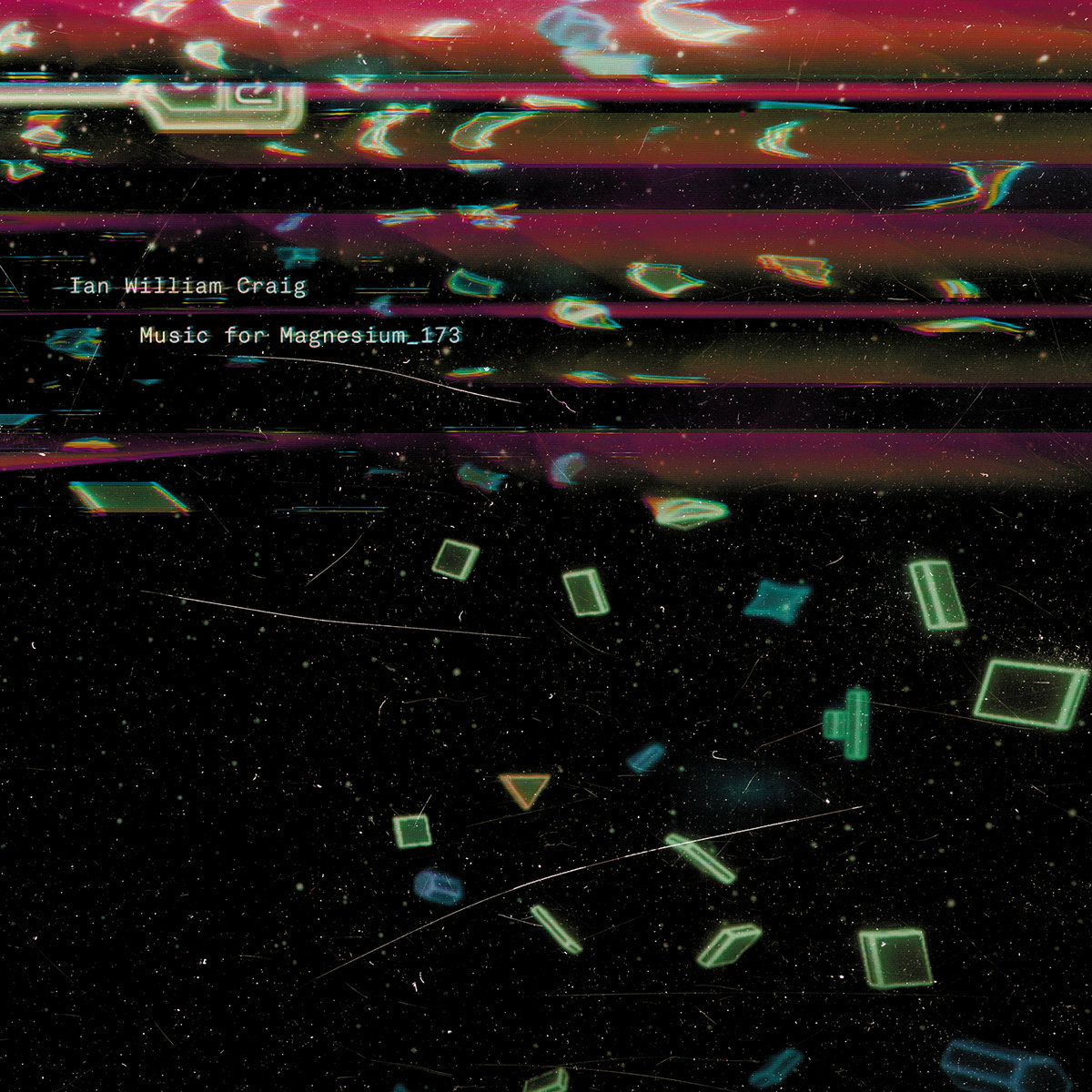
Often, when considering a new score for a TV show, film or game, the listener is presented with a series of short, inconsequential cues, with little of musical substance to make for satisfying listening. Ian William Craig is on a mission to change that, returning with a bold approach to soundtrack writing.
The Vancouver-based artist has written a substantial piece of work to accompany a computer game, Magnesium 173. This creation from Graham Johnson is described as ‘an elegant puzzle game inspired by quantum mechanics’. In response, Craig has fashioned a dozen pieces of music running for 80 minutes. The tracks evolve with the use of modified tape, electronics and Craig’s own voice, multitracked and manipulated to create a series of choral perspectives.
What’s the music like?
Haunting and otherworldly. There is a peculiar intensity here, taking hold as the sound begins to grow in volume at the start of the soundtrack, and barely letting up throughout. The presence of the human voice is deeply powerful, for although there are no obvious words the vocals command the music’s direction and colour.
Blue Suit Glitch finds a glitchy response from modular synthesizers, while a haunting choir hesitantly rises up out of the weather-beaten tundra on It’s A Sound, Not An Ocean, their sonorous voices soon dominating the landscape on the album’s longest track. A Crack And A Shadow is much shorter, but benefits from a distinctive, sighing motif that gets cut up and worked against a steady rhythm of snowy footsteps.
Viridian is another ambient yet intense piece of work, with falsetto and deeper bass vocals set in contrary lines. The music drifts through thick electronic clouds, as it also does in the weightless Sentimental Drift. Prisms is warm and fuzzy, while Attention For It Radiates exhibits a brighter, wide open choral sound. Meanwhile a wall of bright musical ambience awaits the listener on Sprite Percent World Record, richly coloured with heat-soaked drones, pierced on occasion by a solo voice.
Does it all work?
Yes, it does – and although the emphasis is on the ambient properties of Craig’s writing, there is intensity and poise throughout, along with a keen sense of direction. In spite of its slow moving trajectory, the music is always travelling somewhere.
Is it recommended?
Yes, enthusiastically – fans of Tim Hecker, Fennesz or the Glacial Movements label, to name just a few like-minded sources, will love it. Ian William Craig has made something rather special here.
Wojciech Świtała (piano, below), Silesian Quartet [Szymon Krzeszowiec and Arkadiusz Kubica (violins), Łukasz Syrnicki (viola), Piotr Janosik (cello)]
Bacewicz String Quartet No. 4 (1951) Weinberg String Quartet No. 3 in D minor, Op. 14 (1944) Zarębski Piano Quintet in G minor, Op. 34 (1885)
Wigmore Hall, London Monday 17 October 2022
Reviewed by Richard Whitehouse
In existence now for 44 years and with only a change of leader during that time, the Silesian Quartet has amassed a broad repertoire taking in the extent of the Austro-German tradition along with that of its Polish heritage – as was evident from this latest Wigmore Hall recital.
The rapid upsurge of interest in women composers has been of real benefit to those such as Grażyna Bacewicz, whose sizable output of essentially abstract music went too long under the radar and not least a minor masterpiece as her Fourth Quartet – its first prize at the Liège Competition in 1951 vindicated. Its three movements are dominated by the first of these – a sombre Adagio introduction as variously infiltrates the lively ensuing Allegro, such that the coda essentially becomes a stretto between such contrasted expression. The central Andante finds this composer at her most lyrical, with the ‘giocoso’ marking of the final Allegro not necessarily implying any lessening of formal and emotional focus, as this builds toward an impetuous conclusion that clinches the unorthodox if methodical design of the whole work.
The Silesian gave a superb account of a piece it knows well – having recorded all Bacewicz’s quartets – as it did of Mieczysław Weinberg’s Third Quartet. On a similar scale, this also has a similarly overarching intensity – not least when attacca markings between movements were scrupulously observed as to give the overall design its unity within diversity. The unchecked energy of the initial Presto is by no means offset by the bittersweet poise of the Andante – its taciturn unease continued in an Allegretto affording only the most tenuous, even provisional closure. One reason, surely, why the composer restructured this piece when recasting it more than three decades later as his Second Chamber Symphony, which is hardly to deny the sheer fascination of the music at a crucial stage on the way to Weinberg’s mastery of this medium.
Had he died before writing his last work, Juliusz Zarębski would barely have been a footnote in musical history. His Piano Quintet confirms an acute feeling for Lisztian harmony, allied to a commanding formal sense as should have been the springboard into an eventful maturity and is not so far behind those by Brahms, Dvořák and Franck in being a major contribution to its medium. The Silesian had the measure of the first movement’s quirky take on sonata form – its vividly contrasted ideas merged in a tensile development then varied reprise and dynamic coda. The Adagio frames its lilting central section with a melody of rapt fervency, as is itself framed by music of ‘Forest murmurs’ aura, while the Scherzo likewise frames its wistful trio with music of an intently rhythmic propulsion. The final Presto is essentially a cyclical reprise of earlier ideas as this picks up where its predecessor left off, before pursuing a sonata-rondo trajectory such as culminates in a fervent recollection of the work’s opening theme. That this piece remains the summa of Zarębski’s creativity does not lessen the extent of its attainment.
The Silesian and Wojciech Świtała had prepared no encore, instead reprising the final pages of the Zarębski to close this programme in fine style. It is part-way through a recorded cycle of Weinberg’s quartets, another of which will hopefully feature in a future Wigmore recital.
For the latest in their long running Back To Mine series, now 23 years old, DMC turn to Scott Hansen, the San Francisco producer, artist, designer and songwriter better known in these circles as Tycho.
He is a completely logical addition, already known for some incredibly relaxing chillout music through albums Dive, Epoch and Weather, which offer sunshine-infused meditation to even the coldest listener.
What’s the music like?
As so often with the Back To Mine series, it feels like DMC have caught the right artist at the right time. Tycho’s specialities tend to lie in the electronic field, and that is well represented here, but there are some really nice contrasts and bends in the road to navigate as the mix progresses. It hits just the right balance of moving forward but also enjoying the musical scenery on the way.
Bibio’s remix of Tycho’s own Spectre is the ideal place to start, setting a nice walking pace within a woozy dynamic as the guitar ambles along. Some spacey productions follow, with an excellent bit of serious electronic pop from Panama standing out, the clean textures of Destroyer dating from 2013. Happily the music never veers too close to the mainstream, as Schneider TM’s hybrid track Frogtoise testifies. Tycho’s remix of Little Dragon’s Little Man is the perfect fit to bridge from this to the hypnotic cross rhythms of Luke Abbott’s Modern Driveway, after which the amiable grooves of Weval’s You Made It (Part II) are ideal.
Ulrich Schnauss is a logical inclusion, his brand of weather-beaten electronica leaving a strong impression with In All The Wrong Places, before Tycho’s PBS brings a cool groove to back its probing riff. By the time Slowdive’s Sugar For The Pill kicks in we are more or less horizontal, a feeling reinforced by Octo Octa’s Beam Me Up, the Please Take Me Away mix by Eris Drew panning out rather nicely.
Does it all work?
It does – as you would expect from someone with Tycho’s love of perspective, foreground and background. Like the best Back To Mine compilations it brings a satisfying juxtaposition of familiar names and unfamiliar grooves, sitting alongside each other with the maximum ease.
Is it recommended?
It is indeed – another excellent addition to one of the longest running compilation series around. Even in this era of online mixes and playlists, there is still room for an hour Back To Mine.




 Arcana.fm