In concert – Daniel Pioro, London Philharmonic Orchestra / Andrew Manze – Vaughan Williams: Symphony no.9, Lark Ascending & Tallis Fantasia; Tom Coult Violin Concerto

Vaughan Williams Fantasia on a Theme by Thomas Tallis (1910)
Tom Coult Pleasure Garden: Concerto for Violin and Orchestra (2020) (London premiere)
Vaughan Williams The Lark Ascending (1914-20); Symphony no.9 in E minor (1956-57)

Daniel Pioro (violin), London Philharmonic Orchestra / Andrew Manze

Royal Festival Hall, London
Wednesday 26 October 2022

Reviewed by Ben Hogwood. Concert pictures with thanks to the London Philharmonic Orchestra; picture of Andrew Manze (c) Benjamin Ealovega

Subtitled Visions of England, this concert from the London Philharmonic Orchestra and Andrew Manze was a celebration of Vaughan Williams, marking 150 years since the composer’s birth. As part of an extremely full conducting CV, Manze has a recently recorded cycle of the composer’s nine symphonies under his belt with the Royal Liverpool Philharmonic Orchestra, and clearly holds a special affection for his music.

Two of RVW’s most popular pieces began each half of the concert, but the main act was a relatively rare encounter with composer’s final symphony, completed a year before his death. The Ninth Symphony is a work needing repeated listening before its treasures can be fully revealed, but more recently it has started to get the performances it needs to make an impact. As Manze himself told us from the platform, it also has a deep resonance for the London Philharmonic Orchestra themselves. On the morning of 26 August 1958 they were rehearsing with the composer’s friend and advocate, Sir Adrian Boult, when news came through that Vaughan Williams had died.

This performance delved into the spidery textures that seem to provide a link to the afterlife itself, rather like one of Holst’s later Planets. Also evident were a series of cloudy, watery vistas, such as those found in Debussy’s Nocturnes. Manze probed deeply into the first movement, helped by the baleful colouring of three saxophones, beautifully managed by Martin Robertson, Tim Holmes and Shaun Thompson to enhance the unusual orchestral textures. The tension between the ‘home’ note of E and its immediate neighbour F was ideally weighted, the thoughtful mood tinged with a sense of foreboding.

These emotions underpinned a convincing performance, with references to earlier, angrier music from the Sixth symphony sharply noted and delivered. There were also moments of calm acceptance, as though the composer was reappraising his life with some satisfaction, the darkness held at bay by silvery strings and consoling woodwind.

The second movement, with its curious rhythmic profile, had nicely balanced syncopations, while the scherzo danced as though in an empty room, the music never quite leaving the leash on which it was held. Segueing directly to the finale, Manze’s control and passion could be felt in equal measure, a sense of resolution hard to come by but ultimately found as the music headed for its final three chords, the ‘E’ and ‘F’ finally resolving their dispute. This beautiful symphonic ending offered genuine light in the darkness, a similar sensation to Shostakovich’s final symphonic statement if seen through very different eyes.

The concert opened with the ubiquitous Fantasia on a Theme by Thomas Tallis, less elusive music perhaps but equally profound when casting its eyes back over time. This ideal concert opener speaks as loudly as it surely did in 1910, providing consolation for the fevered brow through subtle but far-reaching statements. On this occasion the performance did not quite have the ‘tingle’ factor, but it did feature beautiful string playing and finely wrought balance between the ‘choir’ of ten instruments, elevated a little at the back of the stage. Meanwhile the main orchestra could boast excellent contributions from four section principals, Pieter Schoeman and Tania Mazzetti (violins), Richard Waters (viola) and Pei-Jee Ng (cello).

The Lark Ascending holds a similarly treasured status among lovers of Vaughan Williams, remaining one of the calling cards of 20th century English music. In the right performance it creates a magical evocation of George Meredith’s lark, as it ‘drops the silver chain of sound’. Daniel Pioro played the solo part with great sensitivity and more than a little panache, choosing not to overindulge in a relatively straightforward opening sequence, but appearing to add a few extra ‘blue’ notes as the violin warmed to its characterisation, ‘lost on his aerial wings’. Manze’s pacing, initially quite fast, settled to a satisfying pace, with ideal balance between soloist and orchestra. The hall responded with commendable silence to the absolute quiet at the end.

A busy evening for Pioro included a role as soloist in the first London performance of Tom Coult’s Pleasure Garden. A four-movement concerto for violin and carefully chosen orchestra, it is effectively a compilation of four very distinct tableaus, taking its lead from constructed ‘natural spaces’ in and around congested living areas.

The first movement, Starting to rain – Zennyo Ryuo appears, found as vivid a portrayal of rain as you could wish to hear – in my mind I was checking the roof for a leak! Throughout the concerto Coult’s keen ear for orchestral colour was evident at every turn, as was his assured writing for violin, brilliantly played by Pioro. The coloristic effects were enjoyable and easy on the ear, harmonies largely consonant but never over-simplified, and the description of events in Dyeing the lake blue for Queen Victoria, Francesco Landini serenades the birds and The art of setting stones was easy to follow. The birds in particular were vividly portrayed by the soloist.

There was however a fragmented feel to the green spaces, as though they had not fully germinated, and this was exaggerated by the stopping of each movement to pause the descriptive process. When the piece did finally finish there was still an element of unfinished business, in spite of its 27-minute length. Repeated hearing would be welcome to give a more thorough appraisal and understanding, as the warm reception would suggest Coult hit the mark for the vast majority of listeners. His music has many attractive traits and he is a gifted orchestrator, so his is most definitely a space to keep under watch.

Switched On – De Lux: Do You Need A Release? (Innovative Leisure)

Reviewed by Ben Hogwood

What’s the story?

Do You Need A Release? is a highly appropriate title for our times. It is the third album from Californian band De Lux, who are principally the founding duo of Sean Guerin and Isaac Franco. However on the sessions for this album they brought their live band into the studios at Long Beach and made this set of powerful, electronically sourced pop music.

What’s the music like?

De Lux offer an invigorating album of time travelling, switching effortlessly between the past (Talking Heads, Tom Tom Club and Blancmange are all palpable influences) and the present / future. Like a poppier version of The Rapture or !!!, they hit the listener right between the eyes with a set of euphoric choruses, sharply defined electro disco and highly effective power pop.

The live aspect is important and keeps the music with a quickly beating heart. They Call This Love provides a brilliant first chorus, a sign of strength for the album lying ahead. Validation has a sharper edge, nicely realised, while Some Things Never Break mines the archive for a riff that could easily have been transported in from a Telex record. The punchy guitars are a great complement here.

On And On (Till The End Of Us) has a strutting beat and a strong chorus (going on and on and on!) while by contrast The Final Breath You Take is a poignant and understated number, and rather moving with it.

Does it all work?

It does indeed – a really strong set of grooves and sentiments for our times. The only slight problem is one of length, with some tracks fulfilling a 12″ structure – but if you’re happy with that, there really are no problems.

Is it recommended?

Yes, and especially if you like any of the names mentioned above. If you do need a release, you know exactly what you should do!

Listen

Buy

Let’s Dance – Various Artists – Future Disco: Mirrorball Motel (Future Disco)

Reviewed by Ben Hogwood

What’s the story?

Future Disco has proved to be an incredibly popular series over the years, presenting a number of different takes on the house-disco interface. Part of its success is down to the ability to keep fresh with its selections, and true to form Mirrorball Motel includes five new tracks.

What’s the music like?

Consistently strong and rarely generic, this is a really enjoyable set of tunes.

The new material performs strongly. Daisybelle & Tasty Lopez’s Starlight (in Future Disco Ballroom Dub form) sashays onto the floor with confidence. Boys ShortsSuburban Love Affair has a strong West Coast vibe, while Italoconnection dazzle with interlinked synths in the 1980s throwback All Over. Charlie Hepworth‘s It’s Satisfaction has an enjoyable rough edge to its tone. Best of all, arguably, is the heat-soaked You Understand from the brilliantly named Clive From Accounts, a track full of atmosphere and promise.

The other tracks are hardly fillers – not when you consider the addition of Roosevelt, Breakbot, Irfane & Yuksek and Digitalism – as well as strong contributions from the likes of Storken and EYNKA, who throws in some Bicep-friendly shimmering synths.

Does it all work?

It does – Mirrorball Motel takes you to a different place pretty much straight away, impressing with its fusion of poolside house and deep, clubby dance fodder.

Is it recommended?

Yes, enthusiastically – taking its place alongside the most successful instalments in an impressively durable series.

Listen

Buy

In Appreciation – Libor Pešek

by Ben Hogwood

Today we learned of the sad news that conductor Libor Pešek has died at the age of 89.

A tribute to him has been posted on social media by his management company IMG, while the artist page they held for him contains details on his conducting career.

Libor Pešek made some particularly fine recordings with the Royal Liverpool Philharmonic Orchestra when Virgin Classics was in the ascendancy in the 1990s. They include a cycle of the symphonies of Dvořák but also a rather wonderful disc introducing us to the music of Vítězslav Novák, and in particular his Slovak Suite. The recording became extremely popular with Classic FM listeners, and has led to something of a revival for the composer.

The playlist enclosed here is almost exclusively of Czech music, including works by Suk and Smetana, but we also include a nod to some extremely fine recordings of British music the conductor made, notably Britten’s Young Person’s Guide.

Any listener to classical music from the 1980s onwards will surely have encountered Libor Pešek’s art, and we can appreciate it here:

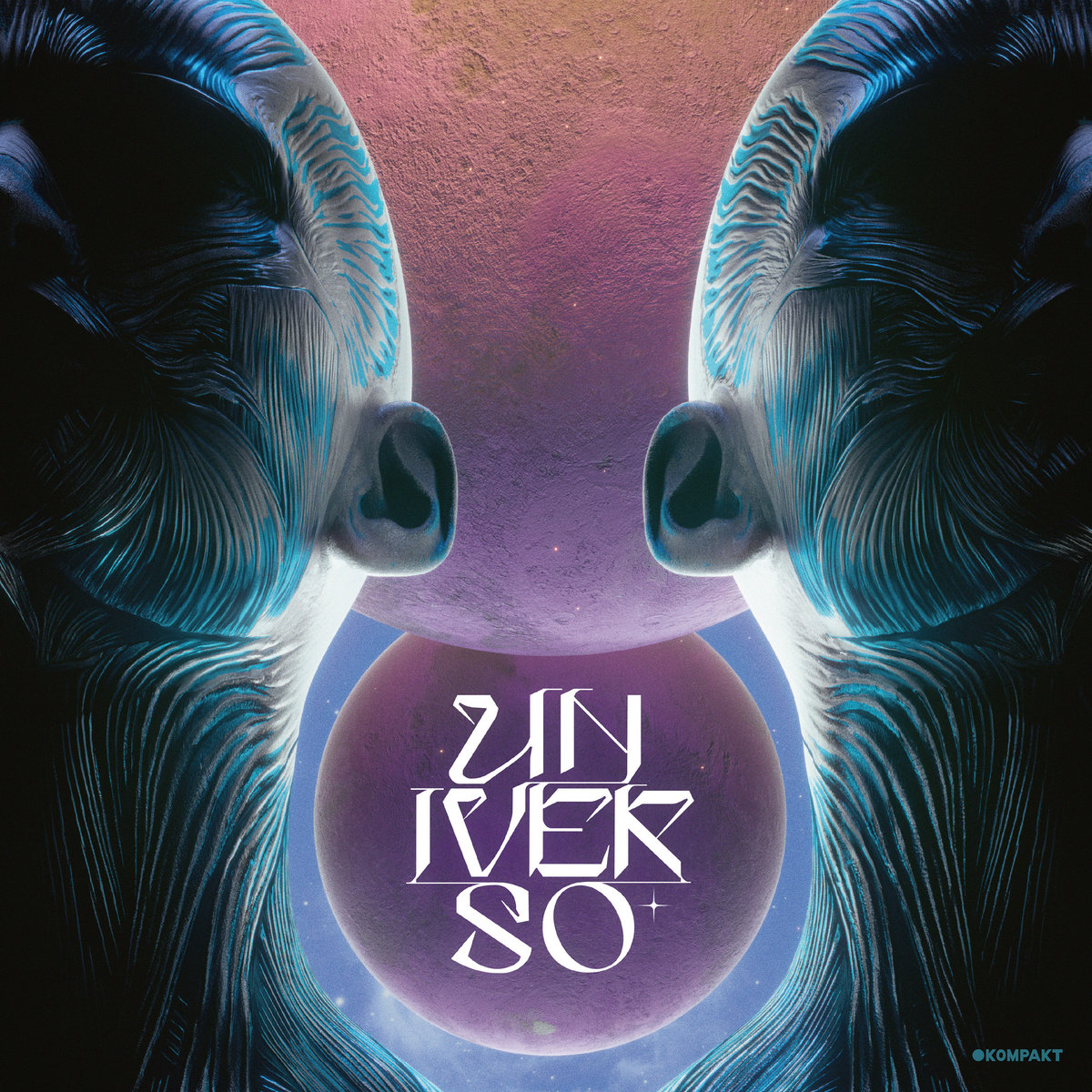
Switched On – Agents Of Time: Universo (Kompakt)

Reviewed by Ben Hogwood

What’s the story?

Italian duo Andrea Di Ceglie and Luigi Tutolo return with their second album as Agents Of Time. Having boosted their profile with recent single Afterlife and a remix of The Weeknd’s Take My Breath, the pair return to an approach blending techno knowhow and song-based structures – with a few instrumentals thrown in for good measure.

What’s the music like?

Strong and assured. Agents Of Time are pretty consistent in their marriage of full bodied, club-based beats and song structures, and get a satisfying variety in their choice of material. The net result is a set of what can only be called ‘moody bangers’!

There is a good deal of versatility in this music. Dream Vision, for instance, makes a really strong impact with its cinematic strings, while Blu proves its worth as one of the strongest vocal tracks.

Clipped beats and moody vocals from Audrey Janssens in Fallin’ hark back to the UK garage sound at the turn of the century. Janssens reappears later on the tougher Poison. Interstellar Cowboy goes for a futuristic approach, the vocal accents balancing a solid instrumental backing.

On the instrumental front, Pulses and Ciao are both excellent in the way they channel evocative lines through driving beats with a sharper edge to the bass. Finally Dinasty signs off with no beats at all, succeeding through a trancey loop instead.

Does it all work?

Mostly. There are some curious vocal additions (The World Is Dump, for instance) but most of Universo squarely hits the mark.

Is it recommended?

It is, if you like a dose of vocal pop against melodic techno as part of your dance music experience. Expressive and cinematic, this is an album well worth trying.

Listen

Buy