
In Concert – Olli Mustonen plays Prokofiev Piano Sonatas @ Wigmore Hall

Prokofiev

Piano Sonata no.4 in C minor Op.29 (1917)
Piano Sonata no.2 in D minor Op.14 (1912)
Piano Sonata no.9 in C major Op.103 (1947)
Piano Sonata no.6 in A major Op.82 (1939-40)

Olli Mustonen (piano)

Wigmore Hall, London
Monday 31 October 2022

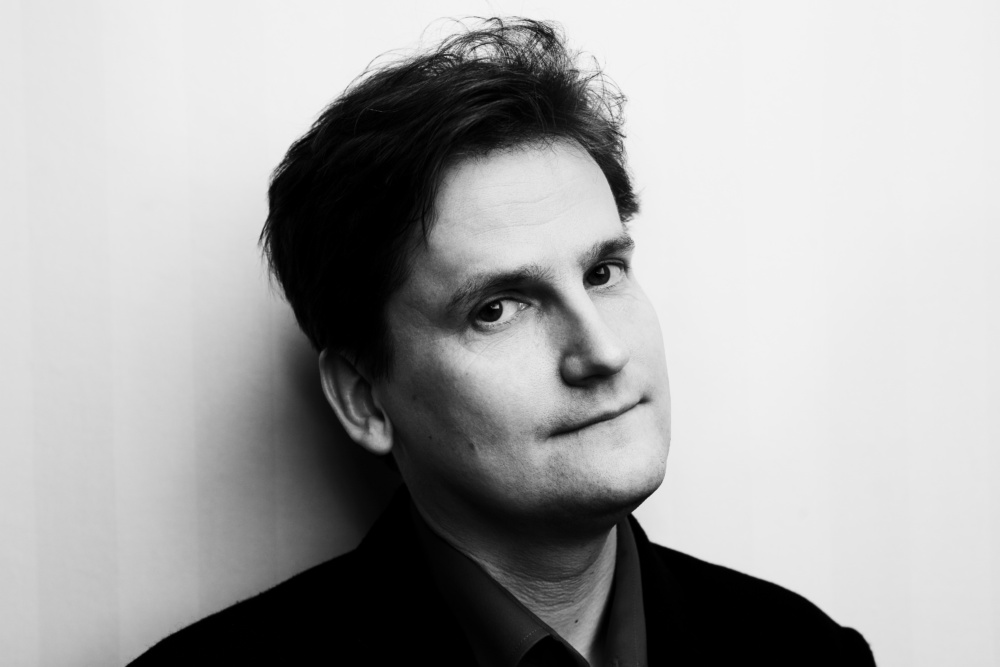
Reviewed by Ben Hogwood; Photo of Olli Mustonen (c) Heikki Tuuli

Sergei Prokofiev is a composer whose music responds well to a ‘completist’ treatment. In the last decade London has seen cycles of his seven symphonies (from Valery Gergiev and the Mariinsky Orchestra) and his five piano concertos, given in a memorable Prom in 2015 with the London Symphony Orchestra supporting five different soloists. Now came the chance to look more closely at the composer’s writing for piano in a two-night performance of the nine solo sonatas, given by a specialist of the composer’s music.

Olli Mustonen has recorded the Prokofiev concertos but not yet committed his thoughts on the sonatas to disc. Should he do so the results will be fascinating, for he has a highly individual and uniquely compelling take on this composer’s music. His is an energetic approach, and even by the end of the first movement of the Piano Sonata no.4 he was mopping a fevered brow. Fourteen movements later he had delivered a revealing look at music whose power to reflect its time and place of composition is remarkably strong, carrying profound messages forward to the present day.

Born in what is now Ukraine, Prokofiev experienced great trials and separations throughout his life. Those tensions are felt in his music, where they are offset by a ready sense of humour, expressed through piano writing that emphasises athleticism but makes room for tender lyricism, backed by an instinct for concise yet developed frameworks in which the music can sit. As a result, pieces and movements rarely overstate their welcome.

Piano Sonata no.4 was a good choice with which to start, a collection of old jottings sometimes subtitled D’après des vieux cahiers (After Old Notebooks). Using material dating back to 1908, Prokofiev assembles a selection of inner thoughts and bittersweet memories. Mustonen expressed these first hand, taking liberties with the rhythm and note emphasis on occasion but wholly in the spirit of the music. The language, initially gruff, melted to an emotive and balletic slow movement with an expressive tune using the white notes on the keyboard. The bustling finale exhibiting a common language with the contemporaneous Piano Concerto no.3.

Like the fourth sonata, the Piano Sonata no.2 bears a dedication to Prokofiev’s friend from the St Petersburg Conservatory Maximilian Schmidthof, tragically lost to suicide in 1913. The language here is more obviously Romantic, with elements of Chopin and Scriabin, but the tart lyricism in the right hand could only be from Prokofiev, and Mustonen brought it out with often startling clarity. There was a whirlwind scherzo, like a devilish skaters’ dance, before a cold melancholy encased the slow movement, which sounded like a distant relative of The Old Castle from Mussorgsky’s Pictures At An Exhibition. The helter-skelter finale, brilliantly played, took the audience on a fairground ride.

After the interval Mustonen gave a rare performance of the Piano Sonata no.9, an elusive work whose dedicatee, Sviatoslav Richter, confessed to finding it a difficult work to understand. Its music hints at a new simplicity, emphasised by the choice of C major as the ‘home’ key, but the awkward complexion of the music tells of a troubled mind, Prokofiev seemingly thrown by the end of the Second World War and yet another set of restrictions on musical style from the Russian authorities.

The faster figures in the first movement soon tired of their attempts to run away from this, but the macabre second movement suggested a restless toy shop after dark. Throughout the work, bursts of brittle melody threatened to extinguish the more songful elements of Prokofiev’s writing, though the forceful finale was typical of the composer in its power and obduracy. Mustonen did well to communicate what seemed to be a dip in the composer’s energy towards the close.

Finally we heard the Piano Sonata no.6, a work speaking directly to the wartime climate today. Written as the Second World War was raging, it is closely linked with the seventh and eighth sonatas, works that also tell of conflict, anger and desolation. The opening salvo of the Sixth was chilling indeed, but in Mustonen’s hands it became an outright assault, the treble notes biting through with such power that the ‘A’ on the piano lost its tuning as the sonata progressed. If anything this made the impact of Prokofiev’s writing even stronger, the scrunched-up harmonies raw and dissonant.

The Sixth is not a depressing work, however – as its stuttering Scherzo told, wrenched this way and that by a left-hand melody. The lyrical power of the third movement, initially subtle but then more overtly passionate, looked ahead towards the composer’s colourful ballet scores. Mustonen felt that connection, conducting himself whenever a hand was free, and sensing the orchestral connections for the voices in front of him. The finale had a curiously phrased but highly effective main theme, and when the artillery from the first movement returned it brought with it an even greater chill than before. The sonata ended in a cacophony of noise, powerfully wrought and given without quarter.

Taking the white heat out of the sonatas a little, Mustonen proceeded to charm with an encore of the Prelude Op.12/7, published in 1913 and often used as an encore by the great Russian pianist Emil Gilels. It was an unexpected treat, capping an evening of exceptional pianism.

You can hear Olli Mustonen’s recording of the Prelude, part of a Prokofiev miscellany recorded for Ondine, below:
Olli Mustonen plays Prokofiev

This week, Arcana will be visiting the Wigmore Hall to hear the complete piano sonatas of Prokofiev, played over two nights by Olli Mustonen.

The Finnish pianist is a specialist in the Ukrainian-born composer’s music, and it looks set to be a fascinating pair of concerts, offering a rare chance to appraise the complete works in this area of Prokofiev’s output. As a taster to illustrate his natural rapport with Prokofiev’s writing for the keyboard, here is Mustonen performing the Piano Concerto no.2 in G minor with the Singapore Symphony Orchestra and Hannu Lintu:

Olli Mustonen plays the complete sonatas at the Wigmore Hall, over two nights – for information click on the links for Monday 31 October and Tuesday 1 November:

Mustonen has also recorded the five piano concertos for Ondine, with Lintu and the Finnish Radio Symphony Orchestra. You can hear these dynamic accounts below:

On Record – Julian Brink: Utility Music (Sono Luminus)

Reviewed by Ben Hogwood

What’s the story?

Johannesburg composer Julian Brink initially conceived Utility Music as part of a film score. The film was unfinished, but he revisited the music during the pandemic in 2020, moulding it into a standalone album. The recording took place remotely around the world, with contributions from musicians in Los Angeles, New York, London, Frankfurt and Hamburg, not to mention the composer’s bedroom at his apartment in Hollywood.

The title reflects the German phrase ‘gebrauchsmusik’ – music written for a specific event or purpose – as well as a reflection of how the recording came about. The influence of John Cage is clear, too, in the more experimental aspects of the music and its germination.

What’s the music like?

Easy on the ear – but never too easy. Brink often works from the approach that less is more, and it serves him extremely well, for Utility Music has an intimate, conversational approach that instinctively draws the listener closer and communicates directly.

The quality of his instrumentalists is a clear asset, too – and they all deserve a name check. The core are three string players, Moldovan violinist Dan-Iulian Druțac, violist Nick Revel (of the PUBLIQ Quartet), and cellist Joe Zeitlin. They are complemented by woodwind (Matt Demerritt), clarinet (Tyler Neidermayer), horn (Meredith Moore), trumpet (Joe Auckland), brass (Juliane Gralle), harp (Hanna Rabe), percussion (Max Gaertner) and bass (Gabe Noel).

Colombo/Green Fingers shows a little of the influence of Steve Reich, but Miniatures is where you sense Brink’s individual voice is louder, a mechanism slowly turning with clicks and whirs against coloristic effects from the strings. Simple Trio is an intimate aside, while Eventually Lapse has watery textures over which a violin sings and calls. Eastwood no.4, meanwhile, is especially descriptive, attractively scored for harp, percussion, viola and cello – while the final Pattern Shells, for mixed quartet, is attractively shaded.

Does it all work?

It does indeed – and if you need further proof, watch this ‘reaction’ video from viola player Nick Revel:

Is it recommended?

Yes – very much so. There are some intriguing and descriptive sound worlds awaiting listeners here, but also intimate and personal asides that speak with a calm but probing intensity.

Listen & Buy

To hear clips and explore buying options, you can view this release on the Sono Luminus website

Switched On – Bibio: BIB10 (Warp Records)

Reviewed by Ben Hogwood

What’s the story?

As its title confirms, this is the tenth studio album that Bibioaka Stephen Wilkinson – has completed. Much of that odyssey has been for Warp Records, where he has garnered a loyal following from albums such as Ambivalence Avenue, Mind Bokeh, Silver Wilkinson and the attractive Sleep On The Wing EP from 2020.

For BIB10, however, Wilkinson wanted to use more synths, drum machines and electric guitars, but in his words, ‘getting a more polished sound, without ironing the humanity out of it, was part of the ethos’.

What’s the music like?

Anyone following Bibio over those ten albums will know that he has a high quality threshold, and that his songs are consistently good and meaningful. His work also evades capture where genres are concerned, flitting between electronica, pop, folk and a lightly psychedelic approach.

BIB10 feels firmly rooted in the 1980s at times with its electro-funk work, but on other occasions when the guitar comes out it even passes close to the orbit of Steely Dan. The music has a typically airy disposition and an attractive lightness, while Bibio’s vocals are as always very nicely done.

Two tracks feature the resonant tones of Olivier St Louis – the breezy S.O.L. and the album closer Fools, which dips into RnB. Elsewhere, Off Goes The Light is an attractively light hearted song in a big space, Sharratt is a nicely designed web of guitar melodies, while the languid Rain And Shine has slight Eastern leanings.

Cinnamon Cinematic is a perky number where those Steely Dan references crop up, its closing guitar solo a good bit of fun. Meanwhile there are more pastoral overtones in the thoughtful tones of A Sanctimonious Song, with its woozy effects.

Does it all work?

It does. One of the funkiest of Bibio’s albums, it also contains some of his most satisfying, club-based songs. The drums machines work a treat, ensuring a bit of time travel for listeners as they go back three decades.

Is it recommended?

Heartily. Bibio remains one of our underrated musical wonders, and Warp really do have a treasure on their hands. More people should appreciate his music, and the way it sweeps our cares away!

Listen

Buy

From closed doors to a heavenly host: The completion of a Mahler symphony cycle

by John Earls pictures (c) Andy Paradise

Two years ago, in the midst of the pandemic, I wrote a piece for Arcana FM on ‘Mahler’s Eighth and coming out of COVID-19’. I concluded by saying that I wouldn’t get to see a performance of this epic ‘Symphony of a Thousand’ – and complete my personal Mahler live symphony cycle – any time soon, but that when I did it would have a very particular significance.

I certainly didn’t know that the performance would be by the Royal Philharmonic Orchestra conducted by Vasily Petrenko at the Royal Albert Hall on a Sunday afternoon in late October 2022, a concert that was itself rescheduled due to the pandemic.

And what a performance it was. The Royal Albert Hall could be said to be purpose built for this work, accommodating not just an expanded orchestra (including seven off-stage brass players in the gods) but three choirs, two boys’ choirs, eight soloists and a huge concert organ (the Royal Albert Hall’s was once the largest instrument in the world).

You get the full blast of the organ from the off with the tumultuous opening of Part 1’s Veni Creator Spiritus. It’s quite a ride from there on in, and Petrenko and the RPO handled it superbly all the way through to the powerful finale of Part 2’s setting of the end of Goethe’s Faust. This was not just about the big sections, the delicate moments were deftly done too.

But this work is really all about the singing, and the assembled choirs of the Philharmonia and Bournemouth Symphony Choruses and City of London Choir, as well as the Tiffin Boys’ Choir and Schola Cantorum of the Cardinal Vaughan Memorial School were magnificent.

And it wasn’t just the massed voices, as glorious as they were. The soloists – and let’s name them (above): Sarah Wegener (Magna Peccatrix), Jacquelyn Wagner (Gretchen), Regula Mühlemann (Mater Gloriosa), Jennifer Johnston (Mulier Samaritana), Claudia Huckle (Mary of Egypt), Vincent Wolfsteiner (Doctor Marianus), Benedict Nelson (Pater Ecstaticus) and James Platt (Pater Profundus) – were excellent too.

I made the point in my earlier piece that there is something about the combination of the mass assembled forces performing together and being joined by an audience in an even bigger collective. I think the standing ovation from the near sell-out crowd at the end was testimony to this.

Mahler’s Eighth is definitely one of those pieces that you need to see performed live. I’m so glad that I finally did.

John Earls is Director of Research at Unite the Union and tweets at @john_earls