Switched On – Daniel Patrick Cohen: We Deliver (Backlash Music)

Reviewed by Ben Hogwood

What’s the story?

When making his new album We Deliver, Daniel Patrick Cohen became obsessed with short tracks whose function would be to act as bridges between album tracks, or introductions to more substantial offerings. As his love of this form grew, he developed a great respect for 20th century hip hop producers and their ability to write focused interludes that became a work in themselves.

Resolving to write an album based on the form, Cohen describes his new release as ‘a lo-fi work entirely made up of these throwaway-type tracks. My intention is explicitly for it to be exactly the sort of weirdo record that an imaginative producer may find a dynamite sample from’.

What’s the music like?

On the evidence of We Deliver, Cohen’s wish may be granted – for this is a fascinating and invigorating set of 32 tracks, with a myriad of guests and a huge range of styles. Cohen’s magpie approach works especially well though, and the well chosen guests bring a great deal of character and humour to proceedings.

A word about those guests – especially vocalist Alice Zawadzki, saxophonist Joe Wright, multi-instrumentalist Dan Berry, violinist Róisín Walters and pianist Alexandra Făgărășan. Zawadzki is the vocalist stopping the listener in their tracks on Wild fig and ginger handwash, while the vocalist on the humourous Shopping With Violence is James Murray, who picks up the amusing track as an answerphone message later on. It is genuinely difficult to pick out highlights from the album but it is certainly worth mentioning the good deal of wah wah funk applied to That’s not how it works in this world I’m afraid, and the really nice, slightly warped play on the vocals of Puteți avea o familie fericită.

The pizzicato strings and the odd jarring noise of Wait your kid here are distinctive, cutting to a flowing piano on Buy priority through security. The hesitant wind instrument choir on Change the sentences so they have the same meaning are rather charming, as is the lovely coarse violin from Walters on the intriguingly titled They are a nuisance and a possible health hazard. Meanwhile the vibrant strings and piano of Repeat, producing a rich lather (!) are also winsome.

Does it all work?

It does – Cohen leaves you wanting more at the end, in spite of 32 tracks! Often the ideas are good enough to support more substantial pieces of work, and occasionally you will be left wishing he had developed his thoughts more. That said, sticking to the rules of duration is crucial in this sort of album, and it works a treat.

Is it recommended?

It is, enthusiastically, as music with a light touch but also a great deal of content. Cohen marshals his troops brilliantly – and as such his playlist for Arcana should also be recommended!

Listen

Buy

In Concert – Soloists, Choir and Orchestra of the Age of Enlightenment / John Butt: Haydn: ‘Nelson’ Mass and ‘Trauer’ Symphony

Haydn
Symphony no.44 in E minor Hob.I:44 ‘Trauer’ (1772)
‘Ganz Erbarmen’ from The Seven Last Words of our Saviour on the Cross Hob.XX:2/2 (1786, choral version 1796)
Missa in angustiis (‘Nelson’ Mass), Hob.XXII:11 (1798)

Sofie Ticciati (soprano), Bethany Horak-Hallett (mezzo-soprano), Hugo Hymas (tenor), Robert Davies (bass), Choir and Orchestra of the Age of Enlightenment / John Butt

Hall One, Kings Place, Friday 30 September 2022

Reviewed by Ben Hogwood

Full marks should go to the OAE and Kings Place planning teams for this concert. Somehow they anticipated that what was required on the last day of September 2022 was a ‘mass in time of fear’ – and in doing so unwitting delivered the ideal response at the end of a week of great political uncertainty. The subtitle was given by Haydn to a substantial work better known as the Nelson Mass, so called because it was performed in the presence of Nelson and Lady Hamilton when they visited the composer at Eisenstadt in 1800.

First, though, we heard a work from the composer’s Sturm und Drang period. His Symphony no.44, the only one of his 104 in the key of E minor, has the nickname Trauer on account of the performance of its slow movement at Haydn’s funeral. It falls in the middle of a particularly rich vein of creativity in the Haydn symphony, where he was exploring less common key centres and instrumental possibilities. This performance was given by just 17 players but they gave a sound that could have been made by an orchestra double the size. They caught the dark undertones of its lean and jagged first movement, reminding us of how dramatic Haydn symphonies can be. John Butt was an embodiment of the vigorous performance, drawing the wit and dance rhythms from the Menuetto but also enjoying the relative sweetness of the trio section, with outstanding high horn playing from Ursula Paludan Monberg. The muted Adagio was beautifully done, finding the serene corners of the major key, while the finale had terrific drive, the strings digging in with gritty staccato.

A curious inclusion followed, the second movement of the choral version of Seven Last Words of our Saviour on the Cross. Concentrating on Christ’s promise to his fellow crucified prisoners that they too would see paradise, Haydn offers a vision of redemption that the four vocal soloists portrayed after a period of initial solemnity. The choir, positioned around the balcony, sang down to the audience and were ideally balanced by Butt, who was always cajoling them on to more.

He did likewise in an outstanding performance of the Nelson Mass, which was compelling from first note to last. Described by no less than Haydn scholar HC Robbins Landon as ‘arguably his greatest composition’, it began with a dramatic Kyrie, laying an immediate sense of occasion. With brass and timpani alongside the 17-strong chorus on the balcony, there was fear and tumult in the music, which reached an apex in the Benedictus, an extraordinary passage of writing for the time. Soprano Sofie Ticciati was a subtly commanding presence, especially in this section, and she had sterling harmonic support from fine mezzo-soprano Bethany Horak-Hallett, who came into her own with a terrific solo at the start of the Agnus Dei. Hugo Hymas and Robert Davies were excellent too, the latter’s burnished bass tones matching the sweet violins in the Qui tollis section of the Gloria.

The choir sang with composure but with great passion, too, mirroring the input of their conductor, who had the measure of the Kings Place acoustic. This gave the big numbers – Gloria, Credo and Agnus Dei especially – the reverberation they needed at the end to follow their emphatic conclusions. By the end of the latter movement the darkness was completely vanquished, Haydn’s firm beliefs given their surest possible foundation. This was an outstanding concert, and a memorable contribution to the Voices Unwrapped series at Kings Place. Here the voices were not just unwrapped, they were ringing in the venue’s recesses long after the audience had departed.

Switched On – VLSI live @ The Marquis – BUNKR & Echaskech

VLSI @ The Marquis, Dalston

by Ben Hogwood

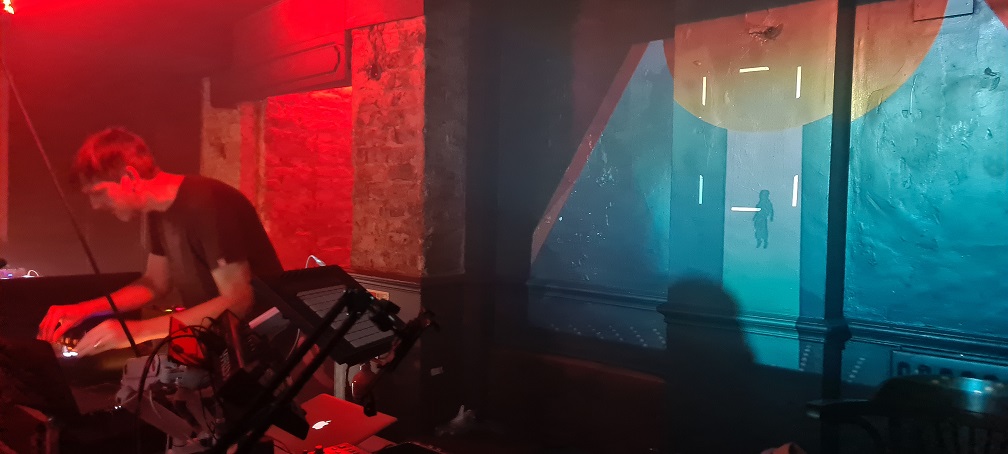
If atmospheric electronic music is your thing, the VLSI label have it in abundance – as they demonstrated in the dark recesses of the newly refurbished space downstairs in The Marquis on Dalston High Street.

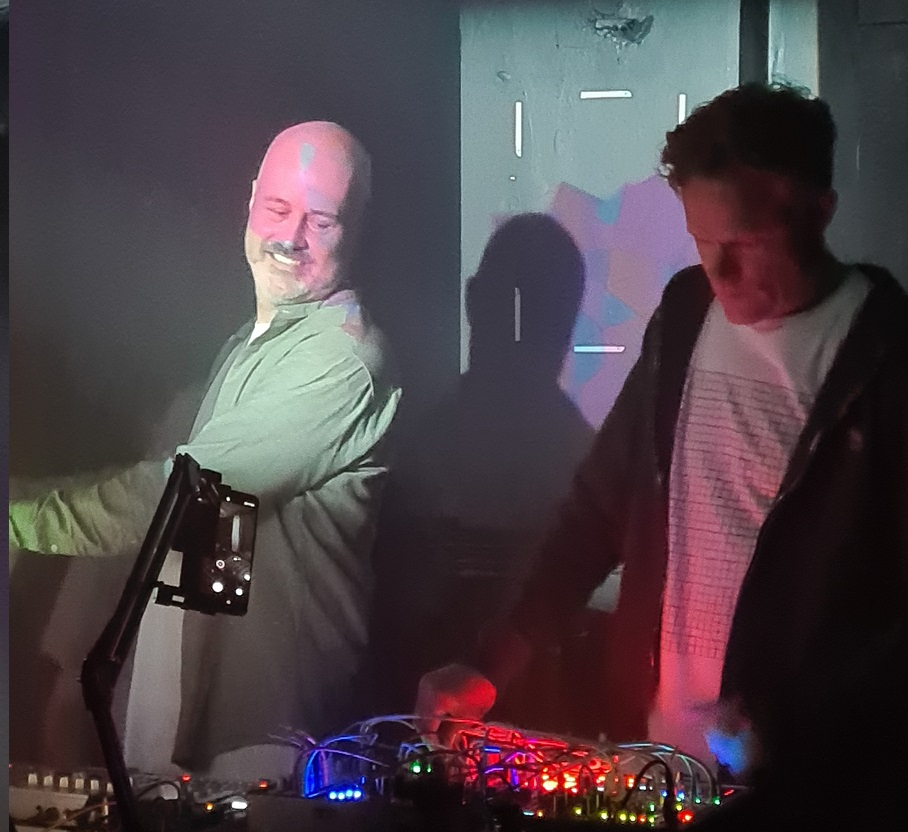
The label is run by Dom Hoare and Andy Gillham, who together are Echaskech. They positioned themselves mid-evening in a packed schedule, giving a superb set of concrete-heavy beats, fulsome bass and impressive widescreen vistas, creating urban panoramas under moody skies. The music of the duo (below) has aged with impressive surety since their arrival nearly 20 years ago, complementing their descriptive music with sharply voiced keyboards and some intricate and brilliantly realised rhythm tracks.

BUNKR – Brighton’s James Dean – is an excellent addition to the VLSI roster, and his headline set was notable for its creators energy and passion at the controls. As with Echaskech, he makes descriptive music of real substance, and if anything his viewpoint has a wider perspective. He does this through spacey keyboards and sonorous melodic lines, while the beats were reassuringly solid once again. Dean’s live tweaking served up a treat to remind us how good his two albums for the label – The Initiation Well and Graveyard Orbit – really are. The evening at the Marquis was ideally paced, punctuated by involving and stimulating DJ sets from just b & Rossscco, alternating deep breakdowns with bigger, rolling beats.

This was an invigorating night, punters wreathed in smiles as they enjoyed the darkly tinged music and celebrated the creativity of a label that deserves to go a long way. Make sure you have a listen to their latest offerings below – including music from Octavcat, who also made a strong impression at the night but unfortunately Arcana was not on hand to tell you how much!

In concert – CBSO / Mirga Gražinytė-Tyla: The Sea – Britten, Adès, Weinberg & Debussy

Britten Four Sea Interludes from Peter Grimes, Op. 33a (1945)
Adès The Exterminating Angel Symphony (2020)
Weinberg Jewish Rhapsody, Op. 36 No. 2 (1947) [First public performance]
Debussy La mer (1905)

City of Birmingham Symphony Orchestra / Mirga Gražinytė-Tyla

Symphony Hall, Birmingham
Wednesday 28 September 2022

Reviewed by Richard Whitehouse

This afternoon concert by the City of Birmingham Symphony Orchestra found Mirga Gražinytė-Tyla at the helm for her first concert as the orchestra’s principal guest conductor in what was a varied programme featuring music of (more or less) Jewish emphasis framed by evocations of the sea.

The Four Sea Interludes that Britten extracted from his opera Peter Grimes invariably makes a worthwhile concert-opener, not least with Dawn as hauntingly poised as this. MG-T drove Sunday Morning hard, so that the cross-rhythmic interplay between wind and strings came close to decoupling, but there was no lack of atmosphere either here or in Moonlight where a sense of emotional disintegration was almost tangible. Storm was as relentless and, in its latter stages, imploring as the music requires – hurtling forth toward a close of brutal finality.

Next, a revival of The Exterminating Angel Symphony as derived from the eponymous opera by Thomas Adès, commissioned and premiered by the CBSO last August. As previously, its four sections feel more a symphonic suite than symphony per se – the whole still amounting to more than the sum of its constituent parts. MG-T secured a virtuoso response – whether in the encroaching expressive ambivalence of Entrances, or relentless build-up and malevolent aura of March. Berceuse remains uninvolving in emotional content despite the allure of its scoring, while Waltzes provides a suavely ingenious finale in its inexorable motion towards catastrophe. It would be hard to imagine a more committed or convincing account, such that the composer – making one of his rare appearances as a non-performer – looked well pleased.

After the interval, MG-T continued her advocacy of Mieczysław Weinberg in what was billed as a ‘first public performance’ for his Jewish Rhapsody. One of various pieces at a time when Soviet composers attempted (inevitably unsuccessfully) to placate officialdom with music of an outwardly populist nature, it forms the middle part of a Festive Scenes trilogy only recently located in its entirety. Beginning with an affecting melody for flutes it proceeds, via solos for clarinet and violin, to sombrely eloquent music (a little akin to that of Kodály’s folk-inspired works from the 1930s) which gains in energy until breaking out in dance-music of decidedly manic cast – a recall of the initial melody on flute then oboe leading to the headlong pay-off. Superbly rendered by the CBSO, this is no mean discovery and warrants repeated hearings.

Finally, to La mer – a piece of which this orchestra has given many memorable performances over the decades, and which did not disappoint here. If the opening stages of From Dawn to Midday on the Sea were a little tentative, the theme for divided cellos was finely articulated and the apotheosis powerfully wrought. Play of the Waves had no lack of capriciousness or delicacy, while Dialogue of the Wind and the Sea duly contrasted those visceral and poetic elements towards a peroration that never lost sight of the essential pathos within its triumph. An impressive close, then, to a concert such as gave notice of the continued rapport between orchestra and conductor. MG-T returns next week for an equally diverse selection with Sheku Kanneh-Mason in Haydn and the CBSO’s own Marie-Christine Zupancic in more Weinberg.

You can read all about the 2022/23 season and book tickets at the CBSO website. You can visit Mirga Gražinyte-Tyla‘s website here – and for further information on Weinberg or Adès, click on the composer names

Switched On – Theo Parrish mixes the next instalment of !K7’s DJ Kicks series

by Ben Hogwood

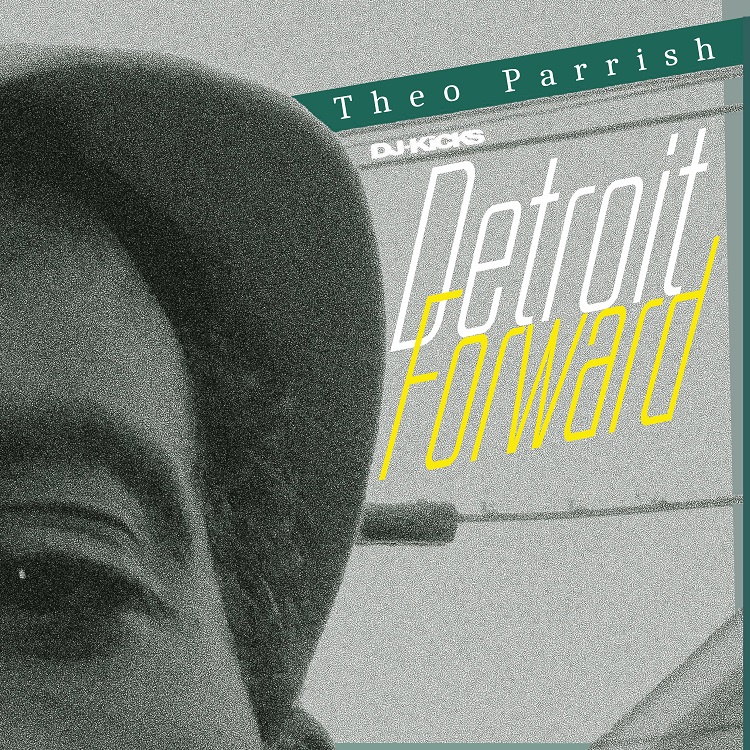
DJ Kicks, the jewel in !K7’s crown, is one of the longest running series of mix compilations – and in the last year they have enjoyed stellar contributions from Disclosure, Jessy Lanza and Cinthie. However they are set to go one better than even that, with a rare guest appearance from Theo Parrish, who has carved a creative homage to his home city in the form of Detroit Forward.

Parrish himself says, “Detroit creates. But rarely imitates. Why? We hear and see many from other places do that with what we originate. No need to follow. Get it straight. In the Great Lakes there’s always more under the surface – more than what appears to penetrate the top layer of attention and recognition. What about those that defy tradition? Those that sidestep the inaccurate definitions often given from outside positions? This is that evidence. Enjoy.”

The 90-minute mix will include Ian Fink’s Moonlite, which you can hear below to get a flavour of the compilation:

DJ Kicks: Detroit Forward will be released on 28 October on !K7 – and you can be sure to read more about it on these pages! In the meantime, you can preorder your copy here:

Download / stream tracklist:

01: De’Sean Jones & Ideeyah – Pressure

02: Donald Roland II – Simba’s Theme

03: Meftah – When The Sun Falls

04: Theo Parrish & Duminie DePorres – Real Deal

05: Specter – The Upper Room

06: Deon Jamar – North End Funk

07: Ian Fink – Moonlite (Duality/Detroit Live Version)

08: John C & Meftah – Full

09: Monica Blaire – aGain (T’s Edit)

10: De’Sean Jones – Psalm 23

11: Raybone Jones – Green Funk

12: Jon Dixon – Wind Drifts (Instrumental)

13: Whodat – Don’t Know feat. Sophiyah E.

14: KESSWA – Chasing Delerium feat. Nova Zai

15: Raj Mahal – Hudsons

16: De’Sean Jones – Flash Spain

17: Jason Hogans – Surrounded By Trees

18: Howard Thomas – Experiment 10

19: Sterling Toles – Janis

2CD tracklist:

1/01: De’Sean Jones & Ideeyah – Pressure

1/02: Donald Lee Roland II – Simba’s Theme

1/03: Meftah – When The Sun Falls

1/04: Theo Parrish & Duminie DePorres – Real Deal

1/05: Specter – The Upper Room

1/06: Deon Jamar – North End Funk

1/07: Ian Fink – Moonlight (Duality/Detroit Live Version)

2/01: John C & Meftah – Full

2/02: mBtheLight – aGAIN (T’s Edit)

2/03: De’Sean Jones – Psalm 23

2/04: Raybone Jones – Green Funk

2/05: Jon Dixon – Wind Drifts (Instrumental)

2/06: Whodat & Sophiyah.e – Don’t Know

2/07: KESSWA – Chasing Delerium feat. Nova Zai

2/08: Raj Mahal – Hudsons

2/09: De’Sean Jones – Flash Spain

2/10: Jason Hogans – Surrounded By Trees

2/11: Howard Thomas – Experiment 10

2/12: Sterling Toles – Janis

Triple vinyl tracklist:

A1: De’Sean Jones & Ideeyah – Pressure

A2: Donald Lee Roland II – Simba’s Theme

A3: Jason Hogans – Surrounded By Trees

B1: John C & Meftah – Full

B2: Meftah – When The Sun Falls

B3: De’Sean Jones – Psalm 23

C1: Ian Fink – Moonlight (Duality/Detroit Live Version)

C2: KESSWA – Chasing Delerium feat. Nova Zai

D1: Specter – The Upper Room

D2: Raj Mahal – Hudsons

E1: Raybone Jones – Green Funk

E2: Whodat & Sophiyah.e – Don’t Know

F1: Howard Thomas – Experiment 10

F2: mBtheLight – aGAIN (T’s Edit)

F3: Sterling Toles – Janis

* All tracks exclusive to ‘DJ-Kicks: Detroit Forward’, aside from ‘Real Deal’ by Theo Parrish & Duminie DePorres