On Record – Mark Peters: Red Sunset Dreams (Sonic Cathedral)

What’s the story?

Mark Peters last made an album to chart his move back to Wigan in 2018. On the rather wonderful and vividly descriptive Innerland he made a windswept musical documentary of his travels, capturing the North of England in all its glory.

Now as he returns to the album format his gaze is cast much further afield – to America. Red Sunset Dreams is a form of ‘ambient country’ music, using Peters’ trademark style of slowly shifting panoramas but bringing authentic instruments to the table, using banjo and steel guitar in the creation of these dusty images.

What’s the music like?

Red Sunset Dreams is in keeping with previous Mark Peters albums, but now with added American flavour, giving a real sense of time and place. It is bookended by two magical contributions from Dot Allison. The first is the breathy Switch On The Sky, beautifully matched by the sonic clouds in Peters’ production, the beat slowly making its way across the sky and the unmistakable, friendly patter of the banjo. Now Is The Time is the encouraging mantra with which she ends. Sundowning ends the album in a blaze of light, a wordless contribution this time that is boosted by sensitively placed lap steel guitar.

Peters’ use of instruments is notable. The banjo appears again in Tamaroa, taking a prominent role, while the distinctive tones of pedal steel guitarist BJ Cole hold sway in Silver River. A spacious backdrop for Dusty Road Ramble really sets the scene, the listener able to picture the scenery as it trundles past, while Red Sunset Dreams itself is wide open and spacious, a richly coloured reverie for the listener to fully indulge in.

Does it all work?

It does. Peters has an instinctive pacing in all his work, knowing just how long to make the tracks, when to push on and when to pull back and appreciate the musical scenery. All are wonderfully in place here, with the added bonus of more instruments to create the evocative moments.

Is it recommended?

Absolutely. Red Sunset Dreams is a fine addition to the Mark Peters canon.

Listen

Buy

Leif Ove Andsnes records Dvořák’s Poetic Tone Pictures

Leif Ove Andsnes – picture (c) Gregor Hohenber

by Ben Hogwood

We all love a bit of Dvořák, don’t we?

That might be a bit of a sweeping statement – and don’t worry if you haven’t heard of him! – but the 19th-century Czech composer is much loved and admired for his winning way with a melody. His symphonies, concertos, chamber music and increasingly the vocal works are all part of the main body of classical repertoire.

Yet a part of Dvořák’s work is consistently overlooked, and that is his substantial body of piano music, that is hardly ever played. Leif Ove Andsnes, in a new album for Sony Classical, is looking to put that right. This is Dvořák’s Spring Song, taken from the 13-part cycle Poetic Tone Pictures, published in 1889:

The Poetic Tone Pictures are, as Leif explains briefly here, a ‘cycle of many stories’:

Happily we will be discovering much more of this music in the next month, from Leif himself. Stay tuned!

Playlist – Late Elgar

by Ben Hogwood

If you’re reading this in the UK you will have noticed the sharpness in the air, an unmistakeable sign that summer is giving way to autumn.

At this time of year my musical thoughts often turn to late Elgar (above), and four works in particular that unwittingly depict the changing of the seasons with a striking clarity. Those four pieces are, in order of publication, the Violin Sonata in E minor Op.82, the String Quartet in E minor Op.83, the Piano Quintet in A minor Op.84 and the Cello Concerto in E minor Op.85.

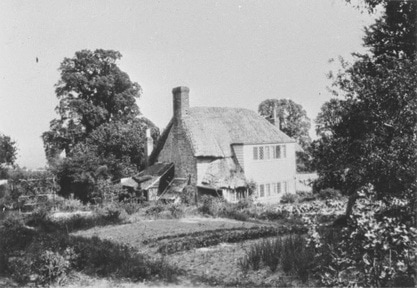
Each piece – in a minor key – was written at Brinkwells (above), a thatched cottage in Sussex where Elgar had spent the previous summer with wife Alice and daughter Carice. The Violin Sonata was completed in summer 1918:

Immediately after the composer began the String Quartet, finished just before Christmas 1918:

Spring 1919 saw the completion of the Piano Quintet…

…before the Cello Concerto, one of his crowning glories, was completed in time for an October 1919 premiere:

They are the last four major compositions completed by Elgar – and you can listen to complete recordings of each one on this Spotify playlist:

Preview – Oxford Lieder Festival 2022

by Ben Hogwood

In three weeks’ time, the 21st Oxford Lieder Festival will be underway – and this is a short piece to show you why it’s worth going!

Arcana first attended this festival in 2018, and were really taken with its layout, friendly atmosphere, and intimate (or breathtaking!) venues. This is before we even get to the music, which is imaginatively chosen and programmed, and performed by some of the best singers and pianists available. Not only that, but festival director Sholto Kynoch and his team place the music in the context of interesting talks and features to place the songs in the context of the wider arts climate.

This year’s festival is Friendship In Song: An Intimate Art, and its aim is to ‘explore friendships between composers, poets and performers, recreate the intimate atmosphere of the salon, and generally enjoy a festive spirit of conviviality and shared experience. World-renowned artists mingle with the best of the new generation, and the great works of the song repertoire are complemented by new music and new discoveries’.

You are encouraged to head to the festival website to explore the concerts and artists, but Arcana would like to point you to a couple. On Saturday 15 October the songs of Richard Strauss come under the microscope. Until recently this aspect of the composer’s output was not greatly considered, lying in the shadow of his orchestral works and operas, but more recent explorations have shown just how inventive he could be as a songwriter.

On Sunday 16 October Claire Booth & Christopher Glynn perform songs and piano works by Mussorgsky and Rimsky-Korsakov, and later that evening Patricia Petibon & Susan Manoff make their festival debut in a typically imaginative programme. If you have not seen these two live before, they are a brilliant double act, bringing their songs to life, as Arcana discovered at the Wigmore Hall back in 2015.

Tuesday 18 October sees the beginning of a mini-series devoted to this year’s most prominent festival composer. Vaughan Williams: Perspectives will examine some of RVW’s most memorable songs and cycles, including Songs of Travel (William Thomas & Anna Tilbrook) and Four Last Songs (Ailish Tynan and Libby Burgess). As a considerable bonus Alessandro Fisher, William Vann & the Navarra Quartet will perform On Wenlock Edge together with a complementary work, Portraits of a Mind by British composer Ian Venables.

Wednesday 19 October finds soprano Lotte Betts-Dean and pianist Natalie Burch performing Ukrainian composer Valentin Silvestrov, a late night slot for his Quiet Songs – and then on Sunday 23 October a day devoted to Schubert will revel in concerts from Birgid Steinberger & Julius Drake (Schubert and the Sounds of Vienna), then Werner Güra and Christoph Berner (Schubert ballads)

The Swedish Nightingale is a recital themed on the legendary Swedish soprano Jenny Lind, whose life and musical contacts will be explored by soprano Camilla Tilling and pianist Paul Rivinius on Tuesday 25 October. The next day, father and son duo – Christoph Prégardien and Julian Prégardien – will give a concert with Michael Gees, which promises to be a memorable encounter. Finally, regular festival guest Carolyn Sampson will give Music For A While on Friday 28 October, with her regular partner Joseph Middleton, while the festival will close with Dame Sarah Connolly singing music by Brahms, Schumann, Strauss and Mahler, alongside pianist Eugene Asti.

What a memorable three weeks it promises to be!

Listening to Beethoven #214 – Piano Sonata no.22 in F major Op.54

Sea beach with fisherman (The fisherman) by Caspar David Friedrich (1807)

Piano Sonata no.22 in F major Op.54 for piano (1804, Beethoven aged 33)

1 In tempo d’un menuetto
2 Allegretto – Più allegro

Dedication Count Ferdinand Waldstein
Duration 12′

Listen

written by Ben Hogwood

Background and Critical Reception

Beethoven biographer Lewis Lockwood has an important observation, that ‘in other middle-period pairings, a long, powerful and brilliant work (in this case the Waldstein sonata) is succeeded by a short and quiet one, with Beethoven creating a double image and a deliberate contrast, a reminder of the balance between great and small, between seemingly opposed and adjacent modes of being that can compliment one another, as a rare flower grows by a large tree’.

Little needs to be said after that rather neat summing up – though it is as always worth hearing the thoughts of pianist Angela Hewitt. Writing booklet notes for her Hyperion recording, she notes the elegance of the opening before ‘all hell breaks loose’. For the second movement, she stresses the importance of observing the composer’s ‘dolce’ marking to avoid it sounding like a study.

Thoughts

As Angela Hewitt notes, it is a graceful and genial start to this piece, Beethoven enjoying a few sleights of hand with some chromatic inflections to the melody, before the cavalry rights roughshod over the tranquil mood. There is a perceptible glint in the composer’s eye while this happens, and you can sense the frowns the first audience may well have had! This means when the mood returns to tranquil the listener is no longer as trusting as to what might happen – and they are right to be wary, for Beethoven enjoys a few more outbursts and melodic quirks.

The second movement is fast and flowing, though there is a more romantic element to the twinkling right hand, and a good deal of expressive weight when the left hand goes towards the bottom end of the piano. Once again Beethoven enjoys journeying to far-flung keys, and the momentum never lets up right to the emphatic finish.

This is a curious piece, one that is indicative of Beethoven’s quest for the new, challenging existing notions of how a sonata should behave. It has elements of the Waldstein’s virtuosity and energy in the final movement, and has all the characteristics of a ‘prelude and fugue’ from the Baroque period. There is much to enjoy here!

Recordings used and Spotify links

Alfred Brendel (Philips)
András Schiff (ECM)
Angela Hewitt (Hyperion)
Paul Badura-Skoda (Arcana)
Stephen Kovacevich (EMI)
Igor Levit (Sony Classical)
Claudio Arrau (Philips)
Daniel Barenboim (Deutsche Grammophon)

Once again a crowded field of some very fine versions, though those from András Schiff, Alfred Brendel and Stephen Kovacevich prove particularly enjoyable.

You can hear clips of Angela Hewitt’s recording at the Hyperion website

You can chart the Arcana Beethoven playlist as it grows, with one recommended version of each piece we listen to. Catch up here!

Also written in 1804 Hummel Rondo in E flat major Op.11

Next up Triple Concerto in C major Op.56