Online Concert: Francesca Dego & Alessio Bax @ Wigmore Hall – Mozart & Brahms

Francesca Dego (violin, above), Alessio Bax (piano, below)

Mozart Sonata for piano and violin in B flat major K454 Den første sommerfugl (1784)
Brahms Violin Sonata no.1 in G major Op.78 (1878-9)

Wigmore Hall, Monday 20 March 1pm

by Ben Hogwood

This was the first time violinist Francesca Dego and pianist Alessio Bax had performed together in public – but had that fact not been given to us by BBC Radio 3 announcer Andrew McGregor, the unsuspecting audience would have assumed they had been playing together for years. Both demonstrated an innate understanding of the music in this attractive programme, which had equal portions of light and shade.

Much of the light was found in the Mozart, his K454 violin sonata written during a phase where he was especially preoccupied with the key of B flat major. Around the violin sonata, regarded as one of the three crowning masterpieces in the form, sit the string quartet nicknamed the Hunt (K458) and the Piano Concerto no.18 (K456), the B flat neighbours evidence of a period where Mozart seems to have been especially fertile.

His stimulus on this occasion was the Italian violinist Regina Strinasacchi, a figure with whom the Italian Dego – a Mozart specialist herself – possibly felt an affinity. In detailing her affection for the work in the concert notes, Dego noted how Strinasacchi had studied at the Ospedale della Pietà, where Vivaldi once taught, before meeting Mozart in Vienna.

The piece made a winsome impression here, Dego showing how, in Mozart performance, less can so often be more. The pair enjoyed a poised introduction, Dego lingering on the last note before a sparkling Allegro moderato opened up ahead. There was definitely an air of spring to this movement, with burbling piano figures and bright violin melodies ideally balanced by the two.

The slow movement took time for thought, enjoying the space afforded to an operatic violin line, though never lingered unnecessarily. Dego’s tone was especially enjoyable here. The finale was very nicely done, with breezy humour and opportunity for virtuoso display for both instruments, tastefully taken.
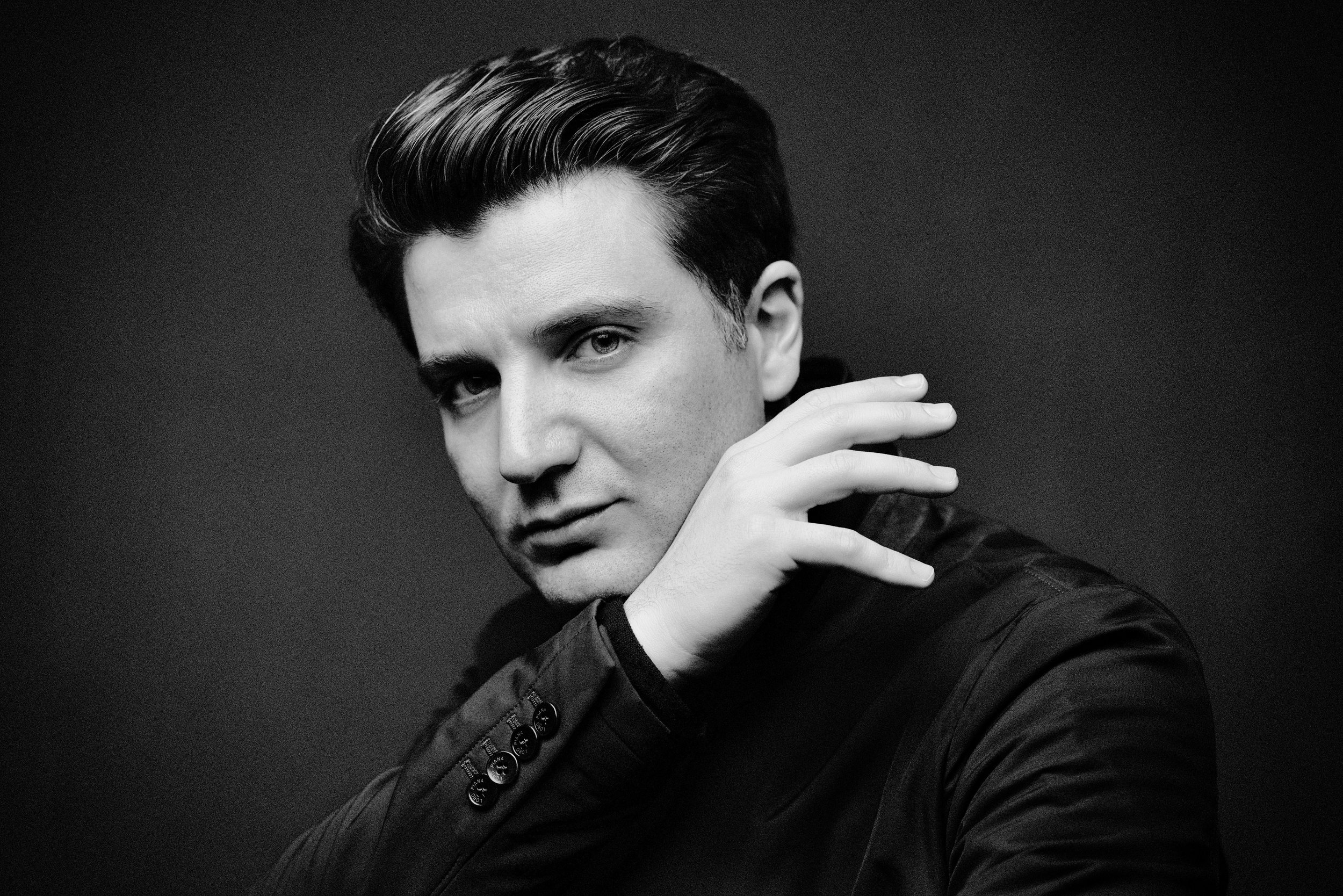
Alessio Bax Pianist Photo: Marco Borggreve

As with several of his first forays into a new musical form, Brahms took several attempts before he was happy to publish his Violin Sonata no.1, which was completed just after the Violin Concerto. It is an attractive work with memorable themes, but a shadow fell over its composition due to the fate of Felix, the son of Clara Schumann and Brahms’s godson, who contracted tuberculosis, from which he died.

Dego and Bax brought this melancholy to the slow movement, the music turning hollow at the extremes of the piano register, Bax’s shaping of the low phrases especially expressive. The soft coda was bittersweet, a mood which carried over into the slow movement. Whereas the first movement had plenty of room given to its attractive melody, the finale pushed forward, Brahms looking to blossom into an exultant major but ultimately remaining troubled by the frequent reappearance of the minor key. There was however a good deal of energy and ultimately the sonata ended positively, the light and shade of this performance having given it a deeper perspective.

Dego introduced a bold encore choice, the second movement Tarantella of Busoni’s Violin Sonata no.2 – a work that should be heard in the concert hall far more often. On this evidence, a recording would be most welcome, given the musicality the two performers brought to this fine recital.

For more livestreamed concerts from the Wigmore Hall, click here

Switched On – Sunroof: Electronic Music Improvisations Vol. 2 (The Parallel Series / Mute)

by Ben Hogwood

What’s the story?

Daniel Miller and Gareth Jones are the electronic music equivalent of London buses. After spending the best part of four decades on their first collaborative album of improvisations, released under the Sunroof umbrella in 2021, they have knocked up the second round of musical trades in a matter of months. The instinctive musical understanding the pair have is brought together in a series of eight improvisations. This time they opted for more space, and allowed their ideas to either knock against each other or to get carried along with the flow.

What’s the music like?

Always intriguing, and with a spirit that carries the listener right back to those first collaborations in 1982. Miller and Jones find that the instinctive approach bears fruit, as does the decision to give their ideas more space.

At times their music evokes a busy beehive, or semi-repetitive industrial processes. The feeling is that of constant development, the pair able to bring forward interesting motifs, rhythms and textures in a spirit that recalls early electronic invention from the likes of Cabaret Voltaire.

January #2 concentrates on small fragments, moving together or against each other like tiny life forms squeezed into a small space. These are set against a longer drone, before shrill sounds from a triangle-like percussion begin to dominate. The music of July #2 suggests a series of codes, with voice-like fragments and bleeps put into the mix. November is a broader canvas, initially darker with more acidic sounds before panning out to reveal a more industrial landscape.

July #3 buzzes only briefly in comparison to July #1, which is a hive of activity and incident, its voice given a disconcerting Dalek edge. Meanwhile October brings in the most obvious rhythm, reminiscent of a game of ping pong but with accompanying synth arpeggios that bubble with activity. January #1 explores bell-like sonorities and acidic timbres, expanding to cavernous reverb in the process.

Does it all work?

It does, though sometimes the feeling is that Sunroof could have gone even further with their ideas, for their imagination is certainly fertile enough.

Is it recommended?

Very much so – a compelling set of improvisations that offers a ready complement to the first volume. Hopefully Miller and Jones are just getting into their stride, and we will hear the fruits of more Sunroof collaborations in the near future.

Listen

Buy

Switched On – Optometry: After-Image (Palette Recordings)

by Ben Hogwood

What’s the story?

Optometry is a new collaboration between John Tejada, known as a quality source of largely instrumental techno, and March Adstrum, a guitarist and vocalist of intriguing musical stock – her parents played baroque violin and she toured backstage with a number of their ensembles.

The press release describes how the band focus on themes of life, love and loss, weaving seductively melancholic textures together with synths, drum machines, guitars and bass.

What’s the music like?

The reason for quoting the press release above is that it presents a wholly accurate description of what has the potential to become a very strong musical outfit. Optometry make intriguing and subtly unpredictable music, cool to the touch but with more than a little emotion bubbling beneath the surface.

When it starts, After-Image sets out its stall to become a quality source of sharp edged electronic pop, but as it unfolds there is actually more to it, as Tejada and Adstrum make room for some experimentation and a number original thoughts.

Chameleon struts out confidently, with a strong beat and a vocal of glassy clarity. Technicolor is bathed in bright harmonies, but the experimentation bears fruit in Falling, featuring Mason Bee, which adds an intriguing bit of bossa flavour with sighing strings. Bee reappears on Larger Than Me, a vulnerable song that asks repeatedly, “do you still think about me?” By contrast the closing Cathedral is worth noting, too, a short sound poem that paints an impressionistic picture of sound, with plenty of echo and refraction that brings snatches of vocal and great, wide spaces to the listener’s ears.

Does it all work?

Pretty much. The only criticism to level at Optometry is that on occasion it feels like their ideas could be more fully developed, especially Cathedral which hints at a haunting ambience it would be great to hear more of.

Is it recommended?

Yes. An interesting listen, and evidence of the musical versatility that John Tejada and March Adstrum hold. It’s a grower, too.

Listen

Buy

Switched On – Blank Gloss: Cornered (Kompakt)

by Ben Hogwood

What’s the story?

This is the third album from Sacramento duo Blank Gloss, following up their Melt debut from February 2021 – which made a strong impression on Arcana around its release.

For this record, Morgan Fox (piano and synthesizers) and Patrick Hills (guitar) united for just two days at the studio in Sacramento in December 2020. During the sessions the music came together quickly, Hills benefiting from the use of a MIDI pick-up on his guitar that gave it a darker sound.

What’s the music like?

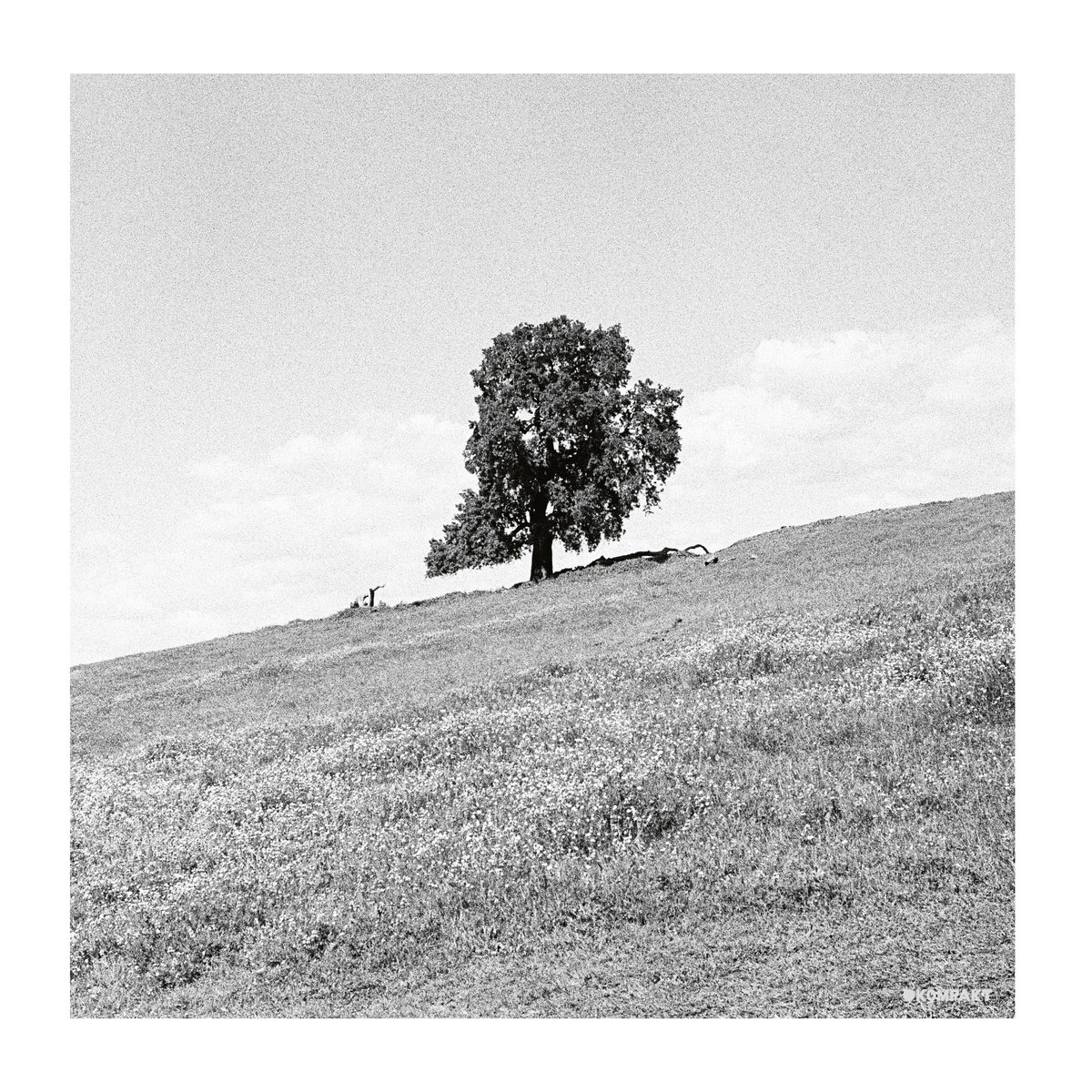
There is a sparseness to the music of Blank Gloss this time, stripping their music back to the bare elements while looking to still paint pictures of the great outdoors. In many respects the cover encapsulates this approach, replacing the dusky orange cloud of Melt with a black and white image, a single tree in a field. The tree represents some of the inner detail Fox and Hills bring to their music, while the listener can almost feel the wind in the long grass around.

To start with, the duo take their listeners and place them once again in a huge space under a starry sky, the reverberant guitar track of Sender replicating the ‘ambient Americana’ of the previous album. Yet this time there is a sense of unease, perhaps reflecting the lockdown conditions under which the recording may well have taken place. The piano for Dusted has a distracted thought pattern, reflecting nagging pulses and signals from outer sources.

By contrast the extended No Appetite, though reserved in mood, has a soothing and sustained set of chords in which the listener can float, and Salt is similarly static. On The Ground pans right out to take in solemn piano threads and ambient outdoor noises, while Soda Lake bubbles under the surface, its positive energy just held in check.

Dressed Alike finishes the album with a warm glow.

Does it all work?

Yes. The less is more approach works really well, giving opportunity for the listener to place their thoughts. The colours given to the piano and guitar are carefully managed and beautifully achieved, with a damper often applied to the keyboard to soften the attack.

Is it recommended?

Yes – a strong complement to Melt, but a sign that Blank Gloss are moving on in their thought patterns and musical phrasing. Cornered feels like a wholly appropriate response to the troubles of the world, and while sombre in mood it offers ample consolation for darker times.

Listen

Buy

In concert – Royal College of Music London students – Chamber Spotlight: Different Trains

Ed Driver Fruits Of Their Laboue (world premiere)
Ed Pelham (clarinet), Tabitha Bolter (horn), Aidan Campbell (bassoon), Stone Tung (trumpet), Eddie Curtis (bass trombone), Michal Oren (conductor)
Schoenfield Café Music (1987)
Rubie Besin (violin), Layla Ballard (cello), Alexander Doronin (piano)
Reich Different Trains (1988)
Jordan Brooks, Sara Belic (violins), Scott Storey (viola), Sam Hwang (cello)

Performance Hall, Royal College of Music
Wednesday 15 March 2023, 6pm

by Ben Hogwood

If you live in or around London, it is well worth reminding you that one of the best ways in which to experience classical music is to visit one of the enterprising colleges and academies in the city. They are packed with interesting recitals, with several lunchtime or early evening concerts per week, with interesting programmes and enthusiastic students ready to give them. The two most obvious examples are the Royal Academy of Music and the Royal College of Music, though more can be sought and found.

It was the Royal College of Music in which your reviewer spent an early evening hour. Currently excelling (on the strength of reviews) in a Respighi – Ravel double bill of opera, which sadly this reviewer did not have the time to experience, the college is enjoying a rich vein of musical form. This is due to a strikingly successful renovation of their ground floor space, and a very fine Performance Hall, suited for chamber-sized concerts such as this one. Here we had the chance to appraise the talent within the college, both at composer and performer levels.

The first piece was a world premiere, Ed Driver’s quintet Fruits Of Their Labour. Born in 2000, Driver is a composer of some repute, with recent accolades from the Birmingham Contemporary Music Group and a new piece for the Hermes Experiment just two of his recent notable attributes. Fruits of Their Labour proved an attractive curtain raiser for this concert, Driver enjoying the unusual quintet combination of clarinet, horn, bassoon, trumpet and bass trombone.

Based on a Czech folk song, the piece has a springlike feel as it alternates between dynamism and relative stillness, making the most of the colourful textures available. The energetic sections were contagious, but the slower passages made an arguably greater impact, their chorale-like figures filling the room.

In the latter stage Driver instructed that trumpet and bass trombone should pour water into their instruments, resulting in a sound between a gargle and something of a plumbing malfunction. While effective, the combination with the other instruments was a little superfluous, and when the music returned to its chorale figure the warmer colours were more attractive. On this evidence Driver is a composer of imagination and flair, one to keep in our sights. He received an excellent premiere performance, too, brilliantly played and conducted with authority by Michal Oren.

Next up was a piano trio with a difference. Paul Schoenfield wrote Café Music for the Saint Paul Chamber Orchestra in 1987, looking to bridge the gap between the music you might hear at Murray’s steakhouse in Minneapolis and that heard at the Minnesota ensemble’s home. He achieves his aim with music of great virtuosity and considerable humour, with a great number of enjoyable and quirky themes crammed into a three-movement, 15-minute piece. Rubie Besin, Layla Ballard and Alexander Doronin played these with considerable brio, the pianist in particular impressing with his combination of technical skill and rhythmic drive. The technical demands on the players meant there was not always room to bring the humourous sleights through at their fullest, but Besin and Ballard ensured the music had a smile on its face and a spring to its rhythms, their attractive tones bringing the melodies across with room to spare. The performance that had many flourishes, while allowing time for occasional reflection.

The main work of the evening, Steve Reich’s Different Trains, has become established as a lynchpin of the string quartet repertoire, a reflection of its strength and originality. Inspired by childhood journeys to visit his parents during the Second World War, the piece uses a collection of recordings of trains before, during and after the war – spliced together with interviews from a retired porter, Reich’s governess and two survivors of the Holocaust. Their speech patterns are taken up by the stringed instruments in performance.

This performance had a few balance issues, due to the complexity of balancing loud train noises with live strings in a small performance space, and as a result the words themselves were difficult to hear at times. Yet the quartet gave a fine performance, viola player Scott Storey and cellist Sam Hwang shaping the speech melodies with expression and guile. Violinists Jordan Brooks and Sara Belic added colourful and characterful phrases themselves, bringing rich treble to the train whistles and to some of the motifs generated by the interviews.

Different Trains lasts nearly half an hour, but it says much for the musical content that it passes in the blink of an eye. The quartet here should be congratulated for their musicality and concentration, bringing Reich’s music to energetic and often poignant life.

A fine concert, then – and a reminder to make the most of all this wonderful music if it’s on your doorstep!

For information on concerts at two of London’s central music education hubs, click on the names for concerts at the Royal College of Music and the Royal Academy of Music. Meanwhile you can listen to the premiere recording of Different Trains below