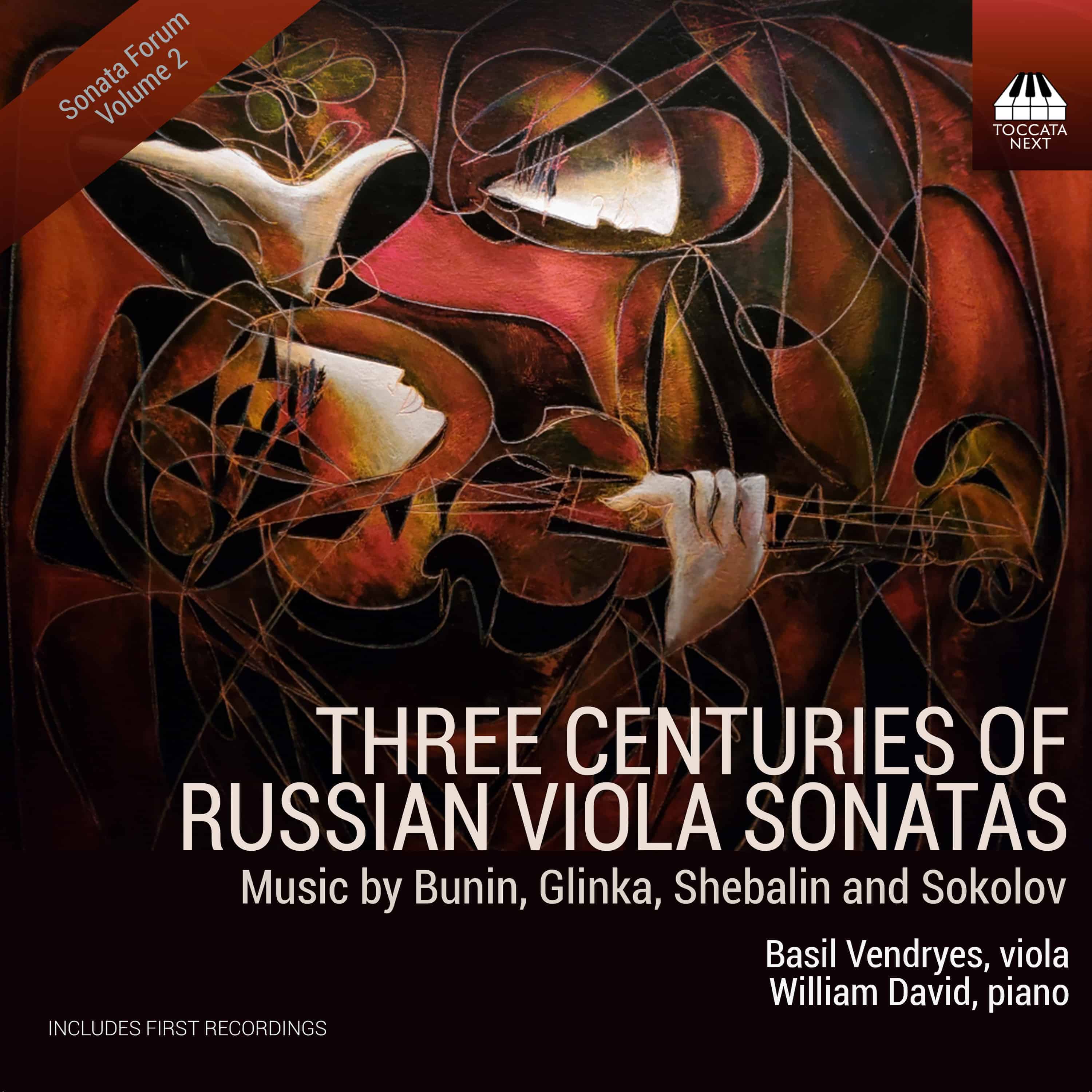
On Record – Basil Vendryes & William David: Three Centuries of Russian Viola Sonatas (Toccata Next)

Basil Vendryes (viola) & William David (piano)

Bunin Viola Sonata in D minor Op.26 (1955)
Glinka (ed. Borisovsky) Viola Sonata in D minor (1825-8)
Shebalin Viola Sonata in F minor Op.51/2 (1954)
Sokolov Viola Sonata (2006)

Toccata Next TOCN0014 [69’31”]

Producers Basil Vendryes, William David
Engineers Bras Smalling, Athena Wilkinson

Recorded 28 September – 1 October 2020 at Mathie Music Salon, Glendale, Colorado

Reviewed by Richard Whitehouse

What’s the story?

Toccata Classics’s Next imprint comes up with an enterprising concept in four viola sonatas extending across 178 years of Russian music, all sympathetically played and recorded while revealing numerous similarities, as well as contrasts, in approach between these composers.

What’s the music like?

Chamber music occupied Mikhail Glinka (1804-57) for barely a decade until the early 1830s, but there are substantial pieces – among them a Viola Sonata whose finale was never written, and slow movement finished in 1932 by Vadim Borisovsky (founder violist of the Beethoven Quartet). The resulting torso is still impressive in its formal ambition and expressive sweep – whether the Allegro moderato with its decidedly serious and often combative tone, then the Larghetto whose halting lyricism yields appealing if restrained eloquence towards the close.

Despite building a sizable catalogue, including 10 symphonies (the second being premiered by Yevgeny Mravinsky), Revol Bunin (1924-76) died without having attained real success at home or abroad. Written for Rudolf Barshai, his Viola Sonata is deceptively understated as to its technical demands and musical substance – a weighty opening Allegro setting up decisive contrast with a central Andantino of greater pathos than its ‘semplice’ marking suggests, then a sombre introduction into another Allegro that maintains unflagging purpose until its ending.

Currently residing in Germany and best known as a pianist of wide-ranging sympathies, Ivan Sokolov (b1960) contributes a Viola Sonata whose relative brevity (barely 12 minutes) feels matched by its circumspection – the pensive opening Allegro leading, via an unaccompanied passage, into an Andante akin to an ‘album-leaf’ in its unaffected poise then an even shorter Allegro which functions as the improvisatory scherzo into a finale revisiting both mood and material of the first movement, now imbued with a fatalism that persists through to the close.

The music of Vissarion Shabalin (1902-63) is showing tentative signs of a return to favour – understandable in the case of his Viola Sonata, central part in a triptych of such pieces also for violin and cello. Written just before that by Bunin, the opening Allegro is less forceful in its rhythmic profile if more accommodating in melodic content, with the central Andante all but permeated by folksong inflections across its reticent course – an aspect shared by the final Allegro with its respectively animated and amiable themes, rounded off by a trenchant close.

Does it all work?

Yes. Not all these works are of equal quality, but the Bunin and Shebalin sonatas should be in the still too limited repertoire for this instrument while also representing these underestimated composers at something near their best. Both works, incidentally, are otherwise unavailable in modern recordings so that Basil Vendryes and William David place listeners in their debt with their perceptive if sometimes overly dogged readings. The sound is a little dry but never to the detriment of this music-making, with Derek Katz’s detailed notes an undoubted enhancement.

Is it recommended?

It is. Those who acquire it will hopefully be encouraged to seek out further music by the latter three composers – Shebalin being adequately represented (though his symphonies and string quartets need to be reissued), Bunin hardly at all and Sokolov with a further Toccata release.

For further information on this release, and to purchase, visit the Toccata Classics website. Click on the composer’s name for more on Ivan Sokolov, and here for more information on a disc of chamber and instrumental music, also on the Toccata label. Click on the artist names for more on Basil Vendryes and William David.
Let’s Dance – Various Artists: Watergate 28 mixed by Biesmans (Watergate Records)

Reviewed by Ben Hogwood

What’s the story?

As the Watergate series continues its colourful journey, Belgian artist Biesmans steps up with a set made entirely of his own compositions.

He does not do this alone, working with a string of luminaries including Dusky, Mathew Jonson, Adana Twins, Kasper Bjørke, Shubostar and Mala Ika, to create a busy 80-minute mix.

What’s the music like?

This is a fine mix, make no mistake, and Biesmans wastes no time in heading for the centre of the house dancefloor. Much of the content is instrumental, but structured in such a way that the mix feels like one big piece.

Wistful entreaty let’s go on a holiday from 13:30. There are some nice, floaty big room moments at 16:04 and 21:09, then 24:39 with a reassuringly fat bass sound. Excellent 30:28 brings back memories of Let Me Show You. A big player at 51 minutes, 40 minutes excellent too. Gets a bit more old school around 61:30. 67 – 68 very good vocal from former riff from latter

Does it all work?

Pretty much. The beats may be of the solid four-to-the-floor variety, but Yamagucci is always at work within, creating interesting cross-rhythms and collections of mini hooks.

Is it recommended?

Yes, enthusiastically. Biesman hits the spot right from the start!

Listen

Buy

On Record – Piet Koornhof, Albie van Schalkwyk & Susan Mouton – Kancheli: 18 Miniatures & Middelheim (Delos)

kancheli

Piet Koornhof (violin), Albie van Schalkwyk (piano), Susan Mouton (cello)

Kancheli
18 Miniatures (2019)
Middelheim (2018)

Delos DE3589 [62’41”]
Producer Piet Koornhof / Engineer Stefan van der Walt

Recorded 9 & 10 April 2021 (Miniatures), 29 April 2022 (Middelheim) at Conservatoire Hall, School of Music, North West University, Potchefstroom Campus, South Africa

Reviewed by Ben Hogwood

What’s the story?

Giya Kancheli made his name primarily in the field of orchestral music. The Georgian composer’s style ranges from prayerful reflection to more volatile thoughts, sometimes in immediate juxtaposition. The music carries a wide dynamic range, showing its worth for the big screen as well as the concert hall or home cinema.

Kancheli did indeed write for plays and films, and extracted some of this material into 18 Miniatures for violin and piano, a rare foray into chamber music. This new album takes that extended suite and adds a late piano trio, Middelheim, dedicated to the hospital of that name in Antwerp where the composer was resuscitated in 2016.

What’s the music like?

The miniatures are well realised musical postcards, at times playful or amusing and then serious or sardonic.

There is a childlike simplicity at play in Kancheli’s writing that is immediately evident in the first piece, Lontano, which ends in a haze of harmonics, and in the third piece, a deceptively simple utterance marked Cantabile. The same marking is used for piece no.16, a short piece whose phrasing has a notable breadth.

In the fourth piece (Grazioso) the violin trills and soars like a bird, while one of the longest pieces, the twelfth (Quasi recitando) finds the instrument brooding to distracted piano accompaniment. Another Quasi recitando, the piece no.14, gives vent to longer phrases that are beautifully sung yet autumnally tinged.

The trio is a powerful piece of work, depicting with startling clarity Kancheli’s moments of distress in the hospital in Antwerp. It does this through a stern, alarming gesture at the start.

Does it all work?

Yes – though listeners may want to dip into the 18 Miniatures a little more, rather than listen to them in an unbroken span of 45 minutes.

In the Miniatures, Piet Koornhof and Albie van Schalkwyk capture the simplicity and feeling of the music, helped by a recording that gives them space. The intensity of the trio is impressive in this performance, sustained throughout a tense and meaningful 17 minutes.

Is it recommended?

Yes – it offers another perspective on Kancheli’s writing, right at the end of his life. The performances are excellent too.

Listen

Buy

You can get more information on this release at the Delos website

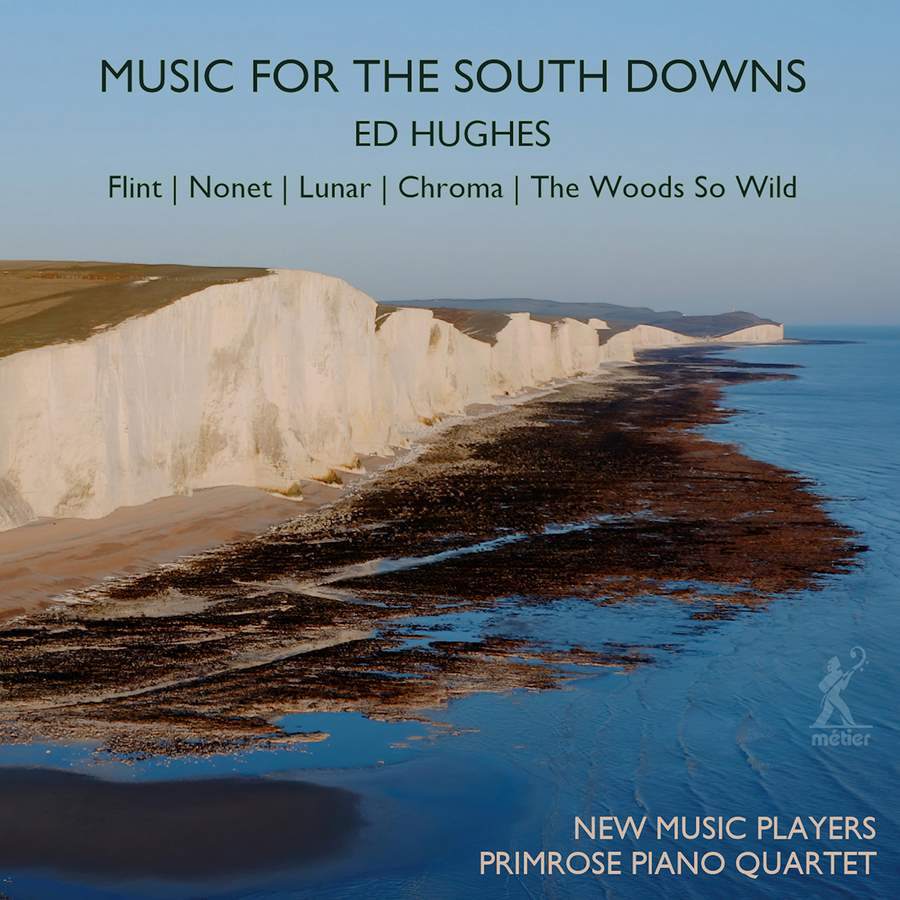
On Record – Primrose Piano Quartet, New Music Players – Ed Hughes: Music for the South Downs (Métier)

Primrose Piano Quartet [Susanne Stanzeleit (violin), Dorothea Vogel (viola) Andrew Fuller (cello) John Thwaites (piano)]; New Music Players / Ed Hughes

Ed Hughes
Chroma (1997)
Flint (2019)
Nonet (2020)
Lunar (2021)
The Woods So Wild (2020-21)

Métier msv28623 [68’32”]
Producer / Engineer David Marshalsea

Recorded 18 March 2021 at St John’s Smith Square, 28 October and 4 December 2021 at Attenborough Centre for Creative Arts, University of Sussex

Reviewed by Richard Whitehouse

What’s the story?

Métier continues its coverage of music by Ed Hughes (b1968) with a release of works partly inspired by and even permeated with the qualities of the South Downs, making for a cohesive selection whose five constituents are tellingly thrown into relief by having been so arranged.

What’s the music like?

Ed (formally Edward Dudley) Hughes has been an enriching presence on the UK new music scene since the BBC broadcast of his orchestral piece Crimson Flames marked him out as a name to watch over three decades ago. He has assembled a sizable as well as diverse body of work across a broad range of genres, one which reveals a notable awareness of the evolution of Western music not just over this past century but across what might reasonably be termed the ‘humanist’ tradition which stretches back through the Enlightenment to the Renaissance.

The present sequence opens with Flint that evokes the Sussex landscape in terms of natural cliff formations and man-made quarries. The three movements are pointedly distinct – often angular gestures of the first being contrasted with the restrained fervour of its successor (in which a local song once collected by George Butterworth threads it way across the content), before the third highlights solo violin for a texture whose shifting emphases add appreciably to its expressive impetus. Although written to complement a film by Sam Moore (which can be seen via Hughes’s website), Nonet is musically self-sufficient – whether in the undulating variety of incident in its initial ‘Con moto’, the sense of being side-tracked and even waylaid in the central ‘Tranquil’, or a gradual feeling of emergence then arrival in the final ‘Flowing’.

Very different in its concept is the Lunar diptych – inspired by Isamu Noguchi sculptures and juxtaposing the darkly translucent harmonies of ‘Lunar 1’ with the agile luminescent gestures of ‘Lunar 2’. The earliest work here, Chroma is also the most abstract in terms of content that derives meaning from its interplay of outward volatility with underlying calm; a process made manifest in the distinction between string quartet and string ensemble over much of its course. Finally, The Woods So Wild turns to the medium of piano quartet and a song from the Tudor era whose plangent modality is brought to bear on the animated melodic weave of its opening movement as on the harmonic eloquence of its central intermezzo – duly heading into a finale whose rhythmic intricacy does not prevent the song coming through affirmatively at the close.

Does it all work?

It does indeed. Without drawing attention to itself in technical terms, Hughes’s music has an understated virtuosity such as adds greatly to the attraction of those pieces featured here. The performances are audibly attuned to this music, whether those by the Primrose Piano Quartet (arguably the finest such ensemble in the UK) or New Music Players which Hughes founded over three decades ago. Nor does the sound, recorded at two different venues, leave anything to be desired in clarity and perspective. The composer has provided informative annotations.

Is it recommended?

Very much so. There are four earlier releases of Ed Hughes from Métier and those who have acquired some or all of these will want this new one too. Those new to his music will find the latest selection an appealing way into this composer and, as such, to be warmly recommended.

For further information on this release, and to purchase, visit the Divine Art website, and for more on Ed Hughes click here. Click on the artist names for more on the Primrose Piano Quartet and the New Music Players, and click here for the South Downs National Park website.

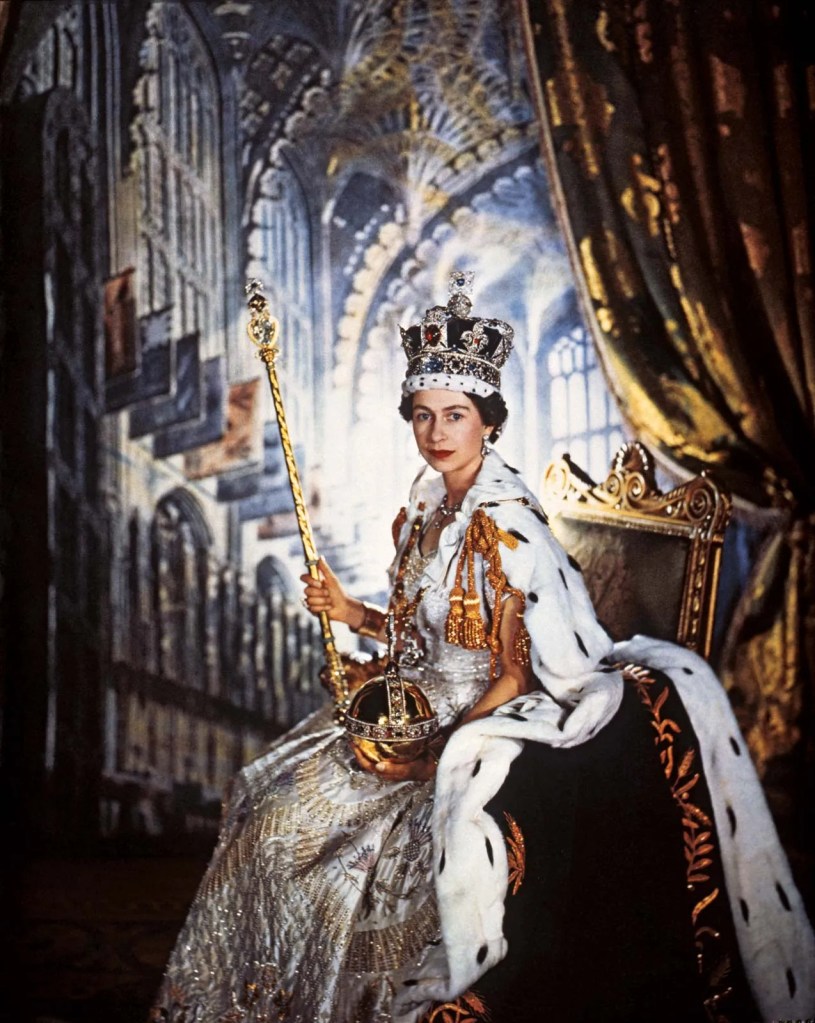
In Memoriam Queen Elizabeth II

Listening to Elgar’s Cello Concerto and remembering, in gratitude. RIP Queen Elizabeth II, and thank you for your life of service and example to the people of the United Kingdom.