Matthewdavid has been busy, with new album Mycelium Music readied for the end of April – and the On Mushrooms EP is a taster ahead of that release.
What’s the music like?
The title gives a strong implication of where this EP sits, but as with other releases from Matthewdavid it works of its own accord, as music that enhances mental wellbeing.
The tracks are cleverly structured, divided by bursts of white noise that mean they can segue into one another comfortably. The music teems with life, in spite of its relative stasis, and on tracks like Under A Tree the green shoots are easy to discern. Matthewdavid works his electrical material with all sorts of intriguing twists and turns.
A New Ambient swirls across the stereo picture, gone all too briefly, but Too High To Play Bear’s Campout is like a musical whirlpool. One4G starts in a calmer place before twisting upwards and away.
Does it all work?
It does, with very little weight – this is music for recharge and reparation.
Is it recommended?
It is – maybe not as a way in to Matthewdavid’s music, as earlier releases are more immediate and more obviously ambient. However On Mushrooms doesn’t need any extra curricular stimulant to work its magic.
Graves Fanfare Osborn The Biggest Thing I’ve Ever Squashed Sweeney Glisk Zisso A Standing-stonea Knibbs Strings Bilateral Maunders In The Land Of Hypocrisy Morgan-Williams Parti Di-ffinau Latimer Bellwether Werner Crossingsb Crayton Encore Singh Lament for the Earthc Baker The Radiance of the Spirit Järventausta Bourrée Arakelyan Prelude and Allegro Nobuto Egress James Come Show Them the Riverd Slater Unravelling the crimson sky Dearden Anthem Appleby Sonnet 43 Taylor-West Turning Points*
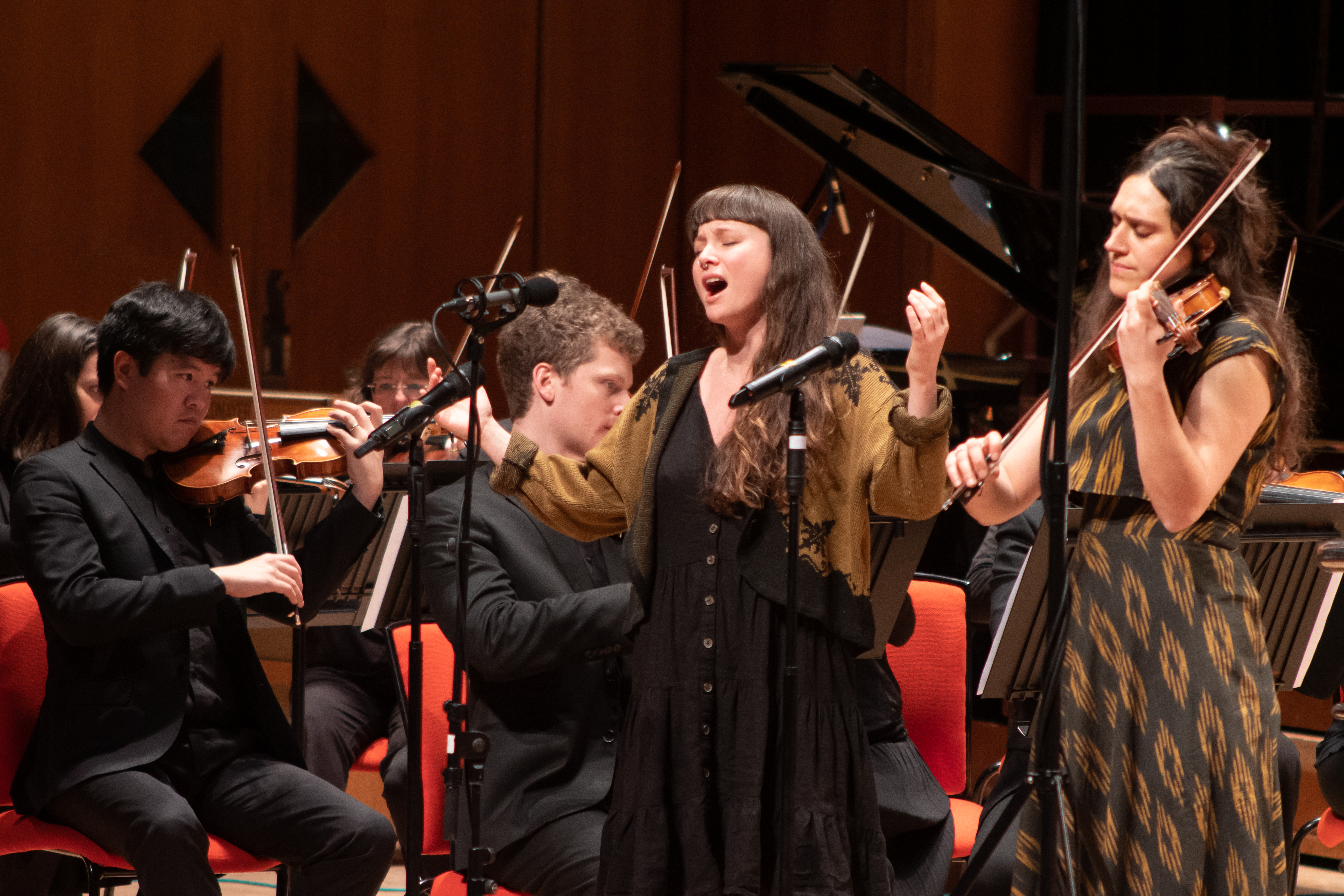
aYfat Soul Zisso, bHéloïse Werner, Bethan Lloyd, dMillicent B James (voices), cSimmy Singh (voice / violin), City of Birmingham Symphony Orchestra / Clark Rundell
Symphony Hall, Birmingham Sunday 29 January 2023 2.30pm
Reviewed by Richard Whitehouse Photos courtesy of (and with thanks to) Aphra Hiscock and Jenny Bestwick
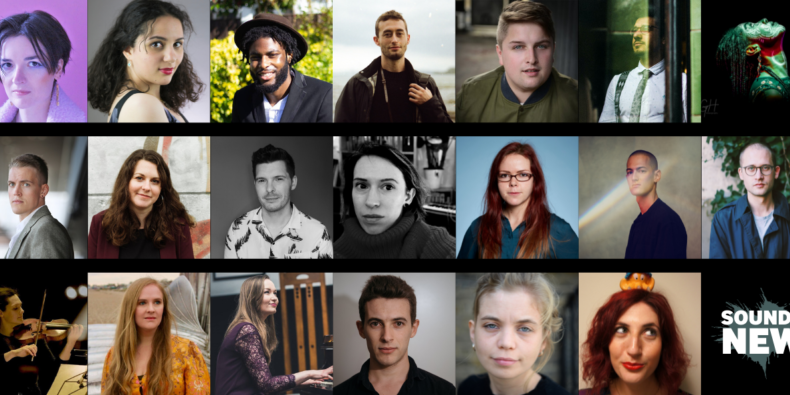
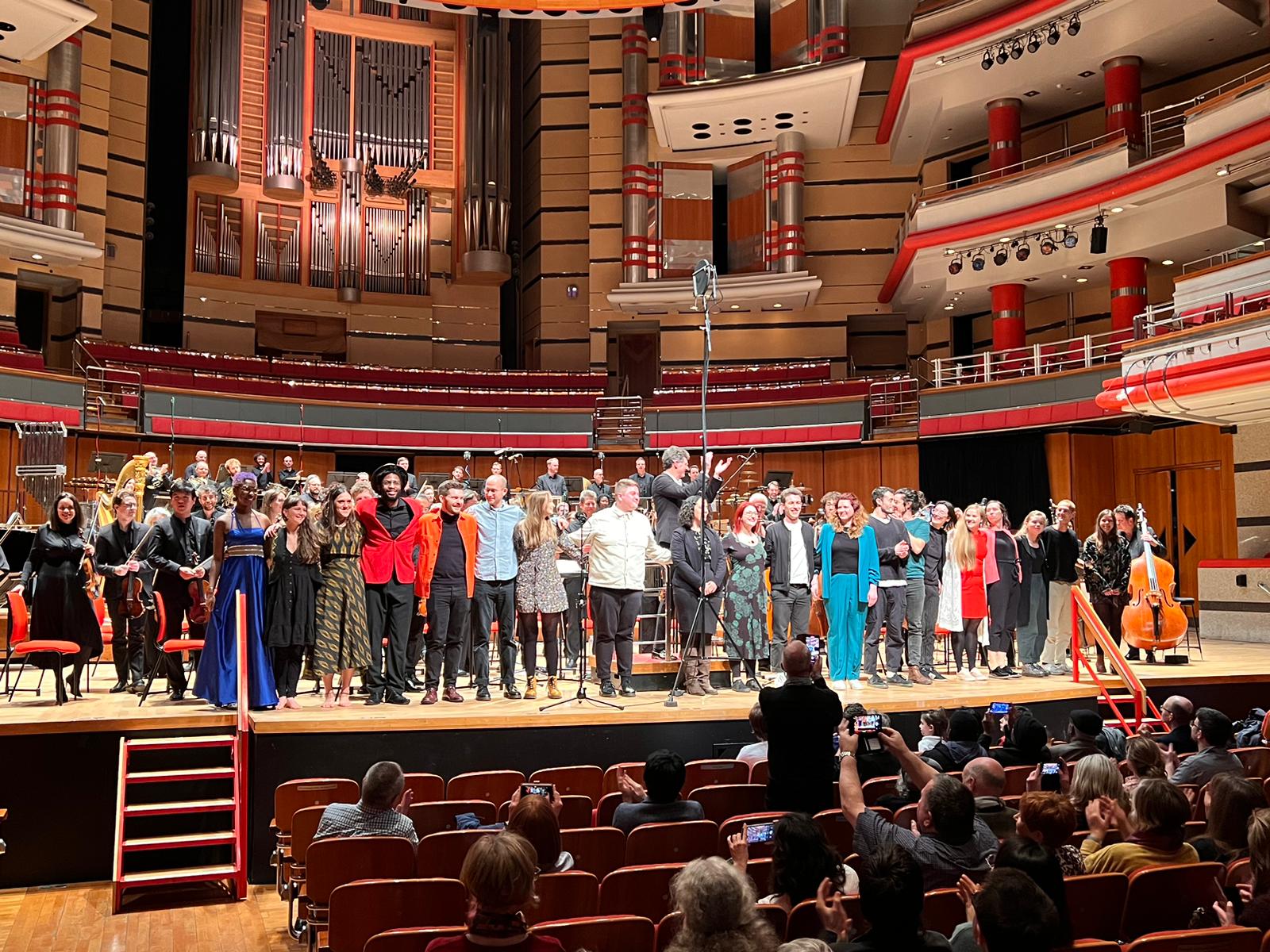
It might have been one of the few positive outcomes to come out of the pandemic, but the decision to programme these 20 pieces by young composers – commissioned by the City of Birmingham Symphony Orchestra as part of its Centenary Commissions – in a single concert rather than across several seasons, as originally intended, paid dividends in terms of highlighting what was an important strand of the orchestra’s activities and so enabled an overview of present-day creativity that would have been impossible within a more generalized context.
Just how the running-order was determined was unclear, but the various juxtapositions were almost always to the advantage of each piece. Benjamin Graves grasped the nettle with music all about becoming rather than being, and Laurence Osborn implied more than even anarchic humour in intricately enveloping textures. Aileen Sweeney favoured an unabashed cinematic outlook, while Yfat Soul Zisso took centre-stage for her demonstrative take on a relatively circumspect poem by Howard Skempton. Chloe Knibbs drew a halting eloquence from the interweaving string sections, in contrast to the vividly gesticulating essence that doubtless reflected the convictions of Florence Anne Maunders. There was an appealingly whimsical quality to the writing of Bethan Morgan-Williams, then a ruminative aspect to that by Ryan Latimer veering towards the hymnic. Héloïse Werner favoured a gestural approach whose vocalise brought continuity almost despite itself, before Stephane Crayton rounded off the first half with music whose brooding understatement seemed an ironic comment on its title.
Playing violin alongside Bethan Lloyd’s impulsive vocal, Simmy Singh offered a lament of insinuating elegance, then Tyriq Baker focussed on the strings for a study of no mean pathos. Joel Järventausta must have been pleased with the performance of and response to his deftly ominous piece, as too Kristina Arakelyan by the rendering of her diptych with its evocative writing for cor anglais. Ben Nobuto fairly revelled in his capricious portrayal of the concept of ‘exiting’, whereas Millicent B James provided an undeniably charismatic rendition of her text-based setting. Angela Elizabeth Slater intrigued the ear with her fastidiously oscillating textures, while Nathan James Dearden teased out those competing implications from the title of his piece with a tellingly sardonic touch, before Anna Appleby pitched her instrumental take on verse by Elizabeth Barrett at a thoughtfully oblique remove. Ironic that the closing piece was the only one to have been heard before the pandemic, but Liam Taylor-West duly pulled out the stops with music whose scintillating orchestration more than deserved revival.
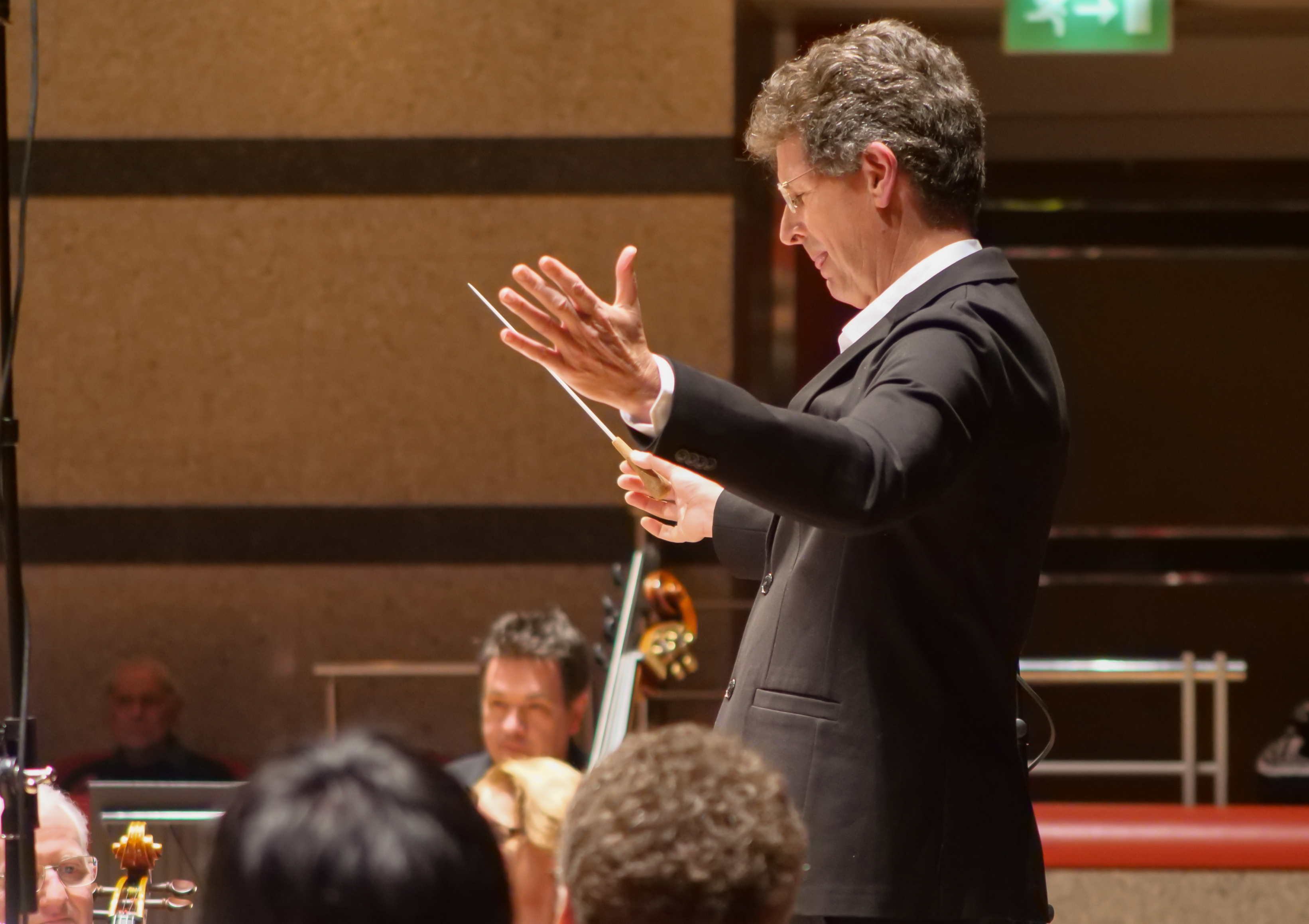
Throughout this programme, the CBSO gave its collective all over what was a considerable range of idioms – abetted by the assured conducting of Clark Rundell (above), who also introduced each half as well as providing continuity between items whenever necessary. Good to hear that the concert was being recorded by NMC Records for later digital release (with maybe an issue on CD too?), and all due credit to The John Feeney Charitable Trust for continuing to fund the orchestra almost seven decades after its first commission. The story continues…
You can read all about the 2022/23 season and book tickets at the CBSO website
Wagner Lohengrin – Prelude to Act One (1846) Beethoven Piano Concerto no.5 in E flat major Op. 73 ‘Emperor’ (1809) Prokofiev Symphony no.5 in B flat major Op. 100 (1944)
Cédric Tiberghien (piano), City of Birmingham Symphony Orchestra / Eduardo Strausser
Symphony Hall, Birmingham Wednesday 25 January 2023 2.15pm
Reviewed by Richard Whitehouse Picture of Eduardo Strausser (c) Peter Wallis
Is there a more evocative way to begin a concert than the Prelude to Wagner’s Lohengrin? The opera itself may fail (for the most part) to live up to the precedent set, but the quality of this piece has never been in doubt – with composers as distinct as Berlioz and Verdi having been captivated by its almost tangible atmosphere and counterpoint redolent of Palestrina in its supple inevitability. Under the assured direction of Eduardo Strausser, it made a fitting curtain-raiser to this afternoon’s concert by the City of Birmingham Symphony Orchestra.
It also provided a telling foil to Beethoven’s Fifth Piano Concerto that followed in the first half. Still the most popular of its composer’s such pieces, it is also nowadays the hardest to bring off – particularly the initial Allegro with its unabashed emotional rhetoric and overtly symphonic conception. Playing down the former aspect and rationalizing the latter, Cédric Tiberghien opted for a tensile and unaffected traversal which emphasized cohesion at the expense of grandeur – underlining just why Beethoven never again completed a concerto.
There was little to fault in Tiberghien’s take on the Adagio (save for a few errors to remind one that Beethoven’s slower music is by no means easier to play), and if the transition into the finale was less than spellbinding, that latter movement for the most part brought out the best in the rapport between pianist and conductor. The CBSO responded with the necessary rhythmic agility, and Tiberghien responded to the applause with excerpts from the Eroica Variations he has recently recorded as part of an edition of Beethoven’s works in this genre.
The engaging director of last year’s Viennese New Year concert, Strausser (above) clearly enjoys a rapport with this orchestra as was a hallmark of Prokofiev’s Fifth Symphony following the interval. Itself the most often heard of a diverse and often diffuse cycle (the ‘Classical’ more often encountered on recording than in concert), it presents notable difficulties of balance and pacing – notably the initial Andante, whose accumulating momentum needs careful handling so as not to congeal. Strausser duly had its measure, maintaining focus through to a seismic peroration – the impact from which carried over into a scherzo whose outer sections seemed more than unusually acerbic. Nor did this preclude a more genial response in the trio, its main theme held over from Romeo and Juliet and as captivating a melody as any by this composer.
That the Adagio is the emotional heart of this work only increases the need to prevent it from dragging, and Strausser’s sense of proportion ensured that the sense of dread made explicit at its climax was balanced by the serene eloquence towards its close. Heading (rightly) straight into finale, he steered a secure course through a movement whose poise is constantly being undercut by disruptive elements as take control in the coda – the composer’s perspective on imminent Soviet victory in the ‘Great Patriotic War’ remaining ambivalent even at the close.
A fine reading of a work whose stature is still questioned (and a reminder that Prokofiev’s Second Symphony still awaits its CBSO debut). Chief Conductor-designate Kazuki Yamada returns next week for an unlikely though appealing double-bill of Tchaikovsky and Holst.
Piano Sonata no.23 in F minor Op.57 ‘Appassionata’ for piano (1804-5, Beethoven aged 34)
1. Allegro assai 2. Andante con moto 3. Allegro ma non troppo – Presto
Dedication Count Franz von Brunswick
Duration 23″
Listen
written by Ben Hogwood
Background and Critical Reception
Even within Beethoven’s output, the Appassionata sonata is seen as a landmark. As Angela Hewitt writes in the booklet note for her recording of the work on Hyperion, it is a central part of Beethoven’s ‘heroic’ period, sat in publication order between the Eroica symphony and the Piano Concerto no.4, and at a time where Beethoven was taking risks.
Beethoven’s fellow composer and friend Ferdinand Ries recorded how he watched Beethoven at work in Baden. The two composers went for a walk, where Ries described a striking melody on the shawm – which Beethoven could not hear because of his rapidly advancing deafness. It turned out that he was preoccupied in any case, for on their return he immediately went to the keyboard, and played through the newly composed finale of the new sonata, Ries recounting a performance of ‘irresistible fire and mighty force’.
Writing in The Beethoven Companion, Harold Truscott asserts that ‘technically, apart from one or two passages, the work is not difficult to play…yet can still sound very brilliant. Its real difficulty, however, is control of its varied elements and of the great expressive power which is their sum.’
Angela Hewitt notes Beethoven’s holding back of this power until the finale – an increasingly notable feature of his writing. As Jan Swafford writes, ‘Beethoven had an incomparable skill for raising a movement to what seems an unsurpassable peak of excitement or tension, then to surpass it.’
Thoughts
In the Appassionata the risk taking can be seen everywhere you turn. It can be found in the work’s opening phrase, going down to the low ‘F’ exploiting the bigger range of Beethoven’s new Erard piano. It can be found in the stormy middle section of the first movement and the whirlwind figurations of the last, where the right hand is playing so fast it threatens to go off the end! It can also be found in the structural design, Beethoven writing a slow movement that acts initially as an equivalent to the hymnal slow movement in the Pathetique sonata, but ends up as a bridge to the finale. The consolation it was beginning to provide is wholly lost.
Its opening three notes give an immediate idea of the gravitas of the piece. They may be the notes of the F minor triad but they carry great weight – as Beethoven’s works in this key were wont to do. The first movement is compelling, the main theme littered with interruptions as though a battle is being waged between war and peace. The latter breaks out in the second movement, the hymnal motive both simple and moving, but soon gathering momentum as Beethoven finds he cannot stand still.
All is headed for a last movement of formidable power, unlike anything we have heard on the piano so far. The torrent of notes fly in the face of Truscott’s assertion that the piece is not difficult to play – but the language for the listener is unremitting and straightforward. At the end the Appassionata sets its listener down in a heap, all emotion spent.
Recordings used and Spotify links
Alfred Brendel (Philips) András Schiff (ECM) Angela Hewitt (Hyperion) Paul Badura-Skoda (Arcana) Stephen Kovacevich (EMI) Igor Levit (Sony Classical) Claudio Arrau (Philips) Daniel Barenboim (Deutsche Grammophon)
There are some towering interpretations of Beethoven’s masterpiece in this playlist, not least those by Emil Gilels, Claudio Arrau and Alfred Brendel. Andras Schiff and Angela Hewitt are also very fine. Paul Badura-Skoda secures authentic drama from his Broadwood piano, dating from a mere decade after the piece was written.
You can hear clips of Angela Hewitt’s recording at the Hyperion website
You can chart the Arcana Beethoven playlist as it grows, with one recommended version of each piece we listen to. Catch up here!
James Yorkston had no plans for a sequel to his 2021 album with The Second Hand Orchestra – but on writing new songs on his piano, and sharing them with the orchestra’s leader Karl-Jonas Winqvist, they realised the opportunity was ripe for a guest singer to enhance the music – and Winqvist suggested The Cardigans’ singer Nina Persson.
The pairing operated in relatively relaxed conditions, with no overriding concept other than the wish to sing a collection of folk-based songs. The orchestral parts are fresh, semi-improvised by the players on the day of recording.
What’s the music like?
This is a joyous collaboration, one that finds the singers and musicians finishing each other’s sentences as though they have been working together all their lives.
Both Yorkston and Persson are natural storytellers, and from Nina’s first verse on Sam and Jeanie McGreagor, the listener hangs on each tale and musical nuance. As the album progresses we get to know their vulnerable sides, but also some touches of light humour, the two singers bouncing off each other’s musical qualities. Try Mary and you will see how well their voices are matched.
There are singalong refrains in a lot of the songs, with the communal Peter Paulo Van Der Heyden a favourite, and in Keeping Up With The Grandchildren an extended guitar soliloquy to complement the vulnerable vocals. Most of the songs have the sort of childlike simplicity you might associate with folk music at its most raw, but the arrangements can propel these through unexpectedly complex forms, as they do in The Heavy Lyric Police.
As for The Second Hand Orchestra, their fresh contributions are beautifully delivered – notably the violin in An Upturned Crab, and Karl-Jonas Winqvist ensures total respect for the lyrical material throughout, moving from a single, plaintive instrument to the full force of an orchestra rich with woodwind colour.
“This is the time”, they sing on the winsome Hold Out For Love – the most wonderful, singalong moment, where everything is suddenly right with the world.
Does it all work?
Yes – mostly because the collaboration is so unforced, and the music making relaxed. That shouldn’t, however, be mistaken for complacency, for both singers deliver deeply felt songs, their voices ideally matched. The orchestrations are beautiful and consistently rewarding.
Is it recommended?
It is – an ideal match of musicians from the northern territories, doing what they do best – and clearly enjoying it immensely.





 Arcana.fm