On Record – Bamberger Symphoniker / Jakub Hrůša – Bruckner 4: The Three Versions (Accentus)

Bruckner (ed. Korstvedt)
Symphony no. 4 in E flat major ‘Romantic’ – 1874, rev. 1875/6; 1878-80, rev, 1881; 1887, rev. 1888. Finales – 1878 ‘Volksfest’; 1881. Earlier drafts and versions

Bamberger Symphoniker / Jakub Hrůša

Accentus Music ACC30533 [four discs, four hours 34 minutes]
Producers: Sebastian Braun, Bernhard Albrecht; Engineers: Markus Spatz, Christian Jaeger
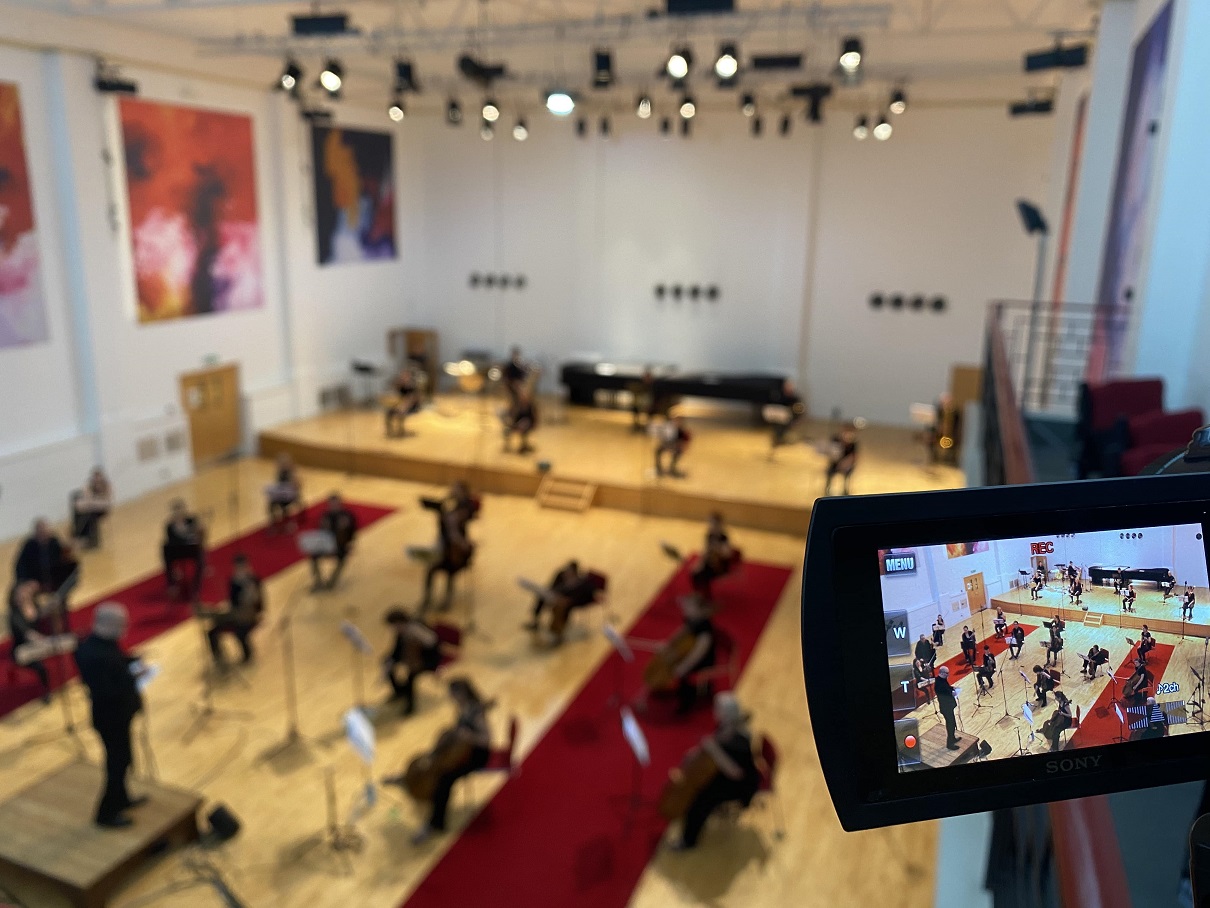
Date: November 2020 at Joseph-Keilberth-Saal, Konzerthalle, Bamberg

Reviewed by Richard Whitehouse

What’s the story?

Jakub Hrůša directs the Bamberg Symphony Orchestra – whose chief conductor he has been since 2016 – in this survey of Bruckner’s Fourth Symphony: three ‘versions’ of the complete work, together with two additional versions of the finale plus over a dozen sundry excerpts.

What’s the music like?

Evidently this project had its basis in a period of lockdown during the Covid pandemic, thus enabling a focus on one specific piece such as would have been unfeasible under more usual working conditions. How one responds to it depends, firstly, on how one sees the legitimacy of the ever-increasing editions of Bruckner symphonies; secondly, on the qualities – whether interpretative or executive – of these performances. Certainly, the identity of this conductor with this composer – whose music he has not previously recorded – can hardly be gainsaid.

Undoubtedly the highlight here is the 1874 version, of which this is the first recording in its 1876 revision – significant in that Bruckner clearly intended for the work to be heard in this guise, rather than its being a ‘first attempt’ shelved on completion. Hrůša might have taken the opening movement at a swifter underlying tempo, but its relatively prolix course is well articulated; as is that of the Andante whose course might seem circuitous compared to later versions, but which eschews discursiveness even so. Its close, moreover, provides a catalyst for the scherzo: too often dismissed as a failure, but recklessly imaginative in its expressive character and benefitting here from the revision’s excision of those pauses between sections. Even finer here is the finale, one whose supposedly lightweight content belies its rhythmic propulsion or a stealthily accumulating momentum unequalled by either revision – certainly not in so viscerally energetic a coda. The Bambergers give their all, while confirming that what Bruckner got wrong here was not necessarily put right in either of those later versions.

The 1878-80 version has become the preferred option in the post-war era, the streamlined trajectories of its initial two movements being more easily absorbed by listeners and more comfortably navigated by the musicians. Without yielding any revelations, Hrůša has their measure – not least a magisterially projected coda in the former or an inexorable approach   to the latter’s climax. The spacious acoustic of Joseph-Keilberth-Saal endows a convincing overall perspective but not the ultimate clarity, such as marginally obscures cross-rhythmic interplay of the brass during the Scherzo’s cumulative passages but ensures an ethereal aura in its trio. The Finale emerges broadly and patiently: maybe too much depending on whether one hears this version as the natural outcome of its music’s thematic potential, or an attempt to make this movement a weightier and more serious culmination that leaves an inevitable self-consciousness in its wake. Hrůša seems to have his doubts, though not in a fervent and headily cumulative account of what is undeniably among the most eloquent Bruckner codas.

The 1888 version is that by which earlier generations came to know this piece, making its latter-day rehabilitation the vindication of Bruckner’s final thoughts or an editorial cash-in according to vantage. Whether or not determined primarily by the composer or by his self-appointed acolytes, the cloyingly enriched harmony or theatrical reorchestrations speak of     a desire to ‘sell’ the ‘Romantic’ as a would-be-Wagnerian equivalent to the symphonies of Brahms. Qualities, moreover, which Hrůša tacitly acknowledges in a dependable but often detached reading – tacitly underlining the myriad textural changes without ever seeking to condone them. Neither does he shirk from following those inane truncations as the Scherzo proceeds into then out of its trio, such as conductors who otherwise adhered to this version were wont to ignore, nor the excisions meted out on the Finale as only serve to fracture an already unwieldy and formally disjunct design. As with the final revisions of his first three symphonies, this is worth hearing in context but not as means to any deeper appreciation.

The fourth disc consists of 14 excerpts, mainly of variants from the second version Bruckner amended during the revision process. Few will need to hear these more than twice, as is also true of an 1881 finale differing only incrementally from that found in the main performance (and which would have been more worthwhile had it featured the coda’s 1886 amendment). More valuable is the inclusion of the Volksfest finale as originally intended for the second version, and which Bruckner rightly recognized as a transitional version towards one that he was never to get quite right. As it stands, though, this alternation between the humorous and portentous makes an engaging piece in its own right; one that could even now find favour as a concert overture or even symphonic poem such as the composer never actually envisaged.

Does it all work?

That depends on whether you regard it as legitimate to release a set as contains three versions of just one piece. Editorial reservations as there are focus on whether Benjamin Korstvedt has exceeded his remit by presenting his editions as being of comparable validity, which is hardly unknown in latter-day academic practice (Simon Rattle’s account of this work, due from LSO Live, takes a similar if less inclusive approach using the editions of Benjamin-Gunnar Cohrs). As to performances, those who already have accounts of the 1874 version by Michael Gielen (SWF Music) or Simone Young (Oehms Classics), the 1887 version by Osmo Vänskä (BIS) and 1878-80 version by upward of a dozen conductors can rest content. Hrůša is evidently a Bruknerian of note, however, and his perspective on this piece is well worth getting to know.

Is it recommended?

Indeed. The presentation, four discs in a slipcase plus a booklet featuring detailed notes from Korstvedt and a thoughtful interview with the conductor, is stylishly economical. Those most redoubtable among the ‘usual suspects’ might dissent, but this project is its own justification. Note too that Hrůša and the Bamberg have a recording of the ‘First’ Symphony by Hans Rott – now regarded as the aesthetic link between Bruckner and Mahler, pertinently coupled here with the former’s Symphonic Prelude and the latter’s Blumine – due out on DG this October.

For further information on this release, you can visit the Accentus website, and you can purchase by clicking on the link from Presto Music. Click on the names for more information on the Bamberg Symphoniker and their chief conductor Jakub Hrůša

Switched On – Arp: New Pleasures (Mexican Summer)

by Ben Hogwood

What’s the story?

Arp, the alias for American producer Alexis Georgopoulos, made a very positive impression with his 2018 album ZEBRA, the first in a projected trilogy for the Mexican Summer label. Where that record stepped into a lush landscape, its sequel makes its way to the heart of the city. The press release talks in florid terms of “the flinty glow of commerce, the sleek rhythms of industrialization, and the cool finesse of brutalism”, all leaving their imprint.

Once again Arp uses analogue synthesizers as his mode of expression, with the list of instruments including a whole squad of keyboards from Fairlights to Moogs, 707s to 909s. In spite of the number of instruments used, the objective for Arp is to make incisive music that on occasion moves to the experimental.

What’s the music like?

Extremely enjoyable, and full of human emotion in spite of its wholly electronic origins. Although set in the city some of these textures are still wide open, conveying a giddy excitement at their surroundings. There are some wonderfully rich colours from the analogue equipment, which Arp uses to the extent of its descriptive powers.

The busy activity of the city can be glimpsed on Sponge (for Miyake) with figures flitting across the stereo picture, or in the rolling drums and melodic nuggets of New Pleasures itself. The swirly goings-on of i: /o are complemented by a bendy bass bringing reminders of Paul Young, while Le Palace has some lovely chunky handicaps and airy lines that also reek of the 1980s…in a good way!

Traitor (Dub) has a good disco vibe from that era, as does Embassy Disco, which elegantly refers towards Kraftwerk but with some attractive contributions from the marimba. Cloud Storage proves to be a weird and wonderful ending of some woozy keyboard thoughts.

The mood running through the album is consistently positive and amiable, but never coasting – quite the opposite, as Arp packs his music with bite-sized riffs, rich bass sounds and subtle percussion. Often the mood leans towards the Balearic, suggesting a hot city, which is also implied by the nocturnal mood of many of the instrumentals.

Does it all work?

Yes, pretty much, and not least because New Pleasures reveals more melodic layers with each listen, showing an intricately constructed patchwork of complementary riffs and moods.

Is it recommended?

Yes – a fine complement to ZEBRA. The sequel, and the conclusion of the trilogy, is already eagerly awaited.

Listen

Buy

On paper – Andrew Mellor: The Northern Silence – Journeys in Nordic Music and Culture (Yale University Press)

The Northern Silence – Journeys in Nordic Culture and Music by Andrew Mellor

Yale University Press [hardback, 320pp, 16 b/w illustrations, ISBN 9780300254402, £18.99]

Reviewed by Richard Whitehouse

With their generous levels of state funding and – outwardly at least – a high degree of social cohesion, the Nordic countries continue to set the bar for might be thought of as ‘advanced’ societies. That much of what has been written (English or otherwise) about them is derived from internal sources adds to a feeling of self-sustaining complacency which Andrew Mellor, having worked as a freelance music journalist in or around Copenhagen for almost a decade, is well equipped to consider, corroborate or, when necessary, correct in The Northern Silence.

Its subtitle, Journeys in Nordic Music and Culture, is variously significant – Mellor having made it his brief to travel as extensively and cover as inclusively as possible the many outlets which exist in Scandinavia (Denmark, Norway, and Sweden) as well as Finland, Iceland and the Faroe Islands. Although much of the volume’s content ostensibly derives from articles or interviews written for numerous magazines and journals (not least Gramophone, of which he was reviews editor before heading northwards), Mellor has been scrupulous with organizing then integrating his material so there is never any sense of sources thrown together arbitrarily. Rather, the five main chapters unfold as a sequence of topics or subjects related, even if only tangentially, to the heading in question and can be read sectionally or complete as preferred.

The first chapter duly proceeds as overviews of those four larger countries as experienced by a sympathetic outsider and focusses on four musical works whose attributes could be taken as exemplifying a national context. Thus, the bracing harmonic interplay of archaic and modern in Grieg’s Four Psalms, more provocative fusion of tradition with sophistication in Sibelius’s En Saga, head-on confrontation with ingrained parochialism in Nielsen’s Sinfonia Espansiva, then the acerbic sideswipe at bourgeois conformism in Atterberg’s Dollar Symphony. Not all of these ‘case studies’ are pursued throughout what follows, but their underlying premises as typifying the essence of Norway, Finland, Denmark and Sweden holds good in each instance. Icelandic music is represented by the juxtaposing of characteristics as found in Jón Leifs and Björk, whose output (if not personas) may have more in common than Mellor cares to admit, and Sunleif Rasmussen exemplifies that of the Faroes in terms of a culture whose making up for lost time might yet result in the most potent amalgam of any Nordic state relative to size.

Nor is ‘culture’ defined in exclusivist terms – Mellor always mindful to probe the connection between music and the plastic arts, most notably architecture or design, through which these countries are known even more directly to the wider world. The sixth chapter is particularly valuable in this respect, and those who have marvelled at the design of Helsinki’s Finlandia Hall while cringing at its acoustic will likely derive food-for-thought on reading about Alvar Aalto’s architectural convictions being a latter-day parallel to those of Sibelius as composer. That the aural and the visual have often had so close an accommodation in these countries is hardly a surprise given its common derivation from their environment, and the ease by which Mellor points up such lateral associations is a testament to his immersion in all things Nordic.

That said, it is those musical legacies of Nielsen and, above all, Sibelius which dominate the discourse almost a century after the death of the one and the ‘silence’ of the other. Admirable as Mellor is in identifying Nielsen’s emergence against a backdrop of Austro-German norms, his desire to convey that of Sibelius from a similar vantage means the crucial role of Russian music in the honing of his idiom is overlooked; odd given the acknowledgment elsewhere of Finnish culture being forged from the crucible that was Russian political dominance. In other ways this is evidently a book of its era – composers such as Rosenberg, Holmboe or Sallinen get short shrift, though the ‘dark horse’ that is Fartein Valen warrants discussion through his masterly Second Piano Sonata. Of more recent figures, Kaija Saariaho and Magnus Lindberg are not unreasonably surveyed, but Mellor proves no more immune to the blandishments of Anders Hillborg than most; when Sweden has any number of fine second-rate figures such as Anders Eliasson, to emphasize so passably third-rate a figure seems the more unfortunate.

Elsewhere, Mellor can be (surprisingly?) selective as to his inclusions. The evolution of Per Nørgård through to his trail-blazing Second Symphony is well detailed, but there is hardly a mention of his volatile later music – not least the Fifth Symphony which reassesses the genre as decisively as any such piece from the late 20th century, though its 21st-century parallel in the Third Symphony of Seppo Pohjola is included. A comprehensive survey of Nordic music is hardly Mellor’s intention, as he mentions near the outset when ‘‘…by necessity, plenty of talented and important musicians are left out’’, but a feeling persists such omissions may be because they do not accord with the Nordic perspective that he is keen to convey. One hopes his thoughts on such inspired misfits as Rued Langgaard find their place in a future volume.

In other respects, Mellor might be thought misguided in his even-handedness. Sympathetic as Atterberg may have been to aspects of Nazi-ism, to criticize him for rendering the term Volk as ‘people’ rather than Aryan ignores the fact the latter definition had been in common usage in Europe, United States and, moreover, the Soviet Union over several generations. Also, his criticism of Danish paper Jyllands-Posten for its Mohammad parody misses the point that the confronting of institutions, religious or otherwise, is necessarily a facet of vibrant democracy.

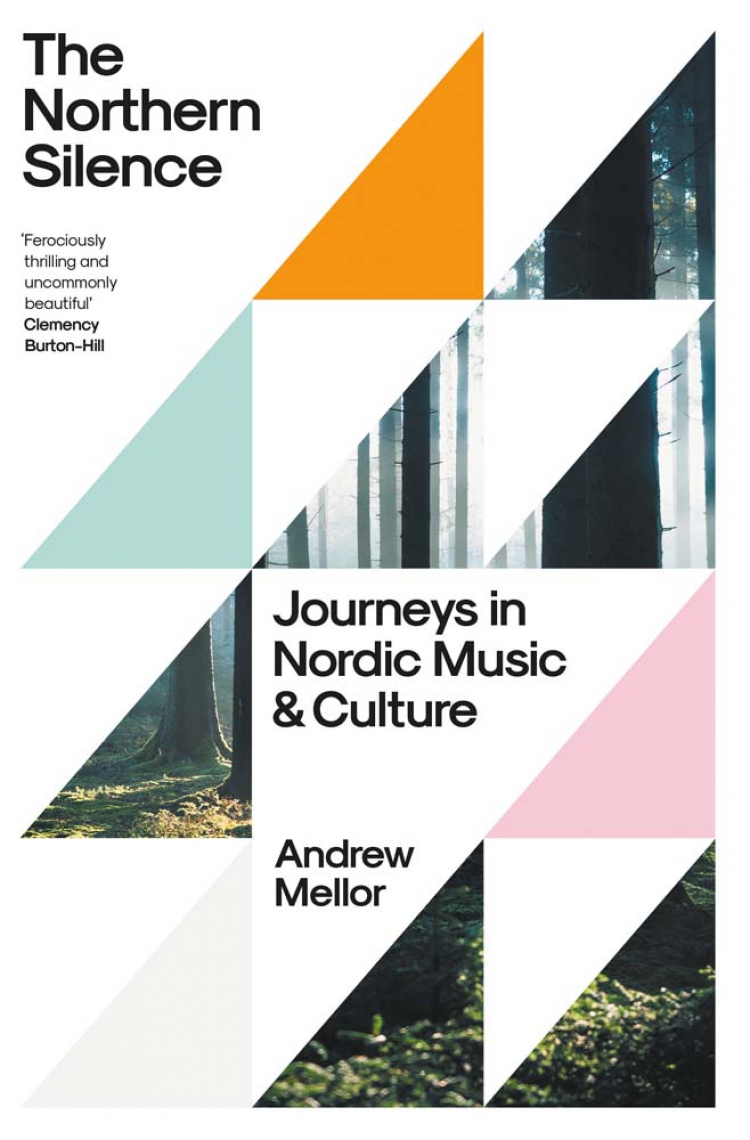
As stylishly presented as the Nordic textiles on its cover and admirably edited (but just what is Sibelius’s String Quartet in E minor?), this absorbing read says a great deal for Mellor’s breadth of outlook and his depth of sympathies. In the Prelude and Postlude, the reaching-out of Sibelius’s masterpiece Tapiola towards silence is pertinently considered as exemplifying Nordic culture. Hopefully this book’s authorial voice will stay resilient for a long while yet.

For information on purchasing this book, head to the Yale University or Waterstones websites. You can also listen to a podcast interview with the author at the Gramophone website

Switched On – Various Artists: Shapes: Spectrum (Tru Thoughts)

What’s the story?

After 23 years there is something immensely reassuring about the annual appearance of the Tru Thoughts label showcase. The ‘Shapes’ series has always felt like a holiday present, containing as it does a huge amount of highlights and remixes, generously sourced and sequenced by label founder Robert Luis.

The Spectrum edition collects together 35 tracks that show off the depth and breadth of the music made on the label, from stalwart artists such as Quantic, Alice Russell and Anchorsong through to new sounds from Ebi Soda, Anushka and Tiawa. This time around there is an exclusive in the form of Divine Elevation, a new track from Think Tonk.

What’s the music like?

Thoroughly enjoyable – and ideally sequenced by the man who knows the music best. Robert Luis has a really good knack for ebb and flow, in this case keeping the musical temperature high as he moves between slower, smoky numbers and nippy remixes taking in drum ‘n’ bass.

Early highlights include Palm Skin Productions, providing a moment of calming magic with The Sword Will Die, a downtempo epic that develops unexpectedly sharp edges. Quantic provides a notable highlight with Nidia Góngora, and the richly scored Mucamba, while Alice Russell’s Heartbreaker has characteristically brilliant vocals but also a memorable trumpet contribution.

Luis is happy to include some really substantial mixes here, one of which is a dub cracker in the form of Sefi Zisling’s The Sky Sings, reworked by Obar Nenor. Meanwhile the sound of Afronaut channelling P-funk on How It Goes is very welcome.

Other highlights include the samba infused A Pomba Girou, from Zero dB via the remixing desk of Austin Ato, Rebecca Vasmant’s Dance Yourself Free which opens out beautifully, then the WheelUP remix of Tiawa’s Soldiers, an easy synth based groove. There is offbeat soulful goodness from MELONYX, then a lovely warmth to the STR4TA remix of Anushka’s Bad Weather, one of the choicest moments among the 35. The good vibes spread to the cool Again Again by Kuna Maze, the V.B. Kühl remix of sUb_modU’s Gravity and the hypnotic Daz-I-Kue remix of WheelUP’s Fusion, looping Bembe Segue’s vocal nicely.

Meanwhile the exclusive, Think Tonk’s Divine Elevation, cuts a sharp figure with its edgy breaks and serrated bassline.

Does it all work?

It does. Many label compilations have gone the way of the playlist, but Tru Thoughts have their presentation down to a tee, and this is an excellent and broad-minded selection of music. Not only that, there will be a vinyl release of selected tracks in October.

Is it recommended?

Definitely. Label devotees will snap it up, while those new to Tru Thoughts are in for a treat.

Listen

Buy

Online concert – English Symphony Orchestra / Kenneth Woods: Music from Wyastone – Sibelius: Symphony no.6 & Tapiola

Sibelius Symphony no.6 in D minor Op.104 (1923); Tapiola Op.112 (1926)

English Symphony Orchestra / Kenneth Woods

Recorded at Wyastone Concert Hall, Monmouth, 1-2 March 2022

by Richard Whitehouse

A cycle of Sibelius symphonies by the English Symphony Orchestra got underway last year with an impressive account of the Seventh, making this second instalment the more pertinent for showing just how the composer had arrived at that work and where he went from there.

Only if the Sixth Symphony is viewed as neo-classical does it feel elusive, rather than a deft reformulation of Classical precepts as here. The first movement duly unfolded as a seamless evolution whose emotional contrasts are incidental – Kenneth Woods ensuring its purposeful course complemented the circling repetition of the following intermezzo, with its speculative variations upon that almost casual opening gesture. Ideally paced, the scherzo yielded a more incisive tone which the finale then pursued in a refracted sonata design as gained intensity up to its climactic mid-point. Tension dropped momentarily here, quickly restored in a disarming reprise of its opening and a coda whose evanescence was well conveyed; a reminder Sibelius Six is as much about eschewal of beginnings and endings in its seeking after a new cohesion.

A suitably expanded ESO then tackled Tapiola – Sibelius’s last completed major work, whose prefatory quatrain implies an elemental aspect duly rendered through the near/total absence of transition in music of incessant evolution. A quality to the fore in this perceptive reading with Woods finding the right balance between formal unity and expressive diversity throughout its underlying course. Just occasionally there was a lack of that ‘otherness’ as endows this music with its uniquely disquieting aura, yet a steadily accumulating momentum was rarely in doubt towards the seething climax, then a string threnody whose anguish can bestow only the most tenuous of benedictions. A reminder, too, that not the least reason Sibelius might have failed to complete his Eighth Symphony was because he had already realized it in the present work.

The ESO being heard to advantage in the spacious clarity of Wyastone Hall, these accounts will be worth getting to know on commercial release (with the Seventh Symphony) early next year, when this cycle will itself continue with recordings of the Fourth and Fifth Symphonies

These works are available for viewing on the English Symphony Orchestra website from 29 July – 1 August, then through ESO Digital by way of a subscription. Meanwhile click on the names for more on the English Symphony Orchestra and Kenneth Woods