Switched On – The Utopia Strong: International Treasure (Rocket Recordings)

reviewed by Ben Hogwood

What’s the story?

Steve Davis, Kavus Torabi and Mike York made a strong impression on their debut in 2018 as The Utopia Strong – but International Treasure confirms they were only just getting started.

Now their line-up is established, Davis has confirmed what it all means: “I see myself as a strong midfielder, or a centre back. Kavus and Mike are like the Lionel Messi or Ronaldo in the equation, and I’m setting situations up for them.” This modest appraisal gives a clue to Davis’s own role with the modular electronic backdrops, which are so important to the more improvisatory work that goes on up front.

International Treasure, the trio’s second album, takes them further along a journey which has already explored more musical dimensions than they thought possible.

What’s the music like?

International Treasure has a strong emotional pull throughout its nine tracks. It is also difficult to place stylistically, which proves to be one of its strongest selling points. At no point does it feel like the record was placed under any restrictions, and yet its musical progress is carefully managed at every turn, creating a rare intensity.

Another feature of the trio’s work is the vivid colouring they apply to the sounds, which operate as strong primary musical colours. This is in part due to Torabi’s acquisition of a guzheng (a Chinese plucked zither) which is used on Shepherdess, and the set of pipes and wind instruments York brings to the table, like an updated version of the Penguin Café Orchestra.

Does it all work?

It certainly does. There are some fascinating colours and tableaus presented here, each of them handsomely rewarding repeated listening.

Is it recommended?

Yes – as indeed is the first album. If you’re an electronic music devotee then this is a mandatory purchase, and a sign that even greater things lie ahead for the unlikely trio.

Listen & Buy
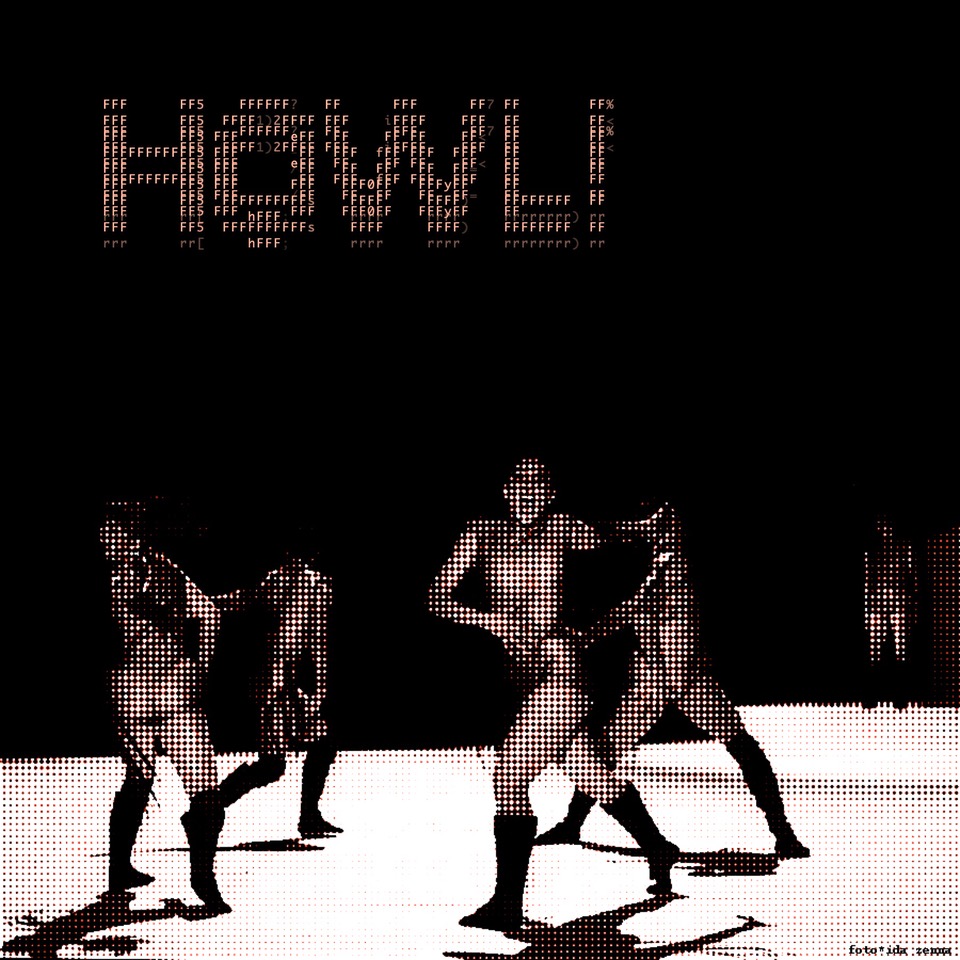
Switched On – Gabriel Prokofiev: Howl! (Oscillations)

reviewed by Ben Hogwood

What’s the story?

The roots of Howl lie in the ‘Arab Spring’, and also Allen Ginsberg’s poem of the same name from the mid-1950s. It is a five-part composition exploring the use of recent technological forms for protest and expression, and has already made itself a history in terms of real life protests.

Gabriel Prokofiev originally conceived the piece as a score for the choreographer Maurice Causey, and its first performance in Hong Kong was sadly adjacent to the independence protests. Now it has a raw significance in opposition to the Russian invasion of Ukraine, especially with protesting forbidden in Russia.

Prokofiev uses the rich tones of an ARP Odyssey synthesizer, filtering and layering its sounds to produce a wide variety of tones. Complementing these are the clarinet of Linus YS Fung, who took part in that first Hong Kong performance, and Yury Revich, whose violin adds a sensitive, songful treble to the wrought second part, Separation.

What’s the music like?

There is a great deal of first-hand angst in this music, and Prokofiev makes his protest in the strongest possible musical way.  The synthesizer tones fulfil several functions here – first of all to confront, which they do from the outset, but also to provide unexpected comfort when the sounds swell and get warmer.

Howl springs forward with purpose, its first section (Agitprop) crackling with serrated figures that ricochet across the stereo picture. The all-encompassing synth tone dominates to start with, on occasion sounding like the malfunctioning of a big machine or a computer program gone wrong.

Linus YS Fung makes striking contributions to the Separation section, where the interference from the electronics contrasts with the clarinet’s probing, sonorous tones. The following Swarm section is extremely descriptive, painting the assembling of an ominous army like the Martians in War Of The Worlds.

Pulse presents a bleak picture in response, with harmonies that are watchful and fearful but then grow in timbre and intensity. Finally Afterlude feels like an injection of positive energy, offering a step out of trouble.

Does it all work?

Yes, emphatically. This is uncompromising music, facing its problems with unwavering surety. It certainly isn’t for every moment in the day, but Prokofiev offers enough light amongst the shade to make an effective five-part suite.

Is it recommended?

Yes, and with a little necessary caution due to its intensity, volume and frequency. What is beyond doubt is that Howl – sadly – is music of necessity, made for these inhumane times.

Listen

Buy

Beyoncé’s Break My Soul – making house music all night long

by Ben Hogwood

Last week we saw the return of Beyoncé with her first new music in three years – and as so often happens with artists of her standing and calibre, it didn’t take the direction everyone was anticipating:

In fact, Break My Soul is something of a history lesson in dance music, and could have been released at any time in the last 35 years. That is definitely not a criticism, as the music sounds fresh out of the studio, but in using a sample of classic house music the former Destiny’s Child singer has put the focus firmly on recent American music history.

The principal sample on Break My Soul is the Robin S classic Show Me Love, in its 1992 Stonebridge club mix form:

Several records have sampled it of late, including Craig David on My Heart’s Been Waiting For You (where he also namechecks the song in the lyrics) and Charli XCX’s Used To Show Me, both taking the main hook of the track for their inspiration. Beyoncé has been a bit more subtle, lifting just a short snippet from the middle of the riff.

Other records come to mind when hearing Break My Soul for the first time, over and above Show Me Love. Firstly, there are some very similar vocal techniques used in the early Chicago house classic Jack Your Body, the genre-defining track from Steve ‘Silk’ Hurley – which also happens to be in the same key:

Detroit, too, is not far off where influences are concerned. I was put in mind of this Gospel-flavoured treat from Terrence Parker a few years back:

There is no suggestion that Beyoncé, or her writers (principally Tricky Stewart and The-Dream) have copied any of these records, more an observation that they have respectfully mined a long-standing tradition of house music influence, using its heritage to create something that could only be a Beyoncé song.

It will be interesting to chart the direction of the album, as house music gains an ever-greater hold on this year’s new American music.

In concert – Janai Brugger, Karen Cargill, CBSO Chorus & CBSO / Markus Stenz: Mahler ‘Resurrection’ Symphony

CBSO season finale: Mahler.

Mahler Symphony no.2 in C minor ‘Resurrection’ (1888-94)

Janai Brugger (soprano), Karen Cargill (mezzo-soprano), CBSO Chorus, City of Birmingham Symphony Orchestra / Markus Stenz

Symphony Hall, Birmingham
Saturday 25 June 2022

Written by Richard Whitehouse Photos courtesy of Beki Smith

At the end of another season by the City of Birmingham Symphony Orchestra what could be more fitting than the symphony to have been programmed by the orchestra’s last five principal conductors, defining the Simon Rattle era and been scheduled during the majority of seasons ever since?

Tonight’s performance (and that on the previous Wednesday) was to have been conducted by Mirga Gražinytė-Tyla, but maternity leave occasioned an infrequent UK appearance (at least since his highly regarded tenure with London Sinfonietta in the mid-1990s) for Markus Stenz, who has recorded a Mahler cycle with the Gürzenich Orchestra of Cologne as centrepiece of his discography majoring on 20th-century music and that of the post-war era. A ‘Resurrection’, indeed, where this work’s ‘darkness to light’ trajectory seemed by no means a fait accompli.

Many are the conductors who, even now, ride roughshod across the first movement’s fraught trajectory or fall victim to a deceptively sectional unfolding; under Stenz, there was no doubt as to the cohesion with which dramatic and pastoral elements were drawn into an integrated and dynamic whole. Suffused if not overloaded with pathos, those closing pages carried over the ensuing (two-minute) pause into an Andante whose alternation of the genial and ominous was pointedly but never self-consciously evident. Felicitous playing here from CBSO strings and woodwind, then by the brass in a scherzo whose barbed irony and ‘dancing on a volcano’ volatility was tangible. Stenz was right to proceed directly through the latter four movements with minimal pause – so ensuring an intensifying emotional curve into those conflicts ahead.

First, Karen Cargill made for an eloquent though not ideally steady exponent of the ‘Urlicht’ setting with its calm before the storm of the vast closing movement. Positioned at upper left of the platform, she and Janai Brugger gave of their best in a setting of Friedrich Klopstock’s (suitably Mahler-ized) hymn Die Auferstehung where the relatively lean CBSO Chorus gave notice of its long familiarity in this music. The route taken there brought out the best from the CBSO but also Stenz’s interpretive focus – the starkly contrasted orchestral episodes evincing a formal logic and expressive inclusiveness that, with playing of unfailing clarity (not least by his antiphonal placing of the violins), ensured the finale never degenerated into a sequence of dramatic tableaux – the sureness of Mahler’s symphonic reach tangible throughout its course.

At around 85 minutes, this was a spacious while never lethargic reading which positioned the work as a precursor to the existential symphonic battles ahead rather than the culmination of a symphonic lineage stretching back to Beethoven’s Fifth. Nor was there any impersonality or lack of conviction with Stenz’s approach – his grip on the formal dimensions of the outer movements being matched by his conception of the work as a cohesive and cumulative unity. The CBSO’s playing married assurance with a palpable sense of responding ‘to the moment’.

Birmingham might have waited until 1975 to hear Mahler Two, but it gave the premiere of Stanford’s Requiem back in 1897 and gives this work again when Martyn Brabbins directs the CBSO in a revival next Saturday. An event which, in itself, is of no mean significance.

For more information on the CBSO visit their website, and for more on the soloists click on the names to read about Janai Brugger, Karen Cargill and conductor Markus Stenz

New release – Wordcolour

Here’s a nod in the direction of a particularly interesting new release from Wordcolour, aka Nicholas Worrall.

His new album, The trees were buzzing, and the grass, was released on Houndstooth yesterday – and it looks set to be one of the most intriguing debuts of the year.

A collaborative work, it features guest slots from friends and acquaintances including percussionist Michael Anklin, voice artist Natasha Lohan and performance artist Es Morgan.

Morgan and Worrall worked together on a script for the album, which they chopped and dispersed through the music, interspersed with narration from friends. The music itself flits between scenes, ambient environments and acoustic backdrops in the manner of a film shoot, creating a compelling story.

The wide range of colours are typified by Blossom, which you can watch below: