
In concert – Nicola Benedetti, CBSO Chorus and Symphony Orchestra / Kazuki Yamada: Dvořák, Mendelssohn & Grigorjeva

Dvořák Carnival Overture, Op. 92 (1892)
Mendelssohn Violin Concerto in E minor, Op. 64 (1844)
Grigorjeva In Paradisum (2012)
Dvořák Symphony no.9 in E minor Op.95 ‘From the New World’ (1893)

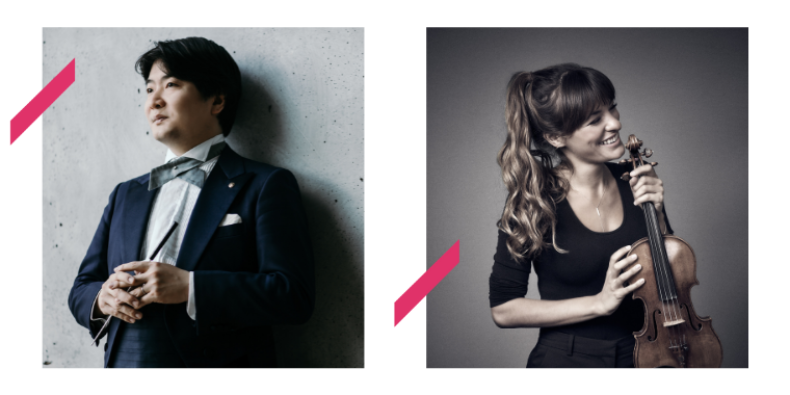
Nicola Benedetti (violin), CBSO Chorus, City of Birmingham Symphony Orchestra / Kazuki Yamada

Symphony Hall, Birmingham
Tuesday 20 September 2022

Reviewed by Richard Whitehouse

It may have been a largely mainstream programme, but tonight’s concert by the City of Birmingham Symphony Orchestra drew a capacity house at the beginning of a season in which Kazuki Yamada takes on the reins for what looks an eventful new era near the start of the orchestra’s second century. The CBSO’s response in Dvořák’s Carnival Overture more than confirmed it was ready for the challenge – Yamada ensuring the nocturnal evocation at its centre worked its evocative spell, then building an irresistible momentum going into the thrilling final bars.

Mendelsohn’s Violin Concerto cannot have been absent from many of the CBSO’s previous 102 seasons and made its appearance this evening, Nicola Benedetti tackling a piece she must herself have played on many occasions. Not that there was anything routine about a reading such as abounded in subtle touches – especially the opening Allegro’s cadenza, which more than usually fulfilled its role as this movement’s structural fulcrum. In the Andante, Benedetti pointed up the expressive contrast between its main themes; the second of which was notable for a tonal astringency that brought out its plangency in full measure. If there was nothing so arresting in the finale, the interplay of soloist and orchestra was astutely judged through to the effervescence of the closing bars. Certainly, a performance to make one enjoy the piece anew.

Introducing the second half, Yamada requested the audience remain silent during the pause between pieces – the first a setting of In Paradisum by Ukrainian-born Galina Grigorjeva (b 1962), its lucid harmonies and heady culmination bringing the best out of the CBSO Chorus.

From here to the New World Symphony was no great step. Once again, a work rarely absent from the CBSO’s schedule seemed largely revitalized. Not that all of Yamada’s interpretative decisions came off – after an introduction of no mean gravitas the opening Allegro unfolded a little fitfully, though so interventionist an approach might have gained from the exposition repeat to place these in greater context. There were similar touches in the Largo, yet here the focus of Yamada’s conception and the raptness of the player’s concentration were their own justification – not least towards the close, with the front desks combining to poignant effect. Without being driven as ruthlessly as is often the case, the Scherzo has the requisite impetus and, throughout its trio, a whimsical elegance which proved as engaging as the charged coda.

Heading into the final Allegro with minimal pause, Yamada brought out its inherent force but also the ruminative eloquence of its second theme; the transition to which, in the reprise, was ideally judged. Nor did the apotheosis lack for drama as those closing bars melted into silence.

Prior to the start of this concert, a minute’s silence was observed then (most of) the audience joined in possibly its first rendering of God Save the King. A more localized farewell was paid later in the evening to Colin Twigg, first violinist for over 31 years and whose retirement will hopefully see more of his own compositions as have featured in Centre Stage recitals over the years. A miscellany is featured on a Toccata Classics release and worth anyone’s investment. The CBSO will be back in action on Saturday with a major new commission from Brett Dean.

You can read all about the 2022/23 season and book tickets at the CBSO website. For further information on the night’s artists, click on the names for composer Galina Grigorjeva, and for artists Nicola Benedetti and Kazuki Yamada
Playlist – Daniel Patrick Cohen

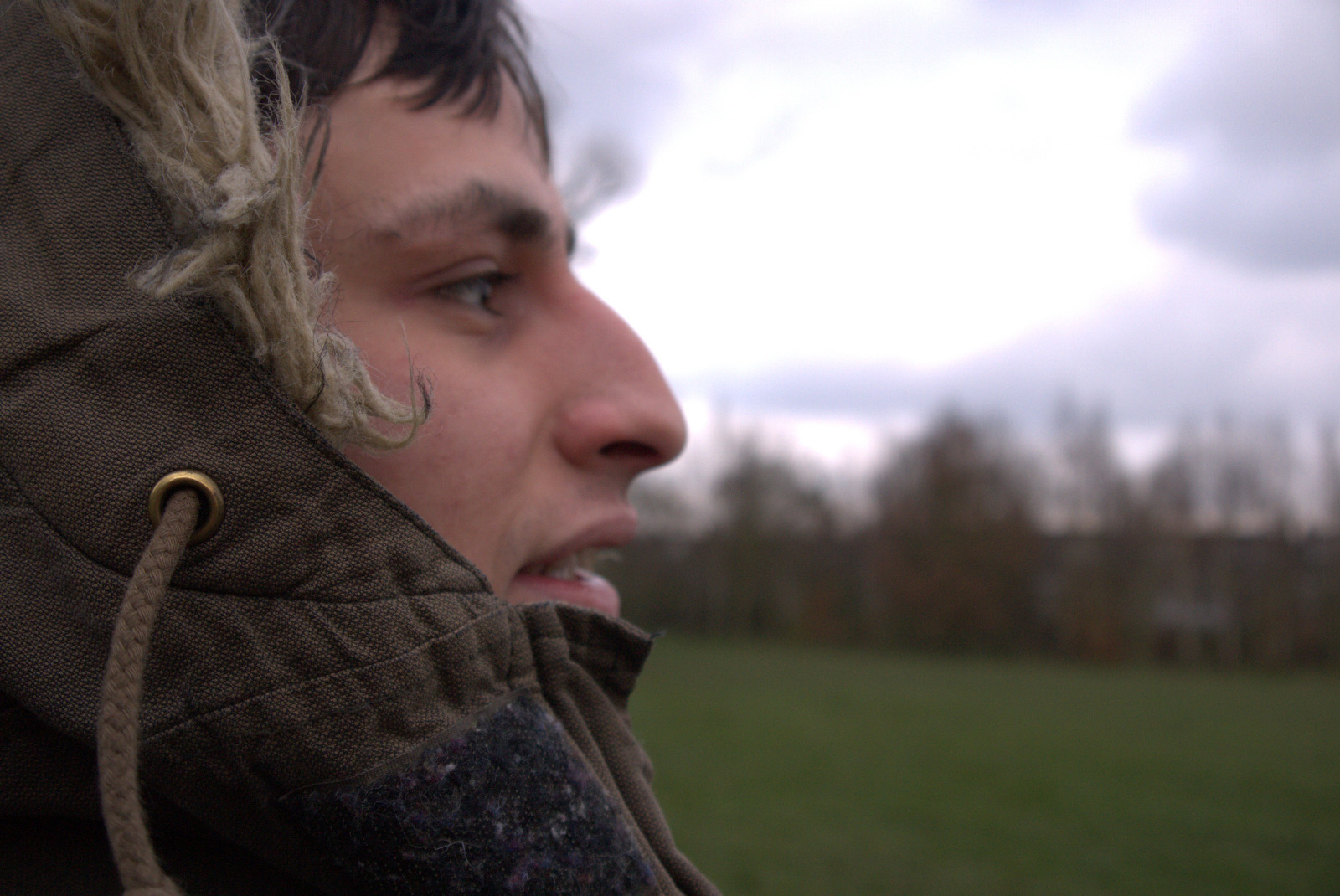
Daniel Patrick Cohen. Picture credit Alexandra Făgărășan

Arcana is delighted to hand our playlist baton over to Daniel Patrick Cohen, whose fascinating new album We Deliver is on our own playlist for review shortly.

Cohen, a Londoner living in Romania, has a particular love for film music and hip hop, and wrote a substantial score for Alfred Hitchcock’s The Pleasure Garden, as part of the British Film Institute’s Rescue The Hitchcock 9 enterprise, where composers were invited to score the director’s silent films.

With We Deliver, Cohen writes a love letter to hip hop in the form of a 32-track album featuring 67 musicians, described as a lo-fi work entirely made up of throwaway-type tracks that a hip hop producer might have written.

His playlist, then, contains 15 such ‘throwaway’ tracks, including inspired examples from the likes of Daft Punk, J Dilla, Radiohead, Björk and even Mozart alongside five of his own compositions blended in to reveal the loose connections. He elaborated for us:

“The idea is that these tracks were moments of magic which I imagine captured the mood on a day so perfectly that they resisted being developed and expanded. I think it’s worth elaborating that there’s nothing “lazy” about them; on the contrary, one could spend a lifetime waiting for these moments!”

In Memoriam Queen Elizabeth II

As a tribute to Queen Elizabeth II, here is a small part of the deeply meaningful music from her funeral service at Westminster Abbey this morning, which also included new works from Sir James MacMillan and the Master of the King’s Music Judith Weir.

Two English works, by Sir Hubert Parry and Vaughan Williams, are included below. My Soul There Is A Country is the first of six Songs Of Farewell by Parry, for unaccompanied choir, written towards the end of the First World War.

O taste and see is a short motet that Vaughan Williams completed in 1953 for the Coronation of Queen Elizabeth II. It is a short and beautiful piece:

Switched On – Slumberville: Harmony (Nettwerk)

Reviewed by Ben Hogwood

What’s the story?

Harmony is the first album from Swedish producer Sebastian Fronda under his new Slumberville alias. Fronda has been making music for more than two decades, labelled as one of Sweden’s hip hop pioneers, and has established a strong live presence in the Nordic countries with more than 500 shows.

Slumberville is intended as a moniker under which he can make lo-fi music, dipping into his hip hop sensibilities but  making room for samples and appropriations from a number of musical forms. For Harmony, he ‘Google-watched’ a number of different places around the world, such as Paraná River, assembling a set of travelcards to document his findings in musical form.

What’s the music like?

Slumberville veers towards the horizontal in his approach on this album, but there are some enjoyably quirky moments that keep the listener guessing. For The Win is quite spiky, with its staccato cello, while Chinatown plays loosely with an Oriental melody.

The  most enjoyable track is Paraná River, with a couple of winsome melodies over a low slung bass and endearing hip hop beat, but a close second to this is the singalong What A Great Feeling, with its dreamy optimism. Fronda’s musical humour ensures there are plenty of wry smiles throughout.

Does it all work?

It does, largely – though some of the ideas here could be more fully developed into more tracks double the length. This is a compliment to the humour and subtle inspiration that runs through these tracks and their source material.

Is it recommended?

It is. Slumberville has made a diverting, quirky album that is a good deal of fun. It has endearing, light humour, and its beats have a spring in their step that lightens the mood.

Listen

Buy

Switched On – Collisions: Collisions (Naive / Believe)

Reviewed by Ben Hogwood

What’s the story?

Collisions is so-named because it is the coming together of a musical trio. Tom Hodge, Ollie Howell and Ciaran Morahan are the three musicians in question, and each brings a different skill-set. Hodge is a film composer whose connections include Max Cooper and Floex, Howell is a composer and drummer, while Morahan is described as a ‘post-rock composer’, whose output includes work with Codes In The Clouds and VLMV.

What’s the music like?

There are two elements to the collaboration album – ‘Collisions’ tracks and ‘Motions’. The former set the scene and the sonic perspectives, while the latter offer free-form musical explorations, allowing Hodge’s piano and clarinet and Howell’s drums to work their magic largely unfiltered. This works particularly well. While the Collisions have a curious order (beginning with the spacious II then moving through I, III and IV), they are ideally paced. II offers a big panorama, with concrete heavy drums and spacey synths, while I is a really good blend of subtle, brushed drums and with a thoughtfully probing piano line, before bringing in a sonorous clarinet. III has a similar profile, though this time the piano is given more space to air its thoughts.

Does it all work?

Yes – and the three artists have managed to get the ideal blend of musical events and time for reflection. Collisions is in effect two genres – an underlying ambience, but with carefully thought out ideas above them that bring positive energy and vibrant colours.

Is it recommended?

Yes – enthusiastically. Collisions will reward those who enjoy musical ambience of a wider scope, such as Erland Cooper, or those who enjoy the chattering electronics of an artist such as Max Cooper, who has close connections here. Get it and revel in the musical inspiration.