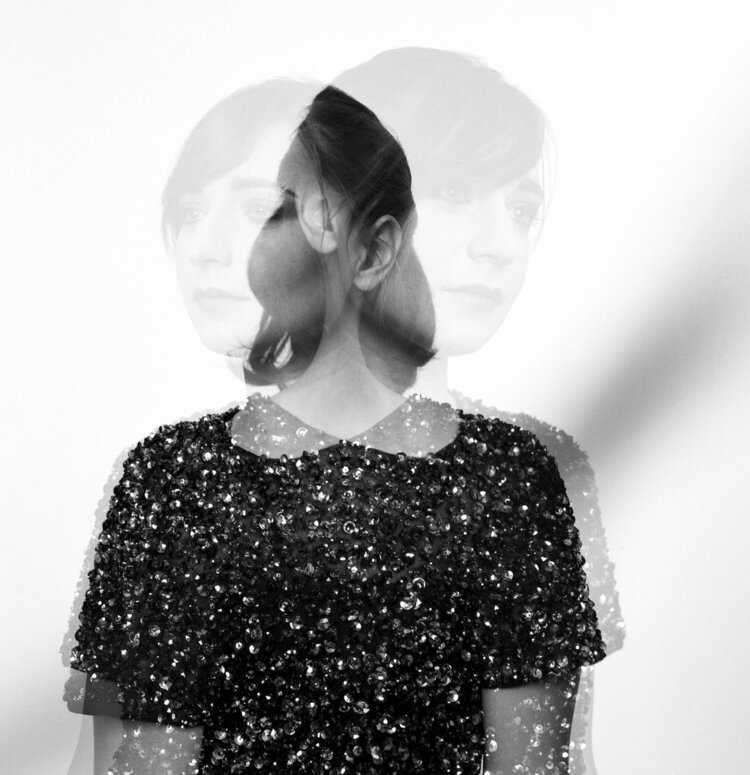
Switched On – Fragile X: Human Condition (Cue Dot Records)

What’s the story?

The Cue Dot Series reaches a dozen releases with this substantial piece of work from Fragile X – the alter ego for Glasgow-based musician J. Gorecki. He has designed an album to question aspects of human nature and instinct, in particular personal growth, but – as he details in the commentary alongside the album – the answers are firmly weighted towards the positive.

There are six stages of the human condition represented here – birth, growth, emotion, aspiration, conflict and mortality.

What’s the music like?

Human Condition – as its title implies – is a mixture of highs and lows, but the music here gives the listener a wholly positive experience. Gorecki writes with great assurance, gently probing at our thoughts and feelings as he does so. Cogito ergo sum (which translates as I think, therefore I am) is the ideal way to set the scene, soft-grained textures cushioning some more probing melodic lines, and introducing us to a warm blend of electronically and acoustically-derived sounds.

The softly oscillating figures of The Good And The Beautiful have attractive, treble-rich colouring which is a hallmark of Gorecki’s writing, with golden hints to the textures from half way through. Object / Subject has murmuring voices as part of its overall ambience, before it pans out into a wonderfully spacious train of thought. Eudaimonia uses what appears to be a small collection of time pieces, each one creating an ambience among themselves, while A Question I Have Become For Myself has some distorted thoughts but also a reassuring, slow chorale in the background.

You Are has watery percussion and rippling chords, presenting a beautiful epilogue that gradually falls under the influence of a slow, brooding melodic line. This slightly darker aspect has already revealed itself in the shady Space Of Appearance, a relatively brief but sombre time for contemplation.

Does it all work?

It does. The album is best experience as a single span of music, its natural flow secured early on and sustained throughout the nine tracks. Gorecki shows himself to be as at home in longer structures approaching ten minutes as he is in creating shorter snapshots.

Is it recommended?

Yes. Human Condition is a thoughtful meditation, which works both as a foreground and background feature. Foreground listening is by far the best, mind, for the inner parts of Gorecki’s patchwork are fully revealed and the colours can be best appreciated. A subtle experience but a lasting and uplifting one.

Stream and Buy

Switched On – Franck Vigroux: Atotal (Aesthetical)

Franck_Vigroux_Atotal_Artwork_LP_3000

reviewed by Ben Hogwood

What’s the story?

The music for Atotal is half of an intricate story. To quote from the press release, Franck Vigroux created it as an audiovisual performance with regular collaborator Antoine Schmitt, their aim ‘to reconstruct in order to better deconstruct the processes of imposition of will by repetition and absolute synchronism, to propose a breach to a potentially life-saving decoincidence. The total work of art, when pushed to its paroxysm of absolute coincidence of the perceptions of a captive spectator, is similar to the techniques of mental manipulation of totalitarian regimes, proceeding by annihilation of the critical mind, repetitive semantic pounding, subliminal messages.’

Got that?! It bears reading a few times, along with the rest of the detail on Vigroux’s Bandcamp page, because the more you read it the more you realise how much thought the pair have put into the work.

What’s the music like?

The success of this album depends on how Vigroux’s music sits on its own, without visuals, as a single work of art. The answer is emphatic, for Atotal is never less than a powerful encounter for the listener, to the extent where it can be overwhelming on headphones. Certainly the images conjured up in the listener’s mind are very close to Schmitt’s pictures in the excerpt here:

The blasts of white noise circling around a two-note riff on Swinging Total are an illustration of how Vigroux creates a great deal from minimal beginnings. By contrast Atotal010 is well within itself, with remote breathing noises giving a primal, intimate air. Lame is another thrilling rush, a widescreen vortex of sound underpinned by a big beat, while Accelerando has similarly big textures but is disorientated, like the processing of a large machine.

Vigroux works his sparse material into the thrilling forward drive of Communication, and his writing has lots of spatial, semi-industrial elements to it. He can be caustic in style, but the likes of Perdu find him in descriptive mood, with flickers of sound near and far. Communication is again sparse material but has a thrilling forward drive. Side Total contrasts wave effects with blocks of sound, while Total Primus is great, a substantial track with rumbling bass and purer tones in the treble, not to mention a lumbering rhythm.

Does it all work?

It does, but a certain amount of caution should be advised – in a good way. This is music that can often hit its target square between the eyes, and while the effect can be thrilling it is not for every mood, being a treble espresso of music at times!

Is it recommended?

Very much so. Vigroux’s music is always worth exploring, his approach always interesting – and the music for Atotal is no exception to that rule.

Stream

Buy


In concert – Clare Hammond, CBSO / Michael Seal: Nielsen, Grieg & Sibelius

clare-hammond-grieg

Nielsen Helios Overture FS32 (1903)
Grieg
Piano Concerto in A minor Op. 16 (1868)
Sibelius
Symphony No. 1 in E minor Op. 39 (1898-9)

Clare Hammond (piano, above), City of Birmingham Symphony Orchestra / Michael Seal

Symphony Hall, Birmingham
Wednesday 9 March 2022 (2.15pm)

Written by Richard Whitehouse

A Scandinavian programme this afternoon from the City of Birmingham Symphony Orchestra, featuring music by the three most famous of this region’s composers (so no representation for Sweden), and presided over with his customary authority by CBSO’s associate conductor Michael Seal.

Unusual nowadays to have a programme consisting of overture, concerto and symphony – but Nielsen’s Helios is as fine a curtain-raiser as any, its ‘sunrise to sunset’ scenario captured with one of the most graphic crescendos and diminuendos in the literature. Seal ensured this gradual emergence, and its faster evanescence, were unerringly paced – the horns’ echoing sonorities enfolded into the orchestral texture; and if the intervening intermezzo and fugato rather tread water by comparison, their role within the formal scheme made for a cohesive overall entity.

Whether or not Grieg tired of hearing or at least playing his Piano Concerto, he would surely have appreciated Clare Hammond’s take on its solo part. The inedible opening gesture might have been less than usually arresting, but the opening movement proceeded methodically and often poetically so its structural seams were barely in evidence – culminating in a resourceful account of the cadenza with the composer’s motivic ingenuity much in evidence. Easy to pass off as a bland interlude, the Adagio had an appealing poise that opened into keen pathos at its height. Trenchant rather than impetuous, the outer sections of the finale were rarely less than engaging but it was the warm soulfulness at the centre that really struck home; its return for a triumphal apotheosis did not quite avoid portentousness, but it ensured a decisive conclusion.

A distinctive and, for the most part, convincing performance which Hammond followed with the caressing harmony of the eleventh from Szymanowski’s Op. 33 Etudes – music in marked contrast to the existential drama of Sibelius’s First Symphony which came after the interval.

The latter work’s emergence against a background of fraught self-determination has inevitably taken on far greater resonance during recent weeks, and it was to Seal’s credit that he played down any tendency to overt sentiment – rendering the first movement, its sombre introduction limpidly realized by Oliver Janes, as the striking and frequently innovative study in expressive contrasts it should be. Nor was there any lack of Tchaikovskian pathos in the Andante, whose whimsical passages were as vividly delineated as those eruptive outbursts towards its climax.

The ensuing Scherzo had the right rhythmic tensility and, in its central trio, enticing whimsy – but it was the Finale as set the seal on this performance. The ‘Quasi una fantasia’ marking can result in emotional overkill but Seal kept its prolix follow-through in focus at all times – whether with the anguished recall of the work’s initial theme, surging impetus of its swifter sections, or the heart-on-sleeve immediacy of its ‘big tune’; pervaded by an ambivalence to the fore in a peroration which (almost) avoided histrionics on the way to its fatalistic close.

A fine response from the CBSO, playing here with burnished eloquence and Matthew Hardy making the most of a timpani part that has structural as well as expressive significance. Few having heard it are likely to underestimate this work’s status in Sibelius’s symphonic output.

For more information on the CBSO’s current season, visit their website. Meanwhile for more information on the artists, click on the names to access the websites of Clare Hammond and Michael Seal

In concert – Laura van der Heijden & Jâms Coleman @ Wigmore Hall – Pohádka: Tales from Prague to Budapest

Laura van der Heijden (cello), Jâms Coleman (piano)

Janáček Pohádka (1910, rev. 1912-23)
Dvořák Gypsy Songs Op. 55: Songs my mother taught me (1880)
Kaprálová Navždy from Navždy Op. 12 (1936-7)
Mihály Movement for cello and piano (1962)
Kodály 3 Songs to Poems by Bela Balazs Op. posth.: Why are you saying that you do not love me (1907-9); Énekszó Op. 1: Slender is a silk thread (1907-9)
Sonatina for cello and piano (1909)
Janáček Violin Sonata (1914-15, rev.1916-22)

Wigmore Hall, London, 9 March 2022

reviewed by Ben Hogwood Pictures (c) Olivia Da Costa (Laura van der Heijden), Sim Canetty-Clarke (Jâms Coleman)

It bears repeating that times are tough for new artists in music. Competition is fierce, while opportunities for live performance and recording have been severely hampered over the last two years of lockdown and pandemic restrictions. How refreshing, then, to talk about two new artists, a long term agreement with Chandos and a chamber music album notable for its originality and depth of expression.

The new artists, cellist Laura van der Heijden and her musical partner, pianist Jâms Coleman, have been performing together since 2017. Their debut album, for which this concert was an official launch, looks at music from Central and Eastern Europe with its roots in folk, either written directly for cello and piano or falling naturally into a vocal range.

The album shares its title, Pohádka, with a three-part fairy tale for cello and piano by Janáček, based on a Russian tale. This began the concert, a picture book performance bringing the story to life with sharp characterisation and flair. Janacek used a good deal of his music to explore macabre storylines and this was no exception, though the lighter, more lyrical moments were good fun. van der Heijden’s tone was sonorous and projected easily to the back of the hall, while Coleman’s stylish playing was capped with limpid work in the second section.

We then heard arrangements of two songs from Dvořák and Vítězslava Kaprálová as an idea complement, the former transcribing beautifully from voice to cello, with tasteful ornamentation from the cello. It was good to hear more of Kaprálová, a talented Czech composer who tragically died from tuberculosis when she was just 25. Her music immediately cast a spell, Coleman’s mysterious chords matched by a remote but moving line from the cello in its higher register.

Different qualities were required for the music of Hungarian composer and conductor András Mihály. His Movement for cello and piano was a dramatic rollercoaster, and rather volatile at times – reflecting perhaps the differing styles at play in modern music when it was written in 1962. While there were undoubtedly elements of Bartók and even Webern in the music’s contours, which veered into atonality at times, there was a fierce expression suggesting Mihály’s music should be explored further. Both players responded with a terrific performance, mastering the technical demands.

Zoltán Kodály was also an influence on Mihály, and his music suits the cello hand in glove, whether in large-scale sonatas or shorter, folk-informed songs. We heard two songs here, the cello a doleful voice for Why are you saying that you do not love me, while Slender is a silk thread found Coleman beautifully spinning out the silvery tale. However the single-movement Sonatina for cello and piano, at just under 10 minutes, made a lasting impression with its passion, profound lyricism and subtle melancholy. The performers’ love for this piece was clear, and the high voltage account found them finishing each other’s musical sentences.

The same could be said for Janáček’s Violin Sonata, a pungent piece whose proximity to World War One is evident in the rapid fire of its phrases. The composer’s unusual musical language was once again wholly compelling, with broad lyrical statements countered by strange, abrupt full stops to his melodies. The parallels with the current situation in Ukraine were impossible to ignore, especially with the emotion both players brought to the second movement Ballada, its sweeping melodies reaching skyward. Ultimately the acidic third and fourth movements cast a cloud over the mood, the players vividly depicting the distant sound of gunfire alongside more thoughtful introspection. van der Heijden was commendably modest about her own arrangement of the Sonata, for cello and piano, an extremely successful version losing none of the intensity or fractious treble phrases. Both players were superb, their virtuosity and togetherness notable throughout.

This was an extremely rewarding concert, energetic and romantic in turn but also thought-provoking through its wartime undercurrents. Laura van der Heijden and Jâms Coleman deserve great credit for their refreshing take on a chamber music album, which bodes well for their ongoing relationship with one of Britain’s best classical independents. Theirs is a partnership to watch closely.

Watch and listen

Switched On – Charlotte Harding: III (TRI Remix)

Composer Charlotte Harding returns with the intriguing track III, marking her debut as a solo artist.

Her new track, shown here in TRI Remix form, uses a string quintet and plays around with their sounds to make a musical language Harding calls ‘clectro’. Put simply, clectro = classical + electronic!

If you watch the video, directed by John Minton with artwork from Keaton Henson, you will see how the description is rather apt – and also get an idea for Harding’s powers of invention. She looks set to bring a fresh approach to the meeting point of the two styles – we will certainly keep our ears peeled for more!

You can read more about Charlotte Harding’s work at the Faber Alt. website, and also her own website here