In concert – Soloists, CBSO Chorus, CBSO / Joshua Weilerstein: Robert Nathaniel Dett – The Ordering of Moses

Ives (orch. Schuman) Variations on ‘America’ (1891/1962)
Bernstein (orch. Ramin & Kostal)
 Symphonic Dances from ‘West Side Story’ (1957/61)
Dett
The Ordering of Moses (1937) [UK premiere]

Nadine Benjamin (soprano), Chrystal E Williams (mezzo-soprano), Rodrick Dixon (tenor), Eric Greene (baritone), CBSO Chorus, City of Birmingham Symphony Orchestra / Joshua Weilerstein

Symphony Hall, Birmingham
Wednesday 23 February 2022

Written by Richard Whitehouse

This evening’s concert by the City of Birmingham Symphony Orchestra was an all-American programme, centred as it was upon the first performance in this country for what is likely the most ambitious work by the African/American composer Robert Nathaniel Dett (1882-1943).

Although he gained prominence as a choral conductor (his Hampton Choir having performed for President Hoover and Britain’s Prime Minister Ramsay MacDonald), Canadian-born Dett failed to make a lasting breakthrough as composer – his death when barely 61 confining him to a footnote in American cultural history. The ‘sacred cantata’ The Ordering of Moses was a statement of intent when submitted for his MMus in June 1932. Adapted from Exodus and Lamentations, its text describes the Hebrews escaping slavery in Egypt by the parting of the Red Sea over the course of 55 eventful minutes. The brooding prelude is rich in atmospheric writing for lower woodwind and brass, while the climactic sequence draws wordless chorus and orchestra into a graphic depiction of the ‘crossing’; after which, thanks is rendered unto God in suitably festive terms – Walton’s Belshazzar’s Feast an audible precedent. Much has been made of the use of spirituals but, apart from the rallying presence of ‘Go down, Moses’, they serve more a textural and harmonic role in heightening the music’s expressive potency.

A potency owing in no small part to its vocal and choral forces. Eric Greene was predictably sonorous in his eloquence when setting the scene as ‘The Word’, while Chrystal E Williams made the most of her small if crucial part as ‘The Voice of Israel’. Most memorable, though, were those contributions of Rodrick Dixon as the impulsive and ardent Moses, then Nadine Benjamin whose Miriam exuded poignancy and fervour in equal measure. The CBSO Chorus represented ‘The Children of Israel’ in suitably implacable and ultimately affirmative terms.

The whole performance was ably handled by Joshua Weilerstein, who ensured certain more discursive episodes in the cantata’s earlier stages never hung fire and drew a lusty response from the CBSO. Astute programming, moreover, in preceding a still little-known work with staples from the American repertoire. It might not encapsulate the whole of the musical, but Bernstein’s Symphonic Dances from ‘West Side Story’ captures its essence via orchestration (with judicious assistance from Sid Ramin and Irwin Kostal) as made a suitable impact here.

Surprising that William Schuman’s bracing orchestration of the teenage Charles Ives’s bravura organ piece Variations on ‘America’ does not enjoy more regular performance this side of the pond, or perhaps the quirky and increasingly uproarious incarnations of what Weilerstein pointedly referred to as the National Anthem of Lichtenstein still rankles with home-grown listeners? Whatever the case, the conductor made a persuasive case for this engaging and effervescent music to be heard more frequently – the CBSO players remaining straight-faced throughout.

It certainly provided an irreverent curtain-raiser to an engrossing programme as may yet have blazed a trail. More little-known American music on Sunday when Weilerstein directs only a second UK outing for Florence Price’s Piano Concerto, alongside Korngold and Tchaikovsky.

For more information on the next CBSO Youth Orchestra concert, click here. For more on the composer Robert Nathaniel Dett, head to a website devoted to his work. Meanwhile click on the links for information on the artsts – Joshua Weilerstein, Nadine Benjamin, Chrystal E Williams, Roderick Dixon and Eric Greene

Radio 2 Piano Room – a ray of light for February

Written by Ben Hogwood

This is not an advert…but it is a post urging you to listen to some of the sessions in BBC Radio 2’s Piano Room series of concerts if you haven’t already.

Over the last month on Radio 2’s weekday Ken Bruce show, a different act each day has delivered three songs from the BBC’s Maida Vale studios. While the title implies the act will be alone at the piano, the reality is that two of their songs are recast by the BBC Concert Orchestra and their team of expert arrangers. For a bonus the chosen soloist(s) will cover a song of their choice.

The results, quite frankly, have been unexpectedly good and occasionally spectacular. Performers that you might think of as day to day radio fodder have reinvented their songs in this environment. David Gray, for instance, a fine songwriter who arguably suffers from overexposure of his most familiar songs, was transformed. Please Forgive Me (a brilliant arrangement by Tim Bradshaw), This Year’s Love and a cover of Peter Gabriel’s Sledgehammer took on a life of their own in the Piano Room’s first instalment, setting the tone for what followed.

Over the weeks there have been some deeply impressive sessions from newer artists who have raised their game. Radio staples such as Anne-Marie, Ella Henderson and Clean Bandit delivered heartfelt sessions, where every breath could be heard and felt on the airwaves, the musical equivalent to an actor appearing on the West End stage. Anne-Marie in particular deserves great credit for elevating Ed Sheeran’s Bad Habits to another level entirely.

The real stars, dare I say it, have been the BBC Concert Orchestra and their team of arrangers. They have delivered consistently strong and sensitive versions of these songs, lovingly crafted and gaining new qualities through the exquisite string and woodwind writing. Although they have a full orchestra at their disposal the arrangers have never overused them, always keeping the vocalists at the front.

My personal favourites in this month have been David Gray, Simple Minds, Tears for Fears, Jamie Cullum and – unexpectedly – Natalie Imbruglia, who sang a beautifully arranged version of Torn that really cut to the heart.

There are however still a couple of sessions I have yet to hear – and if they reach the same standard as those listed then we are in for a treat.

Take my advice, then, and head for the iPlayer or BBC Sounds, where no less than 60 freshly minted songs await. You will not be disappointed. Now, which other world broadcaster could possibly offer this?

Mark Lanegan: An appreciation

by Ben Hogwood Photo by Steve Gullick

Very recently we learned of the incredibly sad news that singer Mark Lanegan has died, aged 57. Lanegan was an integral part of grunge when it surfaced in the 1990s, both in a solo capacity and as vocalist for his band Screaming Trees. He went on to enjoy a richly creative career for the next three decades.

He did so in the face of great adversity, for Lanegan’s adolescence was riddled with crime and dependency on alcohol and drugs. He faced these with remarkable strength, reaching a long period of abstinence, with those struggles detailed in his recently released autobiography Devil in a Coma. The title is a reference to a prolonged bout of Covid in 2021, which left him hallucinating and in a coma.

All these elements of his life can be felt in his music, his voice often painting pictures of unfathomable darkness, but also using the power of music as a release to help him out of those holes.

My first encounter with Lanegan’s voice was relatively late in his career, after his work with Screaming Trees and Queens of the Stone Age and just as he started collaborating with Soulsavers in 2007. The song Kingdoms Of Rain stopped me dead in my tracks and lingered long in the mind, for although there was darkness at its heart there was a spiritual element that spoke of hope and light around the edges:

The next Soulsavers collaboration, Revival, was even more explicit in its search for redemption, offering spiritual solace in the company of a troupe of gospel singers. A majestic song, seemingly modelled on Bob Dylan’s Knocking At Heaven’s Door, it is a musical treasure – and seeing it live at Bush Hall, London in 2007 it is a memory I will never forget.

A year later I was booked in to do an interview with him to talk about his new album as one half of The Gutter Twins with Greg Dulli. In hindsight, I should not have agreed – it was 10am on a Saturday morning and I was to phone him at a hotel in Amsterdam. It was quickly clear that he was not enthusiastic about the idea, and I got the impression he had been given a busy program of interviews he did not feel happy about. He was entirely professional, but we got through 15 questions in five minutes, and the answers, though unfailingly polite, were monosyllabic. We said an amiable goodbye, but the interview was never written up.

Lanegan’s happy place was clearly in the music, and a wealth of tributes from fellow artists confirm he was a joy to work with. He became so prolific that it was hard to keep pace with all his endeavours. The need to make music was primal, filling the gaps he had previously crammed with other stimulants. Three albums with Isobel Campbell were made, cementing a special partnership that saw their first album, Ballad of the Broken Seas, nominated for a Mercury Prize. The Gutter Twins collaboration, Saturnalia, left a powerful and more guitar-fuelled impact.

Lanegan’s voice was always at the forefront of anything to which he contributed, instantly recognisable. It was shaded like the finest bourbon, but with a cracked upper register that regularly let the light in, like a deeper blend of The Band’s Robbie Robertson and Nick Cave.

He continued to work with Soulsavers, and another album, Broken, moved him from occasional guest to centre stage vocalist.

It exceeded the creative heights of the first, headed by the remarkable Death Bells:

However it was now time to move to a solo setting, yielding another rich vein of creativity that Lanegan mined with 4AD, Vagrant and latterly Heavenly Recordings. With them he made the Gargoyle, Somebody’s Knocking and Straight Songs Of Sorrow albums, consistently fulfilling records that had moments of wide-eyed optimistic in their outlook.

Songs like Beehive were building on the promise shown by Harvest Home, an example from the Phantom Radio album of 2014. This gives a good example of Lanegan singing higher over a much more energetic beat:

Lanegan’s voice made him suitable for guest slots with electronic music producers. Sadly my wish to see him do a collaboration with Massive Attack was not fulfilled, but vocal turns on the music of Bomb The Bass, Moby and UNKLE brought previously unseen elements to their music as well as his. The singer’s stage presence continued to be magnetic, as those lucky enough to see him at London’s KOKO in 2017 would surely agree. Brooding, dark as night for sure – but smiling more now, totally at home in charge of another batch of majestic songs.

Given the troubles and obstacles he faced in life, it is remarkable that Mark Lanegan made it as far as 57. That he did is testament to the healing power of music, and thankfully he has left us with some truly wonderful material to savour, for which we are extremely grateful.

You can read a obituary for Mark Lanegan written by Will Burns, on the Heavenly Recordings website:

Switched On – Heavenly Remixes 3 & 4: Andrew Weatherall (Heavenly)

heavenly-3

reviewed by Ben Hogwood

What’s the story?

Heavenly have already released two volumes of compilations celebrating the art of the remix on their label. They have turned to a wide range of their artists either as remixers or as providers of the original song, moving from older staples from Saint Etienne and Doves to more recent Heavenly royalty Working Men’s Club, The Orielles and Gwenno.

Volumes 3 and 4 tell a different story, coming to you directly from the mixing desk of the much missed Andrew Weatherall. Weatherall was a shining light in dance music – rock music, too – from the 1990s onwards, sprinkling his production stardust on albums from Primal Scream (notably Screamadelica) and Beth Orton, while providing production and remixes for a huge range of artists.

This selection is all exclusive to the Heavenly label, celebrating his achievements and status with the label, for their first ever remix was from Weatherall himself.

What’s the music like?

In a word, brilliant. Weatherall made so many remixes but managed the difficult juggling act of having his own distinctive style without ever making the same mix twice.

That first remix – the Andrew Weatherall Soul Of Europe Mix of Sly & Lovechild’s The World According To Sly & Lovechild – is an uplifting call to arms at the start of this collection. It may begin with the vocal gambit “These are dark days” but it is a wholly positive vocal, dressed with undulating marimbas and a chunky bassline. Next up is Mark Lanegan, the legendary vocalist who as I write this review sadly passed away only yesterday. Beehive gets an upfront remix with the couplet “lightning coming out of the speakers, wanna hear that sound some more”. After these two heavyweights, an even bigger mix lies in wait in the form of Flowered Up’s ‘Weekender’ from 1992. This is expertly paced over 17 minutes, no less, getting into its groove early on and never letting up. A similar rhythm permeates Gwenno’s Chwyldro but this is a wholly different approach, with a hazy palette and some weird harmonies complementing her softer tones.

Another legendary remix follows, Weatherall taking Saint Etienne to the dancefloor with his take on Only Love Can Break Your Heart, a dub-infused version that drops into a full vocal version half way through. A heady remix of Confidence Man’s Bubblegum follows, then a Sabres of Paradise mix of Espiritu, whose Conquistador goes through the wringer in an up-tempo flurry of percussion and rave riffs. Finally The OriellesSugar Taste Like Salt plays havoc with the stereo placement and rolls out a big set of drum fills, both favourite tricks of Weatherall’s as he succeeds in displacing the listener.

heavenly-4

Volume 4 is just as good – and once again presents a set of shapeshifting beats that manages to twist the original artists almost beyond recognition. audiobooks are first, Weatherall taking them to the electro disco with the groovy, spacey, Dance Your Life Away, before an edit of the Two Lone Swordsmen Dub of Saint Etienne’s Heart Failed In The Back Of A Taxi, a suitably grubby affair.

Next up is DovesCompulsion, an unlikely candidate but packed with reverb and big vocals as it settles into a brilliant chugging groove with constantly flickering electronics. TOY’s Dead and Gone gets a minimal, relatively straight remix with a good deal of white noise, then Confidence Man’s Out The Window makes the most of a vocal that could have been sent from the Hacienda. LCMDF’s Gandhi is a shape-shifter in Weatherall’s hands, then another Espiritu track – Bonita Mañana – gets taken to the cleaners over 13 glorious minutes. Finally – and regretfully – we reach the end with Unloved and a slow, loping take on Devils Angels, doom-laden and disorientating on headphones.

Does it all work?

It does, handsomely – and it matters not a jot that some of these remixes weigh in at more than a quarter of an hour. Flowered Up’s Weekender is a great example of how to make one remix sound like half of a DJ set, and it says a lot for Weatherall’s craft that it would be easy to listen to the track all over again.

Is it recommended?

Yes – for this is the sound of an artist constantly finding new ways to express familiar vocals, always with both eyes on the dancefloor. It is clear that Andrew Weatherall had nothing but fun in his studio! Weatherall fans and anyone wanting to learn the dos and don’ts of a good remix should get this, as should anyone with a passing interest in dance or indie music from the 1990s onwards. Even without any of the historical baggage, this is simply a brilliant set of grooves with a feelgood atmosphere running throughout!

Stream and Buy


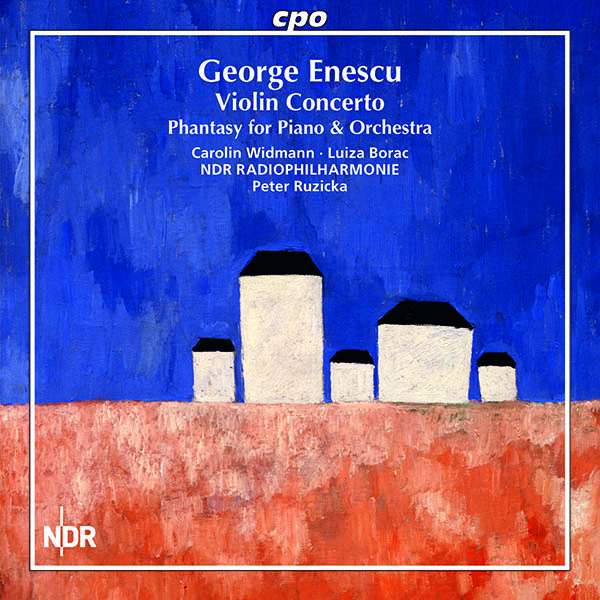
On record – Enescu: Violin Concerto & Phantasy (Carolin Widmann, Luiza Borac, NDR Radiophilharmonie / Peter Ruzicka) (CPO)

enescu

Enescu
Violin Concerto in A minor (1896)
Phantasy in D minor (1896/8)

Carolin Widmann (violin), Luiza Borac (piano), NDR Radiophilharmonie / Peter Ruzicka

Producer Elisabeth Kemper Engineer Daniel Kemper

CPO 555 487-2 [53’32”]

Recorded 25-28 May 2021 at Grosser Sendesaal, Landesfunkhaus, Hannover

Written by Richard Whitehouse

What’s the story?

CPO continues its coverage of little-known Enescu with this coupling of two pieces from the composer’s teenage years, persuasively rendered by leading performers and with a conductor second to none through his expanding the orchestral output of a still under-appreciated figure.

What’s the music like?

Although not his ‘breakthrough’ year, 1896 was a significant one for Enescu in terms of those compositions he at least attempted. He was not yet 15 when premiering the first movement of a Violin Concerto whose Andante was not played and its finale likely never written. Even so, the audience must have been surprised and even a little bemused at the audacity of a teenager who opened with an Allegro moderato rivalling those of the Brahms and Beethoven concertos in its scale and intent, and one whose technical display is secondary to its weight of argument.

Enescu having relocated to Paris after seven years in Vienna, evidence of competing aesthetic influences is not hard to discern – with Brahms the audible precursor of that Allegro, down to the climactic entry of the soloist after a lengthy opening tutti, then a (self-written) cadenza as serves a formal rather than virtuosic purpose. Despite being considerably longer than that of the Brahms, the Andante looks more to French antecedents – notably the Third Concerto of Saint-Saëns whose siciliano profile it utilizes, but not a tendency for pronounced expressive contrasts that is exemplified by the rhythmic impetus of its alternating episodes. Exactly why Enescu never completed this work is uncertain, yet if he felt its influences too obvious, such derivativeness need not be a barrier to appreciation or enjoyment of these movements today.

Enescu unlikely had any knowledge of the Violin Concerto that Busoni was writing at much this time, yet the former’s Phantasy has a tangible aura of the music his older contemporary was then writing. Witness the stealthy introduction as surges forth into the main movement, its alternation of genial assertiveness and ironic rumination itself a Busonian trait, as too the close-knit integration between soloist and orchestra or the subtle ambiguities of its harmonic writing. CPO’s booklet note gives 1898 as the date of composition which other sources give as two years earlier, but there is general agreement that its (only) performance took place at Bucharest in 1900. By then Enescu had written his first undoubted masterpieces, the Second Violin Sonata and Octet for strings, and no doubt felt the piece suffered through comparison.

Does it all work?

Yes, on its own terms. The rapidity with which Enescu evolved as a composer meant he soon left behind the influences as are audible here, which does not make either of these pieces any less worth hearing or merely for enthusiasts. Carolin Widmann is classy casting in the Violin Concerto, articulating its lengthy structures with no mean artistry, while the Enescu specialist Luiza Borac (most recently heard in in the torso of a Piano Concerto from the same period on Profil Hänssler) ensures a cohesion in the Phantasy without limiting its imaginative qualities.

Is it recommended?

Indeed, not least when the recording is unexceptionally fine and Volker Tarnow’s annotations are unfailingly informative. Hopefully CPO and Ruzicka will further their Enescu exploration with the Second and Third ‘School’ Symphonies or sundry orchestral pieces from this period.

Listen

Buy

You can discover more about this release and make a purchase at the Presto website.  For more information on the artists, click on the names for Carolin Widmann, Luiza Borac, Peter Ruzicka and the NDR Radiophilharmonie