On record – Havergal Brian: Symphonies 3 & 17 (New Philharmonia, Royal Philharmonic Orchestra / Stanley Pope) (Heritage)

brian-heritage

Brian
Symphony No. 3 in C sharp minor (1931-2)
Symphony No. 17 (1960-61)

Ronald Stevenson, David Wilde (pianos, Symphony no.3); New Philharmonia Orchestra (Symphony no.3), Royal Philharmonic Orchestra (Symphony no.17) / Stanley Pope

Heritage Records HTGCD153 [67’26”]

Recorded 12 January 1974 and 23 June 1976 at BBC Maida Vale Studios, London

Written by Richard Whitehouse

What’s the story?

Heritage has followed its release of Charles Groves’s centenary accounts of Havergal Brian’s Gothic Symphony (Part One) and In Memoriam with this first official issue of the composer’s Third and Seventeenth Symphonies, as given in their first performances under Stanley Pope.

What’s the music like?

Although he left few commercial recordings, the London-born and Geneva-based conductor Pope (1916-95) was highly regarded in music from the 19th and 20th centuries. These studio performances are among the best premieres that Brian received, not least the Third Symphony which at almost 55 minutes is his lengthiest after the Gothic. Little is known about its genesis, but the 20-minute opening movement has a complexity and emotional breadth that suggest a suitably high-flown inspiration. Two pianos mark off crucial junctures in its formal trajectory, besides enriching the texture vis a concertante underpinning such as surges forth in the stark chordal cadenza prior to the coda. Had Brian stopped there, this would still have been among his most ambitious symphonies, and the three remaining movements afford intrigues aplenty.

The slow movement continues in similar fashion in its combining of textural audacity with a melodic immediacy (notably for flute and violin) as makes this an ideal entry-point for those new to Brian, and though its expressive ambience is by no means easy to define, a feeling of heroic fatalism comes to the fore during the climactic stages and in a coda of moving pathos. By contrast the scherzo is as direct in its appeal as anything that Brian wrote, not least a trio whose ingratiating charm provides suitable contrast with the boisterous music on either side. With its slow overall tempo, the finale builds in sonorous paragraphs – to whose Brucknerian grandeur Pope is especially attentive – toward a stormy culmination and heightened recall of earlier ideas; thence into an epilogue whose unequivocal finality is rare in Brian’s maturity.

Nearly three decades later, the Seventeenth Symphony offers a very different perspective on Brian’s creative outlook. Last in a series of five single movement such pieces, it is markedly elliptical as to formal unfolding and expressive follow-through – yet, even more than with its masterly predecessor, a continuous and metamorphic ingenuity is perceivable right from the pensive introduction then throughout the three- (or even four-) in-one sequence that follows. Confident and yet ruthless in its triumphalism, the coda is decidedly music for its ‘present’.

Does it all work?

Almost. The Third is the most inclusive of Brian’s orchestral symphonies in its intricacy of texture and (ambivalent) range of expression. Drawing four such diverse movements into a cohesive whole is no easy task, but Pope succeeds more completely than does Lionel Friend (Hyperion) and probes more fully than Adrian Leaper (Naxos) the disquieting obliquities of the Seventeenth. The playing of the New Philharmonia and Royal Philharmonic orchestras is testament to the skill of British players in tackling such complex music on limited rehearsal.

Is it recommended?

Yes. Heritage has done a fine job in opening-up the 1970s sound (the BBC’s notoriously dry Maida Vale studio) and John Pickard contributes his usual insightful notes. The 1974 account of Brian’s choral Fourth Symphony would be an ideal next candidate for such rehabilitation.

Listen

Buy

You can discover more about this release at the Heritage website, and you can read more about Havergal Brian here

75 years ago today – the first performance of Korngold’s Violin Concerto

Today marks 75 years to the day since the premiere of Korngold’s Violin Concerto. Like much of this composer’s work, the Violin Concerto took a while to gain popularity, but since we have moved into the 21st century it has taken up a much more regular position in the concert hall.

In her excellent biography of the composer, Jessica Duchen tells the story of the concerto, and how it was suggested to Korngold for close on 30 years by his friend Bronislaw Huberman, founder of the Palestine Orchestra (later the Israel Philharmonic). The regular suggestion became something of a running joke until 1945, when Korngold unexpectedly produced a completed score for the concerto. Ultimately the work had its first performance on 15 February 1947, with the incomparable Jascha Heifetz as soloist and the St. Louis Symphony Orchestra conducted by Vladimir Golschmann.

As you will hear from this live performance with violinist Hilary Hahn and the Deutsche Symphonie Orchester under Kent Nagano, the work has an intense, lyrical profile from the start, shot through with the descriptive powers Korngold used to such good effect in his film scores. There is a longing quality to the first movement especially, a nocturnal second and an energetic third which generates impressive momentum to the finish.

Watch and see what you think:

Switched On – vaghy: Minimalism (Théque Records)

vaghy

reviewed by Ben Hogwood

What’s the story?

After 20 years of playing as part of a band, Hungarian pianist Tamás Vághy is striking out on his own, with little more than a piano and some electronics. His aim was to strip music back to its bare elements, and to rediscover his own art as a performer and composer.

While vaghy plays the piano for the main melodic lines, he also provides the accompaniment through a clutch of analogue synthesizers and even a heavily manipulate zither.

What’s the music like?

Minimalism is a brave title for a new album, for although in this case it means a ‘back to basics’ approach, it also forms in the listener expectations that vaghy’s style will be close to that of Steve Reich or Philip Glass.

That proves not to be the case, but not in a bad way, for this is a thoughtful and often enlightening piece of work. It is also not a straightforward piano album, thanks to vaghy’s treatment of sounds. This is immediately apparent on the opening Rush, with dampeners applied to the tones so that the piano makes a lovely, mottled sound.

vaghy writes with a good deal of movement in his music, but with a stillness at the heart of it where the listener can position themselves. The style also bears similarities to Michael Nyman’s piano work but the tones are lighter on the ear and more evocative.

As Minimalism progresses so there is increased light and shade – the former present in the airy touches of Backwash, which has a lovely rippling effect. The latter qualities are evident in the darker Tripping, with its shuffling rhythm track.

Meanwhile the likes of Lonely and Dawn Light find a special, inward-looking intimacy, while Intention has a lovely turn of phrase and some complementary effects with the Moog, which blossom to a full-bodied and powerful conclusion.

Does it all work?

Yes – Minimalism has enough craft and descriptive colour to stand out from the crowded field in solo keyboard repertoire. Its loops become strangely hypnotic and the attention to detail invested by vaghy is repaid through music of character and subtle shades of colour.

Is it recommended?

Yes. If you like keyboard players such as Nils Frahm then vaghy’s music will definitely appeal, and its subtleties will work their hypnotic touch on many a listener. This is a quiet album – and if you make space for it, the rewards are plenty.

Stream and Buy


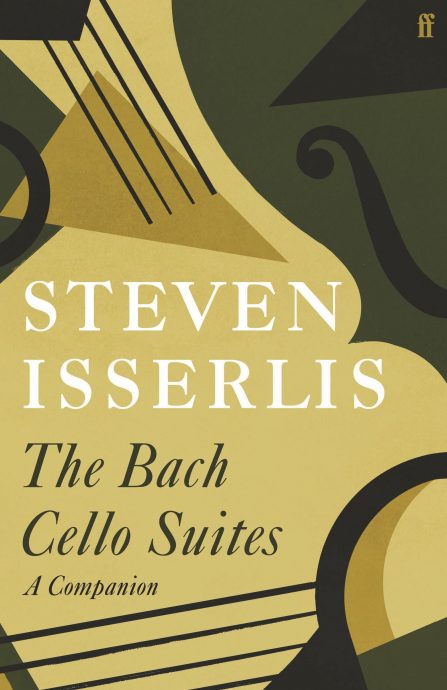
On paper – Steven Isserlis – The Bach Cello Suites: A Companion (Faber)

reviewed by Ben Hogwood

What’s the story?

Ask Steven Isserlis the music he would take to a desert island, and his answer would surely be the six Bach Cello Suites. The cellist has lived with their music all his adult life, and having released his award-winning recording of them for Hyperion in 2007, he now expresses his deep love and admiration for them in written form.

What’s the book like?

In a word, invigorating. Having lived with the suites myself for 35+ years as an amateur cellist, your reviewer is very much a convert – but reading this gave me enthusiasm anew, for Isserlis reveals new treasures about this wonderful music at every turn.

Crucially he does this in a way that will appeal to cellists and non-cellists alike, and even those who struggle with musical terms. A helpful glossary is on hand to help here, but so is an introduction that sets out this celebration of six works where mystery, expression and originality walk hand-in-hand.

The origins of the suites are shrouded in mystery, right down to their authorship. Isserlis tackles these questions head-on, in a wholly compelling way. He confronts the doubts, examines the existing performing editions, and looks at the role of Bach’s second wife Anna Magdalena in their publication, all without getting too bogged down in musicology. There is healthy but qualified assumption and speculation, made as a music lover but backed up with firm arguments from Bach scholars past and present.

Isserlis looks at the construction of each suite in great detail, marvelling at Bach’s consistent marriage of mathematical precision and emotional outpouring. He uses the scholarly texts but also leans heavily and most enjoyably on his perspective from the pure, musical instinct of a performer. This approach lifts the music from the page, frequently inspiring the reader to listen along.

This instinct leads to a central, compelling case for a subtext for the suites, describing the life of Christ in a way that can be keenly experienced by the listener but which also makes a great deal of musical sense, with the caveat that the cellist’s conclusions are largely speculative.

What is beyond doubt is the technical mastery shown by Bach in writing for the cello, and the inspiration that flowed so readily and so inevitably in writing the suites, lifting the instrument and its potential to a higher plain. The six suites are remarkable pieces both individually and collectively, as are the six movements of each – and Isserlis brings them to life as he writes. He celebrates their role in the life of any cellist while also, under his breath, lightly cursing some of the technical difficulties as the cycle progresses.

Readers can opt to take the book from start to finish, taking in each of the 36 movements, but the layout rewards repeat visits to dip in to individual parts and elements of their composition. This is ideal not just for serious, practicing cellists but also for individual listener preferences.

Does it all work?

Yes, in several ways. Isserlis is a fluent and passionate writer, putting the music first at all times, so that reading the book will almost always lead to a first hand encounter with the music. That is the surest guide to success for any book on music, surely!

Is it recommended?

Yes, on pretty much every level. For cellists – either full or part-time, like your reviewer – this book is essential and thought-provoking reading. It reveals afresh the many delights to be found in experiencing this wonderful music, and will also make you want to listen to more Bach, the choral works especially, to explore the fascinating parallels drawn between these and the suites.

Non-cellists should not hesitate to approach the book either, for there are many entertaining and thoughtful stories in the book that prove richly rewarding.

This is a fine achievement, celebrating a body of work that all cellists hold dear. The music lifts from the page and into our homes with an easy candour and compelling storytelling. It is a wonderful achievement.

On record – Lindberg: Aura, Marea & Related Rocks (Finnish Radio Symphony Orchestra / Hannu Lintu) (Ondine)

lindberg

Lindberg
Aura (1993-4)
Related Rocks (1997)
Marea (Tide) (1989-90)

Emil Holmström, Joonas Ahonen (pianos/keyboards), Jani Niinimäki, Jerry Piipponen (percussion) (all in Related Rocks), Finnish Radio Symphony Orchestra / Hannu Lintu

Ondine ODE1384-2 [66’59”]

Producer Laura Heikinheimo; Engineers Anna-Kaisa Kemppi, Antti Pohjola, Enno Mäemets October 2019 and bDecember 2020 at Music Centre, Helsinki

Recorded October 2019 and December 2020 (Marea) at Music Centre, Helsinki

Written by Richard Whitehouse

What’s the story?

Ondine continues its extensive coverage of Magnus Lindberg with this retrospective volume of works mainly written in the 1990s; at a time when the Finnish composer was moving away from his overtly avant-garde stance to an accommodation with the contemporary mainstream.

What’s the music like?

It was when Lindberg was writing Aura that Lutosławski died, hence the memorial dedication of a piece which represents a conscious summation of what the younger composer had striven for to that time. Its almost 40-minute duration and its division into four movements led some commentators to attribute a symphonic conception; something that the predicating of gestural over motivic continuity effectively refutes. That said, the initial section does have a feeling of exposition in its respective dynamism and stasis; ultimately arriving at a seismic unison chord from which its successor unfolds along the lines of ‘slow movement’ with an initial emphasis on the rhetorical interplay of brass and strings, followed by an evocative episode with tuned percussion and woodwind to the fore. Another unison leads to the third section, its animated motion nominally akin to a scherzo though with only a halting momentum on the way to the final section; a finale inasmuch as it takes the piece through to a threnodic conclusion, albeit with only a tangential bringing of the overall structure formally and expressively full circle.

Although the trajectory of Lindberg’s output thereafter was toward greater harmonic clarity and tonal directness, there have been numerous ‘curve balls’ – not least Related Rocks with its electronic gloss on the favourite modernist line-up of two pianos and two percussionists. Nor is there anything remotely proscriptive about one of this composer’s most effervescent and playful works (not least via a doubtless coincidental allusion at one point to the theme-tune of the 1970s snooker programme Pot Black), as retains its appeal a quarter-century on.

Finally, to Marea – central piece in an informal trilogy of works for chamber orchestra that exemplify Lindberg’s music towards the end of his first decade of creative maturity. At just 12 minutes, it might also be considered a template for those curtain-raisers often found in the composer’s recent output; though the level of incident and intricacy of texture, underpinned by an upward-striving trajectory, evinces a simplification too often replaced by superficiality once the composer arrived at an idiom lending itself gratefully to international commissions.

Does it all work?

Mainly, given Lindberg was seeking to extend his musical language onto a wider expressive canvas without veering towards the diluted idiom often informing his idiom thenceforth. No doubt that, whatever its formal issues, Aura stands among of the crucial orchestral works of its period and Hannu Lintu’s take is a worthy successor to the pioneering account from Oliver Knussen (DG). Marea summons a feisty response by the Finnish Radio Symphony Orchestra, while those keyboardists and percussionists render Related Rocks with scintillating virtuosity.

Is it recommended?

Indeed. Those who dislike the rebarbative feel of Lindberg’s early music or are unpersuaded by his latter-day output ought to find something worth engaging with in these pieces. Neither the high-impact sound nor booklet notes by Kimmo Korhonen leaves anything to be desired.

Listen

Buy

You can discover more about this release at the Ondine website. You can read more about Lindberg here. The Finnish Radio Symphony Orchestra are here, and their conductor Hannu Lintu’s website can be accessed by clicking here.