In concert – CBSO Centre Stage: Schubert String Quintet

cbso-centre-stage-schubert

Schubert String Quintet in C major D956 (1828)

CBSO Soloists [Kate Suthers and Bryony Morrison (violins), Amy Thomas (viola), Miguel Fernandes and Helen Edgar (cellos)]

CBSO Centre, Birmingham
Thursday 10 February 2022 2pm

Written by Richard Whitehouse

Just one work in this afternoon’s Centre Stage but, given this was Schubert’s String Quintet, no-one could complain of being short-changed. Music, moreover, that has featured regularly in recitals given by members of the City of Birmingham Symphony Orchestra over the years (not least the first live performance for this reviewer, given at the Birmingham and Midland Institute in the early 1980s as the second half of an imposing programme which opened with Brahms’s First Sextet) and that remains an emotionally involving experience like few others.

Pacing this work so its textural richness is allowed full rein without any loss of momentum is at least half the story, not least an opening movement whose contrasting themes need to find expressive accord from the outset. The present account succeeded handsomely in this respect, not least by varying the balance between these themes in the repeat of the exposition, and if the development marginally lost focus in its earlier stages, the heightened lead-back into the reprise brought an emotional frisson almost matched by the stark conclusiveness of the coda.

Whether or not the finest movement as to actual content, the Adagio is often the highlight of a performance – those outer sections shot through with a yearning regret which was tangibly in evidence. While the central episode could have been even more agitated, the spellbinding transition into the initial music was unerringly judged. Nor was anything amiss in the contrast between the Scherzo and its trio; the former bracingly impetuous, the latter inwardly fatalistic (and making the most of those rapturous two-cello sonorities) without ever becoming turgid.

If the finale often feels anti-climactic, this is not because of its relative concision but through an inherently Viennese ingratiation as was rightly played down in preference for a rhythmic forthrightness maintained through to a close that conveyed defiance as much as decisiveness. It duly set the seal on an impressive reading as drew an enthusiastic response from the near-capacity house. Hopefully an equally sizable attendance will be in evidence for next Friday evening’s recital, featuring Bach and Piazzolla, which comes courtesy of El Ultimo Tango.

You can read more about that next Centre Stage recital, and book tickets, on the CBSO website
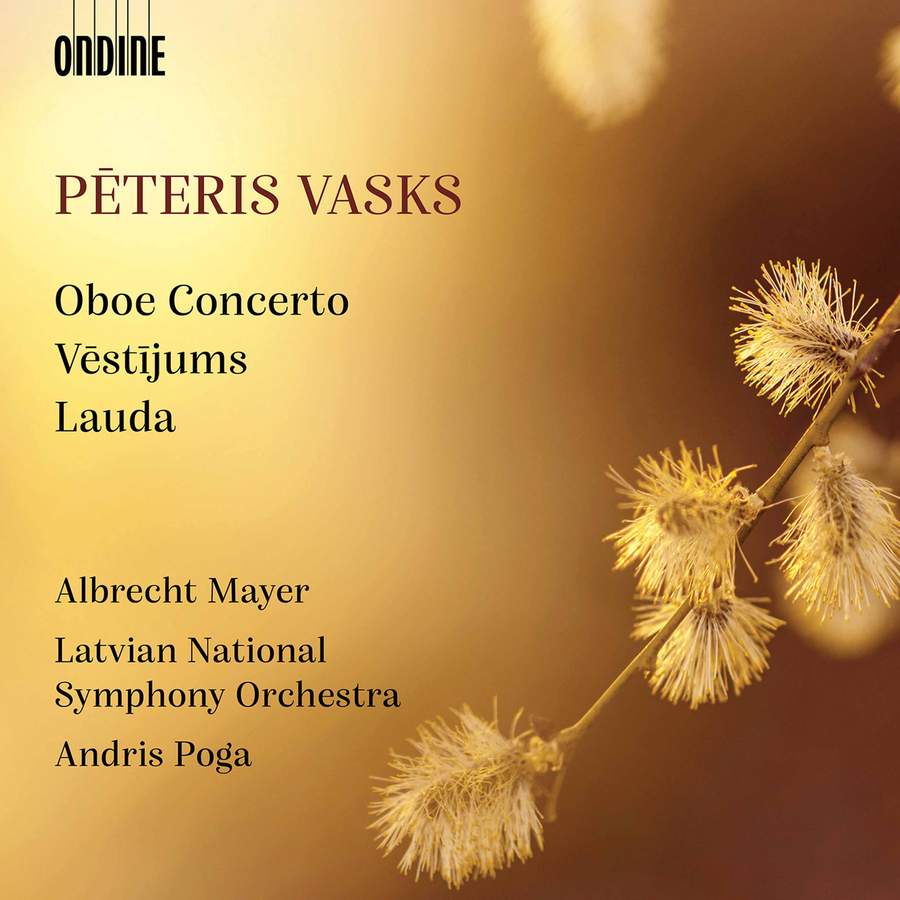
On record – Vasks: Oboe Concerto, Message & Lauda (Albrecht Mayer, Latvian National Symphony Orchestra / Andris Poga) (Ondine)

vasks-ondine

Vasks
Oboe Concerto (2018)
Message (Vēstijums) (1982)
Lauda (1985)

Albrecht Mayer (oboe), Latvian National Symphony Orchestra / Andris Poga

Ondine ODE1355-2 [68’37”]

Producer / Engineer Normunds Šnē

Recorded 16-17 and 20-21 July 2020 at Great Guild Hall, Riga

Written by Richard Whitehouse

What’s the story?

Ondine continues its coverage of Pēteris Vasks (b1946) with this release featuring his recent Oboe Concerto, alongside pieces from the 1980s, in what is a viable overview of the music of his maturity and reminder of his status as the leading Latvian composer of his generation.

What’s the music like?

Premiered in October 2018 with the performers on this recording, the Oboe Concerto is the seventh concertante work Vasks has written (his third for woodwind) and, at over 33 minutes, is on a sizable scale. Of its three movements, Morning pastorale has a preludial function in the way that the soloist emerges gently and wistfully against a discreet orchestral backdrop. This gradually builds to a climax, at whose apex the Scherzando begins with its lively interplay between soloist and orchestra – at length subsiding into a secondary ‘trio’ theme of piquant elegance. There follows an animated development, culminating (just before mid-point) in a plaintive cadenza then return to the opening music, prior to a coda of some fervency which   is held over at the start of Evening pastorale. The soloist duly comes to the fore for a calm soliloquy, building towards a forceful climax before a return to the mood of the opening and a whimsical leave-taking. A limited range of expression might leave this work seeming over-long but, with Albrecht Mayer pacing it superbly, the larger design more than sustains itself.

Of the two earlier pieces, Message – scored for two pianos, strings and percussion – reflects the impact of minimalist traits in its relatively static harmonies and rhythmic repetition, while Lutosławski (then completing his influential Third Symphony) and Górecki (then in his most overtly minimalist phase) can be detected in passages of textural freedom that afford contrast with those of expressive directness. Vasks himself comes through during the climactic stages, the music’s restrained fervour heightened on the way to a culmination of scintillating impact.

Although only his second major work for full orchestra, Lauda is typical for the way Vasks builds its cumulative structure through a dovetailing of instrumental groupings over a steady rhythmic undertow such that an inexorable momentum comes gradually, even unexpectedly to the fore. The journey is a stealthy and eventful one that draws both modal and plainchant elements into its emotional orbit; with the brass assuming dominance as the title is evoked in a resounding climax which leaves woodwind then strings musing plaintively in its wake.

Does it all work?

Yes, in the main. Whatever the stylistic variety across his output of several decades, Vasks remains a relatively self-effacing composer who never seeks to gain listeners’ attention by overly demonstrative means. His is rather an incremental and slow-burning approach which yields its musical rewards often in retrospect, as is true of the Oboe Concerto and – albeit to   a lesser degree – of those other works here. It helps that the playing of the Latvian National Symphony Orchestra, under the assured direction of Andris Poga, is so attuned to his music.

Is it recommended?

Yes, and not only to those who have already acquired previous releases from this source. The sound is up to Ondine’s usual standards in its clarity and realism, along with detailed booklet notes from Orests Silabriedis. Hopefully Vasks’s recent Sixth Quartet will be recorded soon.

Listen

Buy

You can discover more about this release at the Ondine website. You can read more about Vasks here, and click here to read more on soloist Albrecht Mayer. The Latvian National Symphony Orchestra are here, while conductor Andris Poga’s website can be accessed by clicking here.

In concert – Mao Fujita, Royal Philharmonic Orchestra / Vasily Petrenko – Dani Howard, Rachmaninov & Holst’s ‘The Planets’

mao-fujita

Howard Ellipsis (2021) [RPO Commission: World Premiere]
Rachmaninov Rhapsody on a Theme of Paganini, Op. 43 (1934)
Holst The Planets, Op. 32 (1914-17)

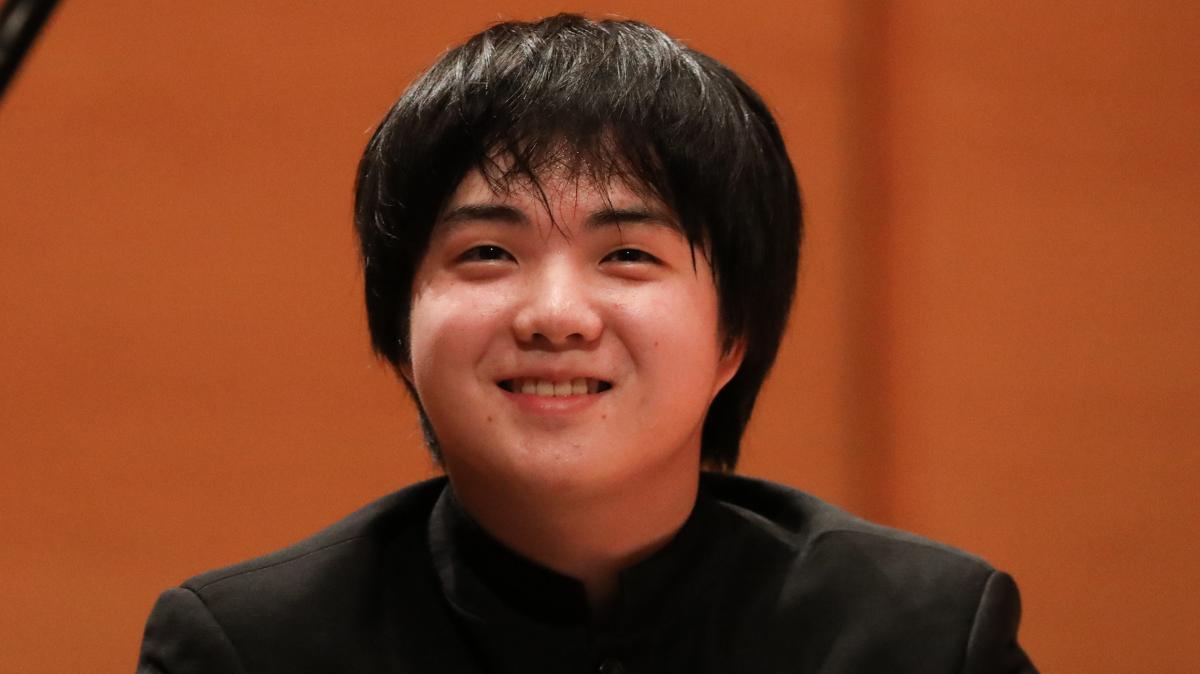
Mao Fujita (piano, above), Royal College of Music Chamber Choir, Royal Philharmonic Orchestra / Vasily Petrenko (below)

Royal Festival Hall, London
Thursday 3 February 2022

Written by Richard Whitehouse. Photo credit (Mao Fujita) Vyacheslav Prokofyev / Getty Images

Great British Music is the theme underlying the Royal Philharmonic Orchestra’s current series of concerts at Royal Festival Hall – a major work of the earlier 20th century complemented by music elsewhere in Europe and, in this instance, a commission from a young British composer.

Her output widely championed, not least by the RPO’s new music director Vasily Petrenko, Dani Howard is already master of the curtain-raiser. Hence the engaging yet never superficial effect of Ellipsis – her tribute to this orchestra in its 75th anniversary which alludes to various pieces and personages in its history, with a deftness that made for an appealing if not overly memorable listen. Not in doubt, though, was the keen motivic resource with which the piece unfolded from its fanfare-like opening bars towards the fervent apotheosis at its culmination.

Only caution through its origins in borrowed material can have prevented Rachmaninov from designating Rhapsody on a Theme of Paganini as his ‘Fifth Piano Concerto’. Certainly, those volatile mood-swings of its initial 15 variations, inward rapture of the next three then tensile incisiveness of the closing six variations constitute a three-movement design whose Classical proportions are informed by the developmental ingenuity of a later era. Qualities Mao Fujita brought out in notable measure during a performance which lacked little in technical finesse.

One of a handful of pieces whose all-round audacity was the incentive rather than deterrent   to its immediate acceptance, The Planets was destined to prove the defining work of Holst’s career whose sheer impact a century and more has not diminished. Petrenko was evidently keen to emphasize its symphonic dimension through allying its seven movements to a broad consistency of pulse – witness the follow-through from his remorseless while never unduly histrionic take on Mars to his sensuous if never cloying approach to Venus. The former saw a suitably galvanic response from the RPO brass, the latter an elegance and poise from its strings which was no less evident in Petrenko’s lithe Mercury, then a Jupiter whose impetuous outer sections framed an eloquent and unaffected handling of the indelible trio.

Even the (doubtless) spontaneous applause which greeted this most familiar section did not undermine contrast with the emotional starkness of Saturn as it headed towards a climax of wrenching plangency, before finding release in a final stage that was nothing if not cathartic. The only passing disappointment came with Petrenko’s skittish and over-hasty rendering of Uranus, such as forced the martial main theme into a rhythmic straitjacket (for all that the climactic organ glissando made its mark) then detracted from the emptiness of its final bars. Not that this prevented Neptune from casting an otherworldly spell – whether in the modal musing at its start, those ethereal textures near its centre, or the gentle evanescing into which orchestra and wordless voices (the laudable RCM Chamber Choir) withdraw toward its close. If not a revelatory account, this was nevertheless a committed and involving performance that renewed admiration for Holst’s magnum opus as well as reinforcing the overall excellence of the Royal Philharmonic in the early stages of what looks set to be an era of real achievement.

For more information on the Royal Philharmonic Orchestra’s 2021-22 season, visit their website. Meanwhile click on the links for information on the artists Mao Fujita and Vasily Petrenko.

Listening to Beethoven #205 – Der Wachtelslag WoO 129

peanuts-birds

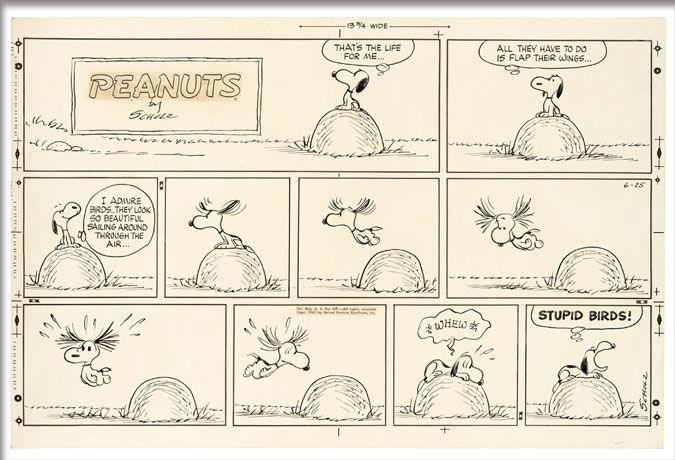
Peanuts comic strip, drawn by Charles M. Schulz (c)PNTS

Der Wachtelslag WoO 129 for voice and piano (1803, Beethoven aged 32)

Dedication not known
Text Samuel Friedrich Sauter

Duration 3’45”

Listen

Background and Critical Reception

The guide to this song on the website of the Beethoven-Haus Bonn lists it as a ‘box office hit’. Certainly Beethoven was aware of the popularity of Der Wachtelschlag (The Call of the Quail), informing the publisher Breitkopf & Härtel in Leipzig, “I am offering you the following works for 300 gulden: A quail song, the text of which you may know. It consists of three verses, but my setting is entirely durchkomponiert (through-composed)”

For some reason the publishers did not take the song and it was released the following year by Kunst- und Industrie-Comptoir in Vienna. The autograph score hints at another dedication to Count Browne, but this did not carry over to the original.

For Susan Youens, writing booklet notes for Signum Classics, the song “belongs to the antique tradition of bird calls in music…a bird whose calls invoke God”. She compares Beethoven’s setting with a later one from Schubert. “Both men inevitably devised the same dotted rhythmic figure for the quail’s calls”. Beethoven, however, “takes the poem far more seriously and from the perspective of the human being who listens to these worshipful injunctions. Ranging farther afield tonally than his younger contemporary, Beethoven’s storms are more tempestuous (the low bass rumble of thunder is a particularly wonderful detail), his acclamations of God’s praise grander, and his pleas for God’s aid more plangent.”

Thoughts

This is surely one of Beethoven’s most descriptive and dramatic songs – and is an indication of his development into a song composer of greater experimentation. The form of the song is quite unusual, being through-composed and taking an operatic air at times. Beethoven also brings the piano and voice close together in a shared depiction of the source material.

As Youens notes above, the rumble of the piano, low in the left hand, is a brilliant dramatic touch, while the ‘recitative’ nature of some of his vocal writing brings Handel to mind (to this ear at least!). Around the time of this song Beethoven had been working on a large, dramatic score (Christus am Ölberge, to be covered shortly) and this may be a fruitful result of the inspiration from that stage work.

It certainly makes a strong impact!

Recordings used

Dietrich Fischer-Dieskau (baritone), Jörg Demus (piano) (Deutsche Grammophon)
Peter Schreier (tenor), András Schiff (piano) (Decca)
Barbara Hendricks (soprano), Love Derwinger (piano) (Arte Verum)
Christopher Maltman (baritone), Iain Burnside (piano) (Signum Classics)
Hermann Prey (baritone), Leonard Hokanson (Capriccio)

Dietrich Fisher-Dieskau is the ideal singer for this song, forcefully bringing it to life with the equally fervent tones of Jörg Demus. Yet his is not the only way to express Beethoven’s thoughts – Peter Schreier and András Schiff may be higher up the register (F major rather than D), and they glower less, but they still invest plenty of feeling in the text. The other versions listed are also very fine – including soprano Barbara Hendricks and Love Derwinger, at the same higher pitch but with a sharper tone from the singer. Christopher Maltman and Hermann Prey complete a formidable discography.

Also written in 1803 Krommer Symphony no.2 in D major Op.40

Next up Christus am Ölberge (Christ on the Mount of Olives), Op.85

Listening to Beethoven #206 – 3 Marches for piano duet Op.45

ballesio-duet
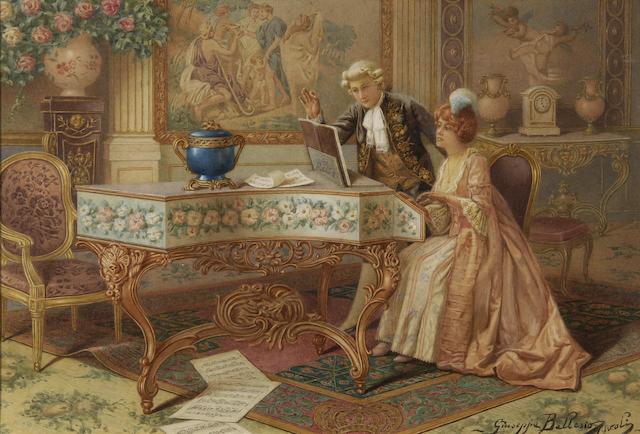
The duet by Giuseppe Ballesio

3 Marches for piano duet Op.45 (1803, Beethoven aged 32)

Dedication Princess Esterházy
Duration 14′

no.1 in C minor
no.2 in E flat major
no.3 in D major

Listen

Background and Critical Reception

Beethoven’s return to the piano duet came through a commission from Count von Browne, the dedicatee of his three String Trios Op.9. Peter Hill, writing booklet notes for one of his last recordings for Delphian in 2020 (with Benjamin Frith), refers to a story given by Beethoven’s pupil Ferdinand Ries. Ries had been entertaining the Browne house with music by Beethoven, and mischievously included a march of his own which he passed off as a piece by his teacher. It was well received, but the joke backfired when he had to repeat the piece in the company of Beethoven himself.

Fortunately Beethoven saw the funny side, and also got the commission. As Hill notes, the three marches bear no resemblance to another famous march from later in the year – the funeral march second movement of the Eroica symphony – being substantial works in their own right.

Thoughts

These are really meaty pieces, close on five minutes each in duration. They are clearly structured with bold, contrasting ‘trio’ sections, too – much more so than the relatively slight collections of dances we have had from Beethoven to date.

The first piece has a grand stature, very upright and noble as the first theme is vigorously announced. As it progresses, however, Beethoven introduces a few subtle doubts, playing with major and minor tonality in a way Schubert might have done. There is quite a substantial middle section, which possibly hints at the forthcoming Fifth symphony.

The second march retains a heroic air, due partly to its key of E flat major, though its trio moves into A flat major for a playful section powered entirely by a rumbling bass note low down in the register of the piano. There are some unpredictable, fantasia-like elements here, but the familiar rumble is never far away.

The bracing third march is also powered by the bass, Beethoven moving into D major for a triumphant finale which is notable for its staccato, sharply dotted rhythms.

Recordings used and Spotify playlist

Peter Hill & Benjamin Frith (Delphian)
Amy and Sara Hamann (Grand Piano)
Jörg Demus & Norman Shetler (Deutsche Grammophon)

Amy and Sara Hamann have recorded the marches twice – once on a modern Yamaha instrument and again on an instrument from Nanette Streicher, née Stein, ca. 1815. Both interpretations are lively, though on the original instrument there is extra bite to the rhythms. Peter Hill and Benjamin Frith clearly enjoy their account, with a natural give and take between the two. Demus and Shetler go slower on the first march, to good effect, before an extra snap to the rhythms of the second and third.

Also written in 1803 Viotti Trio for two violins and cello in E major

Next up Der Wachtelschlag WoO 129