In concert – Birmingham Contemporary Music Group & PRiSM: Iannis Xenakis Centenary – Maths and Music

CBSO Centre @ 3pm:

Xenakis Plektó (1993)
Pattar Philosophy should stop at midnight (2022) [World Premiere]
Tzortis Croque strideurs (2022) [World Premiere]
Xenakis Anaktoria (1969); Nomos Alpha (1966); Phlegra (1975)

Arne Deforce (cello), Musicians of BCMG: NEXT / Melvin Tay

CBSO Centre @ 5pm:

Xenakis Ittidra (1996)
Fernando Breathing Forest (2022) [Sound and Music commission: World Premiere]
Xenakis Akanthos (1977)
Howard Compass (2022) [BCMG Sound Investment commission: World Premiere]
Xenakis Jalons (1986)

Anna Dennis (soprano), Julian Warburton (percussion), Birmingham Contemporary Music Group / Gabriella Teychenné

The Exchange @ 7pm:

Luque It Is happening Again (2019-21) [UK Premiere]
Xenakis La Légende d’Eer (1978)

Birmingham Electro Acoustic Sound Theatre, Sunday 29 May 2022

by Richard Whitehouse

There could been no better way for Birmingham Contemporary Music Group to round off its current season than with this extended tribute to Iannis Xenakis on his 100th birthday. Over three events, a representative selection of the Greek composer’s work was heard within the context of new commissions and realizations of graphic scores.

The latter featured in the Synesthesia concert, after an earlier session where this ‘free, internet-browser-based music application’ (continuing from the UPIC programme that Xenakis pioneered in the 1980s) was made available – two previous graphic scores forming the basis of those pieces heard this afternoon.  Philosophy should stop at midnight found Frédéric Pattar following quite literally the contours of the score, a deft humour pointed up though the verse by Richard Brautigan (perhaps a latter-day ‘consolation of philosophy’?), whereas Croquis strideurs found Nicolas Tzortis aligning his score with poetry by Arthur Rimbaud in what was a more capricious or ‘off the wall’ approach.

The three pieces by Xenakis (above) were well chosen to demonstrate the expressive range of his music. Plektó (Braids) is typical of the music from his last years with its teasingly subversive take on a mixed ensemble, while Anaktoria (a lover of Sappho) puts an ensemble as modelled on Schubert’s Octet through its paces in music by turns ingratiating and obstreperous. Most impressive was Phlegra (being (different) regions of modern and ancient Greece), written at the advent of that period when ‘arborescence’  principles brought a new evolutionary dynamism to the composer’s thinking evident in this assured reading by musicians of BCMG: NEXT under the attentive direction of Melvin Tay.

Cellist Arne Deforce earlier took the stage for a performance of Nomos Alpha, typical in its utilizing mathematical abstraction to create viscerally emotional music. Visuals by Marcus de Sautoy and Simon Russell, as derived from the symmetrical properties of a cube, were arresting but it was the musical realization which commanded attention.

Three more pieces by Xenakis were included in the late-afternoon concert. Among his last works, Ittidra (unusual for this composer with its being the reverse spelling of the dedicatee’s name) is a brooding and ultimately fatalistic reassessment of the string sextet, and Akanthos (a city in ancient Greece) extends its instrumental remit to include woodwind and brass as well as soprano whose vocalise adds an often ethereal but at other times keening timbre to the ensemble – vividly conveyed here by Anna Dennis. Again, it was the closing item which made the most lasting impression. Xenakis’s relations with the modernism as represented by Pierre Boulez might at times been strained, but there was evident accord by the time he wrote Jalons for the latter’s Ensemble Intercontemporain. Here those ‘signposts’ or ‘landmarks implied by the title emerge as gestural peaks in music whose headlong motion generates irresistible excitement, and not least with BCMG sounding so responsive to the  guidance of Gabriella Teychenné.

Alternating with these works in either half were new commissions by very different composers. With its libretto by Zoe Palmer, Breathing Forest is described by its composer Samantha Fernando as ”A meditation on the inner struggles of a woman and her transformation through the Japanese art of … forest bathing”. What resulted was an exploration of its atmospheric text, realized with audible precision and elegance by Anna Dennis, whose musical substance – while not unappealing in itself – remained too inert to convey the emotional catharsis likely intended. More absorbing was a BCMG commission from Emily Howard, whose Compass takes those spatial and nautical connotations of its title as basis for music that unfolded as a cohesive dialogue between string septet with Julian Warburton‘s array of percussion. Few latter-day composers have shown Howard’s zeal for the interplay of music with mathematics, BCMG’s committed realization vindicating her latest piece musically as well as conceptually.

The final event, an acousmatic concert by Birmingham Electro Acoustic Sound Theatre (BEAST), relocated from CBSO Centre to The Exchange – an impressive Grade Two-listed building on Centenary Square under the auspices of University of Birmingham. Its third-floor conference room certainly suited these two pieces – starting with It Is Happening Again by the Mexican-born, now Madrid-based composer Sergio Luque. Drawing on his development  of Xenakis’s stochastic synthesis process, this proved to be a short while evocative study in density of sonic waves whose inherent abstraction was far from being without a tangible atmosphere through its succession of sonic ideas.

Although hampered by microphone malfunction, Christopher Haworth‘s introduction to the next piece was full of relevant detail concerning the purpose and reception of electroacoustic music. Not least when the piece in question was La Légende d’Eer, most expansive and all-encompassing of those Xenakis realized and which caused no mean controversy when initially heard as a musical facet of Diatope at the inauguration of the Pompidou Centre, with its apparently high level of amplification. The present multi-channel version was more easily accommodated, if not at the expense of its dazzling variety – Xenakis evoking the Platonic legend of a soldier returning from the dead via a symmetrical form which takes in an array of instrumental and synthesized sounds as they build to a sustained peak of organized frenzy before the almost regretful evanescence. Had nothing else survived, Xenakis would still have been thought a key creative figure from the post-war era and its impact has not lessened with time or expectation.

It certainly set the seal on a finely conceived and impressively realized sequence of events that reaffirmed Xenakis as a composer whose legacy is undeniable and his influence enduring. The 2020s will bring a whole succession of notable centenaries (that of Ligeti being just a few months away) and BCMG has set the bar high for those to come.

Click on the names for more information on the Birmingham Contemporary Music Group, composers Frédéric Pattar, Nicolas Tzortzis, Samantha Fernando and Emily Howard, and performers Sergio Luque, Anna Dennis, Arne Deforce, Julian Warburton, –
Melvin Tay, Gabriella Teychenné and Christopher Haworth.

Switched On – Various Artists: ReFabricated: Volume I (Cue Dot Records)

What’s the story?

Having reached a dozen albums in their Cue Dot series, and setting a few electronic music markers down in the process, Paul Scott’s label are taking a little time to survey their work to date. They are doing this in a clever way, getting each artist from the series involved in a remix and reworking album, each one reworking the work of another or having their own originals fed back to them.

This melting pot of creativity is capped with the final remix of 13, where 808 State’s Graham Massey takes on Scissorgun.

What’s the music like?

ReFabricated has all the qualities Cue Dot artists have exhibited throughout this series, getting the blend of ambience and the germination of ideas these artists have so consistently had.

R. Seiliog’s remix of Lyndon Scarfe‘s Starling is a beauty to start with, making slow and stately progress against a much bigger background. Seiliog returns the favour to Toby Wiltshire, the twinkling remake of Emerald Sylvan shifting slowly and rather beautifully across the sky.

Meanwhile the spoken word / steady build combination of Fragile X reworking Lying Cat generates positive movement and energy. Spoken word has a bigger role in the more playful Lammy from SAD MAN & Francis Lowe, who gain a loose-limbed bass and groove from Moth Effect.

The musical variety in this selection is one of the most pleasing things. Beat-heavy remixes such as A Human Concept‘s take on Manfred Hamil‘s It’s Not A Drug It’s A Drink work really well, as does the supple groove of Scissorgun, remixing Moth Effect‘s When The Bloom Is Off The Rose. SAD MAN gets the synths bubbling on Scissorgun’s own Sybarite, the broken rhythms following suit, while Hamil’s Asphyxiated gets a really nice Lo Five remix, with closely woven textures and complementary melodies.

Many of the tracks have an ‘outdoors’ feel to them, the germination given a natural aspect. Lyndon Scarfe‘s remix of Veryan‘s Belonging has a lovely open feel, while the thick ambience in Manfred Hamil‘s remix of Human Concept‘s A Reason To Feel suggests the half light at either end of the day, before consoling beats arrive.

Others pan out further for a panoramic view, with Toby Wiltshire‘s Orange Light glowing softly in Veryan‘s rather wonderful remix – or go in close, as Graham Massey does on a compelling stitch-up of Scissorgun’s Tangie Biscotti.

Does it all work?

It does. The music is ideally ordered, and the creative spirit of these artists shines through in both explicit and subtle ways.

Is it recommended?

Yes – ReFabricated is a great way in to the Cue Dot label, or, more likely, an enhancement to the fine things you have already heard.

Listen / Buy

In concert – Zoë Beyers, English Symphony Orchestra / Kenneth Woods: Celebrating the Queen’s Platinum Jubilee

Beethoven Egmont, Op. 84 – Overture (1809-10)
Elcock Violin Concerto, Op. 13 (1996-2006) [UK premiere]
Vaughan Williams The Lark Ascending (1914/20); Symphony no.5 in D major (1938-43)

Zoë Beyers (violin), English Symphony Orchestra / Kenneth Woods

Routh Hall, Bromsgrove School
Friday 27 May 2022

There will be many concerts over the next fortnight celebrating Queen Elizabeth II’s Platinum Jubilee, but few (if any) of more substance than that given tonight by the English Symphony Orchestra with its principal conductor Kenneth Woods, taking place on the attractive campus of Bromsgrove School some miles from Birmingham.

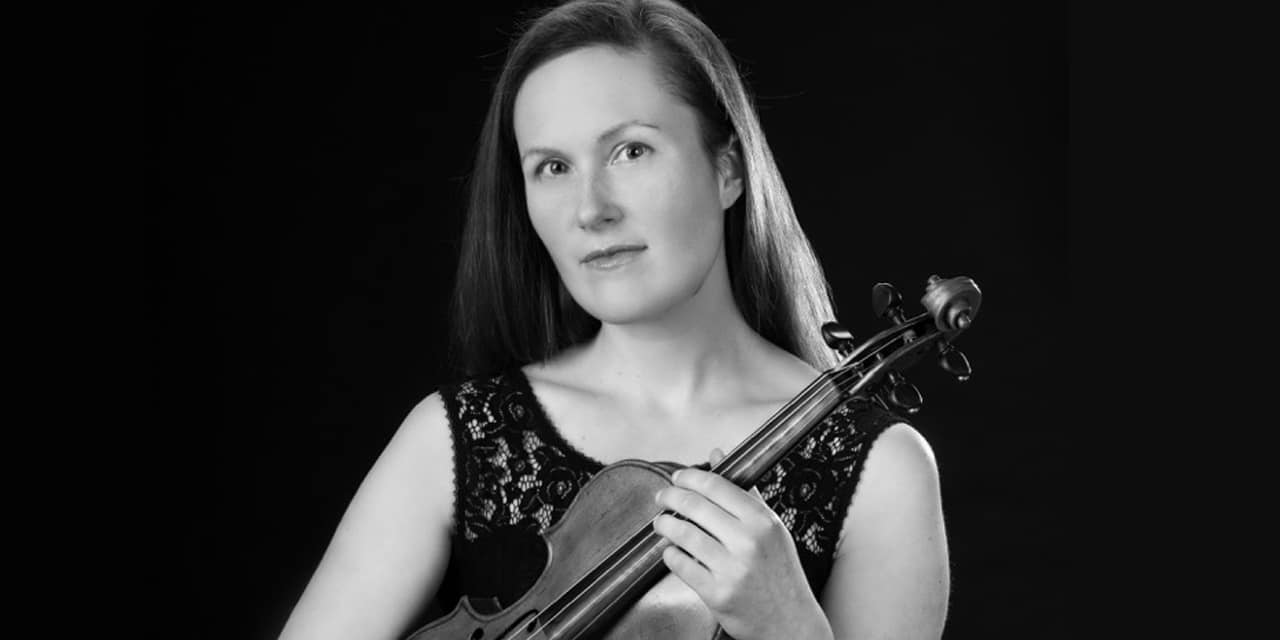
It might not have been written for this occasion, but the Violin Concerto by the ESO’s current composer-in-association Steve Elcock (above) was no less impressive for that. This marks something of a transition from those less ambitious pieces written for local musicians and the symphonic works now being recorded to great acclaim. It opens with an Allegro vivo whose rhythmic energy is maintained throughout, yet with enough expressive contrast for its second theme to assume greater expressive emphasis in the reprise. The highlight is a Molto tranquillo whose haunting main theme, initially unfolded by the soloist over undulating upper strings in a texture inspired by change-ringing techniques, is a memorable inspiration. A pavane-like idea later comes into focus and the closing stage, opening onto an eloquent plateau before evanescing into silence, lingers in the memory. The finale is a Passacaglia whose theme accelerates in five variations from Andante to Presto, culminating in a ‘cadenza’ for violin and timpani then a decisive pay-off.

A tough challenge, indeed, for any soloist and one which Zoë Beyers met with assurance over its 30-minute course. Aside from its sheer velocity the first movement is notable for a close-knit interplay between soloist and orchestra that was brought off with admirable precision, while the modal subtleties of the slow movement were rendered as enhancements to its overall tonal trajectory. Aside from a slight falling away of tension toward its centre, the finale saw the piece to a forceful close. Good to hear these performers recorded it prior to this performance, as a coupling to the Eighth Symphony that the ESO premiered last year, and which should be released over the coming months.

Beyers returned after the interval to launch a Vaughan Williams second-half (this year being the 150th anniversary of his birth) with The Lark Ascending. Easy to take for granted now that it is so frequently performed, the piece can still work its magic in an attentive rendering such as this. The underlying tempo might have been on the slow side, but the elegance and poise invested into the solo line were not to be gainsaid, nor was the translucency of orchestral textures which Kenneth Woods shaped with due restraint through the folk-like central section then into the easeful closing pages. Suffice to add that the unaccompanied final bars held those present spellbound with their artlessness.

There was at least as much to admire in the reading of VW’s Fifth Symphony which here followed on inevitably. A steady overall tempo for the Preludio did not exclude a palpable accumulation of energy in its development, nor a build-up of real fervency with the thrilling re-entry of its second theme. Understated it may be, but the Scherzo is replete with rhythmic quirks and while these were not always ideally negotiated, the music’s sardonic humour and ultimate evaporation were tellingly rendered. Doubtless this work’s emotional heart, the Romanza was admirably realized in its gradual coalescing of hymnal and folk-inflected elements towards a nobly wrought apex, but Woods kept enough in reserve so the final Passacaglia never risked becoming an anti-climax. It earlier stages conveyed  an emotional release as is countered by the ensuing anxiety then fateful reappearance of the work’s opening theme, subsiding into a coda which feels as much a benediction now as when it was first heard almost eight decades ago.

Beethoven‘s overture to Goethe’s Egmont might have seemed anomalous in this context but, as Woods pointed out in his opening remarks, the heroes and villains of 16th-century ‘Spanish Netherlands’ were not so far removed from those of today and, as the heady closing pages reminded us, triumph over adversity can never be taken for granted.

For further information on Steve Elcock, click here to visit his dedicated site, and for more on Vaughan Williams click here. To find out more about the artists, click on the names for more on Zoë Beyers, Kenneth Woods and the English Symphony Orchestra.

Switched On: Cool Maritime – Big Earth Energy (Western Vinyl)

by Ben Hogwood

What’s the story?

Cool Maritime is a pseudonym for Santa Cruz musician Sean Hellfritsch. With a childhood spent outdoors in Californian orchards and canyons, he has perhaps not surprisingly fostered a deep concern for natural and environmental issues. His music is an extension of that, and Big Earth Energy builds on the success of last album Sharing Waves, released on LA’s Leaving Records. The name Cool Maritime reflects the bond he has felt with the northern coastal climates.

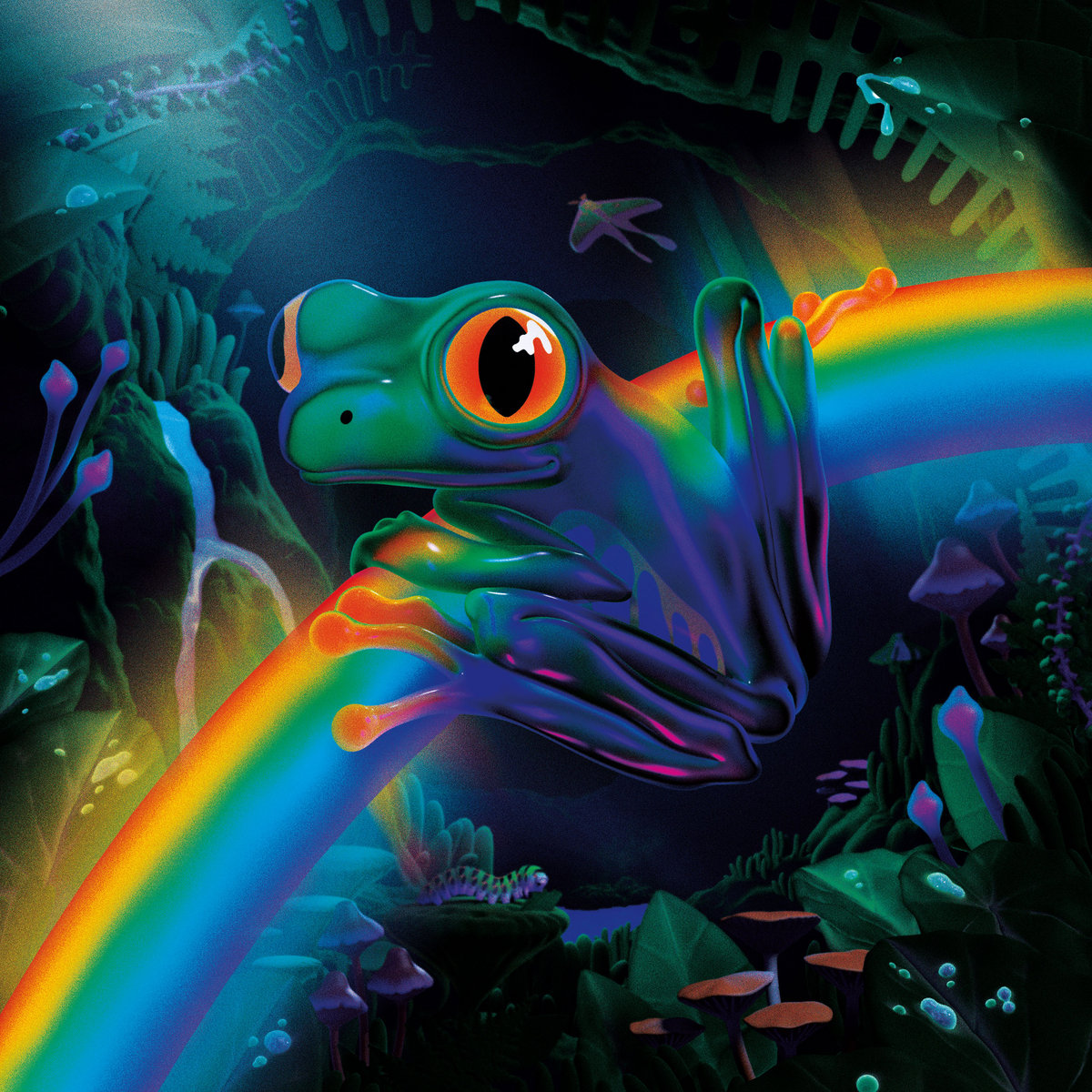
Hellfritsch had a concept for this album, looking back to 1995 and his first encounter with the game MYST. This time the player takes on the mantle of a prehistoric tree frog, changing ‘ages’ with each new level of the game and in the process finding out the massive changes the earth has gone through in that time.

What’s the music like?

Big Earth Energy takes its lead from 1980s Japanese ambient music, with a language that often ‘feels’ Eastern but never explicitly names a time or a place. Hellfritsch likes to keep things moving, but at the same time there is a good deal of ambience to enjoy when the listener pans out to listen on widescreen or headphones.

The richly coloured title track settles and builds its material from small building blocks, gently swaying as though in a breeze. Soft Fascinations has rippling textures that generate positive, restorative energy from which bigger chords can dominate. Amphibia is also deeply shaded, wide open in texture and melodic possibility.

Very soon the ear falls under the spell of the music, and its easy, slightly chunky 1980s sound profile sits very nicely in the context of its material. Avian Glide has a similar effect, with soft marimba lines complementing analogue synth washes. There is plenty of melodic interest, and a discernible pulse, but little outright percussion is used.

Hellfritsch has an appealing style, generating movement through positive melodies and consonant harmonies, with light textures that can sometimes mask the number of countermelodies and crossrhythms in play. Secret of the Megafauna is good example here, a dense forest of musical happenings with ‘plants’ that cross paths, interweave and break apart again. It leads into the sharper lines of closing track Apex, the highest plateau now reached.

Does it all work?

Yes. There is a cleansing quality to Big Earth Energy, the sort of album you would put on when looking to take the weight from your shoulders or feet – along the lines of a producer such as Matthewdavid (owner of Hellfritsch’s previous label) or current label mate Kaitlyn Aurelia Smith. The feel of the music could be described as New Age, with washes of primary musical colours and ambience, but that shouldn’t mask its emotive content or depth.

Is it recommended?

It is – Big Earth Energy is a wholly positive piece of work in the face of environmental adversity.

Listen

Buy

In Appreciation – Alan White & Andy Fletcher

by Ben Hogwood

Yesterday was a sad day for fans of pop music, with Alan White and Andy Fletcher, two members of Britain’s biggest and finest rock bands, sadly leaving these shores.

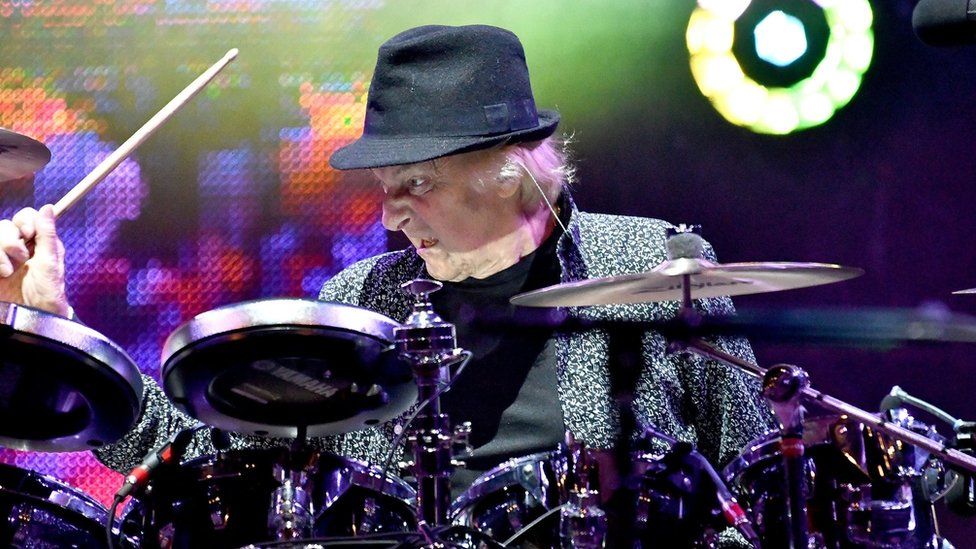
Alan White, drummer with Yes from 1972, died on 26 May at the age of 72. White was very different from Bill Bruford, who many fans would name in their fantasy Yes line-up, but he had an incredibly strong rock aesthetic in contrast to Bruford’s jazzier leanings. Both more then proved their worth as indispensable members of the group, with the often unsung White providing drums for landmark albums Going For The One, Fragile and Tales From Topographic Oceans. White also enjoyed session work with John Lennon and George Harrison in their solo careers.

A personal memory from seeing Yes live in Hammersmith in 1998 is that White was the lynchpin, forming an incredibly solid and dynamic rhythm section with Chris Squire, also sadly departed. The pair providing some unexpected funk to much-loved tracks like I’ve Seen All Good People. Here is the studio version:

The band’s new material in that decade was also notable for bringing out White’s rock attributes, as the opening track The Calling, from 1994’s Talk, illustrates:

The Fish (Schindleria Praematurus), from the Fragile album, shows White’s ability to underpin a track with the most unwavering pulse, no matter how tricky its rhythmic profile:

Meanwhile here is a track from 1974’s Relayer, a chance to appreciate White’s virtuosity and musicality:

Also announced yesterday was the sad death at 60 of ‘Fletch’, a founding member of Depeche Mode. The Essex group have been going for a remarkable 42 years, with Andy Fletcher an ever-present on keyboards. In a moving social media post yesterday, the band paid tribute to a much-loved friend:

Here are two stand-out performances from Depeche Mode’s early years, beginning with their first appearance on Top of the Pops in 1981 with New Life, from outstanding debut album Speak and Spell. This first incarnation of the band presented a new sound with synthesizers that was only just breaking into the mainstream, and the fresh faced pioneers were clearly enjoying their art:

By the time Just Can’t Get Enough came around, the band were regulars in the charts with a succession of brilliant pop songs. This one in particular has lasted the distance, introduced by a jabbing riff from the keyboard section that is a proper mind-worm! In both visuals ‘Fletch’ can be seen getting the most out of the music:

Finally a lesser-known example from the Mode’s singles back catalogue, the exquisitely shaded Everything Counts, seen here from the legendary Pasadena Rose Bowl concert in 1988, part of the 101 tour. Here, keyboards and an electronically treated oboe create some unusual and unexpectedly graceful treble lines: