In concert – London Symphony Orchestra & Sir Antonio Pappano – Petrassi, Puccini & De Sabata

G. Gabrieli Canzoni – primi toni a 8; duodecimi toni a 8 (c1597)
Vivaldi Concerto for Four Violins in B minor RV580 / Op.3/10
Petrassi Concerto for Orchestra No. 5 (1954-5)
Puccini Capriccio sinfonico (1883)
De Sabata Juventus (1919)

Benjamin Gilmore, Julia Ungureanu, Julián Gil Rodríguez, Thomas Norris (violins), London Symphony Orchestra / Sir Antonio Pappano

Barbican Hall, London

Thursday 2 June 2022

Written by Richard Whitehouse

What better way to mark Queen Elizabeth II’s Platinum Jubilee than with two concerts providing a decent overview of Italian orchestral music with the London Symphony Orchestra and its chief conductor designate Sir Antonio Pappano. That relatively little of this music has managed to enter the standard repertoire only makes revivals such as these the more worthwhile.

Tonight’s programme began off-stage with two Canzoni by Giovanni Gabrieli played by LSO brass from the centre of the lower circle – Pappano facing the audience to conduct. Although a more spacious and terraced acoustic would have presented these to better advantage, their hieratic grandeur as well as intricately contrapuntal texture was an admirable foil to Vivaldi‘s Concerto for Four Violins which followed onstage. Published in his ground-breaking collection L’estro armonico, its bracing outer Allegros frame a brief while unpredictable Largo whose disjunctive contrasts of tempo and technique brought the best out of a quartet drawn from the LSO front desks and notably well-matched in temperament.

From the early 18th to mid-20th century was less of an aesthetic wrench than might be thought, the Fifth Concerto for Orchestra by Goffredo Petrassi embodying various of those facets as set out by his musical antecedents. Written for the Boston Symphony and long-serving director Charles Munch, this is arguably the most representative of its composer’s eight such works in its amalgam of technical virtuosity with that personal adaptation of serial thinking which Petrassi pursued during the post-war era. Moreover, its outwardly simple format of two movements each following a slow-fast trajectory belies a subtler and more organic evolution – such that an atmospheric prelude intensifies into a capricious scherzo whose provisional close makes possible what follows. Here, an increasingly restive intermezzo elides into a Dionysian toccata with brass and percussion to the fore – then a pensive epilogue returns the music to the inwardness from which it had emerged. A superb performance from the LSO, and a timely revival of this not so minor masterpiece.

His operas brought the orchestral component of Italian opera to a new level of sophistication, but Puccini wrote little for orchestra alone. Essentially his graduation exercise, Capriccio sinfonico is equally a ‘statement of intent’ with its unfolding from a sombre opening (later to be redeployed in Edgar), through an energetic central phase (its main idea familiar as the opening of La bohème), to a modified reprise of that first section which brings about a gently fatalistic close. Pappano duly guided the LSO through an assured reading of music known ‘by default’, making one regret that Puccini’s later focus on opera to the virtual exclusion of all else left no comparable orchestral work from his maturity.
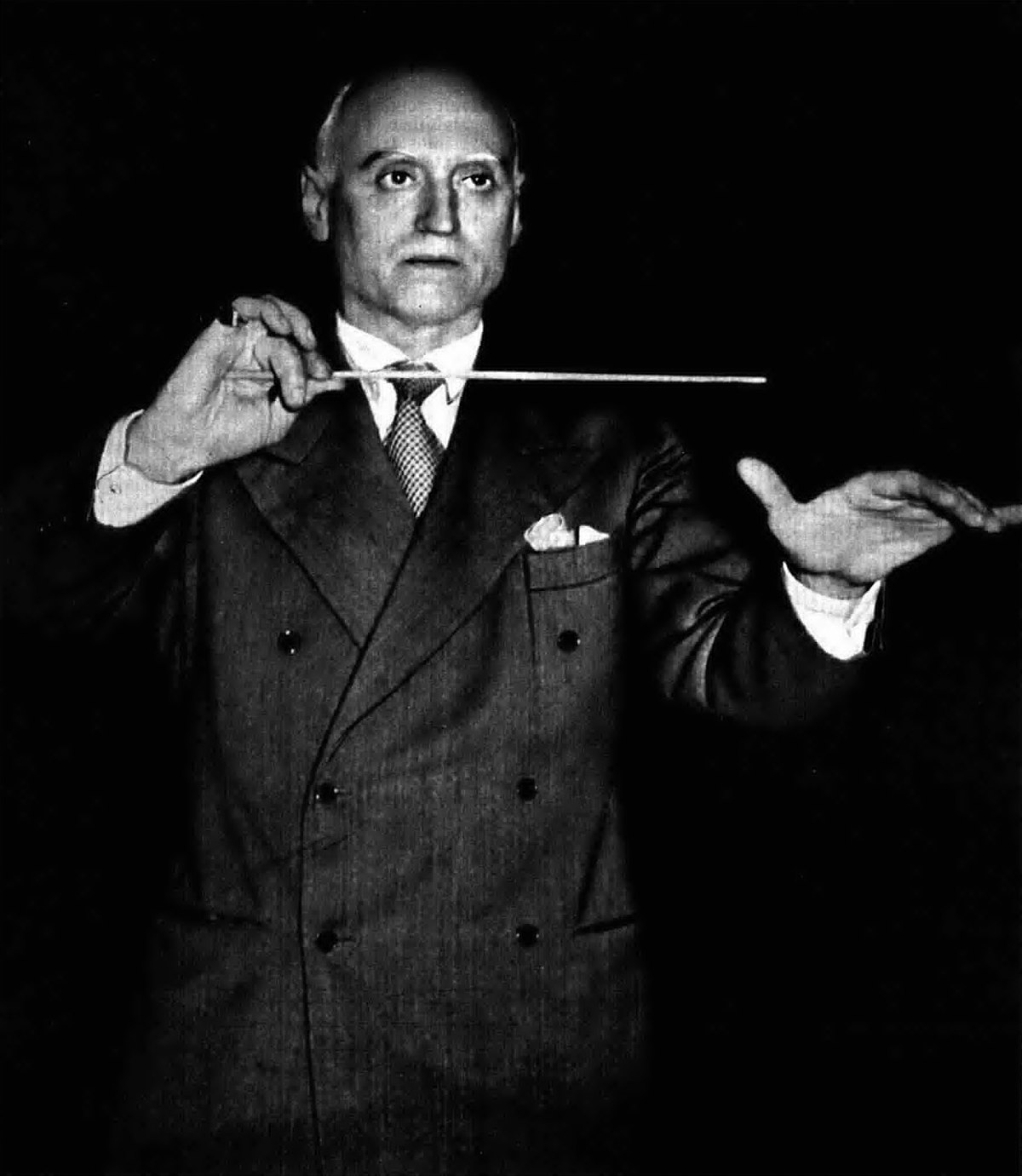
Much the same might be said of Victor de Sabata (above), whose international career as a conductor from his late thirties left him with little time or inclination to compose. A sequence of symphonic poems from around the early 1920s confirms sure mastery of the orchestra, and if Juventus is hardly the deepest of these, its dramatic flair and gestural immediacy are not to be gainsaid. Here, too, there is a three-part structure – the vaunting aspiration of youth becoming subsumed into the trials and setbacks which come with experience, before a revival of those earlier convictions ensures a close of blazing affirmation. Other composers might have invested such a sequence with a dialectical sense of change and attainment, but de Sabata is content to take these implications at face value – while investing his music with a greater subtlety and resourcefulness than it has often been credited for (not least by the writer of this evening’s programme note). This was certainly evident in Pappano’s take on a piece which could yet attract plaudits for other than its name.

As if mindful of the context in which this concert was heard, Pappano opened the second half with a rendering of the National Anthem – somewhat to the surprise of an audibly bemused audience, and presumably not to be repeated for Sunday’s follow-up programme that features Respighi and Dallapiccola at their (very different) communicative best.

To read more on the London Symphony Orchestra’s current season, visit their website

Royal composers – Sir Hubert Parry: I Was Glad

by Ben Hogwood

Our brief survey of coronation music arrives at the quintessential choral anthem, Sir Hubert Parry‘s I Was Glad.

Completed in 1902, Parry’s work sets the text of Psalm 122. It was not the first setting of the psalm, with Henry Purcell and William Boyce – royal composers themselves – setting the texts for coronations of James II (1685) and George III (1761) respectively.

Parry’s is the version we hear most often today, used in the coronation of King Edward VII in its year of composition, then for the Coronation, silver, diamond and platinum jubilees of Queen Elizabeth II, not to mention the wedding of Charles and Diana in 1981, then William and Kate in 2011.

In a resplendent B flat major, the piece has it all – grand trumpet fanfares, thunderous organ lines, and thrilling choral lines that have been seized on gratefully by choral societies around Britain. Little wonder that it has been chosen for such important occasions, for in a good performance Parry’s exultant piece comfortably fills a cathedral.

Royal composers – Sir Arthur Bliss, John Ireland & Sir Arnold Bax

by Ben Hogwood

Our brief look at the music used in the Coronation of Queen Elizabeth II continues with three lesser-known composers whose music was used at either end of the ceremony in 1953.

Receiving its first performance was the Processional by the new incumbent of the position Master of the Queen’s Music, Sir Arthur Bliss. Ideally timed for the ceremony (with a procession that was in total more than six miles!) its orchestral opening builds steadily until the grand entry of the organ half way through. After its central section the piece builds to a rousing conclusion, led by organ, brass and drums:

Also heard before the service was the Epic March by John Ireland. This was effectively a piece of wartime propaganda, written in 1942 to boost the spirits of a flagging nation. When asked for the piece, Ireland wrote to Sir Adrian Boult, “What I have in mind is stern and purposeful rather than jolly and complacent”. The piece was first heard on the opening night of the 1942 season of Promenade concerts, and its stoic, noble tones were wholly suitable as part of the music before the Coronation service:

As the royal party and guests departed they heard the familiar strains of Elgar’s Pomp and Circumstance Marches, nos. 1 & 4 respectively. Sandwiched between the two pieces was a new work by Sir Arnold Bax. The Coronation March has an unmistakably regal feel, some choice moments for the trombones, and a suitably royal chorale to finish:

Royal composers – Sir William Walton

by Ben Hogwood

As all UK-based readers of Arcana will surely know, it is a long weekend of celebrations for the Platinum Jubilee of Queen Elizabeth II. On these pages I thought it would be a good opportunity to look at some of the music used in the service of her Coronation, which took place a year to the day after her accession to the throne.

We begin with three pieces from Sir William Walton which have become some of his best-loved works. The first, Crown Imperial, is almost instantly recognisable, a piece that brings great pomp and circumstance to a ceremony without ever spilling over into over-patriotic bluster – very English, in short. Crown Imperial was commissioned by the BBC for the coronation of George VI in 1937, and was also used in the ceremony for Elizabeth II in 1953

At the close of the ceremony the congregation heard a new piece, Orb and Sceptre, for which Walton was paid £50 by the Arts Council in October 1952. The composer was candid about the new piece. “The Orb and Sceptre I wrote for her is goodish – not as good as Crown Imperial, but I did my best.” He was being modest, for there are still some good tunes contained within, a hint of Elgar in the regal second theme, and colourful writing for brass and percussion.

In November 1952 the organist of Westminster Abbey, William Mackie, persuaded Walton to write a Te Deum for the forthcoming service. With the chance to use the Queen’s Trumpeters, the composer agreed, writing a piece fit for the occasion, using the space of Westminster Abbey to perfection with bold orchestral writing, a spicy organ part and celebratory choral writing. Lady Susanna Walton, the composer’s wife, recalls, “The actual coronation was extraordinary…the Queen’s Trumpeters, standing on the clerestory with long silver trumpets and banners, made a dramatic impact”.

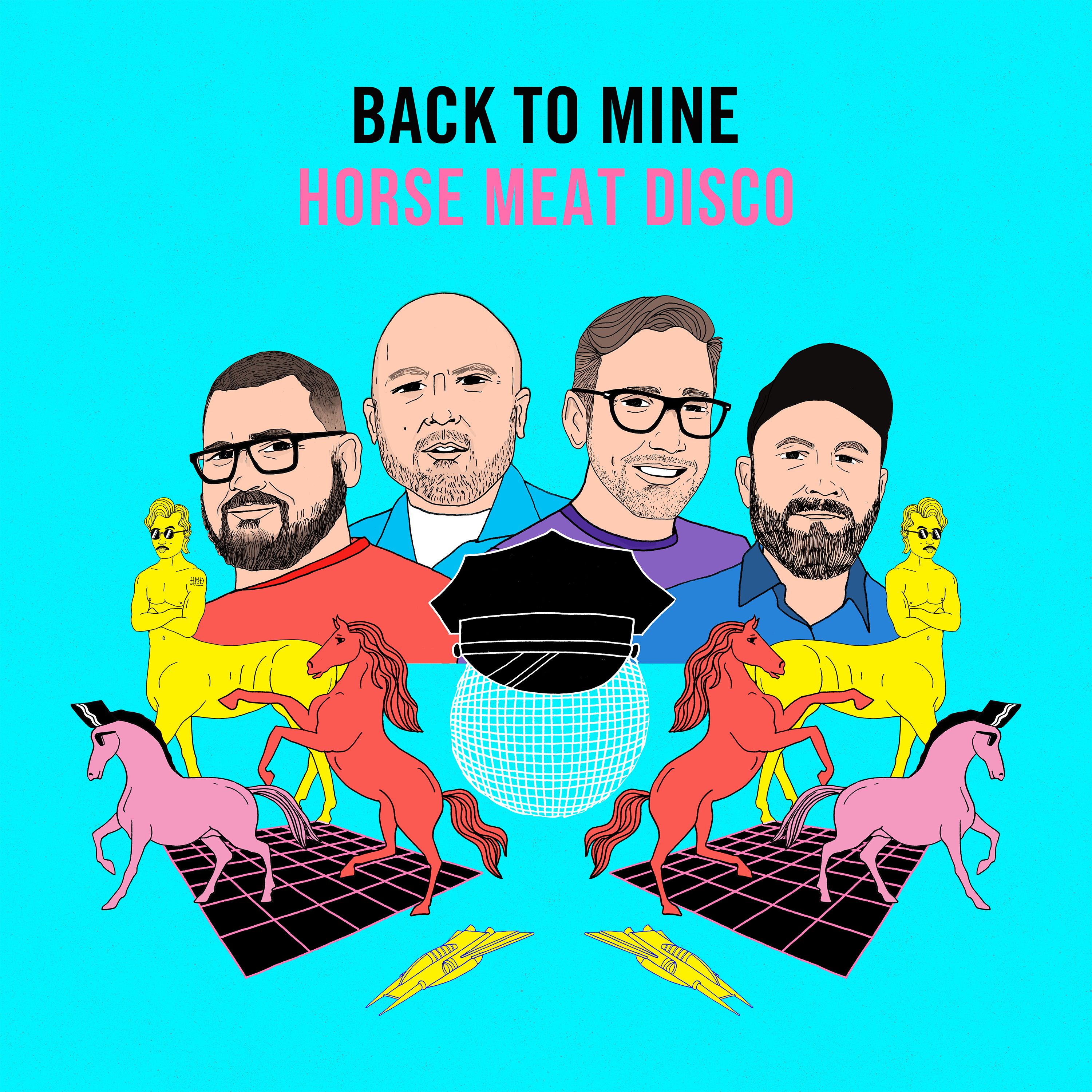
Let’s Dance – Various Artists: Back To Mine – Horse Meat Disco (Back To Mine)

What’s the story?

Back To Mine have been running for 24 years now, and ever since Nick Warren curated the first release, with its strapline ‘a personal collection for after hours grooving’, the series has blossomed into a must-hear with every release. There was a pause in production of 11 years, between Krafty Kuts in 2008 and Nightmares On Wax in 2019, but since then the productions have been shown to be in rude health. This 32nd release turns to Horse Meat Disco for feelgood inspiration.

This is the quartet named after a partially obscured newspaper headline (‘Horse Meat Discovered In Salami!2) but that moniker perfectly supports what they do, somehow! Their brand of feelgood disco music began in a Chinatown basement in 2003 but since then has added an essential dimension to the London gay scene and now a long way beyond.

With founders Jim Stanton and James Hillard joined by Severino Panzetta and Luke Howard, the DJs have been on a roll ever since, expanding their musical outlook to music Hillard says you will get ‘if you love dancing and have an open mind’.

As with all Back To Mine releases, the music is available as a collection of unmixed tracks but also in an unbroken mix lasting just over an hour.

What’s the music like?

As you might expect from this source, extremely uplifting! All these grooves are effortless and given with a smile on their face, though some have quite far-reaching lyrics that speak to the heart as well as the dancing feet. God’s Greatest Gift To Man Is A Woman by Margie Lomax is one such example, a simple but really catchy groove repeating the essential strap line. Róisín Murphy’s Ancora Ancora Ancora is another, with a low slung beat that Severino & Nico de Ceglia work to perfection.     

Alien Alien feat Igino’s Perfidia has a relatively slow but effortless groove thanks to Panzetta and Ray Mang on the remix. Escape From New York’s Fire In My Heart is brilliant, with anthemic chorus over chunky keyboards, while if it’s a great, empowering piece of spoken word you’re after, look no further than Ona King, guest on Larry Heard’s brilliant Premonition Of Lost Love, in its Extended Adult Mix form. Catchy lyrics also turn up in GAME’s wonderful Gotta Take Your Love, with the unforgettable line “You turn me on just like a shower”.

Meanwhile Horse Meat Disco’s own Self Control, from their debut album, has the ultimate combination of twangy guitar, subterranean bass and deadpan spoken word. Messages From The Star by The RAH Band is arguably the pick of the bunch, with a heady guitar lines and a chorus you could put on repeat for hours. Most intriguing track award, however, goes to Marianne Faithfull’s Sex With Strangers, featuring Beck, which leaves a distinctive mark.

Does it all work?

Yes, completely – and it succeeds by bringing the whole feel of a live Horse Meat Disco into your living room or onto your headphones. The smiles, the dancing, the feeling of unity and togetherness – all are brought to life.

Is it recommended?

Enthusiastically. Horse Meat Disco are never knowingly undersold in the tunes department, to use a famous retail phrase, and they certainly deliver the goods here!

Listen

Buy