In concert – Marija Vidović, Tamsin Waley-Cohen, Zagreb Philharmonic Orchestra / Jan Latham-Koenig – Pejačević, Sibelius & Mahler

tamsin-waley-cohen-c-patrick-allen

Pejačević Verwandlung, Op. 37b (1915), Liebeslied, Op. 39 (1915), Zwei Schmetterlingslieder, Op. 52 (1920)
Sibelius Violin Concerto in D minor Op. 47 (1903-04, rev. 1905)
Mahler Symphony no. 1 in D major (1899 version)

Marija Vidović (soprano), Tamsin Waley-Cohen (violin), Zagreb Philharmonic Orchestra / Jan Latham-Koenig

Cadogan Hall, London
Thursday 13 April 2022

Written by Richard Whitehouse. Photos (c) Patrick Allen (Tamsin Waley-Cohen), Paul Persky (Jan Latham-Koenig)

Visits from overseas orchestras are only now getting into their stride following the abeyance caused by the pandemic, so credit to the Zagreb Philharmonic for having undertaken its first UK tour in over half a century with a programme whose challenges were not to be gainsaid.

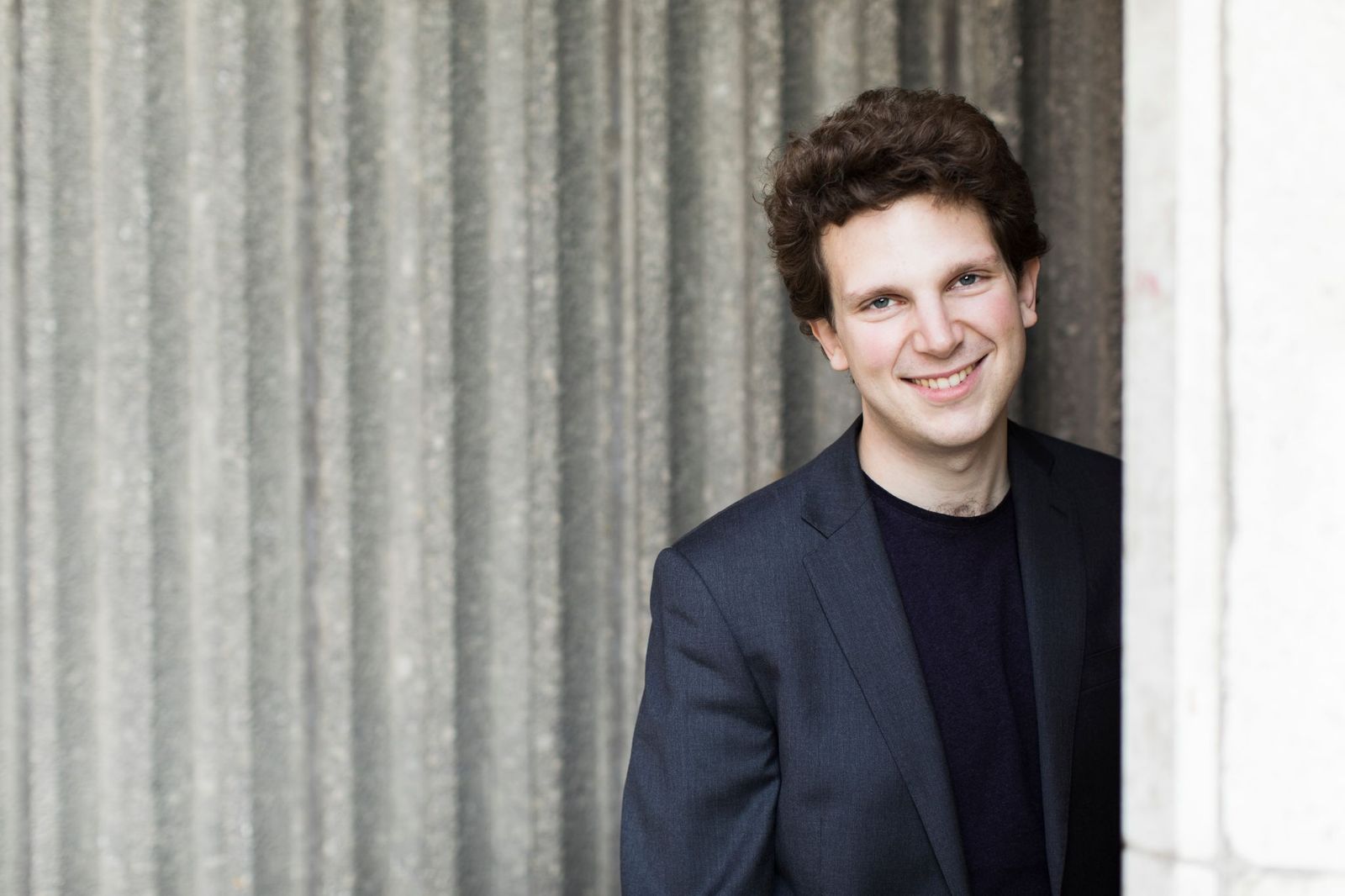
A recent BBC performance of her Symphony confirmed the significance of Dora Pejačević (1885-1923) in European music of the early 20th century, and it was a pleasure to encounter these four orchestral songs from her maturity. A setting of Karl Kraus’s Transformation won grudging admiration of Schoenberg; here, even more so in that of Rainer Maria Rilke’s Love Song with its winsome violin solo and fervent orchestral interlude, the influence of Strauss is directed towards audibly personal ends. Marija Vidović (above) gave them with no mean eloquence and did comparable justice to those charms of Karl Henckell’s verse in Two Butterfly Songs – the elegance of ‘Golden stars, little bluebells’ then the poise of ‘Flutter by, butterfly, flutter away’, each of them benefiting from especially deft contributions by the Zagreb musicians.

Tamsin Waley-Cohen duly joined the orchestra for Sibelius’s Violin Concerto – likely more popular than ever these days, here receiving a confident and forthright account that was at its most persuasive in a trenchant and cumulative take on the developmental cadenza toward the centre of the first movement, then an Adagio more than usually restive and even ominous as it unfolded. The soloist’s astringent tone might not be to all tastes, but it effectively banished any risk of expressive blandness while maintaining an impulsive interplay with the orchestra – not least in that opening Allegro’s combative coda or a finale which, while its Allegro was not ideally ‘non tanto’, generated an impressive momentum which carried through to a truly visceral close. Some solo Bach enabled Waley-Cohen to demonstrate a more inward touch.

A pity Jan Latham-Koenig (above) rarely appears in the UK, as his engagements seldom disappoint. For all its rawness and passing inelegances, this was as gripping an account of Mahler’s First Symphony as one is likely to encounter. Its opening movement was evocatively launched, the sounds of nature gradually admitting of a human presence such as filters through in its lilting exposition (not repeated) then comes to the fore with joyous immediacy in the coda. Robust and forthright, the scherzo’s outer sections found contrast in the ingratiating charm of its trio.

A symphony with a complex gestation (admirably set out in Timothy Dowling’s programme notes), its ensuing fantasy on a well-known children’s song is shot through with elements of klezmer and art-song in a portrayal of a huntsman’s funeral vividly ironic in its tragicomedy. Latham-Koenig was almost as persuasive in the lengthy finale – its Dante-esque contrasts of violence and supplication channelled convincingly to the spellbinding recollection of earlier motifs which made way for a chorale-dominated apotheosis of notably unsparing immediacy.

Few countries have yet had a composer for president, but Ivo Josipović served Croatia during 2010-15 and the encore of his Prelude to the Millenium sounded redolent of early Ligeti or Lutosławski in its uninhibited verve. The Zagreb musicians gave their collective all – to his evident pleasure.

For further information on the Zagreb Philharmonic Orchestra, click here – and for information on the artists, click on the names to find out more about Marija Vidović, Tamsin Waley-Cohen and Jan Latham-Koenig. Meanwhile for more on composer Dora Pejačević, click here
On Record – Jóhann Jóhannsson: Drone Mass (Deutsche Grammophon)

drone-mass

written by Ben Hogwood

What’s the story?

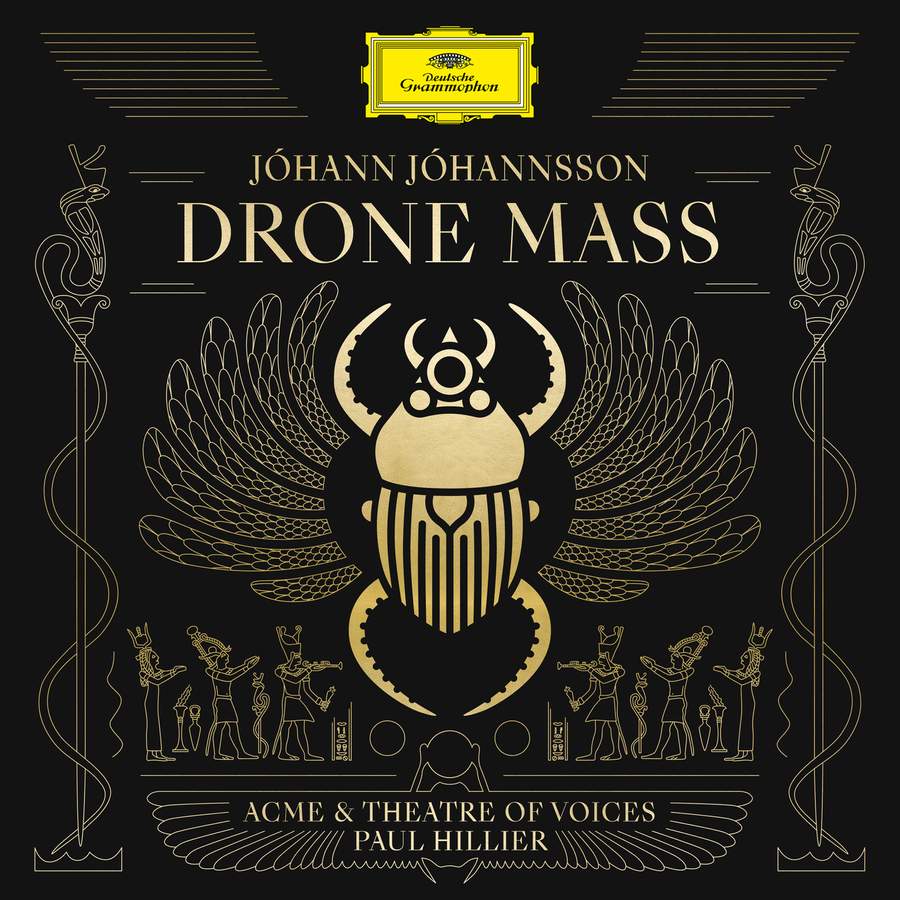
Drone Mass is one of the last completed works from the late and much missed Jóhann Jóhannsson. It was commissioned by the American Contemporary Music Ensemble, and given its first performance in 2015, at the Temple of Dendur in New York’s Metropolitan Music of Art. Jóhannsson took part in early performances of the work, but due to his sudden and sad death in 2018 was not present for this recording, made by ACME and their director Clarice Jensen in 2019. Joining the members of the ensemble were Theatre of Voices, conducted by Paul Hillier, who also took part in the early performances.

As Jensen makes clear in the booklet, Drone Mass is ‘neither a setting of the mass nor a piece that simply drones’ – but it is a sacred piece that has recurring drones throughout the work. It also has new technology as a background theme, Jóhannsson using his mastery of electronic music to write about drones as a force in the world today. The work’s vocals are drawn from the ancient Nag Hammadi scriptures and are written in Coptic, leading to a billing for Drone Mass as ‘an electroacoustic oratorio’.

What’s the music like?

The music takes its lead from the vocals, bringing together elements of ancient polyphony and new, drone-filled electronic textures. Because of this it is possible to approach Jóhannsson’s music from several directions, hearing old, unaccompanied melodies that can switch to electronics with little to no warning. The two work well together, especially as Jóhannsson’s music moves at a relatively slow pace. His language takes its lead from the ‘holy minimalism’ of Arvo Pärt and John Tavener, but is never derivative, searching as it does for a successful fusion of old and new methods of communication.

That search breeds a great deal of tension, which brings depth to the Drone Mass. The work starts with what sounds like an old, ornamented melody on One is True that gradually evolves into a substantial statement from all performing forces. Two Is Apochryphal is a meditative study with high, remarkably pure vocals, then Triptych In Mass contrasts plaintive violin arpeggios with two vocal lines, one drone like and the other much more mannered. The emotional centre of the work, however, lies in the two Divine Objects settings. Part one has a particularly haunting motif which develops into a powerfully wrought statement.

Does it all work?

It does. Although its constituent sections work well out of context, the Drone Mass is at its most effective when heard beginning to end in one sitting, taking shape and growing slowly but surely as it proceeds. The standard of performance is commendably high, too – thanks to outstanding singing from the Theatre of Voices, holding the sustained notes with impressive surety and accuracy. Meanwhile ACME provide the exquisitely shaded instrumental contributions.

Is it recommended?

Yes, without hesitation. Often pieces like this go for too many gestures or try to hit the harmonic sweet spots too often. Jóhann Jóhannsson is different, writing fluently to a larger scale, with music that grows in stature across its hour-long length. It leaves us with much to ponder, the only shame of course being that its composer is no longer around to hear what a fine recording has been made in his honour. In Drone Mass, he leaves a deeply felt and starkly effective representation of our times.

Stream

Buy

You can purchase this compilation at the Deutsche Grammophon website, where you can hear more clips and read more about the project.

In concert – Julia Fischer, London Philharmonic Orchestra / Vladimir Jurowski: Elgar Violin Concerto & Enescu Symphony no.2

London Philharmonic Orchestra, Julia Fischer (c) Marquee TV

Elgar: Violin Concerto in B minor, Op. 61 (1910)
Enescu: Symphony No. 2 in A, Op. 17 (1912-14)

Julia Fischer (violin), London Philharmonic Orchestra / Vladimir Jurowski

Royal Festival Hall, London
Wednesday 13 April 2022

Written by Richard Whitehouse. Photo (c) Marquee TV (Julia Fischer)

Could there be a more instructive coupling than the pieces in this concert, with the London Philharmonic Orchestra and its conductor emeritus Vladimir Jurowski, for showing where musical Romanticism had arrived in the early 20th century and where it might have gone?

Relatively few concertos number among their composers’ most personal works, but Elgar’s Violin Concerto is one such and it was a measure of Julia Fischer’s identity that her account conveyed its conceptual richness as fully as its technical brilliance. Not least in the opening Allegro, Fischer drawing out that fatalism as germane to the heartfelt second theme as to its forceful predecessor such as pervades the initial tutti then the combative development. Here, as with the impetuous coda, Jurowski ensured textural clarity in even those densest passages.

Similarly in the Andante – the musing wistfulness of its main melody finding accord with the high-flown eloquence of what follows, with no undue lingering here or in those rapt closing bars. Its themes may be less overtly memorable, but the final Allegro molto follows a keenly purposeful trajectory whose dynamism is thrown into relief by that accompanied cadenza in which Elgar recollects earlier ideas as an intuitive interlude; rendered by Fischer with a poise as itself prepared ideally for the resumption of the finale then a powerfully rhetorical ending.

Enescu, who conducted the Paris premiere in 1932 with Yehudi Menuhin prior to the latter’s recording with the composer, might well have reflected on the success of this work compared to that of his Second Symphony – coolly received at the 1915 premiere, its score missing until 1924, and no revival until 1961. This might well have been the first hearing in London, but its formal and syntactical intricacy held no fear for Jurowski who, having previously championed Enescu’s Third Symphony and opera Oedipe, presided over a consistently assured rendition.

Not the least of its successes was in maintaining the impetus of the initial Vivace, whose ‘ma non troppo’ marking can easily lead to loss of focus among those polyphonic layers that were delineated with unfailing precision. Music this harmonically complex is (surprisingly?) direct as to melodic contours – not least its central Andante whose main theme, soulfully phrased by Benjamin Mellefont, has the evocative quality of those found in Russian symphonies several decades before. Here its inherent tenderness and its lingering regret could hardly be gainsaid.

The biggest challenge comes in the finale – not least the gauging of an extended introduction whose processional needs to generate momentum sufficient to propel the main Allegro on its eventful if never discursive course. Here, too, the extent of Enescu’s instrumental prowess is made plain by the dextrous contribution from keyboards and percussion to already extensive forces; variety of textures underpinning stages in musical evolution through to a coda whose heady if methodical accumulation of themes and motifs makes for a resplendent apotheosis.

Such was the impression left by this performance, a tribute to Jurowski’s conviction and the LPO’s executive skill. Maybe Enescu’s Fourth and Fifth Symphonies will yet be heard in the realizations by Pascal Bentoiu, his own symphonies themselves deserving of such advocacy.

To read Arcana’s interview with Julia Fischer, who talks about the Elgar and Mozart violin concertos, click here

For further information on the London Philharmonic Orchestra’s 2021/22 season, click here – and for the newly announced 2022/23 season click here For more on George Enescu, head to a dedicated website – and click on the artist names for more information on Julia Fischer and Vladimir Jurowski

In concert – Jayson Gillham, Royal Philharmonic Orchestra / Owain Arwel Hughes: Grace Williams, Grieg & Sibelius

Williams Penillion (1955)
Grieg
Piano Concerto in A minor Op. 16 (1868)
Sibelius
Symphony no. 5 in E flat major Op. 82 (1919)

Jayson Gillham (piano), Royal Philharmonic Orchestra / Owain Arwel Hughes

Cadogan Hall, London
Tuesday 12 April 2022

Written by Richard Whitehouse. Photos (c) Benjamin Ealovega (Jayson Gillham)

Its high-profile concerts may currently be elsewhere in London, but the Royal Philharmonic Orchestra continues its schedule of regular performances at Cadogan Hall, and this evening was heard under the direction of former principal associate conductor Owain Arwel Hughes.

Hughes has rightly featured Welsh music whenever possible, and this programme began with Penillion that Grace Williams wrote for National Youth Orchestra of Wales. Two symphonies aside, several other of Williams’s pieces are inherently symphonic – not least her ‘symphonic poem in four movements’ whose title infers the Welsh tradition of singing against an existing melody. This is heard at its most evocative in the initial Moderato with solo trumpet intoning its (original) theme in the context of ethereal contributions from woodwind, harp, and strings. There follows a tensile Allegro then haunting Andante as ‘scherzo’ and ‘slow movement’ of a piece where the trenchant final Allegro proceeds toward a gently fatalistic close. Certainly, this is music such as warrants frequent hearings – irrespective of the present cultural climate.

Hard to imagine Grieg’s Piano Concerto undergoing a period of neglect, yet familiarity need not breed contempt at the hands of a skilled and sensitive exponent which Australian-British pianist Jayson Gillham assuredly is. After a commanding start the first movement felt unduly sectional in its unfolding, its orchestral tuttis a little overwrought, but the second main theme was limpidly rendered then Gillham came into his own with a cadenza whose developmental aspect was as audible as its virtuosity. With its poetic contributions from solo horn and cello, the Adagio was no less affecting, then the finale’s lyrical middle section threw into relief the combative dialogue either side. Its flute melody returns in a peroration whose grandiloquence found effective contrast with the Notturno in C (Op.54 No 4) that Gillham gave as an encore.

Even if Sibelius’s Second Symphony had been replaced by his Fifth during the run-up to this concert, the latter’s inclusion played no less to the RPO’s collective strengths. Building those earlier stages of the first movement’s intricate evolution patiently and methodically, Hughes amply brought out this music’s epic as well as ruminative qualities on the way to a powerful central climax – from where its scherzo-like continuation headed stealthily and purposefully to a coda that, if it lacked the last degree of visceral impact, generated undeniable dynamism.

The highlight was an Andante enticingly poised between intermezzo and slow movement – its plaintive repartee of not without its more ominous moments, yet whose winsome essence was itself a telling foil to the finale. Here the coursing interplay of strings and enfolding eloquence of its ‘swan theme’, horns magnetically to the fore, set in motion the eventful progress toward an apotheosis whose affirmation was never in doubt. If some of those concluding chords were not quite unanimous, this hardly detracted from the majesty of Sibelius’s overall conception.

A memorable ending, then, to an appealing programme that found the RPO on fine form and confirmed Hughes’s insights. The orchestra returns here next week in a concert of Schumann, Brahms and Dvořák with the violinist Fumiaki Miura and the conductor Domingo Hindoyan.

The inclusion of Penillion was made possible with funding from the ABO Trust’s Sirens programme, a ten-year initiative to support performance and promotion of music by historical women composers. Further information can be found by clicking here For further information on the Royal Philharmonic Orchestra’s 2021/22 season, click here Click on the performer names to read more about Jayson Gillham and Owain Arwel Hughes, and for more on Grace Williams click here

Song at Wolfson – Ukraine Fundraiser

It is so gratifying to see all the musical initiatives currently underway to raise money for Ukraine. One that I particularly wanted to draw attention to is a concert taking place at the Leonard Wolfson Auditorium in Wolfson College, Oxford, on 9 June.

British-Ukrainian mezzo-soprano Rozanna Madylus will be joined in a celebration of Ukrainian song by pianist and Oxford Lieder Festival founder Sholto Kynoch. Rozanna is a former Oxford Lieder Young Artist, and the programme will be introduced by Philip Bullock, setting the history of Ukrainian music in cultural context.

The program includes songs by the 19th-century Ukrainian composer Mykola Lysenko, as well as music by Yakiv Stepovyi, Kyrylo Stetsenko and Stefania Turkewich. The commentary for the concert reveals that Turkewich studied with Joseph Marx and Arnold Schoenberg, before fleeing the Soviets for England in 1946, where she stayed until her death in 1977. Some of her songs have only recently been discovered. With the inclusion of Ukrainian folk songs, the concert promises to be an eye-opening occasion, bringing the music and poetry of Ukraine to the forefront at such an awful time for the country.

The concert will be presented in support of the DEC Ukraine appeal. With generous support from Breckon & Breckon, all costs of the concert are covered and 100% of ticket sales will go directly to the DEC. Although seating is unreserved as usual, tickets are priced at £15, £20 and £25 to help raise as much as possible. If you would like to donate further, please click here to give directly to DEC.

You can book tickets for the concert at the Oxford Lieder website