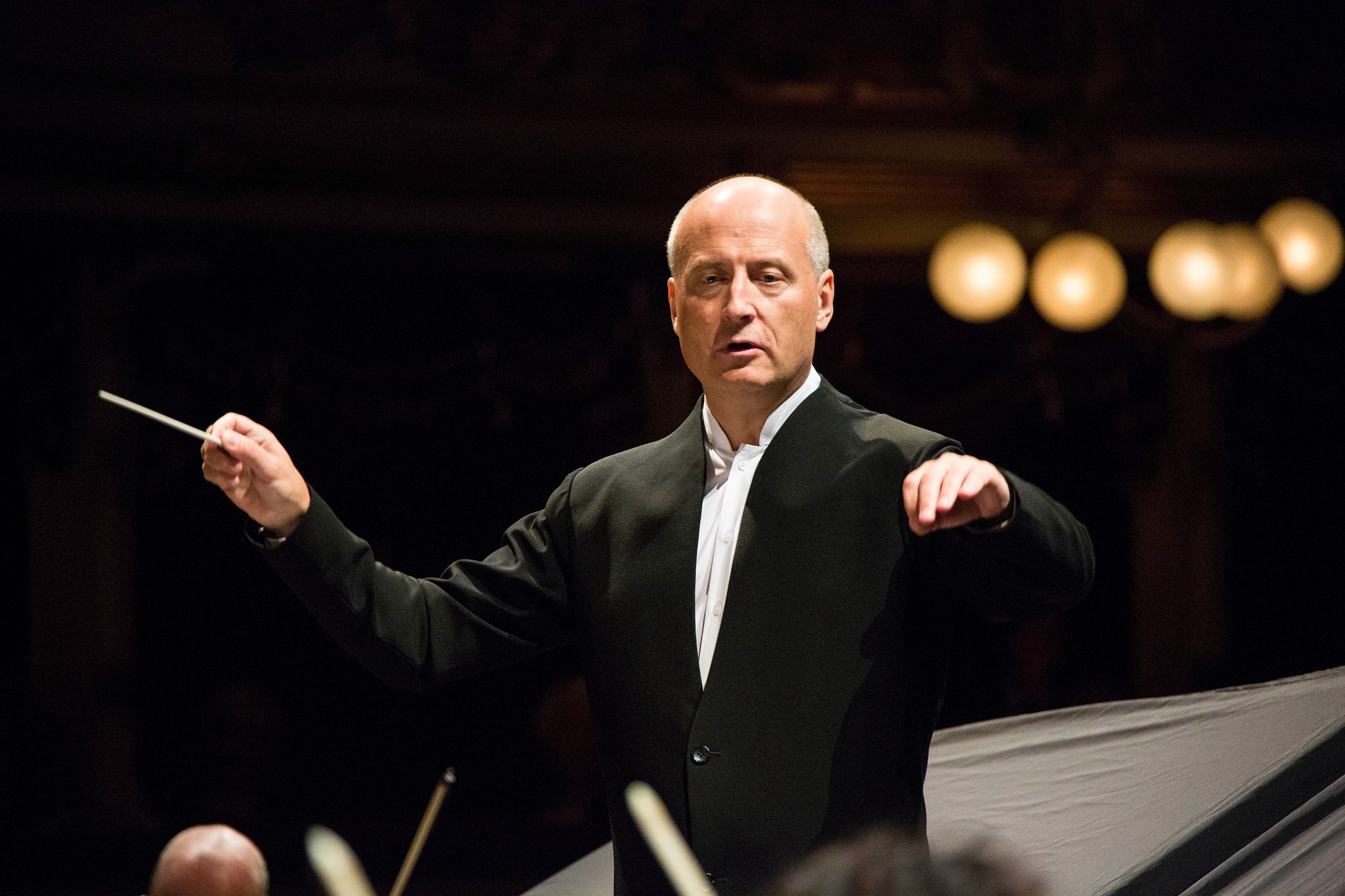
In concert – Tonhalle Orchester Zürich & Paavo Järvi: Sibelius Symphony no.2

paavo-jarvi-tonhalle

Sibelius Symphony no.2 in D major Op.43 (1901-2)

Tonhalle-Orchester Zürich / Paavo Järvi

Grosser Saal, Tonhalle, Zürich
Tuesday 5 April 2022

Written by (and photos below) Ben Hogwood

Sometimes a single work in a classical concert is enough – especially if that work has the lasting power of Sibelius’s Second Symphony.

Paavo Järvi certainly thought so, programming the 45-minute work as part of a concert celebrating the visit of the annual IAMA conference. IAMA – International Artist Managers’ Association – is a vital industry body representing the interests not just of artist managers but of artists themselves, liaising with creative spaces such as the resplendent, refurbished Zürich Tonhalle. Their conference moves around Europe, so a visit from them is a great opportunity for the ‘host’ city to exhibit their creative wares.
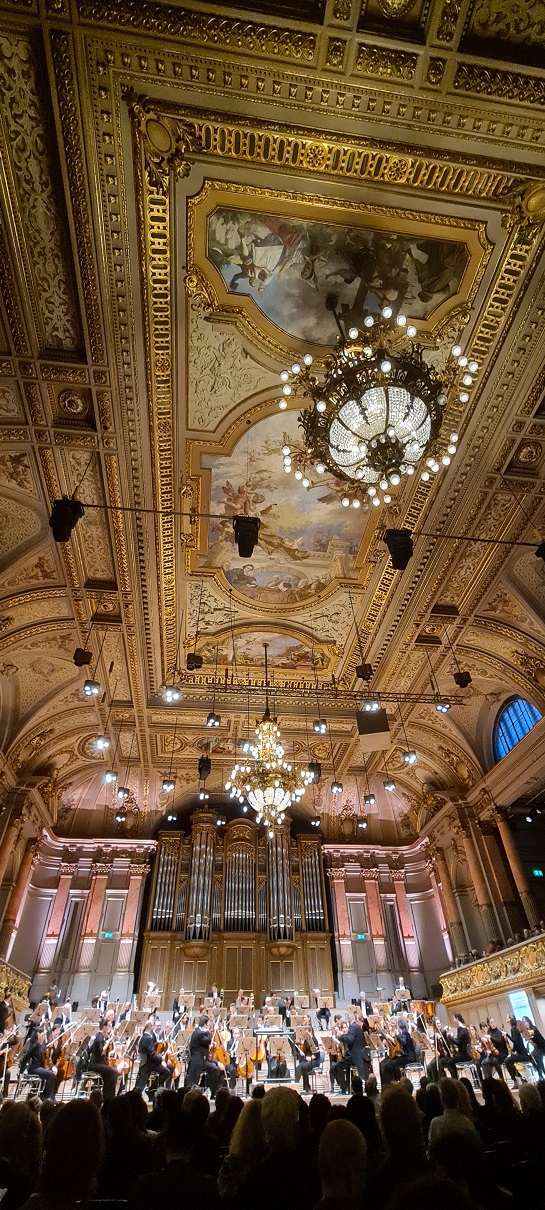
The Tonhalle-Orchester did that in this concert with some aplomb, performing as they were in a venue opened by Brahms himself in 1895. The composer appears as part of a mural (partially visible in the photograph above) on the ceiling in the resplendent company of Haydn, Mozart, Beethoven and Gluck. Sibelius was too late for inclusion, of course.
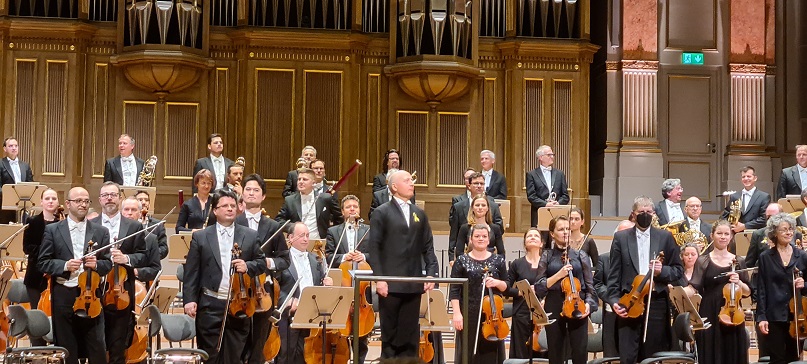
In their company, his Second Symphony received a performance of poise and power, the music on occasion appearing to issue from the very earth beneath our feet. This was most notable in the second movement, whose sequence of tempo changes and shifts of mood was the defining feature of this performance. The Tonhalle-Orchester wind shone out, especially the bassoon’s main theme, while the double basses and cellos used their wonderful grainy sound to provide the most solid undercarriage for the white-hot exchanges above.

The orchestra are a technical powerhouse, their ensemble well-nigh perfect, as was demonstrated in the unity of the strings’ pizzicato in the second movement, and the cushioned, velvety tones with which the work began, a similar effect to waves lapping the shore of a lake.

After the emotional tumult of the second movement the third sprang forward almost in alarm, scurrying figures nervously bouncing off each other until the gradual crescendo to the start of the finale itself. This was carefully managed, and although you could argue Järvi and his charges peaked too soon they just kept getting louder and ever more exultant, aiming always at the end goal. The orchestra forged a fiery path, propelled by the lower strings but with searing contributions from brass and wind, not to mention rumbling timpani, all these elements once again tracing back to the earth itself.

Järvi led his charges with clear, largely cool direction, though his love of the music was clear in more animated sections, driving the orchestra on. They responded with clear and obvious enjoyment to his direction, the team reflecting Sibelius’ ultimately victorious charge to the finish in that glorious final cadence. A special performance with which to mark an auspicious occasion, as in that night conducted by Brahms 127 years ago.
Switched On: Max Cooper – Unspoken Words (Mesh)

by Ben Hogwood

What’s the story?

Max Cooper is a fully fledged multimedia artist these days, telling stories through his increasingly powerful music and a well chosen suite of video collaborations.

Unspoken Words is described as his most powerful and personal album to date, a substantial body of work ‘leading the listener through experiences of escapism and connection with personal stories of reflection, acceptance, grappling, idealism and rejection.’

Cooper draws on his own personal experiences, relating his own mental health in musical terms. Speaking about the writing process, he described how he has tried to put as much feeling and form into the album as possible – the unspoken words – dealing with thoughts that are by turns ‘beautiful, intense, abrasive, messy and baffling’.

The story is told through 13 short films, and mixed in Dolby Atmos.

What’s the music like?

Cooper has a recognisable style these days, but not one that pins him down to a single tempo or pattern. Instead, his music grows ever more personal and meaningful, drawing from Unspoken Words feelings of greater intensity than ever before.

Not all of this music is comfortable or ambient, and there is a strongly descriptive thread running through the album of over-stimulation – that is, too many signals and interactions for the brain to process in one go. Solace In Structure is especially frenetic, processing a lot of signal activity in its five minutes, while Symphony In Acid is more difficult as a close-up encounter. Often these challenges are followed by softer tracks with greater padding, as in Small Window On The Cosmos, where Cooper pans out to consider the bigger picture.

When the awesome potential of this music is let loose, as it is on Ascent, the outcome is thrilling, suggesting that one day Cooper really should write for orchestral forces, for he marshals his equipment with a musical mind that always thinks on the large scale.

Does it all work?

Yes – but not all encounters with Max Cooper’s music are easy or straightforward on this album. Questions are asked – not all of them comfortable – and doubts are raised.

Is it recommended?

Having said the above, Unspoken Words can be recommended as a fiercely relevant piece of work. Anyone interested in the relationship between music and mental health will find an encounter with Max Cooper’s latest to be extremely worthwhile.

Listen

Buy

Switched On: Stelios Vassiloudis – All Else Fails (Balance Music)

by Ben Hogwood

What’s the story?

After a successful stint with John Digweed’s Bedrock label, Greek producer Stelios Vassiloudis takes a slight shift to Balance Music for his first full length ambient album.

What’s the music like?

Equal parts reassuring and reviving, All Else Fails is not an admission of defeat – far from it. From the opening notes it soothes the fevered brow with reassuring harmonies, light textures and comforting voices. There is still enough tension here though, the musical components woven in together and often bouncing off each other.

Vassiloudis gets a very satisfying ebb and flow, too – while Ashes focuses more on percussion, beneath a swaying motif, Mother has a steadier beat and the added richness of a cimbalom. Neon Dream is ushered in by the chirping of house sparrows before establishing a solid rhythmic presence

The rhythmic profiles are continually inventive, especially the easy but subtly funky five-beat loop for White Cells. Avissos is expansive, airy and ambient for its title, the sonorities of the elbow and a wordless choir effect casting a mysterious spell. Womb, by contrast, has a heavily treated, automated voice. As the album progresses to the compositions become more substantial, heading for the finely constructed album track, where shards of rhythm back slower moving background thoughts. There is brief threat from the slightly ominous ticking of the clock at the start of Time To Die, but the track settles into an extended meditation.

Does it all work?

Yes. Vassiloudos makes it all sound very easy and instinctive, yet on closer inspection there is a lot going on here. All the elements are carefully and cleverly combined to make a satisfying and extremely comforting whole.

Is it recommended?

It is. All Else Fails is a more ambient complement to Vassiloudis’ debut album from 2011, It Is What It Is, but shows the assurance of experience, finding a winning combination of exploration and familiarity. Warmly recommended.

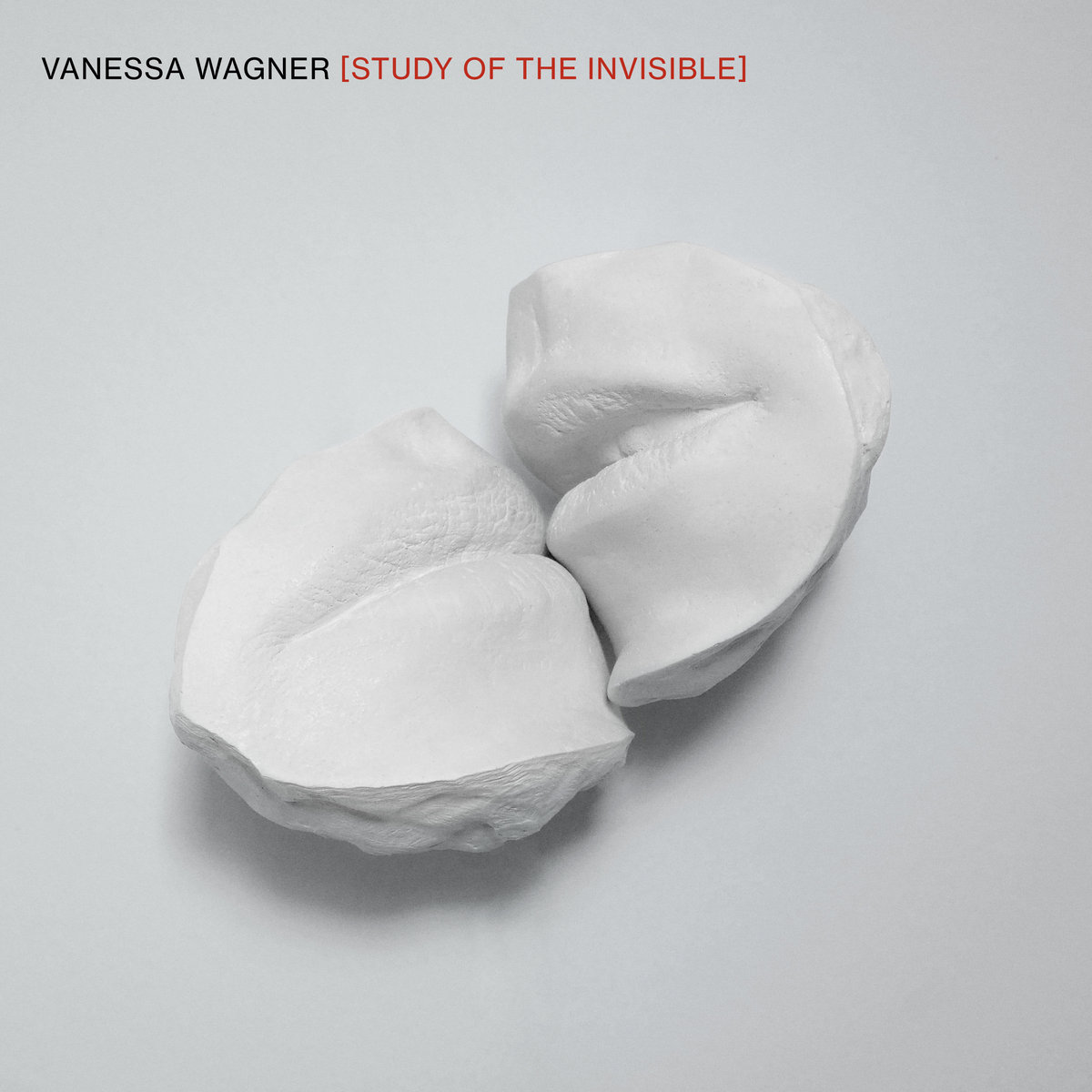
On Record – Vanessa Wagner: Study Of The Invisible (InFiné)

vanessa-wagner-2

written by Ben Hogwood

What’s the story?

Vanessa Wagner returns with a thoughtfully compiled album bringing together a selection of modern piano music that might be described as ‘minimal’. Her concept is to show how new music can still explore the instrument afresh, using the barest of melodic or harmonic material as its stimulus but finding something substantial within.

The selection here includes works by 14 composers, many of them rare and unpublished.

What’s the music like?

This is a really inspired compilation, logically ordered and with a natural rise and fall. In the process of the anthology, Vanessa Wagner shows off a wide range of approaches to the piano, from flowing, watery pieces to more percussive interludes. The music might be predominantly slow but Wagner finds its pressure points and releases its emotional energy in full, showcasing some fine compositions in the process.

The rippling surfaces of Suzanne Ciani’s Rain, first in the collection, are a kind of homage to a Debussy Arabesque. Harold Budd’s La Casa Bruja has a slower, more reflective beauty, as does the Brian and Roger Eno collaboration Celeste. Contrast these with the gently twinkling ivories of Bryce Dessner’s Lullaby (Song for Octave), and the thicker brush strokes of David Lang’s Spartan Arcs.

The two Philip Glass selections range from a sombre, deeply felt Etude no.16 to a staccato Etude no.6 that sounds a bit more like a fly buzzing against the insides of a jam jar. Wagner really gets Glass’s phrasing, and the powerful refrain that the piece returns to is forcefully and brilliantly played. Even more dazzling is the following Etude no.3, ‘Running’, by Nico Muhly, its thrilling discourse brilliantly distilled.

Elsewhere Moondog’s flowing Prelude no.1 in A minor casts its eyes towards the past, while Julia Wolfe’s Earring finds striking sounds in the piano’s upper register. Ezio Bosso’s Before 6 complements the activity of the Glass and Muhly Etudes with almost complete stillness, the effect both meditative and moving.

The most striking of the compositions, however, is the album’s centrepiece. Caroline Shaw’s Gustave Le Grey, based on a Chopin Mazurka, starts with clumps of chords and a solemn, slow bass. From these beginnings the piece progresses to contemplation, lost in thought in its centre before a searing expression of feeling, the piano cutting through in Wagner’s intense interpretation. A sense of pathos is evident at the end, a satisfying resolution.

Does it all work?

Yes, on many levels. What this compilation also does is somehow highlight the importance of the music of Erik Satie, without including any. Much of the music here is both minimal, interesting and emotional, mirroring the older composer’s achievements in his Gnossiennes and Gymnopédies. Wagner plays this music with great feeling and panache.

Is it recommended?

Without hesitation. This is a fine creative project, brilliantly scoped and realised. If you want to discover new piano music, here is a whole album’s worth on which to reflect and enjoy.

Stream

Buy

Switched On – Hannah Peel & Paraorchestra: The Unfolding

A nudge in the direction of this new release from Mercury-nominated Hannah Peel and Bristol’s Paraorchestra, under their artistic director Charles Hazlewood. The Paraorchestra are an ensemble of professional disabled and non-disabled musicians, and Peel has been working with them for a couple of years.

Their collaboration The Unfolding is a beauty, as a listen to the title track will confirm. Remote voices paint an airy sound picture, with sonorous cello and flickering electronics.


While that piece is more obviously classical, We Are Part Mineral honours its title by bringing a fulsome percussion section to the fore, a nice combination of propulsive rhythms and spacious textures:

The Unfolding is out now on Real World, and comes highly recommended! You can hear more from the album by listening on the Bandcamp link below: