Let’s Dance – Dennis Cruz: Roots (Crosstown Rebels)

dennis-cruz

reviewed by Ben Hogwood

What’s the story?

This is the first album from established Spanish producer and DJ Dennis Cruz, who is ready to put his own spin on house music through a ten-track long player. He does this with a succession of guest artists, topped by an appearance from the late Lee ‘Scratch’ Perry, but also including P. Rivas, Ian Luvig, Josh Butler, Iuliano Mambo and Leo Wood.

What’s the music like?

The propulsive rhythms of La Ratonera start the album, a signal of intent with their persuasive shimmying. The nine-minute track has plenty of room to grow, with sultry flute work and the sound of a party in the distance. This cuts to Los Tamales, an instrumental with a lovely swing to its rhythm and old-time piano riff. Later another instrumental, Bend, plays some games with a trumpet and voice imitating each other over a bouncy beat.

Ian Luvig then steps up to provide the stripped back vocal for Good Old Days, a minimal affair with quite a stark texture but a mission to hit the dancefloor hard. The same could be said for Ecua, with some flamenco flavoured brilliance added to the mix, spliced and diced by Cruz’s skilful production. The temperature stays heated for What U Doing, with Leo Wood’s sultry vocals dressing a heat hazed bed of keyboards.

Go Down will be of great interest to fans of the late Lee ‘Scratch’ Perry, who fronts a busy rhythm track. This is a night piece that cuts up his voice inventively, delivering a fluid groove to go with it. It is countered nicely by the raucous trumpets of Ahora Toda Va (Dub), where Josh Butler whips up the crowd.

Te Quiero Cantar takes us back towards the pool, a really nice Mediterranean flavoured instrumental, before Back Again hooks up with Iuliano Mambo for a woozy, sun soaked jam with a big bass sound.

Does it all work?

It does. There is nothing staid or square about Dennis Cruz’s take on house music – the rhythms sway and sashay their way around the dancefloor as he applies plenty of flavour to the mix, keen to show off his Spanish heritage to the max. The vocal guests are the icing on the cake.

Is it recommended?

For sure. Cruz brings warmth to the winter with a set of grooves that prove pretty much irresistible.

Stream

Buy
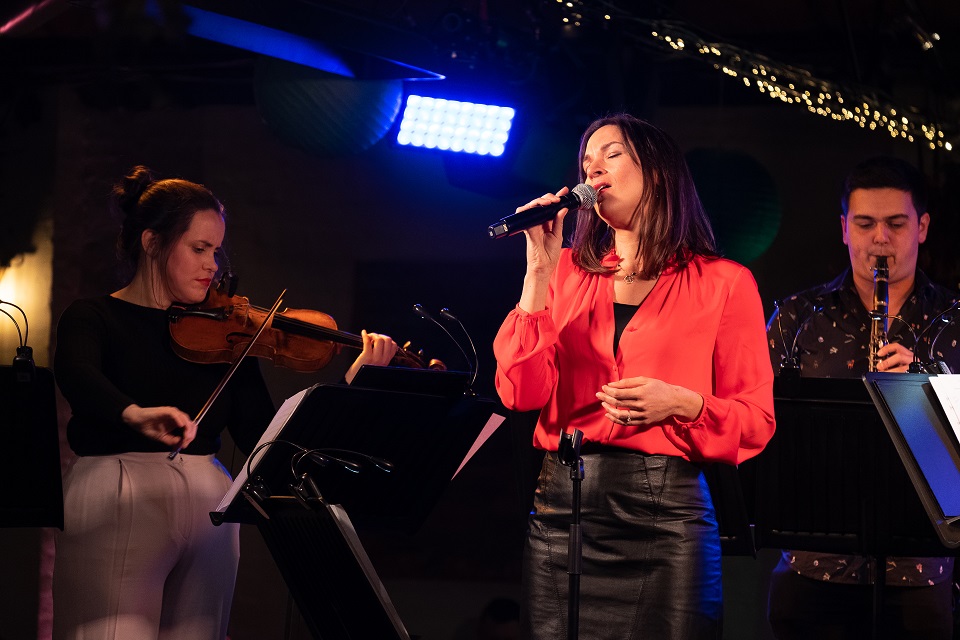
 

In concert – Hockley Social Club & the CBSO present: Symphonic Sessions 2 – Ooh la la

2021.12.02 - Hockley Social Club Symphonic Sessions - cr. Hannah Fathers-5185

Symphonic Sessions 2 – Ooh la la

Emer/Piaf J’m’en fous pas mal (1946)
Milhaud Suite Op.157b – Jeu (1936)
Lili Boulanger Nocturne, ILB10 No. 2 (1911)
Satie Gymnopédie No. 1, IES26 No. 1 (1888)
Gould Benny’s Gig – VI, Calypso; VII, Jaunty (1962)
Khachaturian Clarinet Trio in G minor – Allegro (1932)
Louiguy/Piaf La vie en rose (1947)

Gilles Les trois cloches (1940)
Tiersen Amélie – Comptine d’un autre été (2001)
Debussy Première rhapsodie, ICD73 (1909-10)
Gershwin Shall We Dance – Walking the Dog (1937)
Stravinsky L’Histoire du soldat, Suite – Tango, Valse, Ragtime; Danse du diable (1919)
Tormé/Wells The Christmas Song (1945)
Glanzberg/Contet Padam, padam… (1951)

Gabrielle Ducomble (singer), Oliver Janes (clarinet), Colette Overdijk (violin), Julian Atkinson (double bass), James Keefe (piano)

Hockley Social Club, Birmingham
Thursday 2 December 2021

Written by Richard Whitehouse Photos courtesy of Hannah Fathers

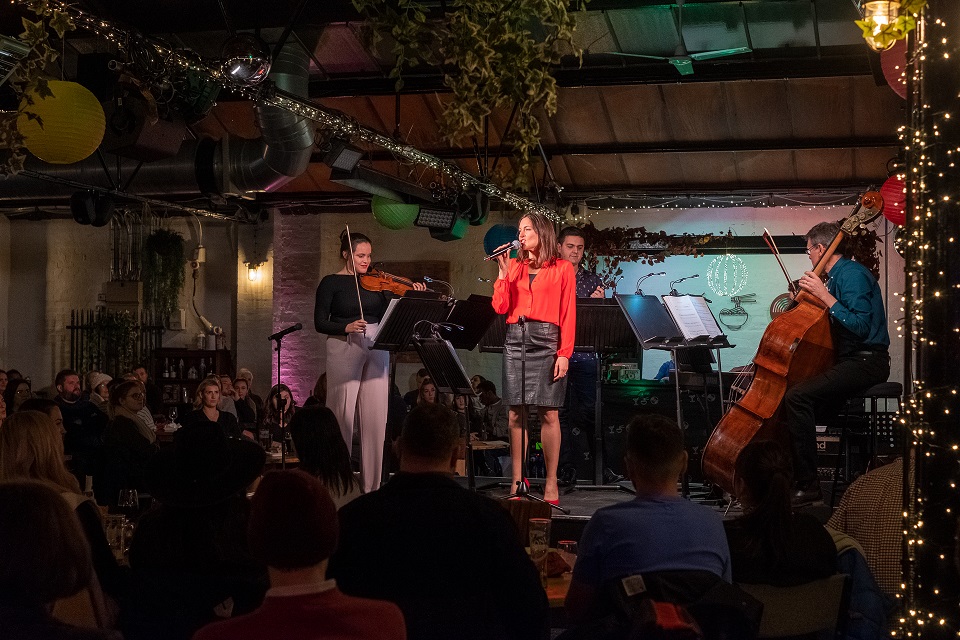
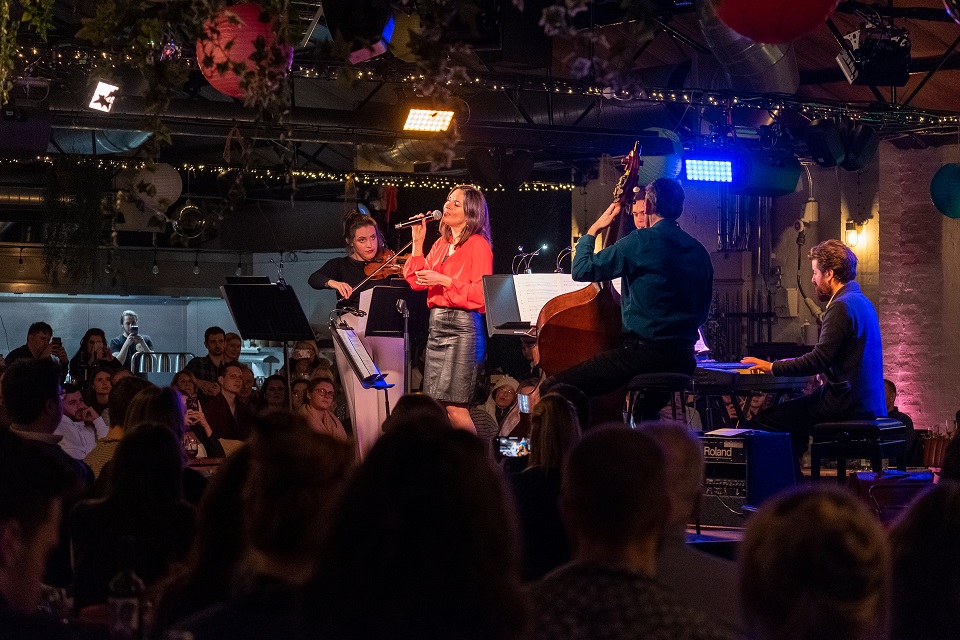
It might not have featured the eponymous song from John Cale, but this ‘Ooh la la’ certainly had more than its share of surprises in among the entertainment. The artistic and commercial success of the first Symphonic Sessions event held back in October meant that its successor, once again co-presented by Hockley Social Club (a beacon of light in the dreary surrounding of Newtown) and the City of Birmingham Symphony Orchestra, would not be long in coming. Soon enough for this to have taken on anticipations of Christmas in its overall aura, and with a cabaret element provided by Belgian chanteuse Gabrielle Ducomble, whose cover-versions of Édith Piaf have previously (and rightly) attracted widespread plaudits. The stage, or raised platform towards the centre of the venue, was ready for another varied and enjoyable evening.

The first set duly got off to a striking start with Michel Emer’s J’m’en fous pas mal, Gabrielle Ducomble bringing out the world-weariness of lyrics which Piaf all too easily made her own; and to which Jeu, third movement of Milhaud’s Suite for clarinet, violin and piano, provided a vivacious foil. The evocative poise of Lili Boulanger’s Nocturne was elegantly conveyed by Colette Overdijk, then James Keefe drew surprising nuances from electric piano for the first of Satie’s Gymnopédies. Oliver Janes and Julian Atkinson enjoyed putting two numbers from Morton Gould’s suite Benny’s Gig through their paces, the central scherzo of Khachaturian’s Clarinet Trio most engaging with its alternate vigour and suavity. Ducomble’s take on Louis Guglielmi’s La vie en rose, Piaf’s signature-song, brought this set to a warmly eloquent close.

After a ‘dessert interlude’, the second set found Ducomble leaving her mark on Jean Villard Gilles’s Les trois cloches (a Piaf song introduced to a new generation by Tina Arena), before the ‘Theme’ from Yann Tiersen’s music for the film Amélie injected an appealing whimsy. A sure highlight was Janes’s rendering of Debussy’s Première rhapsodie, sensuous and poetic by turns, then perfectly complemented by the coy jauntiness of Gershwin’s Walking the Dog (aka Promenade). Four dance pieces from the suite for violin, clarinet and piano arranged by Stravinsky from L’Histoire du soldat received an incisive response, then Ducomble offered a soulful take on Mel Tormé’s evergreen The Christmas Song. The faux affirmation of Norbert Glanzberg’s Padam, Padam… saw this Piaf-centred programme to its gently fatalistic ending.

Probably the only thing not really evident over the course of this evening was the ‘‘specially dressed bohemian finery of a rather festive feeling Hockley Social Club’’ as was detailed on the promotional flyer, but no matter. The reaction from a capacity house was never less than enthusiastic – doubtless abetted by the variety of food and drink (including another designer cocktail) available, with DJ sets from Pritt Kalsi which enhanced the ambience between the live music-making. Incidentally, those who enjoyed Gabrielle Ducomble’s singing can hear her in residence at London’s Brasserie Zédel in the final week of December, and Symphonic Sessions will be back in action sometime next spring – now established as an attraction well beyond the confines of B19 and likely to remain so throughout 2022, and hopefully beyond.

symphonic-sessions-2

Further information on Symphonic Sesions can be found here. For more information on Gabrielle Ducomble click here, and head to the Brasserie Zédel website for details on her residence there.

In concert – Ning Feng, CBSO / John Wilson: Rachmaninoff Symphony no.3, Glazunov Violin Concerto & Gershwin’s symphonic Porgy & Bess

rachmaninoff-wilson

Gershwin (arr. Bennett) Porgy and Bess: A Symphonic Picture (1942)
Glazunov Violin Concerto in A minor Op.82 (1904)
Rachmaninoff Symphony no.3 in A minor Op.44 (1935-6)

Ning Feng (violin), City of Birmingham Symphony Orchestra / John Wilson

Symphony Hall, Birmingham
Wednesday 1 December 2021 (2.15pm)

Written by Richard Whitehouse. Photo of Ning Feng (c) Felix Broede

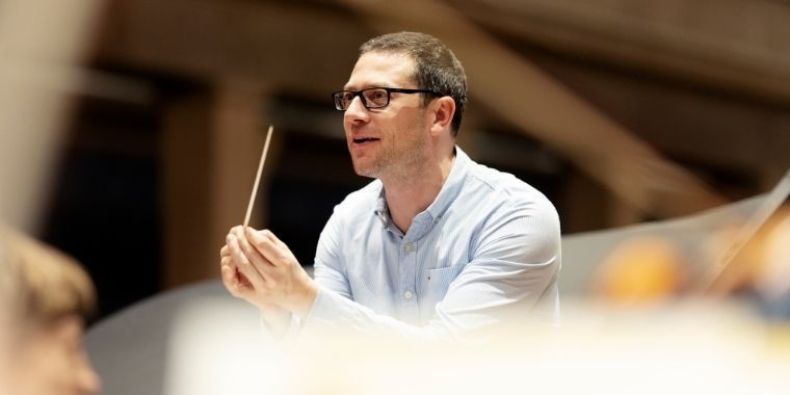
John Wilson may have been taken by surprise when asked to introduce this afternoon concert from the City of Birmingham Symphony Orchestra, but there was nothing left to chance as to the performances in what proved to be a judiciously planned and finely realized programme.

Gershwin’s Porgy and Bess is now well-established as an opera as much as a musical (hybrid or otherwise), not least through Wilson’s advocacy at English National Opera’s staging three seasons ago, but there is still a place for the ‘Symphonic Picture’ as posthumously realized by Robert Russell Bennett. The pre-eminent arranger and orchestrator from Broadway’s ‘golden age’, Bennett may have regarded Gershwin’s masterpiece as essentially a sequence of classy showtunes, but the finesse with which these were fashioned into a cumulative overview of the drama cannot be gainsaid. Wilson drew sumptuous playing from the CBSO in an arrangement by no means dismissive of Gershwin’s orchestration. Perhaps another time he could schedule the far more arresting Catfish Row suite, but so fine a reading of the Bennett was no hardship.

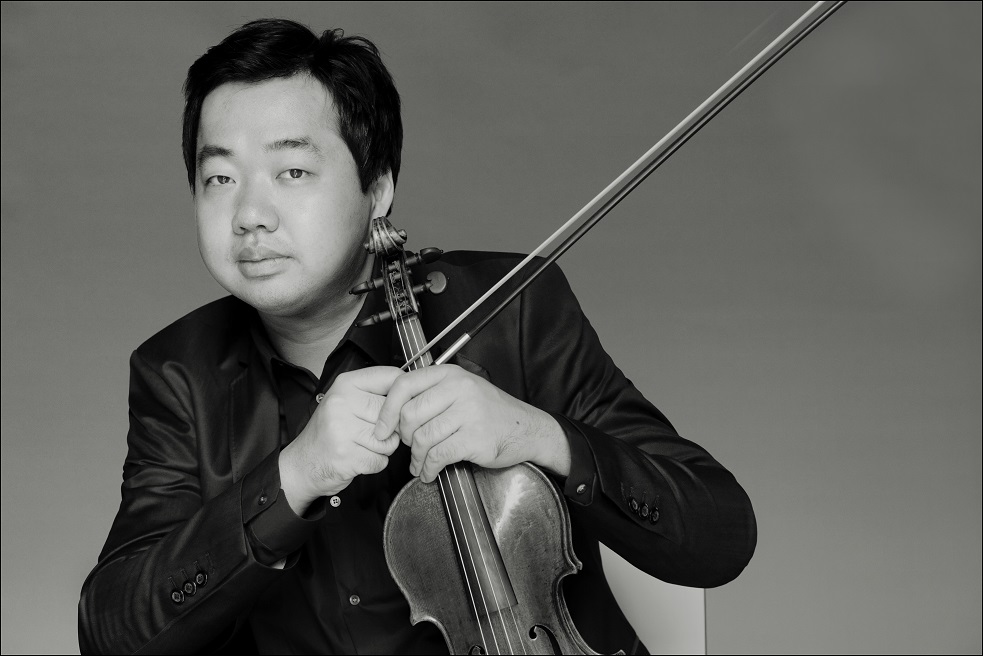
If Glazunov refused Gershwin’s request for tuition, he surely realized no amount of technique could compensate for – in the former’s case – limited or erratic inspiration. Not that his Violin Concerto is an unalloyed masterpiece, but its expressive elegance allied to a formal ingenuity have deservedly kept it in the repertoire and Ning Feng (above) audibly believed in every bar. Maybe the presentation of its main themes in the brief opening section was a little too matter-of-fact, but the central ‘slow movement’ then ensuing development and scherzo were rendered with the right deftness and incisiveness; nor did a relatively lengthy cadenza hang fire on the way to a ‘finale’ that ensured a scintillating close. A sympathetic accompanist, Wilson judged the orchestra’s contribution to a nicety, with some especially felicitous playing from woodwind.

It was Glazunov’s disastrous conducting that had sunk Rachmaninoff’s First Symphony but, four decades later, the Third Symphony finds the latter near the height of his creative powers – its pithy melodic content harnessed to an orchestral astringency that underlines the exiled composer’s confrontation with though not embracing of the musical present. Right from its haunting ‘motto’, through its contrasted themes (with exposition repeat) then a development that culminates in graphic anguish, Wilson had the measure of this masterly first movement.

What ensued was almost as fine, not least the seamlessness with which the slow movement’s scherzo emerged out of then back into the main Adagio – the playing off the acerbic against the bittersweet its own justification. If the finale felt a little too sectional in overall unfolding, there was no lack of characterization – not least the strings’ superb articulation in the central fugato as this headed towards the reprise, though a more continuous acceleration might have imbued the coda with even greater conclusiveness in what is a QED of unequivocal defiance.

Even so, this was a confident and, for the most part, insightful performance of a work whose true emotions are barely concealed beneath the enticing surface. The CBSO, which gave its all, will be back at Symphony Hall next Thursday in a major new work from Jonathan Dove.

For more information on the CBSO’s autumn season visit the orchestra’s website. For more on the artists, click here for John Wilson and here for Ning Feng

In concert – London Sinfonietta / Edmon Colomer: A Catalan Celebration

london-sinfonietta-catalan

Gerhard Libra (1968)
Figuera
Faula (2017)
García-Tomás
Aequae (2012)
Illean
Januaries (2017)
Gerhard
Leo (1969)

London Sinfonietta / Edmon Colomer

Queen Elizabeth Hall, London
Wednesday 1 December 2021

Written by Richard Whitehouse

A celebration of Catalan music, this concert by the London Sinfonietta also commemorated the fiftieth anniversary of the death of Roberto Gerhard – which, falling in January last year, had augured a number of events substantially curtailed by the COVID-19 pandemic and its attendant lockdowns. At least it had been possible to reschedule this programme – Gerhard’s work framing three recent pieces by contemporary composers whose music, if by no means beholden to that of their predecessor, was demonstrably influenced and even enhanced by it.

Of these three composers, Joan Magrané Figuera (b1988) was most audibly in the modernist lineage. Faula (Fable) unfolds continuously, its four strands of material being akin to levels of activity – exuding a nervous anticipation, ferocious interaction, static intoning, and a deft animation – present in varying combinations for a process which did not so much evolve as play out across its allotted time-span. More arresting was Aequae (Equal) by Raquel García-Tomás (b1984) – its ‘equality’ embodied in six parts, each of two-minute duration, that drew variety as well as ingenuity of response from its ensemble – with a subtle emphasis on those similarities arising unbidden from the emergence of identical motifs in differing contexts. By comparison, Januaries by Lisa Illean (b1983) felt relatively moribund with its concentration on a continuity that, if not static in its timbre or texture, evoked an atmosphere which started then ceased as though a photographic image not susceptible to real change or intensification. The phrase ‘monotonously beautiful or beautifully monotonous’ inescapably came to mind.

Qualities that could never be applied to Gerhard’s output in general or that of his final decade in particular. Works for ensemble are numerous from this time, yet it made sense to focus on those Astrological pieces which, written in the wake of his masterly Fourth Symphony, were also the last he completed. Both are structured as continuous entities alternating between the extreme of stillness and movement common to the music from his maturity. In the case of the ‘chamber concerto’ that is Libra, the concept of balance feels everywhere apparent – not least its six players interlocking in a range of sub-groups that attain equilibrium on both formal and expressive levels. While it pursues a similar trajectory, the ‘chamber symphony’ that is Leo is intentionally less cohesive in design – the confrontation within its larger forces pushing such constraints to, but never beyond their limits. Both works, moreover, feature an epilogue that, with their gently undulating motion and focus on a folk-inflected melody of exquisite poise, bring into accord their musical concerns as surely as those star-signs of Gerhard and his wife.

Music which has lost none of its affective capacity during the more than half-century since it appeared, and how apposite they should be played by the ensemble that gave their world and European premieres respectively. The London Sinfonietta sounded no less committed than its forebears on pioneering accounts with David Atherton – for which Edmon Colomer, his long-time advocacy heard in numerous performances and recordings, can take due credit. One can only hope it does not take another 50 years for this music’s intrinsic worth to be recognized.

For further information on the concert, click here For more information on the composers, click respectively for Roberto Gerhard, Joan Magrané Figuera, Raquel García-Tomás and Lisa Ilean. For more on Edmon Colomer, click here

In concert – CBSO Centre Stage: CBSO Percussion Ensemble

Daugherty Lounge Lizards (1994)
Mazzoli
Volume (2006)
Reich
Dance Patterns (2002)
John Luther Adams
Qilyaun (1998)

City of Birmingham Symphony Orchestra Percussion Ensemble [James Keefe, Clíodna Shanahan (pianos), Adrian Spillett, Toby Hearney, Andrew Herbert, Matthew Hardy, RBC Students (percussion)

CBSO Centre, Birmingham
Friday 3 December 2021

Written by Richard Whitehouse

This last Centre Stage recital for 2021 brought a welcome return from the CBSO Percussion Ensemble for a programme such as demonstrated the sheer variety possible in the percussion medium even with the relatively small number of musicians required in most of these pieces.

Although he has written extensively for larger forces, Michael Daugherty is often at his best with chamber groupings as the two pianos and two percussion of Lounge Lizards, whose four sections keenly evoke the composer’s student years playing jazz piano – whether Sip ‘N’ Stir at Cedar Rapids, Dennis Swing Club at Hamburg, Ramada Inn on the New Jersey Turnpike and Bamboo Bar in Amsterdam. A range of ‘cool jazz’ idioms and practitioners is alluded to, with the deadpan humour as has long been a Daugherty hallmark never far below the surface.

Those who heard Missy Mazzoli’s Violent, Violent Sea at a CBSO concert in May will know of her vivid timbral sense, and Volume is no exception. Inspired by the inventive and highly charismatic playing of musicians from Trinidad, it can be performed (as here) with a second vibraphone replacing steel drum and which, heard alongside intricate exchanges for two kick drums and five bottles of water is, to quote the composer, ‘‘a raucous and joyful … homage to the … spirit of innovative music-making’’ – this performance certainly being no exception.

As Adrian Spillett remarked during a platform change, the music of Steve Reich has never been absent from a Centre Stage programme by this group – and Dance Patterns finds this composer at his most dextrous. Written for pairs of pianos, vibraphones and xylophones as part of the Dutch dance-film Counterphrases, its content does no more while no less than is indicated by its title, though such is the deftness and understatement of its interplay that the six-minute duration passes as though in an instant and all too soon dissolves into the ether.

‘Understatement’ is hardly apposite to describe Qilyaun by John Luther Adams – the Iñupiaq word for ‘shaman’s drum’ also ‘device of power’ graphically evoked in this visceral workout for four bass drums. Its gradual deceleration of activity to a midpoint of isolated strokes then reverse acceleration back to the initial rhythmic continuum was executed with a formidable unanimity by Royal Birmingham Conservatoire students, even if the need to keep listeners at a remove from the drums at the rear of the auditorium rather compromised social distancing.

That said, the piece was likely a revelation to those who know JLA only through his recent (and rightly acclaimed) orchestral works and concluded this recital in unequivocal fashion. Centre Stage resumes on January 21st with an all-Poulenc programme including the Sextet.

Further information on future CBSO Stage concerts can be found here