In concert – Raphael Wallfisch, CBSO / Gergely Madaras: New Worlds – Sibelius, Jonathan Dove & Dvořák

gergely-madaras

Sibelius Finlandia Op.26 (1899)
Dove In Exile (2020) [CBSO Centenary Commission: UK Premiere]
Dvořák Symphony no.9 in E minor Op.95 ‘From the New World’ (1893)

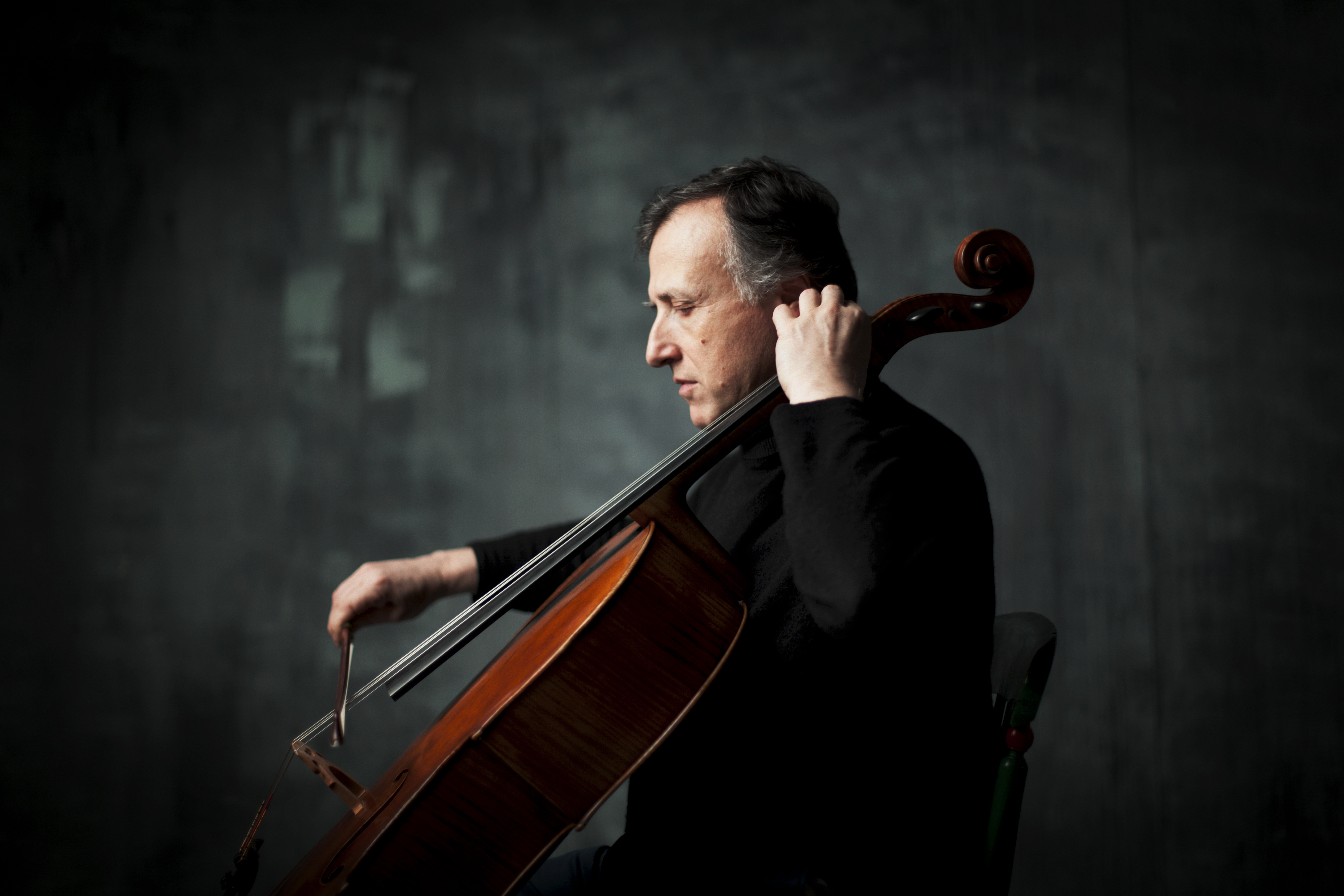
Sir Simon Keenlyside (baritone), Raphael Wallfisch (cello, below), City of Birmingham Symphony Orchestra / Gergely Madaras

Symphony Hall, Birmingham
Thursday 9 December 2021

Written by Richard Whitehouse

Tonight’s concert from the City of Birmingham Symphony Orchestra amounted to a themed programme with late 19th century evergreens by Sibelius and Dvořák framing another of this orchestra’s Centenary Commissions in the first UK performance of a major work from Jonathan Dove.

In his introductory remarks, Dove spoke of In Exile as a hybrid of cantata, operatic scena and concerto; a fusion that has surprisingly few antecedents – one being Concerto on Old English Rounds by William Schuman, with viola and chorus as ‘soloists’. Here the roles were taken by baritone and cello during a half-hour piece whose texts, adapted by Dove’s regular librettist Alasdair Middleton, examine the state of exile from a perspective less about those emotions experienced in the adoptive country than of sensations evoked by what has been left behind.
Drawing on Medieval sources, Dante and Shakespeare then, from the early 20th-century, the Lebanese poet Kahlil Gibran and Irish scholar Douglas Hyde, to the Iranian-American Kaveh Bassiri, In Exile unfolds as a formally continuous and emotionally cumulative sequence whose traversal from the general to the specific is complemented by its undulating texture, enhanced with resourceful writing for strings and tuned percussion, which graphically evokes a journey of the mind as well as body. Simon Keenlyside gave a powerful rendering of the vocal part in all its burnished rhetoric, while Raphael Wallfisch (to whose mother, the cellist Anita Lasker-Wallfisch, this piece is dedicated) was no less searching as his ‘alter ego’ whose role takes in several exacting cadenza-like passages. Certainly, a work that should bear repeated hearings.

Making his debut with the CBSO, Gergely Madaras conducted with a sure sense of where this piece was headed, having opened the concert with a gripping account of Finlandia. Sibelius’s apostrophizing of his homeland can descend into bathos – Madaras ensuring otherwise in this tensile reading whose sombre brass, supplicatory woodwind and strings, then dashing central episode led into a lilting take on what became Finland’s unofficial national anthem, before the peroration urged the music on to a conclusion whose grandeur was shot-through with defiance.

There was equally much to admire in Dvořák’s New World after the interval, even though this was essentially a performance of two halves. Madaras’s listless way with the first movement’s introduction set the tone for a rather terse and short-winded account (made the more so by its lack of exposition repeat) of the Allegro, while Rachael Pankhurst’s eloquent rendering of the Largo’s soulful melody was hardly enhanced by peremptory changes in tempo, notably in the tense middle section. Not so the Scherzo, its coursing outer sections ideally complemented by the whimsical trio at its centre, then the final Allegro brought an impulsive response that kept its histrionics on a firm rein yet without losing sight of an intently growing momentum whose outcome was a powerfully wrought apotheosis – its radiant closing chord judged to perfection.

So, a well-conceived and finely executed concert featuring a conductor who will hopefully be returning in due course. The CBSO has three Choral Christmas concerts coming up later this month, then can be heard on January 9th in a Viennese New Year programme to see in 2022.

For more information on ‘A Choral Christmas’ click here. For more information on the January – July 2022 CBSO season, you can visit the orchestra’s website. Meanwhile click on the links for information on Jonathan Dove, Gergely Madaras, Sir Simon Keenlyside and Raphael Wallfisch.

Switched On – Various Artists: @0 curated by Coldcut & Mixmaster Morris (Ahead Of Our Time)

What’s the story?

The value of music for our mental wellbeing is fully recognised in this compilation from Coldcut‘s label Ahead Of Our Time.

With 50% of their net receipts going to CALM, Black Lives Matter and Mind, they have set a rather wonderful set of conditions. Not only 8s the ambient music set to ease troubled minds and enhance, wellbeing, but the proceeds will too.

The compilation is available in separate tracks on LP and CD, and also in mix form thanks to Mixmaster Morris.

What’s the music like?

Both relaxing and enchanting. In the unmixed selection, the soft voices of Julianna Barwick give the listener a warm welcome with Star Ray, before the fuzz of Sigur Ros and Rembihnútur.

Laraaji‘s Illusion Of Time is like a comforting breeze, while the friendly tones of Kaitlyn Aurelia Smith’s Mt Baker are like a musical hug.

Ryuichi Sakamoto‘s Aqua is intimate and expressive, it’s piano texturesnicely contrasted by a reworking of. James Heather‘s And She Came Home. The music of Suzanne Ciani is like soft precipitation, as are the consoling waves of Nailah Hunter, while the twisted tendrils of Helena Hauff and Mira Calix suggest icy, ghostly textures.

The Daniel Pemberton and FSOL collaboration Behind The Eyes is like a bubbling spring with its piano and busy electronics, while one of the most distinctive tracks is The Fire Burns Out, a kind of squeezebox drome from Coldcut themselves. Finally The Drift Home offers some lovely stillness from Steve Roach.

Does it all work?

Yes – and even more so in the mixed version, where no fewer than 30 tracks are beautifully blended together. The new talent is notable too – with deserving mentions for Obay Alsharani and David Wenngren.

Is it recommended?

It is – a collection to savour in the small hours, and one that proves easily capable of soothing the fevered brow.

Stream

https://open.spotify.com/album/36ry6OLPgVNFDj7Vx1HCjv&ved=2ahUKEwj-itiD5t70AhU3Q0EAHSeSAE8QFnoECAwQAQ&usg=AOvVaw1ECmTMNRB_rH9pwx_ro3Y5

Buy

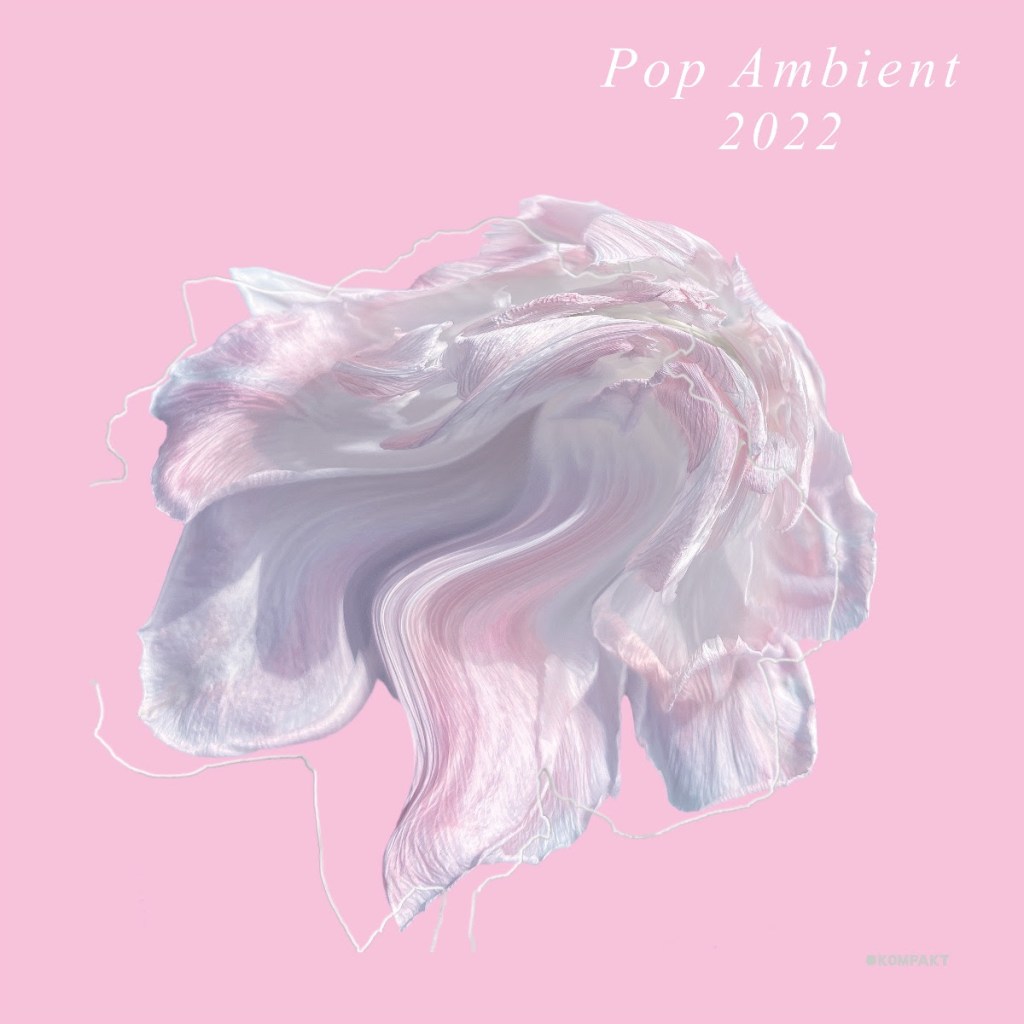
Switched On – Various Artists: Pop Ambient 2021 (Kompakt)

What’s the story?

Pop Ambient’s place in the calendar is a reassuring recurrence, as is the music it contains.

For more than 20 years now, Kompakt’s beatless compilation series has given a steadying hand to its listener’s, and the Cologne label see no reason to tinker with their formula.

Once again the tracklisting is a blend of familiar names and new talent, curated as ever by Wolfgang Voigt. His question is simple: What happens when the dancefloor is empty, and everyone’s home to drift away?

What’s the music like?

Once again the carefully selected and sequenced music of Pop Ambient takes its listeners to a special place. Voigt has an uncanny ability of choosingmusic that takes the heat off everyday life, but retains an exquisite tension keeping the listener on board.

The steady chimes of Coiling, from relative newcomers Blank Gloss, is a great example before a deep dive into the watery textures of Yui Onodera‘s Cromo 6. Kari, a collaboration between Markus Guentner and Joachim Spieth, is absolutely lovely, suspended in a blanket of sound.

The bell-like sonorities of Reich & Würden‘s Grainscan prove unexpectedly moving with the addition of a poignant trumpet line, while the steady pulse of Triola‘s Mutterkorn is dressedwith birdsong. Perhaps inevitably some of the best music comes from Thomas Fehlmann, whose Rosen Fliegen has waves of consonant harmony. Later on the notable Retrospektive, from Max Würden, sparkles around the edges.

Elsewhere the calming selection includes blissful moments from Andrew Thomas, Thore Pfeiffer and Weiht, a strong collaboration between Morgan Wurde and Maria Estrella. Closing out the sequence we find Blank Gloss again, further enhancing their reputation with Anticlimbers.

Does it all work?

Yes. It may be a tried and tested formula for over two decades now, but there is surely no need to change the record for Voigt and Kompakt.

Is it recommended?

It almost goes without saying. Pop Ambient is as important now as it ever has been, and shows how Kompakt still have their finger on the reassuringly slow pulse.

Stream

Buy

On record – Peter Dickinson: Lockdown Blues (Somm Recordings)

lockdown-blues

Barber (arr. Dickinson) Canzonetta Op. 48 (1977-8)*
Berkeley
Andante Op.23/6 (1945)
Cage
In a Landscape (1948)
Dickinson
Blue Rose (1978); Freda’s Blues (2016); Lockdown Blues (2020)
Ellington (arr. Dickinson)
Twelve Melodies (1932-43)*
Gershwin
Three-Quarter Blues (c1925); Who Cares? (1931)
Goossens
Lament for a Departed Doll Op.18/10 (1917)
Lambert
Elegiac Blues (1927)
MacDowell
To a Wild Rose Op.51/1 (1896)
Poulenc
Pastourelle IFP69 (1927); Bal fantôme IFP64/4 (c1934)
Satie
Trois Gymnopédies IES26 (1888); Trois Gnossiennes IES24 Nos.1-3 (1889-90)

Peter Dickinson (piano)

SOMM Recordings SOMMCD0644 [68’24”]

Producer & Engineer Peter Newble

Recorded 16 and 17 April 2021 at Potton Hall, Westleton, Suffolk. * indicates first recordings

Written by Richard Whitehouse

What’s the story?

Peter Dickinson here turns the third phase of lockdown to his – and our – advantage with this collection of piano music touching on the blues and jazz which have long been a mainstay of his careers as performer and composer, and which also includes two notable first recordings.

What’s the music like?

The programme commences with the pensive sadness of Dickinson’s Freda’s Blues, written in memory of the widow of Lennox Berkeley, continuing with a poised and refreshingly non-mawkish take on MacDowell’s perennial To a Wild Rose – its blues and rag idioms made the basis of Dickinson’s Blue Rose. The empathetic feel of Lambert’s Elegiac Blues in memory of singer Florence Mills is affectingly caught, while Dickinson’s marrying of blues and Bach in Lockdown Blues recalls George Shearing’s pioneering such fusions. After the drollery of Poulenc’s Bal fantôme, Dickinson’s reworking of the Canzonetta which Barber intended for his unrealized Oboe Concerto proves a focal-point in its searching pathos. Such a quality is also to the fore in Berkeley’s limpid Andante, as is the alluring charm of Gershwin’s Three-Quarter Blues – and to which the whimsy of Poulenc’s Pastourelle provides a pertinent foil.

Whether as solo pianist or in recital with his sister Meriel, Dickinson has been unstinting in his advocacy of Satie and his reading of the original Gnossiennes (not those three published decades after the composer’s death) lacks for nothing in perception. Such is equally the case when, after the insinuating charm of Gershwin’s Who Cares? then the wistful eloquence of Goossens’s Lament for a Departed Doll, he renders Satie’s evergreen Gymnopédies with an objectivity that not unreasonably plays down the mystical aura often attributed to this music.

Perhaps the highlight here is Twelve Melodies that Dickinson has arranged from Ellington’s big-band numbers in what proved a veritable ‘golden age’ for such music and not previously recorded in this guise. Picking out a selection might hardly seem necessary, but the yearning of Solitude, eloquence of Lost in Meditation, questing emotions of Azure then the expressive warmth of Mood Indigo stand out in a sequence which concludes with the phlegmatic charm of Day-Dream then haunting atmosphere of Prelude to a Kiss. Moreover, Dickinson has one final trick up his sleeve with an elegant rendering of Cage’s In a Landscape – music in which this most recalcitrant of composers comes closest to his beloved Satie with its ineffable grace.

Does it all work?

Very much so, thanks not merely to the range of music covered but also through Dickinson’s insight. Into his 87th year when these recordings were made, his technique remains as fluent as his understanding and enjoyment are audible. Long able to accommodate the populist and the experimental within his own music, such inclusiveness extends to the idiomatic aspect of his interpretation and the deftness of his touch. Surely nothing can now prevent the Ellington set being taken up by pianists everywhere, with the numerous shorter pieces ideal as encores.

Is it recommended?

Indeed. The piano sound has a naturalness and clarity ideal for this music, while few writers other than Dickinson would be equally aware of technical details and chart standings. Here is looking forward to further releases by this always resourceful pianist in his ‘Indian summer’.

Listen & Buy

You can discover more about this release and listen to clips at the SOMM Recordings website, where you can also purchase the recording. For more information on Peter Dickinson, click here.

On Record – Erland Cooper & Shards: Egilsay EP (Mercury KX)

What’s the story?

It has been an extremely productive and musically enriching year for Erland Cooper. This four-track EP is his second collaboration with Shards, the vocal ensemble with whom he worked on a festive release last year. Once again it has a visual accompaniment, with regular collaborator Alex Kozobolis.

What’s the music like?

Beautiful. Once again we are transported to Orkney, but each time we go we either learn something new about the place or are placed in a different context. Egilsay is one of the small isles to the north of the archipelago, and the compositions here are intended as meditations on shifting time and light. The song titles are Orcadian words associated with these phenomena.

This is immediately evident in the swooping vocal lines of Glimro and Lisbealad. The deeply moving first track shows how well Cooper writes for voices nearer the extremes of their range, with an angular line beautifully sung. The second has an even wider range, with soprano soaring and a bass down low, feeling the elemental qualities of the Orkney coastline. Tullimentan has a timeless quality, like an old Mediaeval incantation set against the steadily falling rain and flowing water. It is very emotive.

There is a second take on Glimro, reclothing the song and including a John Keats poem to mark the poet’s bicentenary. Its sotto voce words are read to the accompaniment of string arrangements from Uèle Lamore and Kathryn Joseph that put the piece in a new light, looking back to the previous EP Never Pass Into Nothingness.

Does it all work?

Yes. Once again this is music transporting its listener far away from their environment and directly into the place it reflects. Egilsay has a harsh, striking beauty that feels fully reflected in these concentrated portraits.

Is it recommended?

Absolutely, as another compelling chapter in Erland Cooper’s musical evolution. The voices make for an even more complete human experience.

Stream