In concert – Echoes/BCMG NEXT @ Centrala

bcmg-next-centrala

Anderson Scherzo (with trains) (1993)
Salonen
Pentatonic Étude (2008)
Birtwistle
Duets for Storab (1983)
Donatoni
Soft (1989)
Finnis
Brother (2012/15)

Musicians from BCMG NEXT

Centrala, Digbeth, Birmingham
Thursday 16 November 2021

Written by Richard Whitehouse

It may not be the most easily locatable arts venue of those within Birmingham’s inner suburbs, but Centrala – launched almost a decade ago as a base for the dissemination and promotion of Central and Easter European cultures – was an appealing space for this latest recital featuring NEXT musicians from Birmingham Contemporary Music Group. The performance area itself might have been compact to a fault, but there no feeling of excessive restriction in the course of what was a varied yet balanced programme of works stretching across almost four decades.

It began in invigorating fashion with a timely revival of Scherzo (with trains) whose premiere at Wigmore Hall was an early success for Julian Anderson – being one of his most engaging works for ensemble and a major contribution to its genre. Drawing inspiration from Thoreau as well as rhythms of high-speed trains, two clarinets (Heather Ryall and George Blakesley), basset horn (Beth Nichol) and bass clarinet (Emily Wilson) unfold an unpredictable discourse; one whose requirements of technique and coordination were met in this assured performance.

A pity that the scheduled account of Anna Thorvaldsdottir’s Spectra was lost through Covid-related issues, but a further hearing for Esa-Pekka Salonen’s Pentatonic Étude was certainly no hardship. This testing paraphrase on a passage from Bartók’s unfinished Viola Concerto puts the soloist through its paces, restating the original in an understated apotheosis realized by Cameron Howe with evident sensitivity. Also reappearing from NEXT’s recent recital at Coventry Cathedral was Harrison Birtwistle’s Duets for Storab. Written when the composer lived on the Inner Hebridean island of Raasay, its inspiration lies in locations each having the name of a Viking prince whose shipwreck, pursuit and death are charted over six evocative pieces. Flautists Rebecca Speller and Leila Hooton were heard in (mainly) whimsical accord.

The music of Franco Donatoni enjoyed a brief vogue here in the decade before his death, but there have been few performances since – so making this revival of Soft the more welcome. Written for the late Harry Sparnaay, the bass clarinet’s doughtiest champion, this tensile and eventful piece feels typical of his late maturity in the way that seemingly detached, and even arbitrary gestures gradually build into a cohesive and cumulative continuity; one in which the expressive possibilities of the instrument are explored intensively though with no little irony.

Heather Ryall proved no mean exponent of this piece, as were Claudia Dehnke and Cameron Howe of Brother by Edmund Finnis. Written while he was composer-in-residence with the London Contemporary Orchestra, its four movements chart a gradually elaborating interplay between violin and viola, evolving from the meditative and incremental to the energetic and demonstrative – without the rapport between these instruments drawing apart in the process. Suffice to add the present performance lacked for nothing in terms of incisiveness or finesse.

It also brought to a close this final BCMG event for 2021. Dates of further performances are being announced in the new year, and it would be a shame if these not to feature a return to Centrala – well worth a visit by anyone who happens to be passing through Birmingham B5.

Further information on the BCMG can be found at their website. For more on NEXT Musicians click here, then on each of the composers names for the websites of Julian Anderson (with an alternative here), Esa-Pekka Salonen, Harrison Birtwistle, Franco Donatoni and Edmund Finnis. Finally for more information on the Centrala venue, click here
Online concert – Steven Isserlis & Connie Shih mark the centenary of Saint-Saëns @ Wigmore Hall

steven-isserlis

Saint-Saëns Cello Sonata no.1 in C minor Op.32 (1872)
Liszt Romance oubliée S132 (1880)
Fauré Romance Op.69 (1894)
Saint-Saëns Romance in F major Op.36 (1874)
Bizet arr. Hollman Carmen fantaisie (not known)
Willaume La noce bretonne Op.14 (pub. 1924)
Holmès arr. Isserlis Noël d’Irlande (1897)
Hahn 2 improvisations sur des airs irlandais (1894 rev. 1911)
Saint-Saëns Cello Sonata no.2 in F major Op.123 (1905)

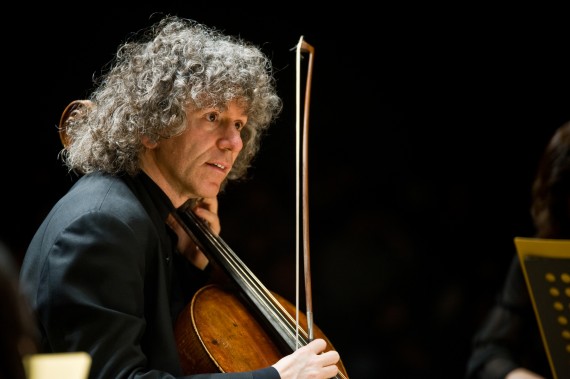
Steven Isserlis (cello, above), Connie Shih (piano, below)

Wigmore Hall, London
Thursday 16 December 2021

Written by Ben Hogwood

This well-devised program to mark the centenary of the death of Saint-Saëns was put together by cellist Steven Isserlis and his regular partner, pianist Connie Shih. They presented the composer’s two cello sonatas, the first of which was recorded by Isserlis back in 1992, in an intriguing historical context.

There is no room for shrinking violets in the first movement of the Cello Sonata no.1 in C minor Op.32, a relatively early work, and both performers threw themselves headlong into the music. Saint-Saëns was a virtuoso pianist, and on occasion his writing for the instrument is as demanding if not more so than the instrument it is ‘accompanying’. Here however the two were on equal terms, with plenty of cut and thrust in a dramatic first movement. The C minor casting and stormy start draw parallels with Beethoven, and these were built upon in the players’ compelling dialogue. The improvisatory slow movement was ideally poised, with an air of mystery in its central section where the cello was in its lowest register, complemented by twinkling figures from the piano. The Allegro moderato third movement returned us to powerful, passionate music, Isserlis’ double stopping passages immaculately delivered and Shih finding the necessary definition and phrasing in a superbly played piano part.

A full 32 years elapsed between the first sonata and its sequel, the Cello Sonata no.2 in F major Op.123. By this time the 70 year-old composer’s style had developed considerably. It is a substantial piece, running over 35 minutes, and is perhaps less-performed on that basis, not to mention the demands made on the performers. Isserlis and Shih showed what a fine work it is, however, in a performance that was gripping from the off, full of passion but also finding the more elusive statements in the quieter music, where Saint-Saëns could be found writing subtle but far-reaching sleights of harmony.

A joyous opening paragraph surged forward with considerable energy, powering an impressive and flowing first movement, Shih harnessing the power of the piano but continuing to hold a sensitive balance. She led off a capricious scherzo, whose variations were brilliantly characterized, from a limpid third variation (marked Tranquille) to a rippling Molto allegro that followed.

The heart of the piece, however, lies in the substantial Romance, a dreamy slow movement with a beautiful melody and a profound middle section turning towards the minor key. Both played with poise and affection, finding the centre of music the audience could fully lose themselves in. The last movement, which the composer promised ‘will wake anyone who’s slept through the rest of the piece’, was terrific, working from its deceptively innocuous opening phrase to throw off the shackles and end in celebratory mood. Isserlis was typically generous with his expression, with Shih deserving credit for her technical command and shapely melodic phrasing. The octaves towards the end were especially well-handled.

While the two sonatas were the main works of the concert, the complementary pieces were no less involving, providing an ideal foil. Firstly we heard from Saint-Saëns’ close friend Liszt, one of his few works for cello and piano. The Romance oubliée began with a recitative, with beautiful tone in the held notes from the cello, setting the (intense) mood. Then another great friend (and pupil), Fauré – whose Romance uses the whole range of the cello, starting in the mysterious depths and ending in the rarefied upper register. Saint-Saens’ own warm-hearted Romance in F major Op.36 was affectionately recounted, before the showstopping Carmen fantasie from Saint-Saëns’ friend and regular recital partner, Joseph Hollman. This was a showstopper, with quickfire dances and a pizzicato Habanera, stylishly done by Isserlis.

Shorter pieces followed from Gabriel Willaume, Reynaldo Hahn and Augusta Holmès, each with fascinating connections to the composer. Willaume’s La noce bretonne (The Breton wedding) was rather moving, its distant drone growing in feeling and power before passing by and disappearing again. Hahn’s 2 improvisations were songlike and affecting in their simplicity, a soulful Willow Tree especially, before an arrangement by Isserlis of Holmès song Noël d’Irlande, its pentatonic language easy to absorb.

This was a very fine concert, with playing of an exceptionally high standard by both artists, but crucially with the involvement that told us how Saint-Saëns, in particular, could combine virtuosity with deep feeling, contrary to some opinion. It is hard to imagine how his centenary could have been better observed – and it ended with a perfectly weighted account of The Swan, one of his most famous shorter pieces – taken as it is from Carnival of the Animals. Isserlis needed only to introduce it with a wave of the hand.

You can watch this concert on the Wigmore Hall website for the next 28 days – and you can hear most of the music played by Isserlis and Shih on the Spotify playlist below, with some of the recordings drawn from their recent album Music from Proust’s Salons. That disc can be heard (and purchased) from the BIS website

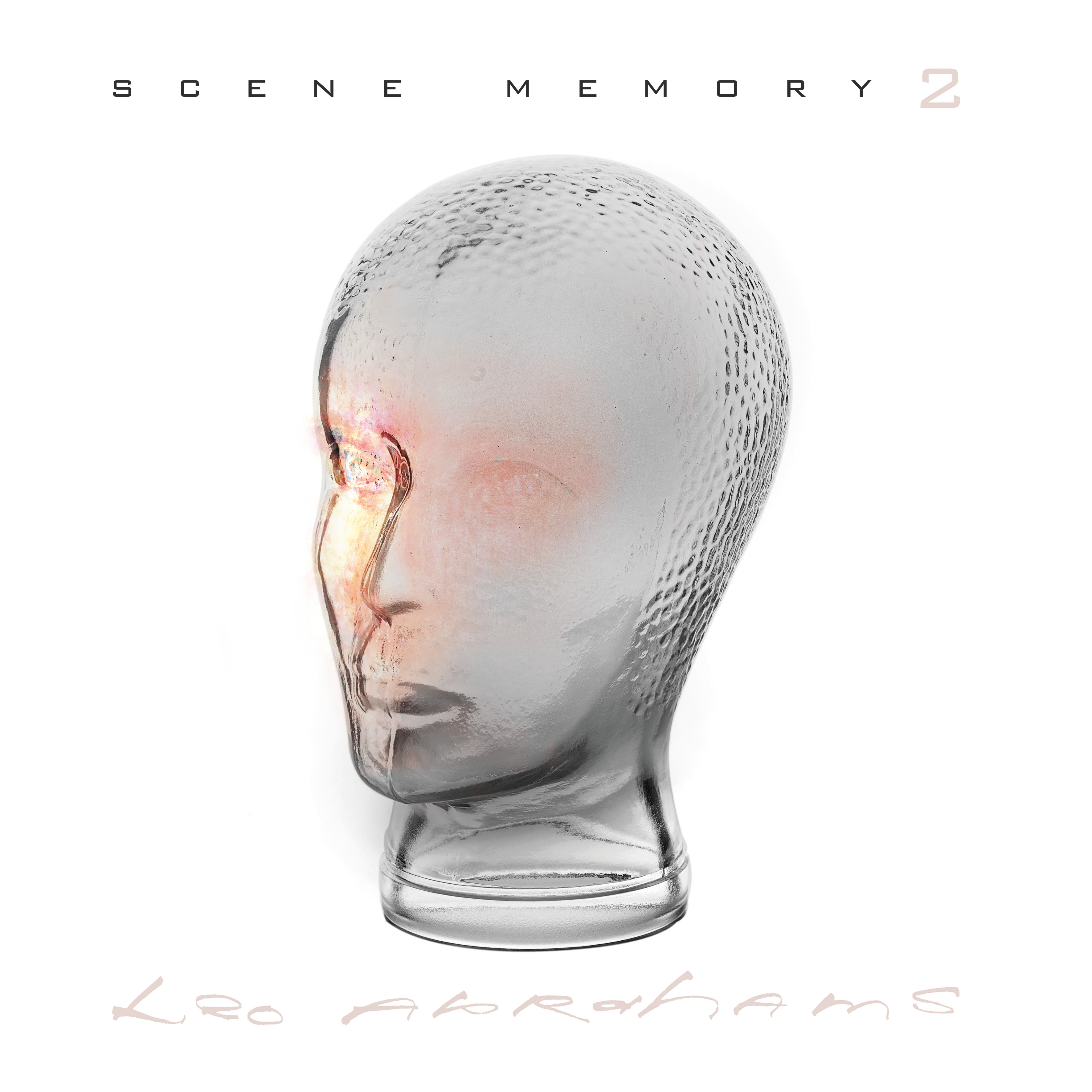
Switched On – Leo Abrahams: Scene Memory II (figureight records)

leo-abrahams

reviewed by Ben Hogwood

What’s the story?

This is a sequel album at a distance of fifteen years from the original. When Scene Memory I came out in 2006, Leo Abrahams was already proficient in a number of musical forms and styles, but since then he has broadened his horizons by working with Brian Eno, David Byrne, Jon Hopkins and Paul Simon, among many others.

Working from his London studio, Abrahams offers both collaboration and solo work, but until recently has tended to prioritise the former. Scene Memory II sees him return to the solo guitar, and all its sounds are conjured from the instrument in some way.

His approach is one largely borne of instinct and improvisation, inspired by a tour of Siberia undertaken in 2019. Many of the melodic ideas have their origin there, being honed to completion in London.

What’s the music like?

There is an intriguing balance of ambience and tension running through Abrahams’ music. The studied guitar lines that come to the forefront are often complemented by more spacious surroundings, rewarding listeners on headphones or wider screen sound systems. There is always a strong sense of direction in his workings, however, and the guitar is used to generate sounds that are by turns percussive, feather-light, melodic and noise-based.

Spiral Trem is glitchy, with bass drum sounds like stepping stones, somehow wrought from the guitar. Supplicant explores the higher range of the instrument with harmonics, which sound like chimes. Its lines recall a similar state of mind to that found in the early ECM recordings of Pat Metheny. Tithe has a calling towards the start and then flickers intermittently, the pauses between its melodic phrases bringing to mind the more intricate works of John Martyn. Alternations retreats to a distance for its reverberating, languid lines, while Ruins is suitably eerie, turning the guitar into a wordless vocal instrument and losing track of a discernible pulse. Troth, meanwhile, has a more severe language secured through its sharper timbres.

Does it all work?

It does. Abrahams’ work has presence and poise, and makes a powerful impact even in its most restrained moments.

Is it recommended?

It certainly is. Abrahams writes music that becomes more compelling the more time you spend with it. It will be interesting to see how his solo work develops as he spends more time on it over the next few years.

Stream

Buy


In concert – Colorado MahlerFest Orchestra / Kenneth Woods – MahlerFest XXXIV: Sawyers & Mahler Fifth Symphonies

MahlerFest01_square-01

Colorado MahlerFest Orchestra / Kenneth Woods

Sawyers Symphony No. 5 (2020) [World Premiere]
Mahler
Symphony no.5 in C sharp minor (1901-2)

Macky Auditorium, Boulder
Saturday 28th August 2021

Written by Richard Whitehouse

A programme of two five-movement Fifths might not have been what Kenneth Woods had envisaged at this stage of his symphonic traversal in the Colorado MahlerFest but, after an inevitably curtailed season last year, the need to jump-start the festival this time round was evident, and the present double-bill did so impressively. Mahler’s cycle is often viewed as the ‘end of the line’ for the genre of the symphony, yet its ongoing evolution is not hard to discern, and it is to Woods’s credit that he is making this aspect a crucial part of his tenure.

Woods has championed the music of Philip Sawyers for more than a decade, with this Fifth Symphony continuing along a stylistic path comparable to those two before it. Its immediate predecessor ended with an expansive Adagio as was his most impressive such movement so far, and the present work continues from such inward (never self-conscious) seriousness in a Moderato (each of the movements being designated with Shostakovich-like inscrutability) that overrides clear-cut sonata procedures for a gradual unfolding whose thoughtful opening theme takes on greater emotional intensity as it builds to an ominous climax then closes in a mood of some ambivalence. Here, as throughout, the writing for a standard orchestra (with fifth horn and harp though no percussion other than timpani) is never less than resourceful.

From here an Allegro picks-up the pace incrementally to capering and, in its middle stages, wistful effect; before the central Lento pursues a sustained course (not a little unlike that of Rubbra’s slow movements) over two cumulative paragraphs – the second of which climaxes with the most anguished music in the whole work, prior to the brief yet affecting coda from strings. More overtly a scherzo, the ensuing Presto also evinces greater expressive contrast between its impulsive outer sections and a chorale-like ‘trio’ of affecting poise. From here, the final Allegro is the most orthodox movement in its energetic and reflective main themes – taking in an intensive development and subtly modified reprise prior to an apotheosis that ensures a decisive yet, as might be expected from this composer, never bathetic conclusion.

On this first hearing, Sawyers’s new symphony proved a cohesive and absorbing piece – less arresting in content, perhaps, than either of its predecessors but with an unfailing formal logic and expressive eloquence that are not to be gainsaid. Interesting, too, this Fifth should mark something of a rapprochement with ‘classical’ tonality; whereas Mahler’s Fifth, which came after the interval, sets in motion that often fractious discourse which duly informs almost all this composer’s symphonic works from his final decade of creativity – indeed, of existence.

Pacing is crucial in Mahler’s symphonies, with this being no exception. From the outset of a trenchant trumpet solo, the Funeral March was almost ideally judged – its development not too histrionic, and coda whose eruptive force subsided into numbed uncertainty. Proceeding (rightly) without pause, its successor – as if a fantasia to the prelude just heard – steered with unobtrusive authority to its climactic if ill-fated chorale, and if the final return of the opening music lacked vehemence, the pulsating expectancy of the closing bars was tangibly rendered.

That the central Scherzo has long divided opinion is not in doubt (Otto Klemperer avoided the work because of it while Hermann Scherchen reduced it by two-thirds), and though Woods’s conception had its merits – a rustically evocative trio plus the transitions on either side – the unforced equability of its outer portions underlined just how closely this music verges on the platitudinous; its ländler-informed coyness and contrapuntal contrivance over-exploiting the potential of its content. At least the coda wrapped up this movement with real decisiveness.

The remaining movements were finely realized, Woods taking the Adagietto at a flowing yet flexible pace that enabled its rapture to emerge without risk of indulgence (here, as throughout, the strings’ articulation of grace notes served a structural as well as expressive purpose). The deftest of transitions duly prepared for a finale whose elaborate interplay of rondo and sonata elements was replete with a cumulative impetus as carried through to a fervent peroration, the chorale blazing forth during a close where affirmation and nonchalance were irresistibly fused.

It should be added that the playing of the Colorado MahlerFest Orchestra was of a consistently high standard – testifying to the excellence of the individual musicians as, also, their collective responsiveness to Woods’s technical acumen and interpretative insight. Its latter-day status as mainstream repertoire may have obscured its innovative qualities (and drawn attention away from its unevenness), but to hear this work so authoritatively realized and within the context of a major new symphonic statement says much for the continued importance of MahlerFest.

Further information on the Colorado MahlerFest can be found on their YouTube channel. For more on the festival, visit their website – and click on the names to visit the websites of Kenneth Woods and Philip Sawyers respectively.

Switched On – Rival Consoles: Overflow (Erased Tapes)

rival-consoles-overflow

reviewed by Ben Hogwood

What’s the story?

Ryan Lee West’s new album under the pseudonym of Rival Consoles was written for a dance production, Overflow, choreographed by Alexander Whitley. The aim of Whitley’s work was to explore ‘themes of the human and emotional consequences of life surrounded by data’…echoing ‘the concept of social media, advertising, marketing companies and political factions exploiting our data to gain wealth, political advantage and sow division.’

West noted the potential of the combined artform to ‘create an otherworldly space the listener/viewer can escape to and explore’. A big feature of the finished work is a light sculpture created by Children of the Light, with a long LED bar that moves around the stage.

What’s the music like?

Rival Consoles responds to his theme with music of real presence and tension. Right from the off there is an air of foreboding to Monster, with its brooding colours and slightly irregular pitches and rhythms stretched over ten minutes.

I Like ratchets this up still further. Mashing up a short vocal sample, which is effective but also infuriating as the speaker never quite gets to the point. The Cloud Oracle also treats speech intriguingly, with a held note that has talking heads spun around it.

Flow State is a thrilling ride at a high tempo, with crossrhythms generated by the keyboards that are redolent of Steve Reich and which have plenty of opportunity for development over twelve minutes, the percussion hammering more incessantly on the door.

All these examples are an indication of the invention Ryan Lee West gets in response to Whitley’s brief, resulting in music that pushes him further technically and creatively from the previous album Articulation.

Does it all work?

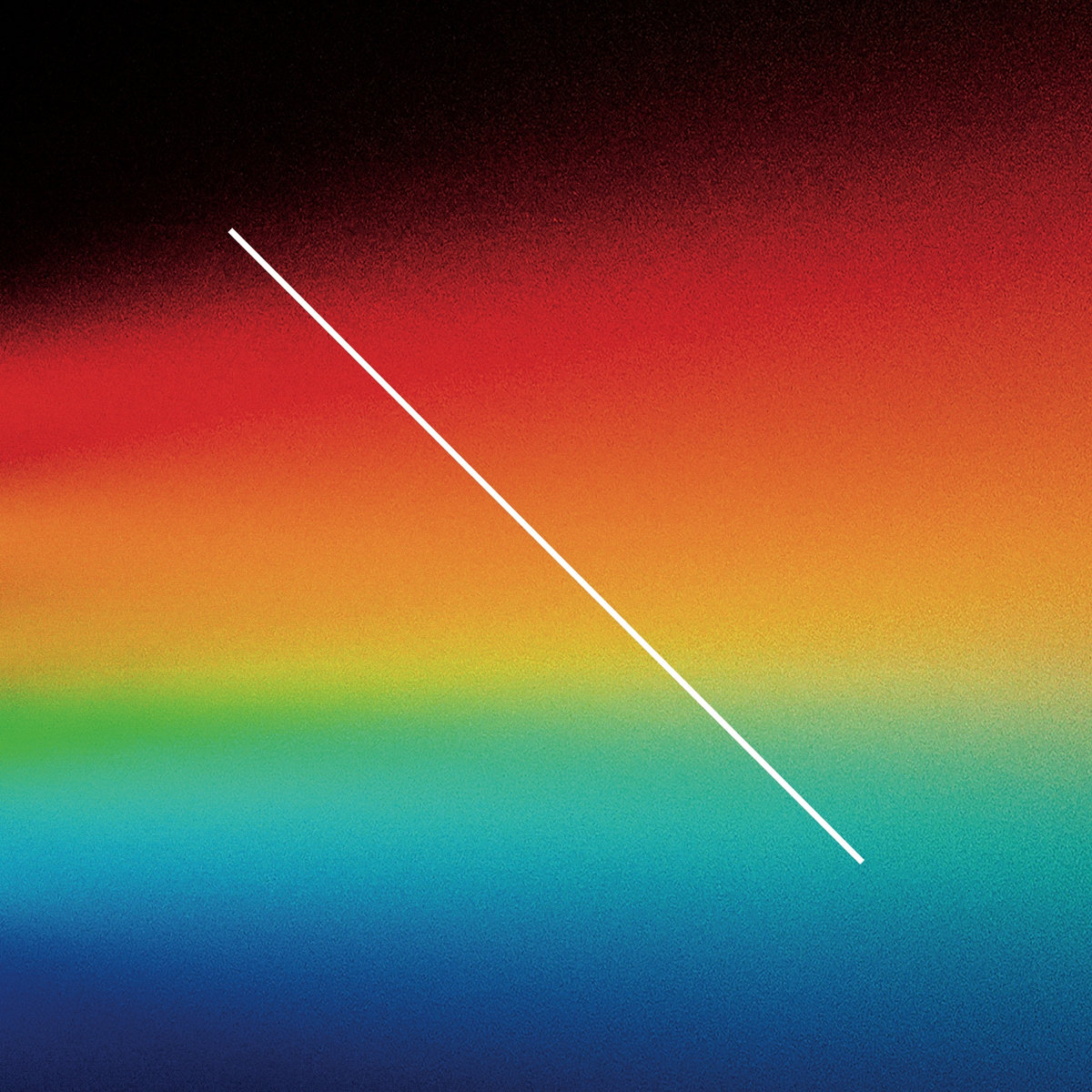
It does. Overflow is a compelling piece of work, a musical equivalent to the striking colours that adorn its cover.

Is it recommended?

Yes. There was a general feeling that Articulation did not quite meet Ryan Lee West’s full potential as Rival Consoles, effective though it was. There can be no such doubt here.

Stream

Buy