Guest mix – John Sellekaers

It is our great pleasure to welcome John Sellekaers to the Arcana playlist section.

In fact the Brussels-based, Canadian born musician has gone one further and contributed an hour-long mix which, to be honest, is an absolute treat. Just a few seconds of Andrew Wasylyk’s Blossomlessness #2 is all it will need for you to mentally cast off the cares of modern living and float into pure musical ambience.

The mix develops with some lovely contributions from Simon McCorry, Atom TM, Loscil and Mark Van Hoen to name just a few, and gradually Sellekaers introduces more beat-based work to his equation – before pulling back and letting the music create a wonderful amount of space.

Arcana reviewed John’s new Observer Effects album on the Glacial Movements label back in August, finding its immersive ambience ‘coldly effective’ – a compliment to the purity of his productions. The same applies to his DJing, as you will find here.

Our thanks to John for this wonderful selection of music:

In concert – Guildhall Chamber Orchestra / Joshua Weilerstein: Music by Andrzej & Roxanna Panufnik, Still & Copland

Joshua Weilerstein 58_credit Sim Canetty-Clark (2)

Heather Brooks (harp), Guildhall Chamber Orchestra / Joshua Weilerstein

Andrzej Panufnik Harmony (1989)
Roxanna Panufnik
Powers & Dominions (2001)
Still
Mother and Child (1943) [UK premiere]
Copland
Appalachian Spring: Suite (1943/5)

Milton Hall, London
Wednesday 27 October 2021

Written by Richard Whitehouse; picture of Joshua Weilerstein by Sam Canetty-Clarke

The Guildhall Chamber Orchestra was heard this evening at its regular base in a programme where works by father and daughter either side of the Millennium complemented music from American composers enjoying their greatest success in the run-up to the Second World War.

A pity that Harmony has remained among the lesser known of Andrzej Panufnik’s works, as this ‘Poem for Chamber Orchestra’ encapsulates traits that define his mature output. Scored for pairs of woodwinds and a group of strings (the size variable according to forces available) placed stereophonically, its 18 minutes effect the gradual coming-together of various textural, harmonic, rhythmic and melodic possibilities in what – unusually for this composer – is less a symmetrical (let alone palindromic) form than a cumulative design unfolding from the most speculative exchanges to sustained outpouring. Commemorating both the 75th anniversary of the composer’s birth and the 25th anniversary of his marriage, it exemplifies those concerns for long-term formal and expressive integration as are achieved here with seamless cohesion.

It received a reading of real commitment by the Guildhall CO under the attentive direction of Joshua Weilerstein (who will hopefully tackle some of the Panufnik symphonies in future), joined by Heather Brooks for Powers & Dominions by Roxanna Panufnik. A composer who has often expressed a love for the instrument, this ‘Concertino for Harp and Orchestra’ falls into two contrasted parts. Enigmatically duly emerges from speculative gestures to take on increasing emotional intensity as melodic elements derived from two of the Psalms come to the fore, while Sinisterly brings a bracing confrontation with the vibraphone and orchestral harp that climaxes in a wide-ranging cadenza then heads into a haunting recessional. Heather Brooks proved an adept and sensitive soloist for one of this composer’s more durable works.

Weilerstein was surely right in his introductory remarks to suggest that William Grant Still’s Mother and Child was tonight receiving its first hearing in the UK. Arranged from the second movement of this composer’s Suite for Violin and Piano and taking inspiration from Sargent Johnson’s eponymous sculpture, its 10 minutes weave diaphanous textures around a melody with overtones of a spiritual and which – as often with this composer – yields an appealing profile. It could yet prove a worthwhile addition to the roster of American works for strings.

The Suite from Copland’s ballet Appalachian Spring may need no such introduction, but it remains a testing assignment which the Guildhall CO tackled with increasing confidence. As a rule it was the more animated episodes that came off best, Weilerstein securing playing of no mean verve and rhythmic definition such as propelled the music forward as a cumulative entity. If the culminating Variations on a Shaker Hymn seemed a little too blatant in overall expression, the ensuing postlude struck a resonance through the sensitivity of its realization.

It certainly made for a fitting conclusion to this concert, and one in which the qualities of the Guildhall CO’s playing were enhanced by the consistency of Weilerstein’s insights across a varied and demanding programme. Hopefully they will be back working together before long.

For further information on the Guildhall current season head to their website. For more Joshua Weilerstein head here

In concert – Sarah Beth Briggs, English Symphony Orchestra / Kenneth Woods: Mozart in Cheltenham

sarah-beth-briggs

Sarah Beth Briggs (piano, above), English Symphony Orchestra / Kenneth Woods

Sawyers The Valley of Vision (2017)
Mozart
Piano Concerto no.22 in E flat major K482 (1785)
Beethoven
Symphony no.6 in F major Op.68 ‘Pastoral’ (1808)

Town Hall, Cheltenham
Monday 25 October 2021

Written by Richard Whitehouse; picture of Sarah Beth Briggs by Carolyn Mendelsohn

Tonight’s concert found the English Symphony Orchestra at the Town Hall in Cheltenham, a building of Victorian opulence with an expansive while (surprisingly?) immediate acoustic to match, in a programme featuring classics of their respective media by Mozart and Beethoven.

First, though, a welcome revival for The Valley of Vision – the tone poem by Philip Sawyers that surveys the environs around Shoreham, Kent as were immortalized in the visionary early landscapes of Samuel Palmer. Although the composer had identified five continuous sections, the probing intensity of this music makes for a seamless unfolding which was to the fore in a superbly focussed account as directed by Kenneth Woods (who recently premiered Sawyers’ Fifth Symphony at the Colorado Mahler Festival). No less tangible was the control over this music’s momentum, extending through to a climactic faster section before soon regaining its initial pensiveness. In its subtly evocative aura and persuasive handling of tonality, moreover, this piece can rank with the most significant British orchestral works of the past two decades.

From the six piano concertos that Mozart wrote for his subscription concerts during the mid-1780s, the Twenty-Second is likely the least often heard. A pity, when its relatively expansive form and unpredictability of content are striking even in the context of this most exploratory phase from the composer’s output. Certainly, it is a piece of which Sarah Beth Briggs had the measure – whether in the forceful impetus of its opening Allegro, winsome interplay between soloist and woodwind in the central Andante (arguably the most eloquent among Mozart’s sets of variations) or blithe unfolding of a final Rondo afforded greater pathos by the ‘harmonien’ episode whose interposing was an inspired departure. Nor were Dennis Matthews’s succinct and artfully integrated cadenzas other than an enhancement of what was a fine performance.

Not that there was there anything routine about Beethoven’s Pastoral following the interval, a worthy successor to those performances of the Fifth and Seventh Symphonies that Woods and the ESO have given in recent concerts. Thus, a purposeful though never inflexible take on the opening movement left sufficient room to characterize its reflective asides, with the ‘Scene by the brook’ even more engrossing through its homogeneity of texture and seamless continuity; the closing bird-calls elegantly phrased and enticingly integrated into the whole.

Too rapid a tempo for the scherzo left Woods with insufficient room to point up contrasts in motion with its trio sections, but the Thunderstorm was finely rendered as an extended introduction into the finale – this Shepherd’s Song emerging as the formal and emotional culmination in all respects. Not the least of these strengths was an inevitability of progress – here maintained right through to a coda of serene poise and, in the process, underlining the degree to which any vestige of self has been sublimated into the enveloping cosmic dance.

An absorbing performance as made one look forward to further Beethoven symphonies from this source. Woods and ESO are in Worcester at the weekend with two concerts as part of the Autumn Elgar Festival, the first featuring the masterly Elegy for Strings by Harold Truscott.

Further information on the ESO’s current season can be found at their website. For more on composer Philip Sawyers, visit his website here, while more on pianist Sarah Beth Briggs can be found at her website

In concert – Sol & Pat (Sol Gabetta & Patricia Kopatchinskaja) @ Queen Elizabeth Hall

pat-sol

Leclair Violin Sonata in C major Op.5/10: Tambourin (c1734)
Widmann 24 Duos: Valse bavaroise; Toccatina all’inglese (2008)
J.S. Bach Prelude in G major (from BWV860) (c1722)
Francisco Coll Rizoma (2017)
Domenico Scarlatti Sonata in G, Kk.305
Ravel Sonata for violin & cello (1922)
J.S. Bach 15 Two-part Inventions BWV772-86 (selection) (c1723)
Ligeti Hommage à Hilding Rosenberg (1982)
Xenakis Dipli zyia (1951)
C.P.E. Bach Presto in C minor Wq114/3 (c1768)
Kodály Duo Op.7 (1914)

Patricia Kopatchinskaja (violin), Sol Gabetta (cello)

Queen Elizabeth Hall, London
Tuesday 26 October 2021

Written by Richard Whitehouse

Combining two of the most charismatic and creative string players of their generation was such a good idea to make one surprised it had not happened earlier, but tonight the Patricia Kopatchinskaja and Sol Gabetta double-act hit the Southbank Centre in no uncertain terms.

A stomping entrée to Leclair’s Tambourin in C (a rare instance when Kopatchinskaja donned footwear) launched proceedings in arresting fashion, while Jörg Widmann’s Valse bavaroise and Toccatina all’inglese – both from his resourceful playbook of 24 Duos – allured and engaged. Bach’s Prelude in G (from BWV860) afforded a limpid breathing-space, then Francisco Coll’s Rizoma fairly intrigued with its incrementally shifting textures and ethereal harmonics – just the sort of piece, indeed, necessary for energizing the violin-and-cello medium. Kopatchinskaja admitted to disliking the arrangement of Scarlatti’s Sonata in G (Kk305) and canvassed the audience for its opinion, the response encouraging an incisive take on music whose enthusiastic response left her shaking her head in mock consternation.

The first half concluded with Ravel’s Sonata for violin and cello – much less often revived than it should be, ostensibly on account of the duo-medium, but an undoubted masterpiece when rendered with such commitment as here. Kopatchinskaja and Gabetta teased out those exquisite tonal obliquities of the Allegro, countered by the alternate brusqueness and suavity of the scherzo or distanced rapture of the slow movement; before the finale brought matters to a head with its headlong syncopation and no lack of that ‘spirit’ as indicated in the score.

A brief inclusion from Bach’s 15 Two-Part Inventions (BWV772-86) opened the second half with pointed understatement (presumably more so than the Scarlatti sonata that was originally scheduled), with the expressive poise of Ligeti’s Hommage á Hilding Rosenberg duly making way for the acerbic interplay of Xenakis’s Dipli zyia which is among the most Bartókian of the formative pieces to have found posthumous revival by this composer (who is hopefully being suitably commemorated throughout his centenary in 2022).

Kopatchinskaja and Gabetta then sat side by side for a speculative reading of C.P.E. Bach’s Presto in C minor (Wq.114 No. 3) made the more so through its being played pizzicato throughout. Interesting, too, how such an arrangement can dissolve any perceived boundary between musical epochs.

The programme reached a culmination in every sense with Kodály’s Duo, one of several large-scale chamber-works for strings on which his reputation as a composer of ‘abstract’ music rests. After a tensile account of the preludial Allegro, Kopatchinskaja and Gabetta rendered the central Adagio with sustained pathos and a timbral acuity made more so by their faultless intonation. Nor was there any lack of eloquence in the finale, its deliberate progress building a momentum that was released in the coda to heady and exhilarating effect.

Quite a concert, then, with a performance to match by two musicians who complement each other’s playing to a mutually beneficial degree. Hopefully they will be returning with another wide-ranging programme before too long. The enthusiastic audience evidently felt likewise.

For more information on the new Sol & Pat release, head to the Linn Records website

Bernard Haitink – An appreciation

by Ben Hogwood

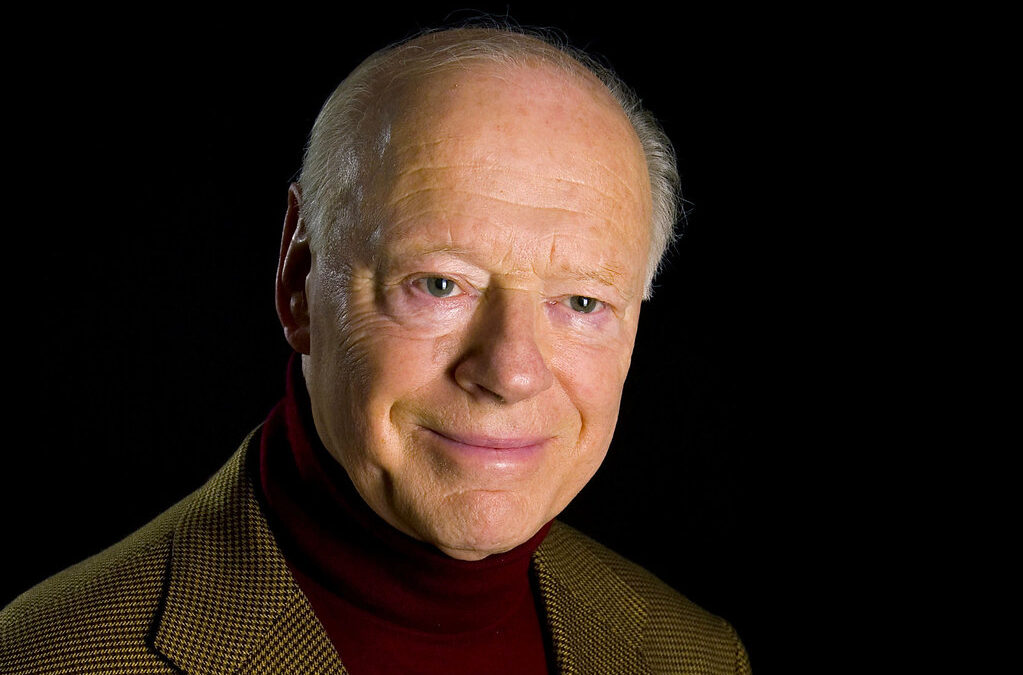
Last week we heard the sad news of the death of Dutch conductor Bernard Haitink at the ripe old age of 92.

Haitink was a special man indeed, seen by many as the last in a long line of ‘old school’ conductors. He was an artist of great craftsmanship and elegance, who earned the respect of his peers through an incredibly long career that only ended in 2019.

The tributes flooding in from ensembles the conductor worked with say everything about Haitink as a man. The Salzburg Festival declared, “The music world has lost one of its very greatest. His aim was never to triumph; probably that is why his interpretations became such triumphs.” The Berliner Philharmoniker praised how “He always impressed and inspired us with his qualities – his great craftsmanship, his perfect knowledge of the score, his warm, noble bearing.” From Sir Simon Rattle, an insight borne of personal experience: “He was one of the rare giants of our time, and even rarer and more precious, a giant full of humility. My dear Bernard, we keep you deep in our hearts.”

Like many people I have had the pleasure of listening to Haitink’s recordings for many years, but my first live memories go back to the first ever BBC Proms concert I attended in September 1997. There he conducted the European Union Youth Orchestra in Bruckner’s Symphony no.7, following a sensitive account of Beethoven’s Piano Concerto no.4 where the soloist was Emanuel Ax. By coincidence the same works and soloist featured at Haitink’s last Prom in 2019, this time with the Vienna Philharmonic.

I also saw Haitink at the Proms in 2005, conducting the London Symphony Orchestra as soloist Hélène Grimaud performed the Ravel Piano Concerto. After the interval, Haitink gave a characteristically poised account of Shostakovich’s Eighth Symphony, which left its mark on this particular listener for days:

I remember too a very special pair of Proms in 2011, Haitink and Ax united once again for Brahms with the Chamber Orchestra of Europe, one of several ensembles with which the conductor forged a special relationship.

As a recording artist, Haitink gave us a vast array of special symphony, concerto and opera recordings. He recorded multiple symphony cycles of Mahler, Bruckner, Beethoven, Brahms and Schumann, not to mention landmark collections of Shostakovich and Vaughan Williams symphonies with the Concertgebouw and London Philharmonic Orchestras, and fine cycles of Rachmaninov and Beethoven piano concertos with Vladimir Ashkenazy and Alfred Brendel respectively. That’s before we even get to opera! There he delivered much-loved recordings of Mozart, Wagner, Richard Strauss and Britten to highlight just a few.

I have delved into the discography for a set of recordings with personal significance – which can be accessed on the Spotify playlist below. They include Mahler, Bruckner, Shostakovich and begin with Vaughan Williams’ Symphony no.5, with the London Philharmonic Orchestra.

It is safe to say that Bernard Haitink will occupy a special place in the heart of many a musician and listener, and this gives just a small number of reasons why: