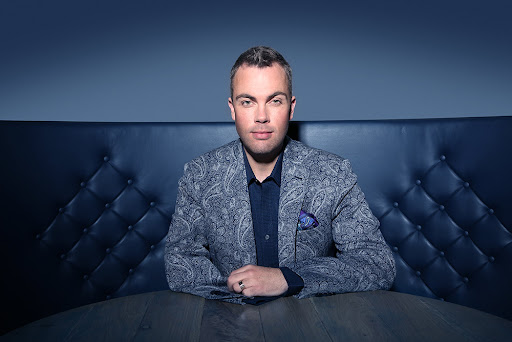
It’s second album time for BUNKR. His time between albums one and two appears to have been well spent, with a keen emphasis on open textures and broad synth lines. The second BUNKR album is inspired by where satellites go when they die – Graveyard Orbit being a term for the universal car park they are moved to when operational life is done, and they are retired as space junk.
What’s the music like?
In a word, vibrant. The music for Graveyard Orbit is every bit as enjoyable as the BUNKR debut, and if anything a little more nuanced. There is also a touch of sadness about the satellites’ fate, felt most keenly in the beatless Vanguard Distress Signal.
Terminus 23 has an appealing warmth, while the glittering synths of Stargazing are rather special. 6am Eternal plays with expansive drones as a Bach-like synth line snakes through the textures, while Graveyard Orbit itself summons up a shuffling percussion track to go with its cool expanse. Glacial Shift is a woozy affair, the keyboards shimmering like the northern lights, while Astral Spectral pulses with activity, its quick beat and urgent lines rushing forwards. Dark Chorale has a subtle similarity to the harmonic movement of Primal Scream’s Come Together, which turns out to be a kindred spirit in feeling too.
Does it all work?
It does. BUNKR’S second album keeps everything that was good about the first, and builds on it rather effortlessly What’s not to like?
Is it recommended?
Very much so – as long as it is purchased in tandem with the first. With fluent writing and rhythmic invention, the Brighton-based producer has moved on a step from his already impressive achievements!
If an awards ceremony does its job properly, it should provide those attending and watching with lasting feelings of inspiration, hope and even wonder.
The Royal Philharmonic Society Awards did just that at the Wigmore Hall on Monday, recognising some superhuman musical achievements as we dared to think in more hopeful terms of classical music emerging from the pandemic.
Restrictions such as those imposed in lockdown can often bring out the best in creative minds, and the 13 awards made during the evening showed this time and time again. When such minds are backed into a corner, some of the solutions can be truly mindboggling. You can judge for yourself when the Awards are published online next week, and aired on BBC Radio 3 on Monday 8 November (to open in a new window click here)
Perhaps the most striking and wide reaching initiative on show was ENO Breathe, the program set up for sufferers of long-Covid to help with breathing and anxiety, and now rolled out to 50 NHS Trusts across the UK. All the people involved in its creation were rightly acknowledged here, praising a program which has benefited from the expertise of opera singers and colleagues at Imperial College Healthcare:
It was indeed a night to acknowledge the tireless work of those behind the scenes, who effectively enable their organisations or teams to give the appearance of a swan while they work feverishly beneath the surface. Bassoonist Ashby Mayes is a prime example. He gave a bubbly performance of Weber’s Rondo Ongarese with pianist Kumi Matsuo, but then violinist Nicola Benedetti revealed his ‘other’ vocation as technology inventor and troubleshooter as part of The Benedetti Foundation’s online work.
Benedetti rightly added the Instrumentalist Award to her already impressive armoury, for she is a true modern ambassador for classical music. With the ability to face outwards to politicians but also inwards to those at early or difficult stages in their musical journey hers is a consistently inspiring presence.
As the evening progressed it became ever clearer that each category had three nominations that were effectively winners, and they were recognised as such in the excellent presentations from RPS Chief Executive James Murphy, RPS Chairman and Director of Wigmore Hall John Gilhooly and BBC Radio 3 presenter Katie Derham. They all brought a fresh and enthusiastic approach to the awards, sharing with us the delight of simply being in the same room again.
Further inspiration came from Kadiatu Kanneh-Mason, winner of the Storytelling Award for her book House of Music. In revealing just how many publishers had turned down the volume ‘because black people don’t play classical music’ (!) she illustrated just how persistence and endurance can overcome such ridiculous hurdles. Peter Brathwaite, nominated for his Radio 3 program In Their Voices, showed the same thing
Elsewhere there were joyous stories of music making in lockdown, providing solace to everyone. The World How Wide, led by the Chorus of Royal Northern Sinfonia, won the Series and Events Award with a vibrant recasting of Vaughan Williams’ Tallis Fantasia, showing off the region’s natural beauty with a film directed by NOVAK that made you want to be there:
Meanwhile Hilary Campbell and the Bristol Choral Society used online resources in the best possible way to launch a new CD and a Christmas carol competition for new composers. They won the Inspiration award, showing in the process how amateur music making is so important to the mental and physical health of all the country’s musicians. Good CDs can enlighten and inspire us, but first-hand musical experiences can rarely be bettered.
This can be felt throughout the Bold Tendencies initiative in Peckham, Hannah Barry’s transformation of a disused multistorey car park claiming the Gamechanger Award. Dani Howard’s Trombone Concerto, written for Peter Moore and the Royal Liverpool Philharmonic Orchestra, confirmed its status as a powerful new vehicle for the instrument, while Jennifer Johnston won the Singer Award for her artistry and services to the same city. Back online, meanwhile, Vopera claimed the Opera and Music Theatre Award for their vibrant and imaginative digital production of Ravel’s L’enfant et les sortilèges, brilliantly backed by musicians from the London Philharmonic Orchestra:
Other winners – last but certainly not least – included Laura Bowler, who won the Chamber-scale Composition Award for her remarkable work Wicked Problems, the composer performing with bass flautist Ruth Morley at the ‘sound’ festival in Aberdeenshire. Ryan Bancroft won the Conductor Award to supplement his burgeoning reputation with the BBC National Orchestra of Wales, and Edinburgh’s Dunedin Consort capped a year of stellar online music making, including the premiere of Errollyn Wallen’s opera Dido’s Ghost, with the Ensemble Award:
Finally we heard from the Hermes Experiment, winners of the Young Artist Award. This exciting and highly original ensemble comprises soprano (Heloise Werner), clarinet (Oliver Pashley), double bass (Marianne Schofield), harp (Anne Denholm) and co-director Hanna Grzeskiewicz. The group stand for original creation of mostly new music in an open and diverse musical setting. Their contagious love and boundless enthusiasm was at the heart of Pashley’s arrangement of Piazzolla’s Concert d’aujourd’hui, capturing the spirit of a bright and uplifting evening.
Our wholesome congratulations go to all the nominees for the RPS Awards – and indeed to all of those unnamed who did not quite make the shortlist. You are all winners in our eyes!
To learn more about the Royal Philharmonic Society visit their website
Beethoven 7 Variations on ‘Bei Männern, welche Liebe fühlen’ from Mozart’s Die Zauberflöte WoO 46 (1796) Britten Cello Sonata in C major Op.65 (1961) Piazzolla Le grand tango (1982)
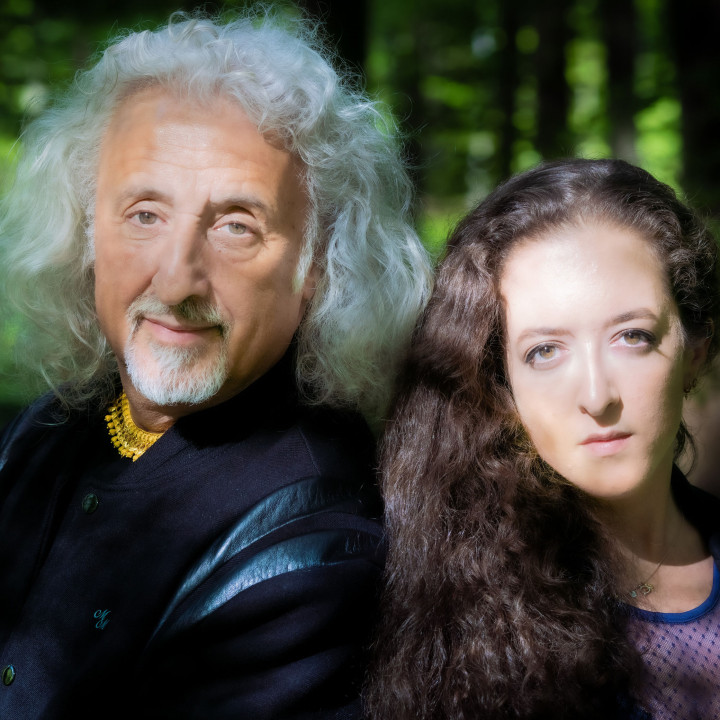
Mischa Maisky (cello), Lily Maisky (piano)
Wigmore Hall, London Monday 1 November 2021
Written by Ben Hogwood
Father and daughter duo Mischa and Lily Maisky presented an imaginative program of works for cello and piano in this BBC Radio 3 Lunchtime Concert, where it was gratifying to note a full attendance at the Wigmore Hall.
They immediately found the light-hearted spirit of Beethoven’s 7 Variations on Bei Männern, welche Liebe fühlen, an aria from Mozart’s Die Zauberflöte. The piano takes the lead for much of this work, and Lily’s phrasing was subtle yet nicely shaped. The burnished tone of Mischa’s cello was a feature in the minor-key fourth variation, while Lily’s sensitive ornamentation at the start of the sixth was especially attractive.
A compelling performance of Britten’s Cello Sonata followed. As a former pupil of Mstislav Rostropovich, Mischa Maisky effectively has a direct line to a work that started the beginning of an extremely fruitful musical friendship between Britten and Rostropovich that lasted up to the composer’s death 15 years later. This performance inhabited the spirit of the work from first note to last, with the feeling in the first movement Dialogo that we were eavesdropping on a private conversation. Britten’s frequent but subtle references to Shostakovich were nicely highlighted here, with a few witty asides.
In the second movement Scherzo the Maiskys were dancing a balletic routine, Mischa’s pizzicato questions finished off by Lily’s featherweight answers. The tempo was slightly slower than is often used here, but in this way the pair effectively pointed out the work’s proximity in Britten’s output to the opera A Midsummer Night’s Dream. The sombre third movement Elegie had a silvery tone from the cello, while the following Marcia dealt in sardonic humour. The finale was a tour de force, featuring low notes from Mischa’s cello capable of rattling the windows, before powering through to an emphatic finish.
Piazzolla’s Le Grand Tango celebrates the dance form with which the Argentinian composer became obsessed, though as he stated the preoccupation was in his mind rather than the dancing feet. This was a passionate performance, the Maiskys in hold throughout as they maintained their close musical chemistry, right from the full bodied notes with which the cello began to a red-blooded dance for the closing pages. In between we had music of great tenderness and affection, not to mention rhythmic persuasion.
The duo gave us two encores, the first of which was a heartfelt tribute to the recent passing of Nelson Freire, clearly a dear friend. Bloch’s Prayer, from the short suite From Jewish Life, was an ideal choice, reverently played and with a searing tone quality to the highest register. It was a moving tribute that could hardly be bettered. There was also an ideal response in the form of Mischa’s own transcription of Brahms’s Lerchengesang Op.70/2, where Lily’s piano took the expressive lead.
You can hear the music played by Mischa and Lily on the Spotify playlist below, compiling Mischa’s recordings for Deutsche Grammophon of all the repertoire:
For more information on Mischa Maisky you can visit hisartist page
Howard Argentum (2017) Britten Diversions Op.21 (1940, rev. 1954) Shostakovich Symphony no.10 in E minor Op.93 (1953)
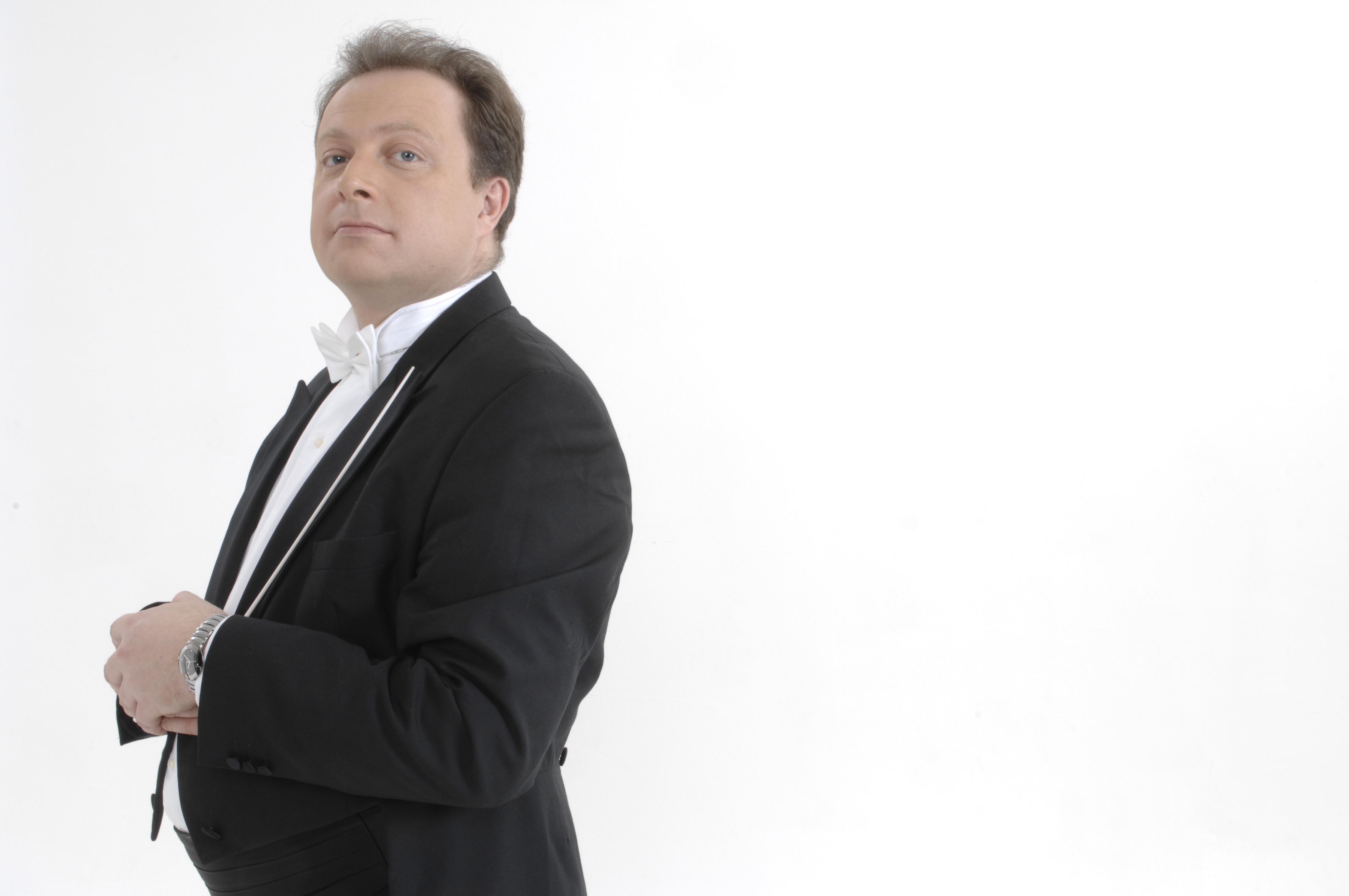
Nicholas McCarthy (piano, below), CBSO Youth Orchestra / Michael Seal (above)
Symphony Hall, Birmingham Sunday 31 October 2021 (3pm)
Written by Richard Whitehouse
It seems quite a while since the CBSO Youth Orchestra was last in action – this afternoon’s concert playing to its strengths with a programme as featured respectively early and mature works from Britten and Shostakovich, while beginning with a recent piece by Dani Howard.
Now in her late twenties, Howard is one among several British composers who have come to prominence in the past five years. Written to commemorate the silver-wedding anniversary of two close friends, the appropriately named Argentum is in a lineage of curtain-raisers by such as John Adams or Michael Torke – drawing audibly yet productively on such post-minimalist traits in music whose unbridled animation subsides towards a mid-point stasis, before rapidly regaining its previous energy over the course of a build-up to the pointedly affirmative close.
The CBSOYO evidently enjoyed making its acquaintance, then seemed no less attuned to the eclecticism pursued by Britten in his Diversions. Written for Paul Wittgenstein, who had lost his right-arm in the First World War, it takes the form of 12 variations on a theme announced by the orchestra whose faux-portentousness determines what follows. Prokofiev is the main influence (Britten could not have known his left-hand Fourth Concerto, written for but never played by Wittgenstein and unheard until the 1950s) on music of an inventiveness and verve admirably conveyed here by Nicholas McCarthy; his characterizing of each variation astutely gauged through to a scintillating ‘Toccata’ cadenza, with Michael Seal similarly judicious in the mock-solemnity of the ‘Adagio’ then a final ‘Tarantella’ of suitably uproarious humour.
Over his years as Associate Conductor of the CBSO, Seal has gained a formidable reputation in symphonic repertoire, with his account of Shostakovich’s Tenth Symphony never less than satisfying in its long-term cohesion. Not least the opening Moderato, unfolding at an almost unbroken pulse with the stark main theme powerfully wrought and its successor lacking only a degree of irony. The central development exuded palpable impetus and while the climactic arrival of the reprise could have been even more shattering, the wind-down into the musing coda was ideally judged. Taken at a swift if never headlong tempo, the Scherzo was suitably graphic in its evoking of violence (whether, or not, a ‘portrait’ of Stalin is beside the point), then the ensuing Allegretto was poised unerringly between slow movement and intermezzo.
This most intriguing portion of the work again lacked little in insight – with due credit to first horn Alex Hocknull for coming through, almost unscathed, in one of the lengthiest and most testing solos of the orchestral literature. A pity that Seal did not head straight into the finale, but his handling of its Andante introduction astutely mingled pathos with anticipation – the main Allegro itself pivoting between nonchalance and defiance through to a conclusion in which any thought of triumph over adversity was – rightly- withheld until the closing bars.
All in all, a gripping performance of a symphonic masterpiece and a fine demonstration of the CBSO Youth Orchestra’s collective prowess. The CBSO returns this Wednesday for Mozart and Mendelssohn frère et soeur, with Benjamin Grosvenor in Beethoven’s First Concerto.
Further information on the CBSO’s current season can be found at the orchestra’swebsite. For more on Michael Seal, clickhere – and for more on pianist Nicholas McCarthy, click here
Portrait of Antonio Salieri by Joseph Willibrord Mähler, 1815
Polyphonic Italian Songs for largely unaccompanied voices (1801-1803, Beethoven aged 32)
1. Bei labbri che amore (duet)
2. Ma tu tremi, o mio tesoro (trio)
3. E pur fra le tempeste (solo)
4. Sei mio ben (duet)
5. Giura il nocchier: trio (5a), quartet (5b), quartet (5c)
6. Ah rammenta (duet)
7. Chi mai di questo core (trio)
8. Scrivo in te (duet)
9. Per te d’amico aprile (trio)
10. Nei campi e nelle selve: quartet (10a), quartet (10b)
11. Fra tutte le pene: duet (11a), trio (11b), quartet (11c)
12. Salvo tu vuoi lo sposo: solo (12a), duet (12b)
13. Quella cetra ah pur tu sei: trio (13a), quartet (13b), quartet (13c)
14. Già la notte s’avvicina: trio (14a), quartet (14b)
15. Silvio amante disperato (quartet)
Dedication not known
Duration most songs between 1′ and 1’30”
ListenBackground and Critical Reception
This collection of Italian songs provides us with a fascinating insight into Beethoven’s studies with Antonio Salieri, while also closing this particular chapter in his career. All the settings are of texts by Pietro Metastasio, whose poetry Beethoven was already familiar with.
Keith Anderson writes for Naxos that the exercises provide a substantial collection of songs in varied form, in many cases offering Beethoven’s original version, followed by Salieri’s corrected version. They have been brought together under the number WoO 99, with a series of numbering from Beethoven compiler Willy Hess for each item. These settings offer varied insights into Salieri’s teaching methods and Beethoven’s achievements in these years. The unaccompanied Italian settings were written during Beethoven’s early days in Vienna, generally between 1793 and 1797 and those with accompaniment up to 1802. The listings and earlier complete recordings are discussed in full by Mark S. Zimmer in The Unheard Beethoven.
Jan Swafford gives valuable insight into Beethoven’s manner as a student. “As with his counterpoint masters, in his dealings with Salieri Beethoven was a wilful student even as he dutifully set his assigned old-fashioned Italian texts in a suitable style. One day Beethoven ran into Salieri in the street after the teacher had thrashed one of rhose efforts. Salieri complained that he hadn’t been able to get the tune out of his head. “Then, Herr von Salieri,” Beethoven grinned, “it can’t have been so utterly bad.”
Thoughts
These songs give fascinating insights into Beethoven’s development as a composer. The music feels much ‘older’, with the overriding impression that the pupil is diligently aiming for a style coveted by his teacher, rather than breaking particularly new ground – bolstering his abilities and covering perceived weaknesses.
The first of these settings, Bei labbri, che amore, is a chaste two-parter for male and female voice in close harmony. Ma tu tremi is initially similar but there is a slightly more awkward top line in the middle section. E pur fra le tempest is a short setting of just under a minute, for solo voice and flowing piano, moving to an unaccompanied and quite serene Sei mio ben for three voices.
It is interesting to hear three versions of Giura il nocchier, the second of which is much fuller in texture than the first, while the third shifts the pitch down a tone. The four-part Chi mai di questo core is the fullest song here, and features a nice dialogue between the voices, if still polite and functional.
Some of the arrangements are written for full, choral textures, such as the second and third short arrangements of Giura il nocchier. There are no fewer than six versions of Fra tutte le pene availble, each of the three originals with revisions by Salieri to make the part movements a little more logical.
Other songs include the pure C major of Scrivo in te, a minute-long setting in three parts, and the fuller choral songs Per te d’amico aprile and Nei campi e nelle selve, in two versions – the second of which has a mournful edge. Also in two versions are Salvo tu vuoi lo sposo, and Gia la notte savvicina, which has a feather light choral setting for its alternative. Meanwhile the choral Quella cetra ah pur ti sei has three – and sounds rather like Haydn in the first.
Spotify playlist and Recordings usedSoloists, Ensemble Tamanial, Cantus Novus Wien / Thomas Holmes (Naxos)
The Naxos recordings are very well delivered, with the caveat that it is difficult to convey emotion in songs that are so short. The solo items have the necessary intimacy, while the choral numbers have a nice space surrounding the textures in the recording picture. Occasionally the top edges of the soprano lines feel like a bit of a strain, but that could be as much due to the composer’s writing as anything else!
You can chart the Arcana Beethoven playlist as it grows, with one recommended version of each piece we listen to. Catch up here!
Also written in 1803 BoieldieuClarinet Concerto no.1 in E flat major Op.36Next upBei labbri, che Amore WoO 99/1





 Arcana.fm