
In concert – Dr Samantha Ege, CBSO Youth Orchestra / Joshua Weilerstein: Korngold, Tchaikovsky & Price

Samantha-Ege

Korngold Schauspiel-Ouvertüre, Op. 4 (1911)
Price Piano Concerto in D minor (1932-4)
Tchaikovsky Symphony No. 5 in E minor, Op. 64 (1888)

Dr Samantha Ege (piano, above), CBSO Youth Orchestra / Joshua Weilerstein (below)

Symphony Hall, Birmingham
Sunday 27 February 2022

Written by Richard Whitehouse. Picture of Joshua Weilerstein (c) Sim Canetty-Clark

The year’s first concert by the CBSO Youth Orchestra programmed a staple of the symphonic repertoire with two works by composers whose success in their lifetimes subsequently faded almost to oblivion, only to meet with renewed acceptance in a very different cultural climate.

It might have been the first such piece he himself orchestrated, but Overture to a Drama finds the 14-year-old Erich Korngold in command of late-Romantic forces with a tonal opulence to match. Best here are the ominously modal introduction which returns transformed in a defiant peroration, and while the main sonata design rather goes through the motions – not least a ‘by numbers’ development – it engaged due to Joshua Weilerstein’s astute direction, not least his bringing out the wistful charm of its second theme (eloquently played by oboist Elly Barlow).

Florence Price’s Piano Concerto was met with a distinctly equivocal response when given at last year’s Proms, and it made a comparable impression today. The introduction – soloist in ruminative dialogue with trumpet and woodwind – promises much, but the actual Andantino proceeds rather dutifully to a half-hearted climax. This heads into a central Adagio where the piano arabesques elegantly dovetail with instrumental solos (notably cellist Eryna Kisumba) in a manner redolent of Edward MacDowell’s once-ubiquitous D minor Concerto. The final Allegretto unfolds to the rhythm of the Juba (precursor of Ragtime), but the overall effect is tepid compared to its use in Price’s symphonies, even if Samantha Ege (replacing an injured Jeneba Kanneh-Mason) might have made more of its vivacity on the way to a forceful close.

A prominent academic as well as pianist, Dr Ege recently met with considerable acclaim for her album of Price’s piano music Fantasie Nègre (Lorelt), and it would be well worth hearing her in a concerto of greater substance such as those by Adolphus Hailstork or George Walker.
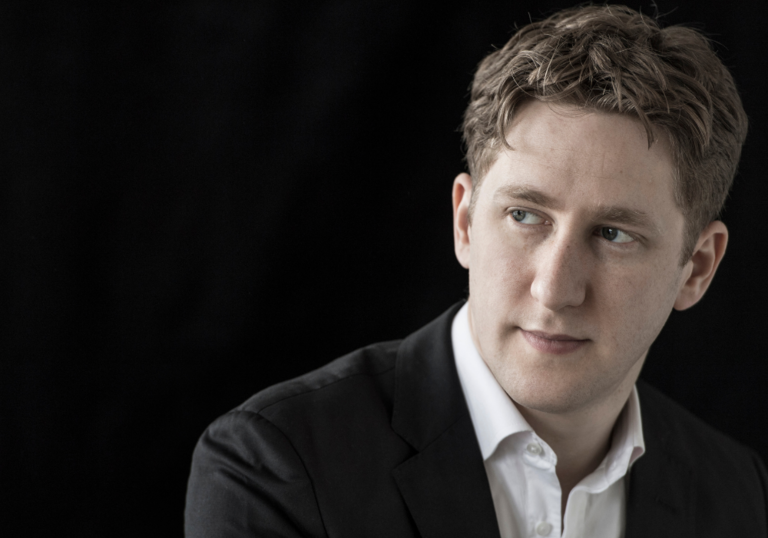
Weilerstein (above) works extensively with youth orchestras, and there was doubting his rapport with these players in Tchaikovsky’s Fifth Symphony. Pensive if never turgid, the first movement’s introduction passed seamlessly into an Allegro whose rhythmic tensility held its expressive fervour in check. The coda’s march-past then found meaningful contrast with the sepulchral start of the Andante, its indelible horn theme (lucidly rendered by Alex Hocknull) part of an inevitable unfolding capped by a stormy return of the ‘fate’ motto and coda of gentle pathos.

Segueing unexpectedly but effectively into the Valse, Weilerstein duly made the most of this music’s elegance and insouciance. Nor did he lose focus in the Finale’s opening restatement of the motto-theme, whose appearance can all too easily pre-empt what follows. There was no lack of impetus as the music built purposefully towards an apotheosis whose affirmation was shorn of bombast, nor any risk of hectoring with the triumphal surge to the close. This is never an easy piece to bring off, and the present performance was rarely less then convincing.

For more information on this concert, click here – and for information on the artists click on the names Samantha Ege and Joshua Weilerstein. Websites dedicated to Korngold and Florence Price can be accessed by clicking on the composer names.
In concert – Black Mirrors / BCMG NEXT @ Royal Birmingham Conservatoire

pattar

Pattar La Nuit Remue (2002) (a), Acte (1999) (b), Miroir Noir III (2009) (c), Miroir Noir II (2009) (d)

BCMG:NEXT (a, b, c) (Rebecca Speller (flute, a), Emily Wilson (a), Heather Ryall (b) (clarinets), Raddon Stephenson (trombone, b), Maja Pluta (a), Olivia Jago (c) (violins), Cameron Howe (viola) (a, c); Rosie Spinks (cello) (a, c); Michaella Livadiotis (piano (a, b), (celesta) (c), Joe Howson (toy piano) (c) / Melvin Tay (a, c)

L’Instant Donné (d) (Mathieu Steffanus (clarinet), Saori Furukawa (violin), Elsa Balas (viola), Nicolas Carpentier (cello)

Recital Hall, Royal Birmingham Conservatoire, Birmingham
Friday 25 Febuary 2022

Written by Richard Whitehouse

The second half of Birmingham Contemporary Music Group’s current season got off to an intriguing start with this collaboration between BCMG:NEXT and the Paris-based L’Instant Donné. All four of the pieces were by Frédéric Pattar (b1969), the Dijon-born composer who studied in Lyon with Gilbert Amy and who has worked extensively with this latter ensemble – building an extensive output over the past three decades which is audibly in the lineage of French post-war modernism, not least through its emphasis on timbral and colouristic facets.

Such qualities were uppermost in La Nuit Remue, a homage to surrealist poet Henri Michaux whose traversal from Boulezian fastidiousness to Lachenmann-like ‘concrète instrumentale’ was accomplished elegantly if anonymously. Melvin Tay drew a committed response from NEXT, who made a similarly fine impression with Acte. Inspired by a late poem of typically studied fatalism from Arthur Rimbaud, the interplay of its three wind instruments made for stark tonal contrasts such as were variously abetted and mediated by dextrous piano writing.

The remaining works were the latter two instalments from the trilogy Miroirs Noirs, each of which offered a striking take on its chamber format. In Miroir Noir III, the stealthy dialogue between string trio was pointedly offset by interjections from celesta and toy piano in a stern test of coordination the NEXT players met head-on. Members of L’Instant Donné then took the stage for Miroir Noir II, a more extended piece which teased out the possibilities of the ‘clarinet quartet’ with a keen sense of momentum sustained through to its deadpan ending.

A fine performance, then, from a group whose appearance this evening (as at the lunchtime recital in Symphony Hall) was made possible through Diaphonique, a funding body whose support is the more necessary in these post-Brexit times. Hopefully more of Pattar’s music will make its way to the UK (his Second String Quartet is well worth hearing on YouTube), but this collaboration was a worthy means of introducing it to Birmingham listeners in skilful and sympathetic performances.

Further information on BCMG events can be found at their website. To read an interview with Frédéric Pattar click here, while his biography can be found here). For more on L’Instant Donné click here, and for Diaphonique here

In concert – Soloists, CBSO Chorus, CBSO / Joshua Weilerstein: Robert Nathaniel Dett – The Ordering of Moses

Ives (orch. Schuman) Variations on ‘America’ (1891/1962)
Bernstein (orch. Ramin & Kostal)
 Symphonic Dances from ‘West Side Story’ (1957/61)
Dett
The Ordering of Moses (1937) [UK premiere]

Nadine Benjamin (soprano), Chrystal E Williams (mezzo-soprano), Rodrick Dixon (tenor), Eric Greene (baritone), CBSO Chorus, City of Birmingham Symphony Orchestra / Joshua Weilerstein

Symphony Hall, Birmingham
Wednesday 23 February 2022

Written by Richard Whitehouse

This evening’s concert by the City of Birmingham Symphony Orchestra was an all-American programme, centred as it was upon the first performance in this country for what is likely the most ambitious work by the African/American composer Robert Nathaniel Dett (1882-1943).

Although he gained prominence as a choral conductor (his Hampton Choir having performed for President Hoover and Britain’s Prime Minister Ramsay MacDonald), Canadian-born Dett failed to make a lasting breakthrough as composer – his death when barely 61 confining him to a footnote in American cultural history. The ‘sacred cantata’ The Ordering of Moses was a statement of intent when submitted for his MMus in June 1932. Adapted from Exodus and Lamentations, its text describes the Hebrews escaping slavery in Egypt by the parting of the Red Sea over the course of 55 eventful minutes. The brooding prelude is rich in atmospheric writing for lower woodwind and brass, while the climactic sequence draws wordless chorus and orchestra into a graphic depiction of the ‘crossing’; after which, thanks is rendered unto God in suitably festive terms – Walton’s Belshazzar’s Feast an audible precedent. Much has been made of the use of spirituals but, apart from the rallying presence of ‘Go down, Moses’, they serve more a textural and harmonic role in heightening the music’s expressive potency.

A potency owing in no small part to its vocal and choral forces. Eric Greene was predictably sonorous in his eloquence when setting the scene as ‘The Word’, while Chrystal E Williams made the most of her small if crucial part as ‘The Voice of Israel’. Most memorable, though, were those contributions of Rodrick Dixon as the impulsive and ardent Moses, then Nadine Benjamin whose Miriam exuded poignancy and fervour in equal measure. The CBSO Chorus represented ‘The Children of Israel’ in suitably implacable and ultimately affirmative terms.

The whole performance was ably handled by Joshua Weilerstein, who ensured certain more discursive episodes in the cantata’s earlier stages never hung fire and drew a lusty response from the CBSO. Astute programming, moreover, in preceding a still little-known work with staples from the American repertoire. It might not encapsulate the whole of the musical, but Bernstein’s Symphonic Dances from ‘West Side Story’ captures its essence via orchestration (with judicious assistance from Sid Ramin and Irwin Kostal) as made a suitable impact here.

Surprising that William Schuman’s bracing orchestration of the teenage Charles Ives’s bravura organ piece Variations on ‘America’ does not enjoy more regular performance this side of the pond, or perhaps the quirky and increasingly uproarious incarnations of what Weilerstein pointedly referred to as the National Anthem of Lichtenstein still rankles with home-grown listeners? Whatever the case, the conductor made a persuasive case for this engaging and effervescent music to be heard more frequently – the CBSO players remaining straight-faced throughout.

It certainly provided an irreverent curtain-raiser to an engrossing programme as may yet have blazed a trail. More little-known American music on Sunday when Weilerstein directs only a second UK outing for Florence Price’s Piano Concerto, alongside Korngold and Tchaikovsky.

For more information on the next CBSO Youth Orchestra concert, click here. For more on the composer Robert Nathaniel Dett, head to a website devoted to his work. Meanwhile click on the links for information on the artsts – Joshua Weilerstein, Nadine Benjamin, Chrystal E Williams, Roderick Dixon and Eric Greene

Radio 2 Piano Room – a ray of light for February

Written by Ben Hogwood

This is not an advert…but it is a post urging you to listen to some of the sessions in BBC Radio 2’s Piano Room series of concerts if you haven’t already.

Over the last month on Radio 2’s weekday Ken Bruce show, a different act each day has delivered three songs from the BBC’s Maida Vale studios. While the title implies the act will be alone at the piano, the reality is that two of their songs are recast by the BBC Concert Orchestra and their team of expert arrangers. For a bonus the chosen soloist(s) will cover a song of their choice.

The results, quite frankly, have been unexpectedly good and occasionally spectacular. Performers that you might think of as day to day radio fodder have reinvented their songs in this environment. David Gray, for instance, a fine songwriter who arguably suffers from overexposure of his most familiar songs, was transformed. Please Forgive Me (a brilliant arrangement by Tim Bradshaw), This Year’s Love and a cover of Peter Gabriel’s Sledgehammer took on a life of their own in the Piano Room’s first instalment, setting the tone for what followed.

Over the weeks there have been some deeply impressive sessions from newer artists who have raised their game. Radio staples such as Anne-Marie, Ella Henderson and Clean Bandit delivered heartfelt sessions, where every breath could be heard and felt on the airwaves, the musical equivalent to an actor appearing on the West End stage. Anne-Marie in particular deserves great credit for elevating Ed Sheeran’s Bad Habits to another level entirely.

The real stars, dare I say it, have been the BBC Concert Orchestra and their team of arrangers. They have delivered consistently strong and sensitive versions of these songs, lovingly crafted and gaining new qualities through the exquisite string and woodwind writing. Although they have a full orchestra at their disposal the arrangers have never overused them, always keeping the vocalists at the front.

My personal favourites in this month have been David Gray, Simple Minds, Tears for Fears, Jamie Cullum and – unexpectedly – Natalie Imbruglia, who sang a beautifully arranged version of Torn that really cut to the heart.

There are however still a couple of sessions I have yet to hear – and if they reach the same standard as those listed then we are in for a treat.

Take my advice, then, and head for the iPlayer or BBC Sounds, where no less than 60 freshly minted songs await. You will not be disappointed. Now, which other world broadcaster could possibly offer this?

Mark Lanegan: An appreciation

by Ben Hogwood Photo by Steve Gullick

Very recently we learned of the incredibly sad news that singer Mark Lanegan has died, aged 57. Lanegan was an integral part of grunge when it surfaced in the 1990s, both in a solo capacity and as vocalist for his band Screaming Trees. He went on to enjoy a richly creative career for the next three decades.

He did so in the face of great adversity, for Lanegan’s adolescence was riddled with crime and dependency on alcohol and drugs. He faced these with remarkable strength, reaching a long period of abstinence, with those struggles detailed in his recently released autobiography Devil in a Coma. The title is a reference to a prolonged bout of Covid in 2021, which left him hallucinating and in a coma.

All these elements of his life can be felt in his music, his voice often painting pictures of unfathomable darkness, but also using the power of music as a release to help him out of those holes.

My first encounter with Lanegan’s voice was relatively late in his career, after his work with Screaming Trees and Queens of the Stone Age and just as he started collaborating with Soulsavers in 2007. The song Kingdoms Of Rain stopped me dead in my tracks and lingered long in the mind, for although there was darkness at its heart there was a spiritual element that spoke of hope and light around the edges:

The next Soulsavers collaboration, Revival, was even more explicit in its search for redemption, offering spiritual solace in the company of a troupe of gospel singers. A majestic song, seemingly modelled on Bob Dylan’s Knocking At Heaven’s Door, it is a musical treasure – and seeing it live at Bush Hall, London in 2007 it is a memory I will never forget.

A year later I was booked in to do an interview with him to talk about his new album as one half of The Gutter Twins with Greg Dulli. In hindsight, I should not have agreed – it was 10am on a Saturday morning and I was to phone him at a hotel in Amsterdam. It was quickly clear that he was not enthusiastic about the idea, and I got the impression he had been given a busy program of interviews he did not feel happy about. He was entirely professional, but we got through 15 questions in five minutes, and the answers, though unfailingly polite, were monosyllabic. We said an amiable goodbye, but the interview was never written up.

Lanegan’s happy place was clearly in the music, and a wealth of tributes from fellow artists confirm he was a joy to work with. He became so prolific that it was hard to keep pace with all his endeavours. The need to make music was primal, filling the gaps he had previously crammed with other stimulants. Three albums with Isobel Campbell were made, cementing a special partnership that saw their first album, Ballad of the Broken Seas, nominated for a Mercury Prize. The Gutter Twins collaboration, Saturnalia, left a powerful and more guitar-fuelled impact.

Lanegan’s voice was always at the forefront of anything to which he contributed, instantly recognisable. It was shaded like the finest bourbon, but with a cracked upper register that regularly let the light in, like a deeper blend of The Band’s Robbie Robertson and Nick Cave.

He continued to work with Soulsavers, and another album, Broken, moved him from occasional guest to centre stage vocalist.

It exceeded the creative heights of the first, headed by the remarkable Death Bells:

However it was now time to move to a solo setting, yielding another rich vein of creativity that Lanegan mined with 4AD, Vagrant and latterly Heavenly Recordings. With them he made the Gargoyle, Somebody’s Knocking and Straight Songs Of Sorrow albums, consistently fulfilling records that had moments of wide-eyed optimistic in their outlook.

Songs like Beehive were building on the promise shown by Harvest Home, an example from the Phantom Radio album of 2014. This gives a good example of Lanegan singing higher over a much more energetic beat:

Lanegan’s voice made him suitable for guest slots with electronic music producers. Sadly my wish to see him do a collaboration with Massive Attack was not fulfilled, but vocal turns on the music of Bomb The Bass, Moby and UNKLE brought previously unseen elements to their music as well as his. The singer’s stage presence continued to be magnetic, as those lucky enough to see him at London’s KOKO in 2017 would surely agree. Brooding, dark as night for sure – but smiling more now, totally at home in charge of another batch of majestic songs.

Given the troubles and obstacles he faced in life, it is remarkable that Mark Lanegan made it as far as 57. That he did is testament to the healing power of music, and thankfully he has left us with some truly wonderful material to savour, for which we are extremely grateful.

You can read a obituary for Mark Lanegan written by Will Burns, on the Heavenly Recordings website: