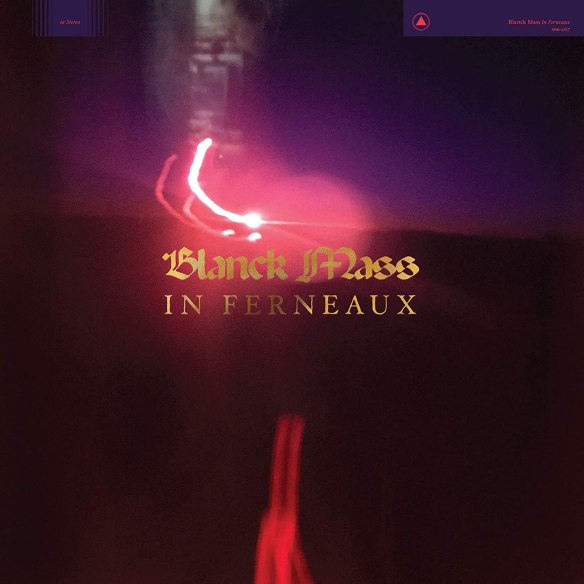
Switched On: Blanck Mass – In Ferneaux (Sacred Bones)

reviewed by Ben Hogwood

What’s the story?

There are just two tracks on In Ferneaux, the new release from Benjamin Power – the man behind Blanck Mass. They are long-form pieces of roughly equal length, drawing on Power’s substantial archive of field recordings from the last decade of travelling. It is in effect his way of continuing to travel in spite of lockdown conditions, with compositions brought about by extended time at home.

What’s the music like?

The output of Blanck Mass has never been short of substance or emotion, and Power confronts his feelings with typically direct musical honesty. In Ferneaux gives the impression of being a piece of work a long time in the making, needing extended time at home to realise its ambition.

The two tracks last just over 40 minutes and work in a single sequence on headphones or with surround sound. Their emotional impact and musical identity are strong, right from the start of Phase I, with its shimmering electronics. It is a powerful depiction (for me at any rate) of the bright, sunny days we experienced at the start of lockdown in the UK this time last year, and the burst of positive energy unleashes a flurry of rhythms. As these depart stage left the scene darkens, and an ominous drone takes over. From this a new regenerative process begins, and the musical camera pans out with big chord shifts – which in turn fade.

Power’s talent for moving between scenes comes from his experience with soundtrack work. Phase II, however, is an immediate jolt to the senses, beginning with a wall of uncompromising, metallic noise. This single blast introduces the most human of the field recordings so far, a personal conversation, on which Power reflects with slowly moving, cool sounds. The metallic blast returns, but just when it all feels too much consolation arrives in the form of big, woolly chords that the listener can dive into.

This is a prelude to the most confrontational music so far, a set of pounding rhythms and primal white noise, a party in a dungeon. Again the response is huge chords but the closing is pure and moving, a piano solo that loops round majestically. Ultimately the music fades away on the wind

Does it all work?

Yes – this is a compelling pair of sonic journeys, a travelogue of Power’s last decade on the road. The only regret is not knowing where some of the scenes were captured – but in turn that fuels the imagination when listening.

Is it recommended?

Very much so. In Ferneaux is a strong indication that Blanck Mass can work with bigger structures, reinforcing Power’s capabilities as a soundtrack composer but also emphasising the potential he has to go on to score longer, more classically-based works. His development promises to be fascinating.

Stream

Buy

Switched On – Two Synths, A Guitar (And) A Drum Machine (Soul Jazz Records)

reviewed by Ben Hogwood

What’s the story?

Soul Jazz describe their new compilation as ‘a new collection of current D-I-Y post-punk bands shaped by the mutant sounds of no wave, punk funk and New York Noise bands from the late 70s and early 80s that collided with the world of underground dance music found at the Paradise Garage, Mudd Club in New York City’.

This also incorporates influences from the UK – Manchester and Sheffield along with a bit of London – and makes for an open musical policy leading to a wide range of beats and rhythms.

What’s the music like?

Invigorating. The collection has such a wide range but is impeccably laid out, so that a noise-heavy track like Toresch’s Tocar can be followed by the cool keyboards of Becker & Mukai’s La Rivière des Perles.

Soul Jazz have cast the net far and wide to come up with a selection of 15 tracks from around the globe, so while New York and the UK hold the key for source material, the ear can track just how far those influences have travelled.

It’s great to see an appearance for Zongamin, whose elastic Underwater Paramid is a more recent track from the long running band. It comes after one of the best vocals on the collection, the distinctive call to arms from LA band Automatic giving Too Much Money pride of place at the front of the compilation. Not all the vocals are as endearing as theirs – Ixna’s Somebody Said will be too shrill for some tastes!

Elsewhere Gramme hit the centre of the dancefloor with a great bass line on Discolovers – excellent vocal too – while New FriesLily and Charles Manier’s Sift Through Art Collecting People are propulsive propulsive groovers. Meanwhile Niagara explore dubbier territory with Ida, as does Black Deer’s Baseball Shorts, taking in even wider perspectives. Wino D expands the mind still further with the final Untitled, drifting away in a spacey cloud of atmospherics at the end.

Does it all work?

It does. Soul Jazz know more than most record labels how to make a good compilation, and the abundance of notes that goes with the music is the icing on the cake. For that reason – not to mention the eyecatching artwork – a physical purchase is the way to go.

Is it recommended?

Yes, enthusiastically. If your shelves already groan under the weight of Soul Jazz releases then you are advised to add a few hundred grams more to the mix. An excellent set of tunes that will introduce you to some new names.

Stream

Buy

You can hear clips from the compilation and purchase from the Soul Jazz shop, Sounds Of The Universe

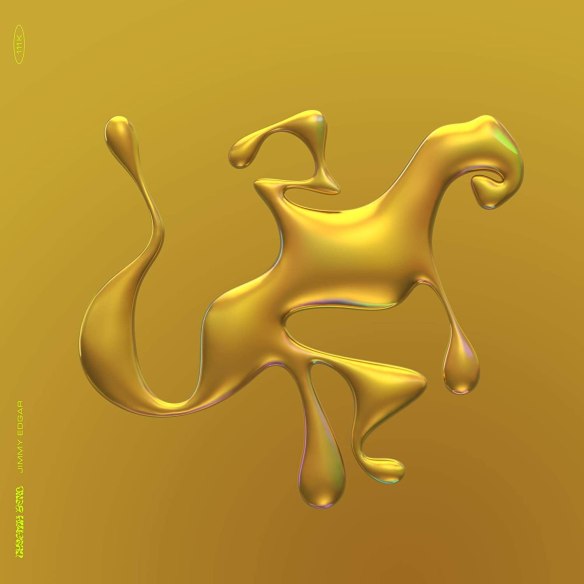
Switched On: Jimmy Edgar – Cheetah Bend (Innovative Leisure)

reviewed by Ben Hogwood

What’s the story?

Jimmy Edgar has been far from idle in his music making over the last decade, but this is his first completed album in nine years. Cheetah Bend is a mixture of solo cuts and collaborations, with vocalists Danny Brown, Rochelle Jordan, B La B and Hudson Mohawke adding their vocal talents to Edgar’s electronic workings.

What’s the music like?

Those electronic workings are fascinating, building on Edgar’s work with a hybrid of styles. Techno is prominent in his thoughts, but so is hip hop and big room R&B. The latter skill is used to great effect on Metal and Turn, where corrugated warehouse beats provide the ideal offshoot to the excellent vocals.

In addition to those mentioned above, Millie Go Lightly coos on Be With You, while Danny Brown’s contribution on Get Up gees the listener up for the album, aping James Brown’s Get Up Offa That Thing with the lyric ‘you gotta do better’. It’s a really good interpretation of a song that hits the sweet spot between tribute and remix. The bigger beats of Cheetah work well with Semma’s vocal, as does Ready2Die, fronted by Messer, which becomes something of a torch song. The single Bent, released last year, hits the treble hard too:

Happily Edgar goes for a P-funk excursion on Zigzag, the best instrumental cut on the album, while the glitchy Curves signs off with typically liquid grooves.

Does it all work?

Yes. Edgar evokes a dark club where sweat runs down the walls because everyone’s dancing, and his clever way with beats keeps things interesting and extremely varied. The influences of Prince, Funkadelic, Timbaland and Detroit techno are just some elements at play in music that sounds like it could be a derivative mish mash of styles, but actually turns out to be far more original and interesting.

Is it recommended?

It certainly is. Jimmy Edgar is always on the prowl – and as the title suggests, Cheetah Bend is a sleek beast looking for a kill. It succeeds effortlessly here.

Stream

Buy

Playlist – Clare Hammond

It is with great pleasure that we welcome pianist Clare Hammond to the Arcana playlist section.

Clare has just released a new solo album, Variations. It is a typically thoughtful and inventive program of works from the 20th and 21st-centuries, ranging from  Adams to Birtwistle, Copland to Gubaidulina.

We invited Clare to complement her new album with a selection of her own favourite sets of variations, and she has obliged with some new discoveries. We begin with one of the greatest of all, the towering Passacaglia for organ by Bach, via Leopold Stokowski‘s colourful orchestration. Then we downsize for Louise Farrenc‘s Variations concertantes sur mélodie suisse, for violin and piano, before we hear from George Walker, the first African American to have won the Pulitzer Prize for Music, and only recently getting more exposure as a composer. Polish composer Grażyna Bacewicz, with her Theme with Variations, offers a strong contrast to the Farrenc, again for violin and piano.

A Decca recording from 1993 follows, an early bit of recognition for the craft of Coleridge-Taylor and his substantial Variations on an African Air for orchestra. We go to piano for Lili Boulanger‘s typically concise and expressive contribution, before the wonderfully humourous, wacky and brilliant Variations on America by Charles Ives, in the orchestration by William Schuman.

Make sure you have a listen to this as well as Clare’s album, to be reviewed on Arcana soon. Our grateful thanks to her for an invigorating hour of music:

You can read more about Clare Hammond’s Variations album on the BIS website, and to hear clips and purchase from Presto Classical, click here

Live review – Emily Davis, English Symphony Orchestra / Kenneth Woods: A Portrait of Steven R. Gerber

Emily Davis (violin), English Symphony Orchestra / Kenneth Woods

Gerber (arr. Hagen) Sinfonietta No. 1 (1991)
Gerber (arr. Williams) String Sinfonia No. 1 (1995)
Gerber Two Lyric Pieces (2005)
Gerber (arr. Williams) String Sinfonia No. 2 (2011)
Gerber (arr. Williams) Sinfonietta No. 2 (2000)

Wyastone Concert Hall, Monmouth
Recorded in 2020 for online broadcast, Wednesday 26 February 2021

Written by Richard Whitehouse

The English Symphony Orchestra’s online (hopefully not too much longer!) season continued tonight with this portrait of American composer Steven R. Gerber (1948-2015). Little heard in the UK (but extensively in Russia during the immediate post-Soviet era), his output follows a not unusual trajectory for someone of his generation – that from serialism to a rapprochement with tonality, though his evident success over these nominally opposing aesthetics is far rarer and confirms a creative zeal as was underlined by the works featured in this ESO programme.

Although he essayed a sizable number of orchestral works (including two symphonies), those pieces heard here were arrangements of chamber pieces. Not that they were at all unidiomatic or lacking impact – witness that of his Piano Quintet by Daron Hagen as the First Sinfonietta, whose five movements evolve in opposition between a pungent incisiveness and an emotional plangency which finds its culmination in the powerfully sustained fourth movement. Kenneth Woods secured a trenchant response from an ESO likely at or near its socially distanced limit.

The other arrangements were all undertaken by Adrian Williams, himself a notable composer of whom the ESO will be playing more in due course. Derived from Gerber’s Fourth Quartet, the First String Sinfonietta is notable for the comparable intensity of its central movements – a Lento then a Maestoso which might have functioned as a finale had not the composer opted, effectively as it turned out, to let such emotions subside over the curse of a brief yet affecting Postlude. It was astute programming to follow this with the Two Lyric Pieces for violin and strings, the only item played in its original guise and one whose mingling of wistfulness and eloquence finds the composer at his most approachable; not least when Emily Davis rendered the solo part with such fluency and poise. These pieces could yet enjoy a widespread success.

As derived from Gerber’s Sixth Quartet, the Second String Sinfonia appears to be among his more quizzical works – the angular while not a little ambivalent opening movement making way for a quizzical Intermezzo, then a closing set of variations that does not so much reach a climax as wind down into an uncertain repose. A more elaborate and methodical take on the Variations template is pursued by the second and final movement of Gerber’s Fifth Quartet, here arranged as the Second Sinfonietta which again has recourse to a fuller instrumentation and more charged expression. Notably the opening Fantasy, whose stark contrasts of mood make for a disjunctive overall trajectory as is subsequently countered, if not wholly resolved, through a steady and always inevitable build-up of the finale towards its forceful apotheosis.

Intriguing and engaging music which, if tending to an unrelieved earnestness, could hardly be faulted for emotional immediacy. It certainly found worthy exponents in the musicians of the ESO, directed by Woods with his customary conviction, while hopefully the tendency of the sound to distort in louder or more fully scored passages – what used to be termed ‘flutter’ in recorded parlance – was a factor of the online broadcast and not of the actual session. Those coming anew to Steven R. Gerber will doubtless have responded to his unwavering sincerity.

You can watch the concert on the English Symphony Orchestra website here

For more information on the English Symphony Orchestra you can visit their website here For more on Steven R. Gerber, visit his website