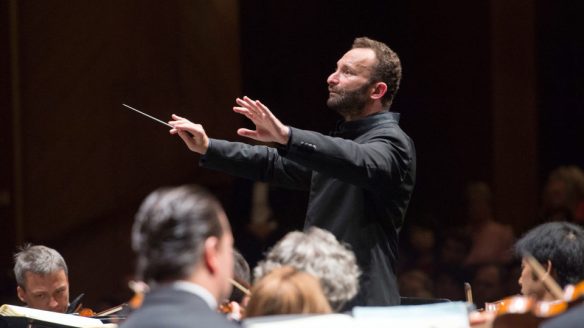
In concert – Berliner Philharmoniker / Kirill Petrenko: The Golden Twenties – Weill & Stravinsky

Michael Spyres (Oedipus), Ekaterina Semenchuk (Jocasta), Andrea Mastroni (Tiresias), Krystian Adam (Shepherd), Derek Welton (Creon, Messenger), Bibiana Beglau (speaker), Men of the Rundfunkchor Berlin, Berliner Philharmoniker / Kirill Petrenko (above)

Weill Symphony no.1 in one movement (1921)
Stravinsky Oedipus Rex (1927)

Philharmonie, Berlin
Saturday 13 February (review of the online broadcast)

Written by Ben Hogwood

“This is no little hicktown. This is one helluva city!”

The words of Bertolt Brecht, writing about his home city in the song Berlin im Licht, set to music by Kurt Weill. It is a sentiment brought to the front of The Golden Twenties, an online festival from the Berliner Philharmoniker running through February, examining ‘a metropolis of contrasts…the epicentre of artistic modernism’.

The festival’s first concert, streamed from the Philharmonie via the orchestra’s Digital Concert Hall, featured the Berliner Philharmoniker’s first ever performance of Weill’s single-movement Symphony no.1 from 1921. This seems like a remarkable historical oversight, even for a work as little-known, but the performance gave this student piece the best possible platform to reach a new audience.

After a thoughtful and revealing introduction from the orchestra’s concertmaster Noah Bendix-Balgley, the Symphony’s distinctive main motive rang out like an extended peal of bells. With this arresting opening Weill laid out the ambition of his work, writing as a student of Busoni looking to impress. This bold statement was complemented by intricate and intimate solo episodes through the inner workings of the orchestra.

Kirill Petrenko conducted a cohesive and convincing account, making sense of the more congested writing and bringing out the parallels with Hindemith and Schoenberg, which he spoke about in the interval. The work’s fulsome harmonies had plenty of deep colour, and it was revealing to hear the counterpoint in such detail. The double basses made an eerie contribution through a fugal episode which wound its way up through the orchestra at several points in the work, before an impressive climax and a darkly shaded postscript. Petrenko nailed the scope of the piece but ensured there was plenty of room for the phrases to breathe individually.

Stravinsky’s Oedipus Rex could hardly have been a more appropriate counterpart for a concert filmed behind closed doors. With its chilling opening statement, ‘The plague is destroying us!’, sung by a socially distanced male chorus from the choirstalls, it was a stark reminder of our current, locked down predicament – and struck an inevitable parallel with the state of the performing arts currently.

This 50-minute opera / oratorio is one of the most notable achievements in Stravinsky’s so-called ‘neo-classical’ period, a dramatic response to Sophoclese‘s tragedy that is not the easiest to digest but which packs an expressive punch.

Petrenko’s incisive conducting brought its message home with a lasting power, and in the performance he was aided by a strong cast of soloists. Michael Spyres’s tenor dominated in the title role, his ringing tones promising deliverance but ultimately winding up in great anguish before the end. He was given ample support by Creon (bass-baritone Derek Welton) and mezzo-soprano Ekaterina Semenchuk, whose fulsome contribution was made in a bright red dress bringing her into dramatic contrast with the funereal black of chorus and orchestra.

Petrenko kept things moving throughout, with virtuoso contributions from woodwind and percussion in particular. In spite of their social distancing the chorus lost none of their power, playing out the tragic story with detail but an ominous inevitability. Holding the threads together was narrator Bibiana Beglau (above), an excellent choice and with strong proejction in the empty hall.

Highlights could be found in the assertive delivery of Welton in the ‘Avenge Laius’ section, while Spyres gave an impassioned promise that he would solve the riddle of the Sphinx. The chorus alternated between a horror at the plague, a sorrowful realisation of the plight of Oedipus, which was particularly moving, and the cold, regretful end.

This was an auspicious start to what promises to be a revealing celebration of Berlin and particularly Weill in the 1920s. The next concert on 16 February will look at the composer’s better-known Second Symphony, while this and future instalments will include the music of HindemithRichard Strauss and Eisler. If the performances are as good as these then online attendance is highly recommended.

The next concert in The Golden Twenties season can be seen and heard at the Berliner Philharmoniker website
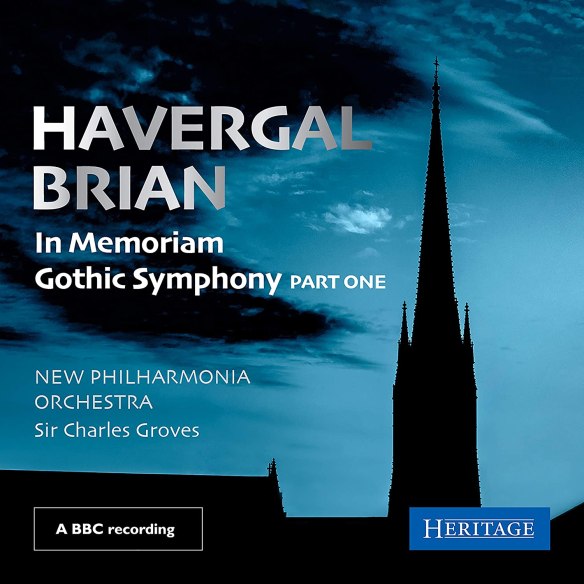
 

On record: New Philharmonia Orchestra / Sir Charles Groves – Havergal Brian: In Memoriam & Gothic Symphony Part 1 (Heritage Records)

New Philharmonia Orchestra / Sir Charles Groves

Brian
In Memoriam (1910)
Symphony no.1 in D minor, The Gothic (1919-27) – Part One

Heritage Records HTGCD172 [59’31”]
Producer Robert Simpson

Recorded 10 October 1976 in live performances at Royal Albert Hall, London, UK. Released by arrangement with BBC Studios, with funding from the Havergal Brian Society

Reviewed by Richard Whitehouse

What’s the story?

The Heritage label renews its archival coverage of Havergal Brian with this disc of works given at the last concert of those centenary events in 1976, including what is still the only professional account of Part One from the Gothic Symphony heard separately, as sanctioned by the composer.

What’s the music like?

Following three concerts at Alexandra Palace, this final one took place at the Royal Albert Hall. even if a planned performance of the Gothic had to be shelved through financial considerations, a second half featuring Berlioz’s arrangement of La Marseillaise and his Symphonie funèbre et triomphale was no easy option. At the helm was Charles Groves who, having recently given the Ninth Symphony at the Proms, proves a Brian interpreter of real perception. Such is evident in his account of the tone poem In Memoriam, among the best of its composer’s earlier works and unheard for almost 55 years. Whether prompted by thoughts as to the end of an era, or by more personal considerations (its initial title having been ‘Homage to an Artist’), the trajectory of its three continuous ‘scenes’ from impulsive vehemence, via searching contemplation, to sustained affirmation is a striking one made more so through the finesse of Brian’s tonal thinking and his resourceful scoring. These are qualities to the fore with Groves’s interpretation, as convincingly shaped as it is eloquently rendered, and most likely the finest that this work has so far received.

If the performance of Part One of the Gothic Symphony is not quite as good, it more than makes the case for this to be heard as an autonomous entity. Tempi are slightly more measured overall than those of Sir Adrian Boult (Testament) or Martyn Brabbins (Hyperion) in their live readings at the same venue, but this enables Groves to wrest unity from the three movements – not least by bringing those extremes of motion and mood of the Allegro into closest accord, while ensuring a cumulative momentum across the whole. The Lento has all the necessary ‘expressiveness and solemnity’, and at a speed flexible enough to contain its volatile progress towards a powerfully rhetorical climax then a lingering postlude. The Vivace more than fulfils its function as a finale: Groves is mindful to integrate the increasingly disjunct scherzo-and-trio episodes, then keeps a firm hold on its explosive central outburst and surreally imagined ‘night flight’, on the way to a peroration of a grandeur intensified by its tonal audacity and afforded pathos in its limpid coda. That the rather bemused applause has not been retained is maybe of no consequence in context.

Does it all work?

Yes, given Brian always did things his way so that his music often pivots between the visionary and the reckless, yet one where he is almost always justified. Certainly, Groves’s In Memoriam is preferable to the well-paced if technically limited account by Geoffrey Heald-Smith with the City of Hull Youth Symphony Orchestra (Cameo Classics), as also the capably played if most often stop-go approach of Adrian Leaper and the National Symphony of Ireland (Naxos). There is no other version of the Gothic’s Part One, in which Groves’s trenchant advocacy vindicates the decision.

Is it recommended?

Very much so. The (unnamed) remastering engineer has done an admirable job of enhancing the BBC sound, not least in minimizing the bronchial audience contribution on that autumn evening now almost 45 years ago, and John Pickard’s booklet notes are a model of reasoned enthusiasm.

For further information on this release, and to purchase, visit the Heritage Records website. Heritage also offer a recording of Brian’s first opera The Tigers here, and the first commercial recordings of the composer’s music here

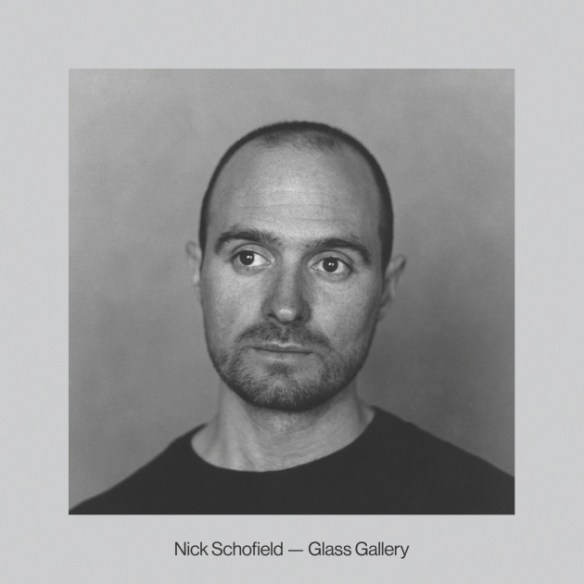
On Record: Nick Schofield: Glass Gallery (Backward Music)

reviewed by Ben Hogwood

What’s the story?

This is the second album from Montreal-based musician Nick Schofield, who has taken two very specific points of reference for Glass Gallery.

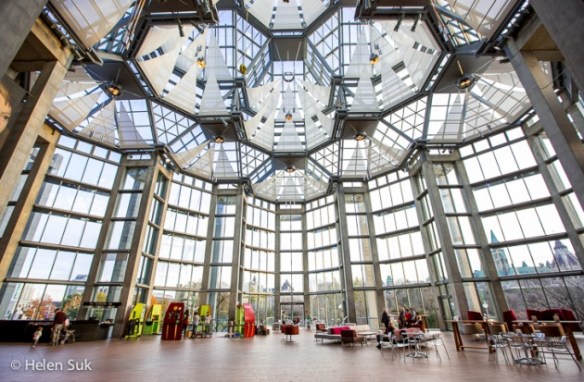
The first is a building – the National Gallery of Canada in Ottawa, to be precise. Schofield draws on its glass atrium for inspiration, depicting in musical form the play of light through its transparent windows.

The second is an instrument, specifically the vintage Prophet-600 synthesizer, on which the whole album was composed. Schofield uses it to paint the different images he has seen through the gallery’s atrium, but also refers to artist Guido Molinari, whose paintings can be seen in the gallery.

What’s the music like?

With so many points of inspiration, it is perhaps inevitable that there is plenty for the ear to hone in on in this album, but like a good art exhibition it also leaves you in a very settled state of mind.

Schofield’s textures with the synth are like the falling of powdery snow – unhurried, never straight, sometimes going up before they come down again, always subtly moving. The melodic cells are beautifully worked, often dovetailing with each other, and the whole album is put together with the assurance that runs through the best ambient music – where a little goes a long way.

Central Atrium sets the scene with its soft oscillations, while Mirror Image has a hint of Eastern promise in its undulating figure, Schofield showing the possibilities of orchestration with just the one instrument. The musical emphasis tends towards the treble, evoking the clear and bright view up through the gallery’s transparent roof.

Molinarism is the standout composition, with pinpricks of musical light against a darker background, like shooting stars – and uncannily portraying the style of the pictures Schofield is evoking. The lightness of touch continues here and throughout, with a lasting elegance and poise to the music, like a flexible slow dancer.

Does it all work?

It does, provided you listen to the whole of Glass Gallery – for again, to use the exhibition parallel, you don’t get the full benefit from just concentrating on highlights. Having listened to it in the middle of softly falling snow, I can confidently say it is the ideal environment for this music.

Is it recommended?

It is. Schofield has made a lovely cold weather album, but one with a warm heart too.

Stream & Buy

Playlist – Aria Rostami & Daniel Blomquist

It is our great pleasure to welcome Aria Rostami and Daniel Blomquist to the Arcana playlist section.

They have been working together on a second collaboration for the Glacial Movements label. Still is the culmination of years of work and musical shapeshifting, the resultant six-track album the ideal companion to our cold weather isolation here in the northern hemisphere

Still was reviewed on Arcana here, but the playlist the pair have put together reflects a little more of their listening, as well as including a couple of tracks from the album. Sit back and get horizontal with a tracklisting that includes stellar works from Bryce Hackford – the gorgeous Coast (maybe) – Mica Levi and Popul Vuh.

Our thanks to Aria and Daniel for this wonderful hour of music:

https://soundcloud.com/ariarostami/aria-rostami-and-daniel-blomquist-mix-arcana/s-qL21jUAxTUx

Listening to Beethoven #115 – Allegretto in C minor, WoO 53


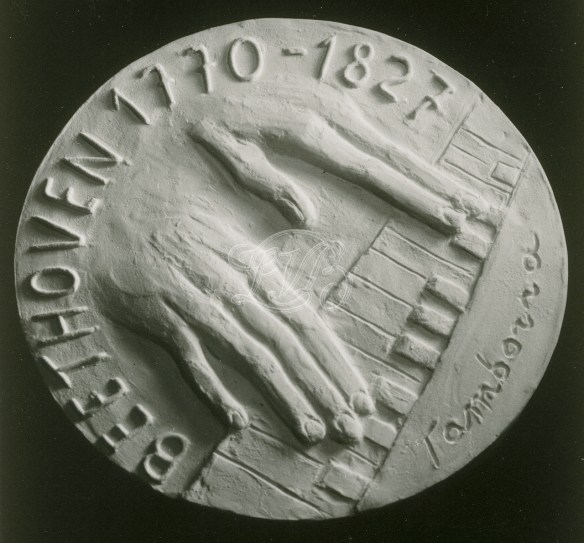
Commemorative medal for Ludwig van Beethoven, around 1970. Photography, probably by Giandavide Tamborra after his plaster model for a medal, probably from 1970, Reproduced from the Beethoven-Haus Bonn with thanks.

Allegretto in C minor WoO 53 for piano (thought to be from 1796-7, Beethoven aged 26)

Dedication not known
Duration 4′

Listen

Background and Critical Reception

There is very little written about this piece, but the few surviving notes suggest it might be an unpublished movement intended for the Piano Sonata no.5 in C minor, published as the first in the Op.10 set around this time.

Thoughts

The mood is pensive and quite downcast for the main theme of this short movement, and Beethoven develops it with the serious mood intact. Set in C minor, it is a thoughtful piece and on occasion has a bit of angst, especially when the heavier left-hand writing appears.

Having said that the clouds part beautifully for a theme in C major around half way through, where the darkness to light transition is very clear. Towards the end the music nearly stops, poised as though pondering its next move…before resolving in the minor key, in downbeat contemplation.

The Allegretto certainly feels like a piece without a home – and given the finished product that is Op.10/1 it is difficult to see where it would have fitted in. It makes a good miniature, though!

Recordings used and Spotify links

Alfred Brendel (Decca)
Gianluca Cascioli (Deutsche Grammophon)
Ronald Brautigam (BIS)
Jenő Jandó (Naxos)
Rudolf Buchbinder (Teldec)
Olli Mustonen (BMG)

Alfred Brendel is compelling in his version, turning the frowns to smiles as the C major theme appears. Gianluca Cascioli starts very deliberately before unleashing a considerable amount of angst around the 1 minute mark. Ronald Brautigam is swift, his phrasing clipped but urgent.

The attached playlist has six very different accounts of the Allegretto, from Brautigam to Jandó via Brendel, Cascioli, Buchbinder and Olli Mustonen:

You can chart the Arcana Beethoven playlist as it grows, with one recommended version of each piece we listen to. Catch up here!

Also written in 1797 James Hewitt Piano Sonata in D major ‘The Battle of Trenton’

Next up Fra tutte le pene WoO 99/3b