The press release for John Tejada’s new album puts his subtle shift in musical direction in perspective. The Watchline is described as “a quiet evolution in tone and form”… “emotionally focussed, sonically weathered”.
His fifteenth album, it is a more personal affair, more than likely influenced by experiencing the trauma of the 2024 fires in California, more or less on his doorstep.
What’s the music like?
Tejada’s deeply personal writing is some of his best music yet. Always a consistent producer, he has often explored the mechanical side of techno to excellent effect – but this time, bringing in tightly woven guitar lines and strong, solid beats, he has hit the sweet spot.
Until The End Of The World encapsulates where he is right now, a dynamic track that builds gradually but with increasing strength and depth, and an underlying feeling of strength in adversity.
Tejada uses a beefier sound here, with bigger drums that are especially evident on the scattered beats of Hollowcrest and the excellent Vaporail, a broken beat shapeshifter. Elsewhere there are widescreen panoramas, with the broad expanse of Driftreturn a notably open affair, while Static Searching benefits from an excellent blend of strong, danceable rhythms and electronic chatter, topped with guest vocals from March Adstrum.
Does it all work?
It does. A cohesive and really strong set, with no weak links.
Is it recommended?
It is. Always a consistent producer, John Tejada has excelled himself here with some of the finest music he has made to date. Emotive and beautifully weaved together, this is a deeply rewarding collection of subtle yet meaningful techno music.
Listen / Buy
Published post no.2,659 – Tuesday 16 September 2025
adapted by Ben Hogwood from the press release. Pictures by Capucine de Chocqueuse (Marie Laure Garnuer and Celia Oneto Bensaid), Peak Motion Films (The Erlkings), Rosie Hardy (Soraya Mafi), Guido Werner (Konstantin Krimmel)
The UK’s largest song festival, now in its 24th year, features 67 events over 16 days.
The Festival boasts a headline series of evening song recitals and a rich array of other events, including choral music, dance, chamber works, and talks.
Among several world premieres is Nice Weather for Witches, a specially commissioned song cycle by Elena Langer, as part of a programme based on the Slavic legend of Baba Yaga.
With ‘Pay More/ Pay Less’ and ‘Pay What You Can’ options, free events, £10 tickets for under-35s, and a variety of discounts and concessionary rates, the Festival is accessible to all.
Taking place from 10 to 25 October, the Oxford International Song Festival promises an exhilarating and ambitious fortnight filled with adventure, discovery, and vision this autumn. This year’s theme of storytelling will feature over 150 singers, instrumentalists and speakers, who will perform hundreds of works across 67 events. The Stories in Song programme ranges from fairytales and ballads to the life stories of composers and poets, from Baroque lute songs to Irish folk music, and from a Schubert Weekend to a day of Spanish and Latin American song.
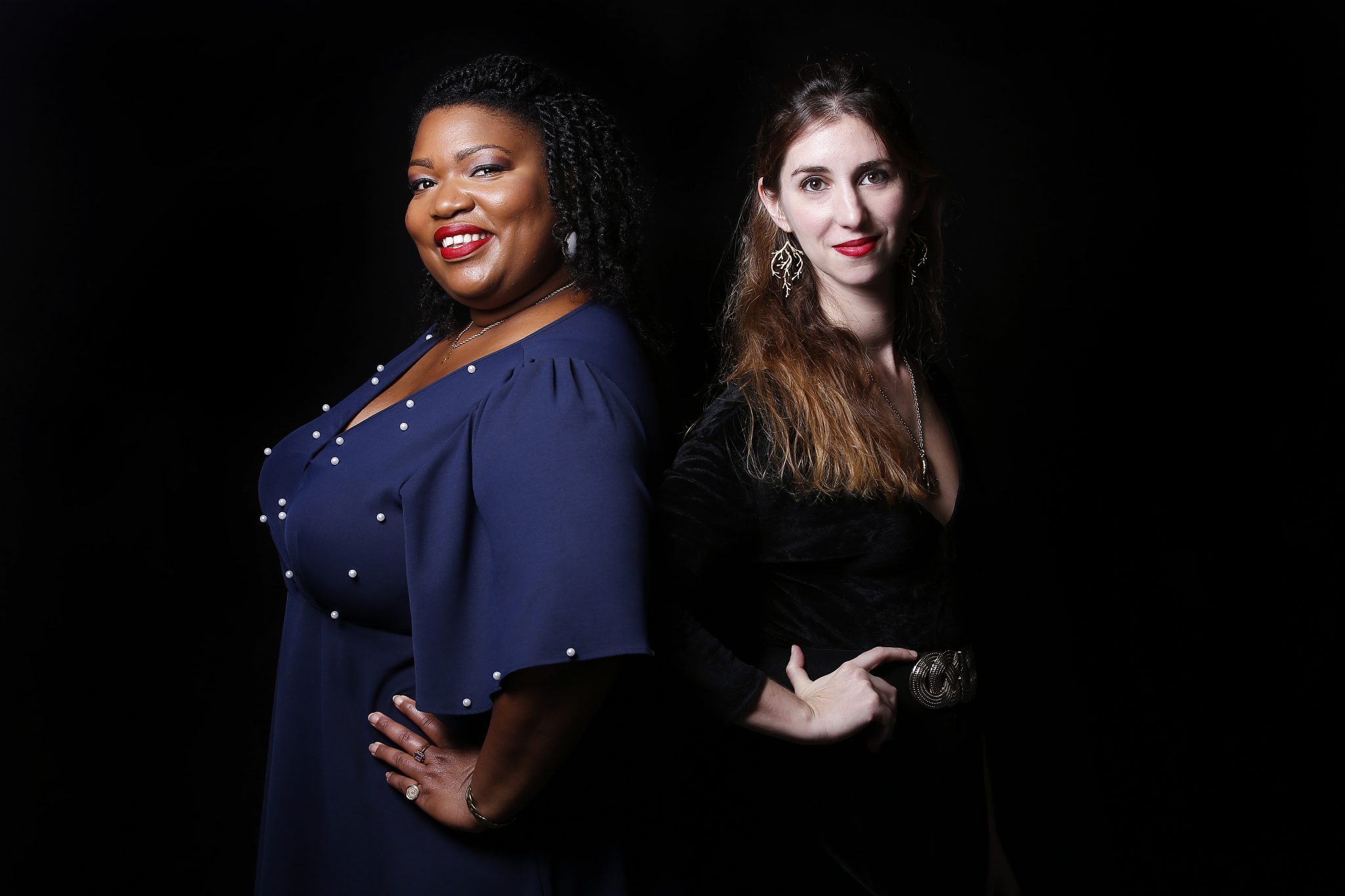
Artists include Benjamin Appl and Sholto Kynoch who give the opening night recital on 10 October; bass-baritone Stephan Loges with pianist Libby Burgess(11 Oct);soprano Juliane Banse and pianist Daniel Heide (12 Oct); Christian Immler and Anne Le Bozec (13 Oct); Nicholas Mulroy with Toby Carr and ElizabethKenny (14 Oct); Stéphane Degout and Cédric Tiberghien (15 Oct); Dietrich Henschel and Angharad Rowlands (16 Oct); Marie-Laure Garnier (above) and Célia Oneto Bensaid (16 Oct); Thomas Oliemans and Paolo Giacometti (19 Oct); Camilla Tilling and Paul Rivinius (21 Oct); and Konstantin Krimmel (below), with Ammiel Bushakevitz (24 Oct). Artists appearing for the first time include Nikola Hillebrand with Julius Drake (19 Oct) and Sir John Tomlinson (25 Oct).
The first of this year’s world premieres is Wild Nights, a new work by Oxford Song Young Artist Will Harmer (10 Oct), performed by Sebastian Hill with Will Harmer, as one of eight showcase recitals given by Oxford Song Young Artists who are completing their 18-month programme of training and performance opportunities.
A new song cycle by Cheryl Frances-Hoad, based on the Untold Lives collection in the British Library, will be sung by Neil Balfour with Sid Ramchander (15 Oct). Oliver Johnston and Natalie Burch give the world premiere of two songs by Elena Langer, setting the Russian poet Osip Mandelstam (22 Oct).Oxford Song’s Associate Composer Emily Hazrati creates a new cycle for Soraya Mafi (above), and Ian Tindale (23 Oct), Book of Queens, inspired by the Shahnameh (‘Book of Kings’), the 10th-century epic poem by the Persian poet Ferdowsi.
Elena Langer’s new cycle, Nice Weather for Witches, is the centrepiece of a programme of song and dance, based on the legend of Baba Yaga, with mezzo-soprano Rowan Hellier, dancers Ana Dordevic and Carola Schwab, and choreographer Andreas Heise (22 Oct). The performance is preceded by a partnership storytelling event with the Crick Crack Club.
The middle weekend of the Festival (17-20 Oct) will be dedicated to the songs of Franz Schubert. Graham Johnson will continue his survey of the composer’s life 200 years on, delving into Schubert’s world in 1825, joined by the soprano Martha Guth and an ensemble of singers from Oxford Song’s Young Artist Programme. Other recitals are given by Henk Neven, Thomas Oliemans,and Nikola Hillebrand. The weekend will culminate with a performance of Die Schöne Müllerin by Roderick Williams and the Carducci String Quartet. The Erlkings (above), the unique Schubert-inspired band based in Vienna led by singer Bryan Benner, will be in residence throughout the weekend, celebrating their tenth year with a new version of Winterreise, as well as performances for students and families, and a concluding Schubert party.
Song Connections events throughout the Festival offer a range of enriching experiences for festivalgoers. On an informal Song Sofa, Katy Hamilton will lead conversations with Roderick Williams and Benjamin Appl in a new format designed to bring audiences closer to both artists and music. There will be an introduction to the Spanish language, highlighting its many regional and continental variants, and discussing its delights and challenges for singers. There will also be a session on the principal poets from the ‘Golden Age’ of Spanish poetry in the 16th and 17th centuries, through to Romanticism and the 20th century. Professor Philip Ross Bullock will explore the life and music of Dmitry Shostakovich, commemorating the 50th anniversary of the composer’s death. Natasha Loges explores a rich legacy of composers from around the globe who studied in Europe, were drawn to the voice-piano combination of song, and subsequently integrated Western idioms with vernacular languages, harmonies and rhythms.
Late-night events include a performance by Argentinian bandoneon virtuoso Victor Villena, who will deliver an electrifying set of tango music (14 Oct), mezzo-soprano Olivia Vermeulen and pianist Jan Philip Schulze with their latest programme, ‘In Heaven’ (17 Oct), and a Halloween-inspired concert with Aphrodite Patoulidou and Keval Shah (24 Oct). An Irish folk-music performance with Zoë Conway and John McIntrye concludes a day focused on the music and poetry of Ireland (23 Oct).
Some events are free or priced at just £6-£10, and there are thousands of tickets available for £18 or less. A generous range of discounts are offered to anyone booking multiple events, and under-35s can attend any event for just £10.
Sholto Kynoch, Artistic Director of the Oxford International Song Festival, shared his excitement: “Telling stories is a fundamental element of song, at the heart of all we do. It is part of the fusion of words and music that creates such magical sparks. In this year’s Festival, we explore stories in many different forms, from fairytales and ballads to the human and artistic relationships behind the songs, and the developing stories of national song traditions. Whether classical song is new to you or you’ve been a regular visitor to the Festival, be assured of the very warmest welcome: the music is thrilling and profound, but the Festival remains informal, sociable and friendly. I look forward to seeing you there.”
Public booking for the Oxford International Song Festival is now open. Book tickets online at http://www.oxfordsong.org or call the Box Office on 01865 591276 (Mon-Fri 9.30am – 1pm).
Published post no.2,658 – Monday 15 September 2025
The longevity of UK dance artists from the 1990s is truly impressive – with some, like Faithless, evolving through forced circumstances. When they lost the charismatic frontman Maxi Jazz in 2022 to a long-term illness, bandmates Rollo and Sister Bliss harnessed the spirit of collaboration, bringing in extra voices while acknowledging their band could never be the same again. And yet there is still room for ambition. Champion Sound is the biggest Faithless album to date, a ‘double double’ epic that takes its listener on a voyage. It is cleverly divided into four, essentially a group of mini albums that can be experienced as separate entities or as part of the bigger whole.
What’s the music like?
Consistently good. Champion Sound shows that the versatility Faithless showed in first two albums Reverence and Sunday 8pm was not misplaced – and they build on it impressively here.
We visit the club – of course – but in two very different ways. The second segment, Phone Number, tells through vocalists Nathan Ball and Amelia Fox the story of a couple who meet on the dancefloor but then can’t work out if their attraction is genuine or was situation-bound. Their songs are vulnerable and at times hit an emotional high.
Book Of Hours follows this, a broad instrumental section of reflective landscapes. Conceived as a tribute to DJ Shadow’s Entroducing album, it builds slowly but surely, opening out with strings and intricate breaks before an affirmative choral section, surely destined for Ibiza’s Café Del Mar.
From here the natural goal is within sight, and Champion Sound itself ends on a high with four no-nonsense anthems, making great use of guests L.S.K. (on the title track), Suli Breaks and Bebe Rexha (on the excellent anthem Find A Way) and finally Anthony Szmierek’s closing thoughts on Yes I Want It Too. Setting all this up is the first section, Peace And Noise, where Suli Breaks is the ideal match for the beats. “Let’s find love between the beats”, he suggests, “before we search for it between the sheets. Can we put the world on pause, while we take the night off and rejoice?” Prior to this we hear some of the last words recorded by Maxi Jazz, his brooding presence eliciting both a smile and a tear.
Does it all work?
Pretty much. It is hugely ambitious, and time constraints will mean Champion Sound can’t be experienced in its entirety – which is where the decision to divide it into four mini-albums of differing moods pays dividends.
Is it recommended?
It is – a really impressive achievement by Faithless, an album of highs and lows that shows Rollo and Sister Bliss still have the fire for their art. It rewards both dancing and thinking in equal measure.
Listen / Buy
You can explore purchase options for Champion Sound on the Beatport site
Published post no.2,657 – Sunday 14 September 2025
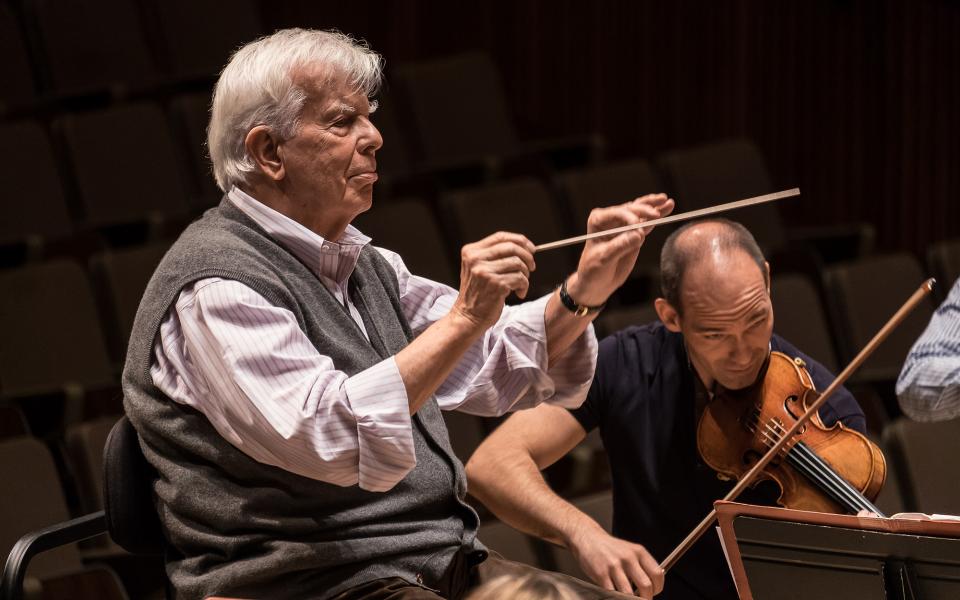
In the last week we learned of the sad news of the death of conductor Christoph von Dohnányi, at the age of 95.
You can read an obituary for him on the Guardian website, and tributes from each of the orchestras with which he had a special relationship – the Cleveland Orchestra, where he was chief conductor from 1984 until 2002, the Philharmonia Orchestra, where he was principal guest conductor, then principal conductor from 1997 to 2008, then honorary conductor for life – and the Vienna Philharmonic Orchestra, with whom he worked from 1966 to 2019.
Dohnányi’s prodigious discography, mostly recorded on the Decca Classics, Telarc and Signum Classics labels, is rich in opera and symphonic repertoire, but he also had a reputation for fine recordings of modern music, including colourful examinations of the worlds of Webern, Carl Ruggles and Lutosławski. These recordings, together with a special Cleveland account of Dvořák’s Symphony no.6, make up the playlist below:
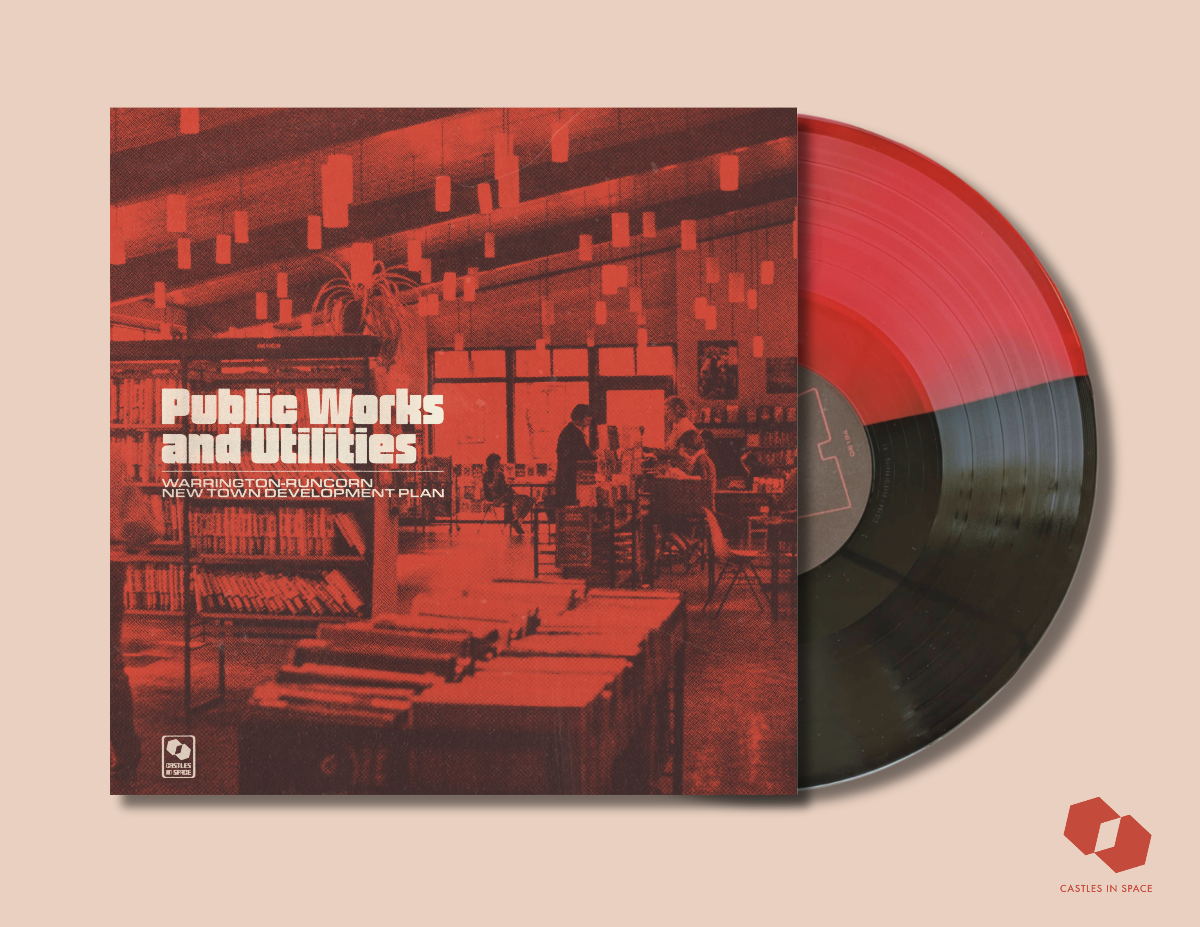
Warrington-Runcorn New Town Development Plan – the one-man retro-futurist electronic project of Gordon Chapman-Fox – has announced his sixth album, Public Works and Utilities. It will be released via the Castles In Space label on October 10, alongside a new compilation, titled Appendix I, which rounds up the tracks from three Warrington-Runcorn EPs on one handy CD.
Public Works and Utilities is the sixth Warrington-Runcorn New Town Development Plan album in less than five years and continues to explore new towns and the demise of the post-war consensus. This time, Gordon’s gaze falls on our public services that have been starved of cash or privatised since 1980.
“It seems ridiculous in hindsight for a developed country to have packed up and sold off vital infrastructure such as power, water or the rail network,” he says. “Forty years down the line, and all of these vital industries are barely functional. Their prime function now is to drain cash from our pockets and into the bulging wallets of shareholders.”
This anger continues to power Gordon’s desire to make Warrington-Runcorn a statement for the here and now, with the themes more relevant than ever, rather than an exercise in rose-tinted nostalgia. As the epic, 18-minute album closer will attest, ‘The People Matter’.
“This album very much came from my live shows,” says Gordon. “A lot of these tracks were designed to be performed live, and you will have heard quite a few of them if you’ve seen me live in the last year.”
As a result, there is a certain rawness, not to mention an almost upbeat danceable quality. The atmosphere of the previous albums has become fused with an urge to get you to move your feet.
The full tracklisting of Public Works and Utilities is:
1. Swift Safe And Comfortable
2. Sunset Over Stanlow
3. 800 Yards Down At Ince Six Feet
4. Water Treatment Works
5. Renewal And Regeneration
6. The People Matter
Released on the same day as the new album, the compilation Appendix I brings together three Warrington-Runcorn EPs onto CD for the first time, bringing together some of the more esoteric elements of the world of musical new town planning.
Building A New Town from 2023 moved the reference point of Warrington-Runcorn back from the synth-drenched late-’70s to the more post-psychedelic, folk infused world of Mike Oldfield and Pentangle. The four tracks are guitar-led, but retain Gordon’s mix of optimism and sinister atmosphere.
The next EP, A Shared Sense Of Purpose was the lead single from last year’s Your Community Hub album, and released in both 7” and 12” versions. This CD takes the single edit from the 7”, and adds the bonus tracks from the 12” – including a remix from the legendary Vince Clarke, and a another guitar-led folk remix of the title track.
Lastly, Overspill Estates adds four songs taken from the sessions for Your Community Hub that didn’t make it onto the final album.
Listen to Appendix I
The full tracklisting of Appendix I is:
1. A Fresh Dawn For North Cheshire
2. The View From Halton Castle
3. Solid Foundations
4. The Cornerstone
5. A Shared Sense Of Purpose (Single Edit)
6. A Shared Sense Of Purpose (Vince Clarke remix)
7. Oakwood
8. A Shared Sense Of Purpose (1973 version)
9. The People Of The Town
10. All Mod Cons
11. Open Green Spaces
12. All You Need In Five Minutes Brisk Walk
Published post no.2,655 – Friday 12 September 2025







 Arcana.fm