Listening to Beethoven #99 – Opferlied Hess 145


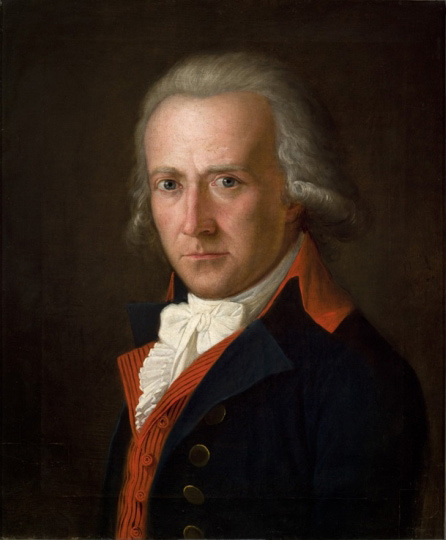
Friedrich von Matthison – portrait by Ferdinand Hartmann

Opferlied Hess 145 for voice and piano (1796, Beethoven aged 25)

Dedication not known
Text Friedrich von Matthisson
Duration 3′

Listen

Background and Critical Reception

This is our second encounter with a text Beethoven was to set four, maybe even five times in the course of his life – and it is his second setting in a year, following the version tagged as WoO 121. The poet Friedrich von Matthisson has also featured previously in his output – through the cornerstone song Adelaide – but now the Opferlied (‘Song of Sacrifice’) appears in a setting for lower voice and piano. As the Unheard Beethoven site points out, it would be finally completed to the composer’s satisfaction when properly published as Op.121b in 1824.

The text stayed with him from now until the end of his life – and again we refer to Unheard Beethoven for noting that it runs hand-in-hand with Ode an die Freude, the Ode to Joy, as a text the composer was mildly obsessed with.

Thoughts

This setting of the Opferlied pairs singer and pianist closely – the right hand of the keyboard shadowing the melody almost throughout. The tempo is slow but the song seems to end a bit too soon, perhaps reflecting its unpublished status.

As with the first version there are strong hymn-like moments in Beethoven’s writing, the singer transported by his text.

Recordings used

Paul Armin Edelmann (baritone), Bernadette Bartos (piano) (Naxos)

Seemingly the only available recording of this version of Opferlied, the performance has a nice poise in the hands of Paul Armin Edelmann and Bernadette Bartos.

Spotify link

You can chart the Arcana Beethoven playlist as it grows, with one recommended version of each piece we listen to. Catch up here!

Also written in 1796 Boieldieu –  Duet no.2 in B flat major for harp and piano

Next up Sonata for piano and cello in F major Op.5/1

Switched On – Apifera: Overstand (Stones Throw)

reviewed by Ben Hogwood

What’s the story?

How long should it take to record an album? From the stories we hear, a few months would seem to be appropriate; a few weeks if the components really click. Apifera, newly formed as a quartet, took just three days to finish theirs, which explains its instinctive music making.

The band are accomplished solo artists from Tel Aviv who have played together before on the Stones Throw label, fronted by Yuval Havkin under his Rejoicer moniker. Here they appear as equals, listing an intriguing set of influences that include Ravel, Debussy and Sun Ra. These are placed in the melting pot alongside folk influences from Israel, Ghana and Sudan.

What’s the music like?

Given the outline above, it is no surprise to report that Overstand is both instinctive and musically free. The music reflects the fresh approach with which it was recorded, creating vivid pictures while utilising a satisfying ebb and flow of energy. The mood is largely positive, the chemistry between the players clear as they create room for each to have their own say.

Drummer Amir Bresler provides the best example of this approach, with complicated rhythms on Lake VU given impressive clarity but also allowing other contributions to shine through. He is a versatile beat maker, pushing the music along with positive energy, over which the keyboards of Nitai Hershkovits and Yuval himself shimmer and shine. Underneath the bass of  Yonatan Albalak offers a sure foundation but embodies their flexible style.

Theirs is an expansive approach but a focussed one too – none of the improvised passages outstays their welcome, and on occasion they add even more colour with brass.

Does it all work?

It does – Overstand works as an overall creator of positive, laid back moods, but also up close as a set of interlocking lines and textures. Just occasionally the music hints it might lose direction, but these moments are fleeting. The blissful, watery finish of Pulse 420 suggests the band could easily make an accomplished ambient record too.

Is it recommended?

Yes. Gloomy Januarys need this sort of music to see them through – and Overstand is a welcome dose of positivity in that regard. It works very nicely as a blend of its influences, bringing some of the cleaner lines of 20th century classical music up against offbeat jazz rhythms.

Stream

https://tidal.com/browse/album/168901909

Buy

Listening to Beethoven #98 – Piano Sonata no.20 in G major Op.49/2


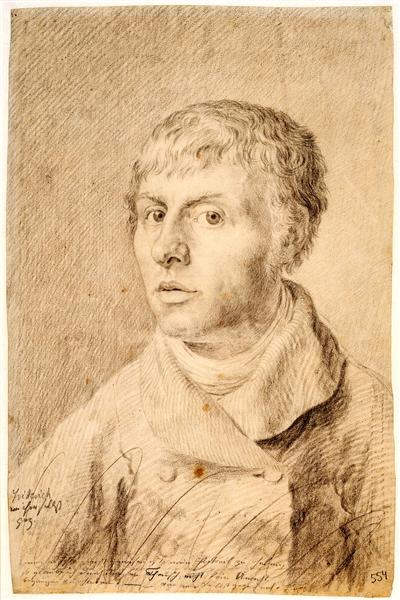
Self-portrait as a young man by Caspar David Friedrich (1800)

Piano Sonata no.20 in G major Op.49/2 for piano (1795-6, Beethoven aged 25)

1 Allegro ma non troppo
2 Tempo di Minuetto

Dedication unknown
Duration 8′

Listen

Background and Critical Reception

One of Beethoven’s shortest piano sonatas, this miniature jewel in G major is an early work in spite of its Op.49 publication. It was published alongside an equally compact work in G minor but is thought to have been written during Beethoven’s visit to Prague in 1796, one of the few times he ventured away from Vienna.

Angela Hewitt, writing in the booklet notes for her Hyperion recording, describes that ‘after a straightforward, no-fuss Allegro, ma no troppo (a study for playing triplets), Beethoven gives us a beautiful movement in the tempo of a minuet, an example of a dance that figured prominently in his music. He must have liked this theme because he used it again in the third movement of his Septet in E flat major Op.20 (1799)’.

Thoughts

The first movement of G major sonata is almost certainly the first complete sonata movement a piano student will encounter – such was the way for me. And yet despite its supposed technical ease it has a poise to rival the most charming works of Mozart and Haydn.

Beethoven writes with a relatively light touch, a few crunchy chords aside, and the tunes are attractively delivered and then developed. A call to arms from the first chord is answered by more delicate thoughts, and this to and fro forms the basis of the first movement. The second movement has its roots more obviously in the dance, and begins with a true earworm that deserved its place at the heart of the wonderful Septet – still to come in our listening. This slightly cheeky tune returns at regular intervals, as though checking we haven’t forgotten about it, before signing off with a thoughtful full stop.

Recordings used and Spotify links

Emil Gilels (Deutsche Grammophon)
Alfred Brendel (Philips)
András Schiff (ECM)
Angela Hewitt (Hyperion)
Paul Badura-Skoda (Arcana)
Stephen Kovacevich (EMI)
Igor Levit (Sony Classical)
Ronald Brautigam (BIS)

There are many thoroughly enjoyable versions of this piece. In picking out a few, I would commend Ronald Brautigam for the freshness of his fortepiano phrasing, even though the recorded sound is a little roomy at times. As András Schiff points out in his notes for ECM, there are no dynamic markings for the sonata, so the performer has to interpret them. His own recording is also quite reverberant, with a clipped delivery turning the second movement theme into a real dance movement. Angela Hewitt takes a smoother approach to Op.49/2, beautifully pointed and phrased, with lovely balance between the hands. Emil Gilels has a more regal approach but is completely captivating in his account.

The playlist below accommodates all the versions described above except that by Angela Hewitt:

You can hear clips of Hewitt’s recording at the Hyperion website

You can chart the Arcana Beethoven playlist as it grows, with one recommended version of each piece we listen to. Catch up here!

Also written in 1796 Clementi 3 Piano Sonatas Op.35 .

Next up Opferlied, Hess 145

Switched On – Casper Clausen: Better Way (City Slang)

reviewed by Ben Hogwood

What’s the story?

Casper Clausen is the frontman of celebrated Danish band Efterklang, renowned for their versatility in writing moving leftfield pop music with orchestral craft. Clausen shows a good deal of those qualities in his first solo album, released on his birthday on 9th January.

What’s the music like?

Refreshingly varied and inventive. Clausen appears to have started Better Way with a clean sheet of paper, for its musical twists and turns are many – but are carefully structured to make an excellent album that only improves with repeated listening.

The first and last tracks are the most substantial. Used To Think sets expectations with a broad sonic canvas, its extended instrumental intro doffing a cap to Krautrock but providing an airy backing to Clausen’s easy vocal once it arrives. Ocean Wave is rather different, a reflective postlude building to an impressive climax.

In between there are intimate asides, intriguing rhythms and subtly expanded musical ambition. The rhythms are at their most imaginative on Feel It Coming, using a set of skewed and broken beats, and 8 Bit Human, which carries a Kraftwerk-style undercarriage.

Falling Apart Like You is the album’s emotional centre, its plaintive vocal taking place over a shifting backdrop. Little Words is its natural counterpart, a mottled guitar giving Clausen the chance to project his lyrics, ‘Call out to the future, do you wanna heal the world?’

Does it all work?

Better Way takes a while to reveal its secrets, but is something of a grower. By the third listen you will realise how memorable Clausen’s hooks are, and how profound his vocals – and appreciation will also have grown for his instrumental palette.

Is it recommended?

It is. Fans of Efterklang – and there are many – will need no persuasion. If you are a fan of Scandinavian pop music then this will also be for you, as it will be if you are looking for fresh faced musical inspiration at the start of the year.

Stream

https://tidal.com/browse/album/165939621

Buy

Live review – Zoë Beyers, English Symphony Orchestra / Kenneth Woods: The Roaring 20s: Decade of Melody & Mayhem

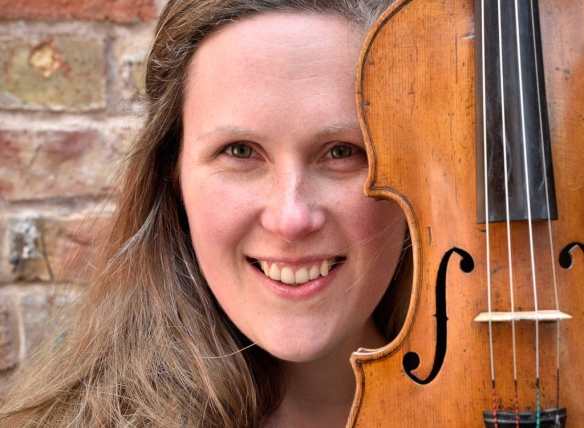
Zoë Beyers (violin), English Symphony Orchestra / Kenneth Woods

Blake (arr. Schuller) Charleston Rag (1915)
Schulhoff Suite for Chamber Orchestra, Op. 37 (1921)
Morton (arr. Schuller) Black Bottom Stomp (1926)
Krenek (arr. Bauer) Fantasie on ‘Jonny spielt auf’ (1927/8)
Milhaud Le boeuf sur le toit, Op. 58b (1920/1)

Wyastone Concert Hall, Monmouth
Recorded 9-10 November, broadcast Thursday 31 December 2020 (online)

Written by Richard Whitehouse

The English Symphony Orchestra certainly saw in the New Year with style in this attractive and enterprising programme centred on the prevalence but also the range of jazz idioms either side of the Atlantic throughout the 1920s. Its stylistic roots were acknowledged in the panache of Charleston Rag by the long-lived Eubie Blake, then the irresistible verve of Black Bottom Stomp by the lived-dangerously Jelly Roll Morton – both heard in distinctive arrangements by Gunther Schuller, whose own jazz innovations warrant revival as his centenary approaches.

Between these pieces, Erwin Schulhoff’s Suite for Chamber Orchestra was a reminder of this composer’s usage of jazz as part of a lifelong and tragically curtailed stylistic odyssey. While the faster numbers recall the wit of Poulenc’s early chamber music and irony of Stravinsky’s suites for theatre orchestra, the Valse Boston – its moody violin solos hauntingly rendered by David Juritz – and Tango admit of an introspection and pathos to the fore in those works from Schulhoff’s last years. Qualities which are here side-lined by the uproarious final Jazz.

It is almost 94 years since Ernst Krenek’s Jonny spielt auf took the German-speaking world by storm, and though its highly Viennese take on jazz lacks the satirical edge as achieved by Weill, the present Fantasie devised by Emil Bauer gives a fine overview of this opera in all its attendant strengths and weaknesses. Abetted by diaphanous orchestration (with its oddly hymnic role for harmonium), the slower sections conjure no mean expressive fervour, while the closing pages exude an affirmation which never feels brittle or forced in its demeanour.

Darius Milhaud had also fastened on to the exuberance of jazz, here with Brazilian overtones, in his ballet Le boeuf sur le toit – as heard in the rarely revived ‘cinéma-fantaisie’ version for violin and orchestra. Perhaps the often equivocal nature of the solo part has mitigated against wider acceptance, but Zoë Beyers took its technical demands confidently in her stride while remaining aware of its ‘first among equals’ status – notwithstanding the strategically placed cadenza (by no less than Arthur Honegger) that brings the soloist unashamedly centre-stage. Credit, too, to the members of the ESO (suitably attired throughout) for having rendered this music’s teasing rhythmic inflections with unfailing poise, and to Kenneth Woods for teasing the maximum finesse from out of Milhaud’s entertaining while not a little provocative score.

It was, indeed, a fine showing all round and would have been ideal before that ‘end of year’ party which circumstances have regrettably made impossible. This event was still a highly positive means of seeing out the old year and welcoming in a much to be anticipated 2021.

You can watch the concert on the English Symphony Orchestra website from 7.30pm on Thursday 31 December 2020 here

For more information on the English Symphony Orchestra you can visit their website here