Before finishing for Christmas and New Year celebrations, I wanted to offer some thoughts on the musical year that has been 2020. And what a year. I doubt we will experience its like again, that’s for sure – and those of you reading this will no doubt have had some incredible challenges to overcome, or have been instrumental in helping other with their challenges. Everything is firmly in perspective, that is for sure.
In the year of a global pandemic, as in all times of strife, music has been there offering a consoling shoulder to lean on. Much of my listening this year has been of the ambient kind, a place of retreat when all has been too frenetic / inhuman / scary. Music has really shown us its true colours again this year, offering the required escape route along with some real inspiration.
Live music, of course, has suffered greatly, and my thoughts are with all those musicians and people working behind the scenes in the arts, their lives irrevocably affected by COVID. As listeners we thank them for their remarkable resilience and inventiveness, bringing live-streamed concerts of such quality they have been the best possible substitute for the real thing. Wigmore Hall set the scene in June, and many others have followed. The orchestras and choirs should be held in the highest regard for their efforts.
Needless to say I did not attend many concerts in 2020, but two of great note were from soprano Louise Alder (above) and pianist Joseph Middleton, showcasing their exceptional album Lines written during a sleepless night at Wigmore Hall in January, and the Orchestra of the Age of Enlightenment under Iván Fischer performing the last three Mozart symphonies at the Royal Festival Hallin February.
I wanted to share with you my favourite music on record this year. It was of course Beethoven 250, and my aim was to listen to the composer’s entire works. That aim continues, but the deadline has been extended massively! It is proving a thoroughly enjoyable experience but circumstances mean it has taken much longer than expected. To enjoy the listening project to its full potential, I look forward to reconvening with the first Sonatas for cello and piano in 2021, and taking it over the finishing line later in the year.
This year’s new releases have been extremely fine – and I have eight to share with you here, beginning with Steven Osborne’s remarkable disc of three Prokofiev piano sonatas on Hyperion. This appeared at the same time as the Coronavirus and felt like a direct response to it. Prokofiev was writing these works during the Second World War, in part a reaction to intense world and personal strife, and what a performance they get from the Hyperion pianist. You can read about them here
On the orchestral front, John Wilson and his Sinfonia of London came out with a simply outstanding program of French music. Escales did the wonderful job of blending seasoned favourites such as Chabrier’s España with gems that benefited from a dusting off – Duruflé’s Trois Danses and Ibert’s Escales among them. My thoughts on the disc are here
One of the most striking contemporary releases this year capped a fine showing from KennethWoods, both with the English Symphony Orchestra and–ashere–withthe BBCNationalOrchestraofWales. Philip Sawyers’Symphony no.4 and Hommage to Kandinsky are captured by Richard Whitehouse in this review of two exceptional pieces of new music, given great performances under conductor Kenneth Woods.
Of the electronica that I mentioned, there are some rather special examples. First among them is Kaitlyn Aurelia Smith’s The Mosaic Of Transformation, an enchanting journey of vividly coloured musical motifs. I attempted to describe them and their impact here
For something closer to home, Erland Cooper’s Hether Blether signed off his Orcadian trilogy with deeply emotive recollections and portraits of home. Complementing the previous instalments Solan Goose and Sule Skerry, it was a life affirming, communal piece of work uniting thoughts at just the right time. You can read Arcana’s interview with Erland here
Meanwhile Bruce Brubaker & Max Cooper took a minimalist composer as their inspiration for Glassforms, a set of electronic reworkings of the music of Philip Glass. Rather than simply dress up the originals, it is an imaginative and very well thought-out set of recastings, detailed here
Also taking inspiration from similarly minimal sources were New York’s Bing & Ruth, through the excellent Species long player. You can read about ithere – and the background to the album in an emotive interview with leader David Moorehere
On the other end of the scale sit Rick Wakeman and the English Rock Ensemble. After a series of stripped back piano albums this is Wakeman at his progressive best, in the company of some exceptional musicians, creating some dramatic and involving music. You can read Arcana’s review here – and an extensive interview with the keyboard wizard here
For music of great verve and positivity, drummer Tony Allen’s collaboration with trumpeter Hugh Masekela, posthumously published, took some beating. The recordings were made in 2010, but were unfinished at the time of Masekela’s death. The passing of Allen himself this year lent their completion extra poignancy. It was the closest I could find to pure musical joy in 2020, as documented here!
Meanwhile, returning after a long break was Charles Webster, making Decision Time – an album of very fine, futuristic soul and deep house. Much has changed since we last heard from Webster in this way, but his musical values remain the same, as reported here
It is not too much of a stylistic shift from Webster to Róisín Murphy, where we find my personal album of the year. Róisín Machine is a brilliant combination of Murphy’s effervescent, spiky personality and some really fine future disco, created with the help of Crooked Man (aka Richard Barratt). As noted here, it has the resilience and strength in the face of adversity we all needed in 2020, but crucially the sense of fun we will still need – and will surely get back – in 2021. Happy Christmas!
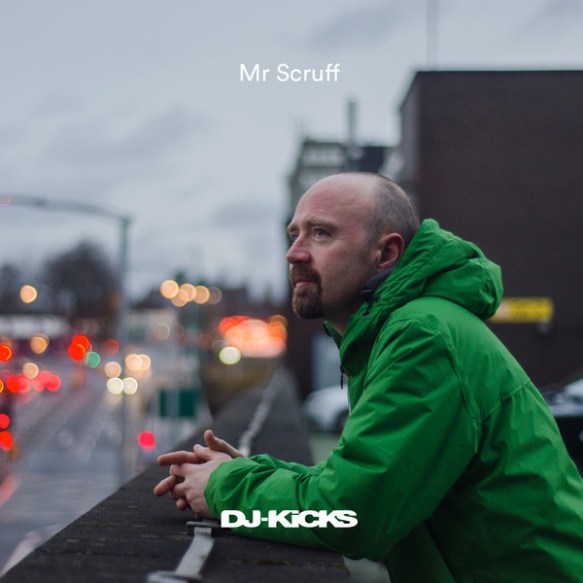
When Arcana called to speak with Mr Scruff , aka Andy Carthy, about his DJ Kicks album earlier this year, we were locked down – but he was using the time productively. “I’m having a big tidy. Musically I’ve been all over the place and want to lay my hands on stuff quickly. I’ve been organising it like a record shop, just having a big clear out and all that. I know a lot of DJs who are doing the same thing. When you’re not pulling out all your records all the time your collection’s a bit static, so it’s easier to organise. I’ve got triple albums where the three albums have been reunited for the first time in about twenty years!”
Has he made any rediscoveries? “Loads! I’ve been going through whole sections like hip hop 12”s and house 12”s. Each section takes about a week to go through, and I’m listening to loads of stuff – promos I received 25 years ago. Two thirds of them are ‘see you later’, but one third is ‘wow’. You’re hearing stuff for the first time.”
We turn to his DJ Kicks compilation, widely acknowledge as one of the best mixes released this year. His approach to it is instructive. “However much you try it’s never going to be like a live mix”, he confirms. “When I started mixing in the 1980s, that was the decade of the megamix. It was still quite ‘in the moment’ but the tools at your disposal were different, and you could be more considered. It reminded me of being a teenager doing pause button edits, it was great fun!”
He starts with a long list…but inevitably elements such as copyright and clearance whittle it down. “It’s an odd one, because !K7’s initial advice was to pick 30-40 tunes – there’s your record box – and they would see what they could clear, and we’d do the mix. They also wanted a very wide ranging mix, and I said that would probably work if you were doing quite a linear mix at one tempo or texturally similar, like a box of DJ tools. This way it will probably go all over the place in terms of tempo, instrumentation and genre, by the very nature of the request. Each record is a very important piece of the puzzle, and if you lose one then the next five or six might not happen. It was a chicken and egg thing, so I did a draft mix, and then made lots of development. Then we would try and clear stuff and half of those tunes couldn’t be used, so it was a little frustrating. You’re normally used to taking records and putting them on, so I had to find ways of keeping interest and focus, and keeping the fun element of the project, without getting dragged down by the politics of licensing.”
He is familiar with such things. “Those frustrations are part and parcel of any licensing operation. On one hand you have the idealist approach – people need to hear this, this mix is beautiful, nothing should impede all the people hearing it – and when you’re DJing, nothing does impede it. Then it’s like, ‘We can’t have this one’, and I’ve had that before. You just need to get over it and keep reworking it, but not too much. You can’t get too bogged down or upset by not being able to use a certain tune.”
Was the idea to also give the listener a sense of discovery? “Kind of, but then on another level a lot of these tracks to me are classics. It’s an odd one because one person’s unknown and obscure is another person’s familiar comfort music, if you know what I mean. The recent obsession with many people of obscure ‘tropical’ music, for want of a better word, is a case in point. I’m thinking of K.Frimpong, something like that. When I first heard one of his tunes via a Ghanaian friend’s parents, I thought it was amazing and obscure, but they told me it was the Ghanaian equivalent of Sex Machine, everyone knows that tune!”
Some will be new to the listener, however. “There’s a few unreleased bits, or ones that haven’t been widely available. Quite a lot of them like the Tiger tune When, which is a classic from my youth. If you weren’t around at the time you’d be like ‘What’s that weird ragga tune by the guy with the slightly nasal, really weird comedic voice?!’ Some tunes on there like Fats Comet‘s Dub Storm are very important tunes from my teenage years. I’m not going out to be deliberately obscure, saying ‘look what I’ve got’ – the music has to be there for a reason. For me it was more about freewheeling, and the joy about putting the mix together is that each tune has to be a transition, taking it somewhere and passing the baton on to something else. With certain older tunes they are more dynamic and less linear than modern electronic productions. The transitions are very important, but that shows that if you take one tune out nothing can fill that gap, either in terms of key or lyrically. If you play an old tune that speeds up you can get from 90 to 110 bpm effortlessly in four minutes. You’re not having to do that as a DJ, the tune’s doing it for you. it builds the energy as a DJ set should do, but if I tried to do that with electronic music it might take me two hours! It’s letting each record do it’s thing, allowing the music to speak and breathe. It’s an especially important consideration when you’re overlaying lots of things, and you have to be careful not to get too much into showing off skills or obscure music. It’s nice to get technical and loopy but other tunes, let them breathe for five or six minutes. The records and audience are part of the conversation, and when you’re doing a student or bedroom mix it becomes a lot more between you and the music.
Is there even a similarity between the structure of a DJ set and a classical work? “You’ve got to have a strong start with a DJ mix, something that is arresting but also a little confusing. I think you have to have a bit of mystery, and it can be drama or ‘what’s happening here, where is this going to go’? It’s like introducing the character at the start of a film, with some plot building. After 3 or 4 tunes you’ve laid out your foundations and some reference points, so people are like ‘yeah, I’m strapped in now, let’s see where we’re going!’ I don’t think you can think too much about it at the start, other than mellow and a bit mysterious, then energetic and maybe comforting at the end. Any more planning than that and I think you’re taking out the opportunity for happy accidents, or just letting the records speak. They become part of the narrative, and it’s about how they add to the story. You’re creating a collage.”
He moves on to wax lyrical about Antibalas, and Battle Of The Species, the twelfth track in the DJ Kicks mix. “That to me is another massive classic. When the trombone comes in it’s like an elephant coming into the room! With tunes like that, ever since I received it, it brings back countless memories of seeing them live. Just the heaviness the guys in New York, like the Daptone Collective, Gabe Roth and the old school producers recording stuff on tape, recreating the 1970s but doing it in such a way that is heavy but nice to be able to introduce them in a mix without smoothing out the mad, raw energy. That’s the danger with a mix, in your rush to make everything seamless you can work against the dynamics of the music. You have to have an ear for what those tunes do. Many of these tunes I’ve played 150 times in a club, you know, so that wasn’t going to be an issue.”
There was an upside to wrangling over copyrights and permission. “The licensing provided some opportunities, because you might get to a certain point in the mix where you have to wait a week or two for things to come back, and you can listen to it from a less technical point of view. It’s good fun, and for me the challenge was trying to combine hard electronics and free, life affirming, organic music in a way that didn’t feel incongruous. Sometimes when you’re overlaying stuff you can lose the up and down dynamic, so it has to be more side to side or push and pull. The joy of playing with these different dynamics is mind boggling at times, the creativity that is inherently possible in mixing. It doesn’t detract from the narrative, and you can almost create a completely new tune! I never lose the joy in that creation of hearing two things that go really well together, whether they are from the same genre or not. In the early 90s I used to mix reggae over techno because the tempos went together – say 140 or 70bpm. There are so many different combinations, and they are unlikely but if you trace them 30 years back you can the genres lived next door to each other. For me though it’s the oddball records, the unclassifiable mutants, hopping and skipping around – they are the real heart and soul of the DJ sets. They really do help get you from A to B!”
These tunes fit in with Andy’s principal philosophy. “What I’m trying to do is connect with the feelings I get when I listen to something new for the first time, then try and pass it on to other people. You’ve got to at least awaken curiosity and excitement in people, and constantly look at it from different angles.”
The beauty of this – from my own point as a listener – is encountering new discoveries such as Andy Ash’s Ease Yourself. “Andy is a producer from Liverpool”, Carthy recounts, “and he sent me a CD of this tune about 15 years ago. From quite a mysterious sort of hazy drum and flute thing, it’s very effective, and I found that getting from something that was percussive and jazzy to some house stuff, it was the perfect transition record. Also in itself, in a dark club, it’s pretty intense. For some reason I remembered that tune, and it’s never been released. For two or three years I played that at every gig, and luckily I found the CD and it still works! He’s great, and a lot of his stuff is house tunes that sample the jazzy end of late 1970s soul. It’s a really nice thing, and that’s happened a few times. The Drymbago tune Chupacabra, they grew out of a regular night we had been running at Bangor University for over ten years. Bangor’s not the first place you think of for an appreciation of African and Caribbean music, but I love these incongruous situations where a whole scene can spring out of a small group of people’s love and obsession about certain kinds of music. This country is full of little scenes like that. It’s another of those brilliant head scratching moments!”
What is the ideal length of a Mr Scruff DJ set? “It depends. As much as it’s nice to play all night, it’s also nice to play alongside other people, to keep it free and easy. I’ve done it on my own for 15-20 years, so it’s been nice in the last few to do some back-to-backs. As long as people are versatile you can have a good back-to-back, a musical conversation. I would say 4-6 hours, depending on the venue. With festivals you have to go a bit shorter, but because I’m so used to playing for a long time, three hours feels like a bit of a rush. I love the whole thing of playing for a long time, as you can build a relationship with the people in the venue, set your own scene.”
There are moments of the live experience that Andy finds genuinely odd. “I do find when the support DJ is on people are standing around until the headliner comes on, which I find really weird. I’ll just swan in and everyone’s cheering for me, but these local people who are here week in and week out, who have actually created the whole scene which is the reason I’m here, you’re not giving them any love or attention. That’s a bit of a disconnect in club culture because of their reliance on headliners, but it’s also down to promoters and the way they curate their nights. If you start relying on headliners you’re going to attract a crowd who have this expectation. People are setting the bar too high and spoiling their own enjoyment, saying, ‘I can’t enjoy this music unless it’s played by someone who is sufficiently well known’. Sometimes I’m queuing up a record that they’ve played, and then suddenly people are getting into it. I’ve not started yet, but you’re dancing, because you think I’m DJing! It’s really weird, and at that point I’ll grab a microphone and give this person some respect. You can’t stand still for them and dance to me!” That said, there are so many community-based nights where that isn’t a problem. That might be remedied in the current climate where you can’t have these massive events.”
We move on to discuss the impact of the pandemic had on Andy’s personal life. “I spend so much time with people and loud music, so I’ve not felt a mad urge to replace my personal life with a screen. That’s been quite nice, getting outside and chatting to people I happen to bump into in the park. I’m in the luxury of not having to worry about my venue or festival, so it is an opportunity to rethink – where my money’s going, where I shop, who I’m banking with. One thing that hasn’t really been a big debate is why are these viruses happening? We need to behave a bit more as a species, aside from votes and that kind of thing. You think, what can I do in my everyday life to improve relations with me and the people around me, and make sure that I’m not inadvertently treating people bad by virtue of the companies that I’m supporting with my money. In a barrage of information where e-mails are flying at you like the credits from Star Wars, it’s kind of nice to take stock for a bit. Most of us are like rabbits in the headlights most of the time!”
Mr Scruff’s contribution to the DJ Kicks series is on !K7, and can be purchased from their website here
Jay Reise (music), Davood Ghadami (narrator), English Symphony Orchestra / Kenneth Woods
Wyastone Concert Hall, Monmouth
Friday 18 December 2020 (online)
Written by Richard Whitehouse
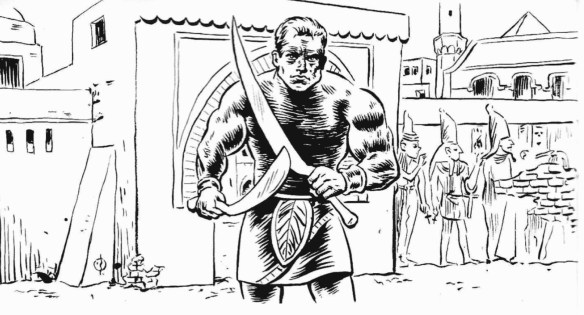
Following on from its uproarious version of Lubin from Chelm [*], the English Symphony Orchestra continues its series of pieces for virtual storytelling in the guise of an old Egyptian tale – here given a contemporary twist to result in the ‘morality’ fable The Warrior Violinist.
This is a parable about being careful what one wishes for. It centres on a youth who plays the violin to exclusion of all else, then finds an even greater other love – the Pharaoh’s daughter. Imagining himself inferior, he bids the Sphinx transform him into a great warrior – in which guise he vanquishes Egypt’s enemies. The princess can love only the man she heard playing the violin and when the warrior tries to reclaim his former prowess, he finds himself unable to play – the Sphinx’s warning that no-one can be changed back having proven only too true.
Davood Ghadami is a personable and thoughtful narrator; his understatement enabling one to focus on a musical score that, even more than the previous two in this series, packs a wealth of incident into a through-composed score which is effortlessly sustained over its 18 minutes. A tribute, indeed, to the initiative of Jay Reise in having elaborated a piece written almost a decade ago for this Art of Storytelling series. Not the least of its attractions is the extensive role allotted solo violin, played here by Zoë Beyers with no mean poise and resourcefulness.
The remaining ESO musicians play with skill and sensitivity, while Kenneth Woods ensures clarity of texture even in denser passages. The production should provoke children and adults alike – and, as usual with ESO, a range of sundry material enhances the overall experience.
You can watch the concert on the English Symphony Orchestra websitehere
For more information on the English Symphony Orchestra you can visit their website here
For information about Auricolae, visit Kenneth Woods’ website here
Parish Alvars Romance in F (1842) Lewis Four Anticke Dances (2015) Rutter Dancing Day – Interlude (1974) Britten A Ceremony of Carols – Interlude (1942) Adie Festive Fantasy (2018) Thomas Cambria (1863) Parry Freundschaftslieder (1872) Various A Christmas Garland (2020) [World Premiere Performance]
St. Mary’s Church, Horsham, 17 December 2020
Reviewed by Richard Whitehouse
Christmas events have inevitably been few and far between this season, thereby making these concerts by the English Music Festival especially welcome – the more so given that St Mary’s Horsham proved to be an ideal location for music-making of such intimacy and inwardness.
A tale of two contrasted halves saw the first devoted to music for the harp – opening with the doyen of 19th-century practitioners, Elias Parish Alvars, whose Romance eloquently spanned the gamut of possibilities from winsome introspection to dextrous virtuosity. Paul Lewis has done much to enrich the modern repertoire, his Four Anticke Dances evoking various dance-measures of the late Renaissance and early Baroque eras through melodies entirely original yet wholly avoiding pastiche. Two interludes from well-known larger collections followed, the ethereal remoteness of that from John Rutter’s Dancing Day contrasting with the delicate playfulness of that from Britten’s A Ceremony of Carols, then Harriet Adie’s Festive Fantasy combined 12 carols in various moods and styles for what is a gift to this instrument. Heather Wrighton rendered this and all those preceding pieces with unfailing assurance; joining with Duncan Honeybourne for Cambria by John Thomas, whose pioneering work in dissemination of Welsh music amply demonstrated in elaborate arrangements of three traditional melodies.
The second half commenced with Freundschaftslieder, four (from a likely total of six) pieces in which the young Parry confirmed growing assurance as a composer. If not overly cohesive, these make for a diverting sequence – whether in the harmonic and rhythmic ambivalence of a Nocturne in G minor, listless agitation of an Allegro in C minor, speculative unfolding of a Ballade in D minor, or confiding wistfulness of an Andante in E major whose subtitle The Confidence of Love underlines Parry’s adherence to an earlier era of musical Romanticism.
Rupert Marshall-Luck rendered these pieces with no mean virtuosity; then he, Honeybourne and narrator Em Marshall-Luck came together for the first hearing of A Christmas Garland – an anthology centred upon the theme of Christmas. It opened with John Pickard’s idiomatic arrangement of his choral piece O Magnum Mysterium, continuing with Richard Pantcheff’s luminous setting of Rilke’s The Annunciation to Mary then restrained fervency of Graham Keitch’s Intrada; prior to Cecilia McDowell’s ruminative take on Christina Rosetti’s Before the paling of Stars. EMF regular Richard Blackford contributed the atmospheric piano piece Christmas Dawn, leading to the elegiac tones of Paul Lewis’s setting of his poem Will There be Snow? and Paul Carr’s appealing take on Rosetti’s evergreen In the Bleak Midwinter. The piano miniatures of Roderick Williams’s Winterscapes provided a pertinent interlude before David Matthews’s entrancing (if unfinished?) setting of Anne Brontë’s Music on Christmas Morning, then James MacMillan’s paraphrase on his setting of John Donne’s poem Nativity.
Paul Lewis re-emerged with an elegant song-and-dance Christmas Twosome in the guise of Fireside Carol and Christmas Waltz, then came Thomas Hewitt Jones’s Sleigh ride with a tired reindeer: as humorous yet speculative a conclusion as one written in 2020 needed to be.
Dyson
Concerto Leggiero (1951)*
The Open Window (1919)
Primrose Mount (1928)
Bach’s Birthday (1929)
Untitled Piano Piece (1890)
Six Lyrics (1920)
My Birthday (1924)
Twelve Easy Pieces (1952)
Prelude and Ballet (1925)
Epigrams (1920)
Three Wartime Epigrams (1920)
Four Twilight Preludes (1920)
Somm Recordings SOMMCD0622-2 [101’58”] Producer Siva Oke Engineer Paul Arden-Taylor
Recorded 17-18 January 2020 The Menuhin Hall, Stoke d’Abernon, UK
Reviewed by Ben Hogwood
What’s the story?
As the cover suggests, this double album gives us the complete music for piano of Sir George Dyson, including five world premiere recordings ranging from the first piece the composer wrote at the age of seven to a two-piano version of Concerto Leggero, a substantial three-movement work for piano and orchestra completed in 1951.
Paul Spicer, the composer’s biographer, contributes a wonderful booklet note telling the story of Dyson’s life and highlighting the importance of the house piano, brought by Dyson’s parents to encourage his obvious gift for musical in the midst of an impoverished upbringing. It is rather moving to read of the composer’s progression through these years, the piano by his side at every turn.
What’s the music like?
The album is beautifully programmed, taking the biggest piece first. The Concerto Leggiero has many harmonic sleights and twists and turns, especially through its first movement, to which Simon Callaghan and Clíodna Shanahan are alive. This is in complete contrast to the early Dyson piano pieces, which are little nuggets you might expect to encounter in early piano learning – but which have an emotional substance ensuring they last well beyond that sphere.
The Open Window itself is charming, with a softly undulating Field and Wood the first of its eight short movements. Dyson’s descriptions are often little picture postcards, such as the restless description of Swallows, but they frequently have an emotive core, found most poignantly in the closing Evensong. In the same way this short suite was written for young pianists to develop their prowess, the Six Lyrics offer the same opportunity through their melodic cells.
Dyson’s very first Untitled Piano Piece is also included, the seven-year old composer offering a bold attempt lasting just under a minute. At the other end of the scale the Epigrams are slightly shady but intense pockets of emotion, each one somehow finding the uncertainty of post-First World War Britain. The Four Twilight Preludes are disarmingly simple, too, elusive portraits that hang in the air and on occasion call Debussy’s music for children to mind. These small but meaningful pieces show the composer’s ability to bring emotion from what on the outside appears to be simple material.
Bach’s Birthday, meanwhile, shows the composer’s skill at working tight compositional procedures into his music. He uses fugues here in music of remarkable density and expression.
Does it all work?
Yes – because Simon Callaghan proves a very sympathetic interpreter, and the programming gives exactly the right balance of light and shade. Given with affection, it is a charming set of music that works as a pleasant background but is more substantial when listened to closely. Dyson is a composer who, in these piano pieces, packs a lot of meaning into short duration. The experience becomes even more rewarding when enjoyed with Paul Spicer’s commentary.
Is it recommended?
Yes. The Open Window fills a notable gap in the British piano music archive, and its support from the Sir George Dyson Trust has secured the completion of an important release. It tells us much more about a composer revered primarily for his choral and orchestral music, illustrating the intimacy he could find in his work. It also serves as a timely reminder of the rich tradition of keyboard music on these shores throughout the 20th century.
For further information on this release, visit the Somm Recordingswebsite





 Arcana.fm