Talking Heads: Ryan Wigglesworth

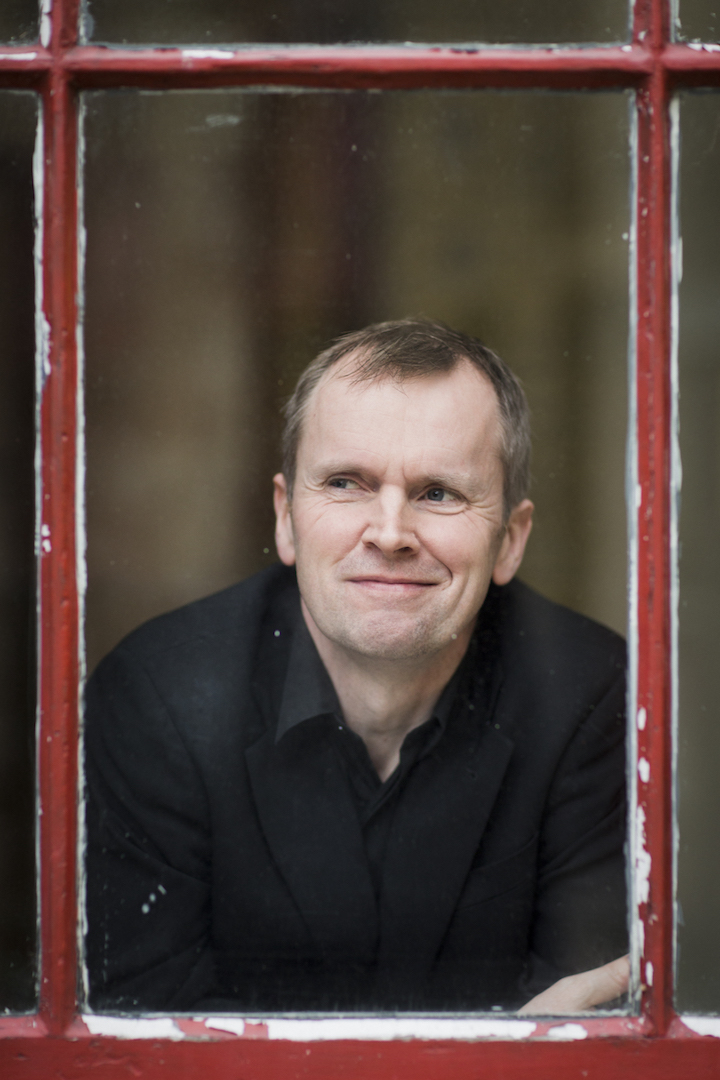
In the first of two interviews themed around the Aldeburgh Festival, Featured Artist Ryan Wigglesworth talks to Ben Hogwood about the influence of his mentor, Oliver Knussen, and the inspiration he takes from the music of Britten, Debussy and Bruckner.

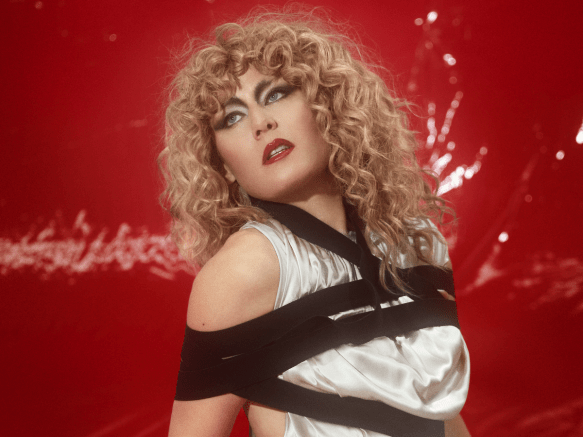
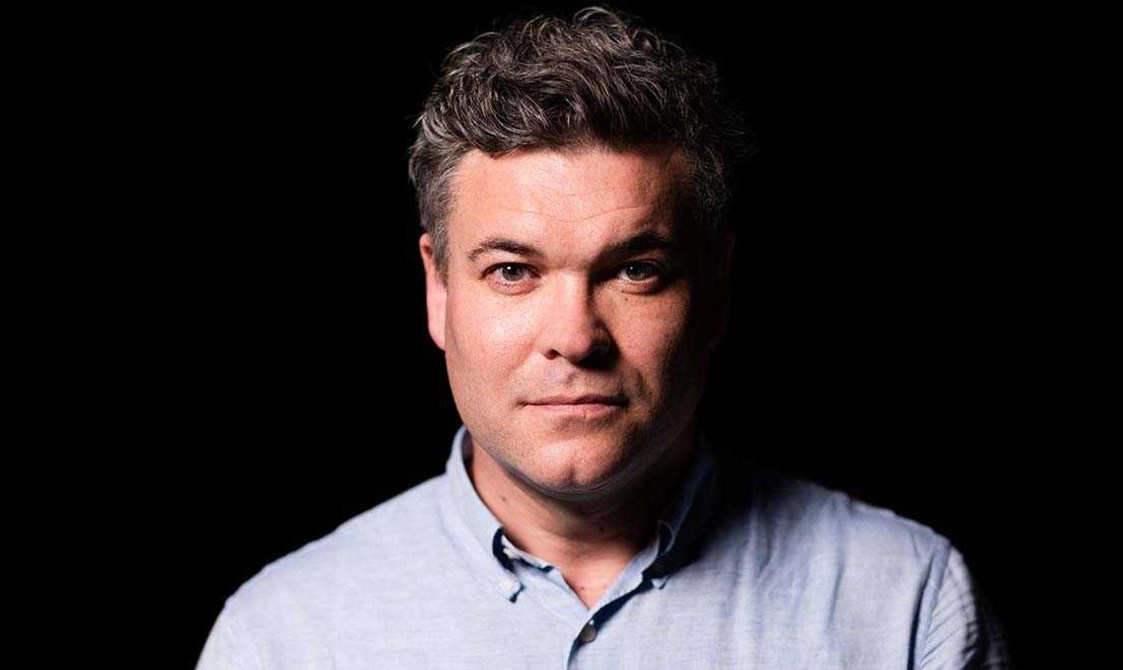
Picture credits: Benjamin Ealovega (Ryan Wigglesworth, Steven Osborne), Mark Allan (Oliver Knussen), Sussie Ahlberg (Sophie Bevan), Lawrence Power (Giorgia Bertazzi)

Ryan Wigglesworth is a musician of many disciplines – and for half an hour he has joined us to talk about his work as a composer, conductor and pianist, specifically within the rarefied world of the Aldeburgh Festival, where he is a Featured Artist for 2026.

The festival has played a key part in his career, as I ask him to cast his mind back to the first time he visited. “My first contact with Aldeburgh was through the young artists programme, which is where I first met Ollie Knussen – that would have been 2000 or 2001. I had forced my parents, when I was much younger, to take me to Aldeburgh. It must have been the time when the Humphrey Carpenter biography of Britten came out. I read that biography and begged my parents to drive from Sheffield so I could see the place and go on a pilgrimage. It’s been a very special place to me for such a long time, and since the turn of the century, when I met Ollie, that became the most important musical friendship and mentorship of my life. I spent so much time there and was virtually living at his house for a period. It’s a home to me.”

It is striking in conversations with artists that worked with Knussen, the speed with which his name comes up, and the affection it provokes. In this case, Wigglesworth met his mentor through the soprano Claire Booth. “Claire and I were undergraduates together”, he says, “and she was on the course at Snape. I tagged along, because I wasn’t officially there as a student that first year. Claire and I had already learned his Whitman Settings, and we kept asking if we could sing it to him. He was dreading it was going to be awful, but he finally caved in, and we performed it. I think he was very touched, and I think that was the beginning of him thinking, “Maybe they’re not so bad, these two!”

As with fellow-students, Knussen (above) left a lasting musical and personal footprint. “It was my education. I must have sat in hundreds of hours of rehearsals with the London Sinfonietta and the BBC Symphony Orchestra. I could never understand why no-one else was there, and it was the same when I used to go to Boulez’s rehearsals. That was my education, because Ollie’s rehearsals were masterclasses in time management, efficiently sorting our problems, and that pristine conducting technique. I’m so grateful to have had that as my starting point, and with such a dominant creative force in your life, it takes a while to free yourself from their way of doing it, and finding your own way, but it still informs everything I do. When it comes down to it, it’s still about respect for the text, and that the composer is the most important thing – not the performer’s ego!”

He considers further. “You couldn’t not be learning, just spending time with him, sitting at the kitchen table. As everyone knew him understood, he had obsessions at a particular moment in time. He would be gorging on the music of Busoni, or whatever it happened to be that week, so we’d go through tonnes of his music – and that’s an incredible education, going through those scores together – and learning how he marked up scores. It was my starting point, and I’ve developed it in how to learn a score thoroughly, especially when I’ve had to learn something quite quickly, stepping in for a cancellation. I remember having to learn Elgar’s The Dream of Gerontius in two days, and it was incredible to fall back on that technique of inhabiting a score.”

The influence of Knussen spreads to the programming for the 2026 Aldeburgh Festival, where his innovations can be felt in Wigglesworth’s repertoire choices – such as the pairing of his own Piano Concerto and that by Ravel, both to be performed with Steven Osborne (above) as soloist. “It’s a bit of a risk, that one!” laughs Ryan, “putting your piece alongside one of the greatest concertos ever written. That was something I began to think about much more deeply spending time with him, the way pieces resonate together. It’s a very subtle and complex business, and of course you get it wrong sometimes, but that’s fine because you don’t know until you do it, very often. It’s one of the great pleasures to have the freedom you have at Aldeburgh where your wings aren’t clipped. It’s worrying that so much of concert life is becoming so narrow, reduced in its scope and imaginative adventure.”

We reflect on his role as Featured Artist at Aldeburgh this year – a chance to spread musical wings? “It’s very special to be able to think about bringing the different aspects of what I do under one roof, because they’re all sides of the same business of making music. Of course they feature in different ways. Playing chamber music is so important because it’s my only direct contact with producing the sound, and I need that. Yet at the same time, if I’m conducting Pelléas et Mélisande, I hope I’m becoming a better composer as a result!”

His reference is to Debussy’s only opera, with which the festival opens on Friday 12 June. “You can’t not learn from every page of a score like that”, he says, “about how to be a better composer and holding the mystery. I don’t think I’ve ever met a composer for whom that’s not the greatest opera ever written, because it’s so difficult to fathom how he did it! It is so elusive, you can’t see how he put it together. The more time you spend in the orbit of masterpieces like that, it’s stimulating for me as a composer, and to spend time with the orchestra. It’s such an organism, this group of individual musicians with a collective personality, sound and ethos – it’s extremely mysterious! That was the great thing about spending all those hours in rehearsal with Ollie”, he reflects, “that’s what you’re soaking up, how these groups function, and how you balance the double basses and harps – what needs to be done on the most basic practical level.”

The orchestra to which he refers in Pelléas is the BBC Scottish Symphony Orchestra, of whom he has been chief conductor since September 2022. “They are uniquely versatile”, he says, “When you think of what they do in the Tectonics festival, with Ilan Volkov, from the most experimental new music – from that to Bruckner’s Seventh Symphony – and they approach it with care and flair. City Halls is so good for classical repertoire, too, and they are incredibly stylish in Mozart, which is such a difficult thing. It’s incredible what they can do, and in such short spaces of time. To be able to flick the switch is amazing, with something like Birtwistle’s Earth Dances, which we performed with Beethoven’s Eroica Symphony at the BBC Proms last year. To achieve that in such little rehearsal time would have been almost unimaginable in the mid-1980s. The speed with which things are inhabited is incredible.”
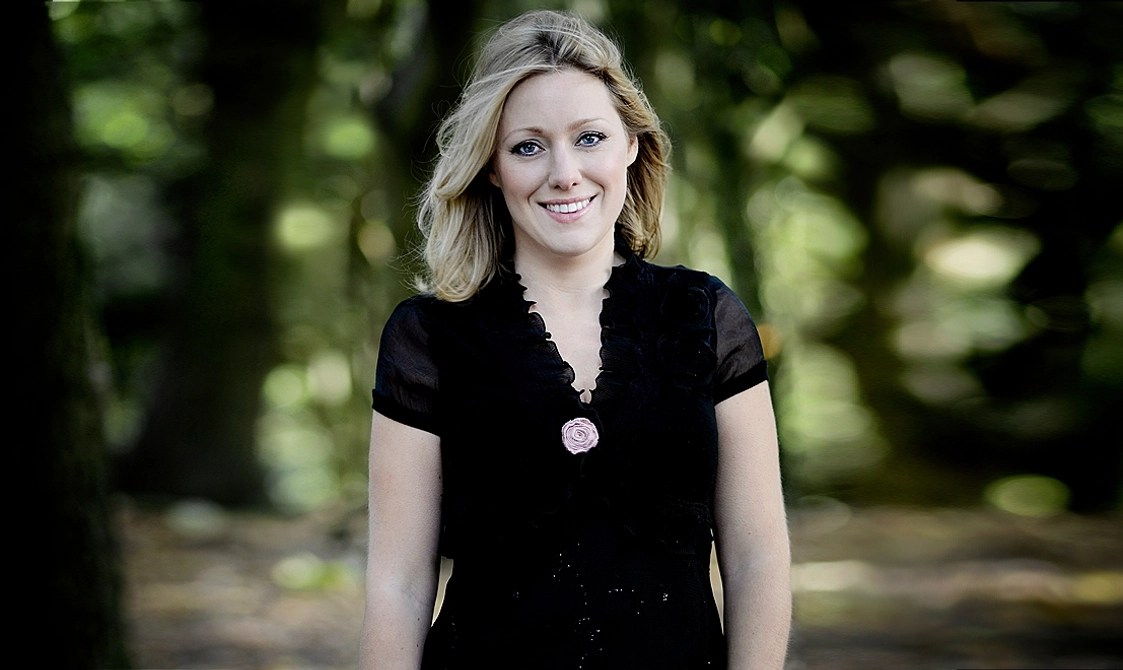
On a much smaller scale is The Poet’s Echo, a concert where Wigglesworth will take to the piano, joining soprano Sophie Bevan – his wife – in a programme marking the centenary of the birth of Russian powerhouse Galina Vishnevskaya. Along with her own husband, Mstislav Rostropovich, Galina played an important role in the career and life of Benjamin Britten. Britten’s song cycle The Poet’s Echo was completed in 1965 for Vishnevskaya, and will feature alongside Wigglesworth’s own settings of George Herbert, Till Dawning – written for Sophie (above). “The Poet’s Echo is new for both of us”, he says, “and it is wonderful to have a major work of Britten’s to come to fresh and learn together. We’ve done selections of the folksongs for a good few years, now.”

He has great affection for them. “I love them so much – and those accompaniments in the Britten folk song arrangements, each one is a sort of bull’s eye! There are one or two very focused, simple ideas, and it comes back to Britten’s economy.” A quality Britten and Knussen shared? “Exactly – a supremely practical approach. I learned from Ollie, and almost at Britten’s feet. Ollie’s Dad was so involved with Britten as a conductor, taking part in the premiere of works like Curlew River, and Ollie was there as a kid, taking all this up. He always said about Britten that he could have been a grandmaster chess player, or even an army general. The ability to move things in the abstract, in his head, was so strong, and that extends to planning the entire act of an opera in his mind before committing it to paper. He had an extraordinary ability to manipulate things in space and knowing, in the operas, when to introduce a colour, treating the instruments of the orchestra like individual characters, and knowing when to hold one back for dramatic purposes.”

He reflects further. “It’s about finding the off-kilter but logical solution. A great example is the ‘interview chords’ in Billy Budd – they’re every way of harmonising the F major triad. He’s working through a secret, and it’s absolutely right, a key emotional part of the opera.”
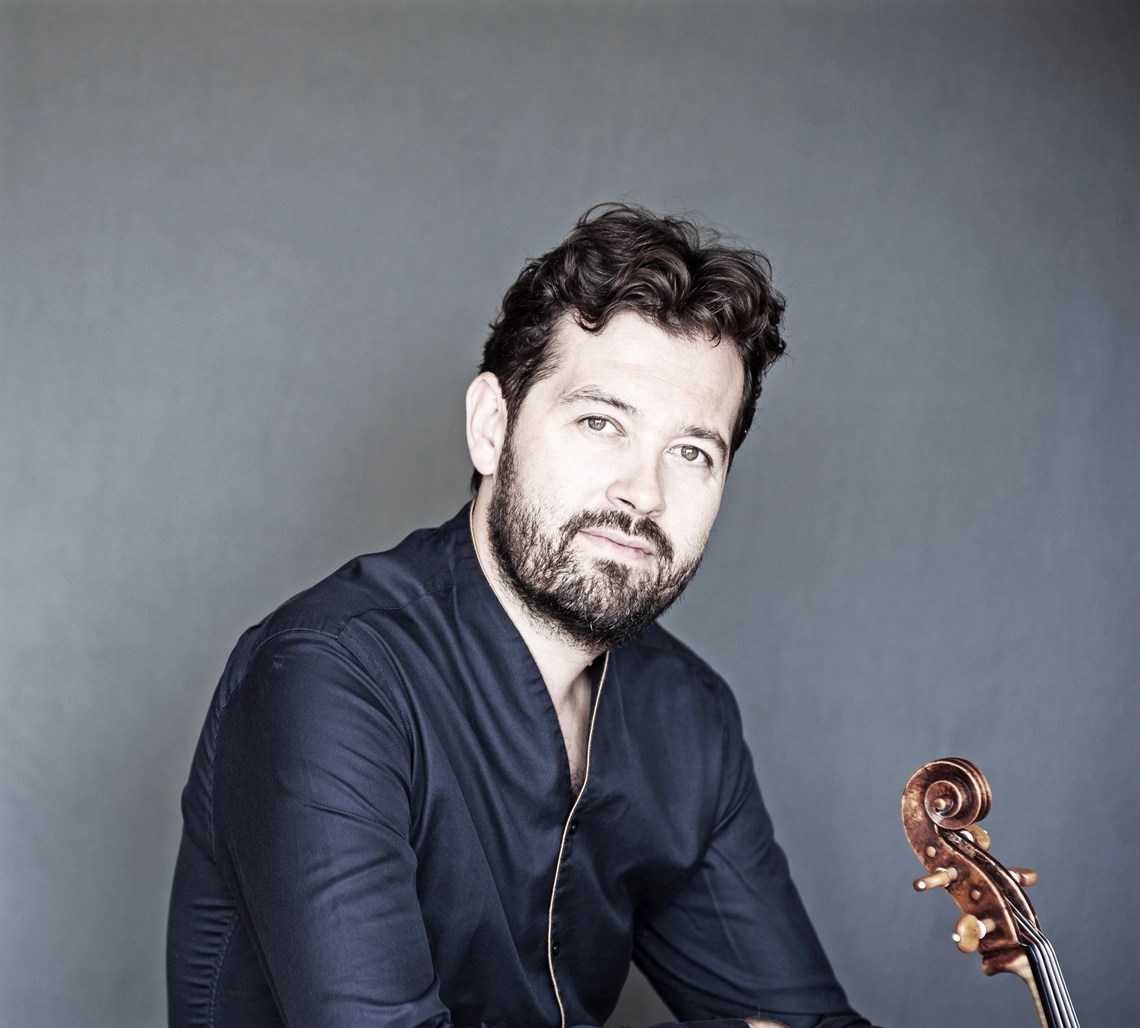
Returning to Wigglesworth’s own music, there is a significant premiere with the Knussen Chamber Orchestra on Saturday 27 June, in the form of his Viola Concerto, written for Lawrence Power (above). “It’s quite difficult to talk about, because I’ve not long finished it!” he confesses. “I’m still too close to the process of having written it, but I haven’t heard it yet. Like all of my recent pieces, and I hope my pieces in the future – they’re all my reactions to who is performing, and who I’m writing for. I think I would struggle now if I were commissioned by a musician or orchestra I don’t know, I’d struggle to have ideas. I’m so lucky with Sophie, or Steven Osborne, who’s playing my piano concerto at the beginning of the festival, to have these long term, meaningful relationships. With Laurence, we first worked together years ago. I wrote these Five Little Waltzes for him during lockdown. He’s such a one-off, and his artistic personality is so strong. He has this incredible sound, and variety of colour, and the piece came from my reaction to that.”

He describes the work. “It’s slightly unusual – in three movements, which sounds very standard, but it’s slow-fast-slow. It was a deliberate attempt to try to achieve something a bit more spacious than anything I’ve attempted before. I suppose it allows the viola to occupy a lyrical space. It’s not a battle between soloist and orchestra, more a fluid relationship. It comes back to the music that becomes more meaningful as a performer. Like Bruckner – I love this music so much, and what can I learn from it? Bruckner’s vision is so personal, but there are things to be learned – how to create a long wave, a big paragraph. It’s finding the things that challenge you, because in the past I’ve struggled to create a genuinely long line. You could say Britten concentrated on little cells of ideas, but it’s nice to think about how to achieve something that doesn’t come naturally, that can become more a part of your make-up.”

Debussy comes to mind as a composer capable of uniting the two ways of working, which returns us to the festival’s opening night. “To have created Pelléas as his first dramatic work, and to have got it that right… it was a long gestation process written it a long time before it was premiered, but it’s unlike anything else!” he says, under Debussy’s spell. “As he admitted himself there is a lot of Mussorgsky’s Boris Godunov in it, but these scenes tend to be conversations between two characters, with the function of these orchestral interludes, which seem so necessary. To think they were added so late on in the process, just to cover the stage move time, is remarkable – but you need them because of the intensity of each scene. You need the space afterwards to process what you’ve just heard, for the brain to catch up. It’s an incredible living organism, when you’re in it – and it really does grip you! This score is just as much like a drug as Wagner is said to be. The more you spend time with it, the more you need it!”

You can read more about this year’s Aldeburgh Festival at the Britten Pears Arts website, with full concert information and details. For biographical information on Ryan Wigglesworth himself, you can visit his artist page

Published post no.2,915 – Friday 12 June 2026

In concert – Steven Osborne, CBSO / Kerem Hasan: Coleman, Grieg & Beethoven

Steven Osborne (piano), City of Birmingham Symphony Orchestra / Kerem Hasan (above)

Coleman Umoja: Anthem for Unity (2001, orch. 2019)
Grieg Piano Concerto in A minor Op.16 (1868)
Beethoven Symphony no.4 in B flat major Op.60 (1806)

Symphony Hall, Birmingham
Thursday 7 November 2024, 2.15pm

Reviewed by Richard Whitehouse Picture (c) Tristan Fewings

Highly regarded for his work with Welsh National Opera and his five years at the helm of the Tyrolean Symphony, British-Cypriot conductor Kerem Hasan’s is a relaxed though attentive presence that resulted in no mean rapport with the City of Birmingham Symphony Orchestra.

Such was evident from the outset of Valerie Coleman’s Umoja. Written for wind quintet, this ‘Anthem for Unity’ (the latter word in Swahili being the title) went through incarnations for wind sextet and concert band before being expanded to a commission from the Philadelphia Orchestra. Essentially a sequence of free-flowing variations on a theme stated by solo violin after an atmospheric introduction, it emerges in sharply contrasted guises before arriving at   a culminative statement – its evocation of ‘unity’ the more powerful for such overt restraint.

If the remainder of this programme consisted of repertoire staples, there was nothing routine or predictable about the performances. Steven Osborne has doubtless given more consistently accurate accounts of Grieg’s Piano Concerto, but his determination here to throw caution to the wind almost always paid off. Not least in an opening movement at its most perceptive in an unusually cohesive development, then a cadenza which ably sustained emotional tension through to a thunderous close. Building to a fervent rendering of its main theme, the Adagio evinced no lack of pathos, and Hasan secured a seamless transition into the finale – its virile main theme tellingly contrasted with that rapturous flute melody (Marie-Christine Zupancic on fine form), which emerged duly transformed as a majestic apotheosis towards the close.

That Hasan was out to make the case for Beethoven’s Fourth Symphony was evident from an introduction whose speculative mystery was tangibly conveyed, thus making contrast with the first movement’s main Allegro the more potent. Nor was the repeat of the exposition a carbon copy of what preceded it, Hasan channelling its impetus into an eventful development whose hushed transition into the reprise brought a surge of adrenalin no less palpable than that of the brief if thrilling coda. The ensuing Adagio might be felt to lack the drama or heroism of those in the symphonies either side, though its wistful main theme accrued considerable profundity on its successive and varied reappearances – not least through the unforced eloquence of the CBSO woodwind in what becomes something of an all-round showcase for that department.

Hasan drove the scherzo sections of the third movement hard, yet there was never any lack of articulation, while the trio sections had all the ingratiating charm needed. Taking the finale at anything that approaches the composer’s metronome marking can easily become a hostage to fortune, but the CBSO held its collective nerve throughout what was an eventful as well as an exhilarating ride – one fully underpinned by Beethoven’s irreverent humour such as comes to the fore in the tonal and emotional punning of those captivating bars that round off this work.

A persuasive case, then, for Beethoven Four as for Hasan’s conducting. Meanwhile, Sunday afternoon brings an intriguing event in the guise of Bach’s Goldberg Variations arranged by Dmitry Sitkovetsky for string ensemble and directed by CBSO leader Eugene Tzikindelean.

For details on the 2024-25 season A Season of Joy, head to the City of Birmingham Symphony Orchestra website. Click on the names to read more about pianist Steven Osborne, conductor Kerem Hasan, and composer Valerie Coleman

Published post no.2,357 – Saturday 9 November 2024

In Concert – Steven Osborne plays Debussy Études @ Wigmore Hall

Steven Osborne (piano)

Debussy
Études Book 1 (1915)
Berceuse héroïque (1914)
Étude retrouvée (1915)
Études Book 2 (1915)

Wigmore Hall, London
Monday 6 December 2022 (BBC Radio 3 Lunchtime Concert)

Reviewed by Ben Hogwood Photo (c) Ben Ealovega

Steven Osborne is in a ‘Debussy phase’. The renowned pianist has recently released an album of Early and late piano pieces for Hyperion, and commendably this concert added a further string to his bow with a collection of late works, principally the two books of Études. These substantial collections represented the end of a year of compositional famine for Debussy, his creativity reignited for the piano and as he began his late trio of published sonatas. Blighted by illness, he nonetheless found the focus to write increasingly economical but outwardly expressive music.

Typically Debussy did not write these pieces as downtrodden exercises for the classroom. Instead, as a recent biography by Stephen Walsh point out, he wrote ‘tests of the pianist’s ability to climb technical mountains while engaging with the musical scenery’. Osborne certainly achieved both objectives in this BBC Radio 3 lunchtime concert. His technical control was well-nigh flawless but at times daring, pushing these pieces to the limit while remaining sensitive to the natural phrasing of the cells of melody with which Debussy works.

He executed each piece with a compelling characterisation, allowing us to admire Debussy’s craft and texture but also creating remarkable images in spite of the discipline required within each study. Each of the two books of Études contains six pieces, and Osborne began with Book 1 in its entirety. The restless Pour les ‘cinq doigts’ (d’après Monsieur Czerny) began, immediately showing off the pianist’s control and natural affinity with Debussy’s melodic writing. Ending with a flourish, he moved to a picturesque Pour les tierces, portraying in aural terms the equivalent of focussing in on a particular part of a fast flowing stream. Pour les quartes moves the musical language in an Eastern direction, moving between evocative scenes, while Osborne enjoyed linking the character episodes of Pour les sixtes with fearsome playing. Pour les octaves was notable for its clarity and power, while the final Pour les huit doigts hurried forward, changing shape continuously like the centre of a lava lamp.

Book 2 was similarly impressive. The right hand in Pour les degrés chromatiques was like a strong wind, with room retained for its recurring melody, while the open textures of Pour les agréments reminded us just how forward looking these pieces are, Osborne giving the music plenty of room for expression. The circus was memorably evoked in the chase sequences of Pour les notes répétées, before Pour les sonorités opposes became a compelling study in musical perspective, its happenings near and far giving an exquisite sense of distance. The rippling figures of Pour les arpèges composes contrasted with trippy, playful syncopations, before finally we heard contrasts between the assertive and the deeply mysterious in a fully voiced account of Pour les accords.

Between Books 1 and 2 of the Études, Osborne found time for two more late pieces, beginning with the curious Berceuse héroïque, where a solemn left-hand figure grew into an imposing presence, then following with the Étude retrouvée from a year later. Here the suggestive chromatic intervals were persuasive, complemented by a ticklish figure in the right hand.

Completing this memorable concert was an encore of the early Rêverie, written in 1890. By showing us how far the composer had advanced in his musical style, Osborne also illustrated the seeds that were there at the beginning, in a piece whose sustaining calm cast a spell on audience and pianist alike.

Arcana’s best of 2020

written by Ben Hogwood

Before finishing for Christmas and New Year celebrations, I wanted to offer some thoughts on the musical year that has been 2020. And what a year. I doubt we will experience its like again, that’s for sure – and those of you reading this will no doubt have had some incredible challenges to overcome, or have been instrumental in helping other with their challenges. Everything is firmly in perspective, that is for sure.

In the year of a global pandemic, as in all times of strife, music has been there offering a consoling shoulder to lean on. Much of my listening this year has been of the ambient kind, a place of retreat when all has been too frenetic / inhuman / scary. Music has really shown us its true colours again this year, offering the required escape route along with some real inspiration.

Live music, of course, has suffered greatly, and my thoughts are with all those musicians and people working behind the scenes in the arts, their lives irrevocably affected by COVID. As listeners we thank them for their remarkable resilience and inventiveness, bringing live-streamed concerts of such quality they have been the best possible substitute for the real thing. Wigmore Hall set the scene in June, and many others have followed. The orchestras and choirs should be held in the highest regard for their efforts.

Needless to say I did not attend many concerts in 2020, but two of great note were from soprano Louise Alder (above) and pianist Joseph Middleton, showcasing their exceptional album Lines written during a sleepless night at Wigmore Hall in January, and the Orchestra of the Age of Enlightenment under Iván Fischer performing the last three Mozart symphonies at the Royal Festival Hall in February.

I wanted to share with you my favourite music on record this year. It was of course Beethoven 250, and my aim was to listen to the composer’s entire works. That aim continues, but the deadline has been extended massively! It is proving a thoroughly enjoyable experience but circumstances mean it has taken much longer than expected. To enjoy the listening project to its full potential, I look forward to reconvening with the first Sonatas for cello and piano in 2021, and taking it over the finishing line later in the year.

This year’s new releases have been extremely fine – and I have eight to share with you here, beginning with Steven Osborne’s remarkable disc of three Prokofiev piano sonatas on Hyperion. This appeared at the same time as the Coronavirus and felt like a direct response to it. Prokofiev was writing these works during the Second World War, in part a reaction to intense world and personal strife, and what a performance they get from the Hyperion pianist. You can read about them here

On the orchestral front, John Wilson and his Sinfonia of London came out with a simply outstanding program of French music. Escales did the wonderful job of blending seasoned favourites such as Chabrier’s España with gems that benefited from a dusting off – Duruflé’s Trois Danses and Ibert’s Escales among them. My thoughts on the disc are here

One of the most striking contemporary releases this year capped a fine showing from Kenneth Woods, both with the English Symphony Orchestra and as here with the BBC National Orchestra of Wales. Philip Sawyers’ Symphony no.4 and Hommage to Kandinsky are captured by Richard Whitehouse in this review of two exceptional pieces of new music, given great performances under conductor Kenneth Woods.

Of the electronica that I mentioned, there are some rather special examples. First among them is Kaitlyn Aurelia Smith’s The Mosaic Of Transformation, an enchanting journey of vividly coloured musical motifs. I attempted to describe them and their impact here

For something closer to home, Erland Cooper’s Hether Blether signed off his Orcadian trilogy with deeply emotive recollections and portraits of home. Complementing the previous instalments Solan Goose and Sule Skerry, it was a life affirming, communal piece of work uniting thoughts at just the right time. You can read Arcana’s interview with Erland here

Meanwhile Bruce Brubaker & Max Cooper took a minimalist composer as their inspiration for Glassforms, a set of electronic reworkings of the music of Philip Glass. Rather than simply dress up the originals, it is an imaginative and very well thought-out set of recastings, detailed here

Also taking inspiration from similarly minimal sources were New York’s Bing & Ruth, through the excellent Species long player. You can read about it here – and the background to the album in an emotive interview with leader David Moore here

On the other end of the scale sit Rick Wakeman and the English Rock Ensemble. After a series of stripped back piano albums this is Wakeman at his progressive best, in the company of some exceptional musicians, creating some dramatic and involving music. You can read Arcana’s review here – and an extensive interview with the keyboard wizard here

For music of great verve and positivity, drummer Tony Allen’s collaboration with trumpeter Hugh Masekela, posthumously published, took some beating. The recordings were made in 2010, but were unfinished at the time of Masekela’s death. The passing of Allen himself this year lent their completion extra poignancy. It was the closest I could find to pure musical joy in 2020, as documented here!

Meanwhile, returning after a long break was Charles Webster, making Decision Time – an album of very fine, futuristic soul and deep house. Much has changed since we last heard from Webster in this way, but his musical values remain the same, as reported here

It is not too much of a stylistic shift from Webster to Róisín Murphy, where we find my personal album of the year. Róisín Machine is a brilliant combination of Murphy’s effervescent, spiky personality and some really fine future disco, created with the help of Crooked Man (aka Richard Barratt). As noted here, it has the resilience and strength in the face of adversity we all needed in 2020, but crucially the sense of fun we will still need – and will surely get back – in 2021. Happy Christmas!

On record – Steven Osborne: Prokofiev: Piano Sonatas nos. 6-8

Steven Osborne (piano)

Prokofiev
Piano Sonatas: no.6 in A minor Op.82 (1940), no.7 in B flat major Op.83 (1942), no.8 in B flat major Op.84 (1944)

Hyperion CDA68298 [74’21”]

Producer Steven Johns
Engineer David Hinitt

Recorded February 2019, St Silas the Martyr, Kentish Town, London

Written by Ben Hogwood

What’s the story?

Steven Osborne has been an advocate of Sergei Prokofiev’s piano music for a number of years now, receiving rave reviews for his performances of the sonatas in particular. This release has therefore been keenly awaited for some time, as Osborne takes on the composer’s so-called ‘war trilogy’.

Prokofiev himself did not label the pieces in this way, but he did work on them simultaneously between 1939 and 1944, as the full horror of the Second World War became apparent. While the composer’s public facing side was preoccupied with writing music of which Stalin could not disapprove, the Piano Sonatas are more private works, the composer left with his real thoughts alone at the piano.

Prokofiev himself gave the premiere of the Sixth Sonata in 1940, after which the following two works were left in the considerable hands of Sviatoslav Richter (1943) and Emil Gilels (1944). Each premiere was given in Moscow.

What’s the music like?

While the Piano Sonata no.7 is found in concert relatively often on account of its virtuosity and dramatic impact, the two around it are lesser spotted companions. They are however two of the composer’s most substantial and meaningful works. The Seventh itself is restless, like a cat on a hot tin roof in the fast outer movements, but pausing for deep and soulful reflection in the second.

The Piano Sonata no.6 has a great depth of feeling. Its first movement presents a caustic but memorable main theme, while the second, a scherzo, is equal parts dry humour and studied, chromatic reflection. A waltz follows, its long and delicate melodies reminding us of Prokofiev as a composer for the stage, before the finale brings forward an extraordinary theme, quick and quiet initially but building to a close of formidable power.

Meanwhile the Piano Sonata no.8, while retaining the key of the seventh, is a very different beast. Prokofiev’s most substantial work for solo piano, it has much longer musical phrases and appears to portray the composer’s innermost thoughts.

Does it all work?

Wholeheartedly. Osborne has the measure of Prokofiev’s music, producing a devastating combination of virtuosity and deep-set feeling.

In the Piano Sonata no.6 there is no doubt of the force of the composer’s emotion, his despair and anger at the unfolding conflict tampered by music of a much softer touch. The abrasive start, major and minor chords clashing, tells you all you need to hear, yet perhaps even more striking are the quieter passages, which Osborne plays with pointed delicacy, the ticking sound in the first movement drawing the listener in, and the ripples of lyricism in the third presenting a compelling scene. Yet there is great resolve here, which comes to the fore in the finale, Osborne driving forward with the main theme but lowering the temperature considerably with a haunting reappearance of the main tune from the first movement.

The Seventh Sonata is terrific, played right on the edge of the cliff but again with keen dramatic instinct. The first movement dances around its central key of B flat major with edgy impatience. Osborne’s dynamic range is hugely impressive, ranging from intimate asides to the clanging percussive passages Prokofiev loves to use. Turning inwards for the slow movement, he goes deep into some of Prokofiev’s most moving music for piano, the lilting contour of the left hand at the start building to a powerful apex in the middle. The third movement Toccata is gone in a flash, driving incessantly forward, grimly determined as though looking to escape its pursuers but trampling on them by the end!

Despite these impressive achievements Osborne’s Eighth Sonata is the crowning glory of this set. He allows the ruminative first movement plenty of time to air its thoughts, Prokofiev in contemplative mood for an unusually concentrated stretch, before the more abrasive thoughts of the previous sonatas bubble to the surface.

The second movement offers a chance for repose, its relatively gentle demeanour helped by a triple time lilt that Osborne paces attractively. The finale brings renewed energy, a valedictory air around both its first theme and the commanding central section, which the pianist takes by the scruff of the neck, leading to a barnstorming closing page.

Hyperion’s sound is ideal, Osborne placed in excellent digital perspective but with plenty of room for Prokofiev’s very biggest sound. There is a huge dynamic range in this music and thankfully we get the best of all worlds.

Is it recommended?

Absolutely. These sonatas have had some fine recordings over the years, and Osborne’s join those right at the top of the digital list. An outstanding achievement from all involved.

Listen and Buy

You can listen to clips from this disc and purchase a copy at the Hyperion website here