New music – Kaitlyn Aurelia Smith: Ruin: It’s Not Just Music (SOMEONE SPECIAL)

posted by Ben Hogwood, with text from the album’s press release.

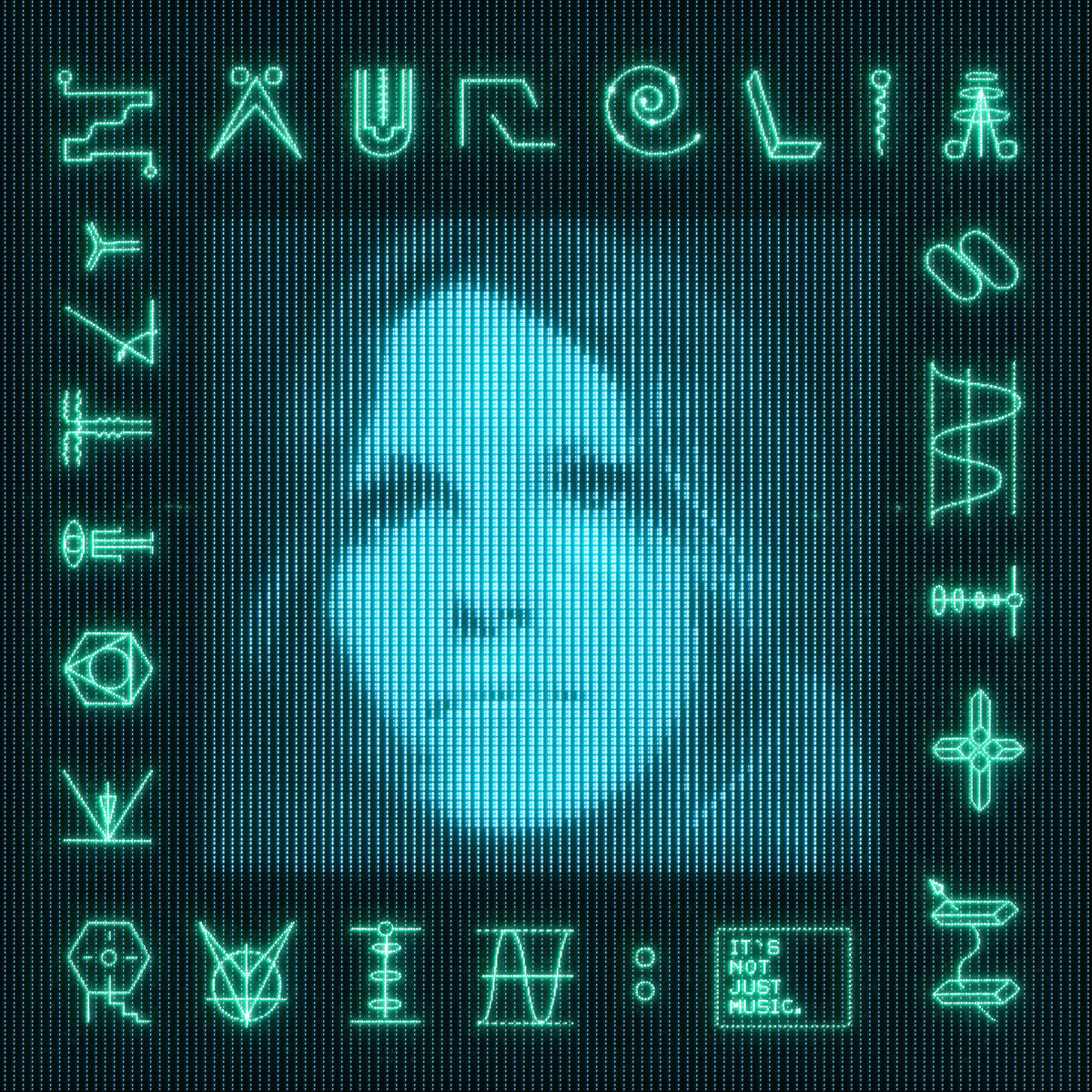
Kaitlyn Aurelia Smith returns with Ruin: It’s Not Just Music, a new studio album that marks one of the most decisive statements in her creative trajectory to date and released via her own label SOMEONE SPECIAL.

 Preceded by four singles across the summer beginning in May with Ruin, followed by GTP, I Don’t Know What It Is, and September’s That Is Like You, the full album is out now on digital, streaming and vinyl.

Kaitlyn says: “I usually shield myself from thinking about how something will be received because I don’t want it to influence me and my creative process; but there has been a lot more connection through this album with people who listen to my music and with every new single, I’ve been able to reflect just how special it feels to be received as an artist rather than confined to a genre. Connecting with people on a purely creative level rather than feeling like I will need to uphold a specific “lane”, and hearing that those who enjoy the music also enjoy being a part of what is a really personal journey of exploring new sounds and artistic directions is something I’m very proud of.”

Across the past decade, Smith has established herself as a unique voice in experimental electronic music, a composer and synthesist whose work dissolves the boundaries between ambient electronica, contemporary classical, composition, and immersive sound design. Her new album Ruin: It’s Not Just Music arrives with a distinctive gravitational pull. The record moves with greater physical force, placing rhythm and impact at the centre of its architecture, revealing a more confrontational and embodied dimension of her musical language.

The release was brought to life during run of recent live appearances, including a live orchestral performance at the Barbican, Four Tet’s Finsbury Park show in London, and Björk’s Iceland Echolalia Festival; whilst the increasingly physical and performance driven direction surrounding this new chapter of her work is further reflected in future performances at ATOMIKA Festival in New Mexico, the Warehouse Project in Manchester, Berlin’s legendary Berghain, and fabric London.

Where much of KAS’s earlier work explored harmonic environments, the new album is built around tension and release. Inspired by the sound of drum and bass, breakbeats fracture through dense fields of synthesis, percussive patterns and her signature melodic fragments – motions that feel closer to the kinetic language of club music than the meditative spaces often associated with her past catalogue. The result is a body of work that feels both recognisably hers and newly charged, music that moves through the body as insistently as it engages the mind.

“I realised I needed to make something confrontational, almost like sonic combat,” Kaitlyn Aurelia Smith explains. “Not a ‘fuck you’ aimed at anyone in particular, but a record that creates space for catharsis. I wanted the music to feel physical and direct, something that releases tension as much as it creates it.”

The philosophical foundation of the new album emerges from an idea she describes as combustion and reconstruction. The title reflects a moment of collapse in which structures disintegrate and something more resilient begins to take shape in their place. The music inhabits that unstable territory between destruction and renewal, where force, discipline, and instinct intersect. “Ruin lives in that moment where everything breaks and something else asserts itself,” she says. “It’s music for the shock and the aftershock. Sound designed for endurance rather than comfort.”

The record draws energy from jungle, drum and bass, and dance-floor focused electronic music while retaining the intricate synthesis and tonal curiosity that have defined KAS’s work from the beginning. The result is a record that feels equally at home within club culture, contemporary composition, and the experimental spaces that have long championed her artistry.

Ruin: It’s Not Just Music ultimately reveals Kaitlyn Aurelia Smith at a moment of clarity and momentum; signalling an artist who continues to expand the possibilities of electronic music while refusing the constraints of genre or expectation.

Published post no.3,036 – Friday 2 October 2026
Arcana’s best of 2020

written by Ben Hogwood

Before finishing for Christmas and New Year celebrations, I wanted to offer some thoughts on the musical year that has been 2020. And what a year. I doubt we will experience its like again, that’s for sure – and those of you reading this will no doubt have had some incredible challenges to overcome, or have been instrumental in helping other with their challenges. Everything is firmly in perspective, that is for sure.

In the year of a global pandemic, as in all times of strife, music has been there offering a consoling shoulder to lean on. Much of my listening this year has been of the ambient kind, a place of retreat when all has been too frenetic / inhuman / scary. Music has really shown us its true colours again this year, offering the required escape route along with some real inspiration.

Live music, of course, has suffered greatly, and my thoughts are with all those musicians and people working behind the scenes in the arts, their lives irrevocably affected by COVID. As listeners we thank them for their remarkable resilience and inventiveness, bringing live-streamed concerts of such quality they have been the best possible substitute for the real thing. Wigmore Hall set the scene in June, and many others have followed. The orchestras and choirs should be held in the highest regard for their efforts.

Needless to say I did not attend many concerts in 2020, but two of great note were from soprano Louise Alder (above) and pianist Joseph Middleton, showcasing their exceptional album Lines written during a sleepless night at Wigmore Hall in January, and the Orchestra of the Age of Enlightenment under Iván Fischer performing the last three Mozart symphonies at the Royal Festival Hall in February.

I wanted to share with you my favourite music on record this year. It was of course Beethoven 250, and my aim was to listen to the composer’s entire works. That aim continues, but the deadline has been extended massively! It is proving a thoroughly enjoyable experience but circumstances mean it has taken much longer than expected. To enjoy the listening project to its full potential, I look forward to reconvening with the first Sonatas for cello and piano in 2021, and taking it over the finishing line later in the year.

This year’s new releases have been extremely fine – and I have eight to share with you here, beginning with Steven Osborne’s remarkable disc of three Prokofiev piano sonatas on Hyperion. This appeared at the same time as the Coronavirus and felt like a direct response to it. Prokofiev was writing these works during the Second World War, in part a reaction to intense world and personal strife, and what a performance they get from the Hyperion pianist. You can read about them here

On the orchestral front, John Wilson and his Sinfonia of London came out with a simply outstanding program of French music. Escales did the wonderful job of blending seasoned favourites such as Chabrier’s España with gems that benefited from a dusting off – Duruflé’s Trois Danses and Ibert’s Escales among them. My thoughts on the disc are here

One of the most striking contemporary releases this year capped a fine showing from Kenneth Woods, both with the English Symphony Orchestra and – as here – with the BBC National Orchestra of Wales. Philip Sawyers’ Symphony no.4 and Hommage to Kandinsky are captured by Richard Whitehouse in this review of two exceptional pieces of new music, given great performances under conductor Kenneth Woods.

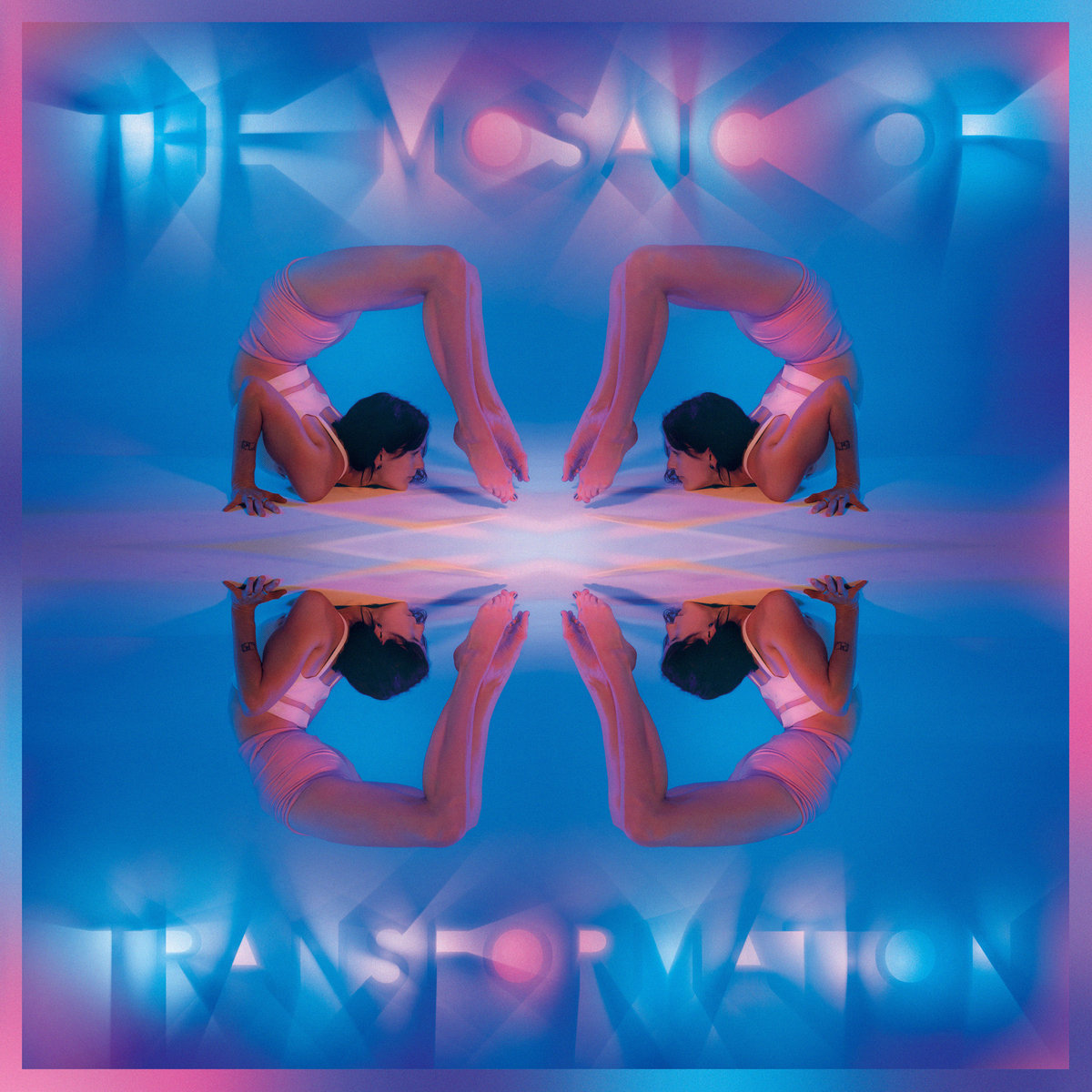
Of the electronica that I mentioned, there are some rather special examples. First among them is Kaitlyn Aurelia Smith’s The Mosaic Of Transformation, an enchanting journey of vividly coloured musical motifs. I attempted to describe them and their impact here

For something closer to home, Erland Cooper’s Hether Blether signed off his Orcadian trilogy with deeply emotive recollections and portraits of home. Complementing the previous instalments Solan Goose and Sule Skerry, it was a life affirming, communal piece of work uniting thoughts at just the right time. You can read Arcana’s interview with Erland here

Meanwhile Bruce Brubaker & Max Cooper took a minimalist composer as their inspiration for Glassforms, a set of electronic reworkings of the music of Philip Glass. Rather than simply dress up the originals, it is an imaginative and very well thought-out set of recastings, detailed here

Also taking inspiration from similarly minimal sources were New York’s Bing & Ruth, through the excellent Species long player. You can read about it here – and the background to the album in an emotive interview with leader David Moore here

On the other end of the scale sit Rick Wakeman and the English Rock Ensemble. After a series of stripped back piano albums this is Wakeman at his progressive best, in the company of some exceptional musicians, creating some dramatic and involving music. You can read Arcana’s review here – and an extensive interview with the keyboard wizard here

For music of great verve and positivity, drummer Tony Allen’s collaboration with trumpeter Hugh Masekela, posthumously published, took some beating. The recordings were made in 2010, but were unfinished at the time of Masekela’s death. The passing of Allen himself this year lent their completion extra poignancy. It was the closest I could find to pure musical joy in 2020, as documented here!

Meanwhile, returning after a long break was Charles Webster, making Decision Time – an album of very fine, futuristic soul and deep house. Much has changed since we last heard from Webster in this way, but his musical values remain the same, as reported here

It is not too much of a stylistic shift from Webster to Róisín Murphy, where we find my personal album of the year. Róisín Machine is a brilliant combination of Murphy’s effervescent, spiky personality and some really fine future disco, created with the help of Crooked Man (aka Richard Barratt). As noted here, it has the resilience and strength in the face of adversity we all needed in 2020, but crucially the sense of fun we will still need – and will surely get back – in 2021. Happy Christmas!

Switched on – Kaitlyn Aurelia Smith: The Mosaic Of Transformation (Ghostly International)

What’s the story?

It is tempting to put forward the idea that what the musical world needs right now is a new album from t Kaitlyn Aurelia Smith. That is because the music she has made up until now is not just a comfort for anxious times but it offers real, meaningful positivity from within. Recognising that potential, Ghostly International have proceeded with the album release rather than defer it, meaning that while Smith’s tour with Caribou may be cancelled the album she would be promoting is still with us.

Her previous release, Tides, was free of beats, and much of the rhythmic profile of The Mosaic Of Transformation is constructed without explicit use of bass drums. Yet it is an album of movement, exploring the relationship between sound and colour, and our own physical beings. She has a great wealth of knowledge and experience in this area, making music specifically designed to ‘fit’ our life experiences in a way that enhances them.

What’s the music like?

The Mosaic Of Transformation is light on its feet much of the time, but that does not make it insubstantial. Quite the opposite, for in tracks like Expanding Electricity, the ten and a half minute closing track on the album, Smith has put together sound collages of a deep and lasting beauty and also of a surprising density. If music were colour – which it often is of course – there would be deep blues and purples in this track especially, beginning with sonorous low register strings but curving upwards through the spectrum. When her multitracked voice proclaims, ‘I feel it, can you feel it expanding?’, the celebration of electrical power is wholeheartedly complete.

This love of electricity – without which very little of our music could be heard! – is felt throughout the album, where brighter pastel shades make themselves known. Carrying Gravity is another substantial track that develops instinctively and with a keen structural command. It has a luminous glow, especially as the textures thin out towards the end.

Some of the harmonic language Smith uses has an Oriental feel, which is either implied or more directly referenced – and the busy exchanges of The Steady Heart bring this through to the front. It is subtly apparent as the album gurgles into life through Unbraiding Boundless Energy Within Boundaries, while Remembering uses block chords and Smith’s distinctive layered vocals. After the initial relative stillness Understanding Body Messages stays true to its title with snippets of musical code passing along the line, conveying positive energy.

The beats are more gainfully employed in The Steady Heart, which has multi-layered vocals at its core – but everything is inevitably pointed to the closing, epic ode to electrical power.

Does it all work?

Yes – and the more you listen to The Mosaic Of Transformation, the more it has to offer. Smith’s layering technique is a sonic delight, because each visit to the music reveals previously hidden workings, subtle melodic touches and crossrhythms, all done with a light craftswoman’s touch. As the last sounds of Expanding Electricity subside, a lasting warmth is left behind.

Is it recommended?

Yes – and the more you listen to The Mosaic Of Transformation, the more it has to offer. Smith’s layering technique is a sonic delight, and each visit to the music reveals previously hidden workings, subtle melodic touches and crossrhythms, all done with a light craftswoman’s touch. As the last sounds of Expanding Electricity subside, a lasting warmth is left behind.

Listen and Buy

Sound of Mind 10 – May Blossoms

As we move halfway through the eighth week of lockdown here in the UK, I thought it a good time to round up some of the best sounds I’ve been enjoying in the last week or two.

The arrival of spring is hopefully in full swing, and there are good signs of creativity throughout the electronic music community.

This playlist begins with the first track of the Conference Of Trees album from Pantha du Prince, before enjoying some rather wonderful pictures brought to us by Peter Broderick, Erland Cooper, Kaitlyn Aurelia Smith and brothers Brian and Roger Eno.

There is brand new music from Bibio, one of the standout tracks from Nathan Fake‘s Blizzards album and to wrap things up a remix of Philip Glass‘s Two Pages by none other than Max Cooper.

Enjoy an hour of escapism!

Ben Hogwood