Listening to Beethoven #58 – Trio for 2 oboes and cor anglais Op.87

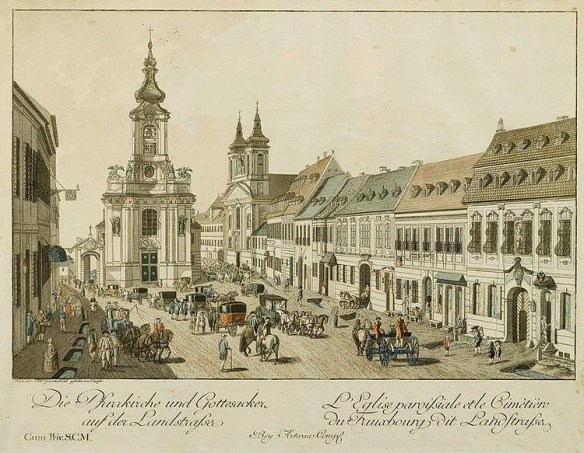
Vienna by Johann Ziegler (c1749-1812)

Trio for two oboes and cor anglais Op.87 (c1795, Beethoven aged 24)

Dedication Not known
Duration 22′

Listen

Background and Critical Reception

Beethoven’s decision to write for the unusual trio of two oboes and cor anglais appears to have been inspired by oboist and composer Johann Wenth. It is thought Beethoven attended a concert in December 1793 where Wenth’s oboe trio was performed. Given the oboists with which Beethoven was already in contact in Vienna at the time, he set about writing a piece for them.

The exact dates of composition for the trio are not known – which is the case with his other work for this instrumental combination, a set of variations on an aria from Mozart’s Don Giovanni. Indeed the variations may have been intended as a final movement for the Trio, being in the same key of C major.

The only clue for a year of composition lies in the manuscript the composer used, which going by the paper is thought to be 1795, with the trio itself published by Artaria 11 years later. There is also a version for strings, apparently sanctioned by Beethoven.

Thoughts

The combination of two oboes and cor anglais is rare in classical music nowadays, and as a result Beethoven’s trio is not often heard. This is a shame for it is an attractive and brightly coloured piece, tuneful and with appealing dialogue between the players. It may have been written for domestic music making, but to these string-playing ears it sounds like quite a taxing affair for wind players at 22 minutes.

It is as light on the ear as its instrumentation implies, and the easygoing nature of the first movement includes a fair bit of subtle wit. The 11-minute first movement does mean the piece is top heavy – effectively in two parts.

The second part has a nice, softly voiced slow movement in F major where the oboes’ lyrical qualities come through readily. This is complemented by a brisk minuet with its own lilting trio section, then a lively finale with a chattering tune.

The trio is an undemanding but thoroughly pleasant listen.

Recordings used and Spotify links

Heinz Holliger, Hans Elhorst (oboes), Maurice Bourgue (oboe) (Deutsche Grammophon)

Consortium Classicum (Christian Hartmann and Gernot Schmalfuß (oboes), Matthias Grünewald (cor anglais)

Les Vents FrançaisFrançois Leleux (oboe), Paul Meyer (clarinet), Gilbert Audin (bassoon) (Warner Classics) – tracks 1 to 4

Les Vents Français substitute the second oboe and cor anglais parts for a clarinet and bassoon, adding more depth to the sound. The Consortium Classicum version is very nicely played, as is the version from DG’s starry cast of Holliger, Elhorst and Bourgue . This one does however show its age, recorded in 1979.

You can chart the Arcana Beethoven playlist as it grows, with one recommended version of each piece we listen to. Catch up here!

Also written in 1795 Albrechtsberger 6 String Trios Op.9

Next up Piano Sonata no.1 in F minor Op.2/1
Online music recommendations – Wigmore Hall’s new season

The Last Night of the Proms is a defining point in the musical calendar; once it has past summer literally becomes autumn where classical music venues are concerned, bringing with it a whole new set of possibilities.

Except this is 2020 of course, and the rulebook for live events has not just been completely rewritten but is subject to endless revisions, as the Coronavirus pandemic regulations change and as the government resets its guidelines.

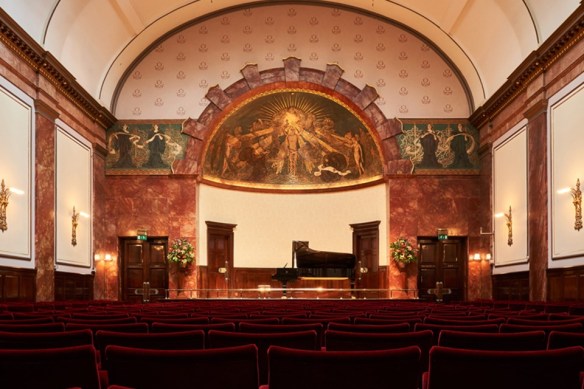
In the midst of this confusion and with (sadly) a lack of constructive action and urgency from the Department for Culture, Media & Sport, the Wigmore Hall’s unveiling of a packed new season of concerts is all the more impressive.

The hall led the return to live classical music back in June, which already seems a long time ago – and the sight of Stephen Hough playing to an empty venue might have been bittersweet but was also unexpectedly moving. Building on the success of that venture, the new season is even more ambitious.

Starting tonight, with Christian Gerhaher and Gerold Huber performing Berg and Schubert, the season runs right the way through to 22 December. During September each weekday will have two concerts, with an hour’s lunchtime recital at 1pm, broadcast by BBC Radio 3, and the evening concert at 7.30pm. All will be streamed on the Wigmore Hall channel and on YouTube.

Happily there are too many highlights for Arcana to list here – but during September you would be well advised to keep near a screen! The first lunchtime recital, on Monday 14 September, will see Alban Gerhardt and Markus Becker playing Shostakovich, Schumann and Beethoven – while other highlights of the first week include a concert from Rachel Podger and Kristian Bezuidenhout on Tuesday 15 September, with Bach and Froberger, and a richly imaginative song recital from Dame Sarah Connolly and Malcolm Martineau, the next lunchtime.

Later we have a characteristically imaginative recital from guitarist Sean Shibe (Friday 18), an all-Bach masterclass from pianist Angela Hewitt (Saturday 19), Quatuor Danel continuing their Shostakovich and Weinberg series (Wednesday 23) and a fascinating juxtaposition of Ravel and Couperin from pianist Cédric Tiberghien (Thursday 24). The following evening sees a combination of French and American songs from baritone Gerald Finley and pianist Julius Drake.

And that’s just the first week! With so many riches in store, head to the Wigmore Hall website – where you can get planning. If you’re lucky enough to live closer to London you might be considering attending in socially distanced person, but if not then the online concerts will be rich and stimulating indeed.

In order to watch the Wigmore Hall’s online content, you need to head to their website and create a free account here. Once set up, you’re ready to roll! Alternatively you can watch at the Wigmore’s own YouTube channel

Switched On – Eumig: 23 (Courier Sound)

reviewed by Ben Hogwood

What’s the story?

A fascinating challenge lies behind this album. Recently Courier Sound released an album of 23 tracks in 23 minutes by their artist Alien (aka Alastair Johnson), and it was so successful that label head Stuart Bowditch decided to set the same challenge for Eumig, aka Nick Dawson.

Given Dawson’s preference for working with drawn out structures, this needed a change of approach – akin to asking Schoenberg to write wearing Webern’s hat. He has responded with a set of musical postcards that meet the brief and create a very concentrated piece of work.

What’s the music like?

Fascinating and extremely varied. Dawson has in effect created a single work by taking the small cells and knitting them together. The music moves between the ideas logically, and flits between intimate asides and much bigger textures, the camera panning out to take in enormous vistas.

Each minute has its own important part to play, but highlights include the distinctive sighing motif of Law Of Diminishing Returns, then the glitchy pair of Electronic Communication and Audio Lingual Acquisition, introducing a sharper edge to proceedings. Worship Of Heavely Bodies is appropriately stellar, while the friendly signals of Primary Colours are nicely placed. Pteroylmonoglutamic Acid (easy for you to say!) has a big presence, like a large assembly of machinery grinding into action.

Does it all work?

Yes. There are some extremely concentrated ideas here, many of which could easily run for much longer and carry the same intensity. The tapestry is woven in a compelling fashion however, Eumig’s thoughts logical to follow but also taking a few unexpected turns.

Is it recommended?

Yes. 23 is a great idea for a challenge to throw down to a composer, and for someone used to composing in much longer forms Nick Dawson handles the shorter form with aplomb. It will be interesting to see what effect this form of working has on his output in the future.

Stream

Buy

Switched On – Richard Norris: Elements (Group Mind)

reviewed by Ben Hogwood

What’s the story?

Richard Norris has kept himself busy during lockdown. As well as running the excellent Group Mind resource on Facebook (do join if you have an interest in any sort of ambient music!) he has been making music to help ease the stress created by the COVID-19 pandemic, confinement and worrisome news headlines – to name just a few of our bugbears in recent months.

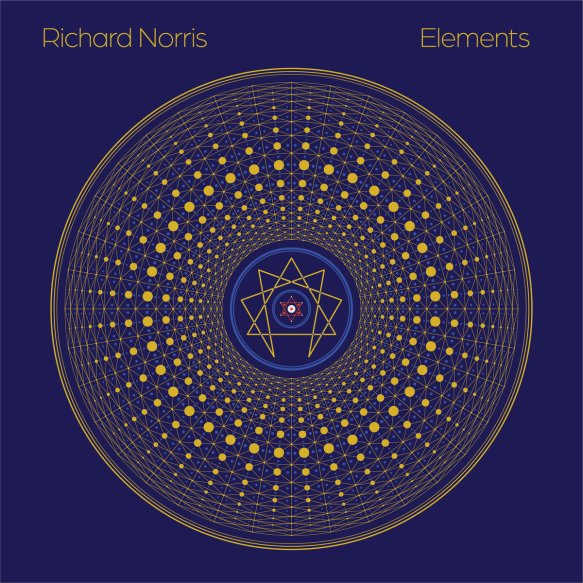
Having released a series of Music for Healing tracks, Norris now heads into album territory with meditations on the five Chinese elements. He is helped by vocalist Bishi (who appears on Water) and some wonderful artwork by Mark Golding and Andy Ball, and a striking front cover image designed by Lyndon Pike.

What’s the music like?

Although his music with The Grid and Beyond The Wizards Sleeve is largely beat-driven, Norris has always shown a talent for creating musical textures that can soothe or comfort, and Elements is a fruitful use of that resource.

He uses appealing, analogue-driven sounds twinned with sequencers, making consonant musical motifs and – where required – well-crafted beats. Earth sets a solid base, its loops unfolding at a naturally relaxed pace, while Water is a more expansive structure, contrasting immersive vocals from Bishi with gentle instrumental oscillations.

Norris’s interpretation of Fire brings to mind the vision of flames lazily flickering in the half-light, with glowing embers that leave a lasting warmth. This eases us into the lovely stillness of Air, which could easily go on for longer than five minutes and not outstay its welcome, after which Space is appropriately remote, with lights twinkling in the distance.

Does it all work?

Yes. Elements is ideal for either end of the day, soothing the fevered brow but also working the brain nicely with its loops and well-constructed melodies. The music is always on the move, but the mind can choose the intensity with which it follows the designs.

Is it recommended?

Very much so. If the cover hasn’t already drawn you in then the music will. For best results the LP is strongly recommended, but anything linked to headphones will do the job. Norris offers a half hour of escapism, something we can all do with right now!

Stream

Buy

Listening to Beethoven #57 – Opferlied


Peanuts comic strip, drawn by Charles M. Schulz (c)PNTS

Opferlied WoO 126 for voice and piano (1795, Beethoven aged 24)

Dedication not known
Text Friedrich von Matthisson
Duration 3′

Listen

Background and Critical Reception

Beethoven set the text to Freidrich von Matthisson‘s Opferlied on no fewer than four occasions, and there are signs that he became somewhat obsessed with its text. The ChoralWiki entry for the piece – which was eventually set in a choral version – details how Beethoven included the statement Das Schöne zu dem Guten! (“The beautiful to the good”), in his late manuscripts.

The entry goes on to describe how ‘Matthisson’s text depicts a young man in a oak grove offering a sacrifice to Zeus. The man asks Zeus to be the protector of liberty, and to give him, both now and in his old age, beautiful things, because he is good’.

This first version remained unpublished – but by the time of the fourth version Beethoven was writing for a four-part chorus and orchestra, indicating perhaps how the importance of the text had amplified.

Thoughts

The Opferlied is an invitation to the baritone to sound forth, Beethoven assigning his singer a strong melody which is doubled by the piano almost throughout.

The song is a passionate one, with long notes for the singer that make it sound rather like a hymn – and the the piano responds in reverential kind.

Recordings used

Dietrich Fischer-Dieskau (baritone), Jörg Demus (piano) (Deutsche Grammophon)
Hermann Prey (baritone), Leonard Hokanson (piano) (Capriccio)
Peter Schreier (tenor), Walter Obertz (piano) (Brilliant Classics)

The two baritone versions are very fine indeed, though Fischer-Dieskau’s tones are perhaps a little more luxurious. The tenor version from Peter Schreier takes the key up into F major (the baritone versions are in D) and his ringing tone is suitably dramatic.

Spotify links

Dietrich Fischer-Dieskau, Jörg Demus

Hermann Prey, Leonard Hokanson

Peter Schreier, Walter Obertz

You can chart the Arcana Beethoven playlist as it grows, with one recommended version of each piece we listen to. Catch up here!

Also written in 1795 Viotti –  Violin Concerto no.24 in B minor

Next up Trio for 2 oboes and cor anglais in C major Op.87