Let’s Dance – The Beloved: Happiness (Special Edition) (New State Entertainment)

The Beloved – Happiness (Special Edition) (New State Entertainment)

reviewed by Ben Hogwood

What’s the story?

Music can make you feel old sometimes. With the recent trend for deluxe reissues of older albums that is happening on an increasingly regular basis for this particular writer! However in the case of The Beloved, initial horror at their standout album Happiness reaching 30 years of age is replaced by the pleasure of a chance to listen to it again – now in the company of a number of exclusives.

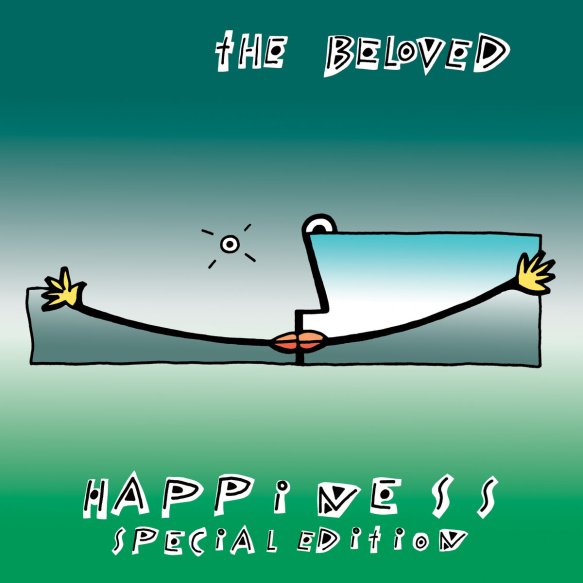
The album has been remastered and reissued with its distinctive and attractive artwork, very much of its time but also falling in nicely alongside the misty-eyed memories people have been creating of Ibiza recently. After the Heritage Orchestra’s Ibiza Classics tour and the White Lines series on Netflix, the reissue of Happiness is timely – and it’s tempting to say it’s a shot in the arm for us late in the summer.

What’s the music like?

Inevitably Happiness sounds dated now, but when you hear it alongside the more clinical Ibiza sounds of the current year its analogue charm is only amplified. There is a strong, positive thread running through the album too which is enormously helpful in these times. Songs like Hello, Don’t You Worry, The Sun Rising and I Love You More all hit the ears sunny side up, with Jon Marsh’s husky vocals enjoying the Balearic climate.

The Sun Rising continues to stand as one of the very finest tunes from the early 1990s, its blissful piano-led house music fit for any dawn-themed chillout set. The knowledge that it was written while the sun rose over Nunhead only increases its likability, totally suited to everyday phenomena. The roll call of Hello is always fun but also meaningful, trying to picture all the different people Marsh name checks and also identifying how they match up. It’s a great set of soundbites.

The extra material offers a great deal of context, especially with the accompaniment of the booklet notes, where Marsh confirms that he and Steve Waddington were ‘doing our own thing. Absolute musical freedom.” That much is confirmed by Acid Love, Sally and Jackie (Won’t You Please Come Home?), all of which are footloose and euphoric if occasionally on the ragged side. The influence of New Order is put to good use on these songs in particular.


Does it all work?

Mostly. There are a couple of more obvious album tracks towards the album’s close, and some show their age a little more readily, but this is still a very strong set of songs suitable both for the singles chart and for the centre of a dancefloor. The Beloved really hit a rich vein of form around this time, and it’s great to be reminded of the artwork that complements it so well. They really were in touch with Ibiza clubbers at the time.

Is it recommended?

Yes. With lockdown, quarantine and external pressures creating anxiety like never before, the reappearance of Happiness provides just the sort of escape its listeners will be looking for, along with the simple assurance that maybe things will be alright after all. When you listen to any of the singles on here, The Beloved make you feel that could indeed be the case!

Stream

Buy
Listening to Beethoven #55 – Rondo in G major for piano and violin

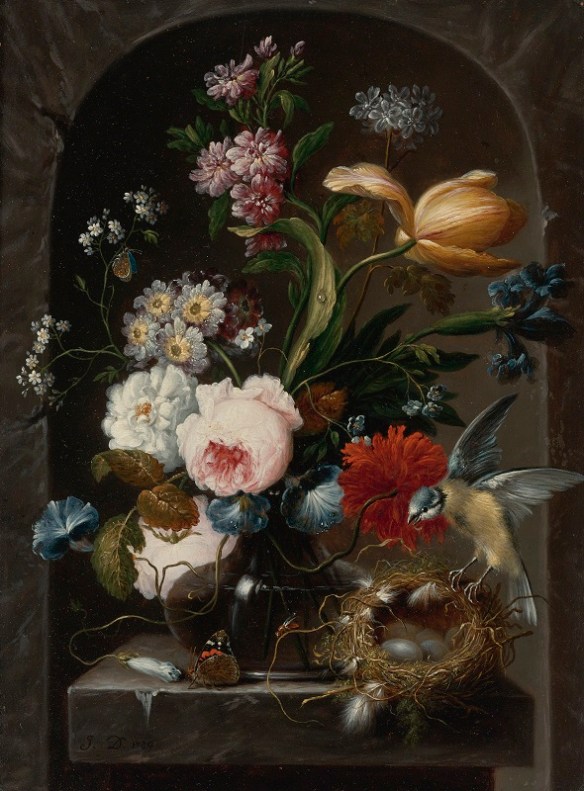
Still life by Viennese artist Johann Baptist Drechsler, 1789

Rondo in G major WoO41 for piano and violin (1794, Beethoven aged 23)

Dedication Elenore von Breuning
Duration 5′

Listen

Background and Critical Reception

Variations and rondos were part of Beethoven’s development as a composer, and this short piece for piano and violin is another example of the composer’s development in the ‘rondo’ form. Traditionally this would involve a main theme (‘A’), a secondary one (‘B’) and a contrasting third section in the middle (‘C’).

Writing in the booklet of the Deutsche Grammophon recording by Wilhelm Kempff and Yehudi Menuhin, Bernhard Uske notes how in writing rondos Beethoven ‘absorbed the pattern of the ‘rondello’ from Italian folk music with its broad appeal into the process of variational development.’

Technically the piece is straightforward, indicating a design for domestic use – and Beethoven thought enough of it to dedicate it to his dear Bonn friend Eleonore von Breuning, along with the Variations on Mozart’s Se Vuol Ballare

Thoughts

The Rondo is easy on the ear. A nice, limpid piano introduction presents the theme, which has a straightforward profile but becomes more memorable with its repetitions in the rondo structure. The violin takes over, and the two instruments are closer together to present the second theme.

The central section (the ‘C’ of the rondo’s A – B – A – C – A – B – A) moves to G minor for a simple triple-time waltz, where a slight shadow falls over the music. It does not last, however, the ‘A’ theme returning to leave us in its warm glow.

Recordings used

Wilhelm Kempff (piano), Yehudi Menuhin (violin) (Deutsche Grammophon)
James Lisney (piano), Paul Barritt (violin) (Woodhouse Editions / Regent)

Paul Barritt and James Lisney present quite a nippy account of the Rondo, nicely dovetailed and brightly voiced. Wilhelm Kempff and Yehudi Menuhin proceed at a much more leisurely pace, taking nearly two minutes longer but playing gracefully and evoking a triple-time dance.

Spotify links

Wilhelm Kempff, Yehudi Menuhin

Also written in 1794 Benjamin Carr The Federal Overture

Next up String Trio in E flat major Op.3

Switched On – Various Artists: Total 20 (Kompakt)

reviewed by Ben Hogwood

What’s the story?

Twenty years undefeated, Kompakt‘s annual round-up is a valuable line in the sand for lovers of their brand of quality electronic music and techno. It comes with a defiant message in what has been a difficult summer for dance music. ‘Music is our oxygen. We’ll dance together soon’.

What’s the music like?

Why change a winning formula? There are 23 tracks here from the Kompakt stable, bringing together established and new artists, adding a slew of exclusives and unreleased tracks, but still standing strong as a statement of what the Cologne label do best.

Style-wise there is something for everyone here, from the slower jam of Silicone‘s remix of Weval‘s Doesn’t Do Anything to the driving, sharp-edged textures of Marc Romboy‘s Stalker. Most of the cuts are instrumental but there are a couple of notable exceptions. Kiwi‘s Hello Echo is a nice disco-house cut in the spirit of The Juan MacLean, Bestley providing the excellent vocals, while Kölsch‘s urgent Remind You strikes a more paranoid tone.

Label head Michael Mayer contributes the nocturnal Agita, while Jonathan Kaspar‘s Licht is a really good combination of warm textures and bleeps. Jörg Burger‘s Surprise Yourself! is a classy affair, with rippling synth lines, while the rolling contours of Lose Control by David Douglas also impress. Best of all though is a rich piece of techno from Steve Moore, his soundtrack setting credentials coming to the fore in the superb Frame Dragging, a really good blend of urgency and warmth.

All this takes place alongside fine contributions from label staples Robag Wruhme, Jürgen Paape, Sascha Funke and Voigt & Voigt – not to mention strong stuff from Yotam Avni and the lively Blush from Christian Nielsen.

Does it all work?

Yes. This sort of compilation series might seem like a dying breed but Kompakt’s Total series works so well because of its variety, quality and new content, satisfying fans and newcomers alike.

Is it recommended?

Definitely. It is to be hoped the annual late summer appearance of the Total compilation will continue well beyond its twentieth year, for its regular slot in the calendar guarantees a new clutch of excellent electronic music. Listeners to the previous 19 will not be disappointed!

Stream

Buy

Listening to Beethoven #54 – Giura il nocchier (1st version)


Beethoven stamp, issued in Hungary to mark the bicentenary of the composer’s birth, 1970

Giura il nocchier Hess 230 for four unaccompanied voices (1794, Beethoven aged 23)

Dedication not known
Text Pietro Antonio Domenico Bonaventura Trapassi (1698 – 1782), as Pietro Metastasio
Duration 0’45”

Listen

Background and Critical Reception

Beethoven’s began setting Italian texts in 1793, just as he was beginning to study with Antonio Salieri in a calculated move to bring more operatic elements of composition to his attention. The new teacher would offer his own musical thoughts which the composer kept for posterity.

This particular text, setting Pietro Metastasio, has no fewer than three version – of which this is the first. The translated first verse of two reads, ‘The helmsman swears that he will no longer trust the ocean, but if he sees it calm, he hastens to set sail again’.

Thoughts

This song feels like an exercise, as though Beethoven were feeling his way back into choral composition, after his only previous settings in the big cantatas of the Bonn days.

This setting is foursquare, close harmonies between the voices in the purity of C major – and a very straightforward piece of writing.

Recordings used

Cantus Novus Wien (Naxos)

This recently released version is nicely sung in quite a reverberant setting. It is part of a valuable recent release from Naxos bringing together Beethoven’s secular works for voice. Recorded in Vienna, it highlights the more ‘functional’ side of his writing, with pieces for weddings, name days or departures of a friend.

Spotify links

Cantus Novus Wien

You can chart the Arcana Beethoven playlist as it grows, with one recommended version of each piece we listen to. Catch up here!

Also written in 1794 William Billings The Continental Harmony

Next up Rondo for piano and violin in G major WoO 41

Listening to Beethoven #53 – Der freie Mann


Peanuts comic strip, drawn by Charles M. Schulz (c)PNTS

Der freie Mann WoO 117 for voice and piano (1792-94, Beethoven aged 23)

Dedication not known
Text Gottlieb Conrad Pfeffel
Duration 1’30”

Listen

Background and Critical Reception

“Who is a free man? He on whom only his own will and no despot’s whim can impose laws; that man is free!”

So runs the translation of this very short setting of Pfeffel. Very little is written about this setting, but the text obviously appealed to the composer as he wrote an earlier version before settling on this in 1794. The entry for this piece on the Unheard Beethoven website writes, “One may even say it expresses one of his basic beliefs: the right of individuals to be free, and take destiny in their own hands”.

The notes for DG’s Complete Beethoven edition class this song as a ‘Gesellscaftslieder’ – joining the two drinking songs we heard recently. This is a sober, political alternative.

Thoughts

This may be a short song but it has a bracing blast from the ensemble at the outset, followed by a wholesome melody from solo singer in response.

For the listener it is good fun – completely lacking in subtlety but all the better for it!

Recordings used

Hermann Prey (baritone), Heinrich Schütz Kreis Berlin, Leonard Hokanson (piano) (Capriccio)
Peter Schreier (tenor), Walter Obertz (piano) (Brilliant Classics)

Hermann Prey and the Heinrich Schütz Kreis, Berlin throw their all into this with impressive heft, supported by the fullbodied piano of Leonard Hokanson. As though to stress the text they repeat it too. Peter Schreier gives a really strong account also, and in the tenor register the song acquires greater upward reach.

Spotify links

Hermann Prey, Heinrich Schütz Kreis Berlin, Leonard Hokanson

Peter Schreier, Walter Obertz

Also written in 1794 Hummel 3 Fugues Op.7

Next up Giura il nocchier