Live review – Jeremy Denk, CBSO / Gustavo Gimeno: Beethoven & Stravinsky

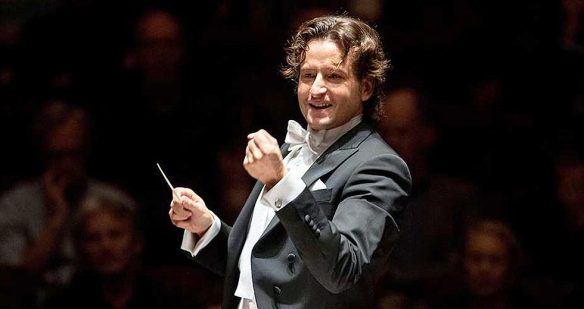
Jeremy Denk (piano, below), City of Birmingham Symphony Orchestra / Gustavo Gimeno (above)

Symphony Hall, Birmingham
Wednesday 20 November 2019 (2.15pm)

Beethoven
Egmont Op.84 – Overture (1810)
Piano Concerto no.3 in C minor Op.37 (1800, rev. 1803)
Stravinsky
Petrushka (1911, rev. 1947)

Written by Richard Whitehouse

Beethoven and Stravinsky might not be felt natural bedfellows (whatever the latter claimed in later life), but this afternoon’s concert with the City of Birmingham Symphony Orchestra and fast-rising conductor Gustavo Gimeno was evidently intent on demonstrating otherwise. The overture from Beethoven‘s music for Goethe’s play Egmont duly launched the programme in imposing fashion, Gimeno securing a trenchant while slightly inflexible response across the main Allegro, with no lack of rhythmic definition as held good during an incisive peroration.
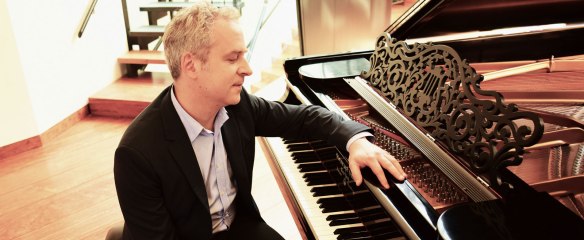
If his Third Piano Concerto finds Beethoven more overtly indebted to Classical precedent, its palpable emotional breadth is a clear pointer to what lay ahead. As soloist, Jeremy Denk had the measure of the opening movement’s often abrupt alternation between imperiousness and intimacy – not least a probing take on the development with those eloquent woodwind contributions. If the cadenza was a shade too volatile in its later stages, the fateful emergence of the coda (timpani and strings) was suitably rapt in its intensity. Raptness was equally the watchword of the central Largo, Denk pointing up the stark contrast of his E flat entry then duetting blissfully with bassoon and flute in its transition to the main theme, but as the coda (seemingly) evanesces into silence a greater dynamic subtlety would have been welcome.

Interestingly, Denk supplied this in abundance at that mesmeric point in the finale when the rondo theme ventures into the major as if to goad the music back to the prevailing C minor. Elsewhere, this was an impetuous and assured account which reached its culmination with a heady solo transition into a coda that dispersed preceding tensions through its unchecked ebullience. Denk returned for an unlikely yet appealing encore – a paraphrase (his own?) on the Pilgrims’ Chorus from Wagner‘s Tannhauser as rapidly evolved into a full-blown rag.

Few British orchestras can have performed Stravinsky‘s early ballets with the frequency and consistency of the CBSO, which is not to suggest Gimeno was other than his own man in this reading of Petrushka – heard in its streamlined 1947 revision rather than the texturally more imaginative 1911 original (which this past nine decades the orchestra has only played under Pierre Boulez). Certainly the revision’s tendency to encourage a headlong and even ruthless approach was evident in an overly regimented take on the Russian Dance, the scene-setting that precedes it audibly lacking atmosphere, but thankfully not the central tableaux depicting Petrushka and the Blackamoor – the former as nervous and agitated as the latter was moody and, not least following the arrival of the Ballerina, ominous in its smouldering sexuality.

No less impressive were the surrounding evocations of the Shrovetide Fair – the latter with its various set-pieces vividly and tellingly characterized, on route to the sudden reappearance of the main protagonists then Petrushka’s death and ghostly apparition for what remain some of the composer’s most affecting pages. The stentorian trumpet writing was fearlessly delivered, and if those concluding pizzicato chords might have been more unanimous, it only marginally detracted from the conviction of what was a well conceived and finely executed performance.

This performance will be repeated at Symphony Hall, Birmingham, on Saturday 23 November at 7pm. For more details head to the CBSO website

Switched On – NETHERWORLD: Algida Bellezza (Glacial Movements)

reviewed by Ben Hogwood

What’s the story?

There is a deeply personal story behind the composition of Algida Bellezza. The man behind NETHERWORLD is the founder of Glacial Movements, Alessandro Tedeschi, and he wrote the core music of the album, which loosely translates as ‘frozen beauty’, in 2015. Each of the five ‘movements’ were born – literally – as he cradled his new daughter. In June 2019 the music was mixed and mastered by Tedeschi’s good friend, sound engineer Matteo Spinazzè Savaris – and the completed album ready for release.

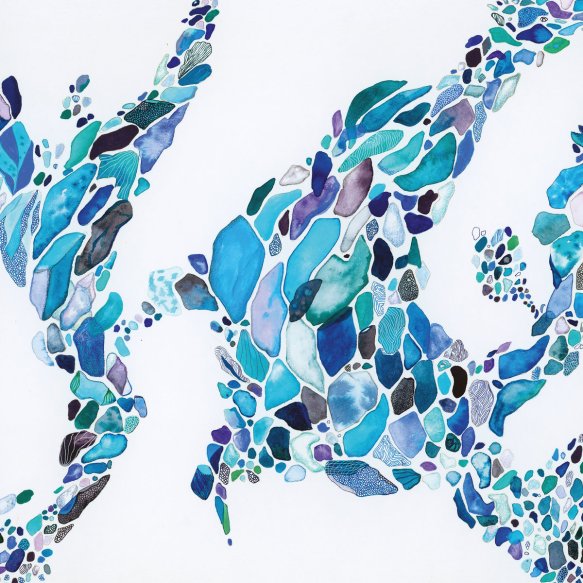
As the cover would suggest it is a great example of Tedeschi’s chilly ambience, which this time takes the all-important Greenland sled dog as its principal focus. The titles of the five tracks all relate to a prominent species of the area – respectively Vulpes lagopus (Arctic Fox), Somniosus microcephalus (Greenland Shark), Orcinus orca (Orca), Monodon monoceros (Narwhal) and Ursus maritimus (Polar Bear).

What’s the music like?

Tedeschi has a way of working that is both ambient but incredibly intense too. The five soundscapes here are characterised by thick textures that resemble weather systems, each putting forward prominent melodic features that work in slowly orbiting loops.

Vulpes lagopus is large in scope, the arctic fox taking very slow, recurring musical breaths, establishing ‘D’ as a tonal base but allowing for other thoughts too. Somniosus microcephalus is almost claustrophobic, its profile like that of a big ocean liner or an incredibly dense cloud with small musical points of reference to hang on to. It effectively wraps the listener in a comforting swathe of cotton wool.

Orcinus orca captures the good and the bad of the killer whale, the passage of a large body expertly portrayed but also its foreboding and potentially inflammatory nature. Monodon monoceros – like the narwhal it portrays – is slower and gentler, the music dominated by soft minor key chords.

Finally Ursus maritimus matches the white of the polar bear, with a lovely sound the listener can really dive into. Tedeschi uses a big bass drum and cymbal effect akin to large waves crashing in the near foreground, before the music settles onto a long sustained note and ultimately settles to rest – even hibernation.

Does it all work?

Yes. Tedeschi brings remarkable depth to his compositions, a blend of easy on the ear ambience and cautionary harmonies that imply everything on the surface is not as comfortable as it seems. This is cold, wintry music that moves slowly, best summarised in visual terms like an icebreaker in the Antarctic – but also managing to portray the five different species in the track titles.

Knowing of Tedeschi’s connection to his little girl only heightens the emotional impact of the music.

Is it recommended?

Yes. Despite its difficult title, Algida Bellezza is typical of Glacial Movements’ output. It works for listeners approaching it from the electronic side but also the classical, where listeners will appreciate the natural, stately development of its ideas. Crucially it is also incredibly ambient and immersive!

Stream

Buy

Switched On – Quarion: Shades (Drumpoet Community)

reviewed by Ben Hogwood

What’s the story?

Music and colour have a strong relationship of course, one that has been incredibly productive over the years – and which really came to the fore in early 20th century classical music. The bond has remained strong, particularly in electronic music with use of lights and images. It is not a great surprise, then, to find the likes of Quarion – aka Yanneck Salvo – exploiting the connection with an album of different shades. Getting the music to accurately represent a colour, however, is a harder task.

Initially Shades began as a series of EPs but soon outgrew the concept, meaning Quarion’s previously lauded single releases could be knitted together as an album and combined with a few more experimental tracks.

What’s the music like?

The icy washes of Turquoise (’99 til Infinity) begin Shades with a glacial calm, but it’s not long until Indigo (Aries) asserts a rhythm-based presence, with bleeps and percussion that suggest a Detroit influence.

Shades then shows itself to be a really strong albums of tracks that stand as well on their own two feet as they do in the longer playing context. Cobalt is excellent, and is ideally complemented by the beatless Ultramarine. Azure (Émotion), a collaboration with Ripperton, is notable for its subtle layering, while Sapphire lays more acidic squiggles into the electronic mix.

As you might expect Teal allows you to dive deep into lush, exotic textures, while Cerulean is nicely done, with attractive melodic lines and deep beats. Three of the longer tracks are over eight minutes but pass in a flash – Indigo (Aries), Cobalt (Plains) and Azure (Émotion) all develop with an impressive and compelling command of structure.

Blue is definitely the implied colour here, but there are many shades that are beautifully interwoven by Quarion’s craft.

Does it all work?

Yes, and it all feels natural too. The colours and the music behind them are strong matches, and the move between the tougher, more acidic beats and atmospheric washes of sound means that Shades embraces light and dark ends of the spectrum with ease.

Is it recommended?

Yes, strongly. In an age where some seem determined to turn their back on the album format for playlists, while others celebrate the format anew, it is a real plus to see Quarion embracing the format for all its strengths, and putting together such a coherent and ultimately danceable piece of work. From happy experience, Shades is a record that repays many repeated hearings. Ultimately it proves that even if you have been making music at the top level since 2006, as Salvo has, it’s never too late for an album!

Stream

Buy

Switched On – Piksel: Places (Modularfield)

reviewed by Ben Hogwood

What’s the story?

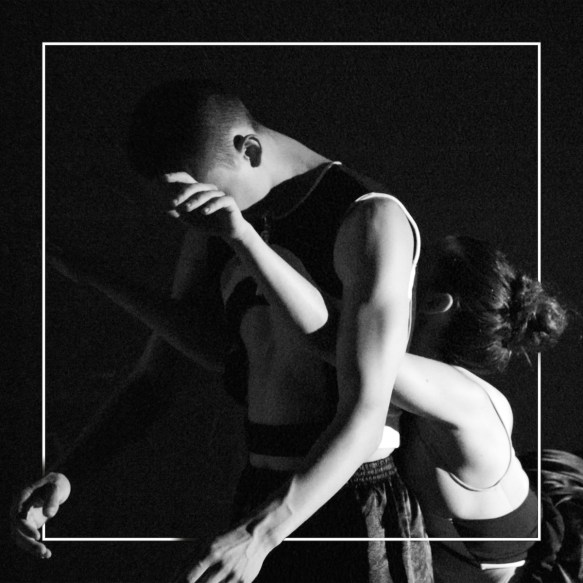
Places is one-third of a multimedia project by Syntrex. Described as ‘an interdisciplinary collective exploring the sense of transition’, it is equal parts contemporary dance (Magnus Westwell), projected animations (Amy Dang) and live music (Piksel herself).

Syntrex: PLACES – Pickle Factory from Amy Dang on Vimeo.

Piksel, real name Ieva Vaiti, is a Lithuanian musician and producer based in London, whose disciplines include classical violin and electronics, with an ever-increasing film score portfolio. The half-hour long soundtrack for Places brings both her specialities together, presented for listening either in eleven separate tracks or one mixed whole.

What’s the music like?

Both descriptive and ambient. Like all good descriptive scores, this is music that as well as fitting the specification works on its own feet.

The track titles are strongly represented by the music. Walk In sets the expansive scene, while Boxes gives a vivid representation of heavy cubes being pushed around, with white noise and electronics squeezing the sound. Breathing senses the wide open air, Travel has a pulsing bass drum – but She Ghetto is rather disarming, the quarter tones and sighing vocals working together to heighten anxiety.

This is ultimately calmed in the musical hug that is Serenity, offsetting the previous tension with weather-based ambience. Time is a little less calm as it shuts off quite dramatically, but that makes way for Home, the jewel in the crown, where Vaiti plays a richly coloured violin solo that soars over the textures.

Does it all work?

Yes. Places is strongly suggestive in its musical descriptions, meaning the listener can approach it without knowing anything of the project to which it contributes.

Ieva Vaiti’s classical and electronic sensibilities work off each other really well, so that the result is a piece of work suiting both approaches.

Is it recommended?

Yes. It works equally well either listening to the divided tracks or the continuous half hour, where the sense of departure and homecoming is heightened.

Stream

Buy

Switched On – Lapalux: Amnioverse (Brainfeeder)

reviewed by Ben Hogwood

What’s the story?

Amnioverse has a pretty heady back story. Its creator, Stuart Howard – known as Lapalux – sees his fourth album as ‘a sort of portmanteau of the amniotic sac and the universe’. That means a study of the continuing life cycle, from birth through life to death and round again.

This is brought to the listener through field recordings of the elements and an impressive battery of modular synthesizers. Each track has a deeply personal edge through the inclusion or stimulus of spoken word from figures close to the composer. That means friends, loved ones and even exes, Howard prepared to get as personal as he needs to for his music to make an impact.

What’s the music like?

With the above taken into account, it is no surprise to report Amnioverse as the most emotional and direct Lapalux album to date. The field recordings give it a big presence on the stereo and a massive sound perspective on headphones, which can be truly thrilling at times, especially when the beats kick in.

The clattering drums on Voltaic Acid are a great example of this, as is Thin Air, where the brooding soundscapes that have built up over time are emphatically released. The album operates on a vast dynamic scale, barely audible in some private moments while others have a thunderous depth to them.

Earth manages to walk the tightrope between both sides. The vocal statement is telling – ‘When we look at the situation, out there in the big world, it just breaks my heart. We just seem to be lost’ – and is capped by a full bodied break beat and wide open sonic backdrop, reminiscent of Way Out West at their very best in the 1990s.

Momentine develops into a widescreen panorama, with a four to the floor rhythm briefly taking charge, while Thin Air and The Lux Quadrant benefit from the glacial vocals of JFDR. However Lapalux leaves the most haunting of all his work until last. Esc has a dislocated vocal which sings, rather disconcertingly, “So long, life breath”. It is a striking way to finish.

Does it all work?

Yes. Be prepared to jump on the very first noise of the album, where a high pitched ‘contact’ noise can be heard – but after that keep the volume up, as it will help full appreciation of Lapalux’s way with wide open sonic textures.

The music reflects its stunning cover, which is from a photograph of James Turrell’s Twilight Epiphany Skyspace installation in Texas. While it was hugely ambitious for Stuart Howard to attempt a musical translation of this, a listen to Amnioverse confirms he has largely succeeded.

Is it recommended?

Yes. It is a relative rarity for electronic albums to get quite so personal in their making, but Lapalux does so in a way that keeps the listener fully on board. You can feel the deep emotion up close, but also pan out to appreciate the sheer scope of Howard’s workings. The beats, too, are superbly manipulated by an artist who continues to plumb greater depths and richer shades of musical colour. Just like the cover.

Stream

Buy