Live review – Renaud Capuçon, CBSO / Anja Bihlmaier: Dvořák, Ravel, Chausson & Bizet

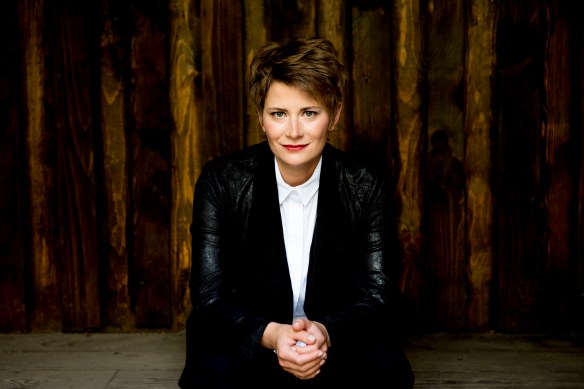
Renaud Capuçon (violin), City of Birmingham Symphony Orchestra / Anja Bihlmaier

Symphony Hall, Birmingham
Wednesday 30 October 2019 (2.15pm)

Bizet arr. Hoffman Carmen Suite no.2 (1887)
Chausson Poeme Op.25 (1896)
Ravel Tzigane (1924)
Dvořák Symphony no.7 in D minor Op.70 (1885)

Written by Richard Whitehouse

This afternoon concert by the City of Birmingham Symphony Orchestra brought a welcome appearance from German conductor Anja Bihlmaier, presiding over an unlikely yet appealing programme as juxtaposed French and Russian music of the late 19th and early 20th centuries.

Bizet‘s Carmen has maintained its hold on the operatic repertoire such that individual items are seldom encountered in concert other than as encores. As arranged by Fritz Hoffmann, this Second Suite astutely alternates entr’actes with vocal numbers. Thus the purposeful Marche des contrebandiers (akin to an offcut from Elgar’s Wand of Youth) precedes the smouldering Habanera, then a Nocturne which is Micaela’s third act aria with its vocal line transferred to violin and soulfully rendered by guest leader Tamas Kocsis. That of the evergreen Chanson du toreador is similarly heard on trumpet, which instrument is duly partnered by flutes in the infectious La garde montante, before wind instruments variously come to the fore during the Danse boheme which rounded off the present selection in appropriately exhilarating fashion.

Renaud Capuçon then joined the orchestra for an unlikely coupling of concertante pieces that is highly effective in concert. It may have been inspired by a Turgenev story, but Chausson‘s Poème is an autonomous entity whose rhapsodic impulses are balanced by formal rigour and an organic evolution as elides between the introspective and ecstatic – a trajectory conveyed with due eloquence by Capuçon, his fastidious tonal shading deftly reinforced by Bihlmaier’s nuanced direction. What is so often an elusive work left a powerful and enduring impression.

As, albeit in its rather more demonstrative way, did Ravel‘s Tzigane. Effectively the result of a bet with violinist Jelly d’Aranyi that this composer could come up with a rhapsody inspired by Hungarian gypsy music, the piece wears its Lisztian antecedents lightly while pointing the way toward the similarly conceived rhapsodies of Bartók. Capuçon teased out the high-drama of its unaccompanied initial section, then – with harpist Alma Klemm – made a breath-taking transition into its heady medley of gypsy-inflected themes prior to the rousing final flourish.

After the interval, Dvořák’s Seventh Symphony came almost as a corrective in its seriousness of purpose and powerful formal logic. Bihlmaier directed a performance as left no doubt as to such qualities, at its best in a thoughtful while never staid account of the slow movement – its brief yet elated climax ideally judged – then a scherzo whose underlying furiant rhythm was suffused with Brahmsian trenchancy (one reason this piece displeased the anti-Dvořák faction decades hence). Not that there was much lacking with the outer movements, though the coda of the initial Allegro was a little too deadpan for its ominousness fully to register, and that of the finale felt too reined-in emotionally; those granitic cadential chords marginally failing to clinch what is surely the most fatalistic of any major-key ending in the symphonic repertoire.

Even so, this was a finely realized account of a work as can all too often misfire. Bihlmaier will hopefully return before long: next week, the CBSO’s principal guest conductor Kazuki Yamada directs a performance of Mendelssohn‘s Elijah, premiered in this city 173 years ago.
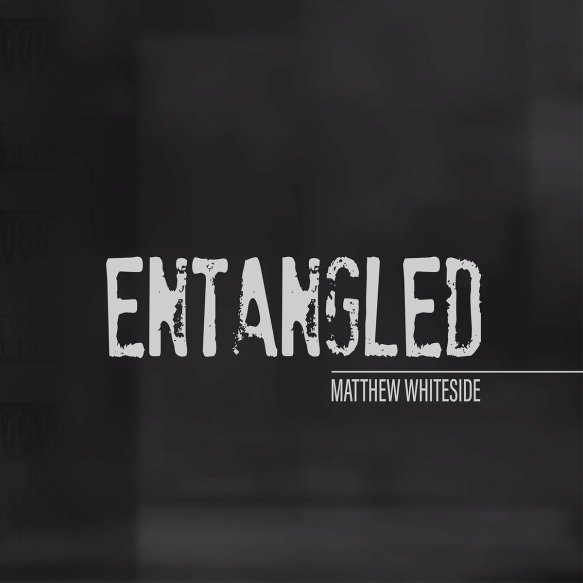
On record – Matthew Whiteside: Entangled

Written by Ben Hogwood

What’s the story?

Entangled is the second album release of Glasgow-based composer Matthew Whiteside. Taking its name from the centrepiece, Whiteside’s Quartet no.4, it is his follow-up to 2015’s Dichroic Light, and adds a further two new quartets.

Entangled itself was commissioned by the Institute of Physics in 2017 for string quartet, electronics and film, as a work dedicated to Whiteside’s great uncle, John Stewart Bell. It explores the proof of ‘quantum entanglement’, where particles are entangled in a ‘spooky’ way.

The substantial Quartet no.5 takes a predominantly slow outlook, while Quartet no.6, which begins the disc, could almost be said to exist without tempo.

What’s the music like?

Entangled is a pretty apt description for the music in this quartet, which is equal parts analogue and digital. The acoustic sounds are treated with studio trickery, the listener’s perspective on headphones cleverly manipulated as the sounds move between foreground and middle ground.

We travel through three movements, entitled Waves, Spooky Action and Spinning, all accurate descriptions for the music within, which contains jagged melodic gestures and writing that veers between fragmentation and long, sweeping notes. There is drama aplenty for Spooky Action in particular, more than appropriate for this time of year, while Spinning disorientates the listener with its sudden loss of a clear tonal base. The experience is quite unnerving all round.

Quartet no.5 also has three movements, none titled, and the structure is heavily weighted towards the first movement, which is almost twice the length of the other two combined. It features a pronounced cello tone buzzing like a fly, the other three instruments expanding out from this drone-like figure. Whiteside uses quarter tones that help bring consonant and dissonant harmonies in and out of phase. The second movement is lighter and more elusive, fading into the middle distance above a lightly plucked dance figure from the cello, while the finale employs a more explicit drone, adding overtones and micro adjustments to create music of tension and imminent peril.

Quartet no.6, which begins the disc, was the last work written and was in part inspired by wind chimes and a particular view Whiteside experienced in Tallinn. It is in effect a folk-inflected drone, played on multiple stops by the strings to make it sound rather like a squeezebox. It is very much a ‘less is more’ piece, setting a rarefied atmosphere and floating some way above the ground thanks to its almost complete lack of bass. A Celtic flavour can be discerned on its wings.

Sitting between the quartets are two bite-sized Responses of three minutes each. These are electroacoustic pieces that work as effective bridges. Response One is a time out from the string quartet texture doubling as an ambient repose, while Response Two is more explicitly connected to Quartet no.4, warping its output and conjuring some intriguing sounds.

Does it all work?

Entangled is an effective piece of work. Whiteside’s writing for quartet takes its lead in part from Bartók and can on occasion draw too much, but it also looks beyond the medium to electronic means, securing a contemporary sound that is strongly communicative.

The structure of the album is effective too, the Responses well placed. Emotionally the three works inhabit very different places, with Quartet no.6 the most immediate and Quartet no.4 the most directly challenging.

The Aurea Quartet give superb technical performances, and give no.6 in particular the ideal weight to help it float on the wind. The recording stresses the leaner textures of the strings, but this aids Whiteside’s music.

Is it recommended?

Yes. It is refreshing to encounter a composer making albums with new classical music in this way, for when used imaginatively the format still has much to give. Entangled also works when interpreted as different shades of brightness. I thought of no.6 as the bright light, no.4 as the dark and no.5 as a deep pastel shade, with a kind of chalky blue in the middle. Try it and see what you think!

Based on the Responses, it would also be interesting to hear more of Whiteside’s electronic work.

Listen

Read

You can read about the workings behind Matthew Whiteside’s Entangled on his website here. The commentary is as much about the mechanics – and occasional frustrations – of self-releasing an album, while giving insights into the creation and recording of the music behind.

Buy

Switched On – Balance presents Soundgarden mixed by Nick Warren

Various Artists: Balance presents Soundgarden mixed by Nick Warren (Balance)

What’s the story?

The Soundgarden is an enterprise headed by DJ Nick Warren and his partner Petra, and in what seems like no time at all it has evolved from parties and radio shows to compilations and now a record label. This compilation marks a return to the Balance series for Warren, who as half of revered 90s duo Way Out West has an almost unrivalled pedigree in house music.

His wish was to create a timeless pair of mixes in which each track has involvement from a member of the Soundgarden family, illustrating the community ethics of the label.

What’s the music like?

Warren’s wishes are largely fulfilled, using his components to make a pair of mixes that could easily be listed as two recordings rather than their 27 tracks.

He creates wide open spaces and is careful not to fill them with too much music, so that sometimes the music can sound quite minimal. It always has a forward progression though, and in the course of two and a half hours opens out beautifully.

Warren opens up with a typically airy number, in this case Aārp‘s Gemma III, and lets the mix establish its own footing with a couple of airy house tracks. Arguably the best of these is Aspen, by Synkro & Arovane, which has a natural feel to it. As time passes a firmer footing and bolder sound are established. Warren’s mixing is typically seamless – it’s difficult to spot the joins at points – with other highlights including Kamilo Sanclamente‘s Urania, dispensing stardust far and wide. Darper‘s Crystal Voyager has broad harmonies and curious bleeps, musing on time and space, then Emi Galvan‘s Embrace flat major has a nice shimmery breakdown before panning out for Ben Archbold‘s SF.

The second mix is dreamy, a little darker but again thoughtfully compiled, starting with the Eastern leanings of SIX‘s Berlin. There are dark hues from Black 8‘s Black Tiger, while Dmitry Molosh’s Note brings a combination of distinctive sharper sounds and an ethereal vocal.

Later on Warren’s own Dreamcatcher, with Black 8, is subtly hypnotic, while Eli Nissan‘s Restricted Delusions is tougher. By the time Oliver & Tom‘s Luly comes around the pace has increased slightly but the mood is contented.

Is it recommended?

Yes. He may be an old hand at this compilation business, but Nick Warren still knows how to pace and mould a mix to perfection.

Stream

Buy

You can get this album from the Balance music website

Switched On – Larry Gus: Subservient (DFA)

reviewed by Ben Hogwood

What’s the story?

Larry Gus is one of DFA’s best-established dance acts, and with Subservient he takes his long player count to four. It is easily his most personal album yet, too, dispensing with the sampler and with Larry – real name Panagiotis Melidis – playing every instrument himself. It is an itemised list, with a drum kit, an SM57 (Shure microphone), a guitar, a bass, a Teenage Enginerring OP-1 (synthesizer and sequencer), and a Roland JV1010 synth module.

Melidis sings both in English and his native Greek, with the overriding message based on empathy. He delves deep into recent experience as a father and a husband, as an artist trying to come to terms with the Greek crisis and similarly catastrophic world events. The musical approach is described rather neatly as a combination of ‘crisis funk pop and trad Mediterranean grooves’.

What’s the music like?

Given the circumstances you could forgive him for delivering some cold and rather harrowing tales, but the response to these challenges is one of outgoing warmth, shot through with a dash of humour and wistfulness.

Subservient does indeed feel a lot more organic with Gus playing the instruments, but more importantly the music itself is once again really well written. You’d struggle to find a more effective bass riff than Taped Hands Here this year, but that track is not alone – Ayler The Pilot is close on its heels with the hook ‘it’s not the family you have it’s just the family you know’.

The vocal tracks are indeed very personal, and A Likely Projection has a thoughtful contribution to go with the breezy riffs. Text of Intent is a remarkable piece of work, its rolling percussion taking the music far afield in response to the meditative vocal.

While some of the music is quite laid back, In This Position goes the other way with some incredibly busy and frenetic music, Classifying A Disease strikes out in the direction of space rock and the bass line on The Sun Sections is far out in an enjoyable way. It’s quite likely that Melidis has a short attention span, which he makes very good use of here.

Does it all work?

Yes. Subservient is a really strong blend of Larry Gus’s personal identity, influences and reactions to present day events. At the same time it brings out an undercover homage to 1970s funk and disco, given a fresh lick of paint and a new viewpoint in the studio.

Is it recommended?

Definitely. Larry Gus continues to make fresh sounds for stale ears, and remains one of DFA’s unsung treasures. Subservient finds him getting ever stronger musically on his most personal album yet, in spite of those day to day vulnerabilities.

Stream

Buy

Wigmore Mondays – Jean Guihen Queyras & Alexandre Tharaud play Debussy, Poulenc, Marais & Bach

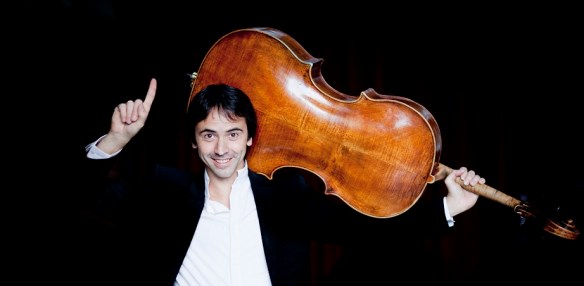
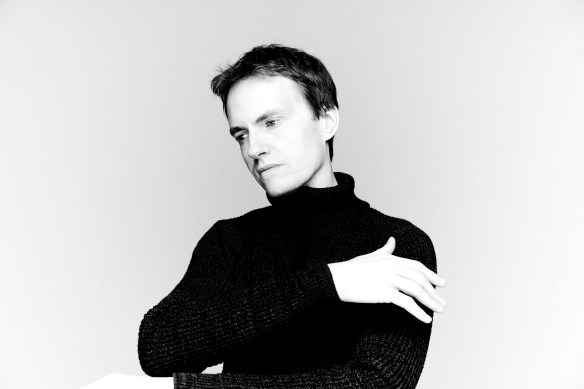
Jean Guihen Queyras (cello, above), Alexandre Tharaud (piano, below)

Wigmore Hall, Monday 28 October 2019 (lunchtime)

You can listen to this concert on the BBC Sounds app here (opens in a new window)

Review and guide by Ben Hogwood
Photo credits Marco Borggreve

Who could possibly be better suited for this concert among today’s musicians than cellist Jean Guihen Queyras and pianist Alexandre Tharaud? The long-established pairing constructed a hugely enjoyable programme of dance-based music for the combination, from two composers who were still writing for the viola da gamba to two writing for the modern cello but harking back to that older era.

The viola da gamba was on its way out when J.S. Bach and Marin Marais wrote their respective pieces for it. They did not know at the time, but it was about to lose its popularity to the cello, which – with one less string and eventually a spike for the player to hold it in – gradually took over.

Bach’s sonata, for viola da gamba and harpsichord, is equally rewarding when played by cello and piano as here, with great sensitivity and a lyrical line to the melodies from Queyras. The first movement Adagio (1:43 on the broadcast link) was beautifully weighted, as was the quicker but equally graceful Allegro (3:18). Both players found the deeper emotion of the Andante (7:06), Bach moving into the key of B minor for some aria-like soul searching. The final movement Allegro (11:03) was a delight, the benefit of an established musical partnership clear to see and with nicely judged ornamentation from Tharaud.

Marais wrote extensively for the lower end of the stringed instrument family, and his Pieces de viole contain music that is as challenging for the players as it is rewarding for the audience. This three-movement suite, arranged for the modern cello by Christian Döbereiner, contained a slower Prélude (16:53) and Sarabande grave (25:33) that Queyras and Tharaud played eloquently, the cellist finding wonderful clarity in his higher range. These shorter movements framed the main act, several variations on the popular tune La Folia titled Couplets sur Les Folies d’Espagne (19:11), which, while apparently played without repeats, is where we had the real fireworks. There was terrific playing from both and a heightened sense of drama ran throughout.

Poulenc originally wrote his Suite Française for orchestra in 1935 as part of a ballet score, but it proved equally effective in a piano arrangement made later that year. This version for cello and piano was made in 1953, for performance by the composer with French cellist Pierre Fournier. Based on the music of 16th century composer Claude Gervaise, it is a charming suite of seven dance movements looking back some four hundred years, merging the musical language of that time with Poulenc’s perky writing and crunchy harmonies. It was brilliantly realised here.

The seven dance pieces are as follows: a lively Bransle de Bourgogne (30:13), a consoling Pavane (31:40), then a cheeky Petite marche militaire (34:00). The suite continues with an eerie Complainte, the cello in its highest register (35:17), then a largely reflective Bransle de Champagne (36:26), graceful Sicilienne (38:10) and ceremonial Carillon (39:29)

Debussy’s Cello Sonata (43:07) is one of the cornerstones of the cello repertoire, a late masterpiece with clear instructions that the pianist should ‘not fight the cello, but accompany it’. At its centre is a remarkable, forward looking second movement with an improvisatory air and extended episodes for pizzicato (plucked) cello.

This was a terrific performance, Tharaud starting off with a forthright opening statement but responding with great care to the nuances of Queyras and his beautifully shaded tone. The pair caught Debussy’s moods – his bold statements but also the furtive corners of the piece, which sometimes feels like it is hiding in the undergrowth on a hot summer evening.

Both elements were clear in the first movement, and also in the second (47:15), a Sérénade where Debussy’s fragments were all joined together. Queyras had the perfect range of pizzicato colours, but also the clarity of tone right at the top of the register. Tharaud complemented him with the ideal lack of sustain on the stumbling piano figurations and the weight of his responses.

All the while this music was headed for the quickfire finale (50:33), which in its short bursts of melody had charm, worry and glorious colour in equal measure, never quite letting go completely until the final bars and Queyras’ authoritative statement.

As a generous encore the pair complemented the Debussy with Rodion Shchedrin’s entertaining In the style of Albéniz (55:28), not dissimilar to the second movement of the Sonata in its evocative tones but more outrageous in its melodies and harmonies. Queyras and Tharaud set it up brilliantly to cap a memorable recital.

Repertoire

This concert contained the following music (with timings on the BBC Sounds broadcast in brackets):

J.S. Bach Viola da gamba Sonata no.2 in D major BWV1028 (before 1741) (1:43)
Marais (1656-1728) Suite in D minor: Prelude (16:53), Couplets sur Les Folies d’Espagne (19:11), Sarabande (25:33)
Poulenc Suite française (1935, arr. 1953) (30:13)
Debussy Cello Sonata in D minor (1915) (43:07)
Encore – Shchedrin In the style of Albéniz (1973)

Further listening

You can listen to the music heard in this concert on Spotify below, including Queyras and Tharaud in the works by Poulenc and Debussy:

Poulenc also wrote a Cello Sonata, which forms part of an album with works for cello and piano with works by Debussy, delivered by the Queyras and Tharaud pairing here:

As this concert illustrated, French composers were particularly skilled at taking inspiration from the Baroque and Classical periods of classical music (from c1650 to 1800). The playlist below enjoys some of the best examples, headed by Ravel’s Le Tombeau de Couperin but also including works by Fauré, Debussy and Poulenc: