In concert – BBC Scottish SO / Ryan Wigglesworth @ BBC Proms: Birtwistle Earth Dances & Beethoven ‘Eroica’ Symphony

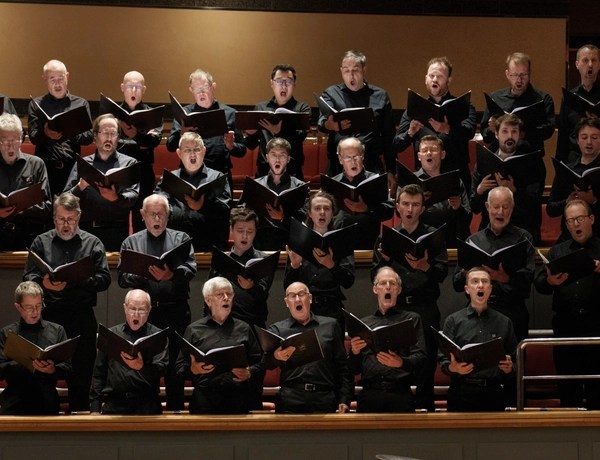
BBC Scottish Symphony Orchestra / Ryan Wigglesworth (above)

Birtwistle Earth Dances (1985-6)
Beethoven Symphony no.3 in E flat major Op.55 ‘Eroica’ (1802-4)

Royal Albert Hall, London
Monday 28 July 2025

Reviewed by Richard Whitehouse Photos (c) BBC / Mark Allan

The emphasis on Ryan Wigglesworth’s activities may have changed during recent years, but this is certainly no hardship when his conducting of so broad a repertoire is as convincing as in his brace of concerts from this year’s Proms with the BBC Scottish Symphony Orchestra.

Performed three times at the Proms during its first decade of existence, Sir Harrison Birtwistle’s Earth Dances tonight reappeared after 31 years. Much may have changed over that time (not least the passing of the composer), though this piece remains a sure highpoint of his output as of British music from the period. Premiered by the late Peter Eötvös before being taken up by Christoph von Dohnányi, Peter Boulez and Simon Rattle, it has now found an ideal advocate in Wigglesworth who surely gets to the heart of this particular matter like no-one before him.

Essentially this is about finding a balance between the facets of its title – those often densely arrayed yet always sharply differentiated strata of the orchestral texture, allied to a rhythmic fluidity which keeps the music moving forward even during its most intricate passages. Not an easy task such as previous exponents have conveyed with varying degrees of success, but Wigglesworth had the work’s measure from the beginning. Rather than a set of more or less complex episodes that follow on sequentially, what came across was a series of interrelated layers fused in an audible process of continual variation – one, moreover, in constant motion to a point at which it did not so much end as disperse into silence. Almost four decades after its premiere, Earth Dances has now emerged as that multi-faceted masterpiece it always was.

It likely took at least as long for the Eroica to be rendered, rather than merely recognized, as such – which could be a factor with their being juxtaposed in the same concert. Whatever the case, it made for judicious programming with Wigglesworth and the BBCSSO rising to their comparable challenges. First performed at these concerts 129 years ago then subsequently in almost every season, Beethoven’s Third Symphony is a testing assignment conceptually and interpretatively – as was not shirked by this involving though often understated performance.

An understatement evident in the opening Allegro, with its subtly modified exposition repeat, the more involving for rendering this movement as an unbroken while cumulative continuity through to an affirmative if not wantonly triumphal coda. Even finer was the Marcia funèbre, its steady undertow flexible enough to accommodate the lilting counter-theme as well as the intensifying fugato at its centre on route to a conclusion the more affecting for its emotional deftness. Nor was this latter quality absent from a Scherzo whose shimmering outer sections found ideal contrast in the trio, its incisive part-writing for three horns buoyantly articulated. The Finale was all of a piece with what went before, its variations on the ‘Prometheus’ theme enticingly characterized but with a keen underlying momentum toward the joyous apotheosis. While no single account of so trail-blazing a work could possibly convey all the answers, this was impressive in its formal focus and expressive balance as saw the symphony whole. Make no mistake, Ryan Wigglesworth now numbers among the finest conductors of his generation.

You can listen back to this Prom concert on BBC Sounds until Sunday 12 October – or listen to recommended recordings of the two works from the Cleveland Orchestra on Tidal here

Click on the artist names to read more about the BBC Scottish Symphony Orchestra and their chief conductor Ryan Wigglesworth. Click also for more on the BBC Proms

Published post no.2,613 – Friday 1 August 2025

In appreciation – Amelia Freedman

by Ben Hogwood Photo (c) The Nash Ensemble

Earlier this week we learned of the sad news of the death of Amelia Freedman. In a post on their website, the Nash Ensemble describe Amelia as their “creator and guiding light”, with “an extraordinary gift for creative programming that was appealing as well as broadening musical horizons”. In their obituary of Amelia, the Daily Telegraph described her as “the most influential British classical music impresario of the late 20th century”.

Her work bore fruit both in the concert hall, through the Nash Ensemble’s long relationship with Wigmore Hall that began in 1967, and a long recording career that is noted for its inventiveness and high performing standards.

The discography below is just a hint of what the Nash Ensemble have achieved on record, including a work by Amelia’s good friend, the late Sir Harrison Birtwistle, as well as the String Trio by David Matthews, which he dedicated to Freedman. Also included are a recent recording of Debussy’s Sonata for Flute, Viola and Harp, a pioneering recording of the attractive Nonet by Sir Arnold Bax, and the vibrant Piano Quartet in B flat major by Saint-Saëns:

Published post no.2,588 – Monday 7 July 2025

On Record – Gwenno: Utopia (Heavenly Recordings)

by Ben Hogwood

What’s the story?

There is a strong feeling around Utopia that this is the record Gwenno has been leading towards in her previous three solo albums.

As if to emphasise the fact she has recorded much of the album in English, a departure from the Cornish and Welsh songs she has been writing to date – as though she needs to communicate her message and feelings more immediately and with greater bandwith.

She regards her first three albums as ‘childhood records’, while Utopia is set to capture ‘a time of self-determination and experimentation’.

What’s the music like?

In a subtle way, Gwenno’s music on Utopia is deeply expressive. As always, her winsome voice is a big draw, but here the sense is that she is going emotionally deeper. War is a great example, a darker song with a lower vocal that leaves a lasting effect. 73, too, gets more emotional, while St Ives New School feels like a meditation on motherhood, with a coda of real substance.

Dancing On Volcanoes is a great pop single, while Ghost Of You is beautifully song. The Devil may be serious and relatively dark in lyrical content but again it has a dreamy side. Y Gath, a collaboration with Cate Le Bon and H. Hawkline, feels multilayered, a song to return to for full discovery. Finally Hireth is a spectral beauty, its cascading guitars complementing another excellent vocal.

Does it all work?

It does – the more personal side reaping rewards in longer songs that are as expressive as they are colourful.

Is it recommended?

It is, enthusiastically. Gwenno writes great pop songs, for sure, and has the voice to communicate them well, but intensive listening ensures the compositions are bound together, both in message and music. Gwenno’s best album yet.

For fans of… Cocteau Twins, Cate Le Bon, Gruff Rhys, Wolf Alice

Listen / Buy

Published post no.2,604 – Wednesday 30 July 2025

On Record – Sebastian Reynolds: New Beginnings (PinDrop)

by Ben Hogwood

What’s the story?

Oxford producer Sebastian Reynolds follows up his September 2023 debut album, Canary, with this set of reworks bringing together source material from collaborations with his previous bands, namely Flights Of Helios and The Epstein.

The collaborative album also welcomes Irish artists Bróna McVittie, Rezo and The Mining Co. as well as West Country group Will Lawton & The Alchemists and New York duo Kritters. The album complements his atmospheric writing with Neon Dance, and his self-termed “athletics themed bangers”, produced with Dubwiser and darqwud.

What’s the music like?

The heat haze of summer courses through Reynolds’ music. He is a gifted and versatile writer, bringing a wide range of beats and textures to make an album that runs fluently.

The songwriting is on point, too – IYSCM especially, a reimagining of If You Could See Me, where breathy vocal interjections are complemented by guitarist Myles Cochran. The destination here is unmistakably poolside, with a lovely Balearic disco feel.

The warmth is a feature of the album, which unwinds with a reworking of Dubwiser’s The Jackal), a loping broken beat number with UNKLE leanings (Molotov, with Rezo), and the breezy Fossils Of The Mind, a collaboration with Will Lawton & The Alchemists. Also making its mark is the attractive indie-baggy hybrid Broken, with Bróna McVittie, and One Year To Go, a Michael Patrick Gallagher co-write with more than a hint of Andrew Weatherall. Finally Make This Our Drone removes the beats but turns everything up to 11, a richly coloured wall of sound.

Does it all work?

It does – and if anything some of the reworks later in the album could be longer, for good vibes abound in their rich melodic content.

Is it recommended?

Enthusiastically. The carefree mood created by New Beginnings is perfect for summer listening, a blissful set of sounds that cover a surprisingly large number of bases. Sebastian Reynolds is a talented producer and songwriter, who deserves to expand his audience considerably with this welcome dose of musical warmth.

For fans of… UNKLE, Ian Brown, Andrew Weatherall, Gorillaz

Listen / Buy

Published post no.2,603 – Tuesday 29 July 2025

In concert – Augustin Hadelich, BBC SO / Sakari Oramo @ BBC Proms: Stravinsky, Mendelssohn, Anthony Davis & Richard Strauss

Augustin Hadelich (violin), BBC Symphony Orchestra / Sakari Oramo

Stravinsky Le chant du rossignol (1914/17)
Mendelssohn Violin Concerto in E minor, Op. 64 (1838-44)
Anthony Davis Tales (Tails) of the Signifying Monkey (1997) [European premiere]
Richard Strauss Till Eulenspiegels lustige Streiche, Op. 28 (1894-5)

Royal Albert Hall, London
Thursday 24 July 2025

Reviewed by Richard Whitehouse Photos (c) BBC / Mark Allan

Now in his second decade as chief conductor of the BBC Symphony Orchestra, Sakari Oramo can be relied on for innovative Proms programmes; tonight’s framing a staple of the concerto repertoire and an unfamiliar orchestral work with influential symphonic poems. In the case of The Song of the Nightingale, Stravinsky recycled sections from the latter two acts of his opera Le Rossignol into an illustrative sequence no less successful when heard in abstract terms. As exhilarating as are those earlier stages with their depiction of the bustling Chinese court, it is what follows – arrival of the mechanical nightingale, illness of the emperor then return of the real nightingale to restore his health – that proves most memorable. Above all, that plaintive song of the fisherman – heard on solo trumpet and rendered with due pathos by Niall Keatley.

Oramo has worked with Augustin Hadelich on numerous occasions and this evening’s account of Mendelssohn’s Violin Concerto confirmed their rapport right from the outset. Not its least attraction was the deftness of orchestral response in music as wears its Romanticism with the lightest of touches, with Hadelich’s handling of the first movement’s central cadenza no less assured than Oramo’s ushering in of its reprise. The slow movement had no lack of eloquence, nor the finale of that genial humour wholly typical of its era as it headed toward its engaging close. Hadelich responded to the (rightly) enthusiastic applause with his own arrangement of Por una Cabeza – originally a song penned by Carlos Gardel and Alfredo Le Pera, and which has latterly become a favourite addition to film-scores whenever a tango element is called for.

Although he is best known for his operas, notably X: The Life and Times of Malcolm X which has enjoyed several revivals since its Philadelphia premiere four decades ago, Anthony Davis has written numerous concertos and orchestral works with Tales of the Signifying Monkey the final part of a triptych that can be played together or separately. Inspired by an African fable about how the monkey uses its innate guile to keep lions and other predatory animals at bay, this proceeds as a stealthily cumulative entity in which elements of jazz and even swing, are prominent within the stylistic mix. An aura of anticipation, frequently with an ominous tinge, is always apparent and if the outcome is at all anti-climactic, it could well another take on the maxim of travelling in hope. Certainly, the BBCSO seemed to enjoy making its acquaintance.

Usually encountered at the beginning of a concert, Richard Strauss’s Till Eulenspiegel’s Merry Pranks is no less effective (and perhaps even more so) when heard at the close. So it proved tonight with a performance which, while eschewing the uproarious humour often instilled into these increasingly scatological events, was always adept in its conveying of the music’s capricious demeanour. Composed in the wake of his ill-received first opera Guntram, the present work was a ready incentive for that orchestral virtuosity which was Strauss’s metier – above all, its climactic confrontation between its protagonist and the judiciary that results in the former’s execution. The real Till likely survived to old age, only to expire during the Black Death, but his fictional self is doubtless more appealing when characterized so judiciously as it was here.

You can listen back to this Prom concert on BBC Sounds until Sunday 12 October.

Click on the artist names to read more about Augustin Hadelich, the BBC Symphony Orchestra and their chief conductor Sakari Oramo – as well as composer Anthony Davis. Click also for more on the BBC Proms

Published post no.2,609 – Monday 28 July 2025