Live review – Scottish Chamber Orchestra & Laurence Equilbey: Tales of Mendelssohn I

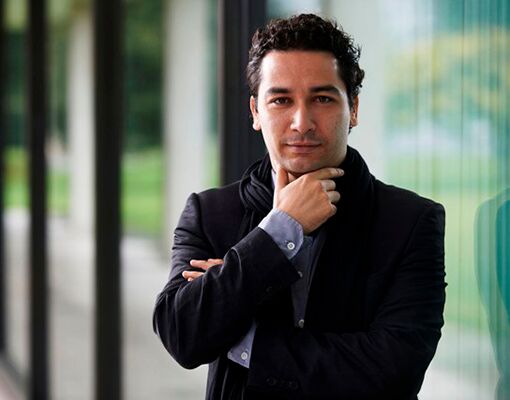
Rowan Pierce (soprano), Jessica Gillingwater (mezzo-soprano), Hilary Summers (contralto), Martin Mitterutzner (tenor), Huw Montague Rendall (baritone), SCO Chorus, Scottish Chamber Orchestra / Laurence Equilbey (above, photo credit Julien Benhamou

City Halls, London
Friday 30 November 2018

Mendelssohn
A Midsummer Night’s Dream: Overture Op.21 (1826) and Incidental Music Op.61 (1842)
Die erste Walpurgisnacht (1844)

Written by Ben Hogwood

Four seasons in one day. That phrase could apply not just to the Glasgow weather on the last day in November, but also to this enticing pair of stage works beginning the Scottish Chamber Orchestra’s Tales of Mendelssohn series at City Halls. One, the composer’s music to Shakespeare’s A Midsummer Night’s Dream, is well known and loved, but the other, a setting of Goethe’s text for Die erste Walpurgisnacht, is barely heard – and made a strong dramatic impact here.

It was the well-known first, with Laurence Equilbey leading a winsome account of some wonderful incidental music. The Overture skimmed and shimmered into the half light, pressing forward with captivating energy – as did the following Scherzo. The Scottish Chamber Orchestra may have been missing a few of their principal players and regulars but that did not dampen their enthusiasm or ensemble, the music given a zestful quality under the encouragement of the stylish conducting of Equilbey.

The bright voices of the ladies of the Scottish Chamber Orchestra Chorus helped, too – and Ye spotted snakes received a charming account, especially with the clarity and control of soloists Rowan Pierce (above) and Jessica Gillingwater, both of whom sang beautifully. The Nocturne and Wedding March were charming too, the latter briskly dispatched, but if anything the lesser known Dance of Clowns and choral finale Through this house made an even stronger impression.

What a contrast between this music and that which began Die erste Walpurgisnacht (The First Walpurgis Night). From the outset this was music of sturm und drang, of fire and brimstone, the composer seemingly relishing the opportunity to set Goethe’s text in a fiery context, interpreted as a barely concealed riposte to anti-Semitism.

The lean strings were quite a shock, as were the striking sonorities with the composer imaginatively doubling horn and bassoon. The tension went up a notch when the chorus joined, singing with real vehemence in the Chorus of the Druid Guards and Heathen People. The three soloists were excellent, too – the probing tone of tenor Martin Mitterutzner complemented by the fuller sound of Huw Montague Rendell (above), whose baritone carried effortlessly to the corners of the hall, and the rounded, velvety quality of Hilary Summers’ contralto.

This was a bracing and at times alarming account, exploring Mendelssohn’s choral writing with no stone unturned, passionately overseen by Equilbey, who clearly loves the piece. So much so that we had an encore of the Chorus of the Druid Guards and heathen People, the chorus deserving of their starring role again. There are two more installments to come in the Tales of Mendelssohn series this month – and if you have the chance they are warmly recommended, revealing contrasting aspects of this fascinating composer and the development of his style.

Further listening

The music from this concert can be heard on the Spotify playlist below:

Live review – BBC Scottish Symphony Orchestra: John Wilson’s Roman Festivals

BBC Scottish Symphony Orchestra / John Wilson (above)

City Halls, London
Thursday 29 November 2018

Donizetti Overture: Don Pasquale (1843)
Puccini Capriccio sinfonico (1883)
Respighi Feste romane (Roman Festivals) (1928); Fontane di Roma (Fountains of Rome) (1915-16); Pini di Roma (Pines of Rome) (1923-4)

Written by Ben Hogwood

If ever an antidote was needed for a blustery November evening, this was it. The BBC Scottish Symphony Orchestra and their Associate Guest Conductor John Wilson began with a sprightly overture – that written by Donizetti for his opera Don Pasquale, complete with romantic solo from cellist Rudi de Groote.

We then heard Puccini’s impressive student piece Capriccio sinfonico, where the orchestra dug in to its substantial outlines and memorable triple-time dance theme.

These two pieces served as effective preludes to the main action in this all-Italian concert – Respighi’s triptych of symphonic poems inspired by the centre of his life, Rome. All too often Respighi is held up as a brilliant orchestrator lacking in musical craft, but these performances under John Wilson utterly refuted those claims. This is music of wonderful colour and texture, certainly, but there are great melodies too, scored in such a way that future composers – among them surely John Williams and Jerry Goldsmith – would surely have fallen under the Italian’s spell.

Respighi himself knew how to use his influences for good. Stravinsky looms large, as do Debussy and Ravel – but nobody else could have written the gladiatorial opening to Roman Festivals, its fire and brimstone blowing the cobwebs away from all corners of City Halls.

The BBC Scottish brass were brilliant here, with Simon Johnson’s blowsy trombone solo in Epiphany and the off-stage trumpets in Circuses both highlights. Jubilee, the second movement of the four, painted vividly the downtrodden pilgrims on the highway, rising up as they glimpsed the Holy City in a shower of glistening colour.

The duet between lead violin and cello in The October Festival (Laura Samuel and de Groote again) was a beauty, while the finale built on its influences from Stravinsky’s Petrushka with music of athleticism and raw power, where pianists Lynda Cochrane and Julia Lynch also deserve a mention, their virtuosity underpinning the sound.

Fountains Of Rome was next, sensibly placed to provide a more restrained complement to the bombastic first poem. Here the wonder lay in four beautiful depictions of water, first heard undulating through The Fountain of Valle Giulia at dawn. The Triton Fountain at mid-morning was a thrilling scherzo in this performance, while the organ (Michael Bawtree) added extra colour and splendour to The Trevi Fountain at midday. Finally the magical, twinkling image of The Fountain of the Villa Medici showed off the slightly smaller orchestra in all its glory, the strings on top form with the notably tricky figures.

Pines of Rome is the most celebrated of the triptych, and though well known its emotional impact here was considerable. The busy, blustery Pines of the Villa Borghese set a colourful scene, but Wilson paced the Pines near a catacomb to perfection, shaping the apex of the Gregorian chant to spine-tingling effect, helped once again by the brilliant BBC Scottish brass section.

Clarinetist Yann Ghiro provided a solo of exceptional control during The Pines of the Janiculum Hill, where we heard the nightingale from afar – an innovative and controversial role for the gramophone in 1924, and even now making unsuspecting audience members sit up in surprise. Yet the whole evening was still to reach its apex, The Pines of the Via Appia, with what was quite simply the loudest orchestral playing I have ever heard. This was Respighi turned up to eleven, and when it shouldn’t have been possible for the music to get any louder or bigger it just kept going.

John Wilson ensured this was always a controlled ascent and never vulgar, so as the hairs stood up on the neck once again his orchestra reached a tumultuous finish, capping a wonderful evening of music. Now that’s what I call a concert!

Further listening

This concert was recorded for future broadcast on BBC Radio 3. John Wilson has not recorded any of the music in this concert, but you can hear a playlist of ‘Roman Festivals’:

Live review – Viktoria Mullova, Matthew Barley & LPO / Orozco-Estrada: Dusapin premiere

Viktoria Mullova (violin, below), Matthew Barley (cello, below), London Philharmonic Orchestra / Andrés Orozco-Estrada (above)

Royal Festival Hall, London
Wednesday 28 November 2018

Enescu Romanian Rhapsody No. 1 in A, Op. 11 No. 1 (1901)
Dusapin At Swim-Two-Birds (LPO co-commission: UK premiere) (2017)
Martinů Symphony No. 4, H305 (1945)
Ravel La Valse (1920)

Written by Richard Whitehouse

This centenary year of the establishing of a greater Romanian state (aka the National Day of Romania) brought tonight’s varied programme from the London Philharmonic under Andres Orozco-Estrada, now into his third season as the orchestra’s principal guest conductor.

Enescu‘s First Romanian Rhapsody might have seemed almost too obvious a choice, but this sophisticated piece suffused with the ‘confidence of youth’ is hardly a populist crowd-pleaser, so making Orozco-Estrada’s rather superficial approach the more disappointing. The opening exchanges were prosaic, the ensuing episodes lacking in wit and (to quote Richard Bratby’s note) insouciance and the heady climactic stages rather jog-trotted their way forward without much hint of that deftness and effervescence as can still excite audiences nearly 120 years on.

The first UK hearing of a major work from Pascal Dusapin is never to be passed over, with At Swim-Two-Birds continuing the series of concertante pieces running through his creative maturity. The title is that of Flann O’Brien’s 1939 novel, which considers Irish culture from a decidedly post-Joycean perspective, but Dusapin’s concerto hardly reflects this beyond its being a double concerto in two movements – both interweaving incisive passages with those that float suspended above their recurring key-notes. Viktoria Mullova (above) and Matthew Barley (below) were fully responsive to their solo and duet writing, whether in the intricate dialogue of the first movement or emerging cadenza-like writing of its successor; during which Dusapin’s predilection for ricocheting percussion and translucent textures came enticingly to the fore.

Such qualities are no less central, albeit put to very different ends, in the Fourth Symphony that Martinů wrote towards the end of the Second World War – when a victorious outcome could openly be expressed. The result is its composer’s most affirmative such piece, though there are many instances of ambivalence and Orozco-Estrada was attentive to such as those moments of stasis in the first movement’s subtly curtailed sonata design, offbeat accents that impede forward motion in the scherzo (its folk-tinged trio enchantingly evoking Dvorak), or sudden and teasing shifts in perspective which rein-in the emotional fervency of the Lento. The finale, too, has glimpses of doubt but Orozco-Estrada marshalled momentum unerringly through to a peroration that caps what should now be a repertoire work in outright jubilation.

An impressive reading, then, which found the partnership between orchestra and conductor at its finest. After this, was La Valse (or anything else for that matter) really necessary? Not that this performance was without its merits, Orozco-Estrada mindful to avoid letting an endlessly fascinating and always unnerving work descend to the level of mindless showpiece, but the music’s reserves of irony and violence sounded merely hectoring when heard in this context. That said, the visceral close was finely navigated by an LPO intent on projecting every bar.

This enterprising and often exhilarating concert was enthusiastically received by all those present. Hopefully Orozco-Estrada will tackle further Enescu and Martinu in future, while a too little known piece as Prokofiev’s Russian Overture fairly cries out for his advocacy.

Wigmore Mondays: Tai Murray & Silke Avenhaus play Grieg, Philip Glass & Saint-Saëns

Tai Murray (violin, above); Silke Avenhaus (piano, below)

Grieg Violin Sonata no.2 in G major Op.13 (1867)
Glass Pendulum (2010)
Saint-Saëns Violin Sonata no.1 in D minor Op.75 (1885)

Wigmore Hall, London; Monday 26 November 2018

You can listen to the BBC Radio 3 broadcast by clicking here

Written by Ben Hogwood

This was an imaginative and invigorating recital from two instrumentalists at the very top of their game. It also brought forward two of the lesser lights in the violin and piano repertoire, giving exposure to composers for whom melody came naturally.

Edvard Grieg’s three sonatas for violin and piano are consistently rewarding. Three weeks previously at the Wigmore Hall we heard Aleksey Semenenko and Inna Firsova in the Violin Sonata no.3; now Murray and Avenhaus gave a passionate performance of its predecessor.

Of a largely sunny disposition, the Violin Sonata no.2 in G major is one of the first works to introduce home-grown folksong into the Norwegian composer’s output. Tai Murray seized the opportunity for drama with an assertive introduction, countering Silke Avenhaus’s thoughtful opening in the minor key (1:49). From 3:17 they moved to the first movement proper, enjoying the attractive, dance-like melodies in a bright exchange, though this was countered by a more reflective, minor-key theme (heard again at 8:19).

Grieg used this key for the slow movement, which began in dreamy, reflective mood (11:09). Soon however the violin was soaring higher and faster, before subsiding to a beautiful, airy second theme, back in the major key (12:47). The third movement once again suggested the outdoors with the piano drone (16:55) and another folksy melody, the violin stepping in exuberantly – and another dreamy episode from 19:02. After a recapitulation of the drone material at 20:18 Murray and Avenhaus led us to a grand coda, a passionate finish in a similar vein to the soon to be published Piano Concerto.

Philip Glass’s Pendulum, originally written for piano trio, appeared here in a duo version sanctioned by the composer. Even when Glass is at his most delicate, great demands are placed on the performers, especially when set the kind of athletic arpeggio figures Murray and Avenhaus had here (from 24:30). They responded with an energetic performance but also took great care with the subtleties of Glass’s writing at the start of the piece, with a steady tread on the lower notes of the piano. The nervous energy was never far from the surface, growing as the oscillations became ever wider, leading to a sweeping finish at 31:47.

The mystery that Saint-SaënsViolin Sonata no.1 is not more often performed is solved by its fiendishly difficult but utterly exhilarating finale. Until then, the work – completed in 1885 – had already made a strong impact, thanks to the composer’s clever grouping of the four movements into pairs of two, and the irregular but strangely effective phrasing of the melodies.

From the start of the first movement (34:02) Murray and Avenhaus set a tense, nervy atmosphere, the violin and piano shadowboxing each other. The second theme (35:37) was equally nervy, despite the flowing piano’s suggestions of the Organ symphony. The recapitulation in this dramatic movement reached a climax at 39:55 with some concerto-esque playing from the piano before the flowing theme returned, Saint-Saëns moving us seamlessly into the second movement (from 43:25)

This respite, a rather beautiful reverie, was broken by the third movement Scherzo (from 48:00), a throwback to the composer’s Danse macabre, with irregular phrases and the instruments mirroring each other again. There was a flowing trio section (from 49:58) but before long we were back to the Scherzo (50:58). Another seamless transition set up the finale (from 52:05), scampering out of the blocks with some remarkable playing from both players, responding to the technical demands with apparent ease and bringing back the second theme from the first movement in a beautiful passage of playing from 56:08. Then the music built for the final time, surging into the major key where a cascade of bells rang out from the piano (57:03), before the emphatic finish.

A terrific concert, this, with no need for an encore. At its best Saint-Saëns’ music can be breathtaking, and this was one such wholly enjoyable occasion!

Further listening

Tai Murray has yet to record any of the music played in this concert, but the playlist below contains some of the best available versions:

If you particularly enjoyed the Grieg, I wholeheartedly recommend a disc bringing together all three of the composer’s sonatas for violin and piano, played by Augustin Dumay and Maria-João Pires:

It remains a mystery as to why the Saint-Saëns sonatas are not performed more often. If you listen to the collection below you will find some persuasive accounts of the Second Violin Sonata, the Cello Sonatas and works for clarinet, oboe and bassoon:

Live review – CBSO Weinberg Weekend: Symphony no.21 & Shostakovich: Symphony no.15

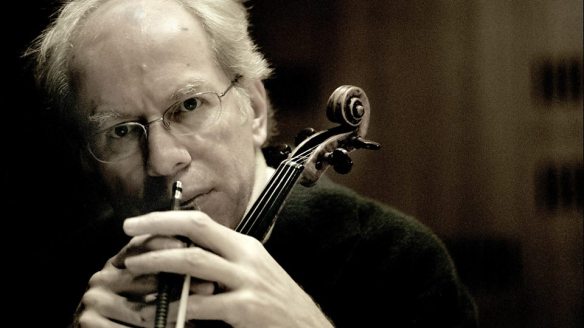
Freddie Jemison (treble), Maria Makeeva (soprano), Gidon Kremer (violin, above), Kremerata BalticaCity of Birmingham Symphony OrchestraMirga Grazinyte-Tyla

Symphony Hall, Birmingham
Saturday 24 November 2018, 11am

Weinberg Symphony no.21 op.152
Shostakovich Symphony no.15 in A major op.141

Written by Richard Whitehouse

The Weinberg Weekend being held in Birmingham reached its culmination tonight with this uncompromising yet rewarding symphonic double-bill. Those unfamiliar with the composer’s music may have been disconcerted by what they heard. Whereas the early Violin Concertino (heard at the previous concert) feels not so far removed from comparable works by Malcolm Arnold, the Symphony no.21 breathes an air of stark fatalism. Written at a time which witnessed the collapse of the Soviet Union and dedicated to the memory of those who died in the Warsaw Ghetto (the ‘Kaddish’ subtitle is found in his catalogue but not the actual score), it ranks among Weinberg’s deepest statements. At almost an hour it is also among his longest symphonies, so making its predominant sparseness and concentration the more remarkable.

The single movement falls into several continuous sections – an initial Largo’ introducing the plangent hymn that pervades the work then the chorale whose presence Weinberg traced back to his First Symphony, their alternation making way for the opening theme of Chopin’s First Ballade intoned somnolently on piano. An Allegro draws a theme from Weinberg’s Fourth Quartet into its reckless orbit, while a further Largo similarly utilizes one from his Double-Bass Sonata – the latter’s sepulchral tones sounding more bizarre given the ensuing klezmer-like passage with clarinet, which persists through a tensile Presto then plaintive Andantino that brings the principal climax. A final Lento unfolds with increasing introspection – violin, piano and harmonium adding their spectral sonorities until the music fades out of earshot.

The work went unheard in Weinberg’s lifetime, with its undoubted technical and emotional challenges having made revivals rare. Yet its formal cohesion and expressive consistency are undoubted – in the conveying of which, Mirga Grazinyte-Tyla took especial credit for rendering the epic structure as an inevitable yet cumulative entity whose febrile outbursts were held in check by that encroaching vastness which extends right across the whole. She was abetted by an assured response from the City of Birmingham Symphony, bolstered by members of Kremerata Baltica (Gidon Kremer taking the violin solos), and if dividing the vocalise between eloquent Maria Makeeva and plaintive Freddie Jemison slightly disrupted continuity in the closing stages, it hardly distracted from the stature of this reading overall.

Shostakovich‘s Symphony no.15 made a pertinent coupling, with Grazinyte-Tyla having its measure right from her purposeful take on the opening Allegretto. The Adagio’s ominous tread was finely sustained, its numerous solo passages having ample room to unfold prior to an anguished climax then desolate coda, while the brief scherzo fairly crackled with barbed irony. Nor was there any lack of focus in the finale, emerging from its miasma of allusions through to a spectral passacaglia whose seismic culmination never pre-empted the subdued recollection of earlier ideas or, above all, the transfigured conclusion with its evocation of ‘voices overheard’ over simmering percussion. It set the seal on an impressive performance and a memorable concert: one which certainly warrants the proposed commercial release.

Sunday morning saw a lecture in the Recital Hall at the recently-opened Royal Birmingham Conservatoire. As presented by Prof David Fanning (Manchester University) and Dr Michelle Assay (Huddersfield University), Exploring Weinberg offered a selective though consistently informative overview of the composer’s life and career: from his formative years in Warsaw, via his arrival in Moscow following periods in Minsk then Tashkent against the background of war; the dark years of the anti-formalism campaign then his incarceration during the final months of Stalin’s increasingly paranoid rule, then to the decades of growing acclaim from colleagues and public alike during the 1960s and ’70s, before a period of increasing neglect as a new generation of Soviet composers came to the fore and the Soviet Union neared its end.

The lecture was illustrated with numerous visual and musical examples, but it was archival recording of Weinberg playing and singing extracts from his opera The Passenger to the Moscow Union of Composers – in a futile attempt to secure its performance – that riveted attention. Hearing a composer’s actual voice is seldom less than revealing and so it proved here, setting the seal on an event which was certainly worth attending despite the absence of a selection of chamber works from Conservatoire students that was to have followed.

Summing up, the Weinberg Weekend fairly succeeded in terms of introducing Birmingham audiences to music by a composer whose importance continues to increase and as a prelude to what looks set to be a deluge of UK performances over the course of his centenary year.

Further information on the Weinberg Weekend can be found here