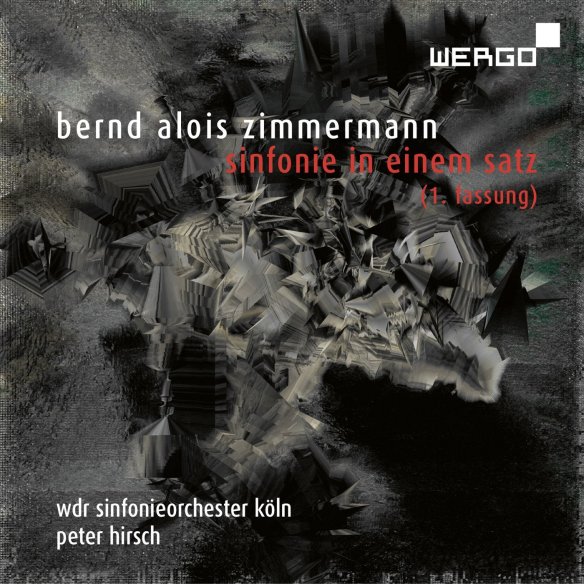
On record: Zimmermann: Symphony in One Movement (Wergo)

zimmermann

Zimmermann: Symphony in One Movement (1951), Giostra Genovese (1962), Concerto for Strings (1948), Musique pour les soupers du Roi Ubu (1966)

WDR Symphony Orchestra Cologne / Peter Hirsch

Summary

Wergo continues its long-term edition devoted to Bernd Alois Zimmermann (1918-70) with this collection of orchestral pieces spanning the greater part of his composing. This is the third such release under the direction of Peter Hirsch – who, as with Zimmermann, hails from Cologne.

What’s the music like?

As varied as Zimmermann’s output when taken overall. Earliest is the Concerto for Strings, derived from a string trio of four years before and whose trenchant ‘Introduction’, plangent ‘Aria’ and incisive ‘Finale’ evince the expected influences of Bartók and Hindemith but also Karl Amadeus Hartmann – conscience of German music during the Third Reich and mentor to numerous post-war composers.

Among the most striking of Zimmermann’s earlier works, the Symphony in One Movement is heard in the 1951 original which, less cohesive than the 1953 revision (transitions tend to be overly rhetorical), impresses with its emotional intensity and visceral organ writing. Coldly received at its premiere, the music’s expressionist manner can now be heard as ahead of rather than behind its time – any formal imperfections arising from recklessness rather than uncertainty of purpose (as in the original version of Varèse’s Amériques when compared to its revision). The composer’s observation that this work ends at the point where symphonic evolution might usually commence never felt more apposite.

The remaining two pieces are closely intertwined conceptually. Zimmermann had previously arranged selections of ‘early’ music for radio broadcast, but with Giostra Genovese he took dances by Susato, Byrd and Gibbons then transformed them to ironic, alienated and even threatening effect. A portent to similar, more self-conscious, stylistic practices by Schnittke and Maxwell Davies, it was later withdrawn and reworked as Musique pour les soupers du Roi Ubu – the ‘Ballet noir’ such as marks the climax of the composer’s ever more fraught relationship to music from the past.

Here those initial dances are overlaid with quotations of other composers and given a serrated edge in scoring for wind and percussion. The blackly humorous scenario sees the personnel of a liberal arts academy humiliated then executed at the hands of Alfred Jarry’s loutish ruler; a back-handed response to Berlin’s Akademie der Künste that had recently elected him a member, not least the final ‘Marche du décervellage’ with its collision of Wagner, Berlioz and Stockhausen in an apotheosis of unsparing violence.

Does it all work?

Yes, with the proviso Zimmermann’s music is increasingly not about stylistic integration or expressive poise. His concept of the ‘spherical plurality of time’, much in evidence here, may be difficult to explain yet is easy to comprehend through the visceral medium of his music.

Is it recommended?

Indeed. Those who respond to these works might consider widening their listening context with the String Trio (as recorded by Trio Berlin on Wergo) and revised version of Symphony in One Movement (an incendiary live account by Witold Lutosławski on Berlin Classics, or no less authoritative one by Günter Wand on Hänssler Profil). The present disc finds Hirsch securing a committed response from the forces of Cologne Radio Symphony, vividly recorded, as well as penning an informative booklet note. Those new to Zimmermann should start here.

Richard Whitehouse

Further information at https://en.schott-music.com/shop/autoren/bernd-alois-zimmermann

Wigmore Mondays – Beatrice Rana: Bach Goldberg Variations

beatrice-rana

Beatrice Rana (photo Marie Staggat)

J.S. Bach Goldberg Variations, BWV988

johann_sebastian_bach
J.S. Bach (1658-1750)

Listen to the BBC broadcast here

Written by Ben Hogwood

The famous Canadian pianist Glenn Gould made his first, famed recording of J.S. Bach’s Goldberg Variations at the age of 23. Beatrice Rana has just completed hers at the very same age, as BBC Radio 3 presenter Sara Mohr-Pietsch informed us just before this Wigmore Hall lunchtime concert began. Of course the interpretations would be wildly different, but there was plenty here to suggest Rana is going to be a wonderful pianist for many years to come.

She decided to use Bach’s marked repeats, a move that stretched the piece to 75 minutes and caused the BBC to extend their traditional hour – a move in favour of their Radio 3 New Generation Artists that suggests they too know exactly what she’s about.

Rana took her time with the opening Aria, setting the scene perfectly (from 1:49 on the broadcast link above). Bach’s timeless writing made the greatest possible impact because of this, in music of great, profound meaning, and whenever textures filled up later on there was always the knowledge this sublime music would return to wrap things up at the end.

Not that Rana gave us anything other than clarity, definition and musicality. Only once was her rhythmic profile noticeably challenged, as she took a while to get a definitive pulse for the seventh variation, a gigue, but elsewhere she was white hot, fingers skating over the keyboard in the toccata variations. In the slow variations she gave the music plenty of time to breathe, investing deep emotion into the minor-key sarabande (from 32:57) and similarly pained variation 25 (from 55:07) She also used helpful silences to signpost the music and give both her and the audience chance to take a breath and digest the music a bit, wondering at this great music.

On this evidence, her forthcoming disc of the Goldberg Variations for Warner Classics should be snapped up, and future concerts followed closely. She certainly did Bach full justice here.

Further listening

You can watch Beatrice in the opening bars of the Goldberg Variations, recorded last year:

…or you can take in Gould’s 1955 recording of the Goldbergs below:

Meanwhile if it’s more Bach that you fancy, this Glenn Gould album gives you access to the amazing world of the Italian Concerto, the Chromatic Fantasy and Fugue in D minor and the Partitas for keyboard:

On record: Brian Eno – Reflection (Warp)

eno-reflection

Summary

After the musical horror story that was 2016, it is perhaps important to remember there were some good bits along the way as well. One of those very much still with us is Brian Eno, who released the excellent album The Ship in April last year.

The timing of this new ambient album – 1 January 2017 – seems to be making a statement that this should be a year where we start to look forward again, embrace the idea of new music and allow it to soothe our furrowed brows.

What’s the music like?

Reflection is nothing new. That is not a criticism, more an observation that this single-movement work, continuing themes explored in Discreet Music of 1975 and Thursday Afternoon ten years later, retains all of the Brian Eno signature brushstrokes and textures.

From the first flourish of notes the mood is immediately set, and Reflection changes very little over the course of the next hour. After a few listens, however, the structure becomes more obvious and it also becomes clear that there is actually an exquisite tension at work, Eno setting down one pitch centre (G) and gradually working against it with notes based more in the area of C. He does this very subtly, and with consonant harmonies, so there is never any explicit threat to the peaceful nature of the writing, but there are little flecks of dissonance.

As the piece progresses it becomes like a lunar body on a slow journey, with the passing of twinkling stars and unblinking planets all around. Some of these are faster moving bodies, leaving tracers in the sky, while others are slow and ponderous, taking a while to go by. The music does become more animated but not by much, and fades into the distance gracefully.

Does it all work?

It all depends on where you listen to it. Headphones are recommended, and public transport, where the album has mostly been experienced, is the ideal setting. Eno manages to do just enough to avoid Reflections becoming pure background music, but if it is experienced as that it is at once calming and soothing, if a little on the dark side. The occasional frissons of tension keep the listener from sinking into complete complacency.

Is it recommended?

Yes. It is another example of Brian Eno’s mastery of the longer ambient structure, even though Reflections does not have any particular surprises in store. It puts the listener in a heightened state of mindfulness, definitely not a bad thing at this point in January!

Ben Hogwood

Listen on Spotify

Tasmin Little, BBC Symphony Orchestra & Edward Gardner at the Barbican – Janáček, Smetana, Szymanowski & Eötvös

Ed Gardner
BBC Symphony Orchestra / Edward Gardner (above) (photo © Benjamin Ealovega)

Barbican Hall, Saturday January 7, 2017

Janáček Jealousy

Smetana Ma vlast: Vltava; Šarka

Szymanowski Violin Concerto No.2 (soloist – Tasmin Little)

Eötvös The Gliding of the Eagle in the Skies [UK premiere]

Janáček Taras Bulba

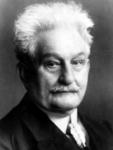
L-R Leoš Janáček (1854-1928); Bedřich Smetana (1824-1884); Karol Szymanowski (1882-1937); Péter Eötvös (b1944)

Listen to the BBC broadcast here

Written by Richard Whitehouse

Edward Gardner returned to the BBC Symphony for this diverse if not wholly successful programme, which opened with the ultimate in terse curtain-raisers. Intended then abandoned as the overture to his opera Jenůfa, Janáček’s Jealousy (1895) has latterly enjoyed a peripheral place in the repertoire. Heard here in the late Charles Mackerras’s realization of the original version, it made for a vivid impression – not least when its alternation between strident brass gestures and eloquent string writing unerringly evokes Sibelius during much the same period.

Next came the second and third instalments from Smetana’s cycle of symphonic portraits, Ma vlast. The performance of Vltava (1874) was a disappointment – its constituent sections rather failing to cohere, with Gardner making little of the visceral ‘St John’s Rapids’ episode and the apotheosis doddering along at a jog-trot.

Šarka (1875) fared better – Gardner exerting a tight grip over its scenario of female retribution, with felicitous playing from solo clarinet and horn prior to the fateful close. In context, these pieces sounded curiously adrift, suggesting that a different selection (Šarka, then From Bohemia’s Woods and Fields maybe?) might have proved more effective. Even better to opt for one of those early ‘Gothenburg’ symphonic poems that are rarely revived, of which Wallenstein’s Camp would ideally have complemented the Janáček in the second half.

Tasmin Little

Tasmin Little

Time was when Szymanowski’s Second Violin Concerto (1933) existed in the shadow of its predecessor, but this last major work by the composer enjoys increasingly regular revival – its amalgam of luscious textures and folk-inflected harmonies underpinned by a formal cohesion where elements of sonata and rondo forms link hands over a powerful cadenza (by the initial soloist Paweł Kochánski) that Tasmin Little rendered with aplomb.Elsewhere her intonation occasionally faltered as she strove for parity against often dense orchestral writing, though a cumulative impact was rarely less than evident on the way to the affirmative closing pages.

After the interval, a welcome first hearing in the UK for a recent orchestral piece by Peter Eötvös. Written for the Basque National Orchestra, The Gliding of the Eagle in the Skies (2012) utilizes not only the quirky rhythmical profile of that region’s traditional music but also its indigenous percussion – two cajóns situated near the front of the orchestra goading the music on with their distinctive timbre. The piece follows an eventful (and suspenseful) trajectory in which the imagery conveyed by the title is amply though subtly conveyed; the typically stratified textures making possible the luminous final stages then an ending which, not for the first time with this composer, suggests a possible continuation just out of reach.

Later Janáček fairly specializes in such oblique endings, and if Taras Bulba (1918) is not one of these, this rhapsody’s graphic yet by no means literal depiction of events related by Gogol leaves no doubt as to its composer’s identification with his subject. Gardner brought fervency then starkness to the respective deaths of Andriy and Ostap, and while the opening stages of the final section were a little temperate, the apotheosis had a glowing inevitability – though some fallible playing was a reminder of this music’s demands for all its relative familiarity.

Wigmore Mondays – Richard Egarr: Keyboard music of the Tudors and Stuarts

Richard Egarr

Richard Egarr (photo Marco Borggreve)

Byrd Fantasia in A minor; Pavan and Galliard; The Bells

Purcell Suite in G major; Ground in C minor

Blow Chaconne in FaUt

Purcell Suite in G minor; Suite in D major; Ground in D minor

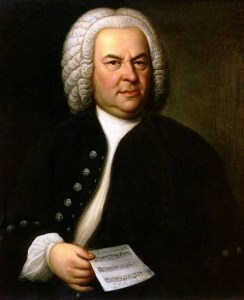
L-R William Byrd (c.1540-1623);   Henry Purcell (c.1659-1695); John Blow (1648-1708)

Listen to the BBC broadcast here

Written by Ben Hogwood

The harpsichord enjoys a rather chequered reputation in concert, and from personal experience at least among friends I can say it is one of those ‘marmite’ instruments.

Certainly it is unusual for it to have a place alone in a BBC Radio 3 Lunchtime Concert, yet here it was, with Richard Egarr beginning the 2017 part of the Wigmore Hall Monday lunchtime concert season.

In the event the BBC had chosen well, Egarr compiling a fascinating program of keyboard music from the Tudors (Byrd) and Stuarts (Purcell and Blow).

The music of Byrd, a composer for Queen Elizabeth, flows with obvious inspiration. Egarr’s selection here began with the free and at times elaborate Prelude and Fantasia (from 1:43 in the broadcast), moved on to a more stately Pavan and Galliard (from 10:54 and 14:39) from the impressive collection My Lady Neville’s Book and concluded with the descriptive The Bells (16:19), a remarkable piece of writing beginning with a single toll and working its way intricately through thrilling peals of bells.

Purcell, even now one of the greatest composers England has ever produced, appears to have written his harpsichord suites as a tuition aid, yet they are all characterised with dances fast and slow. Egarr played three suites here, the G major work (from 23:55 on the broadcast) the simplest and the G minor (from 37:07), with its brisk Corant dance, seemingly the most challenging. Most engaging, however, was the three-part D major suite (from 45:45), with its thoughtful Prelude and brief but vigorous Hornpipe.

Egarr also included two brief Grounds (pieces with a short, recurring bass line) by Purcell (27:24 and 49:31), with a third, A New Ground, as an encore (52:50). We also heard a Chaconne by Purcell’s teacher John Blow (30:18), a chirpy piece that became increasingly busy and eventful, leading to a series of grand, block chords near the end.

Egarr’s performance manner was conversational. He turned his own pages, and even gave the harpsichord itself a clap at the end, as though thanking it for staying well-tuned! His demeanour encouraged the audience to feel part of an intimate concert, and lightened some of the heavy cloud around London for the first Monday proper of 2017.

Further listening

You can listen to the music in this concert on Spotify below, with recordings from Egarr himself: