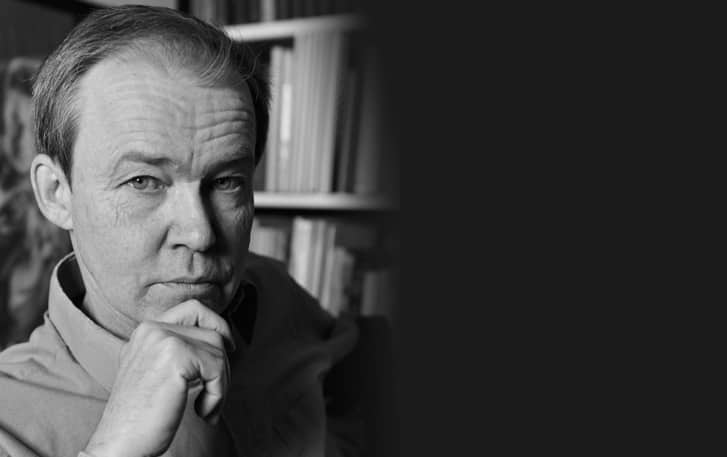
To mark Armistice Day, here is a relatively recent piece of memorial from the composer Philip Sawyers (above). When writing about this work in 2022 I noted,
“A recent work, Remembrance for Strings, made an instant impact. This deeply emotive, thought provoking piece has a hint of Elgar in its profoundly elegiac tone and scoring, but unmistakably bears Sawyers’ fingerprints as the theme evolves, gradually creeping upwards. The strings of the ESO were perfectly paced by Woods, giving the theme plenty of room and bringing the important viola and cello lines through the texture. Sawyers finds effective contrasts between notable pain points of discord and an almost complete stillness as the strings collect their thoughts, holding their collective breath in ideally weighted phrasing. This deeply affecting piece deserves to be heard much further afield, its impact comparable (if notably different) to that of Barber’s Adagio for Strings. A note for Emily Davis, the ESO guest leader, who gave a touching final solo.”
Here it is, in those capable hands:
Published post no.2,715 – Tuesday 11 November 2025
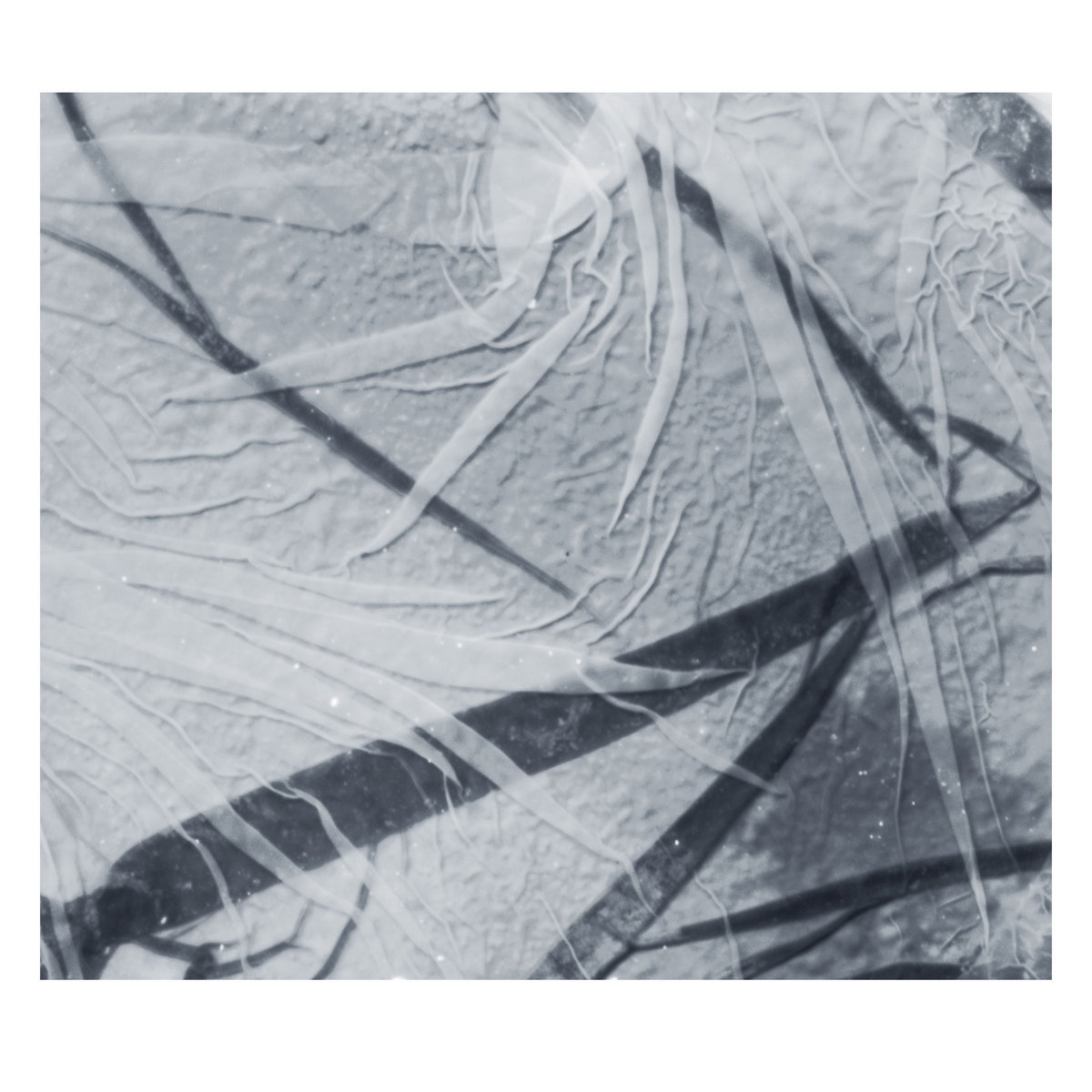
The enterprising quiet details label welcomes Scanner – aka Robin Rimbaud – to deliver the latest in their increasingly impressive series of albums.
For this particular opus, Rimbaud gave himself a brief: “This album is forged entirely from the resonant clangs, echoes, and whispers of a stainless steel staircase at home, transforming everyday architecture into an unexpected orchestra.
By coaxing rhythm, tone, and atmosphere from the metallic body of a staircase, the work reimagines movement between floors as a passage through sound.
No synthesisers were used in the creation, only the natural sound of the staircase using a geophone seismic microphone and the gentle assistance of the occasional resonant filter and sample software.”
What’s the music like?
Darkly comforting. Scanner’s music can be experienced on two levels – one immersive and one with a broader perspective.
The immersive listener will appreciate how each track changes in harmonic content and texture over time, the incremental changes small and gradual but also meaningful.
Meanwhile the listener approaching this music from afar will get a firm appreciation of the space Scanner creates but will more than likely move into an immersive experience due to the intensity of the music. The textures, together with an almost complete lack of percussion, lead to the listener being suspended in thin air.
Start Moment bears out the move from passive to active listening, its thick low range drone punctuated with one of the resonant clangs Scanner talks about. Then the sound begins to fluctuate, the perspective changing to suggest the listener positioned inside an enormous tube.
Riser Beam Connection dresses its persistent central tone with slow moving tones of glassy purity, but Base Plate has more ominous designs and is creepy when powering down at the end. Grain Stress has atonal, avant-garde designs throughout its unpredictable movements, with plucked strings here and gathering clusters of notes there.
Finally the spacious End Moment, Wires is an immersive drone spread across nearly a quarter of an hour, the drone supporting sonorous, bell-like sounds and the scattering of electronic debris in the foreground.
Does it all work?
It does – who would have thought a staircase could provide these moments of drama?! Scanner brings from his source material a remarkably wide range of textural and emotional responses.
Is it recommended?
It is – an inventive five-movement suite that really pushes at the boundaries of its components, making a whole that traverses some weird corners, but which ultimately provides its listener with a reassuring ambience. A fine achievement.
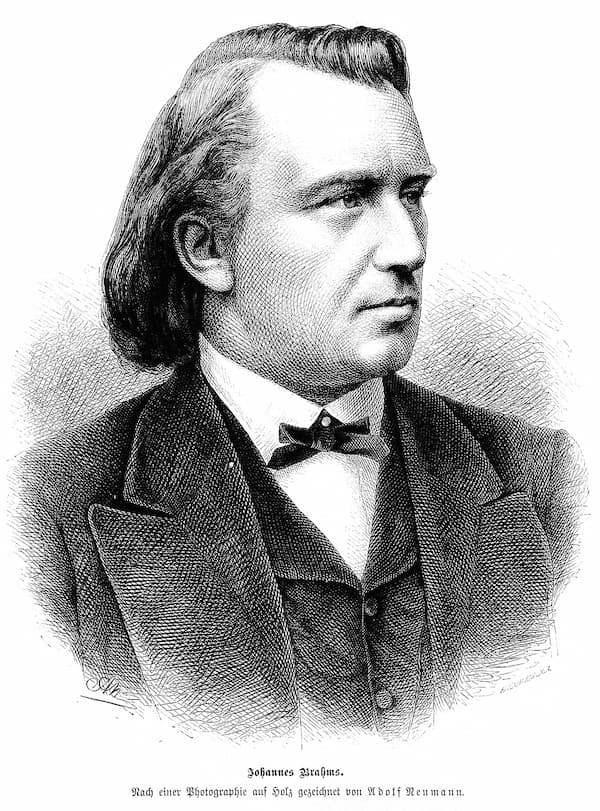
On this day in 1881, Johannes Brahms took to the stage to play in the world premiere of his Piano Concerto no.2 in B flat major, Op.83, with Alexander Erkel conducting the Budapest Philharmonic Orchestra.
The concerto is one of the biggest in the repertoire. Set in four movements and lasting well over 40 minutes, it is more symphonic in structure, with demands of stamina and technique for the soloist that complement the more tempestuous Piano Concerto no.1.
The Second is a more obviously graceful work, from the lilting horn theme at the start to its elegant slow movement, where a solo cello plays a particularly beautiful melody. There are moments of grandeur – especially in the first two movements – while the finale is a dance, light on its feet and brimming with good spirits.
You can listen to a performance below from Yefim Bronfman, with Sir Antonio Pappano conducting the Verbier Festival Orchestra:
Acclaimed electronic musicians, producers and sound architects Max Cooper and Rob Clouth team up for a new collaborative EP; a dark, playful four-track dive into ambient, breakbeat and techno’s subconscious flow, featuring a standout vocal performance from South London rapper FLOHIO.
Recorded over a series of spontaneous London sessions, 8 Billion Realities channels years of creative exchange between two of the genre’s most quietly innovative artists and is a result of a decision between the long time friends to refrain from conceptual overthinking in favour of instinct and joy.
As long-time admirers of each other’s audio/visual work, Cooper and Clouth collaborated in London together after both emerging from intense, idea-heavy album cycles. What followed was a series of exploratory sessions, half-improvised, half-built around half-formed thoughts. The result is a club-ready EP that feels alive and human: imperfect and hypnotically rich.
“Rob Clouth has been one of my favourite electronic music producers since I first heard his work in 2011,” says Cooper. “His work is more full of ideas and structure than anyone else.” “We were both coming from extensive conceptual studio albums and both in the mood for simplifying things and having some fun with the music, so that’s what we did”.
For Clouth, no stranger to Max Cooper’s Mesh label having previously released an array of EPs plus his 2020 debut album Zero Point this record marks a new chapter, both creatively and personally. “Something pretty new for me is collaborating,” he says. “You kind of have to know when to stop, because if you develop an idea all the way to its endpoint, the other person has nowhere to jump in.”
The first A Moment Set Aside began as a break from another idea, a live, unplanned improvisation based around arps and ambience. “The track was written in about as long as it took to play it,” says Cooper. “It was pulled from a one-hour recording session, more or less as you hear it… the energy and excitement grew as the unplanned moment bore some magic.”
“The lesson being that sometimes it’s helpful to set aside a moment without forcing results, and let the subconscious have something to say.” What followed was darker, heavier. “Asymptote” is detuned techno. Subversive and euphoric in its descent. “We found a sort of brain mangling, half consonant, half wandering detuned techno pulse, which we started chatting about being a sort of pit of spiralling body parts we were falling into,” says Cooper. “It was a lot of fun to work on and let loose with bigger kicks than I usually ever get to unleash.”
Then came 8 Billion Realities, featuring a standout rap performance from FLOHIO; an emerging figure in the UK grime and rap scene. The track was inspired by conversations about algorithmic echo chambers and hyper-personalised online worlds. Frantic, direct, and South London to the core, FLOHIO brings this tension to life. Her sharp, intense flow cuts through distortion and rhythm, landing the track somewhere between chaos and control instantly making it one of the most striking moments in either artist’s catalogue. “A different reality for all 8 billion of us,” says Cooper. “We weren’t sure if it would work… but there was something about the energy of the percussive idea and the story which felt like it might fit.” “Then FLOHIO had a play with it and straight off the bat absolutely killed it, not just with the lyrics and energy, but the harmonising too, it was a beautiful process.”
The final piece on the EP Candeleda originated from Clouth’s solo experiments with a live rig made entirely of vocals and keys, using his self-developed “cheatbox” system. “He put forward a beautiful stumbling melodic sequence which we bounced back and forth adding harmonies and synth layers,” says Cooper. “It rounds off a collection covering some of the breadth of music that we both love.”
Speaking about the video release for ‘A Moment Set Aside’, Max Cooper states: “We chatted with Dimitri Thouzery about forests as a visual counterpart for taking a moment out to be immersed in rich form. When I’m feeling stressed the forest is my favourite place to go. Dimitri collected 3D scans of nearby forest floor locations and told the story beautifully with a nod towards something greater than just the forests themselves. Thanks for having a look and a listen.”
Listen / Buy
Published post no.2,712 – Saturday 8 November 2025
In another indication of the staying power of electronic music, Kompakt’s TOTAL series has reached its quarter century. In that time the Cologne label have provided annual sighters of where they are musically, and this selection reveals what a variety of styles they continue to have at their disposal.
These include ‘the latest boy band in town’, Pop Vampires Cologne, as well as two tracks from label co-founder Michael Mayer, and a special track written for the occasion by Robag Wruhme, where he sings on record with his family for the very first time.
What’s the music like?
Typically engaging and stimulating.
The Pop Vampires Cologne contribution, Karianne, is flighty but with a strong, rolling beat, part of a selection of music that does indeed have poppier leanings. These include Pandora’s Box from Superpitcher, where Hot Chip’s Alexis Taylor adds a touch of sweetness to the vocals, and a lovely bit of dubby bass from Jürgen Paape and Hella, whose Grace (A Tale) is a treat.
Gui Boratto brings memories of M/A/R/R/S’ epic Pump Up The Volume to the playful Panorama Xpress, while Robag Wruhme’s contribution is the typically atmospheric contribution from minimal means, Starsow Total. Mayer’s tracks are both excellent, with the chattering of Brainwave Technology contrasting with the eventful Erdbeermond, with its serrated groove.
Does it all work?
It does – expertly curated and sequenced, too.
Is it recommended?
It is indeed. TOTAL is still a required diary entry for electronic music fans, Kompakt demonstrating that their music still carries the ability to innovate and, in this case, surprise with its relatively poppy dexterity.