In concert – Maria Schneider and Oslo Jazz Ensemble present ‘Data Lords’ @ The Barbican

Maria Schneider and Oslo Jazz Ensemble

Barbican Hall, London, 2 March 2025

by John Earls. Photo credits (c) John Earls

Maria Schneider is a distinct force. A passionate advocate of musicians’ ownership rights (she releases her work on the crowd-funded ArtistShare label), a campaigner on the threats of unchecked technology and an enthusiast for the power of nature. She is also an outstanding jazz big band composer and arranger, recording a number of superb albums with her own orchestra.

Much of this came together in this performance with the Oslo Jazz Ensemble of pieces from her remarkable 2020 Grammy award winning album Data Lords (also a Pulitzer Prize for Music finalist).

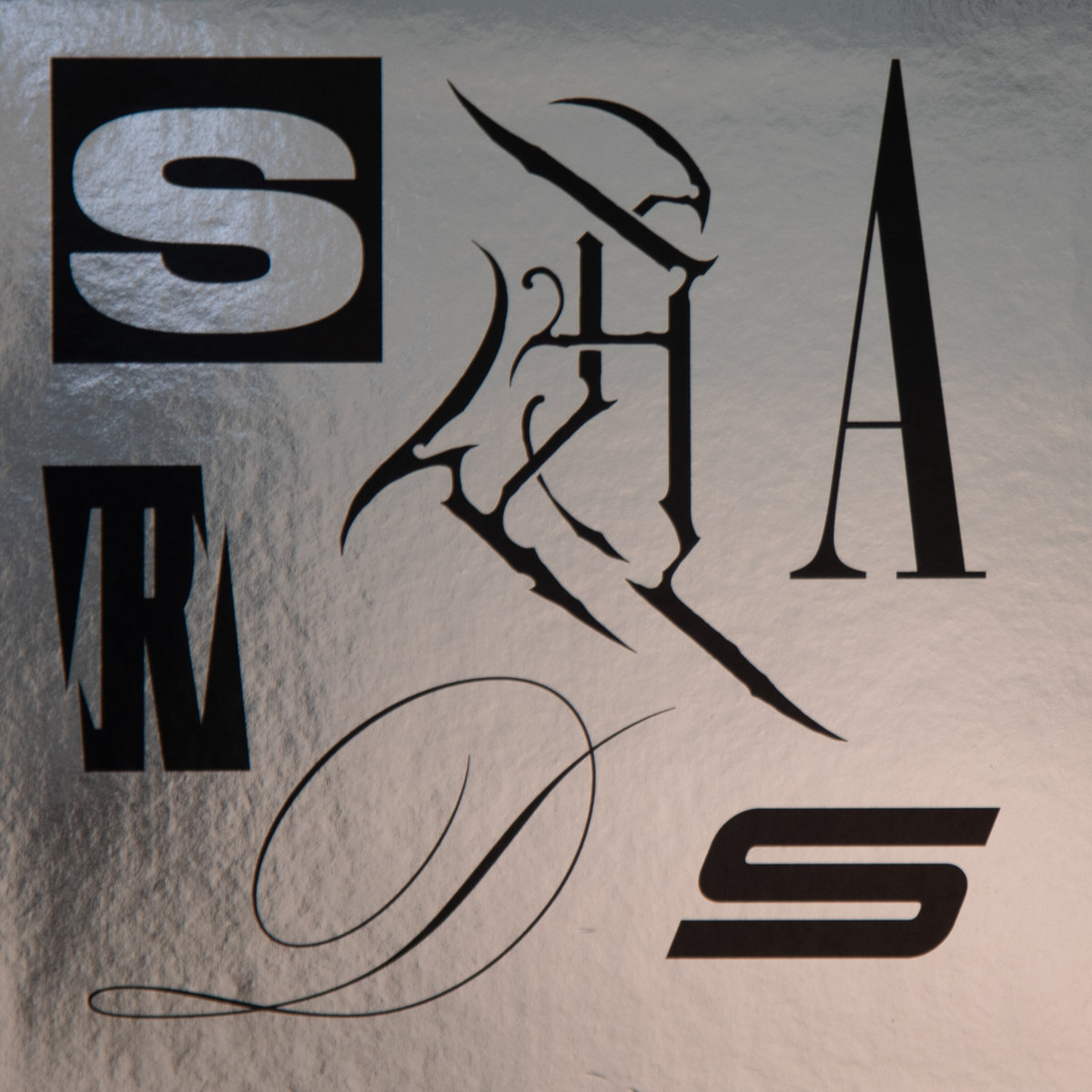
The double album (below) presents a suite of 11 pieces as two distinct discs, The Digital World (reflecting the dangers and threats it entails) and the more redemptive Our Natural World and it is sequenced in that order, reflecting a potentially optimistic outcome.

Incidentally it is also worth making the point that her releases are amazing artifacts in themselves, beautifully packaged with stunning artwork and photos as well as invaluable sleeve notes by the composer (almost like mini essays). They are not available for streaming.

However, for this performance the order of the selected pieces flipped between both worlds. At first this seemed somewhat counter to the narrative of the album. Ultimately, I think it reflects the constant battle between the two worlds which is arguably a better representation of reality.

Consequently, rather than starting with an introduction to a dystopic digital world, the set opened with a beautiful Bluebird with gorgeous solos on alto saxophone and accordion. Schneider’s use of and writing for the accordion is one of her most distinguishing and moving musical features.

However, darkness beckons, as we go into Don’t Be Evil, a takedown of Google’s now abandoned motto – “I guess they couldn’t reach that high bar” mocks Schneider. The sometimes sinister brass was reminiscent of Charles Mingus.

The worrying digital world continued in Sputnik, an “imagining of the digital exoskeleton” of stellar satellites representing humanity. It was sombre, eerie and contemplative, and featured some wonderful solo baritone saxophone playing by Tina Lægreid Olsen. The gently flashing stage and auditorium lights added to the atmosphere.

A mood of a different kind came with Look Up featuring mellow solo trombone, another instrument that Schneider writes brilliantly for. In the album notes she explains that she wrote the piece to feature trombonist Marshall Gilkes (who performs it on the album) inspired after thinking about his “sound, expression, range and facility”. Magnus Murphy Joelson played the piece admirably here.

Next up is CQ CQ, Is Anybody There?, inspired by Schneider’s avid radio ham father. The title is a reference to his ‘callsign’ and the piece uses Morse code for its rhythms (except for a recurring saxophone line). The album notes include a great story about her Dad’s radio ham QSL card: “The internet when used for honest human connection, is indeed incredible”. There was that ominous brass again with Magnus Murphy Joelson on tenor saxophone desperately seeking meaningful connection only to find AI represented by Richard Köster on trumpet (with electronics).

This was followed by The Sun Waited for Me. Inspired by a poem from Ted Kooser’s collection Winter Morning Walks: One Hundred Postcards to Jim Harrison, the music and saxophone solo (Atle Nymo) reflect an optimism and opportunity that provides the conclusion to the album. However, this particular set finishes with the darker Data Lords“At the end of this piece we no longer exist” says Schneider – the trumpet heralding, well, who knows what?

Except, of course, Schneider returns for an encore – “I don’t want to leave on annihilation”. Braided Together is another piece inspired by a Ted Kooser poem and Schneider dedicates it to a number of couples in the audience celebrating wedding anniversaries and long marriages. Its warm tone and mellow alto saxophone ensure the audience leaves on a more comforting note. But only after giving a well-deserved ovation to this exceptional composer, arranger and conductor, and an orchestra completely in tune with her unique talent.

The full line-up for the Oslo Jazz Ensemble, directed by Maria Schneider, is as follows:

Børge-Are Halvorsen (alto saxophone, flutes), Joakim Bergsrønning (alto saxophone, flutes and clarinet), Atle Nymo and Martin Myhre Olsen (tenor saxophone), Tina Lægreid Olsen (baritone saxophone, bass clarinet), Frank Brodahl, Marius Haltli, Richard Köster and Anders Eriksson (trumpet and flugelhorn), Even Skatrud, Nils Andreas Granseth and Magnus Murphy Joelson (trombone), Ingrid Utne (bass trombone), Jørn Oien (piano), Kalle Moberg (accordion), Jens Thoresen (guitar), Trygve Waldemar Fiske (bass), Håkon Mjåset Johansen (drums), Thor-Ivar Lund (sound engineer)

John Earls is Director of Research at Unite the Union. He posts on Bluesky and tweets / updates his ‘X’ content at @john_earls

To read more about Maria Schneider, click to visit her website, and click on the name to read more about the Oslo Jazz Ensemble

Published post no.2,462 – Monday 3 March 2025

On this day – two Haydn premieres

This day marks the anniversary of the premieres of two Haydn symphonies, from the group of 14 known as the ‘London’ symphonies.

While many Haydn symphonies are labelled with nicknames, their unnamed counterparts are far from inferior! That is certainly the case for Symphony no.98 in B flat major, premiered at the Hanover Square Rooms in London on this day in 1792 with Haydn directing from the keyboard and the violinist Johann Peter Salomon, who commissioned the symphonies, leading the orchestra:

Haydn’s penultimate published symphony is no.103, the Drumroll – which was also given its first performance in London, on this day in 1795. It was given in the King’s Theatre, again with Haydn at the fortepiano and the famed violinist, Giovanni Battista Viotti, leading the orchestra.

The symphony is scored for a larger orchestra, with a fulsome wind and brass section – plus the timpani, responsible for the drum roll that opens the work:

Published post no.2,460 – Sunday 2 March 2025

On Record – Gaspar Claus: Un Monde Violent OST (InFiné)

by Ben Hogwood

What’s the story?

In Maxime Caperan’s thriller Un Monde Violent, two brothers plunge into a spiral of violence, with uncomfortable results. For the soundtrack, he enlisted cellist and composer Gaspar Claus who has responded with a score in which he produces and performs.

What’s the music like?

In a word, tense. Claus has already shown a gift in his music to evoke scenes and emotions, and those qualities immediately come to the fore.

The Ouverture is laden with dread, its dark ambience creating waves of uncertainty, though it is still possible to admire the rich and fulsome colours Claus applies in his playing.

His Tancade album of 2021 showed how a wide range of techniques and skills with the cello can produce an unusually wide range of sounds, and that is again the case here, from the unsettling tremolo figures of Un meutre to the pizzicato thrumming of Moto joie or the existential dread of Moto Drame, with its widescreen panning.

Vers l’hôpital is a different story, its affecting chorale richly scored, and Claus moves from this to the flickering, wispy arpeggios of Le père, showing the sonic palette his cello has at its disposal.

The last two tracks are more substantial – Channel is a co-production with vocalist Caspar Clausen, but also features the disorientating appearance of a brass band in the middle of is cluster of chords. Peace is finally achieved in the closing credits, delivered in a concoction of softly voiced harmonics and drones.

Does it all work?

It does, provided you’re in a quiet room. Claus achieves a wide range of dynamics in his writing, and a silent backdrop will ensure all are brought to the fore.

Is it recommended?

It is. Gaspar Claus writes for the cello with great imagination and inventiveness, and this response to the story of Un Monde Violent is as dramatic as it is musically convincing. Strongly recommended.

For fans of… Julia Kent, Sarah Neufeld, Hildur Guðnadóttir, Peter Gregson

Listen / Buy

Published post no.2,460 – Saturday 1 March 2025

Switched On – Optometry: Lemuria (Palette Recordings)

by Ben Hogwood

What’s the story?

OptometryJohn Tejada and March Adstrum – return with a second album. Lemuria is described as a ‘sci-fi musical diary – a deeply personal record that processes the year’s events through introspection and creative exploration’.

By way of background, Tejada is known as a quality source of largely instrumental techno, while Adstrum is a guitarist and vocalist, whose parents played baroque violin. She toured backstage with a number of their ensembles.

This time the pair share production duties, realising the whole project in person and with lyrics taken from Adstrum’s diary entries. The songs ‘explore themes of rebirth, loss and closure.

What’s the music like?

There is certainly a wider range of emotions on this album than the pair’s After-Image debut, though there is a strong sense of melancholy that can be felt in the downtempo offerings. Unanswered captures this keenly, Adstrum singing of “another step on the treadmill”, before changing gears for the excellent Never Coming Back, a compelling quicker number.

Fear (Is The Mind Killer) is expressed through a twisted synth line, whose presence is a vivid source of anxiety. Distortion of a different kind pervades the slow and stately Target Practice. Emphasising the contrasts on the album, resignation is the overriding feeling on Antidote, but Bon Voyage promises a great deal more with its bubbling energy.

Does it all work?

It does, largely – with an instinctive meeting of minds that works well. Lemuria is defined as “an annual event in the religion of ancient Rome, during which the Romans performed rites to exorcise any malevolent and fearful ghosts of the restless dead from their homes”. This is not necessarily a dramatic rite, but a therapeutic one.

Is it recommended?

It is. Tejada and Adstrum have a compelling musical chemistry and their storytelling is well worth following.

For fans of… Steffi, John Tejada, Francis Harris, Michael Mayer

Listen / Buy

Published post no.2,459 – Friday 28 February 2025

Switched On – Tim Hecker: Shards (Kranky)

by Ben Hogwood

What’s the story?

This is effectively a collection of big and small screen offcuts, written over the last half decade. They have been selected and sequenced by Tim Hecker into a short LP.

The compositions were originally written for scoring projects including Infinity Pool, The North Water, Luzifer, and La Tour.

What’s the music like?

This is an intriguing collection from Hecker, whose work is never less than descriptive. In his company we move easily between electronic and acoustic music, the running order set by the mood.

The slow-moving Heaven Will Come is cold and eerie, oddly majestic but fragile at the same time as it slowly takes shape, its slowly descending motif compromised by glitches at the bass end. Monotone 3 is distinctly unnerving, with quarter tones that spread unease.

Morning is more restful, led by an easy piano figure, while Icesynth is also more consonant in its language. Sars Requiem feels transported in from a much earlier period in musical history.

Joyride Alternate is the most immediate track, warm and consoling as its keyboards inhale and exhale, a natural complement to the following Sunset Key Melt and its airy panorama of the end of the day.

Does it all work?

While understandably fragmented, Shards is a successful grouping of disparate pieces.

Is it recommended?

While not necessarily the right starting place for a full appreciation of Tim Hecker’s craft, this is certainly recommended for those familiar with his work. The vivid evocations of place create lasting and memorable pictures in the mind’s eye.

For fans of… Lawrence English, Stars Of The Lid, Fennesz, William Basinski

Listen / Buy

Published post no.2,457 – Wednesday 26 February 2025