In concert – Jenebah Kanneh-Mason, CBSO / Andrew Gourlay: Coleridge-Taylor, Rachmaninoff & Wagner

Jenebah Kanneh-Mason (piano), City of Birmingham Symphony Orchestra / Andrew Gourlay

Coleridge-Taylor Ballade in A minor Op.33 (1898)
Rachmaninoff Piano Concerto No. 2 in C minor, Op. 18 (1900-01)
Wagner arr. Gourlay Parsifal Suite (1877-82, arr. 2017-18)

Symphony Hall, Birmingham
Thursday 12 October 2023 (2.15pm)

Reviewed by Richard Whitehouse

A regular collaborator with the City of Birmingham Symphony Orchestra over recent seasons, Andrew Gourlay returned to Symphony Hall this afternoon for a varied programme of music from the late nineteenth-century and one where his input extended to more than conducting.

The resurgence of interest in Samuel Coleridge-Taylor’s music continues apace, his Ballade a success at the Three Choirs Festival and no less an effective concert-opener today. Gourlay drew a keen rhythmic impetus from its outer sections, while making the most of the surging melody that comes between before it returns to dominate the closing pages. What (if anything more specific) this piece might be about remains uncertain, but its undeniable impulsiveness of expression carries all before it, not least in so vibrant and committed a performance as this.

Rachmaninoff’s Second Piano Concerto has never been more ubiquitous than it is today, and it takes a performance of some distinction to experience it afresh. That was not the case here, even though Jeneba Kanneh-Mason certainly contributed pianism of a high order – elegance of touch combined with crystal-clear articulation as made those more understated passages a pleasure to behold. What it lacked was greater projection elsewhere – piano all but inaudible at the climax of the first movement, despite Gourlay reining in orchestral dynamics – or that sense of the work as a long-term, cumulative entity. Intimate and confiding, the Adagio was the undoubted highlight and though the scherzando sections of the finale lacked a degree of incisiveness, the ‘big tune’ was eloquently rendered when it returned as a fervent peroration.

Overall, if this was a performance not quite the sum of its best parts, it confirmed this latest addition to the Kanneh-Mason dynasty is shaping up as a pianist with whom to reckon – as was demonstrated by her capricious take on Rachmaninoff’s Prelude in A flat major Op.23/8.

Symphonic syntheses from Wagner’s music-dramas (latter-day equivalent of those ‘bleeding chunks’ beloved of an earlier generation) have enjoyed something of a vogue in recent years, though Gourlay’s Parsifal Suite feels both more modest and more successful in its ambitions.

Writing in the programme, the conductor explained his concern had been to draw this opera’s numerous orchestral passages into a continuous as well as a cohesive sequence, with no need for ‘outside’ linking material. This he achieved by reordering those seven sections in question such that one segued naturally into the next. Thus the Prelude to Act One – opulent but never portentous – was followed by the Good Friday Music from Act Three, its beguiling pathos a perfect foil for the anguished Transformation Music from Act Three then the desolate Prelude to Act Three; now finding its continuation in the volatile Prelude to Act Two, before dramatic and musical equilibrium is restored with the Transformation Music from Act One – its stately progress here making possible the Finale to Act Three with its serenely enveloping catharsis.

Certainly, anyone deterred by the formidable length and gravitas of the complete opera will find Gourlay’s suite conveys its essence – not least as rendered with such poise and insight by the CBSO, in excellent shape prior to touring Germany and Switzerland later this month.

You can read all about the 2023/24 season and book tickets at the CBSO website. Click on the artist names for more information on pianist Jeneba Kanneh-Mason and conductor Andrew Gourlay, and for more on composer Samuel Coleridge-Taylor. Andrew Gourlay’s recording of the Parsifal Suite is available through Orchid Classics, and can be listened to below:

Published post no.1,979 – Sunday 17 October 2023

In concert – Baiba Skride, CBSO / Andrew Gourlay: Rossini, Mozart, Berlioz & Prokofiev

Rossini Guillaume Tell – Overture (1829)
Mozart
Violin Concerto no.5 in A major K219 (1775)
Berlioz
Le carnaval romain, Op.9 (1844)
Prokofiev
Romeo and Juliet – Suite no.2 Op.64ter (1936)

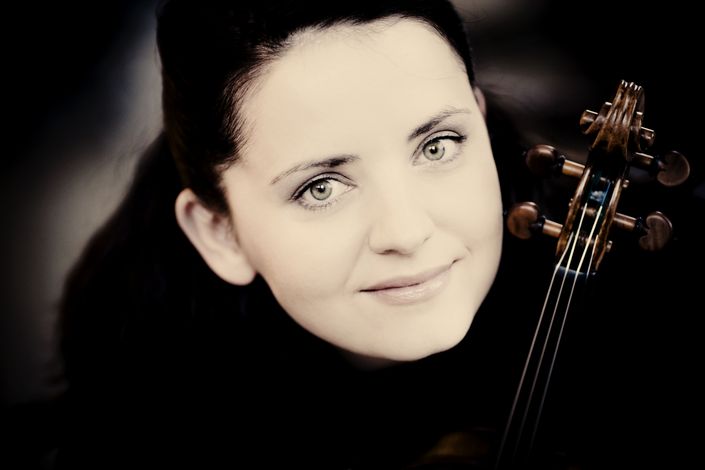
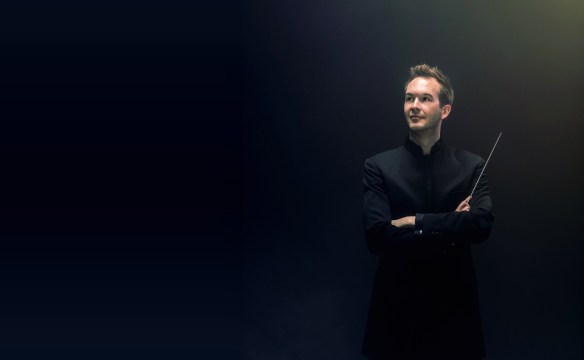
Baiba Skride (violin, below), City of Birmingham Symphony Orchestra / Andrew Gourlay (above)

Symphony Hall, Birmingham
Wednesday 13 October 2021, 2pm

Written by Richard Whitehouse; Picture of Andrew Gourlay (c) Kaupo Kikkas, Baiba Skride (c) Marco Borggreve

This afternoon’s concert by the City of Birmingham Symphony Orchestra saw an unexpected but welcome return from Andrew Gourlay (replacing an indisposed François Leleux) for this diverse programme as worked much better as a concert than it might have appeared on paper.

Its fame as a novelty item in cartoons et al can easily obscure the innovative qualities of the Overture to William Tell, last and most ambitious of Rossini’s operas, in terms of its eliding between curtain-raiser and symphonic poem; which latter aspect Gourlay emphasized in this evocative but cohesive account – whether in the ruminative calm of its opening section with the CBSO cellos eloquently fronted by Eduardo Vassallo, a scrupulously controlled ‘storm’ episode, a not unduly mawkish ‘lullaby’ then a closing galop free from Hollywood overkill.

Mozart was barely out of his teens on writing his Fifth Violin Concerto, if not the finest then certainly the most eventful of his cycle through such as the soloist’s alluring first entry in the opening Allegro with music not directly related to either of the main themes and rendered by Baiba Skride with real finesse. Equally successful was her succinct yet ideally proportioned cadenza prior to its close; after which, the Adagio had elegance without excessive sweetness. In the final Rondeau, others may have made more of that contrast between graceful lyricism and the robust humour of its central section’s stylized Turkishness, but Skride brought these into complete accord and, with Gourlay securing limpid playing from a scaled-down CBSO, this was a persuasive performance of music whose felicities can easily be taken for granted.

Formerly ubiquitous as a concert-opener, Berlioz’s Roman Carnival – the inspired recycling of music from his opera Benvenuto Cellini – launched the second half to striking effect. If the soulful introduction took a little time to settle (doubtless occasioned by a soon extinguished onstage rebellion before Gourlay’s return), what ensued was not lacking rhythmic elan or that scintillating interplay of orchestral timbres as was Berlioz’s gift to the orchestra. Effecting a tangible crescendo into the blazing peroration, Gourlay undoubtedly saved the best until last.

Ad hoc selections from Prokofiev’s Romeo and Juliet rarely provide a satisfying second half, making one of three suites the composer extracted from his ballet the more viable option. Of these the Second Suite is the best overview, and this account quickly found its stride with a visceral take on the music which opens Act Three, the grinding progress of Montagues and Capulets proving no less forceful. Juliet as a young girl exuded the right insouciance and pathos, as did Friar Laurence that of earnest authority. The lithe Dance made a telling foil to Romeo and Juliet before parting, its fraught rapture potently conveyed here, then Dance of the girls with lilies made for an appealingly wistful entrée into Romeo at Juliet’s grave with its searing anguish that only gradually subsides into expectant calm towards the close.

Gourlay had previously directed a fine account of Rachmaninov’s Third Symphony with this orchestra and the Prokofiev confirmed his prowess in Russian music. The CBSO, meanwhile, returns next Wednesday for a varied American programme with the saxophonist Jess Gillam.

Further information on the CBSO’s current season can be found at the orchestra’s website. For more on Baiba Skride, click here – and for more information on Andrew Gourlay, head to the conductor’s website

Live review – CBSO with Oliver Janes & Andrew Gourlay: Strauss, Copland & Rachmaninov

Oliver Janes (clarinet), City of Birmingham Symphony Orchestra / Andrew Gourlay (above)

Symphony Hall, Birmingham. Thursday 6th April, 2017

Richard Strauss Don Juan Op.20 (1888)

Copland Clarinet Concerto (1948)

Rachmaninov Symphony no.3 in A minor Op. 44 (1936)

Written by Richard Whitehouse

An ear infection meant that Mirga Gražinytė-Tyla had to withdraw from this concert, which provided a welcome opportunity for Andrew Gourlay (now into his second season as Music Director of the orchestra in Valladolid) to make his debut at Symphony Hall with the CBSO.

A pity the Fourth Suite from the ballet The Golden Key by Mieczysław Weinberg had to be dropped from the programme, but that will hopefully be rescheduled (and if Gražinytė-Tyla could tackle one of this composer’s symphonies as his 2019 centenary approaches, then so much the better). Instead, Gourlay directed an account of Strauss’s Don Juan which, while it rather failed to ignite in the earlier stages, evinced some suitably enticing playing during the amorous central episode and then a rousing culmination prior to those fatalistic closing bars.

Hardly a natural complement to Copland’s Clarinet Concerto, but the latter piece works well in a variety of contexts. It also provided an impressive showcase for Oliver Janes, now into his third season as principal clarinet of this orchestra and a player whose elegant while never unduly soft-grained tone was admirably suited to the first movement, with its limpid backing for strings and harp. Janes tackled the central cadenza with no less security – necessarily so as, in addition to its technical virtuosity, it functions as a formal and expressive ‘bridge’ into the second movement. This latter, substituting piano for harp and focusing on the jazz idioms often to the fore in Copland, was a little too reined-in over much of its course with the final pages failing to lift off, though there was never any doubting Janes’s identity with the piece.

The highlight of the concert came after the interval with a perceptive and involving account of Rachmaninov’s Third Symphony. Although it lags well behind its predecessor in terms of performance, this piece has moved from the periphery of the repertoire as earlier tendencies to dismiss it as a rerun of past glories have yielded to a recognition of just how subtly while effectively it overhauls the composer’s thinking for the inter-war period. Not for nothing was Nikolay Medtner alarmed by what he heard as the ‘modernization’ of Rachmaninov’s idiom.

In terms of textural balance and formal continuity it poses more problems than any other of Rachmaninov’s orchestral works, but Gourlay was never fazed by these potential pitfalls. The unworldly ‘motto’ launching the first movement was hauntingly rendered, and the only error in what followed was the omission of an exposition repeat necessary to balance an extensive development whose crisis-riven denouement was acutely realized here.

Neither did Gourlay misjudge the integration of slow movement and scherzo in what follows – the outcome being a developing variation as seamless as it was affecting. If the finale then unfolded at slightly too relaxed a pace, this enabled Gourlay to characterize detail in as resourcefully orchestrated a movement as Rachmaninov ever penned – with the closing accelerando vividly brought off.

A convincing take, then, on this engaging symphony and a fine marker for Gourlay to have laid down in what should prove an ongoing association with this orchestra. Those unable to attend Saturday’s repeat can hear it being broadcast by BBC Radio 3 on Tuesday 18th April.

For more information on future CBSO concerts head to their website