Listening to Beethoven #147 – 10 Variations on ‘La stessa, la stessissima’, WoO 73

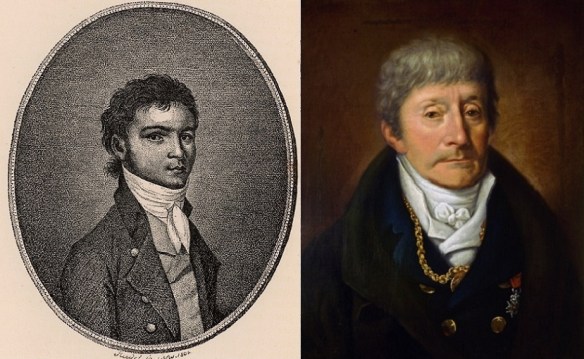
beethoven-salieriLudwig van Beethoven and Antonio Salieri (right)

8 Variations on ‘Tändeln und Scherzen’ WoO 76 for piano (1799, Beethoven aged 28)

Dedication unknown
Duration 9′

written by Ben Hogwood

Listen

What’s the theme like?

The theme is taken from a duet in Salieri‘s opera Falstaff, premiered on 3 January 1799 in Vienna’s Theater am Kärntnertor.

Background and Critical Reception

The variations that Beethoven dashed off after hearing Salieri’s Falstaff in January 1799 earned him a drubbing from critics, writes Jean-Charles Hoffelé. ‘Herr Beethoven may know how to improvise, but he is unable to create good variations’, wrote the Allgemeine musikalische Zeitung.

Hoffelé speculates on the cause of the journalist’s irritation, suggesting it might be ‘the tone of pure entertainment, the impertinent giocoso manner’. He notes however that Beethoven is enjoying himself, citing ‘the distilled Adagio in the top register of the keyboard’.

Thoughts

A strident theme sets out its stall, before Beethoven takes it for a walk in the first variation and then a quicker, propulsive jog in variation two. Again this is a composer working instinctively, the feeling being this composition may well have been written in one sitting at the keyboard.

Beethoven has fun with the offbeat comments of the third variation, while things take a sombre tone in the minor key with the fifth. The music springs out of this with an upright gait, and a fugal episode, then a terrific flurry of notes in the seventh and tenth variations, which no doubt impressed or infuriated the Viennese audience!

The final variation, the tenth, is a tour de force of athletic prowess in the right hand before adding on a coda, as so many of Beethoven’s variation sets do. This one, however, is by turns violent, amusing and touching, channelling the spirit of C.P.E. Bach as it changes mood almost by the bar. Final resolution is forcefully achieved.

Recordings used and Spotify links

Gianluca Cascioli (piano) (Deutsche Grammophon)
Cécile Ousset (piano) (Eloquence)
Ronald Brautigam (fortepiano) (BIS)

If you are happy to listen to the relatively taut sound of Ronald Brautigam’s fortepiano, you will find much to enjoy in his version, a thoroughly entertaining and dramatic reading of Beethoven’s mood changes. Cécile Ousset, perhaps inevitably, has greater elegance but also enjoys the playful aspects, not to mention the outrageous final variation.

Also written in 1799 Benjamin Carr Dead March and Monody

Next up 10 Variations on ‘La stessa, la stessissima’ WoO 73

Listening to Beethoven #146 – 8 Variations on ‘Tändeln und Scherzen’, WoO 76

beethoven-sussmayrLudwig van Beethoven and Franz Xaver Süssmayr  (right)

8 Variations on ‘Tändeln und Scherzen’ WoO 76 for piano (1799, Beethoven aged 28)

Dedication unknown
Duration 9′

written by Ben Hogwood

Listen

What’s the theme like?

The theme is taken from a trio in the opera by Soliman oder die drei Sultaninnen by Franz Xaver Süssmayr. A popular Austrian composer at the time of composition, Süssmayr is not a familiar name in the concert hall nowadays, except for his completion of Mozart’s Requiem.

Background and Critical Reception

Thoughts

This is pure, instinctive inspiration – and is quite stop-start as a result. Yet just as Beethoven has a lot of fun with these variations, so does his listener. The fourth variation is especially brilliant, the hands tumbling down the keyboard like a waterfall.

An elegant seventh variation, the one about which Hoffelé writes, leads to a run of trills, like the end of a cadenza, which look set to complete the set – until a twist in the tale appears in the form of a fugue, crisply executed in the form of a Bach invention.

Beethoven switches unexpectedly to D major near the end, yet this is wholly in keeping with the free running approach throughout this entertaining set.

Recordings used and Spotify links

Alfred Brendel (piano) (Vox)
Cécile Ousset (piano) (Eloquence)
Ronald Brautigam (fortepiano) (BIS)

Cécile Ousset is a model performer in these variations, with enviable dexterity and a good deal of humour. Ronald Brautigam enjoys the more brash, unscripted moments and the piece sounds great on the fortepiano. Brendel is excellent too.

Also written in 1799 Benjamin Carr Dead March and Monody

Next up 10 Variations on ‘La stessa, la stessissima’ WoO 73

Listening to Beethoven #135 – Sonata for piano and violin no.3 in E flat major Op.12/3

violin-sonata-op123

River Landscape Along the Tiber near the Acqua Acetosa (1814) by Joseph Anton Koch

Sonata no.3 for piano and violin in E flat major Op.12/3 (1798, Beethoven aged 27)

1. Allegro con spirito
2. Adagio con molta espressione
3. Rondo. Allegro molto

Dedication Antonio Salieri
Duration 18′

Listen

by Ben Hogwood

Background and Critical Reception

The third of Beethoven’s Op.12 sonatas for piano with violin arrives in the key of E flat major, oft-used in his output up until now.

Relatively little is written about the piece, which along with the other two Op.12 works appears to have had its first performance in 1799, with Beethoven himself at the piano and Ignaz Schuppanzigh playing violin.

However Nigel Simeone, writing in The Beethoven Companion, finds reason to admire the composer’s work, saying, ‘nothing in these works is more individual than the C major Adagio con molt’ expressione. With its violin melody against a wide variety of figuration low in the piano part, this rapt piece displays some of Beethoven’s most original invention from this period in his career, its piano writing hardly surpassed even in the piano sonatas.’

Thoughts

A relatively simple figure starts the third piece in the Op.12 set of sonatas, based on the E flat major arpeggio and shared between piano and violin. This cuts to bright dialogue and a development section where the piano lets loose with some extravagant flourishes. As with the other two pieces, inspiration comes from the Mozart direction – but the style is pure Beethoven, very open and agile, the two instruments finishing each other’s sentences.

The second movement switches to C major and is introverted, with simple, unaffected thoughts. The second section becomes particularly reserved, moving in its central section to long violin notes and a flowing piano accompaniment that bring to mind Gounod’s Ave maria arrangement of Bach’s famous C major prelude. The tables are then turned, the piano spinning the melody over soft violin figures, fully justifying the praise given by Nigel Simeone above.

The association with Bach is audible in the third movement too. After a perky tune leads us off, and the busy piano part propels the music forwards, there is an exchange of ideas with the fluency and profile of a Bach sonata, especially over the pedal note in the bass of the piano just before the end.

This piece feels like the more forward looking of the Op.12 set, despite going further back in time for its reference points. It completes a very positive triptych of works deserving of much closer inspection than they tend to get.

Recordings used and Spotify playlist

Midori Seiler (violin), Jos van Immerseel (fortepiano) (Zig Zag Classics)
Yehudi Menuhin (violin), Wilhelm Kempff (Deutsche Grammophon)
Josef Suk (violin), Jan Panenka (piano) (Supraphon)
Alina Ibragimova (violin), Cédric Tiberghien (Wigmore Hall Live)
Tasmin Little (violin), Martin Roscoe (piano) (Chandos)
Frank Peter Zimmermann (violin), Martin Helmchen (BIS)
Paul Barritt (violin), James Lisney (piano) (Woodhouse Editions)

Midori Seiler and Jos van Immerseel give this music a ‘freshly minted’, just off the page feeling. Their instinctive approach is easy to enjoy. Yehudi Menuhin’s tone in the slow movement demands the listener’s attention, a beautiful interpretation with Wilhelm Kempff sensitive in his piano playing.

The Spotify playlist below does not contain the Barritt / Lisney version, but does include a highly powered account by Gidon Kremer and Martha Argerich, recorded for Deutsche Grammophon:

You can chart the Arcana Beethoven playlist as it grows, with one recommended version of each piece we listen to. Catch up here!

Also written in 1798 Haydn – Die Schöpfung (The Creation) Hob. XXI:2

Next up Piano Sonata no.8 in C minor Op.13 ‘Pathétique’

Listening to Beethoven #134 – Sonata for piano and violin no.2 in A major Op.12/2

santa_maria_maggiore_in_rom
Santa Maria Maggiore, Rome (c1808) by Joseph Anton Koch

Sonata no.2 for piano and violin in A major Op.12/2 (1798, Beethoven aged 27)

1. Allegro vivace
2. Andante, più tosto allegretto
3. Allegro piacevole

Dedication Antonio Salieri
Duration 18′

Listen

by Ben Hogwood

Background and Critical Reception

‘Learned, learned, always learned, no naturalness, no melody!’ So wrote a reviewer on hearing Beethoven’s Op.12 sonatas for piano and violin in 1799. Nigel Fortune, writing in The Beethoven Companion, speculates the ‘tumbling succession of fresh material’ in the first movements would have been responsible for this verdict.

William Drabkin, writing liner notes for Chandos and the Tasmin Little / Martin Roscoe recording, notes the extended phrases on the ‘E’ string, and how they add ‘to that work’s brilliant sound-world’, and that ‘arpeggios and scale passages are also well placed’.

Thoughts

There is a cheeky grin on Beethoven’s face from the outset as his main tune appears to have a lot of ‘wrong’ notes in it. He deliberately leans on those notes to create an amusing and fresh dialogue between piano and violin, who stick closely together as they do on the previous work.

After these frivolities the second movement is more thoughtful and reserved, set in the minor key. A solemn introduction from the piano is followed by a plaintive violin melody. This feels the more ‘Mozartean’ of the three movements, A minor being a favoured key of Mozart.

From here Beethoven returns to the light-hearted mood of the first movement, with a triple-time lilt offering the spirit of the dance. It is attractive with the outright cheekiness of the melody we heard before.

This second sonata is an attractive piece, bright as a spring day thanks to the writing for violin. It is easy to imagine Beethoven hamming up the cheeky tune in the first movement, perhaps craving the mildly outraged review he got. There would be many more!

Recordings used and Spotify playlist

Midori Seiler (violin), Jos van Immerseel (fortepiano) (Zig Zag Classics)
Yehudi Menuhin (violin), Wilhelm Kempff (Deutsche Grammophon)
Josef Suk (violin), Jan Panenka (piano) (Supraphon)
Alina Ibragimova (violin), Cédric Tiberghien (Wigmore Hall Live)
Tasmin Little (violin), Martin Roscoe (piano) (Chandos)
Frank Peter Zimmermann (violin), Martin Helmchen (BIS)
Paul Barritt (violin), James Lisney (piano) (Woodhouse Editions)

Zimmermann and Helmchen deliver a sparkling performance of this work, enjoying the humour of the first movement. Seiler and van Immerseel, too, give a winsome account, with effective lack of vibrato from the violinist in the second movement. Josef Suk and Jan Panenka enjoy the bright sound Beethoven assigns to his instrumentalists.

The Spotify playlist below does not contain the Barritt / Lisney version, but does include a highly powered account by Gidon Kremer and Martha Argerich, recorded for Deutsche Grammophon:

You can chart the Arcana Beethoven playlist as it grows, with one recommended version of each piece we listen to. Catch up here!

Also written in 1798 Haydn – Solo e pensoso, Hob.XXIVb:20

Next up Sonata for piano and violin no.2 in A major Op.12/2

Listening to Beethoven #133 – Sonata for piano and violin no.1 in D major Op.12/1

joseph-anton-koch-wasserfall-im-berner-oberland-1796
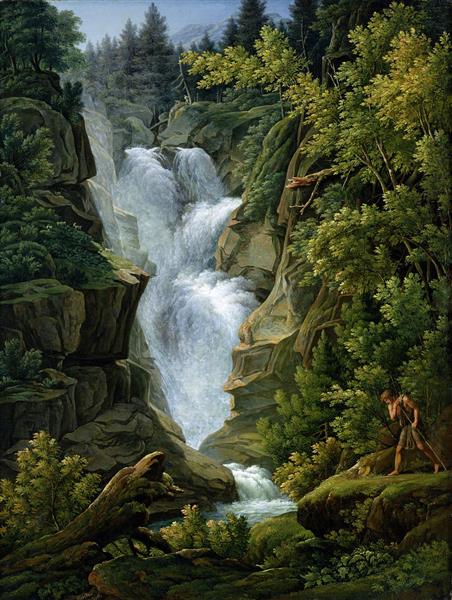
Waterfall in the Bern Highlands (1796) by Joseph Anton Koch

Sonata no.1 for piano and violin in D major Op.12/1 (1798, Beethoven aged 27)

1. Allegro con brio
2. Tema con variazioni. Andante con moto
3. Rondo. Allegro

Dedication Antonio Salieri
Duration 20′

Listen

by Ben Hogwood

Background and Critical Reception

Beethoven’s first venture into the world of the violin sonata needs a few qualifiers. Firstly, the three works collected together as Op.12 were published in 1798 as Three Sonatas for keyboard with a violin, dedicated to his teacher Salieri. They were following Mozart’s convention where the keyboard is still given primary billing – but as the music shows, the tables were definitely beginning to turn in favour of the stringed instrument, just as they were in the two sonatas for keyboard and cello published as Op.5.

The verdict among musicologists is generally that Beethoven is sticking closely to Mozart’s style of writing in these pieces – and indeed that they might be playing it too safe. Daniel Heartz certainly thinks so, and given the detail he invests in Beethoven’s works it is surprising to see them dismissed with a relatively curt verdict. For him the Op.12 sonatas are ‘comparatively tame’. They are said to be indebted to Mozart’s works in the genre. Nevertheless they lack gripping ideas’.

Elsewhere praise is more forthcoming. Richard Bratby, writing for the recording on Signum Classics from Tasmin Waley-Cohen and Huw Watkins, declares that ‘far from being constrained by Mozart’s model, Beethoven had given it Romantic wings’. He enjoys the ‘winsome theme’ given to the second movement, on which the composer writes four variations, and the ‘jig-like finale’ with its ‘subversive rhythmic games worthy (though Beethoven would never have conceded it) of Haydn himself.

Thoughts

A new form for Beethoven – and one that he approaches with characteristic vigour. The first of what would be twelve published sonatas for the combination of piano and violin is enjoyably upbeat and full of melodies – and concise, too, as the composer keeps his musical arguments to the point.

That said, the first movement is quite a sizable structure, beginning with a flourish from both instruments that sets a sunny mood and the close musical relationship between the two instruments. Beethoven, who played the piano with violinist Ignaz Schuppanzigh (quartet leader for Prince Lichnowsky) in the early performances, is immediately at home

The theme and variations of the second movement are a familiar tactic but freshly employed, especially when the third of the four variations moves into an explosive section in the minor key. Beethoven, an acknowledged master of the variation form, is still finding new ways of pushing himself.

The third movement has the best tune, and it’s a surprisingly angular one, with big melodic leaps – but it stays in the head, helped by the repetitions demanded by the Rondo form. Beethoven is off and running in the violin sonata form, and though Mozart is undoubtedly an influence, the overall voice is unique.

Recordings used and Spotify playlist

Midori Seiler (violin), Jos van Immerseel (fortepiano) (Zig Zag Classics)
Yehudi Menuhin (violin), Wilhelm Kempff (Deutsche Grammophon)
Josef Suk (violin), Jan Panenka (piano) (Supraphon)
Alina Ibragimova (violin), Cédric Tiberghien (Wigmore Hall Live)
Tasmin Little (violin), Martin Roscoe (piano) (Chandos)
Frank Peter Zimmermann (violin), Martin Helmchen (BIS)
Paul Barritt (violin), James Lisney (piano) (Woodhouse Editions)

The above is only a snapshot of a remarkably high-level discography for these sonatas, with a wide variety of approaches. Yehudi Menuhin and Wilhelm Kempff have a wonderfully close rapport and obvious enjoyment of the music. Josef Suk and Jan Panenka are brightly lit on an older Supraphon recording, which is brilliantly played if a little too ‘full-on’ at times.

The newest recording, from Frank Peter Zimmermann and Martin Helmchen, has a youthful vigour while the only period instrument example here, from Midori Seiler and Jos van Immerseel, has an exciting cut and thrust.

The Spotify playlist below does not contain the Barritt / Lisney version, but does include a highly powered account by Gidon Kremer and Martha Argerich, recorded for Deutsche Grammophon:

You can chart the Arcana Beethoven playlist as it grows, with one recommended version of each piece we listen to. Catch up here!

Also written in 1798 Haydn – Solo e pensoso, Hob.XXIVb:20

Next up Sonata for piano and violin no.2 in A major Op.12/2