
In Concert – Michael Collins & Wu Qian @ Wigmore Hall: Finzi, Martinů, Milhaud, Tailleferre & Arnold Cooke (reviewed online)

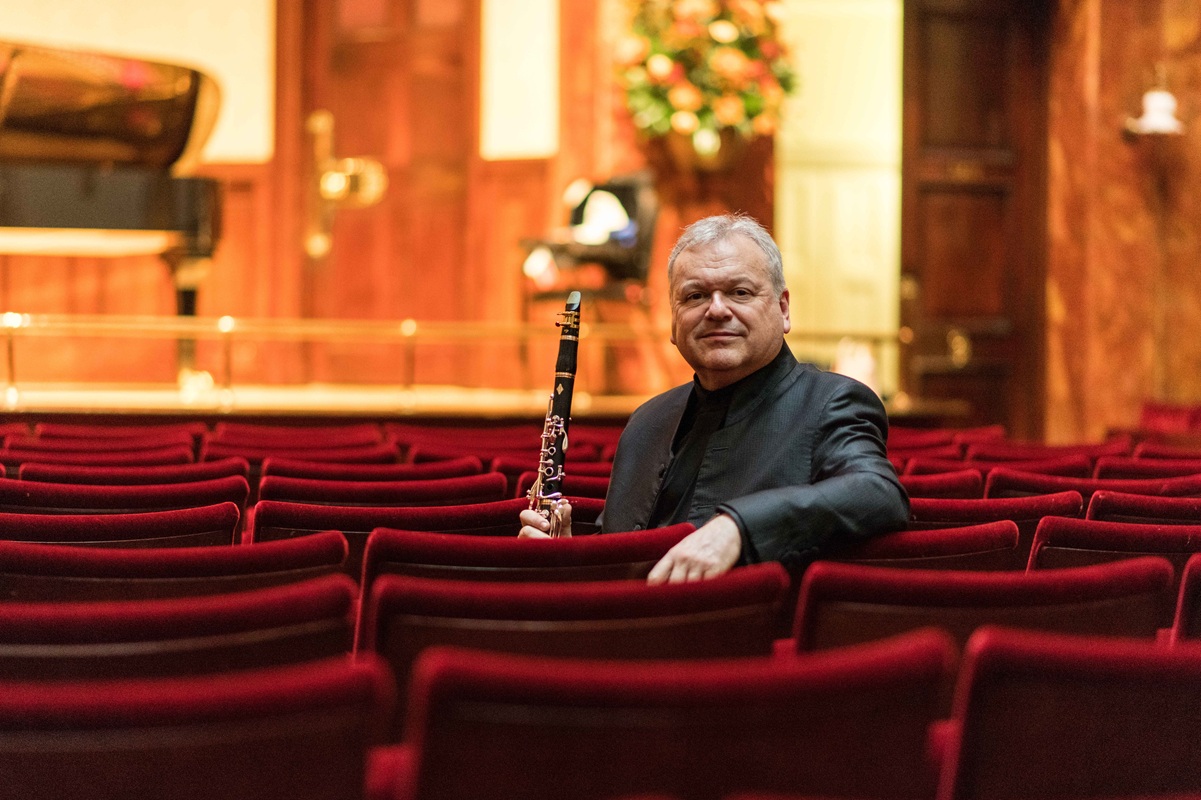
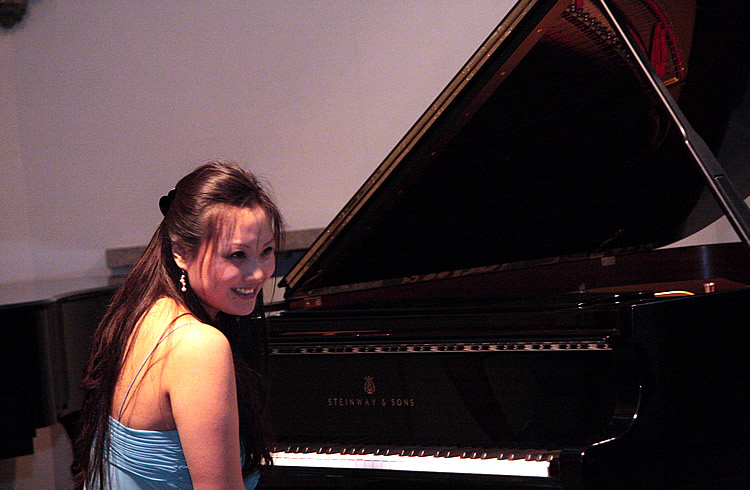
Michael Collins (clarinet, above), Wu Qian (piano, below)

Finzi 5 Bagatelles Op.23 (1920-9)
Martinů Sonatina for clarinet and piano (1956)
Milhaud Duo Concertante Op.351 (1956)
Tailleferre Arabesque (1973)
Cooke Clarinet Sonata in B flat (1959)

Wigmore Hall, London
Monday 9 March, 1.05pm

Reviewed from the online broadcast by Ben Hogwood Photo of Michael Collins (c) Jack Lewis Williams

This was the first public appearance for Michael Collins and Wu Qian as a duo, yet together – on BBC Radio 3’s Lunchtime Concert at least – they displayed an easy familiarity, suggesting a partnership of a longer vintage.

They began with five much-loved miniatures from Gerald Finzi, often heard in isolation on rival radio stations. Collins and Qian enjoyed the bustling counterpoint of the outer Prelude and Fughetta movements, but the emotional heart of the set lay in the lovingly phrased Romance and Forlana, whose lilting rhythms were persuasively played, and the solemn Carol. The downbeat mood, inhabited from wartime struggles, was especially pertinent, though the Fughetta gave the music renewed energy in this performance.

Martinů’s Clarinet Sonatina is a late work, completed during a brief second stay in New York. The Czech composer was used to relocating at short notice on account of Nazi invasions of his homeland and Paris, but this brief second trip to America was an ultimately unsuccessful career move. The Sonatina inhabits the composer’s restlessness, looking longingly across the Atlantic towards Paris. This was captured by Collins and Qian in the bare piano octaves and reflective melody of the Andante, while the finale found greater conviction of feeling.

While Martinů pined for the French capital, Darius Milhaud was writing his Duo Concertant as a competition piece for his Paris Conservatoire students. Milhaud rarely outstays his welcome, and the piece was wrapped up with typical humour and a heartfelt central episode, gracefully played. Meanwhile the Arabesque of Milhaud’s fellow ‘Les Six’ member, Germaine Tailleferre, was a softly undulating dance that proved restrained yet elegant.
The English composer Arnold Cooke acquired a continental edge to his music thanks to a period of study with Paul Hindemith in the 1920s. His compositions for clarinet were written for Franz Reizenstein, also a pupil of Hindemith, and include a concerto and quintet. The airy first movement of the Clarinet Sonata in B flat – written deliberately without major or minor key labelling – was similarly elusive, its questioning line thoughtfully phrased by Collins in a satisfying balance with Qian.

The strident second movement is laced with humour which Collins was keen to bring out, before a probing slow movement with private asides from the clarinet hints at darker thoughts, particularly in its low burbling notes from the instrument near the end, suggesting a watery contemplation. The Finale swept these thoughts aside, making demands on Collins’ agility with the wide range of its thematic material, common across the work. The music dipped and weaved its way through a number of entertaining figures, plumping resoundingly for the major key in a hugely satisfying coda.

You can listen to this concert on BBC Sounds until 9th April.

Published post no.2,824 – Monday 9 March 2026

On Record – Arnold Cooke: Complete String Quartets, Volume One (The Bridge Quartet) (Toccata Classics)

Arnold Cooke
String Quartet no.1 (1933)
String Quartet no.3 (1967)
String Quartet no.5 (1978)

Bridge Quartet [Colin Twigg, Catherine Schofield (violins), Michael Schofield (viola), Lucy Wilding (cello)]

Toccata Classics TOCC0696 [56’05”]
Producer and Engineer Michael Ponder

Recorded 21-22 November 2022, 5-6 March 2023, All Saints’ Church, Thornham

Reviewed by Richard Whitehouse

What’s the story?

Toccata Classics continues its coverage of Arnold Cooke (his organ music is on TOCC0659) with this first volume of his string quartets, performed by The Bridge Quartet and confirming him as a skilful practitioner of a genre such as found favour with many composers of his era.

What’s the music like?

Premiered by the Griller Quartet in March 1935, the First Quartet gained the praise of no less than Havergal Brian and helped to establish Cooke’s wider reputation. Completed a year after his return from study in Berlin, this undeniably shows the influence of Hindemith but offsets it with a lyrical poise as to suggest lessons well learned from an earlier generation of British composers. Although cast in four movements, the opening Lento is a fugue whose emotional austerity never seems unduly severe – with the ensuing Vivace and Allegretto a scherzo then intermezzo of respective impetus and suavity. The final Presto rounds off proceedings with a keen yet never wanton energy that sets the seal on a substantial and approachable work; one which should not have had to wait 84 years until its revival by the present ensemble in 2022.

First given by the English Quartet in May 1968, the Third Quartet is contemporaneous with Cooke’s Third Symphony – whose coupling on Lyrita with a suite from his ballet Jabez and the Devil doubtless introduced many to this composer. Here one senses the presence, rather than influence as such, of Bartók – specifically his Sixth Quartet, the underlying rhythm of whose Marcia informs the initial Allegro of this work, and whose recurrent Mesto theme proves hardly less pervasive in an Andante which none the less emerges as one of Cooke’s most thoughtful and revealing statements. The brief scherzo exudes a driving impetus that carries over into a final Allegro that, in its ongoing vivacity and affirmative close, confirms this as the most likely of these quartets to find its place in the repertoire of the 20th century.

By the time his Fifth Quartet received its premiere in March 1979, Cooke had evidently been eclipsed by a younger generation though there is nothing overtly reactionary about this piece. Unfolding as a single movement, it has three clearly defined sections (as on this recording) -thus, a tense if ambivalent Moderato leads into an Allegro which adeptly elides scherzo and slow movement with no loss of ongoing momentum, then a Presto whose sheer brevity does not preclude allusions to earlier ideas as it steers this compact work to a decisive conclusion.

Does it all work?

Pretty much. Cooke might never have had an overtly distinctive or even personal idiom, but his music has a technical rigour and a feel for communication as makes listening rarely less than pleasurable. It helps when, in the Bridge Quartet, it has exponents so well versed in the lineage of British quartet writing – not least the composer who provided this ensemble’s name – and as attentive to the wealth of contrapuntal invention as to the greater design with each of these pieces. Hopefully other such groups will be encouraged to include them in their recitals.

Is it recommended?

Indeed so. The recording has a focus and perspective which is ideal for such music, and there are succinctly informative annotations by Peter Marchbank. Hopefully the follow-up volume, featuring the Second and Fourth Quartets, will be appearing from this source before too long.

Listen & Buy

For purchase options, you can visit the Toccata Classics website. Click on the names to read more about The Bridge Quartet and composer Arnold Cooke.

Published post no.2,497 – Monday 7 April 2025