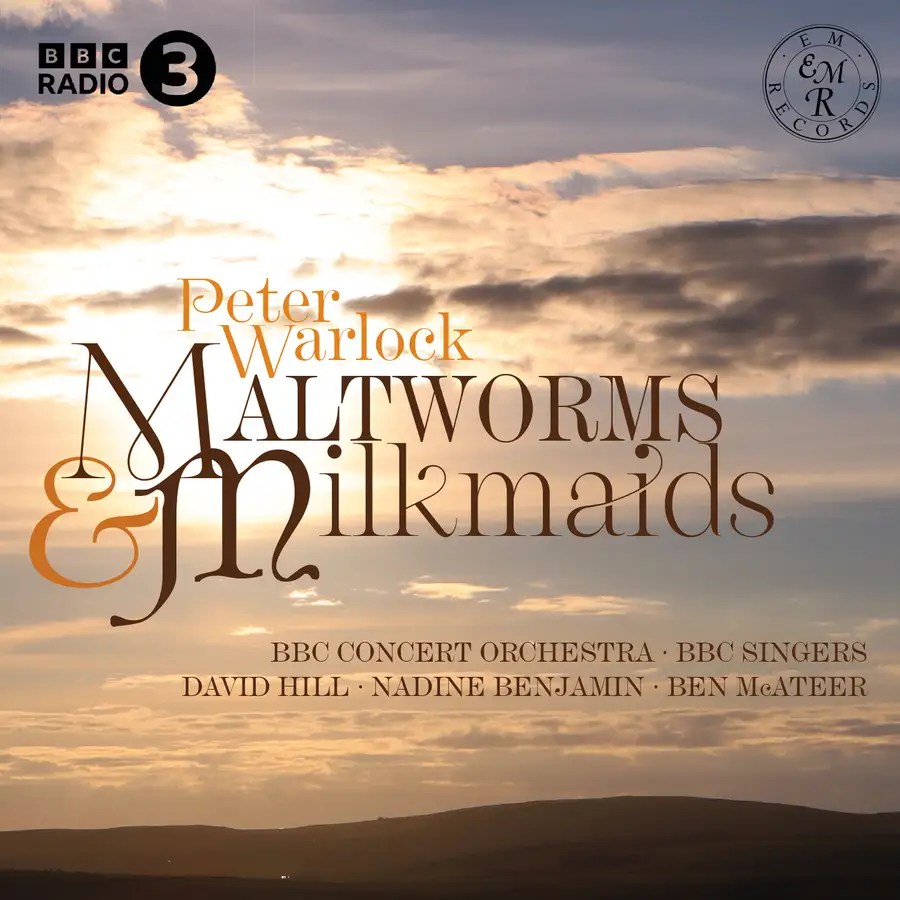
On Record – Maltworms and Milkmaids: Warlock and the Orchestra (EM Records)

Warlock
As Ever I Saw (1918, orch. anon)
An Old Song (1917-23)
Mr Belloc’s Fancy (1921/30, orch. Frederick Bye)
Captain Stratton’s Fancy (1921, orch. Peter Hope)
Serenade (1921-2)
Milkmaids (1923, orch. Henry Geehl)
Adam Lay Ybounden (1922, orch. Reginald Jacques)
Little Trotty Wagtail (1922, orch. David Lane)
The Birds (1926, orch. anon)
The Country-man (1926, orch. Gerrard Williams)
Yarmouth Fair (1924, orch. Kenneth Regan)
Sorrow’s Lullaby (1926-7)
One More River (1925)
Maltworms (1926, with E. J. Moeran)
Capriol (1926-8)
A Sad Song (1926)
Pretty Ring Time (1925)
The First Mercy (1927, orch. Fred Tomlinson/John Mitchell and William Davies)
Three Carols (1923)

Nadine Benjamin (soprano), Ben McAteer (baritone), BBC Singers, BBC Concert Orchestra / David Hill

EM Records EMRCD080 [73’52”] English texts included. Orchestrations by Warlock unless stated
Producer Neil Varley Engineer Robert Winter
Recorded 14-16 January 2022 at the Colosseum, Watford

Reviewed by Richard Whitehouse

What’s the story?

The always enterprising EM Records issues yet another ‘first’ in the guise of this collection featuring the songs with orchestra by Peter Warlock (aka Philip Heseltine), which includes many of those orchestrated by others with two-thirds of them here recorded for the first time.

What’s the music like?

Although his output barely extended beyond a decade and centred largely upon miniatures, Warlock left a substantial legacy of songs whose piano accompaniments mostly respond well when arranged for larger forces. Most of them are divided between soprano and baritone, in which latter Ben McAteer fairly captures their essence – whether the modal poise of the early If Ever I Saw, the heady (slightly forced?) jollity of those ‘fancies’ inspired by Mr Belloc and Captain Stratton, or the deftly barbed humour of Milkmaids. He draws tangible pathos from The Countryman and panache from Yarmouth Fair, with the rumbustious One More River and uproarious The Cricketers of Hambledon duly given their head. A highlight is the first recording of Maltworms, co-written with Ernest Moeran and rendered with suitable levity.

Nor is Nadine Benjamin other than fully attuned to the sentiments of her selection. Hence the soulfulness of A Sad Song or limpidity of Pretty Ring Time, both heard in what are Warlock’s only orchestrations of his solo songs, with The First Mercy an eloquent setting of words by frequent collaborator Bruce Blunt. Most affecting, though, is Sorrow’s Lullaby where soprano and baritone combine for a lengthy and often plangent setting of Thomas Beddoes in which the stark introspection of Warlock’s masterpiece The Curlew is never far beneath the surface.

The BBC Singers make their presence felt in the carol Adam Lay Ybounden and the whimsical Little Trotty Wagtail and winsome The Birds. No compromise is brooked in the rousing Fill the Cup, Philip or wistful choral incarnation of The First Mercy, then a closing trio of carols takes in the capricious Tyrley, Tyrley, the serene Balulalow and the aminated As I Sat Under a Sycamore Tree for a suitably rousing conclusion. Warlock would surely have approved and, had he known of the Singers’ recent travails, doubtless have responded in no uncertain terms.

The BBC Concert Orchestra gives of its best throughout under the astute direction of David Hill, duly coming into its own with the three orchestral pieces that Warlock completed. The evergreen suite Capriol is heard in its seldom heard and appealingly astringent version for full orchestra, the Serenade commemorates Delius’s sixtieth birthday in suitably rapturous terms, and the little-played An Old Song exudes a potent atmosphere as indicates what might have been possible had Warlock felt able to realize his musical ambitions on a larger canvas.

Does it all work?

It does, especially when heard in the continuous sequence as presented here. Warlock might increasingly have fretted about his ability as a composer, but the best of what he did achieve is sure to keep his name alive well beyond the approaching centenary of his untimely demise.

Is it recommended?

It is and not least when the presentation – with full texts, together with detailed notes from David Lane (vice-chairman of the Peter Warlock Society) reflects the always high standards of EM Records. In the words of a latter-day songster, ‘‘a splendid time is guaranteed for all’’.

Listen

Buy

You can explore purchase options for this album at the EM Records website. For more information on the artists click on the names of David Hill, Nadine Benjamin, Ben McAteer, BBC Singers and BBC Concert Orchestra. For more on all things Warlock, click on the name to head to the Peter Warlock Society

Published post no.2,078 – Monday 5 February 2024
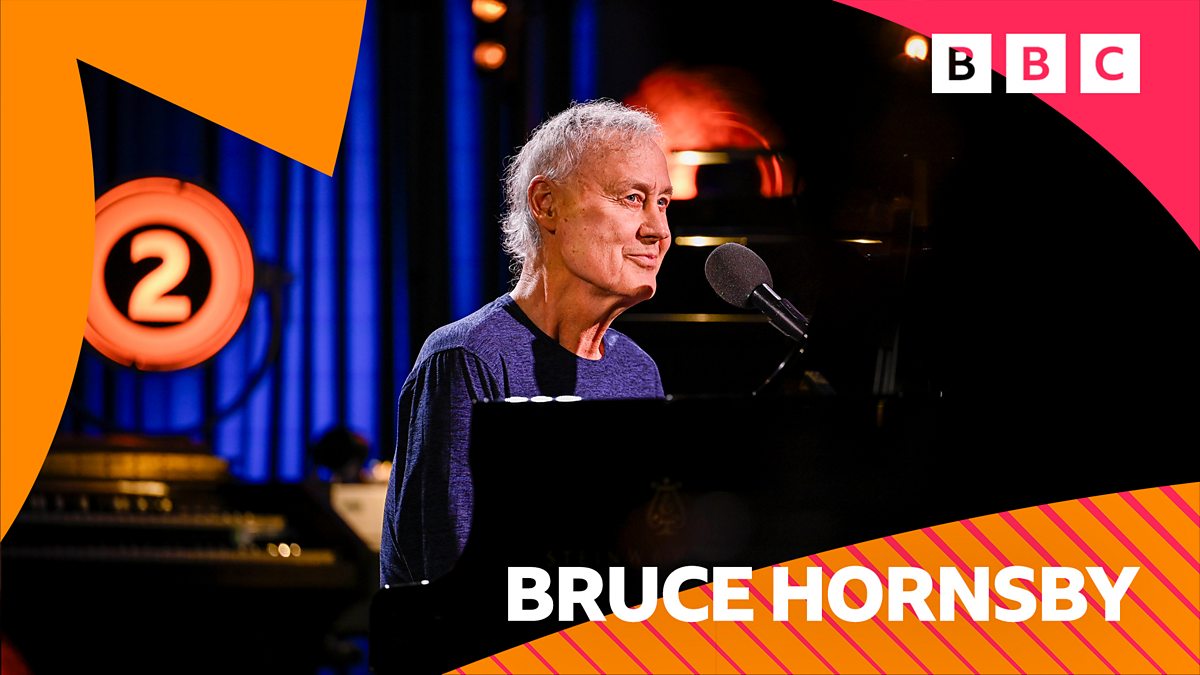
Online review – Bruce Hornsby in the BBC Radio 2 Piano Room

by Ben Hogwood

Anyone listening to Bruce Hornsby‘s music over the last five years will know he is a restless artist in the best possible way, pursuing a direction taking him ever closer to the 20th century classical music he has come to know and love.

With that in mind, his billing at the very front of BBC Radio 2’s Piano Room month was always likely to provide something special – and so it proved.

Hornsby is a fascinating personality, one I was lucky enough to interview for an hour in 2022. We talked about his love of the music of Messiaen and Ives, and how his musical explorations with the New York chamber ensemble yMusic are taking him ever closer to those composers, without forgetting his earlier musical persona as writer of one of the 1980s all-time classic songs, The Way It Is.

His performance with the strings of the BBC Concert Orchestra showed how far that song has journeyed, finding new life through Tupac Shakur and now sounding more relevant than ever in troubled times. What struck here was the lightness of touch Hornsby applied to the piano, softer than the steely edge he used to apply. There was room, too, for thoughtful asides, departing from the song almost completely with the help of the orchestra – whose musicianship should never be undervalued, for they are one of the unsung jewels in the BBC’s creative crown.

Hornsby’s next song was Cast Off, co-written with Bon Iver frontman Justin Vernon. It is one of the many highlights from 2019’s outstanding album Absolute Zero, a quiet number but a frisson of resentment. “Is my back for stabbing?”, Hornsby asks, tellingly.

Then, by way of an enlightening mini interview with host Vernon Kay, Hornsby played The End Of The Innocence, a co-write with Don Henley who originally sang it in 1989. It is a wistful but moving song, and Hornsby did it full justice here, even breaking up the verses for tasteful improvisations with soloists from the orchestra.

His piano playing speaks with even greater conviction than his words, and the mood – while warm and cosy in the studio – reflected a stand against the troubled world outside the studio doors. Hornsby’s piano offers an escape from that, and if you haven’t watched it yet then you will find half an hour in his company wholly beneficial.

You can watch the full set of Bruce Hornsby in the Radio 2 Piano Room by clicking here

In concert – Raphael Wallfisch, BBC Concert Orchestra / Martin Yates: English Music Festival opening concert

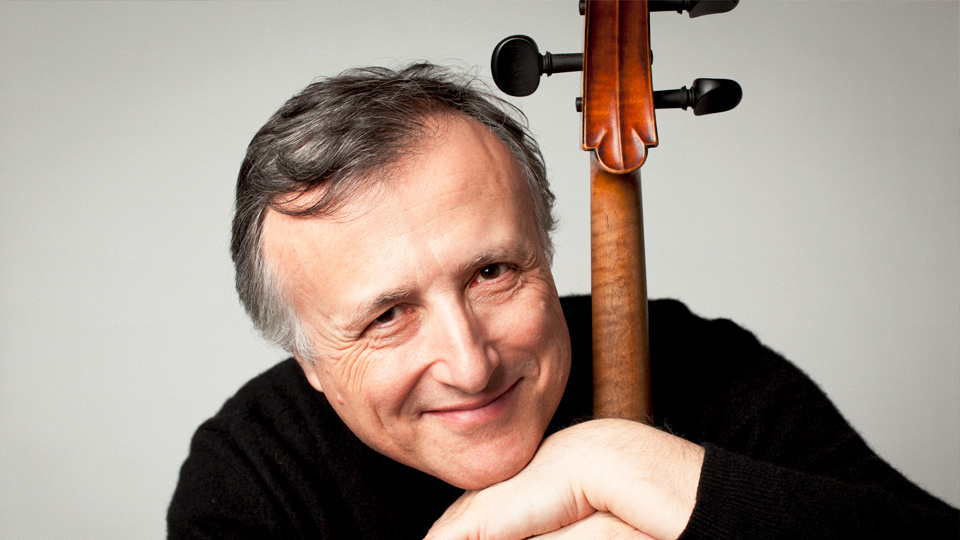
Raphael Wallfisch (cello, below), BBC Concert Orchestra / Martin Yates

Lewis A Celebratory Overture (2023) [EMF commission: World premiere]
Lloyd Webber (orch. Yates) Scenes from Childhood (c1950) [World premiere]
Moeran Cello Concerto in B minor (1945)
Alwyn Serenade for Orchestra (1932) [World premiere]
Delius Two Pieces for Small Orchestra (1911-12)
Vaughan Williams (arr. Adrian Williams) A Road All Paved with Stars (1929/2016) [Public premiere]

Dorchester Abbey, Dorchester-on-Thames
Friday 26 May 2023

Reviewed by Richard Whitehouse

The breezy ebullience of Paul Lewis’s A Celebratory Overture (redolent of Malcolm Arnold without any risk of expressive ambiguity) launched this latest English Music Festival in fine style, with its crisp and precise playing from the BBC Concert Orchestra under Martin Yates.

As so often in these concerts, world premieres were not lacking and the first brought hitherto unknown partsongs by William Lloyd Webber arranged into suite-form then orchestrated by the conductor. If the resultant Scenes from Childhood adds but little to the reputation of this not inconsiderable figure, the Prelude yields appealing poise while Serenade is a waltz of no mean suavity, then the Finale nimbly combines elements of fugue and waltz on its way to a rousing close. Worth hearing, and not least when rendered with such obvious enjoyment.

The emotional weight of this first half inevitably fell upon the Cello Concerto by E.J. Moeran. Completed in the aftermath of the Second World War, it was the composer’s first large-scale piece for his wife Peers Coetmore; her belated and often approximate recording likely having deterred others from taking it up. Not so Raphael Wallfisch (above), his belief evident from the outset of a Moderato whose confiding eloquence is not without undercurrents of unease. These latter are made explicit at the start of the Adagio, otherwise centred on one of the composer’s most affecting melodies and building with due inevitability to a cadenza whose growing animation carries over to the final Allegretto. Here a jig-like main theme denotes an Irish influence that offsets any tendency to introspection as it guides this engaging movement to a decisive close.

Quite a performance, then, which was complemented after the interval by a first hearing for the early(ish) Serenade by William Alwyn. Written while on examination duties in Australia, this undemanding piece moves from a (mostly!) tranquil Prelude, through a stealthy and by no means uninhibited Bacchanale then a serene Air which could yet find favour as a radio staple, to a Finale that, as Andrew Knowles rightly indicated in his programme note, betrays more than a hint of Czech folk-music across its insouciant and ultimately boisterous course.

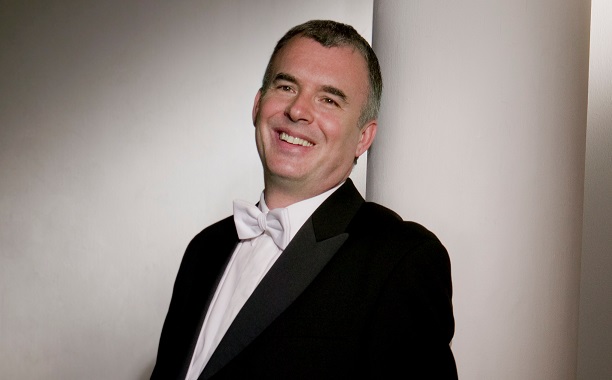
Hardly an interlude, the brace of pieces by Delius fairly encapsulate the inward rapture of his maturity. Yates (above) brought just the right lilt to the dancing gait of On Hearing the First Cuckoo in Spring, while the subtle eddying of Summer Night on the River was effortlessly conveyed.

The final premiere tonight came in the guise of A Road All Paved with Stars – the ‘symphonic fantasy’ as arranged by Adrian Williams (a notable composer in his own right) from Vaughan Williams’ comic opera The Poisoned Kiss. Occasionally revived, its dramatic prolixity rather obscures its musical highpoints – emphasized here in what is both a chronological overview and cumulative paraphrase that also adds a non-symphonic orchestral work to its composer’s output. The surging emotion of those final stages could hardly leave an audience unmoved. This vivid reading concluded a memorable concert in which the Moeran was dedicated to the memory of Michal Kaznowski – who, as cellist of the Maggini Quartet and formerly section-leader at the City of Birmingham Symphony Orchestra, has left a legacy worth remembering.

To read more about the festival, visit the English Music Festival website. For information on the performers, click on the links to read more about cellist Raphael Wallfisch, conductor Martin Yates and the BBC Concert Orchestra, and for more information on composer and arranger Adrian Williams and composer Paul Lewis

On Record – BBC Concert Orchestra / Bramwell Tovey – Poulenc: Les Animaux modèles, Sinfonietta (Chandos)

Poulenc
Sinfonietta (1947-48)
Two movements from ‘Les Mariés de la Tour Eiffel’ (1921, revised 1957)
Pastourelle from L’Éventail de Jeanne (1927)
Les Animaux modèles (complete ballet) (1940-42)

BBC Concert Orchestra / Bramwell Tovey

Chandos CHSA5260 [74’22″’]
Producer Brian Pidgeon Engineers Ralph Couzens, Alexander James
Recorded 10-12 March 2022 at Watford Colosseum

Reviewed by Ben Hogwood

What’s the story?

This collection of colourful works for orchestra by Francis Poulenc has as its main work the ballet Les Animaux modèles, based on The Fables of Jean de la Fontaine. A vibrant work, it clearly had huge significance for the composer, who started on its composition after the Nazi occupation of Paris in 1940, his aim ‘to find a reason to hope for the future of my country’. It received its first performance at the Paris Opera in 1942.

The ballet is symbolic, summarised in Nigel Simeone’s excellent booklet note about ‘a celebration of France’s past at its most lustrous’ than a collection of charming animal stories. It does however bring the story to life from the outset, with a vivid description of the dawn cutting to sharply characteristic portrayals of The Bear and The Two Companions, the former portrayed through an excellent horn solo, The Grasshopper and the Ant, The Amorous Lion, The Middle-aged Man and His Two Mistresses, Death and the Woodcutter, The Two Cockerels and finally The Midday Meal.

Complementing the ballet is the Sinfonietta, written for the BBC Third Programme and first heard in 1948. Initially the main themes of the work were to be part of a String Quartet that Poulenc was working on in 1945, but after its abandonment his friend and fellow-composer Georges Auric recognised the potential of the musical material. The work is dedicated to him in acknowledgement.

Completing the disc are two movements from Les Mariés de la Tour Eiffel, a collaborative single act ballet with Auric and the other members of composer collective Les Six, of which Poulenc was a leading member. There is also a soft-centred Pastourelle from another such collaborative piece, L’Éventail de Jeanne.

Very sadly this is the final recording made by the BBC Concert Orchestra’s principal conductor, Bramwell Tovey – completed just four months before his sad death from cancer at the age of 69.

What’s the music like?

In a word, colourful. Les animaux modèles is unquestionably the star turn, brilliantly played and characterised in this recording. Poulenc’s music is richly tuneful and beautifully orchestrated, often showing the influence of Stravinsky but realised with his own flair and mischievous humour. The central section of The Grasshopper and The Ant is a case in point, where a thrillingly brisk section cuts to an enchanting violin cadenza, the music briefly held in a spell until its release by shrill trumpets.

The Amorous Lion is a scene of great contrasts, with orchestral outbursts and volleys of percussion cutting to tender asides from string and woodwind choirs. The most substantial section – and arguably music – can be found in The Two Cockerels, where Poulenc realises music of great power and depth to portray the combat of the two birds. The surging climactic point, halfway through, is music of particularly strong feeling and resolve, Poulenc’s sentiments against the war reaching their heartfelt climax – before powerful exchanges between brass and the final toll on low piano. With passions largely spent, The Midday Meal provides a regal epilogue.

The slighter movements are no less fun, and The Middle-aged Man and his Two Mistresses scurries along furtively. Following Poulenc’s synopsis is enormously helpful, signposting the composer’s pictorial responses to the storyline as well as emphasising his wit.

In spite of its name, the Sinfonietta is one of Poulenc’s most substantial compositions. Far from being a slight, frothy work, it has a big-boned structure easily outdoing those dimensions, lasting nearly half an hour. Its convincing melodic arguments are led by the assertive first theme, drawing parallels with the Organ Concerto for its bite and resolve, while the second theme, beautifully realised here, brings mellow woodwind colouring. The second movement is a lively scherzo, balanced with tender asides that are fully realised in the slow third movement, a lyrical and colourful Andante cantabile. The brisk finale signs off with a flourish.

The two movements from Les Mariés de la Tour Eiffel are short but mischievous and entertaining, with humourous trombone interventions, while the Pastourelle is a charming addition.

Does it all work?

Yes. These are fresh, vibrant performances given with evident affection by the BBC Concert Orchestra. Bramwell Tovey brings out the colourful orchestrations, allows the lyrical melodies a bit of heart-on-sleeve approach where appropriate, and brings rhythmically sharp responses too. Poulenc’s colourful writing is brought to the fore, along with the melancholic undertones his music often carries.

Is it recommended?

Yes, on many levels. The quality of the music, the excellent Chandos recordings from Watford Colosseum and some very fine performances from which Bramwell Tovey takes his lead. The icing on the cake is the choice of Henri Rousseau’s Monkeys and Parrot in Virgin Forest as cover art. It is the ideal complement for a wonderful album.

Listen

Buy

For more information and purchasing options on this release, visit the Chandos website

Radio 2 Piano Room – a ray of light for February

Written by Ben Hogwood

This is not an advert…but it is a post urging you to listen to some of the sessions in BBC Radio 2’s Piano Room series of concerts if you haven’t already.

Over the last month on Radio 2’s weekday Ken Bruce show, a different act each day has delivered three songs from the BBC’s Maida Vale studios. While the title implies the act will be alone at the piano, the reality is that two of their songs are recast by the BBC Concert Orchestra and their team of expert arrangers. For a bonus the chosen soloist(s) will cover a song of their choice.

The results, quite frankly, have been unexpectedly good and occasionally spectacular. Performers that you might think of as day to day radio fodder have reinvented their songs in this environment. David Gray, for instance, a fine songwriter who arguably suffers from overexposure of his most familiar songs, was transformed. Please Forgive Me (a brilliant arrangement by Tim Bradshaw), This Year’s Love and a cover of Peter Gabriel’s Sledgehammer took on a life of their own in the Piano Room’s first instalment, setting the tone for what followed.

Over the weeks there have been some deeply impressive sessions from newer artists who have raised their game. Radio staples such as Anne-Marie, Ella Henderson and Clean Bandit delivered heartfelt sessions, where every breath could be heard and felt on the airwaves, the musical equivalent to an actor appearing on the West End stage. Anne-Marie in particular deserves great credit for elevating Ed Sheeran’s Bad Habits to another level entirely.

The real stars, dare I say it, have been the BBC Concert Orchestra and their team of arrangers. They have delivered consistently strong and sensitive versions of these songs, lovingly crafted and gaining new qualities through the exquisite string and woodwind writing. Although they have a full orchestra at their disposal the arrangers have never overused them, always keeping the vocalists at the front.

My personal favourites in this month have been David Gray, Simple Minds, Tears for Fears, Jamie Cullum and – unexpectedly – Natalie Imbruglia, who sang a beautifully arranged version of Torn that really cut to the heart.

There are however still a couple of sessions I have yet to hear – and if they reach the same standard as those listed then we are in for a treat.

Take my advice, then, and head for the iPlayer or BBC Sounds, where no less than 60 freshly minted songs await. You will not be disappointed. Now, which other world broadcaster could possibly offer this?