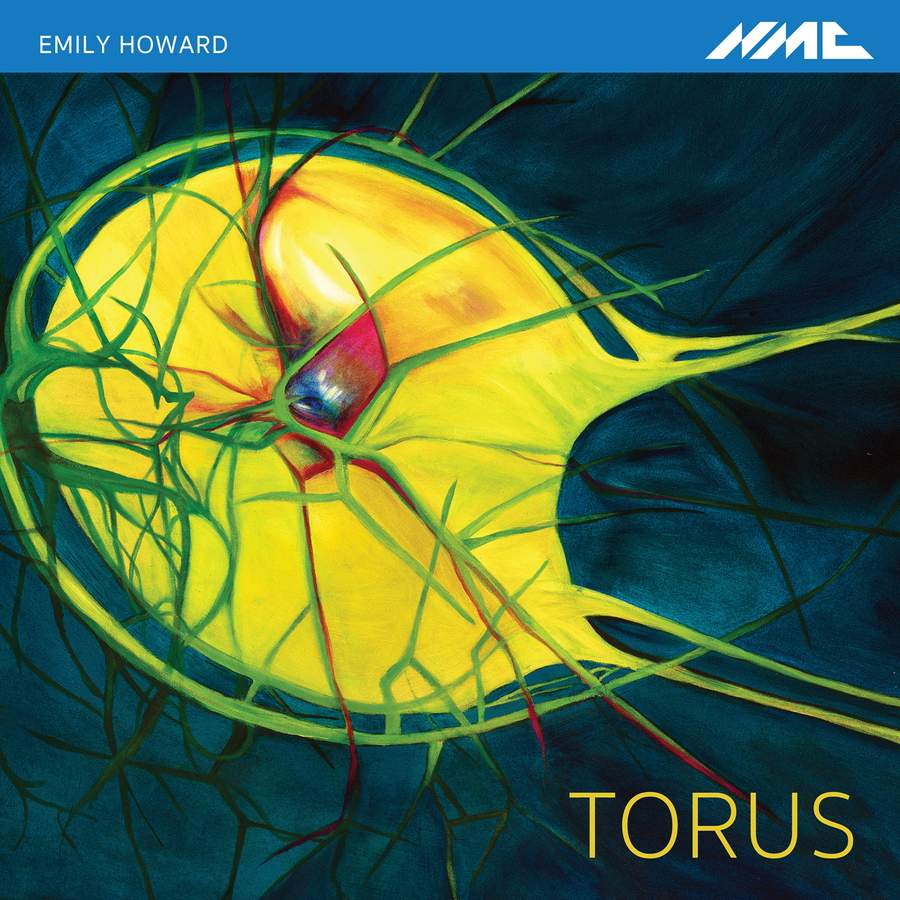
On Record: Emily Howard: Torus (NMC Recordings)

Emily Howard

Antisphere (BBC Philharmonic Orchestra / Vimbayi Kaziboni)
Producer Matthew Bennett, Engineer Stephen Rinker
Recorded 29 November 2022, Bridgewater Hall, Manchester

sphere (BBC National Orchestra of Wales / Mark Wigglesworth)
Producer Dean Craven, Engineer Stephen Rinker
Recorded at the Aldeburgh Festival, 23 June 2018, The Maltings, Snape

Compass (Julian Warburton (percussion), Birmingham Contemporary Music Group / Gabrielle Taychenné)
Producer & Engineer David Lefeber
Recorded 4 December 2022, Royal Northern College of Music, Manchester

Torus (BBC Symphony Orchestra / Martyn Brabbins)
Producer Ann McKay, Engineer Christopher Rouse
Recorded 11 November 2019, Barbican Hall, London

NMC Recordings D274 [68’58″]

Reviewed by Richard Whitehouse

What’s the story?

NMC releases a second collection of music by Emily Howard – now in her early forties and established among the most distinctive while forward-looking composers of her generation, heard in scrupulous performances by a notable line-up of British orchestras and ensembles.

What’s the music like?

Few world premieres from recent years have left an impression comparable to that of Taurus at the Proms in 2016. Its appearance, moreover, marked a further stage in an evolution which had commenced just over a decade earlier and has continued apace, with major commissions from British and European organizations. This has been paralleled by Howard’s commitment into researching the intrinsic properties of sound, most recently via the Centre for Practice & Research in Science and Music (PRiSM) at Manchester’s Royal Northern College of Music.

As it now stands, Torus is the first part in an informal trilogy of pieces collectively entitled Orchestral Geometries. It evolves along the perceived trajectory of a doughnut-shaped ball whose central void is crucial to music evoking absence as much as presence. Not that a work subtitled Concerto for Orchestra could be found lacking in either immediacy of content or virtuosity of gesture, which qualities come demonstrably to the fore as it unfolds and make for a composition involving in its expressive profile and fascinating in its formal process.

By contrast, Sphere is a succinct yet eventful journey through and around the global shape in question and which, in this context, might reasonably be thought an extra-terrestrial interlude – its ideas pithy while exuding enough potential for their development in subsequent pieces.

This is what happens in Antisphere which forms its conceptual opposite though also its aural continuation, the piece gradually encompassing the ‘sound-space’ through an engrossing and imaginative demonstration of orchestral prowess. Evident too is an increased focus upon the visceral nature of the musical content, likely reflecting a form which can precisely be defined in mathematical terms but remains all but intangible as regards human perception. Fortunate, then, that Howard has been able to render this concept as an emotional and affective whole.

Hardly less absorbing is Compass, the most recent of these pieces. This takes the spatial and nautical connotations of its title as the basis for music which unfolds as a cohesive dialogue between string septet and percussion that complements it and offers contrasts at every turn.

Does it all work?

It does, not least for providing an arresting take on that interplay of ‘heart and brain’ that has been a mainstay of Western music. The cerebral basis of all these pieces may be undeniable, though equally so is the precision of their forms and, above all, the allure of their expression judged intrinsically as sound. Much the same could be said of the music of Iannis Xenakis, the centenary of whose birth was commemorated last year, and whose thinking is continued by Howard from a vantage that is inherently personal while being decisively of the present.

Is it recommended?

It is, not least for its excellent performances by three of the BBC orchestras and Birmingham Contemporary Music Group, with booklet notes by Paul Griffiths and mathematician Marcus du Sautoy. This impressive release reinforces Howard’s significance in no uncertain terms.

Listen & Buy

Torus is released on Friday 28 April. You can explore buying options at the NMC Recordings website, and listen to clips from the album at the Presto Music site. You can read Arcana’s interview with Emily Howard by clicking on the link, and click on the names for more on the composer Emily Howard, plus performers Vimbayi Kaziboni, Mark Wigglesworth, Julian Warburton, Gabrielle Teychenné and Martyn Brabbins
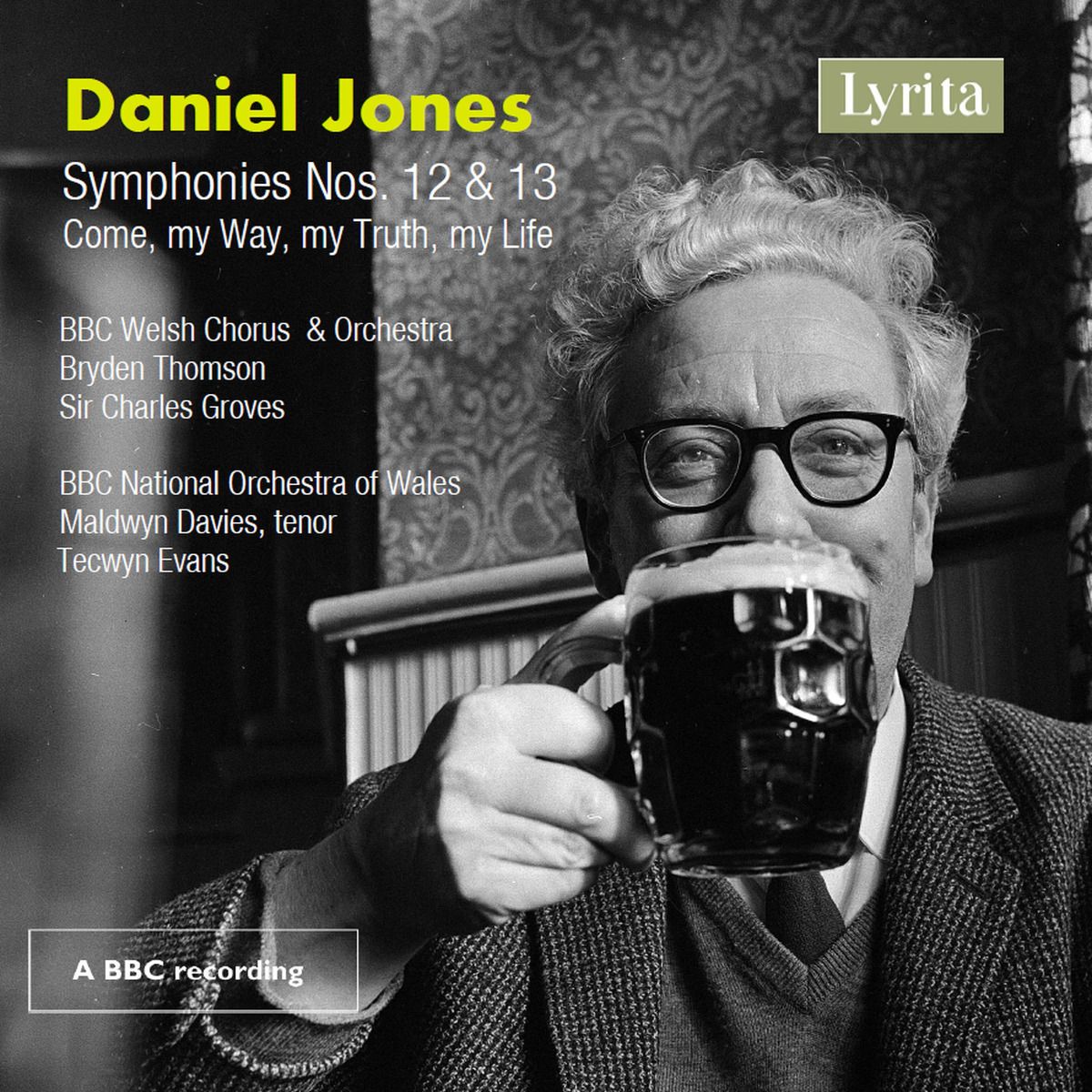
On Record – BBC Welsh Chorus & Orchestra / Bryden Thomson & Sir Charles Groves – Daniel Jones: Symphonies 12 & 13 (Lyrita)

Daniel Jones
Symphony no.12 (1985)a
Symphony no.13 ‘Symphony in memory of John Fussell (1992)b
Come, my Way, my Truth, my Life (1987)c

Maldwyn Davies (tenor) (c), BBC Welsh Chorus (c, BBC Welsh Symphony Orchestra (a) and (c) / Bryden Thomson (a), Sir Charles Groves (c); BBC National Orchestra of Wales (b) / Tecwyn Evans (b)

Lyrita SRCD391 [65’35”] English text included
Dates: (a) – BBC studio recording 22 March 1990; (b) – BBC concert broadcast 23 January 2017; (c) – BBC broadcast from Swansea Festival, 10 October 1987

Reviewed by Richard Whitehouse

What’s the story?

Lyrita completes its coverage of symphonies by Daniel Jones (1912-1993) with this coupling of his final two such works, alongside the premiere performance of his last cantata, heard in readings by artists who identified closely with the composer’s music throughout their careers.

What’s the music like?

It was only midway through this cycle that Jones realized he could start a symphony on each note of the chromatic scale. The Twelfth Symphony thus completes this process – its overall structure being among the composer’s most concentrated. At barely six minutes, the opening movement seems relatively expansive with the tensile sonata-form of its Agitato bookended by affecting Tranquillo passages. There follows a rumbustious Giocoso the more potent for its brevity, a Serioso such as might almost be thought a ‘song without words’ with its lyrical understatement, then a Risoluto which extends just long enough to round off the whole work by effecting an oblique return to its initial bars. Four decades on from his first so-designated piece and Jones can be said to have brought his symphonic cycle decisively to its conclusion.

That, however, was by no means the end of the story: the death, in 1990, of Jones’s friend the organist and administrator John Fussell prompted a Thirteenth Symphony as proved to be his last completed work (an Eighth String Quartet being realized by Malcolm Binney and the late Giles Easterbrook). Relatively expansive next to those later such pieces, with some especially imaginative writing for percussion (allocated to no less than seven players), this unfolds from the restless and eventful Solenne – at almost 10 minutes a worthy ‘memorial’ in itself – via an animated and nonchalant Capriccioso then a Lento whose plangent woodwind writing makes it among his most searching slow movements, to a finale whose Agitato-Tranquillo trajectory is pursued twice as this intensifies inexorably towards an ending as powerful as it is eloquent.

Coming between the two symphonies, Come, my Way, my Truth, my Life is the last of Jones’s four cantatas and again has recourse to metaphysical poetry – in this instance George Herbert, the seven short movements being arranged as to chart the spiritual progress of the author (by extension, that of John Aeron-Thomas – founder-member of the Swansea Festival, for whom this is a memorial). Intersected with a fervent orchestral Fantasia, the six choruses traverse contrasted and even conflicted emotions before attaining an unforced affirmation at the close.

Does it all work?

It does. As has previously been noted in these reviews, Jones was not a composer who sought or attracted easy plaudits – opting for an idiom whose methodical evolution is consistent and absorbing. The performances reflect this thinking, Sir Charles Groves and Bryden Thomson both focussed on capturing the essence of works whose integrity is abetted by deftness and no little humour. Tecwyn Evans’s conducting suggests he, too, is primarily concerned with projecting the spirit of this music. Nor does Maldwyn Davies’s contribution leave anything to be desired.

Is it recommended?

Indeed. The broadcasts have been expertly remastered (No. 13 understandably sounding the best), with Paul Conway contributing detailed and insightful annotations. Job done by Lyrita, which will now hopefully complete a similar intégrale of the symphonies by Alun Hoddinott.

For further information and purchasing options, visit the Lyrita website For more information on Daniel Jones, click here

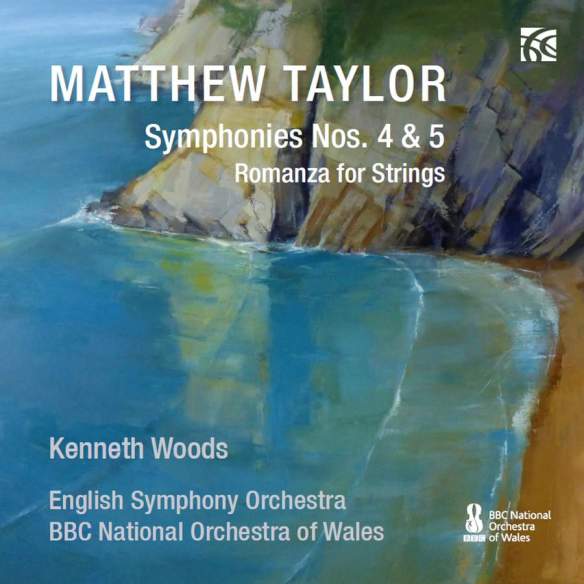
On record – Matthew Taylor: Symphonies nos.4 & 5 (BBC NOW / Woods) (Nimbus)

Matthew Taylor
Symphony no.4 Op.54 (2015-6)
Symphony no.5 Op.59 (2017-8)
Romanza for strings Op.36a (2006-7)

BBC National Orchestra of Wales (Symphonies), English Symphony Orchestra / Kenneth Woods

Nimbus Alliance NI6406 [63’56”]

Producer Simon Fox-Gál
Engineers Simon Smith, Mike Cox (Symphony no.4)

Recorded 8 June 2019 at St. Jude-on-the-Hill, London (Romanza); 14 January 2020 at Hoddinott Hall, Cardiff (Symphonies)

Written by Richard Whitehouse

What’s the story?

A new release of music by Matthew Taylor, including the Fourth and Fifth Symphonies, that means all of the composer’s works in this genre have now been commercially recorded (the First and Third on Dutton Epoch CDLX7178; the Second on Toccata Classics TOCC0175).

What’s the music like?

Symphonism goes back almost to the start of Taylor’s composing, his Sinfonia Brevis having been finished when he was 21, and symphonies have continued to appear at regular intervals across his output. Written respectively to mark the 50th anniversary of Kensington Symphony Orchestra, and as the third instalment within the English Symphony Orchestra’s 21st Century Symphony Project, these two pieces feel typical not least as regards their absolute contrasts of form and expression; while being equally unmistakable as the music of just one composer.

An in memoriam to composer John McCabe – dedicated to his widow Monica – the Fourth Symphony falls into three continuous movements. The first, marked Giubiloso, maintains its energy across distinct shifts of dynamics and activity (the evocative writing for woodwind and harp redolent of Tippett); subsiding from its impassioned climax into an Adagio where strings take the foreground in music of textural richness and emotional depth. Beginning at a decided remove from what has gone before, the Finale buffa exudes a nonchalant humour (reminiscent of Arnold), complemented by a deftly scored episode that cannily prepares for the denouement. This is purposefully controlled through to a climax that recalls the work’s opening theme before an ending as feels the more decisive for its literally coming to a halt.

Heard as an interlude between two imposing statements, the Romanza could hardly be better placed. An arrangement of the second movement of Taylor’s Sixth Quartet (Toccata Classics TOCC0144), it testifies to the suffused lyricism evident in this composer’s writing for strings.

The Fifth Symphony is only Taylor’s second such work in four movements, but its formal and expressive emphasis differs greatly. Indeed, the initial Allegro is unprecedented in his output for sheer volatility (not unlike that of Beethoven’s ‘Serioso’ Quartet), its driving impetus and explosive culmination creating a momentum which is pointedly left unfulfilled by the ensuing intermezzo-like Allegrettos. The first (a tribute to composer and teacher Cy Lloyd) is as terse and equivocal as the second (a tribute to Angela Simpson, wife of composer Robert Simpson) is poised and wistful. It thus remains for the final Adagio (a tribute to the composer’s mother Brigid) to secure that eloquent apotheosis towards which the whole work had been headed, as this moves with sustained power toward its plangent twin climaxes then on to a resigned coda.

Does it all work?

Indeed. In all three pieces, Kenneth Woods secures a dedicated response from the players so Taylor’s exacting yet practicable writing is heard to advantage, not least in acoustics whose immediacy emphasizes this music’s rapt inwardness as keenly as its untrammelled energy.

Is it recommended?

Yes, and not least for a booklet that features informative commentaries by both composer and conductor, and striking artwork by Andrea Kelland. An introductory portrait by James Francis Brown mentions Taylor as having written six symphonies: hopefully, no mere slip of the pen!

Listen & Buy

You can listen to clips from the recording and purchase, either in physical or digital form, at the Presto website

Read

You can discover more about Matthew Taylor by heading to his own website

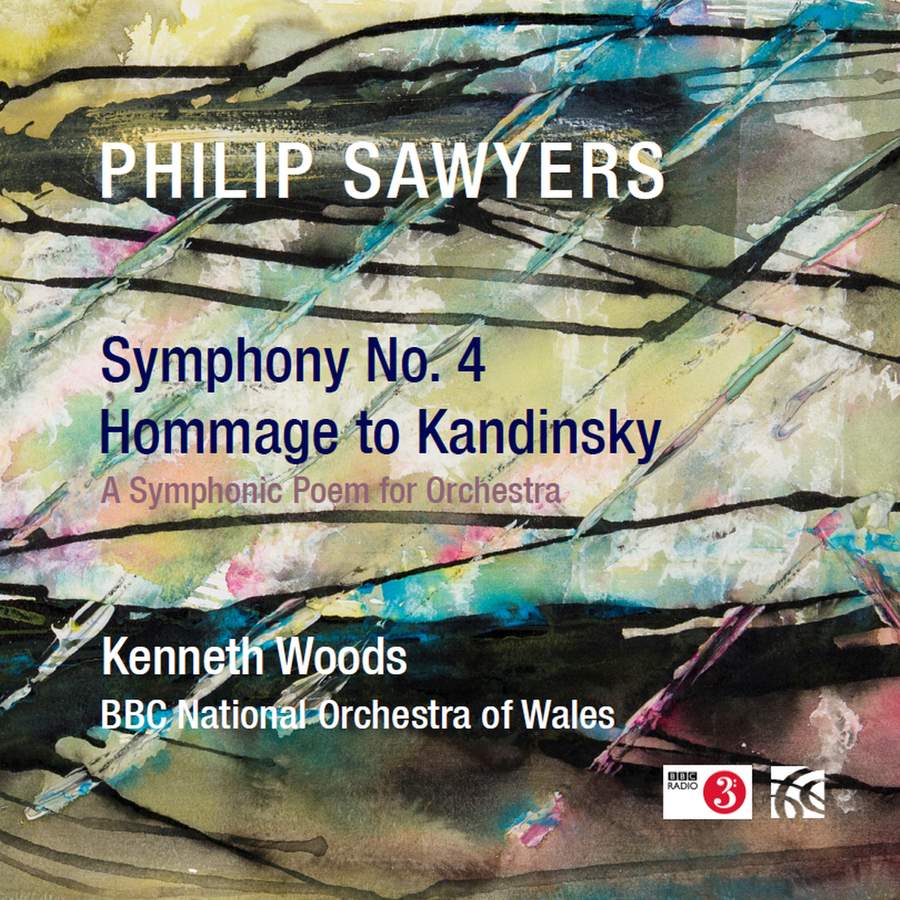
On record – Philip Sawyers: Symphony no.4 & Hommage to Kandinsky (BBC NOW / Woods)

Philip Sawyers
Symphony no.4 (2018)
Hommage to Kandinsky (2014)

BBC National Orchestra of Wales / Kenneth Woods

Nimbus Alliance NI6405 [64’32”]

Producer Simon Fox-Gál
Engineers Simon Smith, Mike Cox

Recorded 15 & 16 January 2020 at Hoddinott Hall, Cardiff

Written by Richard Whitehouse

What’s the story?

Nimbus continues its coverage of Philip Sawyers (b1951) with this release of his most recent symphony, heard alongside a major symphonic poem written some years earlier, in what are impressively assured readings by the BBC National Orchestra of Wales and Kenneth Woods.

What’s the music like?

The emergence of Sawyers as a major symphonist of his generation has been among the more significant aspects of latter-day British music. From the overtly demonstrative First Symphony (2004), via the highly concentrated Second (2008) to the decidedly equivocal Third (2015), is to encounter a composer intent on expanding his idiom incrementally and without any fear of repeating himself. Hence the Fourth Symphony, whose three movements might be felt to take on the (unintentional) model of Bruckner’s Ninth from a distinctly contemporary perspective.

Such is immediately clear from the opening Moderato whose tonal ambivalence underpins an emotional restlessness set in motion by those granitic brass chords at the outset. Formally this is Sawyers’ most individual sonata design to date, its accrued tension duly carrying over into a scherzo with passing elements of intermezzo rather than an actual trio as ensures maximum continuity. There follows an extended Adagio of tangible weight and no little profundity, its focus ensured through a long-term transition from D minor to D accomplished as seamlessly as its incorporation of motifs from earlier in the score. Sawyers says that after this ‘‘there was nothing more to say’’, reinforced by a sustained apotheosis which resolves those chords from the outset with a finality only viable for a composer in command of his musical components.

Little that Sawyers writes is without symphonic potential, as is evident from his Hommage to Kandinsky. Scored for large forces and lasting almost 30 minutes, its subtitle A Symphonic Poem for Orchestra indicates this is no mere evoking of the Russian-born artist’s canvasses – though one aspect of his Composition IV has been transmuted into musical terms towards the start. Structurally the piece unfolds through alternating passages of relative stasis and motion, and if slower sections predominate as it progresses, there is never a risk of expressive inertia owing to the deftness with which existing motifs take on greater intensity while timbral and textural aspects are enriched accordingly. This latter aspect is crystallized at the close when an emphatic chordal cluster gradually dies down, to leave only the purest of C major tones.

Does it all work?

Yes, not least when this release judiciously combines two of Sawyers’ most distinctive and absorbing pieces. Never a composer who could be accused of favouring the easy option, his large-scale organization is, in both instances, as fascinating as it is resourceful. It helps when Kenneth Woods, who premiered Sawyers’ previous two symphonies (the Third as the initial commission of his 21st Century Symphony Project), is unstinting in his advocacy – securing playing of verve and finesse from the BBC NOW in the spacious ambience of Hoddinott Hall.

Is it recommended?

Indeed. The annotations deftly interlace Woods’ descriptive commentary with Sawyers’ own analytical observations, and the booklet cover is graced by artwork from Philip Groom. It will be fascinating to hear just where Sawyers goes from here on his eventful symphonic odyssey.

Listen

Buy

You can listen to clips from the recording and purchase, either in physical or digital form, at the Presto website

Read

You can discover more about this release at the Wyastone website, and more about Philip Sawyers by heading to his own website

Arcana at the Proms – Prom 70: Daniel Pioro gives the world premiere of Jonny Greenwood’s Horror vacui

Jonny Greenwood (bass guitar/tanpura), Daniel Pioro (violin), Nicolas Mangriel (tanpura), Katherine Tinker (piano), BBC Proms Youth Ensemble, BBC National Orchestra of Wales / Hugh Brunt

Biber Mystery (Rosary) Sonatas No. 16 – Passacaglia in G minor
Penderecki Sinfonietta for strings, second movement Vivace
Greenwood Three Miniatures from Water – No. 3; 88 (No. 1)
Reich Pulse
Greenwood Horror vacui

Royal Albert Hall, Tuesday 10 September 2019 (late night Prom)

Reviewed by Ben Hogwood
Photo credits Mark Allan

You can listen to this Prom on BBC Sounds here

Alongside his role as lead guitarist with Radiohead, Jonny Greenwood has a close relationship with the string orchestra. Detailing his love for the medium in the programme for this late night Prom, he explained his preference for live music over electronic or recorded alternatives, citing the living and breathing aspects of the instruments as his prime reason for using them.

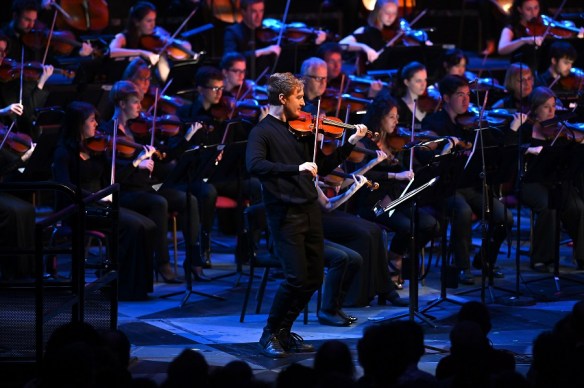
Breathing into the stringed instruments became an aspect of his new piece, Horror vacui, written for violinist Daniel Pioro and an ensemble comprising string players from the BBC Proms Youth Ensemble and the BBC National Orchestra of Wales.
Arranged in a fan shape across the stage, the orchestra had the lowest sounds at the back in the form of eight double basses and twelve cellos, with ten violas just in front of those. That left just the 38 violins in front, each of the 68 instrumentalists having their own specific part.

Greenwood’s directions for conductor Hugh Brunt were unconventional, his arm often sweeping across the ensemble from left to right and back again so that each instrument knew when to come in and fade away. This created a powerful visual and aural effect, the string players’ bows rising and falling like a sound wave.

Greenwood explained how Horror vacui is the fear of empty space, usually in paintings. This was vividly captured not just from the dense orchestration but from Daniel Pioro’s superbly played solo violin part. With incredibly secure intonation he excelled in the pure upper register passages, the notes soaring effortlessly towards the ceiling of the Royal Albert Hall. Beneath him the textures were always changing, sometimes secured by players blowing into their instruments, literally breathing life into them, or from deep-piled chords, some of which were huge blocks of consonant sound. Around 20 minutes in the biggest of these chords drew applause from the audience, most of whom thought the piece had finished there – and indeed it would have been a natural stopping point. There was still a substantial coda to follow, which ended in a pure C major with Pioro back up in the heights. The conventional end felt like a more obvious statement after Greenwood’s innovations earlier in the piece, and though beautiful felt tacked on to the end.

That said, Horror vacui is a very impressive and engaging piece of work – and here, with the orchestra under the leadership of the energetic Lesley Hatfield, it received the best possible performance.

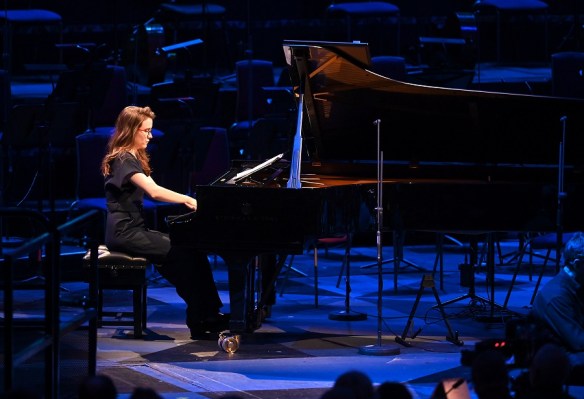
We heard two other Greenwood pieces. The third of Three Miniatures from Water was perfect late night fayre, especially with the drones of two Indian tanpuras to enjoy, but ultimately was not long enough for pure indulgence. The shapes made by the smaller orchestra were pleasing to the ear – while the liquid torrents from solo pianist Katherine Tinker in the premiere of 88 (No.1) were harsher. The title reflects the number of keys on a modern grand piano, and Tinker surely used them all in the course of a virtuoso performance that built on watery influences from Debussy and Ravel.

Steve Reich’s Pulse transported us to the American plains. Written in thrall to Copland’s Appalachian Spring, this very approachable piece has all the Reich qualities of small, oft-repeated melodic cells and development, but also a warmth not lost on the ensemble here. Greenwood himself played bass guitar but it was the higher riff from the violins at the start of the piece that made a lasting impression.

The inclusion of Biber and Penderecki at the start was helpful. The former ensured we could adjust to the sound of a solo violin in the big space of the Royal Albert Hall, as well as the idea of a minimalist approach in the composer’s development of a relatively small chord sequence. That it comes from the early Baroque period, late 17th century, is startling. Penderecki, a friend and close musical ally of Greenwood’s, was present in the second movement of his Sinfonietta. Energetically played here, it is however wholly under the influence of Bartók in its musical language and scoring.

This was a stimulating concert with an attentive audience. A brief note should be made about timekeeping, however, as due to the required stage changes, no matter how efficiently done, this Prom did not finish until 11:55pm. While that is unquestionably value for money, it did inevitably lead to audience members having to leave half way through or even before the main work in order not to miss their last transport options of the evening. The anxiety this can breed is contagious and can affect the whole evening, not just for the leavers but those around them. It would surely have been beneficial for an earlier item in the program to have been omitted to avoid this, or for the concert to start at 10pm as Late Night Proms used to do. I myself had to leave Greenwood’s piece before the finish, as staying on would have landed me with a £70 cab fare and an extremely late night. BBC Sounds was on hand to help with the closing minutes, naturally – but it’s something for the BBC to consider in future.

You can watch this concert in a recording on BBC4 on Friday 13 September. Rehearsal clips for Horror vacui on the BBC website