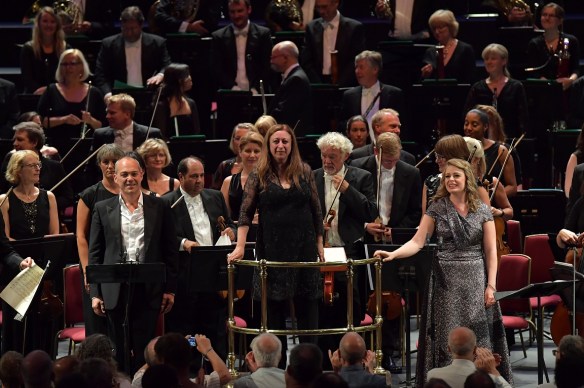
BBC Proms 2016 – Zemlinsky’s Lyric Symphony, Mozart & Northcott world premiere – Baiba Skride, Simone Young & BBC SO

bbcso-zemlinsky

Soloists Christopher Maltman and Siobhan Stagg take the applause with conductor Simone Young and the BBC Symphony Orchestra after their performance of Zemlinsky‘s Lyric Symphony (c) Chris Christodoulou

Prom 62; Royal Albert Hall, 31 August 2016

You can listen to the Prom on the BBC iPlayer

Every festival has its ‘down’ periods – and here it was the turn of the Proms. Don’t stop reading there though, as by ‘down’ period I mean a Royal Albert Hall that was perhaps half full and music that was relatively unknown. The combination can on occasion lead to an unsatisfactory evening, but here it was a heartening opposite.

It was good to note a rare UK appearance for the Australian conductor Simone Young, her first at the Proms. Young is predominantly an opera specialist, so it was perhaps inevitable that Zemlinsky’s Lyric Symphony of 1923 should bring out the very best in her brief relationship with the BBC Symphony Orchestra.

This powerful, passionate account got off to the best possible start, assertively bringing Zemlinsky’s themes of doomed love to the front of the layered texture and packing the music with drama. Here Young was helped by the woodwind and brass, horn player Nicholas Korth in particular, though when singers Christopher Maltman and Siobhan Stagg got into action theirs was the defining contribution.

Baritone Maltman’s silky contribution was brilliantly judged, an ideal complement to Stagg’s soaring soprano, though the biggest notes on her part were saved for the particularly anguished lines in the poems of Rabindranath Tagore. When she began Stratt was a little coy, beautifully so, for this got the audience on to her side and meant we all felt her tragedy in Vollende denn das letzte Lied (Then finish the last song). Maltman it was who ended the symphony, striving for peace, which Young ultimately found in the beautifully floated coda.

The performance was the shade to the light of Mozart’s Violin Concerto no.5. This did receive a slightly heavy performance in comparison to others, but the strings of the BBC SO were beautifully graceful in the slow movement and accommodating to soloist Baiba Skride (below, with the orchestra) in the outer fast movements.

bbcso-skride-mozart

Skride’s violin makes a beautiful sound, and it was a feature of her performance that the notes were floated towards the audience, respectful of the orchestral accompaniment but making the most of Mozart’s melodic inspiration. The choice of cadenzas by Brahms’s contemporary Joseph Joachim was a little risky but the virtuosic passages were sensitively handled, while in the finale, the so-called ‘Turkish’ part of the concerto that actually sounds more Hungarian, there was a pleasing rustic feel, as though we had all been ushered outdoors together. As a footnote to this, Skride chose a movement from a sonata by the eighteenth century composer Johann Paul von Westhoff as her encore.

First up on the program was a world premiere, Bayan Northcott’s Concerto for Orchestra. It is great to have so many in the Proms season, with the unfortunate caveat that not many of these pieces get a second hearing. This one was a premiere in two respects, being Northcott’s first work for orchestra alone. At the age of 76 that is an impressive achievement, and his care over the composition could be sensed in a compressed piece that was full of incident. Debts to 20th century composers such as Hindemith were occasionally felt, but the enthusiasm of the two fast movements drove the music forward, speaking in tunes but also impressing the ear with their instrumental textures too.

Ben Hogwood

BBC Proms 2016 – Kamasi Washington and the City of Birmingham Symphony Orchestra

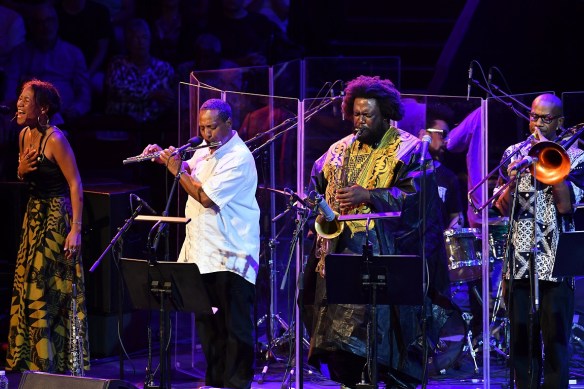
Kamasi Washington (c) Mark Allan

Prom 61; Royal Albert Hall, 30 August 2016

You can listen to this Prom from its BBC broadcast here

Late night Proms at the Royal Albert Hall are usually special – and this one even more so. Kamasi Washington arrived to a great fanfare in 2015, firstly for his work as orchestrator and band leader on Kendrick Lamar’s album To Pimp A Butterfly, then latterly for his extraordinary triple album Epic, released to great acclaim on Ninja Tune.

Washington, while perhaps not earmarked as the future of jazz, is definitely a figure to whom audiences are turning. Some approach him from the hip hop direction, from Lamar or Snoop Dogg, while others with jazz more embedded in their listening recognise the influences of Sun Ra and John Coltrane. But how would all these elements blend with a 32-voice choir and the strings of the City of Birmingham Symphony Orchestra?

Extremely well, as it turned out. It helps that Washington has a wonderful, almost beatific stage presence. He is a mixture of assertion and modesty, which suits his music too, for there were long, ecstatic phrases where the Royal Albert Hall itself seemed to be lifted from its foundations on a tide of good feeling. As the long phrases swelled from the ground up, supported by cellos, basses, the bass of Miles Mosley and the drums of Ronald Bruner Jr and Tony Austin, the treble instruments and assembled chorus were swept along on the good vibes.

That was certainly the case in Change of the Guard and The Next Step, while in The Magnificent 7 there was more of a soloistic approach, Washington’s band each invited to present their extraordinary virtuosity. Top of the pile were Mosley and pianist Brandon Coleman, both placed centre stage and forming a supple rhythmic base as well as a source of boundless musical enthusiasm.

However the praise for the effectiveness of the arrangements should also be directed at Jules Buckley, for whom this was a third appearance at this year’s Proms. Buckley is a master arranger, responsible for a lot of last year’s Ibiza Proms arranging but also this year taking on Quincy Jones and Jamie Cullum – each foils for the music of Washington, where he conducted the strings.

It also helps that Washington’s music is so well orchestrated, for although he allows his band solo time, in the quieter music things stripped back to allow the string orchestra room to be heard. Although they were swamped in the opener Change of the Guard there was plenty of room for the bittersweet cello lines of Henrietta, Our Hero to make a strong impact.

This was one of many high points in the concert, Washington introducing his father Rickey as they both paid homage to Kamasi’s grandmother in a song beautifully intoned by Patrice Quinn. There was a new piece, too, The Space Traveller’s Lullaby, which formed an effective mid-set interlude, stripping back to saxophone, trombone, voices and strings. Washington’s moving solo was backed by twinkling stars projected onto the backboard.

The music lingered long into the night. Some extraordinary phrases, both loud and quiet, issued from Washington’s saxophone, played with the utmost of care. His music has the power to move from tiny, quiet moments or through the massive, surging crests of the wave where all 80 performers were involved. Its wholly positive outlook won the day.

Ben Hogwood

BBC Proms 2016 – Shostakovich, Rachmaninov & Emily Howard from Alexey Stadler, Vasily Petrenko and the Royal Liverpool Philharmonic

proms-stadler

Alexey Stadler pictured during his performance of the Shostakovich Cello Concerto no.1, with the Royal Liverpool Philharmonic Orchestra conducted by Vasily Petrenko (c) Chris Christodoulou

Prom 53; Royal Albert Hall, 25 August 2016

You can listen to the Prom on the BBC iPlayer

The BBC Proms should be commended for their commitment to new music, though this does come with a caveat, for it is not often that a commission for the Proms makes it to a second or third performance. Hopefully that fate will not befall Emily Howard’s Torus, a joint commission with the Royal Liverpool Philharmonic Orchestra, who gave it a thoroughly committed and virtuosic first performance under Vasily Petrenko.

Torus is based on a mathematical phenomenon, but to Howard’s credit she did not make this the domineering feature of the piece – if she did, like all good composers, it was part of the essential framework rather than explicitly signposted. Instead we were able to enjoy the colours of the large symphony orchestra, and especially the percussion, the three players using bows on their cymbals to make the textures glint towards the end.

Though subtitled Concerto for Orchestra, there was no display of gravity defying, musical athletics for the sake of it. Rather we enjoyed the orchestra as an instrument, the melodic content taking on a distinctive falling motif as though the music were heading for a trap door.

proms-petrenko

Shostakovich’s popular Cello Concerto no.1 followed, with a last minute substitute, Alexey Stadler, standing in for the unfortunately ill Truls Mørk. Any doubts about inferiority were immediately quelled, the young Russian cellist finding the soul of the music in a searching account of the slow movement and cadenza in particular. Petrenko and the RLPO, so attuned to this composer’s music in their award winning accounts of his symphonies for Naxos, were superb in support, especially horn player Timothy Jackson – but Stadler rightly stole the show, adjusting to the acoustics of the Royal Albert Hall with commendable ease. His beautiful tone brought both pain and hope to the solo part in equal measure, and led to a gorgeous encore in the form of the Sarabande from Bach’s Solo Cello Suite no.2.

Finally Petrenko led his orchestra in the music of another composer with whom they share great familiarity – Rachmaninov. There are several warhorses in his output that are arguably overplayed in concert, but the Symphony no.3 is not one of them – and how wonderful it was in this account, with soulful melodies, sleights of hand from Petrenko and sudden bursts of light from the orchestra.

The tricky syncopations of the finale were expertly handled, the orchestra delivering the suddenly loud snaps like the slamming of a door, a thrilling effect in the live arena. Yet they were also alive to the music’s lyrical and occasionally less certain undercurrents, where leader Thelma Handy was a superb soloist.

As an encore Petrenko brought out Shostakovich’s arrangement of YoumansTea For Two, and gave it a brilliant send-up, as though conducting the last night. It was a beautifully judged encore, and showed again just how much this orchestra and conductor enjoy working together – which is what it’s all about, surely!

Ben Hogwood

BBC Proms 2016 – BBC Symphony Orchestra / Sakari Oramo: Beethoven’s Fifth, Dutilleux & HK Gruber

gruber-busking

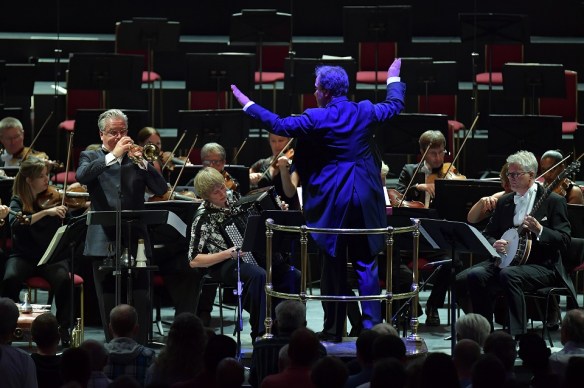
Soloists Håkan Hardenberger (trumpet), Claudia Buder (accordion) and Mats Bergström (banjo) pictured during the performance of HK Gruber‘s Busking, with the BBC Symphony Orchestra conducted by Sakari Oramo (c) Chris Christodoulou

Prom 34; Royal Albert Hall, 10 August 2016

You can listen to the Prom on the BBC iPlayer

Sakari Oramo continues to inspire. His tenure with the BBC Symphony Orchestra to date has been characterised by imaginative programming and excellent performances, and putting an obvious spring in the orchestra’s musical steps.

Last year they delivered a Prom capped by Beethoven’s Seventh Symphony, an account that fizzed with enthusiasm and vigour, and these same qualities were on show for the Fifth Symphony here. Oramo’s speeds were on the aggressive side, the slow movement arguably losing a bit of expressive heart because of it, but the faster movements unquestionably thrilling in their verve and forward drive.

Because of this approach, music that could have been over familiar received a new, sparkling coat of paint, and excellent woodwind contributions, particularly from new oboist Henry Clay, elevated the standard of playing. Guest leader Malin Broman set the tone with great vigour.

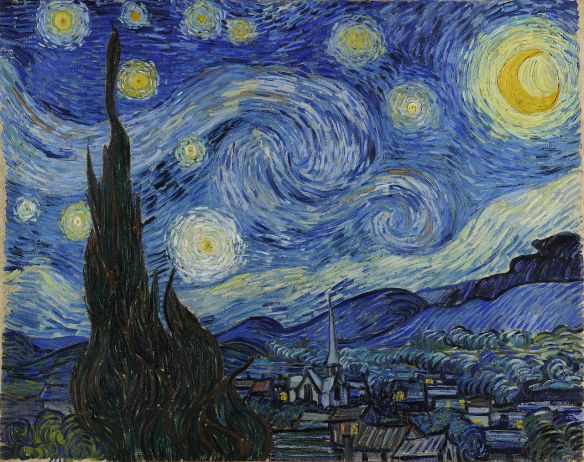
The first half gave us two contemporary pieces of very different impact. Timbres, espaces, movement became a three-movement orchestral piece when Henri Dutilleux revised it in 1990, and in this performance we could revel in its beautifully shaded colours, its sudden, strident unisons, and its captivating rhythms – all reflecting the painting on which it is based, Van Gogh’s Starry Night.

1280px-Van_Gogh_-_Starry_Night_-_Google_Art_Project

These were expertly delivered by the BBC Symphony percussion, while in the second movement the glorious spectacle of twelve cellos highlighted the genius in the composer’s part writing as well as the deep lyricism of his melodies. This was the third Dutilleux performance of the week, capping a very strong trio begun with The Shadows of Time and the Cello Concerto Tout un monde lointain…

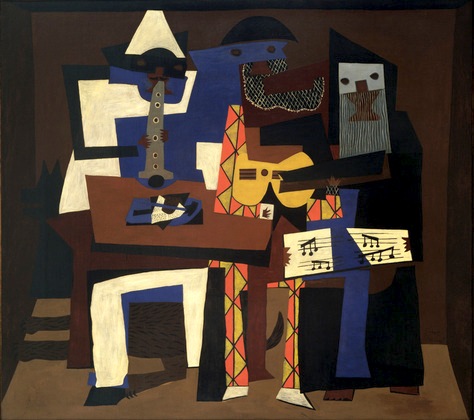
Less obviously successful was the substantial piece by HK Gruber, Busking – a work from 2007 receiving its UK premiere. Again the composer’s inspiration was a painting, in this case Picasso’s Three Musicians:

Picasso_three_musicians_moma_2006

Despite an excellent performance, in which trumpeter Håkan Hardenberger turned various shades of red and purple, all the while staying fully in command of his instruments, this was a piece that unfortunately ran out of steam quite early on.

A very promising beginning, with swaying syncopation brought on by the trumpeter with just his mouthpiece, ultimately lost its rhythmic impetus. Unfortunately the balance between the three soloists also became skewed heavily in favour of the trumpet, at the expense of brilliantly played detail from accordion (Claudia Buder) and banjo (Mats Bergström).

A doleful slow movement briefly evoked a melancholy cabaret, and did so very effectively, but here again the tones of the trumpet dominated, despite Hardenberger’s use of the mellow flugelhorn. This was not the fault of the players – and could also reflect Arcana’s position in the arena – but it was a shame to miss out on the touches of humour elsewhere. By the third movement, where some energy returned, the piece had by that time run out of substance.

That should not count against the overall success of this Prom, however, as the excellent performances of the BBC Symphony Orchestra reaped their just rewards.

Ben Hogwood

You can hear other Dutilleux performances at the BBC Proms by following the links below:

The Shadows of Time with the Philharmonia Orchestra conducted by Esa-Pekka Salonen

Tout un monde lointain… with Johannes Moser (cello) and the BBC Philharmonic Orchestra conducted by Juanjo Mena

BBC Proms 2016 – Pekka Suusisto, Thomas Dausgaard and the BBC Scottish Symphony Orchestra

Pekka Kuusisto High Res 6 - credit Maija Tammi

Pekka Kuusisto (c) Maija Tammi

Prom 27; Royal Albert Hall, 5 August 2016

You can watch this Prom from its BBC broadcast – the Grime and Tchaikovsky here and the Stravinsky here

For sheer musical enjoyment this Prom took some beating.

Right from the start it was clear the players of the BBC Scottish Symphony Orchestra were at the Royal Albert Hall to enjoy their Friday night, and in Pekka Kuusisto they had a more than willing accomplice.

It was Kuusisto’s first appearance at the festival, and as he arrived onstage he gazed in wonder at the full hall, taking in its scope and bidding a cheery ‘hello’ to the front ranks of the Prommers. At that moment you sensed his performance, even before he played a note, had gone up a gear.

Sure enough, his performance of Tchaikovksy’s Violin Concerto was dazzling, but he was careful not to let technical feats overshadow the core of the music’s emotion. As the longer first movement unfolded so did the ardent, lyrical phrases, until we reached the solo cadenza, where just a flick of the eyes and arms were enough to get the audience laughing. Kuusisto plays a lot of his music as though for the first time, the childlike innocence (not to mention his boyish face!) a combination of pure enjoyment. The audience, wrapped up in the occasion, applauded as though he had finished, fully aware there were two more movements to come.

These were the doleful Canzonetta, reminding us of the serious circumstances in which the piece was composed (Tchaikovsky’s disastrous and shortlived marriage, made in spite of his convictions around his homosexual orientation) and a finale that brushed all that aside, its main tune from the violin scampering all over the orchestra as they tried to keep up.

Both violinist and orchestra rightly received a rapturous ovation, but Kuusisto was not done, returning for a traditional Finnish song. Following Sol Gabetta’s lead from the First Night he did the singing, while BBC SSO leader Laura Samuel gamely added a rustic accompaniment. Even the audience were involved, singing one of the phrases as Kuusisto brought the house down.

Even after that the enjoyment was yet to peak, for Thomas Dausgaard – who had shaped Tchaikovksy’s phrases rather beautifully – led them in a vibrant account of Stravinsky’s Petrushka. The composer’s second ballet is perhaps his most tuneful, full of Russian folk song references as it tells the tale of the ultimately doomed puppet. The colours of this performance were given by the BBC SSO at their very best, with superb contributions from Mark O’Keeffe and Eric Dunlea (trumpets), a beautiful, child-like solo from flautist Charlotte Ashton, and wonderful contributions from solo woodwind, brass and percussion alike – not to mention the brilliant efforts of pianist Lynda Cochrane and Julia Lynch on celesta.

Dausgaard was enjoying himself, and although on occasion the music was a little fast it was never less than energetic, the players relishing the shades of colour in The Shrovetide Fair, and the irresistible hooks and dance rhythms Stravinsky threads through the music.

Dausgaard is due to take over full time as chief conductor of the orchestra in the autumn, and on this evidence the two look set for a fruitful musical relationship.

eardleyCatterline in Winter (c) The estate of Joan Eardley.

Beginning the concert was the first part of Helen Grime’s Two Eardley Pictures, a new piece commissioned by the BBC and with its second part today. This one, Catterline in Winter, portrayed the fishing village of the North of Scotland, capturing it in steely, metallic colours – reflecting the dark grey sky and the icy blasts of a seemingly ever present wind. It is always difficult to appraise a new piece on first hearing, but this was an impressive and brightly lit score that is well worth hearing for a second time – preferably in the company of the second, Snow.

Ben Hogwood