Wigmore Mondays – Jennifer Pike & Martin Roscoe: Dani Howard world premiere & Elgar Violin Sonata

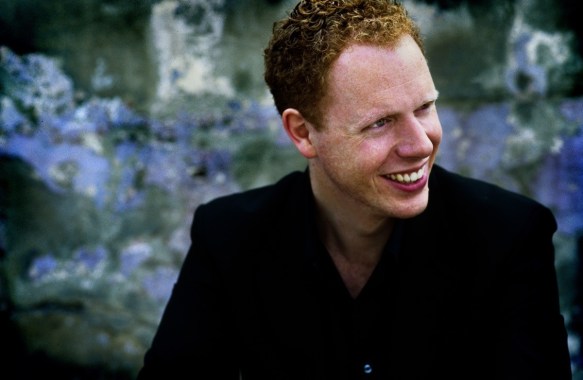
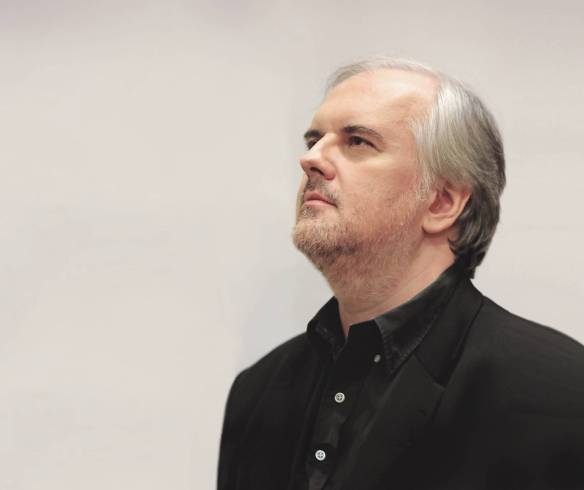
Jennifer Pike (violin, above), Martin Roscoe (piano, below)

Wigmore Hall, Monday 27 January 2020 (lunchtime)

You can listen to this concert on the BBC Sounds app here (opens in a new window)

Review and guide by Ben Hogwood

How refreshing to witness a world premiere brighten up an incredibly dull January day. Dualism, by British composer Dani Howard, is a new piece by violin and piano based on the conflict between ambition and relaxation that we experience on an increasing scale in our everyday lives. With the premise in hand it was easy to spot the ambitious bits – the piano’s energy propelling the music forward initially, the violin swept along – and the much-needed relaxation, where the music paused rather beautifully to take in its surroundings.

Because of these moments Dualism (2:39) was easy to relate to, and its tonal language, with wide open textures in the piano part, brought with it thoughts of the space achieved by the music of Copland and John Adams. Howard created some buoyant harmonies to go with the relatively angular melodic writing but the piece had depth too, an ongoing tension between the power for which it strove and the respite it also needed. The ultimate winner was difficult to call over the nine and a half minutes, Jennifer Pike and Martin Roscoe finding a balance between the elements and each other in an attractive performance.

Elgar’s Violin Sonata followed, an important work in his output as it effectively signals the beginning of his late, shadowy style. Here is where the composer’s work takes on an appreciably darker tinge, though each of the four main works in the period – the Sonata, String Quartet, Piano Quintet and Cello Concerto – each contain moments of light despite all being set in a minor key.

The Sonata is an elusive work, but Pike and Roscoe found its essence and its tunefulness. The first movement (2:39) was the strongest, and you can hear on the broadcast the strength of feeling immediately transmitted through the long sweeps of violin melody. The first theme is passionate, but soon the wisps of violin melody (16:28) indicate the dappled light of autumn.

The second movement (23:38) is a Romance, reaching levels of intensity that speak of sadness and bitter personal experience. It begins with a spirit of unrest, and the light humour forces a short-lived smile before Elgar retreats to the shadows once again. Pike and Roscoe apply a lightness of touch that really suits the dance-like figures that ultimately never get off the ground.

The final movement (31:08) is much broader in its dynamic reach and Pike relishes the return to the sweeping style of the first movement, her broad bow strokes bringing beauty to the melody. Meanwhile Roscoe successfully clarifies the busy piano part, again judging its volume ideally. A fine performance – bittersweet but ultimately resolving positively.

The pair finished with a rustic Theme and Variations from Miklos Rózsa, the composer of such epic film scores as Ben-Hur, Spellbound and A Double Life. Rózsa had a firm grounding in classical forms, writing a Violin Concerto for Jascha Heifetz in 1953 among numerous orchestral pieces. The Hungarian Peasant Song in this concert found him inspired by the folk music of his native country, and more specifically the Mátra region – where he wrote 14 variations on a rustic, outdoor theme. Pike had a lot of fun with these but found the emotional centre too, right from the unaccompanied theme itself (42:34).

The piece progressed through long, powerful lines, bold double stopping or short, twanged pizzicato (plucking). Roscoe’s counterpoint to this was a delight, knowing exactly when to hold back or push on, the pair navigating the very different moods of Rózsa’s variations before bringing them all back together at the end.

Repertoire

This concert contained the following music (with timings on the BBC Sounds broadcast in brackets):

Dani Howard Dualism (2019, world premiere) (2:39)
Elgar Violin Sonata in E minor Op.82 (1918) (14:28)
Rózsa Variations on a Hungarian Peasant Song Op.4 (1929) (42:34)

A well-chosen encore came in the form of Elgar’s Salut d’Amour (54:00), this orchestral favourite working beautifully in reduced form and given the appropriate level of indulgence by Pike.

Further listening & viewing

The Elgar and Rózsa music from this concert can be heard in the recorded versions below, including a classic account from early in Nigel Kennedy’s career, with pianist Peter Pettinger:

Martin Roscoe has recorded the Elgar with Tasmin Little previously, but that version is not available on Spotify. However Jennifer Pike has recorded the orchestral version of the Rózsa Variations, and they form part of a highly rewarding disc devoted to the composer’s orchestral works, including a substantial Cello Concerto:

Jennifer Pike’s most recent album The Polish Violin comes highly recommended, a homage to her Polish roots. Based mainly on the exotic works for violin and piano by Szymanowski, it is brilliantly played and really well programmed, with works by Karłowicz and Wieniawski also included:

Finally a playlist of those four late Elgar works – the Violin Sonata, String Quartet, Piano Quintet and Cello Concerto, in order of publication:

Wigmore Mondays – Jerusalem Quartet play Haydn & Bartók

Jerusalem Quartet [Alexander Pavlovsky, Sergei Bresler (violins), Ori Kam (viola), Kyril Zlotnikov (cello)]

Wigmore Hall, Monday 20 January 2020 (lunchtime)

You can listen to this concert on the BBC Sounds app here (opens in a new window)

Review and guide by Ben Hogwood
Photo of Jerusalem Quartet Felix Broede

The subtitle for this concert on the BBC Sounds website is ‘Quartet Masters’ – which is spot on when you consider the contributions both Haydn and Bartók made to this intimate form of chamber music. The string quartet – two violins, viola and cello – has presented composers with both challenge and inspiration over its 250-year existence, and even as I type this there is no sign of the form dying out.

A big part of the credit should go to Haydn, whose quartets are often used at the beginning of a program such as this. Sometimes that means the consistent quality of his work is overlooked, but there was no doubt of that happening in this performance from the Jerusalem Quartet.

Theirs was a red blooded performance, with a glossy texture to the luxurious string sound, aided by plenty of vibrato on the string. Such an approach would not have worked in the composer’s earlier quartets, but was more appropriate here for one of the six published in 1799 as the composer’s Op.76, his most mature statements yet as a quartet composer.

The ‘Fifths’ is so named because of the melodic interval Haydn uses between the two notes at the very start (2:10 on the BBC Sounds link) This motif becomes an integral part of the quartet, and as the first movement progresses it can be frequently heard. The Jerusalem Quartet’s bold performance gains more charm in the second movement (9:25), a light and relatively gentle dance. Alexander Pavlovsky’s intonation went a little awry here but not for long.

In the third movement, a darkly coloured Minuet (15:18), the quartet impress greatly, divided in two as the two violins’ melody is shadowed by the grainy tones of viola player Ori Kam and cellist Kyril Zlotnikov in impressive unison. The clouds part for a central Trio section with a rustic feel (16:44) before the obdurate theme returns (18:16) The fourth movement, initially quite furtive (19:10), blossoms into an affirmative finish.

Bartók had already confirmed his outright mastery of the string quartet form by the time he reached his Third Quartet of 1927, and the Fourth, completed a year later, achieves if anything a greater level of innovation in sound, together with strong melodic content and the use of connecting ideas between the five movements.

Bartók was obsessed with symmetrical forms, and the dimensions of the Fourth feel wholly right. Its five movements have two intensely concentrated pieces at their outer edge. Movements two and four are Scherzos – which implies they should be witty but the second is ghostly and the fourth otherworldly. The third movement is one of the composer’s classic evocations of the night, with pictorial references to insects and birds as well as dislocated elements of Hungarian folk music.

This performance was right on the money. From the start of the first movement (26:27) the tension is palpable, with a driven approach emphasising Bartók’s dissonant writing but also his melodic invention. The resolution in a pure C major is all the more telling because of it. The second movement (33:10) is marked to be played with all four players using mutes (‘con sordino’) and the ghostly entrails that result chill to the bone – in this case even on a cold January day. The four players shade their contributions exquisitely, preparing us for the central third movement (36:22), a great example of Bartók’s ‘night music’.

The emotional centre of the quartet, this is where time almost stops, and the Jerusalem Quartet captured this feeling immediately with their long, held chords and the songful lines from Kyril Zlotnikov’s cello and Alexander Pavlovsky’s violin. These held a profile close to folk melodies, the other three instruments standing watchfully by.

The fourth movement (42:50) broke us out of these nocturnal dreams, using pizzicato only (each of the four instruments required to pluck rather than use the bow) The folk-like ‘snaps’ against the board of the instrument were very effective, especially on the cello, but so was the thrumming of the violins and viola, which had an enchanting quality.

Finally the fifth movement (46:20) brings a lasting resolution, though it starts with great cut and thrust, using music of dissonance. Later a light-hearted diversion into more folk-based material breaks out, after which we head for a wholly convincing ending, summing up the whole performance perfectly.

A very fine concert, this, which was capped by an encore of the third movement (Minuet) from Mozart’s String Quartet in D minor K421 (54:24). Not only did this piece share the same key of the ‘Fifths’ quartet, it is one of a set of six quartets dedicated to Haydn, so brought the concert full circle with music of both grit and charm, rather like that of its dedicatee.

Repertoire

This concert contained the following music (with timings on the BBC Sounds broadcast in brackets):

Haydn String Quartet in D minor Op.76/5 ‘Fifths’ (1797-8) (2:10)
Bartók String Quartet no.4 (1928) (26:27)

Further listening & viewing

You can watch the Jerusalem Quartet play Bartók’s String Quartet no.4 in a live concert here:

The Jerusalem Quartet have recorded both the works played in this concert, which can be heard on the playlist link below:

Bartók’s cycle of six string quartets is one of his very greatest achievements, and you can track the development of his style by listening through chronologically. The later quartets in particular give the most reward to repeated listening, for even 100 or so years on these works are not easy to grasp straight away! The cycle from the Emerson String Quartet remains one of their best recordings:

Haydn is the father of the string quartet, and his Op.76 set – again six quartets – represents the pinnacle of his compositions for the relatively new sound world of two violins, viola and cello. These are good natured works but have considerable depth too, as this recording by the Hungarian Takács String Quartet proves:

Mozart’s six quartets dedicate to Haydn are among his finest chamber works. This recording from the Hagen Quartett includes a particularly fine account of the D minor work from which the Jerusalem Quartet took their encore:

Wigmore Mondays – Alexander Melnikov: Early piano music by Clementi, Haydn & Mozart

Alexander Melnikov (fortepiano)

Wigmore Hall, Monday 13 January 2020 (lunchtime)

You can listen to this concert on the BBC Sounds app here (opens in a new window)

Review and guide by Ben Hogwood

Something of a history lesson from the versatile pianist Alexander Melnikov, who is capable of moving between modern piano music on a concert grand and 19th century music on the instrument for which it was written, the fortepiano. Essentially the instrument is a forerunner of the grand version we are used to nowadays, but it allows us to see the join between the harpsichord – the go-to keyboard of much of the 18th century – and the bigger and more modern instruments the likes of Beethoven began to write for. Here Melnikov played an instrument by Paul McNulty after Walter & Sohn from an original of 1805. Alexander Skeaping deserves credit as the tuner and supplier.

Melnikov’s program was brilliantly conceived, including music by Mozart and Haydn but linking them through one of the leading pianists and composers of the day, Muzio Clementi. Beethoven was one of his greatest advocates and often played his sonatas, while Clementi promoted his fellow-composer in London, where he arrived in the early 1770s. At this point the English capital was regarded as the centre for keyboard innovations, and in the music for this concert – superbly played and interpreted by Melnikov – you can feel the sense of freedom and exploration as the music looks outwards and forwards towards Beethoven.

The pianist begins with a musical impression of Haydn by Clementi, a brief Prelude from his Musical Characteristics album written as a guide for to give performers an idea of the style of other composers. This short number (from 3:04 on the broadcast link) starts with a broad C major chord, helping us get used to the piano sound. The mood is free and expansive, with a busy left hand. The pianist adds a short improvised section, where it proves difficult to spot the joins, but this serves to lead us straight to a Haydn work, the Piano Sonata in C sharp minor HXVI:36 (4:53).

This was a very rare key for Haydn to use – and rare for piano music, with Beethoven’s Moonlight sonata the next excursion some 20 years later. Melnikov’s performance captures the exploratory air of the piece, beginning with quite a stern statement but then playfully holding back with some of the clipped right hand notes to emphasise the composer’s wit. Melnikov’s affinity for the music is clear, with some beautifully played melodies. The piano sound is lovely, with none of the tinny textures often associated with the earlier instruments.

The second movement is a Scherzando (14:26), Melnikov playing a graceful dance with a really satisfying sense of ebb and flow. The third movement (18:21) is the slowest, a slow and solemn Menuetto moving to a thoughtful and serene final section (20:14) where Haydn moves to the major key. The playing here, using the ‘damper’ pedal, is really lovely.

The next pair of works begin with Clementi’s second ‘impression’ of Mozart (24:17), where a great deal of technical control is required! Me The two composers famously sparred in an improvisation session in Vienna in 1781, so knew a lot about each other – but from the reports did not perhaps see eye to eye.

Clementi’s tribute is keenly felt however, before Mozart‘s own exploratory Fantasia (25:55) receives a carefully thought yet natural performance. Though a short piece, this unfinished work varies greatly in mood and tempo, with quick cascades from on high contrasting with dark left-hand thoughts, before a sunnier closing section to sweep away the clouds. Melnikov gives the music plenty of room, sometimes exaggerating the pauses but always to the benefit of the music.

The concert finished with one of Clementi’s own sonatas, the substantial Piano Sonata in G minor published in 1795. Before it we heard another Prelude from the Musical Characteristics, this time a portrait of himself with a tumbling figure and some highly chromatic music (32:55). The Sonata itself begins at 34:27 with a stern introduction of two-part writing, but that soon cuts to a busy and bright first movement proper. There are a number of abrupt mood swings in this movement, anticipating Beethoven’s way of changing quickly between thoughts, and Clementi also employs some daring harmonies for the time. Melnikov responds brilliantly to these, again his performance given as though performing a characterised stage work, with a stormy closing section.

The second movement (42:40) is marked Un poco adagio (loosely translated as ‘a little bit slow’) and is subtly charming, like a slower dance, before the third movement (48:38), marked Molto allegro (quick and lively), actually hangs back a bit in this performance before going full throttle to a thrilling finish. Again Melnikov’s right hand contours are brilliantly realised.

This was a really enjoyable concert, and great to see the importance of Clementi’s role properly realised. He was one of the true pioneers of early piano music, and without his part it is unlikely Mozart or especially Beethoven would have made their own mark.

Repertoire

This concert contained the following music (with timings on the BBC Sounds broadcast in brackets):

Clementi Musical Characteristics Op.19: Preludio II alla Haydn in C major (publ.1787)
Haydn Piano Sonata in C sharp minor HXVI:36 (publ.1780)
Clementi Musical Characteristics Op.19: Prelude I alla Mozart in A major (publ.1787)
Mozart Fantasia in D minor K397 (?1782)
Clementi Musical Characteristics Op.19: Prelude I alla Clementi (publ.1787)
Piano Sonata in G minor Op.34/2 (publ.1795)

Further listening

Alexander Melnikov has not yet recorded any of the music in this concert, but the playlist below includes recorded versions on the fortepiano wherever possible.

Thirty years ago it would have been unthinkable to consider we would now have a huge resource of recordings made on the fortepiano. This is thankful in part to early protagonists such as Melvyn Tan, but one pianist to have recorded a vast amount of this repertoire is Ronald Brautigam. His recordings of Beethoven are rewarding, but in Haydn he sparkles – such as in this disc of five sonatas, including the one heard in this concert:

Melnikov’s own discography on more historical instruments is in its relatively early stages, but this disc of piano music through the ages from Schubert to Stravinsky is well worth hearing:

Finally from this time comes a thrilling cycle of Beethoven sonatas for piano and violin – pioneering music which Arcana will explore in greater detail as part of 2020 Beethoven. This version with Isabelle Faust is one of the very best:

Wigmore Mondays – Louise Alder & Joseph Middleton: Lines written during a sleepless night

Louise Alder (soprano), Joseph Middleton (piano)

Wigmore Hall, Monday 6 January 2020 (lunchtime)

You can listen to this concert on the BBC Sounds app here (opens in a new window)

Review and guide by Ben Hogwood

This was a concert with an especially personal link for soprano Louise Alder. The Russian Connection – subtitle of her first album for Chandos – goes much further than the repertoire chosen. It reflects Alder’s Russian ancestry, with generations of her family, up to and including her grandfather in 1914, born in the country.

In addition to that, Alder and regular recital partner Joseph Middleton have created a captivating program linking Grieg, Medtner, Tchaikovksy, Britten, Rachmaninov and Sibelius through their choice of poets and their use of a language outside of their own. Six composers, four languages (at last count!) and some richly descriptive writing all made for a particularly memorable concert, especially when performed with the passion and musicality on show here.

Alder and Middleton judged their program to perfection, bringing in the new year with a spring in its step as Grieg’s Heine setting Gruß (Greeting) tripped into view (2:33 on the broadcast link). This is the first song in a compact but deeply descriptive cycle of six from the composer, setting German poetry with his typical melodic freshness and flair. Alder shows lovely control on the final ‘Gruß’ word, before applying a slight husk to the deeply felt Dereinst, Gedanke mein (One day, my thoughts) (3:40), which made a striking impact here. Lauf der Welt (The Way of the World) (6:23) has heady urgency, singer and pianist working as one, while the evocative Die verschwiegene Nachtigall (The secretive nightingale) (8:01) is a sultry, sensual setting in these hands, the initial picture beautifully painted by Middleton. Zur Rosenzeit (Time of roses) (11:40) is filled with intense longing, while Alder’s tone in Ein traum (A dream) (14:55) is particularly beautiful, working through to a powerful finish.

Nikolai Medtner is a Russian composer known for his piano music rather than his songs, so it was gratifying to have Alder and Middleton (above) include two here. They are fine pieces of work, too, with an impressively fulsome piano part that Middleton tackled with deceptive ease and clarity. Mailied (May song) (18:15) holds an intense vocal line over its catchy piano part, while Meeresstille (Calm sea) (20:10) is really well controlled by Alder here.

Tchaikovsky’s numerous songs contain many treasures, and the two French language examples here were no exception. The Sérénade (23:22) dances in the bright light of dawn, with a slightly furtive piano, while Les Larmes (The tears) (25:02) provides much darker soul searching.

Britten’s Russian-language song cycle The Poet’s Echo is a relative rarity in the concert hall, but as Alder and Middleton showed here it contains music of typically fearsome and compressed intensity. The spirit of Musorgsky is evident not just in the choice of poet (Pushkin) but in the bare piano lines, rumbling in the deep for the first song Echo (29:22). Alder’s line is fearlessly delivered, with songs like My heart… (32:17) and Angel (33:48), with its quasi-orchestral piano part, making a powerful impression. The nightingale and the rose (36:20) take powerful flight, the piano gnawing at the heel of the vocal line, while the strange Epigram (40:13) has a striking reverberation achieved through the open piano lid. The final song, Lines written during a sleepless night (41:07) captures the supreme irritation of insomnia through the ‘monotonous tick of the clocks’, with a chilling piano postlude. This work remains a difficult nut to crack, listening-wise, but this is the sort of performance to do it.

We then heard two songs by Rachmaninov, both again setting Pushkin texts. Sing not to me, beautiful maiden (46:44), an early song from the composer’s late teens, receives a fulsome account here with Alder capturing the devastating beauty of the song. The later How fair this spot (51:56), taking the mood from darkness to relative light, is even better, Alder’s top ‘B’ a note of extraordinary clarity.

The generously packed concert concluded with three Sibelius songs, sung in Swedish. Once again these songs are found to be fiercely intense, often expressed through the bare minimum of means. The tempestuous Säv, säv, susa (Sigh, rushes, sigh) (54:02) is heady stuff, while the dynamic range achieved by both performers in Våren flyktar hastigt (Spring is swiftly flying) (56:27) is hugely impressive. Finally Flickan kom ifrån sin älsklings mote (The girl came from her lover’s tryst) (57:49) has a huge, orchestral scope, a reminder that the Second Symphony is not far away in the composer’s output. The song chills to the bone when turning tragically into the minor key for its third verse and the lover’s treason.

This was a simply outstanding concert from Alder and Middleton, deeply intimate yet including the audience in all of their asides. These qualities extended to the wonderful encore, Rachmaninov’s A Dream, where the rippling piano part and exotic harmonies supported Alder’s heavenly soprano line.

If more of the Wigmore Hall Monday lunchtime concerts are as good as this in 2020, we are in for many treats indeed! It only remains for you to listen on BBC Sounds if you haven’t already…and to keep up with the series as it progresses.

Repertoire

This concert contained the following music (with timings on the BBC Sounds broadcast in brackets):

Grieg 6 Songs Op.48 (1884-8) (2:33)
Medtner Mailied Op.6/2 (1901-5) (18:15), Meeresstille Op.15/7 (1905-7) (20:10)
Tchaikovsky Sérénade Op.69/1 (1888) (23:22), Les Larmes Op.69/5 (1888) (25:02)
Britten The Poet’s Echo Op.76 (1965) (29:22)
Rachmaninov Sing not to me, beautiful maiden Op.4/4 (publ.1893) (46:44), How fair this spot Op.21/7 (1902) (51:56)
Sibelius Säv, säv, susa Op.36/4 (1900) (54:02), Våren flyktar hastigt Op.13/4 (1891) (56:27), Flickan kom ifrån sin älsklings möte Op.37/5 (1901) (57:49)
Encore – Rachmaninov A Dream Op.38/5 (not on the broadcast)

Further listening

Most of the music from this concert is part of Louise Alder and Joseph Middleton’s new disc for Chandos, Lines Written During A Sleepless Night: The Russian Connection, with the exception of the two Rachmaninov songs. The full playlist is here:

If you enjoyed Alder and Middleton in this concert – which I’m sure you did! – their previous outing together is a sumptuous collection of songs by Richard Strauss for Orchid Classics which is bound to appeal, and certainly plays to their strengths:

Meanwhile to enjoy the Rachmaninov song output in its entirety there are few better historical guides than soprano Elisabeth Söderström and pianist Vladimir Ashkenazy:

Wigmore Mondays – Nicolas Angelich plays Bach / Busoni, Brahms & Beethoven

Nicolas Angelich (piano)

Wigmore Hall, Monday 9 December 2019 (lunchtime)

You can listen to this concert on the BBC Sounds app here (opens in a new window)

Review and guide by Ben Hogwood

A concert of the three ‘B’s, all of them greats of keyboard literature – with a fourth, Busoni, added for good measure.

J.S. Bach and Busoni make a winning combination, the Italian 20th century composer having discovered a strong affinity with his ‘ancestor’s’ work in transcribing his organ and harpsichord works for piano. These were always done in a reverent way, and the famous Advent chorale prelude Nun komm, der Heiden Heiland (Now come, Saviour of the heathens) is no exception. Nicolas Angelich ensured all was still before beginning this account, and once started he left plenty of room for musical thought and variation of tempo and phrasing. Although at times it was a little too mannered, it was a nicely gauged start to the concert.

Angelich continued without a break into Brahms 7 Fantasien, hailed by Clara Schumann as ‘a true source of enjoyment, everything, poetry, passion, rapture, intimacy, full of the most marvellous effects’. The seven pieces work well as a whole, with three Capriccios placed 1, 3 and 7 in the group, interspersed with four Intermezzi. The relatively ambiguous labels mean Brahms has plenty of freedom for expression, and beyond the Capriccios being faster and stormy, and the Intermezzi slower, intimate and experimental, there is little to confine his work.

The performances here were well-informed, Angelich having recorded these works for Virgin Classics back in 2006. The first Capriccio in D minor (9:51) exhibits power and authority, with the composer’s beloved triplet rhythms in evidence, and is complemented by the first Intermezzo in A minor (12:11), one of several moments where Brahms’ thoughts turn wholly inwards – apart from the slightly sunnier middle section. The third piece, a Capriccio in G minor (16:23) has arpeggios tumbling downwards, and has a central section anticipating the tonal area (E) of the three Intermezzi to come. These are the fourth piece in E major (19:23), full of subtle but noticeable questioning in its melody, and the longest piece of the set. It is followed by the thoughtful fifth piece in E minor (23:59) and a sixth, mostly chordal piece back in E major (26:56) which quickly moves away from its harmonic base. Finally the power and passion returns for the seventh piece, a Capriccio in D minor (30:21). Brahms again is in his favourite two-against-three rhythmic figuration, and this signs off the set in the major key with some aplomb in Angelich’s performance.

Fantasy is also a theme for Beethoven’s most famous piano work, his Moonlight Sonata. In truth this piece sits between a fantasy and a sonata (hence the composer’s subtitle, Sonata quasi fantasia), and the first movement, though static in the profile of its arpeggios, is pure and magical imagery, Beethoven intentionally or not evoking moonlight over Lake Lucerne as perceived by his friend, the poet Ludwig Rellstab.

Angelich brought the stillness of the moment to the Wigmore Hall (35:30), reflective and deep in a reverie, only rousing slightly for a Scherzo of relatively downbeat thoughts (41:35). Those sentiments were well and truly blown away by the Finale (44:12), the only one of the three movements written in true ‘sonata form’ by Beethoven. This was a terrifically played account, carefully thought through and played with feeling rather than a need for technical prowess – though that was present too.

Angelich returned to late Brahms for his encore, the Intermezzo in E flat major Op.117/1 (54:02) Another late work, this one is based on an old Scottish ballad, Lady Anne Bothwell’s Lament – and brought the mood and chronology of the concert full circle.

Repertoire

This concert contained the following music (with timings on the BBC Sounds broadcast in brackets):

J.S. Bach arr. Busoni Nun komm, der Heiden Heiland BWV 659 (c1748, arr.1898) (4:36)
Brahms 7 Fantasien Op.116 (1892) (9:51)
Beethoven Piano Sonata no.14 in C sharp minor Op.27/2 ‘Moonlight’ (1802) (35:30)
Encore: Brahms Intermezzo in E flat major Op.117/1 (1892) (54:02)

Further listening

The music from this concert can be heard in leading available versions on Spotify below. These include Angelich’s recording of the Brahms pieces, with Murray Perahia playing the Bach / Busoni and Beethoven:

Angelich can be heard in a double album of late Brahms that includes the composer’s piano pieces published as Op.117-119. They hold a unique place in the piano repertoire, written by Brahms in the knowledge that his compositional career was nearly over and looking forward to innovations by composers such as Mahler, Berg and Schoenberg:

Busoni’s transcriptions of Bach organ works repay further exploration, especially at this time of year. This album from Kun-Woo Paik brings together some of the more famous examples, including the Toccata, Adagio and Fugue:

Beethoven’s 32 Piano Sonatas remain one of the wonders of his output, but even a listen to the four published after the Moonlight sonata reveal a composer striking out for new shores. The Piano Sonata no.15 in D major Op.28, known as the Pastoral, is similarly magical – before the group of three works published as Op.31 reveal humour in the first, stormy Romanticism in the second (nicknamed The Tempest) and an openness of expression in the beautiful third. The playlist below brings together leading recordings from Emil Gilels: