Kristian Bezuidenhout plays Mozart at Wigmore Hall

Kristian Bezuidenhout plays Mozart piano music at Wigmore Hall

Kristian Bezuidenhout 2010 Photo: Marco Borggreve

Kristian Bezuidenhout (fortepiano) – Wigmore Hall, live on BBC Radio 3, 13 April 2015.

Listening link (opens in a new window):

http://www.bbc.co.uk/programmes/b05qdw80

on the iPlayer until 13 May

Spotify

In case you cannot hear the broadcast…Kristian Bezuidenout has recorded all of this music, save for the brief encore, as part of a complete series of Mozart’s solo piano works for Harmonia Mundi. A playlist of the works played in this concert can be found here

What’s the music?

Mozart – Piano Sonata in F major, K332 (c1783) (18 minutes) ((the ‘K’ number gives an indication of the work’s position in the Köchel catalogue of Mozart’s music)

Mozart – Adagio in F major (unknown) (6 minutes)

Mozart – Piano Sonata in D major, K284 (1775) (Dürnitz) (27 minutes)

What about the music?

mozart

The sound of the fortepiano (a very early form of the piano as we know it today) is definitely an acquired taste – and even then it has to be said not everybody acquires that taste. That is not to put you off listening to the music, but it is an advanced warning of sorts that this is a very different piano sound, one with sharp colours when played loudly. At times the sonorities approach that of a harpsichord, though with an instrument such as the one South African-born Kristian Bezuidenhout uses, a copy of an 1805 model, there is room for manoeuvre.

Kristian is in the process of recording all of Mozart’s work for the instrument, a sizeable canon that includes a number of memorable piano sonatas and several shorter but important standalone pieces. One of these is the Adagio inserted into the middle of the concert – though this is of doubtful authenticity, and may not be by Mozart at all.

The second sonata in this recital, K284, is almost twice as long as the first, and was completed in Munich for a friend of the composer’s, bassoonist Baron von Dürnitz.

Performance verdict

Kristian Bezuidenhout gives these pieces his all, leaving the listener in no doubt as to his total commitment to Mozart’s music. He adopts quite challenging speeds, the fast movements rushing along and even the slow ones being much faster than anticipated – at least in the case of the first sonata in the recital.

His right hand work is always very clear, especially when playing more than one note at once, so each of the inside parts can be heard. This is especially important with the fortepiano, where the notes do not necessarily sustain for as long.

If you are not a fortepiano enthusiast then hopefully Bezuidenhout’s graceful way with the Adagio in particular will go some way to winning you over.

What should I listen out for?

Piano Sonata in F, K332

1:37 – a genial beginning, but soon there is an outburst of storm and strife at 2:04, as Mozart wrenches the music into the minor key. Bezuidenhout exaggerates the contrasts between a relatively calm right hand and the occasionally stabbed notes in the left that give powerful energy to Mozart’s writing

8:31 – the slow movement, the middle of the three – and the most harmonically adventurous. Mozart enjoys some quite florid writing for the piano and uses the walking accompaniment to his advantage, writing music of unexpectedly profound expression. Bezuidenhout arguably plays it a bit too quickly here.

13:08 – a literal hammer blow starts this fast movement with a rapid clatter of notes. At times it sounds as though someone has sat on the lower end of the piano, such is the force of the playing! The fortepiano certainly brings alive the contrasts in Mozart’s writing for keyboard, and here Bezuidenhout uses it to bring out the bell-like figurations in the right hand. Towards the end there is a lovely, graceful touch from the pianist that brings us to a calm finish.

Adagio in F

21:26 – a tender, almost operatic piece of work where the right hand at times takes on the profile of a singer. There is a slightly mischievous element to the melody, which can overdo itself at times, but it is charming much of the time.

Piano Sonata in D, K284

29:18 – this piece starts with a flourish, and Bezuidenhout keeps a brisk tempo throughout. The first main theme is vigorous, the second a bit more thoughtful and graceful, especially when it appears the second time around at 31:18.

34:26 – a thoughtful second movement, and an airy one, with a lightness of touch that really suits the music. There is an attractive ‘question and answer’ between the hands.

39:18 – a long third movement, which is a theme and variations – a form in which Mozart excels. A relatively simple theme is heard to start with before the music heads through twelve very different reworkings of the source material, each one seemingly more difficult than the last! It is a chance for Mozart to really flex his compositional muscles. Of particular note is the variation at 44:31, where Mozart slows down rather. The variation finishing at 46:54 goes heavy on the bass, and is followed by a darker turn in the minor key. An unexpectedly tender episode at 51:36 finds the piano keys lightly brushed, the tempo slowed down dramatically. Finishes at 55:53

Encore

Mozart: Allemande from the Suite in C major, K399 (3 minutes)

57:21 – this short piece, described by the pianist as ‘enigmatic’, is part of a pastiche Mozart wrote, a Suite in the Style of Handel. It is surprisingly dark at times.

Want to hear more?

If more Mozart piano music is what you want, I would point you in the direction of some of the composer’s short and very profound single pieces. Two Rondos do the trick here, with a Fantasia and a late Adagio for good measure. All are played by Bezuidenhout, and included at the end of the Spotify playlist referenced above.

For more concerts click here
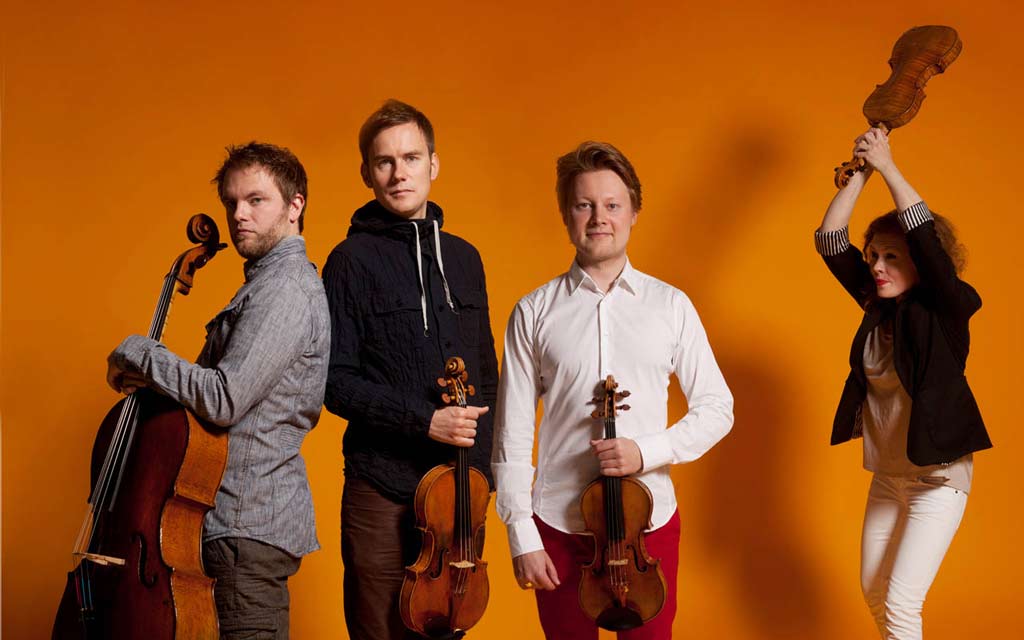
Meta4 play Haydn and Schumann string quartets at Wigmore Hall

The Finnish quartet Meta4 play Haydn and Schumann string quartets at Wigmore Hall

meta-4

Meta4 (Antti Tikkanen & Minna Pensola (violins), Atte Kilpeläinen (viola) & Tomas Djupsjöbacka (cello)) – Wigmore Hall, live on BBC Radio 3, 6 April 2015.

Listening link (opens in a new window):

http://www.bbc.co.uk/programmes/b05pqzdk

on the iPlayer until 6 May

Spotify

This Spotify link is for those unable to gain access to the broadcast. As Meta4 have not recorded any of this music, two alternatives have been chosen in recordings by the Hagen Quartet:


What’s the music?

HaydnString Quartet in C major Op.20/2 (1772) (20 mins)

Schumann String Quartet no.1 (1842) (27 mins)

What about the music?

haydn

Haydn string quartets are so often a feature in an hour-long quartet recital that it is easy to forget just how revolutionary they were at the time of composition. The publication of his six ‘Sun’ quartets in 1772 (so-called because an early edition had the sun on its cover) represented a massive step forward in the history of the form towards what it has become today. One of the best quotes about the string quartet comes from Goethe – who referred to Haydn’s mastery of it as ‘’

Before the ‘Sun’ quartets the violins had almost total dominance in the melody – but the gradual development of viola and cello into melody instruments was well underway, and Haydn ensured that in the second of the six works he gave special attention to the cello from the outset – before bringing all four instruments together as equals. The musical language, too, is expressive, the composer moving to unusual keys and harmonies to present music that is far from simple – as C major often suggests it should be.

Schumann, on the other hand, is not really regarded as a string quartet composer – his primary instruments being the voice and the piano. Yet he contributed three very attractive works to the medium, all written in 1842, a year after his so-called ‘year of song’. This was after an intense period of study of the quartets of Haydn, Mozart and Beethoven.

Schumann dedicated the three quartets published as Op.41 to Mendelssohn – who loved them.

Performance verdict

These are spirited performances from Meta4. For the Haydn they bring out some of the revolutionary aspects of the writing by using less vibrato, giving a more austere sound when the harmonies get darker. Some of the tuning here is not perfect, but there is never lack of expression.

The Schumann quartet is extremely enjoyable, vigorous in its faster movements but finding the lyricism Schumann invests in his quartet writing especially in the slow movement.

What should I listen out for?

2:36 – the quartet begins with quite a sinewy sound. There is a sense of discovery here, a little similar in mood to the opening shades of Haydn’s ‘Le Matin’ symphony. A rather more austere section begins at 6:49, darker in mood, before the cello takes up the theme once again at 8:22.

10:01 – a louder attack from Meta4, and a more dramatic section of music from Haydn that seems to hark back towards the Baroque in its stormy implications. It is no coincidence that the music has shifted from C major to C minor, and the emotions are troubled. The movement ends, almost with a whimper.

13:05 – now the music is rather sweet, with an attractive line given to the first violin – but again the ‘sturm and drang’

A relatively genial last movement begins, but still doesn’t sound fully sure of itself until the pace picks up finishes at 22:42

Schumann

25:57 – a subdued beginning to the quartet, with careful interplay between the instruments. After this slow introduction the music speeds up and gets to the heart of its argument.

35:30 – a restless second movement with what is nonetheless quite a catchy tune when heard several times! A contrasting ‘trio’ section begins at 37:03, which has more graceful contours but still sounds a bit on edge with its chromatic nature.

39:53 – a rising line from the cello signals the beginning of the slow movement, with this material used as the basis

46:59 – a brisk last movement begun with three ‘snap’ chords before the music becomes more rustic and outdoors. Rushes to what looks like a false ending at 51:32, but then an extraordinary passage of play starts where the four instruments sound like bagpipes.

Encore

55:06 – the encore chosen by Meta4 is a ‘local’ one – Jusslin by the contemporary Finnish composer Timo Alakotila (5 mins)

Want to hear more?

After hearing one of the Haydn ‘Sun’ quartets, the other five are also strongly recommended. You can hear the Hagen Quartet playing them on Spotify here.

Similarly the other two Schumann quartets of the Op.41 set are recommended, together with the Piano Quintet (for piano and string quartet) written soon after. The Hagen Quartet are once again in action, playing the First String Quartet and Piano Quintet here (pianist Paul Gulda), and quartets nos. 2 & 3 here

For more concerts click here

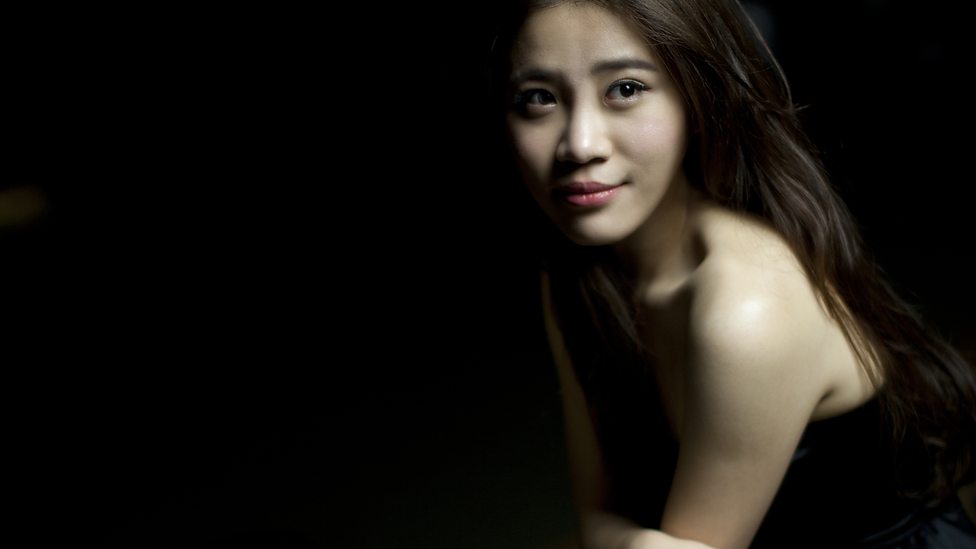
Zhang Zuo – Schumann and Schubert at Wigmore Hall

Zhang Zuo plays contrasting piano works by Schumann and Schubert at the Wigmore Hall

zhang-zuo
Zhang Zuo (piano) – Wigmore Hall, live on BBC Radio 3, 30 March 2015.

Listening link (opens in a new window):

http://www.bbc.co.uk/programmes/b05nsbm7

on the iPlayer until 29 April

Spotify

Zhang Zuo has not recorded either of these works, so this Spotify playlist – for those unable to hear the radio broadcast – includes the Schumann played by Daniel Barenboim and the Schubert by Romanian pianist Radu Lupu.

What’s the music?

Schumann – Faschingsschwank aus Wien, Op.26 (Carnival pranks in Vienna) (1839) (19 minutes)

Schubert – Piano Sonata in C minor D958 (1828) (28 minutes)

What about the music?

Both Schumann and Schubert could proclaim the piano to be their first discipline, and both wrote masterfully for the instrument. These two pieces form a nice contrast in concert, for we hear Schumann at his most exuberant, in the throes of a love affair that was soon to culminate in marriage and the so-called ‘Year of Song’. Written in a brief stay in Vienna, the mischievous ‘carnival pranks’ include a quotation of the ‘Marseillaise’ in the first of the five pieces. This was especially daring as the French national anthem was banned in the Austrian capital at that time.

Schubert, on the other hand, was in the last year of his life and in the knowledge that death was increasingly to hand. His late trio of piano sonatas are remarkable works, reaching an intensity of emotion and accomplishment you can barely comprehend for a composer only just in his thirties. The C minor, the first sonata of the three, is perhaps the most tortured, and is complemented by two even bigger works in the form of the A major and B flat major sonatas, each weighing in around the 40 minute mark.

Yet all three are compelling works in the right performances, for Schubert finds ways of making the music reflect the depths of his thoughts, vividly so in the sudden lightning bolts of anxiety that strike at unexpected points. Time stands still in the slow music, while in faster passages there are almost not enough notes for Schubert to describe his thinking.

Performance verdict

Zhang Zuo – Zee Zee – is a brilliant pianist, of that there is no doubt. Technically assured and very clear in her communication of the notes, she made the music fairly rush out of the Steinway like an endless stream. Yet there were times in this recital where I longed for the music to have a bit more breathing space, because she showed in the slower moments that she has a tender side to her playing.

In some of the Schubert the sonata came across as rather brash. It must be difficult for a pianist in her early twenties to fully probe music written by a composer who knew he was dying. And although at times Zuo communicated some of the anguish Schubert must have been experiencing, the fast music was brittle and at times simply too fast. The finale was certainly thrilling but it raced away, pausing only occasionally for breath.

The Schumann was fun – especially the first of the six pieces – and there were some nice, intimate asides such as the second piece, which felt like a confidential letter between loved ones. But here too the music cut to the bone a little too quickly, especially in the closing piece. It isn’t entirely fair to compare Zuo, a pianist at the start of her career, with the old masters Lupu and Barenboim, who you can hear on the Spotify playlist above, but it is instructive to learn that Lupu spends nearly two minutes longer on the Schubert than Zuo.

I don’t want to be unduly critical – there was an awful lot to admire here after all – but I longed for a bit more light and shade from a pianist who clearly has the technical ability.

What should I listen out for?

Schumann

1:04 – We hear Schumann at his most exuberant as the carnival pranks get underway. This piece takes up half the duration of the collection, returning to its catchy main theme with great gusto each time, but also wandering off into distracted thoughts. The most enjoyable and extravert of these is the march beginning at 5:17 – which ushers in the ‘Marsellaise’ quotation. See if you can spot it!

10:07 – a short and tender romance, in complete contrast to the bluster of the opening piece. A confidential aside in the minor key.

12:36 – the third piece is quicker and flighty, and Schumann surprises his listener by moving to a distant key briefly, before coming back ‘home’.

14:36 – Zee Zee moves straight into the turbulent fourth piece, a torrent of notes that subsides at the end, before almost crashing straight into the fifth…

16:37 – the fifth piece starts with similar vigour and leads to an emphatic conclusion.

Schubert

22:16 – although the first movement is not one of unremitting darkness, the torture of Schubert’s final years is immediately clear to the untrained ear. There is edginess and anxiety here, and you can hear it in Zuo’s right hand right from the off.

There is respite, however, in the form of a second theme that melts under the fingers, especially when Zuo plays it for the second time at 27:10. The music seems set to move into calmer waters but Schubert muddies the textures by introducing a coda with low rumblings in the left hand, bringing the movement to an uncertain close.

30:09 – a soft, thoughtful slow movement with similar contours to the slow movement of Beethoven’s Pathétique sonata. Like Beethoven’s late period, Schubert’s last sonatas are known for their ability to hang suspended in time, but Zuo’s performance is just a bit too quick to capture that consistently – apart from 37:03, where the music reaches new levels of intimacy. A darker strand of music makes itself known at 31:34, and this comes to dominate the louder parts of the movement.

38:21 – an awkward attempt from Schubert to pick up the mood that ultimately ends in darkness. Although a minuet, the main theme does not feel like a piece for dancing – and especially when the stop-start episodes take over. The ‘trio’ section (from 39:31) has a more obvious lilt to its triple time, but is incredibly brief – and the opening returns at 40:40.

41:13 – the last movement, a Tarantelle, begins quickly and urgently, but disruption sets in when Schubert insists on moving to new and distant keys, trying hard it seems to assert some positive music but generally ending up with darker, stormy episodes. An exception to this can be found in a brief excursion to B major for more poetic thoughts at 44:10, while the final two chords – wrapping up at 50:16 – tell of resolution and grit but not release from the darkness.

Encore – J.S. Bach – the Minuet from his Partita for keyboard no.1 in B flat major

51:31 – an attractive, light touch to this encore, nicely detailed. There are two Minuets, the second appearing at 52:17 before the first is repeated at 53:00.

Want to hear more?

The second Schubert sonata has perhaps even more drama, and can be heard on Spotify played by Maurizio Pollini from track 5 of this album

To complement the Schumann, try his set of character pieces Carnaval, which can be heard here, played by Jorge Bolet.

For more concerts click here

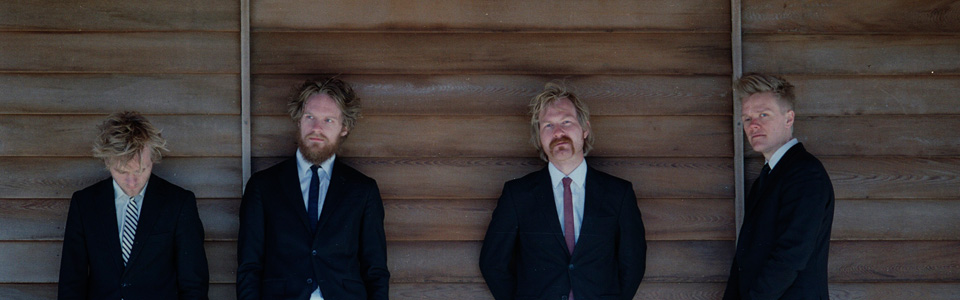
Danish String Quartet – Haydn and Shostakovich

The Danish String Quartet play works by Haydn and Shostakovich at Wigmore Hall

danish-string-quartet
Danish String Quartet (Frederik Øland, Rune Tonsgaard Sørensen (violins), Asbjørn Nørgaard (viola), Fredrik Sjølin (cello)) – Wigmore Hall, live on BBC Radio 3, 23 March 2015.

Listening link (opens in a new window):

http://www.bbc.co.uk/programmes/b05mqmkv

on the iPlayer until 22 April

Spotify

The Danish Quartet are yet to record either of these pieces, so for listeners unable to hear the BBC audio here is a Spotify playlist of the same works from the Lindsay Quartet (Haydn) and the Aviv Quartet (Shostakovich) – two fine versions:

What’s the music?

HaydnString Quartet in C major Op.54/2 (1788) (20 minutes)

Shostakovich String Quartet no.9 (1964) (25 minutes)

What about the music?

[PIC]

As my concert-going companion remarked, Haydn string quartets are always used as curtain openers, which can be something of a shame, as they are always performed when the quartet is at its ‘coldest’. This particular work, seemingly written for the violinist Johann Tost in 1788, can not be allowed to fall into that category, for the first violinist has a lot of demands made on him right from the start.

As with many Haydn works this quartet is deceptive, for it has the routine layout – yet tinkers with the overall design of a conventional string quartet. The first movement is a lot faster than it would be normally, while the second movement (the slow movement here) runs straight into the third (a minuet), a tactic very seldom witnessed. Not only that, the last of the four movements is predominantly slow.

Shostakovich’s most private thoughts went into his string quartets, which often convey the intense fear and claustrophobia he felt with the authorities seemingly poised to knock on his door in the middle of the night, ready to remove him forever for his supposedly rebellious musical tendencies. Ultimately he found ways of expressing himself in a private musical code, and the string quartets were especially vivid at using that.

Yet his ninth published string quartet is much more positive in mood than most, seemingly gathering itself to renounce the fear and stand confidently on two feet. As the Wigmore Hall program note states, this may have been due to the composer’s recent marriage – his third – and the slight ‘thaw’ in relations that was allowing him to revive the previously out-of-bounds opera Lady Macbet of the Mtsensk District.

Performance verdict

How refreshing to hear Haydn played with the energy the Danish String Quartet gave it in this performance. All too often these quartets sound too polite, but this account was a good reminder of Haydn’s innovations in the form, and in the way he makes this piece sound a bit like a miniature violin concerto. First violinist Frederik Øland was up to the job.

The Shostakovich was even better, given a depth of feeling and range of colour that suited the piece perfectly. Whereas some of the composer’s quartets are very closed in this felt like a positive, outgoing experience, standing tall in the face of the horrors of the time. Particularly effective was the Rossini-like polka that danced manically, while the slower sections – and in particular the quotes from Musorgsky’s Boris Godunov – were beautifully handled.

The quartet’s ensemble playing was superb, and their togetherness and positivity were two standout features of a superb concert.

What should I listen out for?

Haydn

1:49 – the first movement, unusual in the composer’s output for being marked Vivace (lively). The Danish Quartet enjoy its contours – particularly first violinist Frederik Øland, who has a challenging part!

8:14 – the mood turns sombre (and the key changes from C major to C minor) for the slow movement. Again the first violin starts to take the lead but sounds a bit absentminded against the long, slow chords from the other three instruments. This moves straight into…

11:27 – the Menuetto, an injection of pace and poise, with a typically upbeat theme from the composer. This is in direct contrast to the Trio section, from 13:03, with its discords. The texture is surprisingly full here for four instruments. The Menuetto reappears to put things right at 14:01, as though nothing had happened!

15:06 – a solemn introductory theme, which turns into a thoughtful and deeply felt Adagio. Very unusual for a slow movement to appear last in a typical four-movement quartet structure in the eighteenth century…and yet there is fast music to come, from 19:54 as the music scampers away…only to return to its previous slow tempo, on which it ends at 22:12.

Shostakovich

This quartet runs continuously but is in five distinct sections / movements:

24:48 – an airy beginning, with hints of unease from the inner and lower parts. The second violin is playing a theme associated with Pimen in Musorgsky’s opera Boris Godunov. A light dance is played out and an air of tranquillity takes over. Yet even here, as the upper parts circle, nervy thoughts lurk in the shadows. Then we move to the second ‘movement’…

…at 29:05. A romance in all but name with happier thoughts, possibly inspired by the composer’s recent marriage (his third). The harmonies are lush here, and after some thought the tempo begins to increase…

..to 33:24, where a polka starts up, and the rat-a-tat rat-a-tat rhythm – a quotation from Rossini’s William Tell Overture­ – begins to obsessively take hold.  A furious energy is unleashed, brilliantly captured by the Danish Quartet, who keep an appealing roughness around the edges when the music is most fractious. The instruments converse with some of these melodic figures.

37:13 – the music takes on a mood of deep thought, but is wrenched from its reverie by violent pizzicato (38:09), a tactic used several times to unsettle the listener, before a piercing and unnerving violin cadenza briefly takes centre stage.

40:38 – the substantial final movement starts with a jolt, the music thrown forwards like a car starting suddenly. Having started this mad push forwards Shostakovich has to keep it going, and does to with some emphatic and blustery unison passages for two or more instruments of the quartet. Powerful lines on the cello are compromised by what can only be described as ‘scrubbing’ from the persistent second violin. Shostakovich’s sardonic humour makes itself known through ‘glissandi’ (where a note slides in pitch, mostly upwards in this case!), before an emphatic finish.

Encore – NielsenMit hjerte altid vanker arranged by the Danish String Quartet second violinist Rune Tonsgaard Sørensen

52:40 – Chosen to celebrate 150 years since the Danish composer’s birth, this is a short but sweetly voiced chorale lasting just under two minutes.

Want to hear more?

As the Danish Quartet mentioned, their compatriot Carl Nielsen is in an anniversary year, born 150 years ago – and the foursome have recorded his complete string quartets, not often heard but here on this album on Spotify:

For more concerts click here

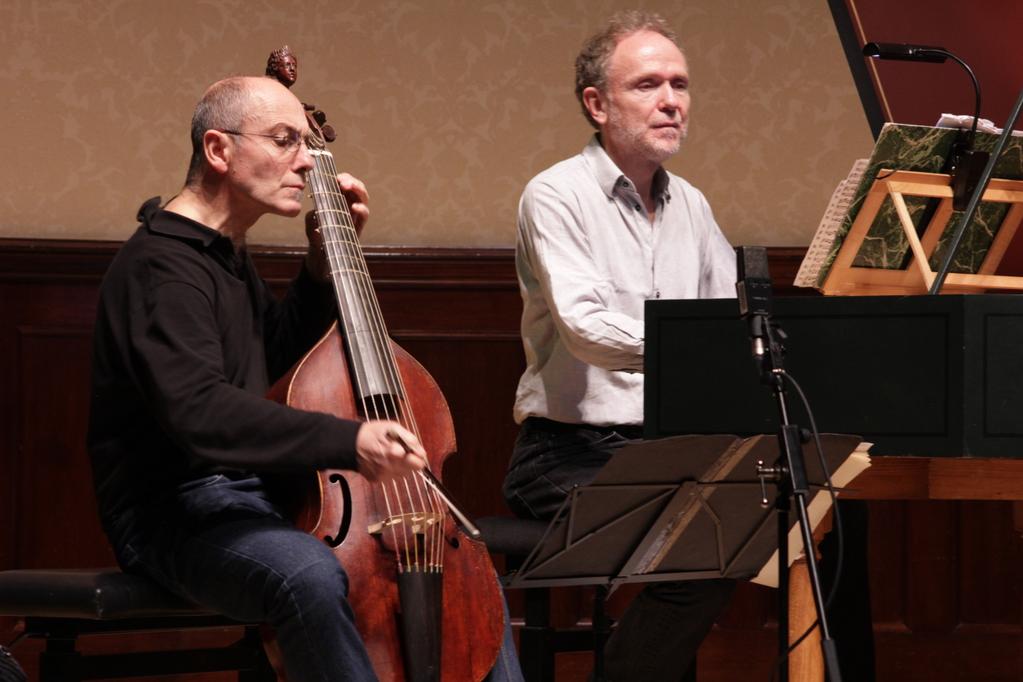
Bach and the viola da gamba – Paolo Pandolfo and Markus Hunninger

Bach and the viola da gamba – Paolo Pandolfo and Markus Hunninger explore two of the sonatas Bach wrote for the instrument, along with music by gamba maestro Carl Friedrich Abel

paolo-pandolfoPaolo Pandolfo (viola da gamba) and Markus Hunninger (harpsichord) – Wigmore Hall, live on BBC Radio 3, 16 March 2015. Photo © Ben Collingwood

Listening link (opens in a new window):

http://www.bbc.co.uk/programmes/b052047t

on the iPlayer until 15 April

For non-UK listeners, this Spotify playlist is available:

For those unable to hear the broadcast I have put together a Spotify playlist, containing the Bach sonatas – but not the Abel, which I could not find on the service. Pandolfo and Hunninger have recorded the Bach recently, but their versions are not available – so I have chosen suitable substitutions here

What’s the music?

J.S. BachViola da gamba Sonata no.2 in D major BWV1028 (not later than 1741) (16 minutes) (the ‘BWV’ number gives an indication of the work’s position in the Bach-Werke-Verzeichnis (Bach Works Catalogue)

Abel6 Pieces from the Drexel Manuscript for solo viola da gamba (date not known) (20 minutes)

J.S. BachViola da gamba Sonata no.3 in G minor BWV1029 (not later than 1741) (16 minutes)

What about the music?

The first question to answer here is ‘what is a viola da gamba’? It is an ancestor of the cello, gripped between the players knees and played with the bow. Although it was used mostly as an ensemble instrument to begin with, Bach, Abel and other composers began to write for it in more of a solo capacity.

The instrument used by Paolo Pandolfo in this concert has seven strings, and dates from around 1700. There is no ‘spike’ on the instrument, so the player has to grip it with their knees.

Bach wrote three accompanied sonatas for the instrument, though exactly when he wrote them is not clear. Abel is described in the BBC Radio 3 introduction as ‘the link between baroque and classical music’, and headed for London with nothing more than ‘six symphonies in his pocket’. He was a virtuoso viola da gamba player, and while in London wrote a lot of music for the instrument. This surfaced in the 19th century through manuscripts belonging to Joseph Drexel. Paolo Pandolfo stated in the introduction that Abel ‘respected the viol as a true lover respects his beloved’

Pandolfo himself came to this music initially from jazz, bringing with it his own talent for improvisation.

Performance verdict

These are engaging and often stylish performances. Paolo Pandolfo and Markus Hunninger have a long-established chemistry in this repertoire, and their experience allows them to tastefully improvise within the confines of the written music – as the composers would wish them to do.

Pandolfo’s quiet playing in particular is sublime, and I found myself instinctively leaning forward on occasion to catch his insights. The freedom he lent the Abel pieces made them sound like brand new improvisations.

On some occasions I did feel this improvising was a little overdone, and that in the Bach especially the slow movements would have benefited from a ‘less is more’ approach, as the pulse was almost lost at times. In the faster movements however the dialogue between the instruments was a constant joy, their enjoyment of the music clear to see.

What should I listen out for?

Bach Sonata no.2

3:45 – the Bach begins with a thoughtful Adagio. Pandolfo is a model of restraint here, and with Hunninger there are some pronounced variations of the tempo

7:29 – the bright, vivacious second movement begins, using the upper register of the viola da gamba’s range. The crisp harpsichord right hand often trades melodic ideas with the gamba.

11:17 – a thoughtful slow movement, now in a ‘lower’ key (B minor) that brings out the resonance of the instrument’s lower strings. Pandolfo plays with great poise here.

16:14 – a burst of sunshine in the form of a move to D major. The gamba and harpsichord play cat and mouse, all the time shadowing each other’s moves. From 17’30” some tasteful trills added by harpsichordist Hunninger, before the instrument plumbs the depths just over a minute later. Some of Bach’s harmonic daring can be heard here, the music veering off to distant areas. Pandolfo occasionally plays two strings rather than one (‘double stopping’)

Abel

23:29 – the first of Abel’s six pieces has a free, improvisatory feel – which I assume to be Pandolfo’s license with the piece rather than an absence of bar lines. The bow flits between strings and the quiet moments are exquisitely found.

25:36 – Pandolfo secures an extraordinary bit of ‘skating’ here (not a technical term!), the bow rushing across the strings but somehow making all the notes coherent.

27:39 – this piece starts with pizzicato (plucking), which sounds unusual on the gamba, before short pieces of double stopping, culminating in the lovely passage at 31’15”. The performance here feels quite mannered, but on saying that Pandolfo does bring the composer’s thoughts off the page, making them feel fresh.

32:18 – again we hear the higher register of the viola da gamba, and Abel writes for it in such a way that it provides the accompaniment as well as the melody, thanks to lots of double stopping. There is an extraordinary passage of music from 34:12, the music rushing almost out of control, but at no point does Pandolfo lose control.

34:40 – this movement reminds me of Bach’s Sixth Suite for Solo Cello, a really lovely and rather moving slow dance.

39:04 – staying in the same key as the previous five – D major – this has a more improvisatory feel as the piece gradually grows in height of pitch. After this introduction there is a spikier stretch of music, with a distinctive theme, before Pandolfo brings the music to a very soft close at 43:40

An extended tuning episode (almost an improvisation!) before…

Bach Sonata no.3

46:51 – the start of this sonata introduces a melody very similar to the one Bach used in his Brandenburg Concerto no.3 – with a subtle difference as this piece is in a minor rather than a major key, and sounds more serious as a result. Pandolfo and Hunninger energetically navigate the contours of a lively first movement.

52:15 – as slow as the second movement was fast, this Adagio is stretched out almost to its limits by the two performers. This is not an overly indulgent performance though, as they are both trying to extract maximum emotion from the music, often by way of ornaments improvised in both parts. This does lose the rhythmic pulse on occasion.

58:54 – the harpsichord picks out the notes of the main theme, a kind of stuttering melody that the viola da gamba takes up. This is the inspiration for the debate of the rest of the movement. There is a false ending at 1:02:08 where the pair deliberately pause on a ‘wrong’ chord – before finishing more emphatically.

Want to hear more?

The ideal complement to this music can be found in Bach’s Sixth Suite for solo cello – which was written for a form of cello with five strings. Anner Bylsma plays it on Spotify here

For more concerts click here