
In Concert – Chiara Skerath & The Mozartists / Ian Page @ Wigmore Hall: Sturm und Drang

Chiara Skerath (soprano), The Mozartists / Ian Page

Kraus Symphony in C minor VB142
Gluck Dieux puissants que j’atteste…Jupiter, lance la foundre (from Iphigénie en Aulide)
Jammelli Ombre che tacite qui sede (from Fetante)
Mozart Vorrei punirti, indegno (from La finta giardiniera K196)
Traetta Ombra cara, amorosa…li resti sempre a piangere (from Antigona)
Haydn Amore nel moi petto (from Lo Speziale)
Haydn Symphony no.45 in F# minor ‘Farewell’

Wigmore Hall, London
Thursday 24 September 7:30pm

Reviewed by Ben Hogwood Pictures (c) Bertille Cascio

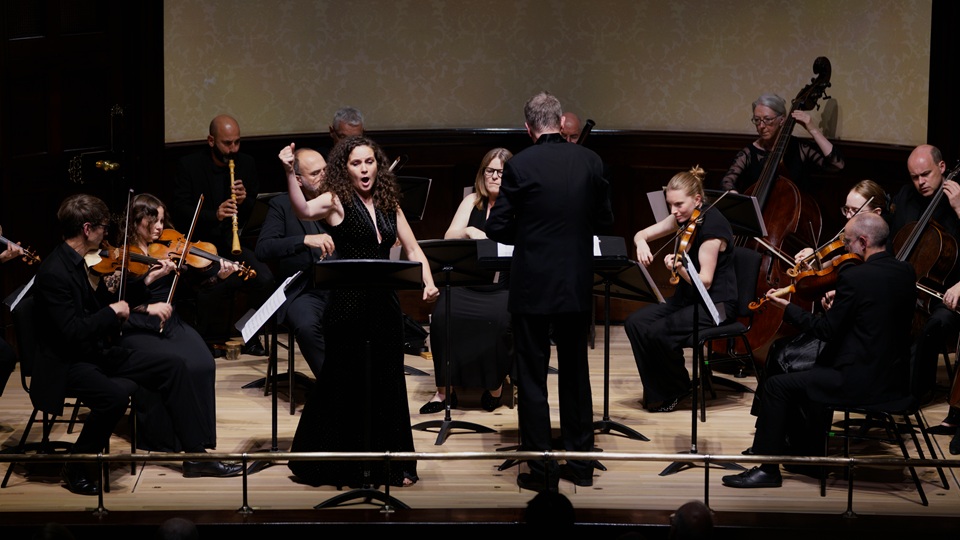
Ian Page and The Mozartists continued their remarkable and revealing turning over of scores from the 18th century at the Wigmore Hall. Their exploration of Sturm and Drang marked 250 years’ use of the phrase, since title of a play by the German Friedrich Maximilian von Klinger – and also the Mozartists’ fourth album exploring music written in this feverish mood.

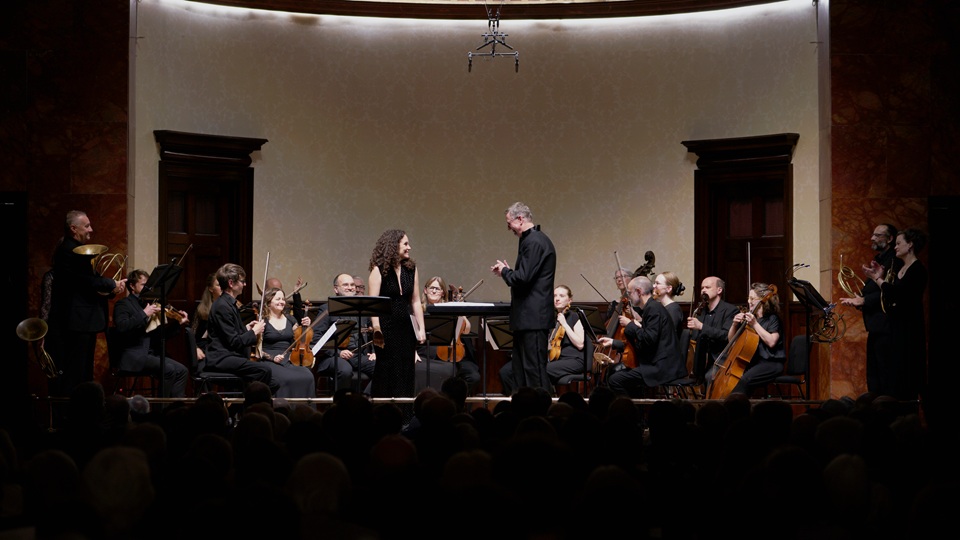
Three of the composers here are virtually unknown today, while Haydn – whose Farewell symphony closed the program – is the one most associated with the phrase. More of him later, for the early part of the concert belonged to Joseph Martin Kraus. The Frankfurt-born composer, who relocated to Sweden in 1778, wrote a Symphony in C minor of some stature five years later, its power sufficient for me to check there were only 20 players on the Wigmore Hall platform. Page marshalled a performance with poise and drama, the lean tones of the Mozartists’ strings complemented by wonderfully grainy woodwind and a fulsome horn quartet who stood to play, two either side of the stage. The solemn counterpoint of the introduction harked back unexpectedly towards the slow movements of Bach’s Brandenburg Concertos, before the urgent Allegro raced ahead in dramatic fashion. The striking Adagio was initially pared-back but blossomed in the wind section, before the sharply defined third movement returned to the cut and thrust of the first. With lively dialogue and fierce energy, this was a performance to savour.

So, too, was the Haydn with which the concert ended, though at times Page appeared to be pressing too hard on the accelerator, with some phrases in the first movement of the Farewell needing more time to breathe. There was considerable tension here though, as there was in the second movement, albeit expressed through austere colours and stretched phrases. The Minuet was lightly defined but offered little relief, while the finale, surely one of the first examples of instrumental protest music, was brilliantly done. The players left the stage incrementally as Haydn requested of his Esterházy musicians, so at the end we were left with just violinists Matthew Truscott and Daniel Edgar. Typically Haydn’s humour was retained, but this time with a darker edge.
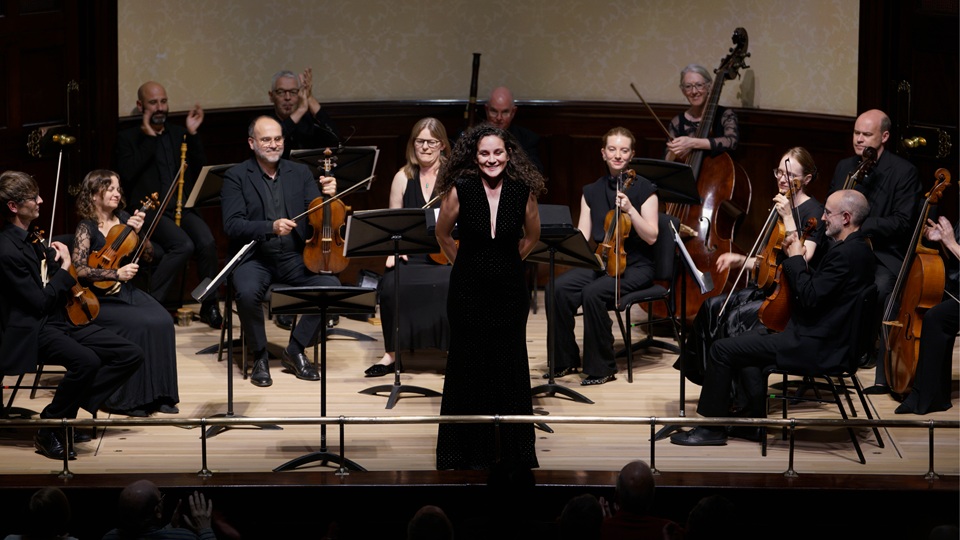
Between the symphonies lay five well-chosen arias, themselves a history lesson – in excellent performances from soprano Chiara Skerath (above), standing in for the indisposed Alexandra Lowe. She immediately seized the audience’s attention with Clytemnestre’s aria from Gluck‘s Iphigenie et Aulide, her horrific realisation that her husband Agamemnon was thinking of sacrificing his own daughter. This was a dramatic a, a dramatic affair, with appropriately sharp interjections from the orchestra. The aria Ombre che tacite qui sede, from Niccolò Jammelli’s Fetante, breathed much cooler air, the soprano low in her range at times, before the concert’s only fleeting reference to Mozart himself. Here we returned to the minor key for an aria from composer’s first mature opera, La finta giardiniera. Skerath’s communication with both orchestra and audience was captivating, revealing the extent of Arminda’s anger at the arrival of her fiancée’s former lover.

The next composer to prove his worth as a dramatic scene setter was Gluck’s Italian contemporary Tomasso Traetta, the cold introduction to Ombra cara balanced by beautiful control from Skerath. We then had a rare outing for the stage music of Haydn himself, keeping the theme of G minor tonality. The humour on show in Amore nel moi petto may not have been as immediate as his wit in the symphonies, but Skerath’s expression gave it the best chance.

As ever, Ian Page deserves enormous credit for an imaginative and entertaining program, balancing education and entertainment. By bringing fresh insight to the familiar repertoire and a chance to shine for the lesser-known names, he has made the ensemble’s Wigmore Hall series an unmissable date in the calendar. The players clearly enjoy it, too, as their encore – a palette cleansing major key slow movement from English composer Carl Friedrich Abel – was wreathed in smiles.
Published post no.3,029 – Saturday 26 September 2026
Bach and the viola da gamba – Paolo Pandolfo and Markus Hunninger

Bach and the viola da gamba – Paolo Pandolfo and Markus Hunninger explore two of the sonatas Bach wrote for the instrument, along with music by gamba maestro Carl Friedrich Abel

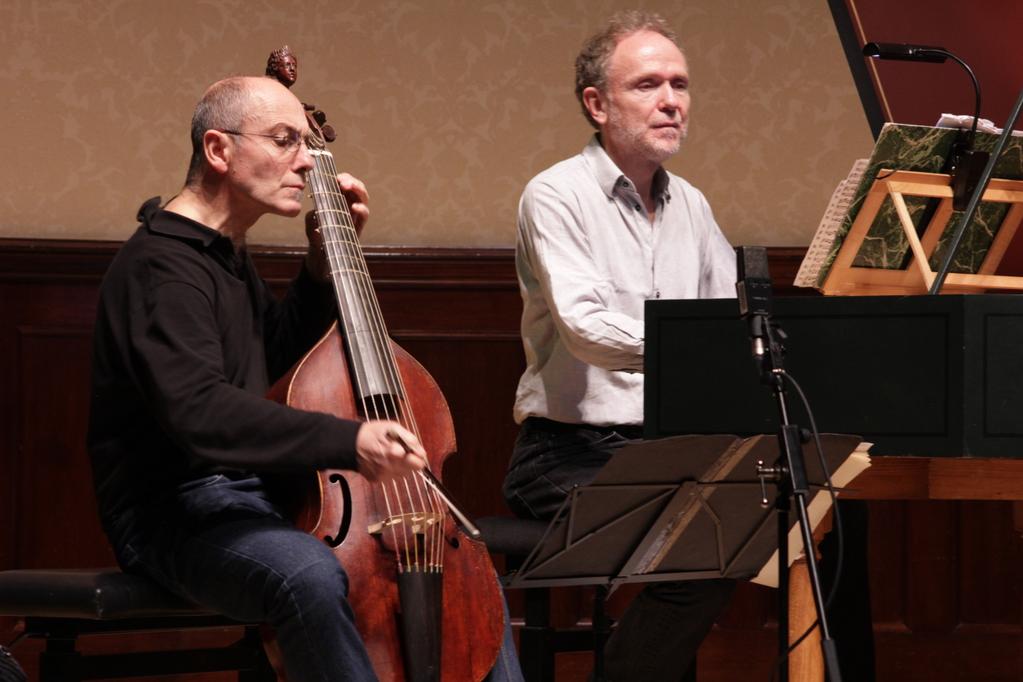
paolo-pandolfoPaolo Pandolfo (viola da gamba) and Markus Hunninger (harpsichord) – Wigmore Hall, live on BBC Radio 3, 16 March 2015. Photo © Ben Collingwood

Listening link (opens in a new window):

http://www.bbc.co.uk/programmes/b052047t

on the iPlayer until 15 April

For non-UK listeners, this Spotify playlist is available:

For those unable to hear the broadcast I have put together a Spotify playlist, containing the Bach sonatas – but not the Abel, which I could not find on the service. Pandolfo and Hunninger have recorded the Bach recently, but their versions are not available – so I have chosen suitable substitutions here

What’s the music?

J.S. Bach – Viola da gamba Sonata no.2 in D major BWV1028 (not later than 1741) (16 minutes) (the ‘BWV’ number gives an indication of the work’s position in the Bach-Werke-Verzeichnis (Bach Works Catalogue)

Abel – 6 Pieces from the Drexel Manuscript for solo viola da gamba (date not known) (20 minutes)

J.S. Bach – Viola da gamba Sonata no.3 in G minor BWV1029 (not later than 1741) (16 minutes)

What about the music?

The first question to answer here is ‘what is a viola da gamba’? It is an ancestor of the cello, gripped between the players knees and played with the bow. Although it was used mostly as an ensemble instrument to begin with, Bach, Abel and other composers began to write for it in more of a solo capacity.

The instrument used by Paolo Pandolfo in this concert has seven strings, and dates from around 1700. There is no ‘spike’ on the instrument, so the player has to grip it with their knees.

Bach wrote three accompanied sonatas for the instrument, though exactly when he wrote them is not clear. Abel is described in the BBC Radio 3 introduction as ‘the link between baroque and classical music’, and headed for London with nothing more than ‘six symphonies in his pocket’. He was a virtuoso viola da gamba player, and while in London wrote a lot of music for the instrument. This surfaced in the 19th century through manuscripts belonging to Joseph Drexel. Paolo Pandolfo stated in the introduction that Abel ‘respected the viol as a true lover respects his beloved’

Pandolfo himself came to this music initially from jazz, bringing with it his own talent for improvisation.

Performance verdict

These are engaging and often stylish performances. Paolo Pandolfo and Markus Hunninger have a long-established chemistry in this repertoire, and their experience allows them to tastefully improvise within the confines of the written music – as the composers would wish them to do.

Pandolfo’s quiet playing in particular is sublime, and I found myself instinctively leaning forward on occasion to catch his insights. The freedom he lent the Abel pieces made them sound like brand new improvisations.

On some occasions I did feel this improvising was a little overdone, and that in the Bach especially the slow movements would have benefited from a ‘less is more’ approach, as the pulse was almost lost at times. In the faster movements however the dialogue between the instruments was a constant joy, their enjoyment of the music clear to see.

What should I listen out for?

Bach Sonata no.2

3:45 – the Bach begins with a thoughtful Adagio. Pandolfo is a model of restraint here, and with Hunninger there are some pronounced variations of the tempo

7:29 – the bright, vivacious second movement begins, using the upper register of the viola da gamba’s range. The crisp harpsichord right hand often trades melodic ideas with the gamba.

11:17 – a thoughtful slow movement, now in a ‘lower’ key (B minor) that brings out the resonance of the instrument’s lower strings. Pandolfo plays with great poise here.

16:14 – a burst of sunshine in the form of a move to D major. The gamba and harpsichord play cat and mouse, all the time shadowing each other’s moves. From 17’30” some tasteful trills added by harpsichordist Hunninger, before the instrument plumbs the depths just over a minute later. Some of Bach’s harmonic daring can be heard here, the music veering off to distant areas. Pandolfo occasionally plays two strings rather than one (‘double stopping’)

Abel

23:29 – the first of Abel’s six pieces has a free, improvisatory feel – which I assume to be Pandolfo’s license with the piece rather than an absence of bar lines. The bow flits between strings and the quiet moments are exquisitely found.

25:36 – Pandolfo secures an extraordinary bit of ‘skating’ here (not a technical term!), the bow rushing across the strings but somehow making all the notes coherent.

27:39 – this piece starts with pizzicato (plucking), which sounds unusual on the gamba, before short pieces of double stopping, culminating in the lovely passage at 31’15”. The performance here feels quite mannered, but on saying that Pandolfo does bring the composer’s thoughts off the page, making them feel fresh.

32:18 – again we hear the higher register of the viola da gamba, and Abel writes for it in such a way that it provides the accompaniment as well as the melody, thanks to lots of double stopping. There is an extraordinary passage of music from 34:12, the music rushing almost out of control, but at no point does Pandolfo lose control.

34:40 – this movement reminds me of Bach’s Sixth Suite for Solo Cello, a really lovely and rather moving slow dance.

39:04 – staying in the same key as the previous five – D major – this has a more improvisatory feel as the piece gradually grows in height of pitch. After this introduction there is a spikier stretch of music, with a distinctive theme, before Pandolfo brings the music to a very soft close at 43:40

An extended tuning episode (almost an improvisation!) before…

Bach Sonata no.3

46:51 – the start of this sonata introduces a melody very similar to the one Bach used in his Brandenburg Concerto no.3 – with a subtle difference as this piece is in a minor rather than a major key, and sounds more serious as a result. Pandolfo and Hunninger energetically navigate the contours of a lively first movement.

52:15 – as slow as the second movement was fast, this Adagio is stretched out almost to its limits by the two performers. This is not an overly indulgent performance though, as they are both trying to extract maximum emotion from the music, often by way of ornaments improvised in both parts. This does lose the rhythmic pulse on occasion.

58:54 – the harpsichord picks out the notes of the main theme, a kind of stuttering melody that the viola da gamba takes up. This is the inspiration for the debate of the rest of the movement. There is a false ending at 1:02:08 where the pair deliberately pause on a ‘wrong’ chord – before finishing more emphatically.

Want to hear more?

The ideal complement to this music can be found in Bach’s Sixth Suite for solo cello – which was written for a form of cello with five strings. Anner Bylsma plays it on Spotify here

For more concerts click here